
绿色低碳

Search documents
新型液冷机柜破解数据中心散热能耗难题
Ke Ji Ri Bao· 2025-12-30 01:11
据了解,该机柜每用1度电支撑算力运算,仅需额外消耗0.1度电用于散热,相比传统风冷技术降耗超 70%。按一个数据中心500台机柜规模计算,每年能节省近1.4亿度电,可节约标准煤约4.5万吨,相当于 减少11万吨二氧化碳排放。 (文章来源:科技日报) 因此,寻求高效、节能、稳定的散热解决方案成为行业共识,液冷技术研发与应用势在必行。 华科高功率密度液冷机柜HZKJ-DS80单柜换热量突破80kW,意味着每秒能带走的热量相当于80台 1000W家用电暖器同时开到最大功率产生的热量总和。传统数据中心要散去这样规模的热量,需要部署 大量风冷设备。 记者12月25日获悉,湖北华中电力科技开发有限责任公司(以下简称"华中科技公司")成功研发了一款 4U机架式高功率液型CDU,搭载该组件的"华科高功率密度液冷机柜HZKJ-DS80"顺利通过中国泰尔实 验室检测。单柜换热量突破80千瓦(kW)、整体电源使用效率低至1.1,核心指标达到行业领先水平, 为我国绿色低碳数据中心建设提供强有力的国产化方案。 数据中心作为数字经济的核心枢纽,散热难题已成产业升级的关键瓶颈。传统风冷技术如同用电风扇, 为24小时不熄火的"锅炉"降温,散 ...
中信证券:预计2026年中国人民银行将在总量工具上保持适度宽松取向,降准降息仍存空间
Sou Hu Cai Jing· 2025-12-30 00:27
中信证券研报称,2026年财政政策定调为"更加积极的财政政策"。财政支出预计继续保持扩张力度,一 方面,继续向"新基建"、科技创新、 绿色低碳等新动能领域倾斜;另一方面,基本民生服务等领域的 支出也将加大,以增进民生福祉和直接刺激消费需求。同时,地方政府存量债务风险受到高度关注。在 控制债务风险的约束下,财政政策在"扩支出"与"防风险"之间求平衡。预计2026年货币政策基调延 续"适度宽松",并强调灵活运用多种工具以降低社会融资成本。预计2026年中国人民 银行将在总量工 具上保持适度宽松取向,降准降息仍存空间。 ...

盐城:勇当“碳”路先锋,塑造发展新动能新优势
Xin Hua Ri Bao· 2025-12-29 23:57
Core Viewpoint - Yancheng is emerging as a leader in green energy and low-carbon development, with significant advancements in its economic and social landscape, particularly in the context of the "14th Five-Year Plan" and the upcoming "15th Five-Year Plan" [1][2][12]. Group 1: Economic and Social Development - Yancheng's GDP is expected to exceed 800 billion yuan by 2025, marking a significant increase over five years [2]. - The number of high-tech enterprises has increased by over 1,800 in five years, ranking 6th in the province [2]. - Yancheng has been recognized as a national pilot city for carbon peaking and has achieved the status of an international wetland city [2][3]. Group 2: Green and Low-Carbon Initiatives - The city has established the largest tidal wind and solar power base globally, with over 40% of the country's offshore wind turbine production capacity [1]. - Yancheng has been awarded the title of "National Ecological Civilization Construction Demonstration City" and is leading in renewable energy integration and generation in the province [2][3]. Group 3: Strategic Planning for Future Development - The city aims to enhance its positioning as an "International Wetland, Coastal Green City, and Gateway to the Jianghuai Region" during the "15th Five-Year Plan" [4][5]. - Yancheng plans to focus on three key areas: "Sea," "Green," and "New," to drive high-quality development and innovation [6][7]. Group 4: Marine Economy Development - The marine economy currently contributes over 150 billion yuan, but there is a need for accelerated growth to match other coastal cities [9]. - Yancheng is committed to enhancing its marine economic capabilities through innovation and collaboration, particularly in renewable energy and marine equipment [10]. Group 5: Green Production and Sustainability - The city has cultivated 191 provincial-level green factories and is recognized for its efforts in sustainable industrial practices [11]. - Yancheng's focus on green low-carbon development is seen as a vital component for fostering new productive forces and achieving high-quality growth [12].
“引领者”蜕变 盘点2025中国汽车行业关键词
Zhong Guo Jing Ying Bao· 2025-12-29 17:15
Core Insights - The Chinese automotive industry is undergoing a profound structural transformation in 2025, shifting from price competition to value competition, driven by market forces rather than policies, and evolving from a "follower" to a "leader" on the global stage [1] Group 1: Price Competition - The price war in the automotive sector has cooled down, marking a transition from vicious competition to rational competition, with average industry profit margins at 4.5% and 55% of dealers facing losses [4] - Regulatory measures, including a self-discipline agreement among major car manufacturers and compliance guidelines from the State Administration for Market Regulation, are promoting a market order focused on quality and value [4] Group 2: New Energy Vehicles - In 2025, new energy vehicles (NEVs) achieved a domestic market share of 53.6% from January to November, marking a significant shift to market-driven growth [6] - The consensus of "oil and electricity at the same price" has emerged, with Chinese brands leveraging core technologies to dominate the domestic NEV market [6] Group 3: Intelligent Driving - 2025 is recognized as the year of large-scale popularization of intelligent driving, with L2-level assistance penetration reaching 64% and L3-level models being trialed in designated areas [8][9] - The cost of hardware for intelligent driving has decreased by approximately 50%, facilitating broader access to advanced driving features [9] Group 4: Supply Chain and Payment Terms - A "payment revolution" is underway, with major car manufacturers committing to reduce payment cycles for small suppliers to within 60 days, addressing long-standing issues in the supply chain [10] - This initiative aims to restore credit systems within the supply chain and foster a collaborative ecosystem, moving from a zero-sum game to a win-win situation [10] Group 5: Export Growth - Chinese automotive exports are expected to exceed 6.8 million units in 2025, maintaining the top position globally for the third consecutive year, with NEV exports doubling to 2.315 million units [13] - The export model has evolved from simple product trade to localized industry chain and technology ecosystem output, enhancing China's role as a global technology solution provider [13] Group 6: Charging Infrastructure - By the end of November 2025, the total number of electric vehicle charging facilities in China reached 19.322 million, a 52% increase year-on-year [15] - The introduction of integrated solar-storage-charging stations is transforming NEVs into flexible distributed energy storage units, enhancing the synergy between energy and transportation [15] Group 7: Safety Standards - Safety has become a central theme in the industry, with new regulations addressing issues related to intelligent driving and battery safety, including the strictest global standards for battery thermal runaway [18] - The focus on safety is pushing the industry to prioritize technical upgrades and ensure that safety is a fundamental aspect of development [18] Group 8: Domestic Brands - Chinese automotive brands have achieved a historic milestone, with a market share of 70% in passenger vehicles, becoming a key driver of market growth [20] - These brands are breaking the monopoly of joint ventures in mature markets, reshaping the global automotive competitive landscape [20] Group 9: Industry Consolidation - The automotive market is experiencing a bifurcation, with a significant concentration of resources towards leading companies as weaker brands exit the market [22] - This marks the end of the first round of industry reshuffling, indicating a transition to a more mature and regulated market [22] Group 10: Value Reconstruction - The industry is moving towards high-quality development, shifting focus from scale expansion to technological innovation, global layout, and user experience [24] - The collaboration across the supply chain and the increase in domestic chip production are strengthening the foundation for a self-controlled industry ecosystem [24]
公用事业行业周报:光热发电建设提速,“规模提升+政策支持”有望保障收益-20251229
East Money Securities· 2025-12-29 11:16
Investment Rating - The report maintains an "Outperform" rating for the utility sector [3]. Core Viewpoints - The acceleration of solar thermal power construction, supported by scale enhancement and policy backing, is expected to secure returns [19]. - The National Development and Reform Commission and the National Energy Administration have issued guidelines to promote the large-scale development of solar thermal power, aiming for a total installed capacity of approximately 15 million kilowatts by 2030, with investment expected to reach around 170 billion yuan [19][20]. Summary by Sections 1. Weekly Overview - From December 22 to December 26, the Shanghai Composite Index rose by 1.88%, the ChiNext Index increased by 3.9%, the utility index gained 0.83%, and the environmental index rose by 1.92% [27]. - In the utility sector, the thermal power segment increased by 2.45%, while the hydropower segment decreased by 0.77% [29]. 2. Utility Sector Dynamics 2.1. Electricity Tracking - In November 2025, the average transaction price in Jiangsu's centralized bidding was 355.95 yuan/MWh, up 4.45% month-on-month but down 13.60% year-on-year [39]. - The total electricity generation in November 2025 was approximately 779.2 billion kWh, a year-on-year increase of 3.96% but a month-on-month decrease of 2.62% [42]. 2.2. Water Conditions - As of December 26, the water level at the Three Gorges Reservoir was 170.95 meters, which is normal compared to 167.82 meters in the same period last year [55]. 2.3. Coal Price and Inventory Tracking - The CCI index for thermal coal was reported at 693 yuan/ton as of December 24, 2025, a decrease of 39 yuan/ton from December 17 [59]. - The inventory of thermal coal at Qinhuangdao Port was 7.02 million tons as of December 25, 2025, down by 110,000 tons from December 18 [65]. 2.4. Natural Gas Price Tracking - The LNG ex-factory price index in China was reported at 3937 yuan/ton as of December 25, 2025, a decrease of 3.39% from December 17 [70]. 3. Configuration Suggestions - Short-term recommendations include focusing on environmentally friendly public utility sectors that cater to residential demand, such as heating services and waste-to-energy projects [14]. - Long-term suggestions emphasize the importance of stable performance and attractive dividend yields in the current low-interest-rate environment, particularly for quality hydropower companies [14].


湖北宜昌加快打造世界级磷化工循环产业集群
Zhong Guo Xin Wen Wang· 2025-12-29 10:17
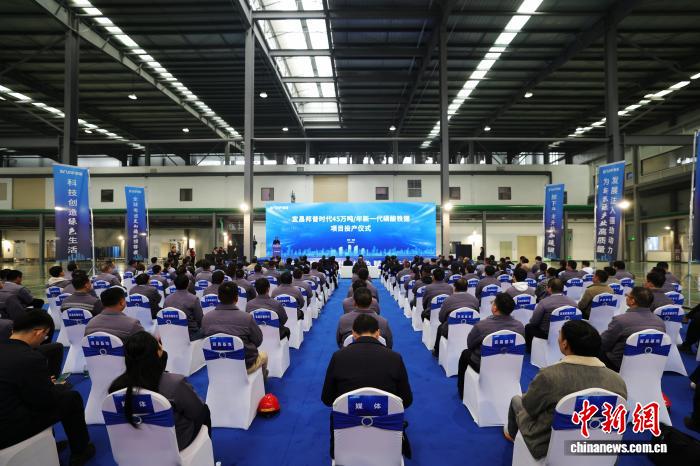
中新网宜昌12月29日电 (董晓斌 荣飞)总投资56亿元的"邦普时代45万吨/年新一代磷酸铁锂项目"29日在 湖北宜昌邦普全链条一体化产业园正式投产,助力该市加快打造世界级磷化工循环产业集群。 工人将生产的磷酸铁锂运送至集中放置区。董晓斌 摄 广东邦普循环科技有限公司董事长李长东表示,邦普将继续加快构建"磷资源与电池回收"双驱动的生态 闭环,推动技术创新,打造循环经济的样板,构建绿色的产业链和供应链,助力宜昌的传统优势磷化工 产业"老树发新芽"。(完)【编辑:王琴】 邦普新一代磷酸铁锂项目生产车间。董晓斌 摄 据悉,该项目践行绿色低碳理念,实现热能综合回收利用,做到全过程碳足迹可追溯。同时,项目实现 单线产能、自动化程度、核心设备国产化率"三大领先",核心设备国产化率100%,全部达产后每年可 实现产值145亿元、税收6亿元。 宜昌高新区政府相关负责人表示,该项目采用新一代磷酸铁锂技术和定向循环技术,具备行业领先的高 压实密度和超高金属回收率,将助力宜昌加快打造新能源电池产业集聚区。 邦普时代45万吨/年新一代磷酸铁锂项目正式投产。董晓斌 摄 宜昌地处长江中上游结合部,是三峡工程和葛洲坝水电站所在地。近年来, ...

东方雨虹:公司改性沥青卷材屋面节能低碳技术成功入选《北京市绿色低碳先进技术推荐目录(2025年)》
Zheng Quan Ri Bao Zhi Sheng· 2025-12-29 10:07
Core Viewpoint - Dongfang Yuhong's modified asphalt roofing energy-saving and low-carbon technology has been recognized as the only energy-saving and carbon-reducing technology in the waterproofing industry to be included in the "Beijing Green Low-Carbon Advanced Technology Recommendation Directory (2025)" published by the Beijing Development and Reform Commission [1] Group 1 - Dongfang Yuhong's technology is the sole entry from the waterproofing industry in the recommended directory [1]

智库报告:“黑天鹅”风险或成常态,考验企业声誉管理应变力
Sou Hu Cai Jing· 2025-12-29 07:19
南都讯记者潘珊菊 发自北京 12月29日,中国传媒大学媒介与公共事务研究院发布研究报告,分析2025年 企业声誉十大负面影响因素,并对2026年影响企业声誉的十大因素作出预测。 公众所理解的许多专业概念,大多存在于固有认知中,通过口口相传或者非权威渠道解读,长时间被误读 误解,与专业界定存在较大出入。比如"预制菜""智能驾驶(辅助驾驶)""零添加""0糖0脂0卡"等等,有的 概念看起来"凶险可怕",实则被长期污名化;有的概念看起来"人畜无害",实则被夸大宣传、刻意美化。 上述两种情况对于企业来讲,都十分不利。由于一个概念解释不清,导致一个企业甚至一个行业受到重创 的情况屡见不鲜。用好行业概念的定义权和解释权,打造稳固企业与行业发展的"助力器"而不是"绊脚 石",成为企业声誉管理面临的一项重要课题。 报告认为,在国家政策护航和多方协同发力下,2025年国内企业声誉整体形势向好,但也存在以下十个方 面的挑战和压力,影响了企业声誉管理效果。 1.生产经营管理中的硬伤,成为引发企业声誉危机的导火索 政府监管力度持续加码,行业治理标准不断提升,但企业在生产经营管理环节的问题仍有发生,包括安全 漏洞、质量缺陷、服务短板、 ...
在全球水处理市场显身手——探访威立雅水务技术公司无锡生产基地
Zhong Guo Hua Gong Bao· 2025-12-29 06:35
Core Insights - The article highlights the rapid growth and innovation of Veolia Water Technologies (Wuxi) Co., Ltd., emphasizing its role as a key strategic production base in China and its unique capabilities in intelligent manufacturing and green development [1] Localization and Capacity Enhancement - The company achieved localized production of submerged ultrafiltration products in less than six months, a significant improvement in speed compared to previous efforts [2] - The Wuxi factory has optimized its layout to achieve double-digit annual capacity growth without increasing its physical footprint, with approximately 30% of its production currently exported globally [2] Intelligent Production Efficiency - The Wuxi factory has implemented highly automated production processes, achieving an annual output of over 300,000 units, leading the industry in production efficiency [3] - As the sole global production base for Veolia's E-Cell (EDI module), the factory has continuously invested in smart manufacturing since 2015, automating key production processes and achieving paperless chemical production [3] - The factory's internal engineering team has developed customized automated production lines, enhancing production efficiency and supporting lean management [3] Green and Low-Carbon Development - Veolia is recognized as a pioneer in the domestic water treatment industry, effectively advancing the sector with its advanced technologies and water treatment concepts [4] - The company is the first to receive dual certification from leading international rating agencies SBTi and Moody's for its climate commitments, aiming for a global carbon-free emission of 15.2 million tons by 2024 [4] - The Wuxi factory has set a decarbonization target to reduce carbon dioxide emissions by 400 tons by 2025, having already achieved 60% of this goal through various innovative projects [4]
鼓励以绿色低碳的方式开展南极活动
Ren Min Ri Bao· 2025-12-29 05:22
Group 1 - The draft law on Antarctic activities and environmental protection consists of 7 chapters and 57 articles, covering general principles, activity permits, environmental protection, inspections, supervision, legal responsibilities, and supplementary provisions [1] - The draft emphasizes principles such as peaceful use, environmental protection, resource conservation, technological support, and international cooperation to safeguard common human interests [1] - The law applies to Chinese citizens and organizations conducting Antarctic activities, as well as foreign entities organizing activities from within China, based on a "nationality" and "departure" jurisdiction model [1] Group 2 - The draft encourages green and low-carbon methods for Antarctic activities and establishes overall environmental protection requirements, including an environmental impact assessment system [2] - Specific environmental protection measures include the protection of Antarctic flora and fauna, waste disposal, prevention of marine pollution, and protection of historical sites [2] - Legal responsibilities are defined for management personnel who abuse power or neglect duties, as well as for unauthorized activities in Antarctic exploration, fisheries, tourism, and shipping [2]