扩大内需

Search documents
两部委同日重磅发声!政策靠前发力,多措并举扩内需
2 1 Shi Ji Jing Ji Bao Dao· 2026-01-20 13:30
Group 1: Economic Policy Initiatives - The Chinese government is focusing on policies to stimulate consumption, stabilize investment, and cultivate emerging industries as part of the 2026 economic strategy [1][2] - The National Development and Reform Commission (NDRC) is planning to implement significant high-tech industry projects and develop a strategy for expanding domestic demand from 2026 to 2030 [1][3] - A comprehensive package of policies was released by the Ministry of Finance, including optimizing personal consumption loan subsidies and implementing special guarantees for private investment [1][2][4] Group 2: Consumer and Investment Support - The Ministry of Finance aims to enhance consumer spending and private investment through various measures, including a 1% subsidy on personal consumption loans and expanding the scope of eligible financial institutions [4][5] - A total of 625 billion yuan has been allocated for the first phase of the "old for new" consumption support program, which has already been initiated in several provinces [3][4] - The government is also focusing on increasing the loan limits for businesses and expanding the categories of supported consumption areas to stimulate economic activity [5][8] Group 3: Focus on High-Tech Industries - The government is prioritizing investments in high-tech sectors, with the National Entrepreneurship Investment Fund set to attract over 1 trillion yuan in investments for projects in fields like quantum technology and biomedicine [10][11] - The share of high-tech manufacturing value added in industrial output has exceeded 17%, indicating a growing emphasis on innovation and technology [11][12] - Policies are being developed to support technological innovation and enhance the capabilities of small and medium-sized enterprises in high-tech sectors [12]
事关贷款贴息、信用卡账单分期贴息等,六项重大利好出炉→
Jin Rong Shi Bao· 2026-01-20 13:16
Core Viewpoint - The Chinese government is implementing a series of fiscal policies aimed at stimulating domestic demand and promoting high-quality economic development, focusing on enhancing private investment and consumer spending [1][5][18]. Group 1: Policy Overview - The policies can be summarized as "one goal," "two focuses," "three principles," and "six policies" [3]. - "One goal" refers to the aim of "expanding domestic demand" [4]. - "Two focuses" emphasize the need to "stimulate private investment" and "promote consumer spending," both of which are crucial components of domestic demand [6]. - "Three principles" guide the execution of these policies: 1. "Convenient and efficient" processes to simplify policy implementation [8]. 2. "Precise and effective" targeting of key sectors and groups to lower financing costs [8]. 3. "Standardized and efficient" practices to balance efficiency with regulatory compliance [8]. Group 2: Six Key Policies - The six policies include four aimed at supporting private investment and two focused on promoting consumption [9]. 1. **Small and Micro Enterprises Loan Interest Subsidy Policy**: Offers a 1.5% interest subsidy on loans for key industries, with a maximum loan amount of 50 million yuan and a subsidy period of up to 2 years [10]. 2. **Private Investment Special Guarantee Plan**: Provides guarantees for loans to small and micro private enterprises, with a maximum loan guarantee of 20 million yuan [11]. 3. **Risk Sharing Mechanism for Private Enterprise Bonds**: Allocates risk-sharing funds to support bond issuance by private enterprises, helping to lower financing thresholds [12]. 4. **Equipment Upgrade Loan Interest Subsidy Policy**: Expands the scope of existing policies to include loans for equipment upgrades and technology innovation, with similar interest subsidy terms [13]. 5. **Service Industry Loan Interest Subsidy Policy**: Increases the maximum loan amount eligible for interest subsidies from 1 million to 10 million yuan, covering 11 categories of consumer services [14]. 6. **Personal Consumption Loan Interest Subsidy Policy**: Offers a 1% interest subsidy on personal loans used for consumption, including credit card installment payments, with over 500 financial institutions involved [14]. Group 3: Expected Outcomes - The policies are expected to significantly lower financing costs for enterprises, addressing the issue of high financing expenses for private enterprises [18]. - For example, a manufacturer seeking a 50 million yuan loan for an automated production line could save 1.5 million yuan in interest over two years due to the subsidy [18]. - The policies also aim to lower financing barriers, making it easier for private enterprises to access funds through enhanced guarantees and risk-sharing mechanisms [19].

扩内需、优供给、促改革——有信心有能力推动“十五五”开好局起好步
Zhong Guo Jing Ji Wang· 2026-01-20 13:16
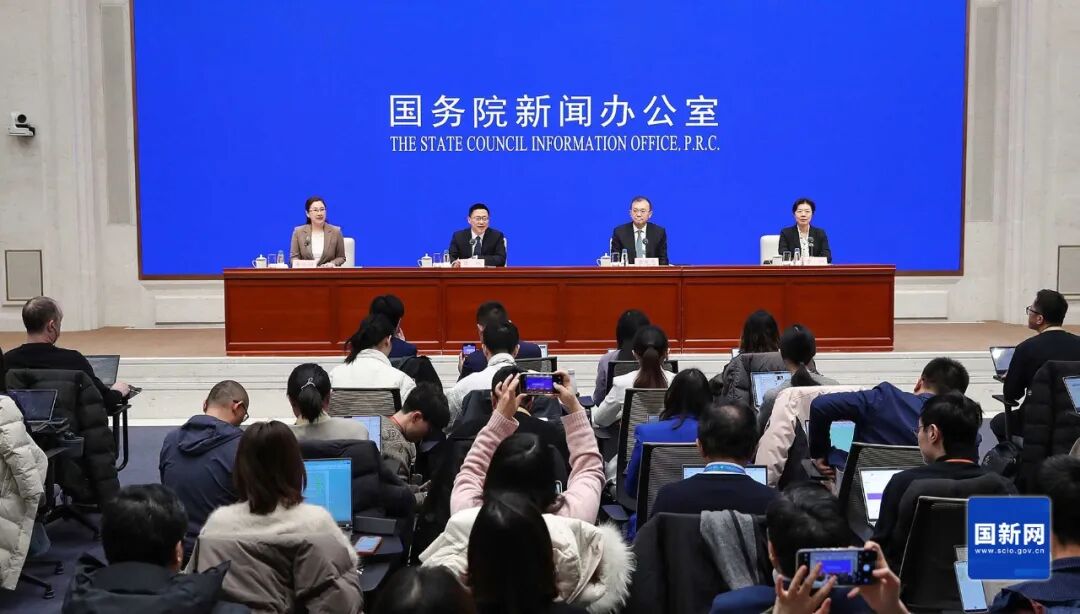
从国新办发布会上获悉,2026年我国宏观政策发力点将围绕进一步做强国内大循环、全方位扩大国内需 求,研究制定出台2026—2030年扩大内需战略实施方案,努力实现供需互促、循环升级。 提升消费者收入是提振内需的重要方面,目前有关方面正在研究制定稳岗扩容提质行动和城乡居民增收 计划。今年还将推动实施服务业扩能提质行动,推出一批具有含金量的政策,加力支持服务业优质高效 发展。 国家发展改革委国民经济综合司司长周陈介绍,投资既是当期需求,也是未来供给,其中一部分可直接 转化为劳动者收入。将推动投资于物和投资于人紧密结合,着力提高投资效益,用好各类政府投资资 金,优化政府投资结构,提高民生类项目政府投资比重,促进需求提升。同时,继续发行使用新型政策 性金融工具,带动更多民间投资。 "扩大内需不是权宜之计,而是战略举措,既要政策给力,也要改革发力。"周陈说,国务院近期已部署 实施财政金融协同促进内需一揽子政策,通过贷款贴息、担保补偿形成"1+1>2"的政策效果。下一步, 发展改革部门还将积极运用改革创新办法,着力打通供需良性循环的卡点堵点,包括清理消费领域不合 理限制、推进消费新业态新模式新场景试点等,充分挖掘经济潜能 ...
扩内需战略实施方案将出台,正研究制定居民增收计划
Di Yi Cai Jing· 2026-01-20 13:00
Core Insights - The Chinese government emphasizes "increasing residents' income" and "investing in people" as key strategies to expand domestic demand and stabilize economic growth [1][2][3] Group 1: Policy Initiatives - The National Development and Reform Commission (NDRC) plans to implement a strategic plan for expanding domestic demand from 2026 to 2030, focusing on creating an economy driven by domestic demand and consumption [1][3] - The Ministry of Finance has announced six policies aimed at stimulating private investment and promoting consumer spending, with sufficient budgetary arrangements made for these initiatives in 2026 [1][8] - The "Two New" policy, which promotes equipment upgrades and trade-in programs, is expected to significantly boost consumer spending and investment, with over 3.6 billion people expected to benefit from these initiatives by 2025 [6][10] Group 2: Economic Growth Projections - China's economy is projected to grow by 5% in 2025, with a total economic output surpassing 140 trillion yuan, contributing approximately 30% to global economic growth [3] - The government aims to enhance the effectiveness of investments by focusing on both material and human capital, with a commitment to improving the quality of government investments in public welfare projects [9][10] Group 3: Consumer Confidence and Investment - Increasing residents' income and enhancing consumer confidence are identified as critical factors for boosting consumption [2][3] - The government is working on a plan to increase urban and rural residents' income, which is expected to enhance their consumption capacity and optimize supply [3][9] - The new policies are designed to lower financing costs and reduce barriers for private enterprises, thereby stimulating private investment [8][10]
激发民间投资、促进消费,财政部公布一揽子扩内需政策
Sou Hu Cai Jing· 2026-01-20 12:54
Core Viewpoint - The Ministry of Finance, in collaboration with relevant departments, has launched a comprehensive policy package aimed at expanding domestic demand and stimulating private investment and consumer spending [1][2]. Group 1: Policy Overview - The policy package includes six key initiatives: 1. Loan interest subsidies for small and micro enterprises 2. Special guarantee plan for private investment 3. Risk-sharing mechanism for private enterprise bonds 4. Loan interest subsidies for equipment upgrades 5. Loan interest subsidies for service industry operators 6. Loan interest subsidies for personal consumption [1][2][3][4]. Group 2: Specific Policies - The first initiative provides a 1.5% interest subsidy on loans for small and micro enterprises, with a maximum loan amount of 50 million yuan and a subsidy period of up to 2 years, targeting 14 key industries including new energy vehicles and medical equipment [2][3]. - The second initiative offers a new guarantee plan for small and micro enterprises, allowing for a loan guarantee of up to 20 million yuan for eligible businesses [3]. - The third initiative introduces a risk-sharing mechanism for bonds issued by private enterprises, providing credit enhancement support to lower financing thresholds [3]. - The fourth initiative expands the scope of interest subsidies for equipment upgrades, including fixed asset loans related to equipment updates and technology innovation [4]. - The fifth initiative increases the loan limit for service industry operators from 1 million yuan to 10 million yuan, with a 1% interest subsidy for one year [4]. - The sixth initiative allows personal consumption loans to receive a 1% interest subsidy, including support for credit card installment payments, with over 500 financial institutions participating [4]. Group 3: Implementation and Financial Planning - The financial expenditures required for these policies have been adequately planned in the 2026 budget, encouraging local and financial institutions to actively engage in business [5].
财政新闻发布会快评:五项新政落地,政策协同共促内需
Yin He Zheng Quan· 2026-01-20 12:54
Policy Coordination - Five new fiscal policies were released on January 20, 2026, focusing on consumer loans and private investment, demonstrating effective coordination with the central bank's monetary policies[1] - The policies aim to enhance domestic demand, technological innovation, and support for small and medium-sized enterprises[1] Fiscal Policy Details - A new interest subsidy policy for small and medium enterprises offers a 1.5% annual subsidy with a loan cap of 50 million, targeting 14 key industrial chains[2] - A special guarantee plan for private investment has a total quota of 500 billion, implemented over two years, with a compensation cap raised to 5%[2] - The equipment upgrade loan interest subsidy policy includes a 1.5% annual subsidy for technology innovation loans, with a two-year term[3] Economic Projections - The fiscal policy framework for 2026 indicates an increase in total expenditure, with a projected narrow deficit rate of around 4.0%, corresponding to a deficit scale of approximately 5.9 trillion[6] - The broad budget deficit is expected to be around 12.5 trillion, with a broad deficit rate of about 8.5%[6] Risk Factors - Risks include potential underperformance of domestic economic recovery, inadequate policy implementation, and significant weakness in the real estate market[9]
一个目标、两个重点、三个原则、六项政策 一揽子政策激发民间投资促进居民消费
Yang Shi Wang· 2026-01-20 12:26
Group 1 - The core objective of the new policies is to "expand domestic demand" [3] - The two main focuses are to "stimulate private investment" and to "promote consumer spending" [3] - The three principles guiding the execution of these policies are "simplicity and efficiency," "precision and effectiveness," and "standardization and improvement" [3] Group 2 - Four policies supporting private investment include: interest subsidies for loans to small and micro enterprises, a special guarantee plan for private investment, a risk-sharing mechanism for bonds issued by private enterprises, and financial interest subsidies for updating equipment [6] - Two policies aimed at promoting consumption involve optimizing interest subsidies for loans to service industry operators and personal consumption loans [6] - Personal consumption loans used for consumption will receive a 1% interest subsidy, and credit card installment payments are also included in the subsidy support [9]
2026年财政总体支出“只增不减”重点保障“只强不弱”
Bei Jing Shang Bao· 2026-01-20 12:25
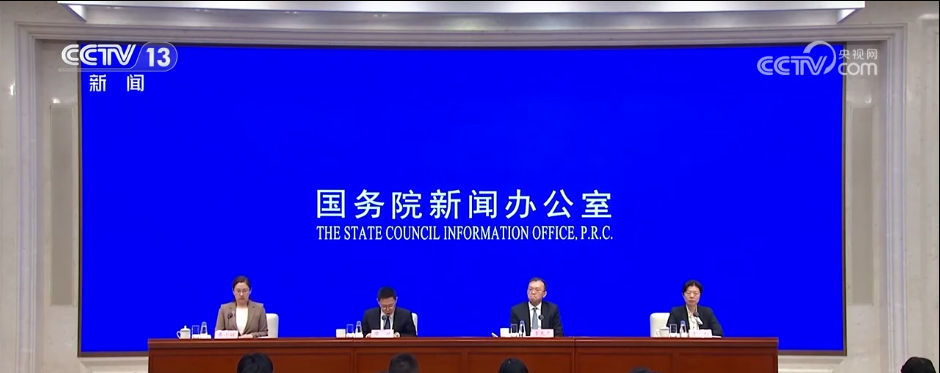
1月20日,财政部副部长廖岷在新闻发布会上表示,2026年,财政部门将继续实施更加积极的财政政策,概括起来就是"总量增加、结构更优、效益更好、动 能更强"。其中,包括确保总体支出力度"只增不减"、重点领域保障"只强不弱";把更多的财政资金用在提振消费、"投资于人"、民生保障等方面,多渠道 增加居民收入;加强财政金融协同,探索创新政策工具,放大公共资金的带动作用和公开政策的外溢效应;进一步增强地方财政发展动能、助力全国统一大 市场建设。2026年,财政部门将"硬核"支持稳就业、稳企业、稳市场、稳预期,确保"十五五"实现良好开局。 更大力度激发民间投资、促进居民消费 1月9日,国务院常务会议研究推出财政金融促内需一揽子政策。1月20日,财政部官网连发五项通知,涉及系列贴息政策、民间投资专项担保计划。 在廖岷看来,一揽子政策可以概括为"一个目标""两个重点""三个原则"和"六项政策"。具体来看,"一个目标"指"扩大内需";"两个重点"主要是以更大力度 来"激发民间投资",以更大力度来"促进居民消费";"三个原则"分别是坚持"便捷高效"、坚持"精准有效"和坚持"规范提效";"六项政策"中的四项是支持民 间投资的政策, ...

宏观纵览 | 财政部答一财:以更大力度激发民间投资
Sou Hu Cai Jing· 2026-01-20 11:44
Core Viewpoint - The State Council has initiated a comprehensive policy package aimed at promoting domestic demand through fiscal and financial collaboration, focusing on stimulating private investment and enhancing consumer spending [2][3]. Group 1: Policy Overview - The policy package includes six key measures: optimization of personal consumption loan interest subsidies, implementation of a special guarantee plan for private investment, and interest subsidies for loans to small and micro enterprises [2][3]. - The fiscal expenditures required for these policies have been adequately planned in the 2026 budget, allowing local and managing institutions to actively engage in business [2][3]. Group 2: Key Objectives and Principles - The primary goal is to "expand domestic demand," aligning with the central economic work conference's directives [3]. - The two main focuses are to "stimulate private investment" and "promote consumer spending," both critical components of domestic demand [3]. - The three guiding principles for execution are: 1. "Convenient and efficient" processes to simplify procedures and ensure direct benefits [3]. 2. "Precise and effective" targeting of key sectors and groups to lower financing costs and enhance consumer capacity [3]. 3. "Standardized and efficient" management to balance efficiency with regulatory compliance [3]. Group 3: Specific Policies - The six policies include four supporting private investment and two aimed at boosting consumption [3]. - The interest subsidy for loans to small and micro enterprises is set at 1.5% of the total loan amount, with a maximum loan limit of 50 million yuan and a subsidy period of up to two years [3][4]. - The special guarantee plan for private enterprises allows eligible small and micro enterprises to access loans up to 20 million yuan for various operational needs [4]. - The updated equipment loan interest subsidy policy expands the scope to include fixed asset loans related to equipment updates and technology innovation, with similar subsidy terms [4]. - The service industry loan interest subsidy policy increases the single loan limit from 1 million yuan to 10 million yuan, with a 1% subsidy for one year [5]. - The personal consumption loan interest subsidy policy now includes credit card installment payments, with a 1% subsidy for loans used for consumption [5].
龙虎榜变斩杀榜!
Datayes· 2026-01-20 11:42
Core Viewpoint - The article discusses the ongoing regulatory tightening in the financial markets, highlighting the recent actions taken by platforms like Xueqiu to curb excessive speculation and promote responsible trading practices [1][18]. Group 1: Regulatory Environment - Xueqiu has issued multiple notices, resulting in the suspension of 22 accounts, as part of its efforts to combat excessive speculation and practices such as "retail investor strategies" and "team trading" [1]. - The article suggests a shift in market sentiment towards a more performance-driven approach, especially as companies prepare for annual report forecasts [18]. Group 2: Market Trends - The article notes a significant shift in capital flow towards cyclical sectors such as real estate, building materials, consumer goods, and chemicals, indicating a potential recovery in these areas [18]. - The fiscal policy for 2026 is expected to maintain necessary levels of deficit and debt, ensuring that overall spending increases, particularly in key sectors [19][20]. Group 3: Economic Outlook - The economic recovery is projected to continue into 2026, with consumption being the primary driver of growth, supported by potential monetary policy easing [8]. - Financial assets are anticipated to surpass residential assets by 2026, driven by increases in deposits, non-deposit financial investments, and stock market valuations [24][27]. Group 4: Sector Performance - The chemical industry is expected to see a reversal in supply-demand dynamics by 2026, with recent price increases in key chemicals indicating a potential recovery [30]. - The building materials sector is currently viewed as a critical area for investment, with expectations of growth driven by macroeconomic improvements and increased demand [31]. Group 5: Investment Opportunities - The article highlights specific sectors and companies that are likely to benefit from the current market conditions, including consumer goods and chemicals, which are showing signs of resilience and growth potential [30][31]. - The performance of stocks in the AI and semiconductor sectors is also noted, with companies like MiniMax and others in the semiconductor space gaining attention due to their innovative products and market positioning [10][37].