
绿色低碳发展

Search documents
山西生态环境实现量质齐升 美丽山西建设迈出坚实步伐
Zhong Guo Fa Zhan Wang· 2025-11-28 03:28
Core Viewpoint - The news highlights the significant achievements in ecological and environmental protection in Shanxi Province since the implementation of the "14th Five-Year Plan," emphasizing improvements in air and water quality, green low-carbon development, ecological protection, and governance systems [3][4]. Group 1: Ecological Environment Quality Improvement - The overall environmental air quality index is projected to decrease to 4.30 by 2024, a 17.0% reduction from 2020 levels [3] - PM2.5 concentration is expected to drop to 36 micrograms per cubic meter, a 21.7% decrease [3] - The proportion of days with good air quality is anticipated to reach 74.2%, an increase of 3.2 percentage points [3] - The proportion of excellent surface water quality in national monitoring sections has risen to 94.7%, exceeding the national average for two consecutive years [3] Group 2: Green Low-Carbon Development Enhancement - A total of 332.1 million kilowatts of outdated coal power capacity has been eliminated, and crude steel production capacity has been reduced by 3.06 million tons [4] - The number of new energy heavy-duty trucks has reached over 23,000, placing Shanxi among the national leaders [4] - The province has completed clean heating transformations for 7.253 million households [4] - All 105 key emission units in the province have achieved a compliance rate of 100% in the national carbon market [4] Group 3: Strengthening Ecological Protection and Restoration - Enhanced supervision of important ecological spaces has led to a reduction in both the number and area of human disturbances [4] - The population of key species such as the North China leopard and the brown-eared pheasant remains the highest in the country [4] - A total of 15 counties have been designated as national ecological civilization demonstration zones [4] Group 4: Improvement of Ecological Governance System - A comprehensive legal framework has been established, including the implementation of 37 local standards [4] - The province has developed nearly 1,600 specific control units and over 12,000 access lists for ecological environment management [4] - The reform of environmental impact assessment reports has been fully implemented in key industries to enhance approval efficiency [4]


生态环境部禁用两类ODS化学品
Zhong Guo Hua Gong Bao· 2025-11-28 03:26
Core Points - The Ministry of Ecology and Environment has announced a ban on the production of two categories of ozone-depleting substances (ODS) starting from January 1, 2026, specifically targeting household refrigerators and freezers using hydrofluorocarbons (HFCs) as refrigerants and polyurethane products using HCFC-141b as a foaming agent [1][2] - The ban is part of China's commitment to the Montreal Protocol and the Kigali Amendment, aiming to phase out HFCs and protect the ozone layer [1][2] Industry Impact - The polyurethane foam industry is a major consumer of HCFCs, with most sub-sectors having adopted alternative technologies, although some sectors like board and spraying still use HCFC-141b [1] - The household appliance industry, particularly in refrigerators and freezers, predominantly uses low-carbon and environmentally friendly isobutane as a refrigerant, with a penetration rate exceeding 90%, while only a small portion of export products still utilize HFCs [1][2] Technological and Economic Aspects - Isobutane has been successfully applied as a refrigerant for many years, with mature technology and a well-established industrial chain, and it is more cost-effective than HFCs, providing significant overall benefits [2] - All sub-sectors of the polyurethane industry have developed mature alternative technologies, allowing companies to choose substitutes based on product requirements [2] Regulatory Measures - The Ministry of Ecology and Environment will enhance supervision and inspection, imposing penalties on companies that violate the regulations [2] - The ministry plans to promote the implementation of the ban through public awareness, training, and guidance to ensure industries meet the phasing-out deadlines [2]
源头减量,标杆引领,聊城不断提升工业固废“变废为宝”能力
Qi Lu Wan Bao· 2025-11-27 07:35
Core Viewpoint - The construction of "waste-free cities" is crucial for promoting green and low-carbon development, enhancing urban governance, and achieving sustainable economic and social development during the 14th Five-Year Plan period [1] Group 1: Industrial Solid Waste Management - The city of Liaocheng has been improving its solid waste management system, focusing on industrial solid waste as a key task in building a "waste-free city" [1] - The Industrial and Information Technology Bureau has been promoting the comprehensive utilization of industrial solid waste resources through source reduction and comprehensive utilization [1] Group 2: Source Reduction and Equipment Upgrades - Emphasis on reducing industrial solid waste at the source by phasing out outdated equipment that generates significant waste and promoting technological upgrades in traditional industries [2] - Over 200 enterprises have participated in energy and green diagnostics to enhance resource utilization efficiency [2] - More than 1,000 energy-saving, water-saving, and environmentally friendly technologies and equipment have been promoted since the beginning of the 14th Five-Year Plan [2] Group 3: Demonstration and Policy Support - Creation of resource comprehensive utilization pilot bases, with Chaping District selected as a pilot base for industrial resource utilization in Shandong Province [3] - Support for the establishment of 32 national-level and 73 provincial-level green manufacturing units, along with 153 city-level green manufacturing units [3] - Policies have been introduced to encourage enterprises to engage in industrial solid waste resource utilization, including financial incentives for compliance and performance [3] Group 4: Future Directions - The Industrial and Information Technology Bureau plans to deepen the construction of the green manufacturing system and improve the industrial chain for solid waste resource utilization [4] - There is a focus on exploring standardized and large-scale comprehensive utilization of red mud to enhance the quality and efficiency of industrial solid waste utilization [4]
工业硅:偏强震荡为主,多晶硅:关注月间价差变动
Guo Tai Jun An Qi Huo· 2025-11-27 01:55
Report Summary 1. Industry Investment Rating - The report does not provide an industry investment rating. 2. Core Viewpoints - Industrial silicon is expected to mainly experience a moderately strong and volatile trend [1]. - For polysilicon, attention should be paid to the changes in the monthly spread [2]. 3. Summary by Directory 3.1 Fundamental Tracking - **Futures Market**: For industrial silicon, the Si2601 closing price was 9,020 yuan/ton, with a change of 60 yuan compared to T - 1, -370 yuan compared to T - 5, and 55 yuan compared to T - 22. The Si2601 trading volume was 369,225 lots, and the open interest was 260,529 lots. For polysilicon, the PS2601 closing price was 55,895 yuan/ton, with a change of 1,165 yuan compared to T - 1 and 1,270 yuan compared to T - 5 [2]. - **Basis**: The industrial silicon spot premium (against East China Si5530) was +480 yuan/ton, and the polysilicon spot premium (against N - type re - investment) was -3,895 yuan/ton [2]. - **Price**: The price of Xinjiang 99 - silicon was 8,900 yuan/ton, and the price of polysilicon - N - type re - investment material was 52,250 yuan/ton [2]. - **Profit**: The profit of silicon plants (Xinjiang new standard 553) was -2,249.5 yuan/ton, and the profit of polysilicon enterprises was 7.7 yuan/kg [2]. - **Inventory**: The industrial silicon social inventory (including warehouse receipt inventory) was 548,000 tons, and the polysilicon manufacturer inventory was 271,000 tons [2]. - **Raw Material Cost**: The price of Xinjiang silicon ore was 320 yuan/ton, and the price of Xinjiang washed coking coal was 1,475 yuan/ton [2]. 3.2 Macro and Industry News - On November 22, the main structure of the first - phase waste heat power generation project of the Inner Mongolia Xingfa industrial silicon project, undertaken by the Fourth Branch, was successfully capped. This project adheres to the concept of "environmental protection first, energy - saving and high - efficiency" and uses innovative technologies to recycle high - temperature flue gas in the industrial silicon smelting process, realizing pollution control and improving energy utilization efficiency [3][4]. 3.3 Trend Intensity - The trend intensity of industrial silicon is 0, and the trend intensity of polysilicon is 0. The trend intensity ranges from -2 to 2, with -2 being the most bearish and 2 being the most bullish [4].
韩晶:统筹生产生活向绿而行
Jing Ji Ri Bao· 2025-11-27 00:01
Core Viewpoint - The article emphasizes the dual approach of leveraging both "effective markets" and "proactive government" to support green low-carbon development, highlighting the importance of a collaborative effort in achieving sustainable growth [1][4]. Group 1: Green Production and Technology - Green production relies on technological innovation to replace high-carbon technologies with low-carbon or zero-carbon alternatives, which is essential for enhancing green supply [3]. - Countries are focusing on key emerging technologies related to renewable energy and low-carbon solutions, as seen in initiatives like the U.S. "Key and Emerging Technologies List 2024" and the EU's "Horizon Europe Strategic Plan 2025-2027" [3]. - There is a need to promote low-carbon technology applications and explore new energy storage solutions, such as virtual power plants, to advance clean production and circular economy practices [3]. Group 2: Green Consumption - The transition to low-carbon consumption depends on both green technologies that reduce energy consumption and the preservation of traditional green lifestyles [3]. - It is crucial to stimulate green consumption awareness and behaviors to enhance the scale and structure of green consumption [3]. - Initiatives promoting resource conservation and waste classification are essential for fostering a green lifestyle and building a beautiful China [3]. Group 3: Policy and Institutional Support - A robust institutional framework is necessary to support green low-carbon development, which includes effective market mechanisms and proactive government policies [4]. - Policies related to taxation, pricing, finance, land use, and government procurement should be aligned to facilitate green development [4]. - Establishing standards for green product design, procurement, and manufacturing, along with a certification system, is vital to eliminate misleading green claims [4].
统筹生产生活向绿而行
Jing Ji Ri Bao· 2025-11-26 22:39
绿色低碳发展既要充分发挥"有效市场"在资源配置中的决定性作用,也要更好发挥"有为政府"在宏观经 济治理中的管理和服务作用,"两手发力"为绿色发展提供坚实支撑。 河北保定推进"公园+"模式,让市民共享绿色生活;青岛高新区鼓励引导企业进行绿色化改造,打造绿 色工厂、绿色供应链……一段时间以来,不少地区采取积极举措,发力绿色产业,创新绿色科技,主动 推行绿色生产生活方式。加快形成绿色生产生活方式,与我们每个人息息相关,是全面绿色转型的根本 所在,也是实现高质量发展、构建人与自然和谐共生的现代化的重要支撑。 我国坚持绿水青山就是金山银山的理念,坚持走绿色低碳循环发展之路,生产生活绿色低碳转型成效显 著。当前,我国已建成全球最大、最完整的新能源产业链,为全球提供了70%的光伏组件和60%的风电 装备,电动汽车、锂电池、光伏产品等优质产能,为世界绿色发展提供了重要助力。随着我国居民消费 从主要解决"有没有"向实现"好不好"转变,消费多元化、品质化、个性化特征日益凸显,共享出行、可 回收的网购包装、光盘打卡等低碳生活逐步成为社会新风尚。 应该看到,我国当前生产生活方式绿色低碳发展仍有很长的路要走。从供给侧来看,受制于不够成 ...
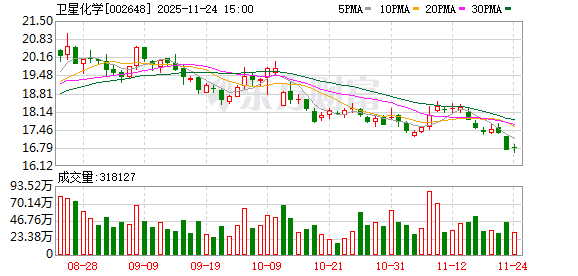
卫星化学:股价的波动受多种因素影响
Zheng Quan Ri Bao· 2025-11-24 08:10
Core Viewpoint - Satellite Chemical emphasizes that stock price fluctuations are influenced by various factors and reaffirms its commitment to green and low-carbon development while focusing on creating a competitive chemical new materials industry chain [2] Group 1 - The company is dedicated to using light hydrocarbons as raw materials to build a competitive chemical new materials industry chain [2] - Continuous efforts are made to enhance the supply chain by supplementing, extending, and strengthening it [2] - Increased investment in research and development is aimed at improving core competitiveness and generating good returns for investors [2]

“川电入苏”特高压输电工程输送清洁水电超5000亿千瓦时
Xin Hua She· 2025-11-24 03:46
Core Insights - The "Chuan Dian Ru Su" ultra-high voltage transmission projects have delivered over 505 billion kilowatt-hours of clean hydropower to Jiangsu, significantly contributing to energy structure optimization and green low-carbon development [1][2] Group 1: Project Impact - The two ultra-high voltage direct current transmission projects, ±800 kV Jinping-Su Nan and ±800 kV Baihe-Tan-Jiangsu, have collectively saved over 150 million tons of standard coal and reduced carbon dioxide emissions by more than 475 million tons [1] - These projects effectively address the structural contradiction between energy-rich regions and energy-demanding areas, optimizing the allocation of green electricity resources across regions [1] Group 2: Energy Demand and Supply - Jiangsu, as a major economic and energy-consuming province, has a strong energy demand, while Sichuan possesses abundant hydropower resources, making the projects crucial for energy supply [1] - The Jinping and Baihe-Tan hydropower bases supply approximately 55 billion kilowatt-hours of electricity to Jiangsu annually, accounting for about 30% of Jiangsu's total electricity consumption from outside the province [1] Group 3: Technological Advancements - The Jinping-Su Nan project, operational since 2012, was a technological milestone with a direct current transmission capacity of 7.2 million kilowatts, representing the highest level of ultra-high voltage direct current technology at that time [1] - The Baihe-Tan-Jiangsu project, completed in 2022, has a maximum transmission capacity of 8 million kilowatts, further enhancing the clean energy absorption capacity and operational resilience of the East China power grid [1] Group 4: Environmental and Economic Benefits - Over the past decade, Jiangsu has achieved an average energy consumption growth rate of 3% and a carbon emission growth rate of 1.5%, supporting an average GDP growth rate of 6.5%, indicating a significant increase in the region's "green" development [2]
工业尾气变成干净原料 我国首个焦炉煤气100%转化项目落地
Yang Shi Xin Wen· 2025-11-24 00:30
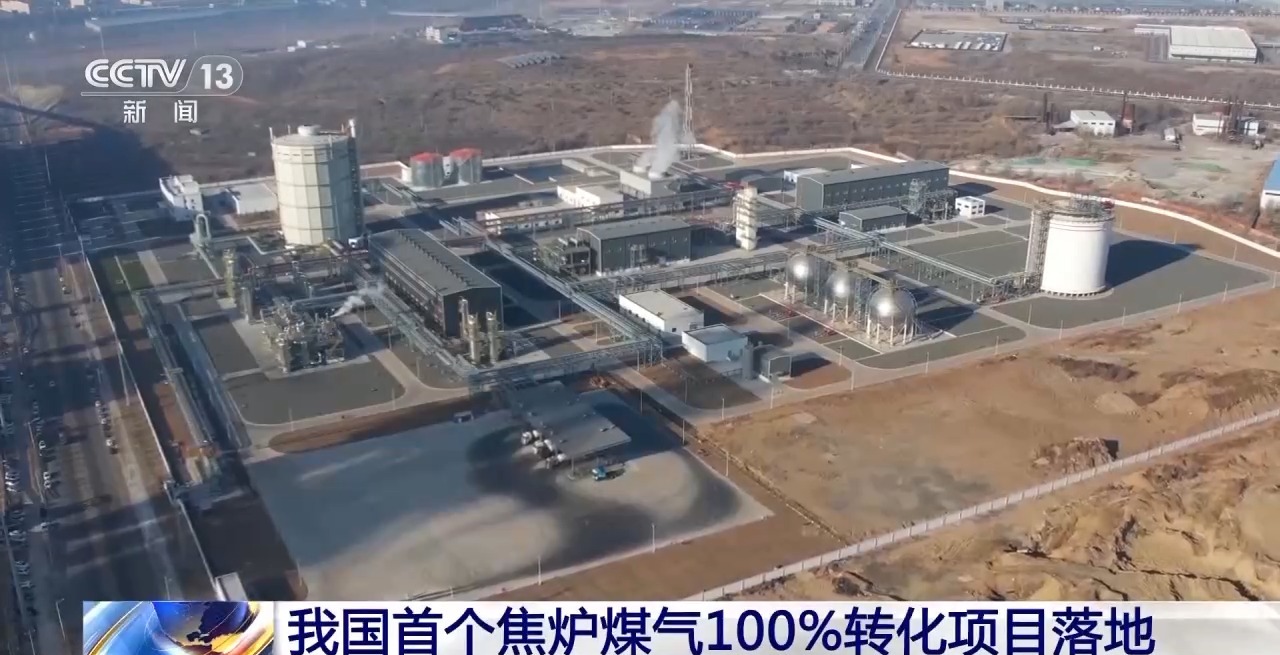
Core Insights - The first 100% conversion project of coke oven gas in China has been established in Lingyuan, Liaoning, marking a significant step towards green and low-carbon development in the steel industry [1][7]. Group 1: Project Overview - The project utilizes advanced separation and synthesis technology to convert coke oven gas into LNG (liquefied natural gas), liquid ammonia, and hydrogen, achieving a complete conversion of waste gas into valuable resources [1][3]. - The annual production of coke oven gas in China is approximately 210 billion cubic meters, and utilizing 30% of this could reduce carbon dioxide emissions by about 45 million tons annually while generating over 100 billion yuan in industrial output [7]. Group 2: Economic and Environmental Impact - The conversion of coke oven gas into hydrogen has a cost advantage, being 30% to 50% cheaper than traditional coal or natural gas hydrogen production methods, which is driving rapid market growth [8]. - The produced LNG can provide heating for around 200,000 households for a month, while liquid ammonia can be further processed into fertilizers, refrigerants, and even rocket propellants [9]. Group 3: Technological Advancements - The purity of hydrogen produced from coke oven gas has improved from 99.999% to 99.9999%, which is crucial for applications in high-end manufacturing sectors such as electronics, aerospace, and advanced chemicals [12][14]. - The core technology relies on a new type of molecular sieve that selectively allows hydrogen to pass through while trapping impurities, enhancing the quality of the hydrogen produced [14].
工业尾气=3种原料 我国首个焦炉煤气100%转化项目落地
Xin Lang Cai Jing· 2025-11-24 00:05
记者今天从中集集团(24日)了解到,我国首个焦炉煤气100%转化项目在辽宁凌源落地。钢铁厂直接 出产清洁能源,为钢铁行业绿色低碳发展开辟新的路径。 ...