自动驾驶

Search documents
近50家芯片大厂最新业绩:谁在赚钱,谁还在复苏?
芯世相· 2026-02-14 04:07
Core Viewpoint - The semiconductor industry is expected to recover in 2025, with significant revenue growth driven by rising storage prices and increasing demand from data centers, leading to improved performance for major chip manufacturers [3][4]. Group 1: Semiconductor Sales and Growth - Global semiconductor sales are projected to reach $791.7 billion in 2025, a 25.6% increase from $630.5 billion in 2024, with further growth expected towards $1 trillion in 2026 [3]. - The recovery is attributed to strong demand from emerging technologies such as AI, IoT, 6G, and autonomous driving [3]. Group 2: Chip Design and IDM - Texas Instruments (TI) is expected to achieve approximately $17.68 billion in revenue for 2025, reflecting a 13% year-over-year growth, with significant contributions from industrial and automotive sectors [6]. - STMicroelectronics (ST) anticipates a revenue decline of 11% to around $11.8 billion, with Q4 showing slight improvement driven by personal electronics [8]. - NXP's revenue is projected at $12.27 billion, down 3%, with automotive and industrial sectors remaining stable [10]. - Renesas reported a revenue drop of 2% to 1.3212 trillion yen, marking its first loss in six years due to significant impairment losses [12]. - Microchip Technology expects growth in both year-over-year and quarter-over-quarter sales, with a projected revenue of $1.186 billion for Q3 2026 [12]. - Qorvo's revenue exceeded expectations at $993 million, with an 8.4% year-over-year increase [12]. - Infineon's revenue is projected at €14.662 billion, down 2%, but with strong demand in AI driving growth [14]. Group 3: Memory Chips - Samsung's revenue is expected to reach 333.6059 trillion won (approximately $233.8 billion), a 10.9% increase, with the semiconductor division achieving 130.1 trillion won in revenue [29]. - SK Hynix anticipates a record revenue of 97.15 trillion won (approximately $681.6 billion), a 47% increase year-over-year [31]. - Micron's revenue is projected to rise from $25.11 billion to $37.38 billion, with HBM chip capacity sold out for 2026 [33]. - GigaDevice expects a revenue increase of approximately 25% to 9.203 billion yuan [35]. Group 4: Wafer Foundry - TSMC's revenue is projected to reach approximately 3.8 trillion new Taiwan dollars (around $122.42 billion), a 31.6% increase, with advanced processes contributing significantly [47]. - UMC expects a slight revenue increase of 2.3% to 237.55 billion new Taiwan dollars, with a focus on mature process technologies [49]. - SMIC anticipates a record revenue of $9.3268 billion, a 16.2% increase, with improved profitability driven by increased wafer sales [51]. Group 5: Testing and Packaging - ASE Group's revenue is expected to reach 645.388 billion new Taiwan dollars, an 8.4% increase, with advanced packaging services contributing significantly [57]. - Amkor's revenue is projected at $6.71 billion, a 6% increase, with strong performance in advanced packaging and computing business [59]. Group 6: Equipment - ASML's total net sales are expected to reach €32.667 billion, a 15.6% increase, with a record order backlog reflecting strong demand for AI-related technologies [61]. - Lam Research anticipates a record year with significant growth driven by advanced process technologies [63]. Group 7: Distribution - WPG Holdings expects a revenue of 999.12 billion new Taiwan dollars, a 13.4% increase, driven by AI and high-performance computing demand [66]. - WPG's revenue is projected to exceed 1 trillion new Taiwan dollars, marking a significant milestone [68].



特斯拉2026战略会纪要 储能总体毛利率20.1%
鑫椤储能· 2026-02-14 00:36
Core Viewpoint - Tesla is focusing on enhancing its autonomous driving capabilities and expanding its Robotaxi services, with significant capital investments planned for future growth and technological advancements [1][5][17]. Group 1: Autonomous Driving and Robotaxi - Tesla has initiated paid Robotaxi services in Austin without safety drivers or follow cars, with over 500 vehicles in operation and expected exponential growth [1][9]. - The company aims to expand its Full Self-Driving (FSD) capabilities, with a target of covering 25-50% of the U.S. by year-end, pending regulatory approval [1]. - FSD paid users have reached nearly 1.1 million, with 70% opting for a one-time purchase; the transition to a subscription model is expected to impact automotive gross margins in the short term [1][10]. Group 2: Capital Investment and Financial Outlook - Tesla plans to invest over $20 billion this year across six major factories and AI capabilities, with cash and investments exceeding $44 billion available for use [2][18]. - The company anticipates record revenue from its energy business, projecting $12.8 billion in annual income by 2025, a 26.6% year-over-year increase [10][11]. - Overall gross margin is reported at 20.1%, the highest in two years, despite challenges from tariffs and fixed cost absorption [13]. Group 3: Product Development and Future Plans - The upcoming Optimus 3 robot is expected to demonstrate advanced capabilities, including learning through observation and voice, with mass production starting later this year [1][16]. - Tesla is transitioning its Fremont factory's Model S/X production line to focus on manufacturing 1 million Optimus robots annually [8]. - The company is committed to a vision of "Amazing Abundance," emphasizing the potential of AI and robotics to create a future of universal high income [4]. Group 4: Competitive Landscape - China is identified as a strong competitor in manufacturing and AI, with its capabilities being underestimated by external observers [3].

早到2分钟算违约!中国自动驾驶攻入“最难搞”的新加坡,凭什么?
Feng Huang Wang Cai Jing· 2026-02-13 23:27
Core Insights - The article discusses the challenges and opportunities for Chinese autonomous driving companies, particularly focusing on the experiences of Mushroom Car Union in Singapore and the competitive landscape in the autonomous driving sector [1][2]. Group 1: Market Opportunities - Singapore is viewed as a high-standard market for autonomous driving, with strict punctuality requirements for public transport, such as a maximum of 2 minutes early and 5 minutes late [5][6]. - Mushroom Car Union has secured a project for L4 level autonomous buses in Singapore, indicating a significant step in its international expansion and collaboration with global leaders like LG Electronics [2][3]. - The company aims to integrate its autonomous buses into Singapore's public transport network, which is seen as a critical move to demonstrate its technology's viability [5][6]. Group 2: Employment and Social Impact - The introduction of autonomous buses is not perceived as a threat to human drivers but rather as a solution to the shortage of bus drivers, particularly in regions like Singapore where there is a significant gap in driver availability [10][11]. - The company emphasizes that its autonomous buses will enhance public transport by providing better punctuality and reducing operational costs, ultimately benefiting users [9][10]. - There is a focus on human-centered design in the development of autonomous buses, with features aimed at improving accessibility for elderly and disabled passengers [12]. Group 3: Technological Development - Mushroom Car Union has developed a technology that combines visual and solid-state LiDAR systems, achieving over 50% improvement in perception distance and a 70% reduction in false detection rates [6][7]. - The company has accumulated over 5 million kilometers of operational data, which supports its technological advancements and operational capabilities [6]. - The transition to fully autonomous driving is seen as a long-term goal, with current operations involving remote safety operators who intervene only in extreme situations [14][15]. Group 4: Industry Trends - The autonomous driving industry is experiencing a shift from purely technology-driven narratives to a focus on practical implementation and profitability [2]. - The article highlights the need for companies to navigate the challenges of regulatory environments and public acceptance as they expand internationally [8][9]. - The industry is undergoing a "de-bubbling" phase, where companies must refine their focus and address key issues such as efficiency and safety [14].
最高法首次明确辅助驾驶非驾驶主体;雷军称SU7备件保障超10年丨汽车早参
Mei Ri Jing Ji Xin Wen· 2026-02-13 23:05
Group 1: Legal and Regulatory Developments - The Supreme People's Court of China has clarified that drivers remain responsible for safety even when using advanced driver-assistance systems, marking a significant legal precedent in traffic safety cases [1] - This ruling is expected to enhance awareness of driver responsibility and may accelerate industry consolidation, benefiting companies with strong compliance and safety standards [1] Group 2: Technological Advancements in Autonomous Driving - Waymo has begun deploying its sixth-generation autonomous driving system on the Ojai model, which is based on a platform from Chinese manufacturer Geely, potentially strengthening its competitive edge in the autonomous driving sector [2] - The collaboration with Geely may open up new opportunities for supply chain synergy in China, while the technology upgrade is anticipated to enhance reliability and expedite the commercialization of autonomous vehicles [2] Group 3: Trends in the Used Car Market - In January 2026, China's used car market saw a transaction volume of 1.7292 million units, reflecting an 18.33% year-on-year increase, with a total transaction value of 110.612 billion yuan [3] - The growth in the used car market, particularly in MPVs and SUVs, indicates a trend towards consumer upgrading, while the recovery in commercial vehicles suggests an improvement in logistics sector performance [3] Group 4: Automotive Service and Customer Commitment - Xiaomi has announced the discontinuation of its first-generation SU7 model but will provide over ten years of spare parts support, demonstrating a commitment to customer service and brand reputation [4] - This move may shift the industry focus from merely pursuing sales to emphasizing full lifecycle service, enhancing consumer confidence and stability in the automotive sector [4]

小马智行获MSCI纳入指数 与摩尔线程合作推进自动驾驶
Jing Ji Guan Cha Wang· 2026-02-13 22:45
Core Insights - Pony.ai has been included in the MSCI China Index, becoming the first autonomous driving stock in the index, which is expected to attract passive investment and signifies recognition from the international capital market [1] - The company has entered a strategic partnership with domestic GPU firm Moore Threads to enhance L4 autonomous driving world model training using domestic AI computing power [1] - The first mass-produced model of the Robotaxi, the Platinum Smart 4X, has been launched, with plans to deploy a fleet of 1,000 vehicles by 2026 [1] - Pony.ai has also been included in the Hang Seng Composite Index, potentially broadening its investor base [1] Stock Performance - Over the past week (February 6 to 13, 2026), Pony.ai's stock price increased by 10.61%, reaching a high of 119.60 HKD on February 11 and a low of 108.40 HKD on February 9 [2] - The closing price on February 13 was 114.70 HKD, with a single-day decline of 0.35% and a trading volume of approximately 72.68 million HKD [2] - Stock price fluctuations were primarily driven by the MSCI inclusion and partnership announcements, with a notable 5.79% increase following the strategic partnership announcement on February 9 [2] Financial Analysis - Pony.ai's 2025 earnings forecast indicates a reduced annual loss of 69 to 86 million USD, a significant decrease of 68.7% to 74.9% compared to 2024, mainly due to increased investment fair value changes [3] - The gross margin for Q3 2025 is projected to rise to 18.4%, a 2.2 percentage point increase quarter-over-quarter [3] - The Robotaxi fleet is expected to reach 1,159 vehicles by December 31, 2025, with the seventh-generation model achieving positive unit economics in Guangzhou, laying the groundwork for expanding the fleet to 3,000 vehicles in 2026 [3] Institutional Perspectives - According to a report by Zhongyou Securities, Pony.ai is recognized as a leader in intelligent driving, with its Robotaxi commercialization path showing initial validation [4] - The report highlights a light-asset model and cost optimization, such as a 70% reduction in the cost of autonomous driving suite BOM, supporting long-term growth [4] - Revenue projections for 2025 to 2027 are estimated at 81.92 million, 122 million, and 236 million USD, respectively, although net profit is expected to remain negative during this period [4]
特斯拉2026年业务展望:自动驾驶法规突破与人形机器人量产
Jing Ji Guan Cha Wang· 2026-02-13 19:42
Strategic Developments - Tesla is advancing a deep integration plan with xAI and SpaceX, including investment agreements and potential merger discussions, aimed at creating an ecosystem covering space AI, humanoid robots, and autonomous driving. Elon Musk has set a long-term market value target of $100 trillion, although the integration faces regulatory scrutiny and technical challenges [1] Industry Policies and Environment - The U.S. House Committee passed the SELF DRIVE Act on February 10, 2026, paving the way for testing and commercialization of fully autonomous vehicles (such as Tesla's Robotaxi and Cybercab) nationwide, with safety standards expected to be finalized by 2027 [1] Product Development Progress - Tesla plans to release the third-generation Optimus humanoid robot in Q1 2026 and will retrofit its Fremont factory to achieve an annual production capacity of 1 million units. Additionally, the AI computing cluster Cortex2 at the Texas Gigafactory is being expanded to support autonomous driving training [1] Capacity Expansion - Tesla is set to unveil the next-generation Roadster in April 2026 and will commence mass production of the electric truck Semi in the first half of the year. The battery production capacity at the Berlin factory is also expected to increase to 8 GWh per year starting in 2027 [1] Executive Changes - In February 2026, Tesla's North America sales and service head departed, continuing a trend of executive departures since 2025, affecting key areas such as software, batteries, and robotics, which may impact operational stability [2] Performance and Operating Conditions - According to the 2025 financial report, Tesla's global electric vehicle deliveries reached 1.636 million units, with the Asia-Pacific market achieving a record high; the energy storage business saw a 48.7% year-on-year increase in installed capacity, reflecting the resilience of the fundamentals [2] Business and Technology Development - Tesla's self-developed AI5 and AI6 autonomous driving chips have made progress, with plans for mass production in 2027-2028. Additionally, testing of the Robotaxi without a safety driver has commenced in the U.S., with Morgan Stanley predicting that production of the Cybercab model may begin in April 2026 [2]

李想之外具体的人事变动始终都是次要矛盾
理想TOP2· 2026-02-13 16:02
Core Viewpoint - The article discusses the strategic shifts within Li Auto, particularly focusing on the leadership changes and the implications for its autonomous driving and AI initiatives. It emphasizes the importance of Li Xiang's judgment on the AI industry's development and the need for effective organization of talent to achieve the company's vision [1][2][5]. Group 1: Leadership Changes and Organizational Structure - Zhan Yifei will take full responsibility for the research and productization of the robotics business, while Lang Xianpeng will be leaving the company [1]. - The restructuring of Li Auto's autonomous driving departments from 3 to 11 is seen as a secondary issue, with the primary challenge being the alignment of production factors and Li Xiang's vision [2]. - The merger of the autonomous driving and smart cockpit departments reflects a shift in Li Xiang's approach, emphasizing integrated design over traditional software and hardware separation [2][3]. Group 2: Strategic Direction and Market Position - Li Auto's strategy is compared to Tesla's VA (Value Added) approach, suggesting that while both strategies have their merits, the VA route may carry less risk due to Tesla's pioneering efforts [3]. - The article notes that regardless of whether Li Auto adopts a VA or VLA (Value Learning Architecture) approach, both have their rationales, and the company may continue to evolve its viewpoints [3][4]. - The potential for Li Auto's autonomous driving technology to enhance user value is considered highly probable, with a clear direction towards improving data utilization and model performance [3]. Group 3: Talent Management and AI Development - The ability to effectively recruit and organize suitable talent is crucial for Li Auto's success, with over 50% of significant technological breakthroughs expected to come from new graduates [9]. - Li Xiang's learning ability and decision-making quality are highlighted as critical factors in determining the company's future success in the AI sector [5][9]. - The article emphasizes that the departure of older team members is less significant than Li Xiang's capability to harness the intellectual resources of new talent [9].

误差仅容5分钟,这家公司要征服海外自动驾驶高地
Feng Huang Wang· 2026-02-13 15:22
Core Insights - The article discusses the challenges and opportunities for Chinese autonomous driving companies, particularly focusing on the experience of Mushroom Car Union in Singapore and the competitive landscape in the autonomous driving sector [1][2]. Group 1: Market Opportunities - The Middle East is seen as a hot market for autonomous driving, while Singapore presents stringent conditions for operation, such as strict punctuality requirements for buses [1][4]. - Mushroom Car Union has chosen to enter the Singapore market, which is characterized by high standards for public transport and a supportive regulatory environment [4][6]. - The company has secured a project for L4 level autonomous buses in Singapore, indicating a significant step in its international expansion [2][4]. Group 2: Technological Capabilities - Mushroom Car Union has developed a technology that integrates visual and solid-state LiDAR, achieving over 50% improvement in perception distance and a 70% reduction in false detection rates [8][12]. - The company has accumulated over 5 million kilometers of operational data in China, enhancing its technical maturity and product engineering capabilities [8][12]. Group 3: Employment and Social Impact - The introduction of autonomous buses is not seen as a threat to human drivers but rather as a solution to the shortage of bus drivers, particularly in Singapore where there is a significant gap in driver availability [10][14]. - The company aims to enhance the user experience by incorporating features that cater to the elderly and disabled, making autonomous buses more appealing compared to traditional options [15][12]. Group 4: Future Vision - The long-term goal of Mushroom Car Union is to become a leading global provider of autonomous driving solutions, focusing on public transportation and leveraging international partnerships [18]. - The company acknowledges the need for remote safety operators initially, transitioning towards fully autonomous operations as technology advances [17][16].
港股收盘 | 恒指收跌1.72% 有色股全线回落 海致科技首挂大升263.64%
Zhi Tong Cai Jing· 2026-02-13 13:47
Market Overview - The Hong Kong stock market experienced a decline on the last trading day of the Year of the Snake, with the Hang Seng Index falling by 1.72% or 465.42 points, closing at 26,567.12 points, and a total trading volume of 257.58 billion HKD [1] - The decline is attributed to weak fundamentals, concerns over tightening liquidity, and a decrease in the attractiveness of Hong Kong's unique market structure [1] Blue-Chip Performance - Zijin Mining (601899) led the blue-chip decline, dropping 7.64% to 41.58 HKD, contributing a loss of 33.26 points to the Hang Seng Index [2] - Other notable movements included Haidilao (06862) rising 3.13% to 17.15 HKD, and Sinopec (00386) falling 5.12% to 5.37 HKD, contributing a loss of 10.66 points to the index [2] Sector Performance - Large technology stocks continued to decline, with Alibaba-W dropping over 2% and Tencent Holdings nearly 1% [3] - Conversely, domestic large model stocks saw gains, with Zhiyuan (02513) increasing by 20.65% to 485 HKD and MiniMax-WP (00100) rising 15.65% to 680 HKD [3] Commodity Sector - The non-ferrous metals sector saw a significant drop, with China Nonferrous Mining (01258) down 5.27% to 14.91 HKD and Zijin Mining (02899) down 4.98% to 42.78 HKD [5] - The market reacted to unexpectedly strong U.S. employment data, which dampened expectations for an early interest rate cut by the Federal Reserve [5] AI and Technology Developments - The recent release of domestic AI models has led to a surge in related stocks, with significant advancements in AI capabilities being reported [4] - ByteDance's Seedance 2.0 model has gained popularity overseas, expected to lower the barriers for high-quality video content creation [4] Company Highlights - Haizhi Technology (02706) saw a remarkable debut, with shares rising 242.2% to 92.6 HKD, following a successful IPO that was oversubscribed by 5065.06 times [8] - Health Road (02587) reported expected revenue of no less than 1.5 billion RMB for 2025, marking a growth of at least 25% compared to the previous year [9] - MicroPort Robotics-B (02252) reported strong performance with over 200 global commercial orders for its core product, indicating a positive market reception [10]

龙虎榜复盘丨半导体、无人驾驶逆市走强
Xuan Gu Bao· 2026-02-13 12:46
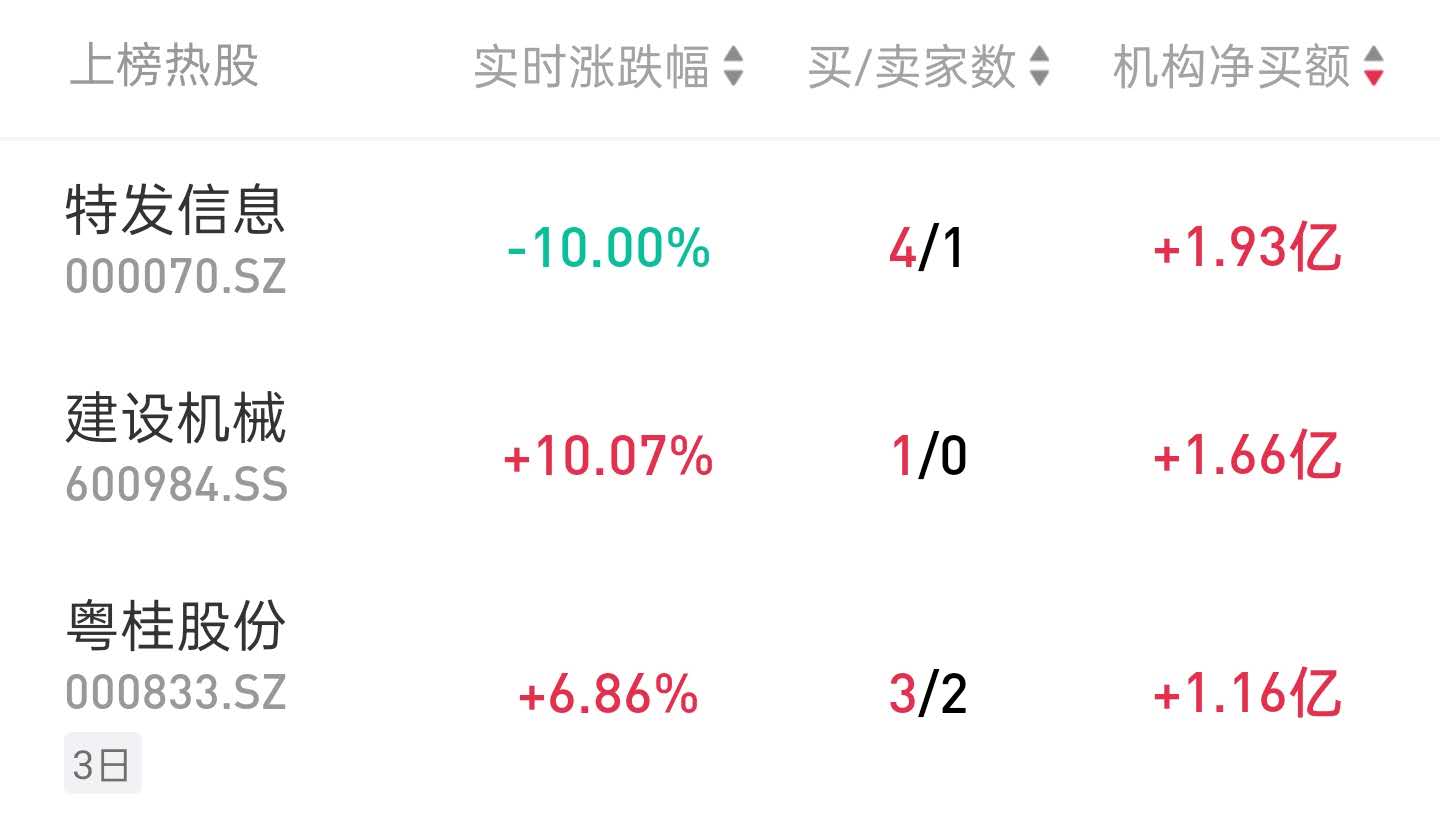
Group 1: Stock Market Activity - On the institutional trading leaderboard, 41 stocks were listed, with 25 experiencing net buying and 16 net selling [1] - The top three stocks with the highest net buying by institutions were: TeFa Information (¥193 million), Construction Machinery (¥166 million), and YueGui Co. (¥116 million) [1] Group 2: Semiconductor Industry - GuoFeng New Materials has achieved progress in the R&D of photo-sensitive polyimide (PSPI) photoresist for semiconductor packaging, currently in the laboratory sample testing phase [2] - Deep Technology is a leading company in the packaging and testing of high-end storage chips (DRAM, NAND Flash), with ChangXin as a major client [2] - The average selling price of ASIC chips from leading design manufacturers (Broadcom, Marvell) is approximately $5,000 to $6,500, which is 50%-60% lower than GPU chips [3] - The AI chip market in China is projected to reach ¥144.7 billion in 2024, with GPU chips accounting for approximately ¥128.8 billion (89%) and ASIC chips about ¥15.3 billion (10.6%) [4] Group 3: Autonomous Driving Industry - QianLi Technology is developing autonomous driving technology and plans to collaborate with Baidu to build a commercial ecosystem for autonomous driving [5] - Zhejiang Shibao has strong technical reserves in steer-by-wire and rear-wheel steering, with mass production projects expected to start in late 2026 and Q4 of this year, respectively [5] - The Ministry of Industry and Information Technology is revising mandatory national standards for intelligent connected vehicles, including safety requirements for autonomous driving systems [5] - By the end of 2025, the first batch of L3 conditional autonomous driving vehicle licenses is expected to be issued, with pilot projects already underway in designated areas [6] - The rollout of L3/L4 vehicles is anticipated to drive demand for high-performance chips, domain controllers, and lidar, with the value of decision-making layers (chips + domain control) expected to account for 25%-30% of the industry chain's profits [6]