
促消费

Search documents
国际大行继续“超配中国”,部分个股一度被外资“买爆”
Di Yi Cai Jing Zi Xun· 2025-10-21 16:01
2025.10.21 本文字数:3357,阅读时长大约6分钟 作者 |第一财经 周楠 A股三大指数21日集体收涨,上证指数再次收复3900点。多家外资近日表态,继续看好中国市场,有国 际大行喊出"超配中国"。 瑞银日前公开表示,在新兴市场中继续给予中国超配评级,理由是,与另一新兴市场印度相比,中国 (企业)营收增长更快,每股收益增长同样较快,"即使忽略中国的AI及互联网股票,MSCI中国指数中 其余股票的资本回报率(ROIC)也在改善"。 瑞银证券中国股票策略分析师孟磊21日对第一财经记者表示,10月以来,A股经历了从"科技成 长"向"价值红利"的风格切换,影响因素包括中美贸易再次出现摩擦、投资者对组合进行再平衡,科技 板块前期涨幅较大、部分投资者获利了结等。但他认为,A股中期表现依然向好,"成长"风格可能跑 赢"价值"风格。 第一财经同时了解到,外资高度关注中国"十五五"规划,特别是"反内卷"、促消费、高质量增长和发展 新质生产力等方面的情况。 第一财经记者梳理上市公司三季报时还发现,部分外资三季度确实在行动,"瞄准"A股龙头股跑步入 场,部分个股的外资持股比例维持较高水平。比如,思源电气(002028.S ...


国际大行继续“超配中国”,A股行业龙头最受青睐
Di Yi Cai Jing· 2025-10-21 13:15
Group 1 - UBS maintains an overweight rating for China in emerging markets, citing faster revenue and earnings growth compared to India, and improving capital return rates in the MSCI China index [1][3] - A-share indices collectively rose, with the Shanghai Composite Index recovering above 3900 points, indicating positive sentiment from foreign investors towards the Chinese market [1][3] - Foreign investors are focusing on China's 14th Five-Year Plan, particularly on themes like "anti-involution," consumption promotion, high-quality growth, and the development of new productivity [1][10] Group 2 - Foreign capital has been actively entering the A-share market, particularly targeting leading stocks, with significant foreign ownership in companies like Siyuan Electric and Huaming Equipment, where foreign holdings exceed 24% [2][6] - The A-share market has shown structural differentiation since October, with foreign investors not overly concerned about the impacts of recent tariff changes, suggesting that A-shares still hold high allocation value [3][4] - UBS and other institutions believe that the current market fluctuations present opportunities for long-term investors, especially in sectors with stable earnings growth [9][10] Group 3 - Leading stocks remain the favorite among foreign investors, with significant foreign institutional holdings in companies like Kweichow Moutai and Ping An Insurance, indicating strong interest in industry leaders [6][7] - As of the end of September, foreign holdings in A-shares exceeded 100 billion yuan for 42 stocks, with CATL leading at 265.66 billion yuan, highlighting the preference for high-value companies [7][8] - The focus on growth stocks is expected to continue, with UBS suggesting that growth styles may outperform value styles in the medium term, providing a favorable risk-return profile for investors [9][10] Group 4 - The upcoming 14th Five-Year Plan is anticipated to emphasize supply-side measures and demand stimulation, with a focus on enhancing consumer income and improving the social security system [11] - The "anti-involution" theme is expected to drive cyclical improvements across various industries, potentially impacting the overall earnings targets for the CSI 300 index by 2025 [10][11]
合百集团:公司产业覆盖零售业及农产品流通两大主业
Zheng Quan Ri Bao Zhi Sheng· 2025-10-21 11:38
Core Viewpoint - Company focuses on enhancing regional consumption vitality and releasing local consumption potential by aligning with national policies to promote consumption and expand domestic demand [1] Group 1: Company Overview - Company is a leading comprehensive commercial circulation enterprise in Anhui Province, covering two main industries: retail and agricultural product circulation [1] - Retail sector includes various sub-sectors such as department stores, home appliances, supermarket chains, e-commerce, and wholesale trade [1] Group 2: Strategic Focus - Company is deepening the layout of first stores and first launches while exploring innovative consumption scenarios based on regional consumption characteristics [1] - The strategy aims to actively contribute to enhancing regional consumption vitality and unlocking local consumption potential [1]

学习时报:努力稳股市让老百姓的消费底气更足
天天基金网· 2025-10-21 05:23
Core Viewpoint - The article emphasizes the importance of stabilizing the stock market to enhance consumer confidence and drive economic growth, highlighting the interconnectedness of stock market performance and consumer spending [3][5][7]. Group 1: Stock Market Performance - As of October 10, the daily trading volume in the Shanghai and Shenzhen markets has repeatedly exceeded 2 trillion yuan, with the Shanghai Composite Index, Shenzhen Component Index, and ChiNext Index rising by 16.27%, 28.24%, and 45.37% respectively this year [3]. - The number of new A-share accounts surpassed 20 million by October 13, marking a year-on-year increase of over 50%, which has positively impacted household financial income [3]. Group 2: Consumer Spending Trends - Despite the stock market's rise, consumer spending growth is lagging behind stock index increases, with per capita consumption expenditure in the first half of the year at 14,309 yuan, reflecting a real growth of 5.3% year-on-year [4]. - The fluctuation in stock values directly affects household wealth and their willingness to spend, creating a psychological barrier to consumption [4]. Group 3: Economic Implications - A stable stock market can inject capital into the real economy and enhance consumer spending through wealth, psychological, and expectation effects, thereby driving economic circulation [5]. - The article suggests that improving institutional frameworks, optimizing market mechanisms, and enhancing investor protection are essential for achieving stock market stability and boosting consumer confidence [5][6]. Group 4: Policy Recommendations - The article advocates for coordinated policy measures, including maintaining adequate liquidity in monetary policy, increasing fiscal support for innovation and livelihoods, and optimizing the business environment through industrial policy [7]. - Such policy coordination is crucial for aligning stock market stability with macroeconomic policies, thereby strengthening public confidence in income and wealth, which can transform consumer willingness into actual spending [7].
学习时报:努力稳股市让老百姓的消费底气更足
财联社· 2025-10-21 02:09
Core Viewpoint - The stock market serves as a barometer for economic development, significantly impacting household wealth and consumer confidence. The Chinese government emphasizes stabilizing the stock market to enhance residents' financial income and consumption capacity [1]. Group 1: Stock Market Performance - As of October 10, the daily trading volume in the Shanghai and Shenzhen markets has repeatedly exceeded 2 trillion yuan, with the Shanghai Composite Index, Shenzhen Component Index, and ChiNext Index rising by 16.27%, 28.24%, and 45.37% respectively this year, indicating a simultaneous increase in volume and price [1]. - By October 13, the number of new A-share accounts surpassed 20 million, a year-on-year increase of over 50%, which has positively influenced the growth of residents' financial income [1]. Group 2: Consumer Spending Trends - Despite the stock market's rise, the growth rate of consumer spending is significantly lower than the increase in stock indices. This discrepancy is attributed to market fluctuations that can undermine consumer confidence [2]. - In the first half of the year, the per capita consumption expenditure of residents nationwide was 14,309 yuan, reflecting a real growth of 5.3% compared to the same period last year [1]. Group 3: Importance of Stock Market Stability - A stable stock market is crucial for injecting capital into the real economy and can enhance consumer spending through wealth, psychological, and expectation effects. Therefore, stabilizing the stock market is key to strengthening consumer confidence [2]. - To achieve stock market stability, it is essential to improve institutional frameworks, optimize market mechanisms, enhance investor protection, and strengthen policy coordination [2]. Group 4: Institutional Improvements - Enhancing institutional frameworks is vital for stabilizing residents' wealth expectations. This includes improving information disclosure, combating financial fraud, and encouraging stable dividend policies among listed companies [3]. - A more transparent and regulated market can boost investor confidence, allowing households to convert paper gains into actual consumption [3]. Group 5: Market Mechanism Optimization - Optimizing market mechanisms can enhance the stock market's role in capital aggregation and job creation. This involves improving connections between different market segments and increasing the supply of quality financial products [3]. - A stable stock market, coupled with good employment conditions and steady income growth, will encourage households to convert wealth into consumption, thereby enhancing overall consumer capacity [3]. Group 6: Investor Protection - Strengthening investor protection is essential to alleviate psychological burdens on consumers. Establishing compensation funds and diverse channels for investor rights protection can help build confidence in the stock market [4]. - Promoting rational and long-term investment strategies can reduce risks associated with speculative behaviors, thereby enhancing the sense of security among investors [4]. Group 7: Policy Coordination - Coordinated policies are crucial for achieving a positive interaction between stock market stability and consumer promotion. Monetary policy should maintain adequate liquidity, while fiscal policy should support innovation and livelihood improvements [4]. - Effective policy coordination can stabilize expectations for future income and wealth, encouraging consumers to transition from willingness to spend to actual spending [4].

学习时报刊文:努力稳股市让老百姓的消费底气更足
Sou Hu Cai Jing· 2025-10-21 01:46
Core Insights - The stock market serves as a barometer for economic development, significantly impacting household wealth and consumer confidence [1] - The Chinese government emphasizes stabilizing the stock market as a key measure to enhance consumer confidence and broaden channels for property income [1][2] - As of October 10, 2025, the Shanghai and Shenzhen stock exchanges have seen significant trading volumes and index increases, indicating a recovery in investor confidence [1] Market Performance - The Shanghai Composite Index, Shenzhen Component Index, and ChiNext Index have increased by 16.27%, 28.24%, and 45.37% respectively in 2025 [1] - Daily trading volumes have repeatedly exceeded 2 trillion yuan, reflecting a robust market environment [1] - New A-share accounts surpassed 20 million by October 13, 2025, marking a year-on-year increase of over 50% [1] Consumer Spending - Despite the stock market's rise, consumer spending growth remains lower than stock index increases, with per capita consumption expenditure rising by 5.3% year-on-year to 14,309 yuan [2] - The fluctuation in stock values directly affects household wealth and consumer willingness to spend, creating a psychological barrier to consumption [2] Stability Measures - To stabilize the stock market, four key areas need to be addressed: improving institutional frameworks, optimizing market mechanisms, enhancing investor protection, and strengthening policy coordination [2][3][4] - Institutional improvements should focus on transparent information disclosure and combating financial misconduct to build investor confidence [3] - Optimizing market mechanisms involves creating a multi-tiered capital market to facilitate financing for small and medium enterprises, thereby enhancing employment and income stability [3] Investor Protection - Strengthening investor protection is crucial to alleviate psychological burdens on consumers, including establishing compensation funds and promoting rational investment practices [4] - Enhanced investor confidence can lead to increased consumption, as individuals feel more secure in their financial investments [4] Policy Coordination - Coordinated monetary and fiscal policies are essential to ensure sufficient liquidity in the capital market and support for innovation and livelihoods [5] - A stable stock market aligned with macroeconomic policies can strengthen consumer confidence, transforming willingness to consume into actual spending [5]

合百集团:聚焦主业响应政策,深化布局探索消费场景创新
Xin Lang Cai Jing· 2025-10-21 01:16
Core Viewpoint - The company is actively aligning its business strategies with national policies aimed at promoting consumption and expanding domestic demand, particularly through innovative consumption scenarios and resource layout for first stores and launches [1] Group 1: Company Overview - The company is a leading comprehensive commercial trading enterprise in Anhui Province, with its business covering retail and agricultural product circulation [1] - The retail segment includes various sub-sectors such as department stores, home appliances, supermarket chains, e-commerce, and wholesale trade [1] Group 2: Strategic Focus - The company is focusing on two main businesses while continuously enhancing its resource layout for first stores and launches [1] - The company aims to explore innovative consumption scenarios that align with regional consumption characteristics to boost local consumer vitality and unleash local consumption potential [1]

核心CPI温和上涨,消费向好积极信号|新京报快评
Xin Jing Bao· 2025-10-20 11:05
Core Insights - The article highlights the effectiveness of proactive fiscal policies in stimulating consumer demand in China, with a focus on the recent economic data released by the National Bureau of Statistics [2][3]. Economic Data Summary - In the first three quarters of this year, China's Consumer Price Index (CPI) slightly decreased by 0.1% year-on-year, while the core CPI, excluding food and energy, increased by 0.6%, with a notable rise of 1.0% in September, marking the first return to a 1% increase in nearly 19 months [2]. - Final consumption expenditure contributed 53.5% to economic growth, an increase of 9.0 percentage points compared to the previous year, reinforcing its role as a key driver of economic growth [2]. Policy Measures - The "Special Action Plan to Boost Consumption" was introduced in March, outlining 30 key tasks across eight areas, including actions to increase residents' income and enhance service consumption [3]. - The government allocated 300 billion yuan in special long-term bonds to support consumption, particularly through trade-in programs, which have led to double-digit growth in retail sales of household appliances and related goods [3]. Retail Performance - Retail sales of household appliances and audio-visual equipment increased by 4.4% year-on-year in the first three quarters, with a significant jump of 20.5% in September, marking a 17.1 percentage point acceleration from August [4]. - The automotive market is also showing signs of recovery, with over 8.3 million trade-in applications for vehicles submitted by September 10, averaging more than 30,000 applications per day [4]. Financial Policies - The central bank has implemented personal consumption loan interest subsidies and support for service industry loans, effectively reducing credit costs for residents and businesses, thereby stimulating consumption potential [4]. - There is a notable shift in consumer spending from goods to services, with service retail sales growing by 5.2% year-on-year in the first three quarters, outpacing goods retail sales [4]. Future Considerations - There is a need to solidify the foundation for consumer recovery, focusing on improving residents' income and optimizing income distribution to enhance consumption levels [5]. - Improving consumer expectations is crucial, as it significantly influences consumption decisions, and a coordinated policy framework is essential for maximizing the effectiveness of measures aimed at expanding domestic demand and promoting consumption [5].
各地聚焦民生领域 启动新一轮消费券发放
Zheng Quan Ri Bao· 2025-10-19 22:58
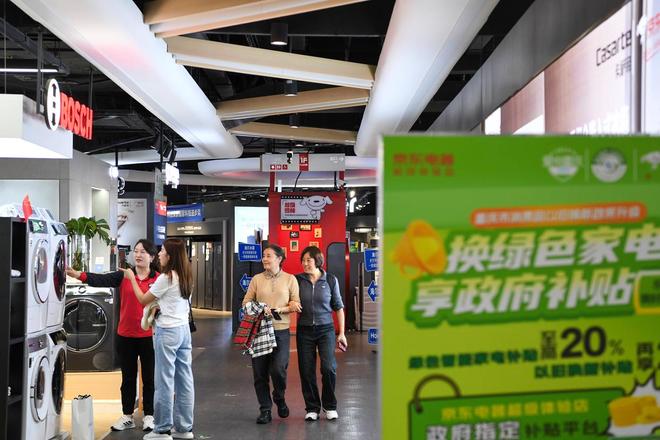
Core Insights - The announcement of a consumption voucher program in Hunan Province aims to stimulate consumer spending, with a total issuance of 100 million yuan focused on essential sectors such as dining, fuel, domestic services, and beauty services [1][2] - This initiative is part of a broader trend across multiple provinces, including Hubei, Yunnan, Guizhou, Zhejiang, and Anhui, to enhance consumer activity ahead of the year-end shopping season [1][2] - Experts highlight that the current consumption voucher policies are more targeted towards daily life needs, optimizing the structure to better align with residents' consumption habits [2] Group 1 - The total amount of consumption vouchers issued in Hunan is 100 million yuan, with a focus on the dining sector, which accounts for 65% of the distribution [1] - Other provinces are also launching similar initiatives to boost consumption, indicating a clear signal from local governments to stabilize growth and promote spending [1][2] - The consumption voucher policies are designed to create a synergistic effect across various high-frequency consumption areas, enhancing the overall impact on consumer behavior [2] Group 2 - There are differences in the issuance cycles, funding scales, and usage rules of consumption vouchers across regions, reflecting variations in economic structure and fiscal capacity [2] - The recent market feedback shows that consumption vouchers have a significant stimulating effect, as evidenced by the "Leisure Shanghai" cultural consumption voucher program, which issued over 296,000 vouchers with a funding leverage ratio of 1:3.25 [2] - Experts believe that while consumption vouchers can temporarily boost spending capacity, they may not fundamentally change residents' income expectations, suggesting a need for long-term mechanisms to improve the consumption environment [2]
各地聚焦民生领域启动新一轮消费券发放
Zheng Quan Ri Bao· 2025-10-19 17:28
Core Insights - The Hunan Provincial Department of Commerce and the Provincial Department of Finance announced a consumption voucher initiative named "Enjoy Hunan · Xiang Dang You Hui," with a total issuance of 1 billion yuan, focusing on four key consumer sectors: dining, fuel, domestic services, and beauty services [1] - This initiative is part of a broader trend, as multiple regions including Hubei, Yunnan, Guizhou, Zhejiang, and Anhui are also launching new rounds of consumption vouchers to stimulate consumer activity ahead of the year-end shopping season [1] - The recent consumption voucher policies are designed to target daily consumer needs more effectively, with a notable shift from previous focuses on large-ticket items like automobiles and home appliances to everyday services [1][2] Group 1 - The total amount of consumption vouchers issued in Hunan is 1 billion yuan, with a focus on sectors that directly impact daily life [1] - The initiative is seen as a clear signal from local governments to stabilize growth and promote consumption [1] - The structure of the consumption vouchers has been optimized, with 65% allocated to dining, reflecting a focus on essential consumer needs [1] Group 2 - Different regions are tailoring their consumption voucher programs based on local economic structures, fiscal capabilities, and consumption patterns, enhancing the effectiveness of the funds [2] - The consumption voucher policies have shown significant stimulating effects, as evidenced by the "Enjoy Shanghai" cultural consumption voucher program, which issued over 296,000 vouchers with a leverage ratio of 1:3.25 [2] - Experts believe there is still potential for further release of consumer willingness, although consumption vouchers may not fundamentally change residents' income expectations [2]