
房地产发展新模式

Search documents
中经评论:促进房地产止跌回稳仍需努力
Jing Ji Ri Bao· 2025-10-22 00:03
Core Viewpoint - The real estate market in China is showing signs of stabilization, with a narrowing decline in sales and prices, driven by policy adjustments and seasonal demand [1][2]. Group 1: Sales and Price Trends - In September, new residential property sales area reached 85.31 million square meters, a month-on-month increase of 48.5% [1]. - New residential property sales value in September was 802.5 billion yuan, a month-on-month increase of 47.3% [1]. - From January to September, the sales area of new residential properties decreased by 5.5% year-on-year, a reduction of 11.6 percentage points compared to the same period last year [1]. - The sales value of residential properties fell by 7.9% year-on-year, narrowing by 14.8 percentage points compared to last year [1]. - In September, the year-on-year decline in new residential property prices in first-tier cities was 0.7%, a reduction of 0.2 percentage points from the previous month [2]. - Second and third-tier cities saw year-on-year price declines of 2.1% and 3.4%, respectively, both narrowing by 0.3 percentage points [2]. Group 2: Inventory and Funding - The inventory of residential properties decreased by 2.41 million square meters at the end of September compared to the end of August, marking seven consecutive months of decline [2]. - From January to September, funding for real estate development enterprises fell by 8.4% year-on-year, but the decline was 11.6 percentage points less than the previous year [2]. Group 3: Future Development Strategies - A new model for real estate development is needed, focusing on a clear and complementary supply structure for basic and diverse housing needs [3]. - Establishing a mechanism for the interaction of "people, housing, land, and finance" is essential for balancing supply and demand in the real estate market [3]. - Reforming real estate development, financing, and sales systems is crucial to prevent risks and ensure project delivery [3]. - The goal is to develop safe, comfortable, green, and smart housing, improving standards and operational levels across the housing sector [4].
促进房地产止跌回稳仍需努力
Jing Ji Ri Bao· 2025-10-21 22:00
Core Viewpoint - The real estate market in China is showing signs of recovery, with a narrowing decline in sales and prices, indicating progress towards stabilization and inventory reduction [1][2][3] Group 1: Market Performance - From January to September, the sales area of new commercial housing decreased by 5.5% year-on-year, a reduction of 11.6 percentage points compared to the same period last year [2] - The sales revenue of commercial housing fell by 7.9% year-on-year, with a decline reduction of 14.8 percentage points compared to last year [2] - In September, the sales area of new commercial housing reached 85.31 million square meters, a month-on-month increase of 48.5% [1] - The sales revenue for new commercial housing in September was 802.5 billion yuan, a month-on-month increase of 47.3% [1] Group 2: Price Trends - In September, the year-on-year decline in new residential prices in first-tier cities was 0.7%, a narrowing of 0.2 percentage points from the previous month [2] - Second and third-tier cities saw new residential prices decrease by 2.1% and 3.4% year-on-year, respectively, with both declines narrowing by 0.3 percentage points [2] - The year-on-year decline in second-hand residential prices in first-tier cities was 3.2%, also narrowing by 0.3 percentage points from the previous month [2] Group 3: Inventory and Funding - By the end of September, the inventory of commercial housing decreased by 2.41 million square meters compared to the end of August, marking a continuous reduction for seven months [2] - The funds available to real estate developers decreased by 8.4% year-on-year from January to September, but the decline was 11.6 percentage points less than the same period last year [2] Group 4: Future Development Strategies - The industry aims to enhance the housing supply system to better meet the basic and diverse housing needs of the population [3] - A new model for real estate development is proposed, focusing on a clear and complementary supply structure between guaranteed and market-based housing [3] - The establishment of a "people, housing, land, and money" linkage mechanism is suggested to balance supply and demand in the real estate market [3][4]
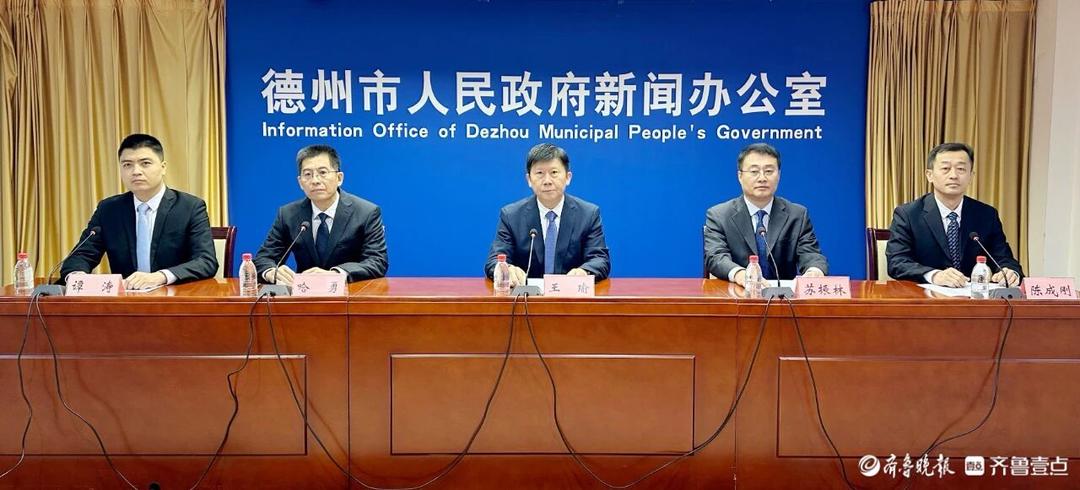
德州“十四五”期间投资870亿元实施中心城区城建项目526个
Qi Lu Wan Bao Wang· 2025-10-21 09:49
Core Viewpoint - The city of Dezhou has made significant progress in housing and urban construction during the "14th Five-Year Plan" period, focusing on high-quality development that prioritizes people's well-being and urban renewal [3][4][5]. Group 1: Focus on People's Livelihood - The city has emphasized improving living conditions, transitioning from "housing for all" to "quality housing for all," ensuring that development outcomes benefit all citizens [3][4]. - Housing security has been enhanced, with 88,000 units for relocation and 176,000 units of affordable housing constructed, benefiting 105,000 households [4]. - Initiatives such as the "micro-renovation" project have improved 845 old communities, adding 100,000 electric vehicle charging ports and installing 861 elevators in existing residential buildings [4]. Group 2: Urban Quality Enhancement - Urban renewal has been a key strategy, with 78 comprehensive area renovations and an investment of 87 billion yuan in 526 urban construction projects [5]. - Infrastructure improvements include the establishment of 238 square kilometers of sponge city, with water supply, gas, and sewage treatment rates exceeding 98% [5]. - The construction of 300 prefabricated rural houses and the renovation of 3,490 dangerous houses have been completed, enhancing rural living conditions [5]. Group 3: Industry Transformation and Innovation - The construction industry has seen a significant increase in output, growing from 34.41 billion yuan in 2020 to 46.08 billion yuan in 2024, with an average annual growth rate of 7% [6]. - The city has introduced policies to promote residential quality upgrades, with five projects recognized as national high-quality housing [6]. - A new model for real estate development has been explored, with the city approved as a pilot for nationwide pre-sale housing [6]. Group 4: Safety and Quality Assurance - Safety remains a top priority, with extensive actions taken to improve gas safety, including the renovation of 598.9 kilometers of gas pipelines [7]. - Quality control measures have been strengthened, leading to national awards for engineering quality and safety [7].

房地产行业第42周周报:本周楼市成交同比降幅收窄,成都出台公积金新政-20251021
Bank of China Securities· 2025-10-21 09:26
Investment Rating - The report rates the real estate sector as "Outperform the Market" [5] Core Insights - The real estate market has shown signs of improvement with a narrowing year-on-year decline in transaction volumes for both new and second-hand homes. New home transaction area increased month-on-month, while the inventory of new homes decreased [5][16] - A new housing provident fund policy in Chengdu broadens eligibility for converting commercial loans to provident fund loans, potentially stimulating demand [5][16] Summary by Sections 1. New Home Market Tracking - In the week of October 11-17, 2025, new home transaction volume in 40 cities reached 26,000 units, a month-on-month increase of 168.9% and a year-on-year decrease of 18.2%. The transaction area was 2.702 million square meters, up 170.6% month-on-month and down 22.9% year-on-year [17][24] - Transaction volumes in first, second, third, and fourth-tier cities showed month-on-month growth rates of 130.8%, 220.2%, and 122.2% respectively, with year-on-year declines of -35.3%, 0.01%, and -34.9% [17][19] 2. Second-Hand Home Market Tracking - In 18 cities, second-hand home transactions totaled 20,000 units, a month-on-month increase of 193.2% and a year-on-year decrease of 29.7%. The transaction area was 183,300 square meters, up 188.9% month-on-month and down 30.9% year-on-year [45][50] - First, second, third, and fourth-tier cities saw month-on-month transaction growth rates of 241.6%, 184.7%, and 163.8% respectively, with year-on-year declines of -27.5%, -30.7%, and -33.9% [45][51] 3. Inventory and Depletion Cycle - The inventory of new homes in 12 cities was 14.1 million units, with a month-on-month growth rate of 0.05% and a year-on-year decline of 13.7%. The depletion cycle for new home inventory was 20.9 months, down 0.8 months month-on-month and up 0.4 months year-on-year [27][39] - The depletion cycle for new homes in first, second, third, and fourth-tier cities was 21.0, 17.8, and 88.6 months respectively, with month-on-month declines of 0.6, 0.9, and 5.2 months [39][43] 4. Land Market Tracking - The total area of land transactions across 100 cities was 8.157 million square meters, down 28.4% month-on-month and down 59.5% year-on-year. The total land transaction price was 20.16 billion yuan, down 51.1% month-on-month and down 57.9% year-on-year [60][63] - The average land price was 2,471.3 yuan per square meter, down 31.7% month-on-month but up 4.1% year-on-year. The land premium rate was 2.2%, down 0.8 percentage points month-on-month and up 0.4 percentage points year-on-year [60][64] 5. Policy Developments - The Ministry of Housing and Urban-Rural Development announced reforms focusing on housing supply systems and urban construction, aiming to establish a new mechanism for real estate development [97]




完善房地产金融基础性制度,助力构建房地产发展新模式 | 宏观经济
清华金融评论· 2025-10-19 08:50
Monetary Policy Overview - The People's Bank of China (PBOC) held its 2025 Q3 monetary policy committee meeting on September 23, emphasizing the need for appropriate monetary policy to support high-quality economic development and create a favorable financial environment for economic recovery [4][5] - The meeting highlighted the effectiveness of the loan market quotation rate reform and the market-oriented adjustment mechanism for deposit rates, which have improved the efficiency of monetary policy transmission and kept social financing costs at historically low levels [4][5] Economic Analysis - The committee analyzed both domestic and international economic conditions, noting a more complex external environment with weakening global economic growth and increasing trade barriers [4][6] - Despite challenges such as insufficient domestic demand and low price levels, China's economy is showing steady progress, with rising social confidence and new achievements in high-quality development [4][6] Banking Sector Focus - The meeting called for large banks to enhance their role in serving the real economy while encouraging small and medium-sized banks to focus on their core responsibilities and strengthen capital [5][6] - It emphasized the importance of implementing structural monetary policy tools effectively and supporting key areas such as technological innovation, consumption, small and micro enterprises, and stabilizing foreign trade [5][6] Real Estate Development - The article discusses the importance of constructing a new model for real estate development, which is crucial for addressing the significant changes in supply and demand dynamics in the real estate market [8][10] - The central government has prioritized stabilizing the real estate market and promoting a new development model, as indicated in recent political meetings [8][14] Challenges and Recommendations - The real estate sector faces challenges such as high debt levels among developers and insufficient supply of affordable housing, necessitating a shift towards a new development model that balances market forces with guarantees [9][10] - Experts suggest that reforms should focus on housing, land, fiscal, and financial systems to achieve a stable and sustainable real estate market [13][14]
二手房成交热度延续
HUAXI Securities· 2025-10-18 13:43
Report Summary 1. Report's Industry Investment Rating The provided content does not mention the industry investment rating. 2. Core Viewpoints of the Report - After the National Day holiday, the property market showed some resilience in terms of week - on - week transaction volume, with the second - hand housing market performing better than the new housing market. However, due to the high base formed by the "924" housing policies in 2024, both new and second - hand housing transactions had negative year - on - year growth [1]. - The real estate industry is accelerating the transformation from "incremental expansion" to "stock quality improvement", and structural differentiation between and within cities may become the norm in the future [1]. 3. Summary by Relevant Content Transaction Volume Analysis - **Week - on - Week Transaction Volume**: 15 key cities' second - hand housing transaction area reached 2.15 million square meters, a 6% week - on - week increase, while 38 key cities' new housing transaction area was 2.74 million square meters, a 23% week - on - week decrease [1]. - **Year - on - Year Transaction Volume**: Affected by the high base in 2024, the year - on - year growth rate of second - hand housing transactions turned negative for the first time after seven consecutive weeks of positive growth, with a decline of 13%, and new housing transactions decreased by 24% for the third consecutive week. Compared with the same period in 2023, second - hand housing transactions maintained high - level activity with an 8% increase, while new housing transactions still declined by 18% [2]. - **By City Tier**: In the second - hand housing market, first - tier cities cooled down, with a 5% week - on - week decline and a 19% year - on - year decrease. Second - tier cities performed well, with a 25% week - on - week increase and an 8% year - on - year decrease. Third - tier cities continued to face pressure, with 4% and 6% week - on - week and year - on - year decreases respectively. In the new housing market, transactions in all city tiers generally declined, with second - tier cities showing some structural resilience with an 11% year - on - year increase despite a 15% week - on - week decline [3]. Key City Observations - **First - Tier Cities**: In the second - hand housing market, Beijing decreased by 31% week - on - week, while Shanghai and Shenzhen increased by 7% and 49% respectively. In the new housing market, first - tier cities' transaction area decreased by 36% week - on - week, with Beijing, Shanghai, Shenzhen, and Guangzhou decreasing by 47%, 44%, 32%, and 12% respectively [27]. - **Other Key Cities**: Hangzhou's second - hand housing transaction area increased by 23% week - on - week, and new housing decreased by 57%. Chengdu's second - hand housing increased by 27% week - on - week, and new housing decreased by 18% [28]. Housing Price Observation - From October 6 - 12, the weekly listing prices of second - hand houses in Shanghai, Beijing, and Shenzhen decreased by 0.18%, 0.41%, and 0.42% respectively week - on - week. Compared with the week before the "924" policy last year, the listing prices in these three cities still decreased, with declines of 2.9%, 9.3%, and 9.2% respectively [54]. Policy Analysis - The natural resources department issued the "Urban Stock Space Revitalization and Optimization Planning Guide", indicating that China's urban development has entered the "stock era". - During the "15th Five - Year Plan" period, the real estate market will focus on "urban renewal", "good houses", and the "new real estate development model". The construction of "good houses" will compete with traditional second - hand houses, and the reform of the pre - sale system and strengthened fund supervision under the "new model" are expected to reshape the industry's development logic and restore market confidence [6].
房地产行业“质效并举”锚定高质量发展新模式
Zheng Quan Ri Bao· 2025-10-17 15:26
Core Insights - The real estate industry in China is transitioning from rapid expansion to a focus on quality and efficiency during the "14th Five-Year Plan" period, aiming for high-quality development [1] - A dual-track housing supply system combining market and guarantee mechanisms has been established, enhancing the foundation for housing security [2] - The demand for diverse housing types is being met through market mechanisms, with a focus on reducing housing costs for residents [4] Group 1: Housing Supply and Demand - Over 11 million units of various types of affordable housing and urban renewal projects have been constructed during the "14th Five-Year Plan" [3] - The housing rental market is becoming more regulated, with a rise in market-oriented and professional rental institutions, establishing a dual rental and purchase system [5] - The housing supply system is expected to further optimize, with an increase in the proportion of guaranteed housing types to address the housing needs of young people in major cities [5] Group 2: New Development Models - The real estate market is undergoing significant changes in supply and demand dynamics, necessitating the construction of new development models [6] - Policies are being implemented to address the issues of high debt and leverage in the industry, promoting a shift towards a new development model focused on safety, comfort, and sustainability [7] - A city-level real estate financing coordination mechanism has been established to support housing project financing, with over 7 trillion yuan approved for "white list" projects [7][8] Group 3: Urban Development and Quality Improvement - The focus of urban development is shifting from expansion to quality improvement, with a strong emphasis on human-centered new urbanization [11] - A total of 2,387 urban village renovation projects have been implemented, providing over 2.3 million units of housing [11] - The new development model in real estate is essential for driving urban development, emphasizing the revitalization and utilization of existing spaces [12]
楼市“仰卧起坐”
Sou Hu Cai Jing· 2025-10-15 15:41
Core Insights - The Chinese real estate market is experiencing a significant transformation, moving from a focus on high turnover to an emphasis on quality living spaces, marking the beginning of a new era characterized by "good houses" [5][6] Group 1: Market Dynamics - The "Golden September and Silver October" period has seen a surprising surge in real estate activity, with bustling sales offices in cities like Xi'an, Chengdu, and Hangzhou, and intense bidding in Beijing's land market [5] - The logic behind sales has shifted from conceptual competition to tangible benefits, such as proximity to metro lines, resources near prestigious schools, and substantial financial incentives, alongside policy optimizations and price corrections [5] Group 2: Market Segmentation - There is a clear divergence in the market, with first-tier cities experiencing a rise in activity while third and fourth-tier cities remain stagnant, indicating a need for a new development model in real estate [5] Group 3: Future Development Strategies - A systematic restructuring of the real estate sector is proposed, consisting of three key strategies: 1. Establishing a linkage mechanism among population, housing, land, and finance to ensure supply is driven by demographic needs and financial support is precise [5] 2. Improving a dual-track system of security and market, promoting both rental and sales markets to ensure housing availability [5] 3. Advancing the sale of existing homes and smart construction practices to make "good houses" a standard in living [5]

一高校2.95亿收购存量房作学生宿舍,多所高校有买有租
Di Yi Cai Jing· 2025-10-15 11:37
Core Insights - The article discusses how some universities are addressing accommodation shortages by purchasing or leasing surrounding social housing as student dormitories [1][2][3] Group 1: Purchasing Existing Properties - Several universities have begun purchasing existing real estate for student accommodation, with notable projects including China University of Mining and Technology and Central South University, with budgets of approximately 29.3 million and 29.5 million RMB respectively [1][2] - The purchase of existing properties significantly reduces construction time and associated risks, making it a cost-effective solution compared to building new dormitories [3] - The total cost of purchasing existing properties is lower than the self-building model, allowing for immediate use to meet urgent accommodation needs [3] Group 2: Leasing Social Housing - Some universities, such as Zhejiang University, are opting to lease social housing near campus to alleviate accommodation pressure, with a budget of 2.36 million RMB for at least 3,000 beds [5] - The leased properties are required to be well-furnished and equipped to meet student accommodation standards, ensuring a smooth transition for students [5] Group 3: Strategic Considerations - Proximity to the university is a critical factor in selecting properties for purchase or lease, with examples showing that acquired properties are within a short distance from campus [4] - Collaboration with enterprises and utilizing idle properties near campuses can help address accommodation shortages while also revitalizing unused real estate [6] - The shift from traditional self-built dormitories to managing purchased properties presents challenges in coordination with property management and developers, necessitating a flexible approach to design and management [6]
市场修复 “金九银十”楼市热度提升
Jing Ji Ri Bao· 2025-10-15 00:37
Group 1 - The real estate market is experiencing a recovery, with some cities showing increased sales during the traditional peak season of "Golden September and Silver October" [2] - Major cities like Beijing, Shanghai, and Shenzhen saw significant increases in transaction volumes in September, attributed to policy adjustments and price reductions by developers and homeowners [2] - The land market is also performing well, with competitive bidding observed in Beijing, indicating strong interest from developers like China Overseas Land & Investment and China Merchants Shekou [3] Group 2 - There is a clear market differentiation, with many cities still facing sluggish real estate transactions, necessitating a new development model for the real estate sector [3] - The new model should include a clear housing supply system that combines both guaranteed and market-oriented housing, alongside a regulated rental market to protect the rights of both landlords and tenants [3] - A mechanism for the interconnection of "people, housing, land, and finance" is essential for the stable and healthy development of the real estate market [3] Group 3 - Reforming the real estate development, financing, and sales systems is crucial, including strict regulations on fund management and project financing [4] - Establishing a city-level real estate financing coordination mechanism is necessary to meet the reasonable financing needs of project companies [5] - The focus should also be on constructing safe, comfortable, green, and smart homes to improve living standards [5]
