去美元化

Search documents
金价可能大跌开始了,26年2月11日黄金跌价
Sou Hu Cai Jing· 2026-02-11 19:12
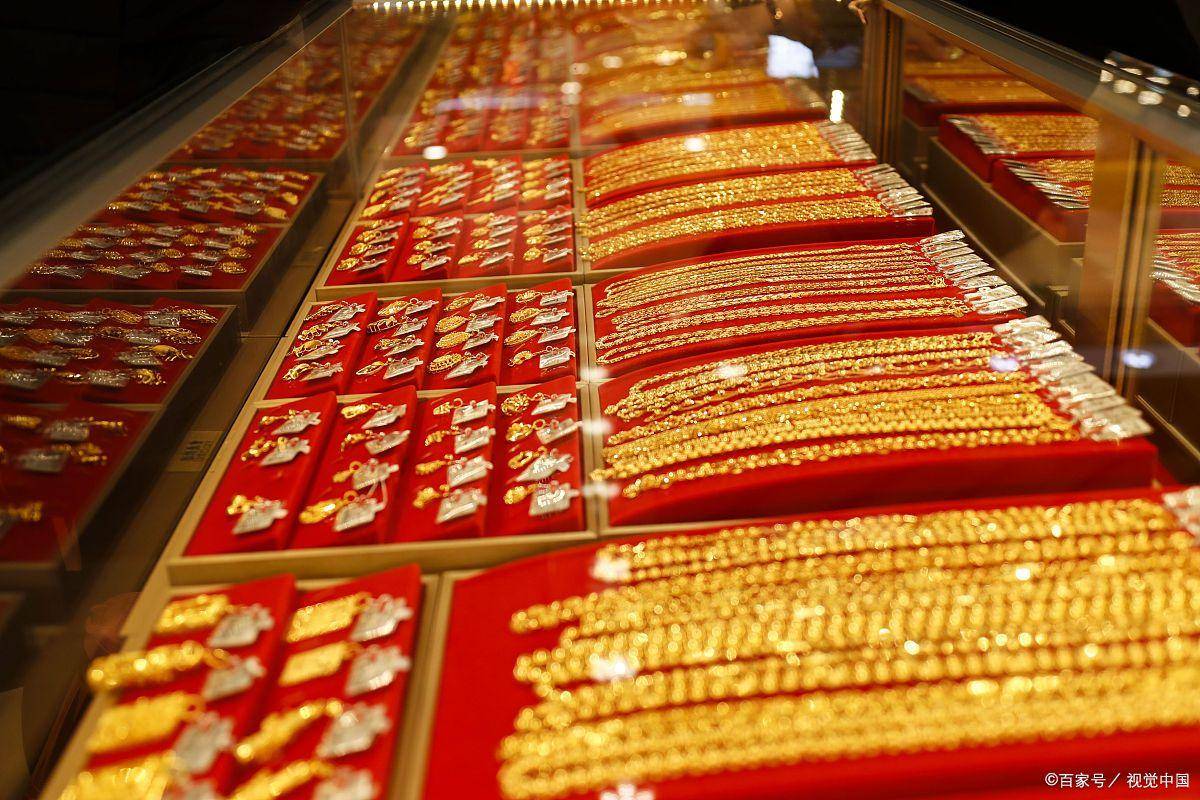
Group 1 - The international precious metals market experienced significant volatility in 2026, with gold prices reaching a historical high before sharply declining, currently hovering around the $5000 mark, leading to a drop in domestic retail gold prices [1] - Recent domestic gold retail prices for 99.9% purity gold range from 1528 to 1555 yuan per gram, with major brands like Chow Tai Fook and Luk Fook Jewelry pricing at 1550 yuan per gram [2] - The investment behavior of different investor segments has diverged, with experienced investors remaining calm during market corrections, while inexperienced investors faced significant losses due to panic selling [3][4] Group 2 - Despite the decline in gold prices, jewelry brands are planning to raise prices due to rising raw material costs, with Chow Tai Fook confirming price adjustments for their "one-price" gold and diamond products in early March [3][4] - The contribution of "one-price" products to Chow Tai Fook's retail value has increased from 27.4% to 31.8%, indicating a shift in pricing strategy [4] - The pricing logic of gold has undergone a structural change, with traditional factors like real interest rates losing influence, and risk pricing becoming the core driver amid high global debt levels [5] Group 3 - Many institutions remain optimistic about the long-term outlook for gold, with UBS raising its gold price target for Q3 2026 from $5000 to $6200 per ounce, and JPMorgan predicting it could reach $6600 by 2027 [6] - The current market is witnessing a structural transformation, with retail investors shifting towards stable asset allocation and institutions implementing hedging mechanisms to manage risks [6][7]

美债持仓跌到18年最低!转头狂买黄金,达利欧的警告要应验?
Sou Hu Cai Jing· 2026-02-11 17:12
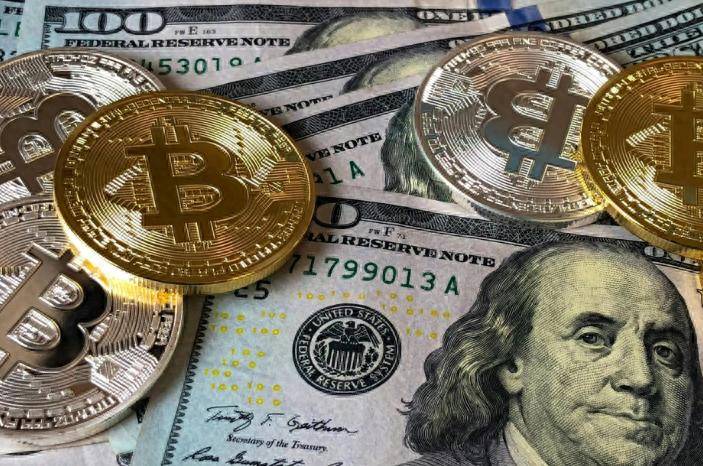
Core Viewpoint - China's attitude towards US Treasury bonds is shifting from allocation to withdrawal, indicating a strategic retreat and a reduction in exposure to US dollar credit [1] Group 1: China's Actions - China has reduced its holdings of US Treasury bonds to the lowest level since 2008, signaling a proactive approach to decrease reliance on the dollar [1] - China has been increasing its gold reserves for 14 consecutive months, indicating a long-term shift in asset allocation strategy [3] - The core of foreign exchange reserves is shifting from "earning more" to "surviving longer," with gold serving as a protective asset during times of external credit instability [5] Group 2: US Debt Concerns - The US national debt has surpassed $38 trillion, with interest payments exceeding $1 trillion annually, highlighting a significant fiscal burden [7] - The rapid increase in debt from $34 trillion to $38 trillion over two years is outpacing GDP growth, raising concerns about refinancing risks [7] - The warning from Ray Dalio about the US being in a debt cycle nearing collapse emphasizes the unsustainable nature of current fiscal policies [5][9] Group 3: Global Financial Dynamics - The proportion of the dollar in global foreign exchange reserves has decreased from 72% in 2000 to an estimated 46% in 2024, indicating a systemic rebalancing away from dollar dependency [9] - Central banks are increasingly favoring gold over US Treasury bonds, with global central bank gold holdings expected to surpass the market value of US debt by 2025 [11] - The shift towards diversified asset allocation reflects a broader trend of reducing reliance on a single credit asset in favor of more resilient combinations [9][13] Group 4: Implications for China - China's foreign exchange reserves are now more focused on safety and resilience, reducing risks associated with a single currency [15] - The strategic value of gold and key resources is rising, linking financial security with resource security [15] - The volatility of the dollar system is likely to impact global pricing power, with rising gold prices reflecting a depreciation of paper currency [15][17]
华尔街年初热门交易 全军覆没
Sou Hu Cai Jing· 2026-02-11 16:49
Market Sentiment Shift - The recent market turmoil is not caused by a single factor, indicating a significant shift in sentiment on Wall Street compared to the panic sell-off triggered by tariff policies last April [1] - Earlier predictions suggested that the U.S. stock market would experience its longest rally in nearly two decades, driven by expectations of sustained AI momentum, unexpectedly strong economic resilience, and gradual interest rate cuts by the Federal Reserve [1][6] AI Disruption Concerns - Concerns about AI potentially disrupting or reshaping certain U.S. industries and companies have emerged as investors worry about the transition of AI investments into commercial products [1][2] - The launch of a new tool by startup Altruist aimed at helping financial advisors has sparked fears of automation threatening the wealth management sector, leading to significant stock declines for firms like Raymond James Financial Inc. (down 8.8%) and Charles Schwab Corp. (down 7.4%) [2] Broader Market Impact - The sell-off affected not only tech stocks but also other previously popular trades on Wall Street, with the S&P 500 software and services index losing nearly 8% over the week, marking its worst weekly performance since March 2020 [6] - The S&P 500 insurance index dropped 3.9%, the largest single-day decline since October of the previous year, reflecting the broader impact of AI-related concerns on various sectors [2] Investment Strategy Shift - Analysts suggest a shift in investment focus from "AI enablers" to "AI beneficiaries," indicating a potential change in which companies will benefit from AI advancements [3][4] - Despite the recent volatility, some analysts believe the market's reaction may be an overreaction, with the fundamentals still supporting a stable growth outlook [8][9] Economic Indicators - The ISM manufacturing PMI showed better-than-expected performance, indicating potential for stable growth and avoidance of inflationary pressures, which is crucial for the stock market and the Federal Reserve [8] - Recent strong earnings reports from various companies have reinforced the initial positive expectations, although concerns about the sustainability of high valuations in tech and other sectors remain [7]
美债真要崩盘?中国大幅减持美债,全球撤退,美元霸权告急
Sou Hu Cai Jing· 2026-02-11 16:40
美债收益率突然蹿到4.25%,市场先是愣了一下,接着开始躁动。 很多人第一反应是美国那边又出事了,但真正让资金坐不住的,并不只是一组数字。 如果只盯着当天的收益率曲线,很容易把这轮波动当成一次技术性震荡。但真正值得琢磨的,是市场情绪变化的速度。 过去,美债哪怕收益率上蹿,资金也会很快回流,大家心里有底。现在不一样了,犹豫的人明显多了,观望的时间也被拉长。 不少国家的资产配置团队,已经不再把美债当作默认选项,而是放进"需要解释理由"的那一栏。这种变化看似细微,却很要命。 金融市场最怕的不是下跌,而是共识开始松散。一旦"安全"需要被反复证明,它就已经不再绝对。 中国的角色,也在这个过程中发生变化。以前是被动接受市场定价,拿到多少收益、承受多少波动,更多是结果导向。 现在不太一样了,减持本身就成了信号,市场会自动解读、自动放大。哪怕动作克制,外界也会跟着调整预期。这不是喊口号换来的,而是体量和耐心积累 到一定阶段后的自然结果。 把时间线拉长看,会发现类似的场景并不陌生。英镑当年失去核心地位时,也不是突然崩掉,而是经历了一个漫长的信任消耗期。 更微妙的地方在于,有些动作没被高调宣布,却已经实实在在发生。有人在悄悄减仓 ...
大家做好准备!金价大反转,接下来可能会这样走
Sou Hu Cai Jing· 2026-02-11 16:38
国际金价在5000美元关口上演了一场惊心动魄的拉锯战。 2月10日北方小年这天,伦敦金现早盘一度跌至5007.32美元,距离5000美元心理关口仅一步之遥。 就当空头准备庆祝时,多头资金突然发力,价格一路爬升,最终收于5029.80美元,单日涨幅0.44%。 这根长达22美元的大阳线,一举收复了前三个交易日 70%的跌幅。 国内黄金市场同样表现出韧性。 上海黄金交易所黄金T D从1114.50元的低点反弹,收于1119.30元,虽然涨幅不大,但技术形态上形成了阳吞阴的反转信 号。 品牌金店的足金首饰价格依然坚挺,周大福、周大生等主流品牌报价维持在1560元/克,老凤祥则为1556元/克。 这与银行投资金条1136-1148元/克的价 格形成鲜明对比,显示出实物黄金市场的分层特点。 这场反转并非偶然。 2月10日亚盘时段,金价在5007美元附近获得支撑,欧盘开盘后买盘明显放大。 资金流向监控显示,多头资金持续流入,推动价格突破 5025美元阻力位。 美盘时段虽有小幅震荡,但最终站稳在5030美元下方。 整个交易日的波动幅度达到38.7美元,呈现出典型的诱空结构。 技术指标的变化印证了趋势转变。 相对强弱指标RS ...

美国发布委内瑞拉石油许可证:禁止与中俄伊等五国相关人员交易
Sou Hu Cai Jing· 2026-02-11 16:29
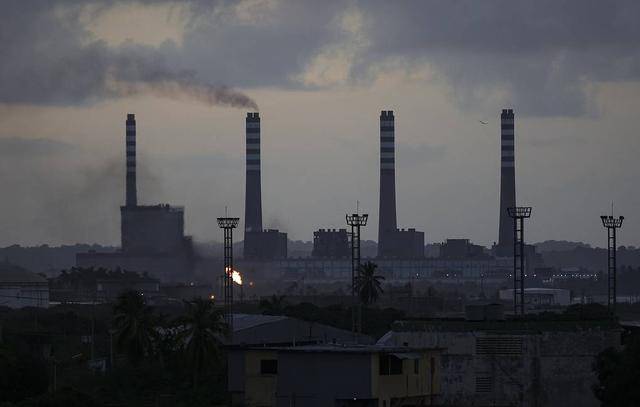
Group 1 - The U.S. Treasury Department has issued a Venezuela oil license that prohibits transactions with individuals related to Russia, Iran, North Korea, Cuba, and China [3][4] - The license is part of a broader strategy to control Venezuela's oil resources and reinforce U.S. energy dominance, as Venezuela holds over 300 billion barrels of proven oil reserves, accounting for approximately 17% of global reserves [3][4] - The U.S. aims to monopolize Venezuela's oil logistics and restrict export routes to the U.S. or U.S.-regulated storage points, while controlling the flow of funds from oil sales [4][5] Group 2 - Following the U.S. restrictions, China, a major buyer of Venezuelan oil, has suspended imports in response to U.S. demands, although Venezuelan oil accounts for less than 3% of China's total oil imports [4][6] - The U.S. faces challenges in its strategy, as Venezuela's aging oil fields and outdated infrastructure require significant investment, which private capital is hesitant to provide due to concerns over U.S. intervention [5][6] - The U.S. approach is accelerating the trend of "de-dollarization," with countries like China, Russia, and Iran increasing their use of local currencies for trade, while other resource-rich nations are reassessing their energy cooperation with the U.S. [6]
民间信黄金是硬底气,金价再波动,家家户户的金条都不轻易动
Sou Hu Cai Jing· 2026-02-11 16:08
近期国际黄金市场的剧烈波动,让不少投资者直呼揪心:从站上每盎司5600美元的历史新高,到单日创 下上世纪80年代以来最大跌幅,再到快速回弹至5000美元附近震荡,黄金价格在短时间内完成了一 轮"过山车"行情。但不同于其他资产暴跌后的持续低迷,黄金市场总能在急跌后快速修复,这背后并非 偶然,而是藏着多重不被轻易看见的隐形支撑。 笔者梳理市场脉络发现,这些支撑既源于扎根民间的消费习惯,也来自全球格局的底层变化,更离不开 市场结构和政策层面的理性护航,多重力量交织,才让黄金市场拥有了独有的抗跌性。 中国民间需求:刻在消费里的底层托底力量 在本轮黄金暴跌的过程中,国内市场出现了鲜明的"逢低买入"现象,深圳等核心金银交易市场依旧有买 家涌入,节前购金的热情并未因价格波动而消退,这股来自东方的消费力量,成为黄金市场最直接的隐 形支撑。而这一支撑的背后,是中国消费者对黄金独有的认知和长期形成的消费习惯。 从官方数据来看,2025年我国黄金消费量达950.096吨,其中金条及金币消费量504.238吨,同比增长 35.14%,首次超越黄金首饰消费量,标志着国内黄金消费结构迎来阶段性转变,投资者对黄金的配置 需求持续提升。 世 ...
395:2!美国踩下金融核弹引信,中国8700亿美债成最后底牌?
Sou Hu Cai Jing· 2026-02-11 15:49
Group 1 - The core point of the article highlights the U.S. Congress's overwhelming support for the "Taiwan Protection Act," which could lead to severe financial sanctions against China if it threatens Taiwan, effectively isolating China from the global financial system [1][3] - The act allows the U.S. government to cut off China's access to international financial institutions like SWIFT, the World Bank, and the IMF without waiting for Senate approval, indicating a significant escalation in U.S.-China tensions [3][4] - The voting results show a rare bipartisan agreement in Congress, with 395 votes in favor and only 2 against, reflecting a strong political consensus on confronting China [3][4] Group 2 - China holds $870 billion in U.S. Treasury bonds, which, despite a 40% reduction from its peak, still makes it the second-largest holder, suggesting that a decoupling could lead to increased U.S. Treasury yields and higher mortgage rates [4][5] - China's cross-border payment system (CIPS) processed 96 trillion yuan last year, a 32% increase year-on-year, indicating a growing alternative to the U.S. financial system with over 2,000 global banks connected [4][5] - Recent developments show that countries like Saudi Arabia and Iran are using the yuan for oil transactions, and ASEAN countries are increasingly settling trade in yuan, which could undermine the U.S. dollar's dominance [4][5]
中国减持美债,抛售潮引爆美债崩盘:美元霸权终要落幕?
Sou Hu Cai Jing· 2026-02-11 15:45
Group 1 - The core viewpoint is that China's continuous reduction of US Treasury holdings is a rational choice based on risk aversion and strategic positioning, driven by the increasing debt crisis in the US, where the national debt has exceeded $38 trillion and annual interest payments are nearing $1 trillion [2] - The US government's reliance on borrowing to manage its debt has raised concerns about the risk of default, especially after the US has weaponized the dollar financial system, as seen in the freezing of Russia's $300 billion foreign exchange reserves [2] Group 2 - China's approach to reducing its US Treasury holdings is strategic, utilizing a "curve selling" method that avoids market disruption while steadily lowering risk exposure by providing low-interest loans to developing countries like Indonesia and Argentina, which then use those funds to repay their debts to the US [4] - This method not only optimizes China's asset structure but also promotes the internationalization of the renminbi, making it difficult for the US to find grounds for intervention [4] Group 3 - The reduction in US Treasury holdings by China has triggered a global sell-off, with pension funds in Sweden and Denmark significantly cutting their US Treasury exposure due to concerns over the unpredictability of US government policies and deteriorating fiscal conditions [6] - Other countries, including India and the UK, are also reducing their holdings of US assets, indicating a growing trend of capital "voting with their feet" against US dollar assets [6] Group 4 - The ongoing sell-off has put US Treasuries in a precarious position, leading to a significant drop in prices and a surge in yields, with the 10-year Treasury yield surpassing 4.5% and the 30-year yield rising nearly 60 basis points in just three days [8] - This increase in yields complicates the US government's ability to finance new debt, potentially disrupting the "borrow new to pay old" cycle, and could lead to higher interest rates on mortgages and auto loans, impacting the US economy and citizens' lives [9] Group 5 - The crisis surrounding US Treasuries is fundamentally a crisis of dollar hegemony, as the US has long exploited its status as the world's reserve currency to issue dollars and shift economic risks [11] - The dollar's share in global foreign exchange reserves has fallen to 56.92%, the lowest since 1995, while global central banks' gold holdings have surpassed foreign central banks' US Treasury holdings for the first time [11] Group 6 - While the decline of dollar hegemony will not happen overnight, the trend of reducing US Treasury holdings led by China and the acceleration of global "de-dollarization" are significant developments that challenge the dollar's dominance [13] - China's actions in reducing US Treasury holdings are aimed at protecting its asset security and optimizing its foreign exchange reserve structure, inadvertently becoming a significant force in the decline of US Treasuries and promoting a more diversified global financial order [15]
2026年有色金属趋势展望:资源博弈与科技革命加速格局重塑,战略资源价值攀升
材料汇· 2026-02-11 15:23
Group 1 - The core viewpoint of the article is that the prices of non-ferrous metals are expected to rise significantly in 2025 due to tariff impacts, interest rate cuts, and geopolitical factors, with specific metals like tungsten and gold showing the highest price increases [4][9]. - In 2025, the price increases for precious metals are projected to exceed 100%, while industrial metals are expected to rise by approximately 30% [4][5]. - The overall revenue and profit trends in the non-ferrous metals industry are closely aligned with price movements, with significant growth in both revenue and profits anticipated for 2025 [9]. Group 2 - The article highlights that the cumulative revenue for the non-ferrous metal mining sector is expected to reach 424.74 billion yuan, reflecting a year-on-year increase of 12.7%, while operating profits are projected to grow by 36.1% [9]. - The non-ferrous metal smelting and processing industry is expected to see cumulative revenue of 9.77339 trillion yuan, with a year-on-year profit increase of 22% [9]. - The performance of various sub-sectors within the non-ferrous metals industry, such as precious metals and industrial metals, is expected to reflect the overall profit trends, with precious metals showing the highest profit growth [9]. Group 3 - The article discusses the outlook for gold prices, indicating that there is a basis for upward movement due to factors such as ongoing central bank purchases and fiscal expansion in major economies [14][15]. - The article notes that the trend of central banks increasing gold reserves is strengthening, with gold surpassing U.S. Treasury bonds as the largest reserve asset globally [15]. - The anticipated continuation of the interest rate cut cycle in 2026 is expected to further support gold prices, alongside geopolitical uncertainties that may drive demand for safe-haven assets [19]. Group 4 - The article outlines the supply-side dynamics for copper, indicating that the U.S. tariff policies and inventory levels are influencing price volatility [27][30]. - It is projected that global copper mine supply will see marginal increases in 2026, with significant contributions expected from major mining projects [30][31]. - The demand for copper is expected to be bolstered by the growth of data centers and energy storage applications, which are projected to significantly increase copper consumption [36][40]. Group 5 - The article reviews the lead market, indicating that prices are expected to remain stable within a narrow range due to weak supply and demand dynamics [45][67]. - The supply of lead is anticipated to improve in 2026, with new projects coming online, although the actual increase may be limited by raw material availability [51][54]. - The demand for lead is expected to be supported by policies promoting battery recycling and the growth of electric vehicle sales, although overall growth may be modest [65][66]. Group 6 - The zinc market is characterized by a mixed performance, with domestic prices showing a decline while international prices are rising due to supply disruptions [71][73]. - The article indicates that the supply of zinc is expected to increase gradually, but the growth rate may slow down in 2026 due to various factors affecting mining operations [73][74]. - Demand for zinc is projected to improve marginally in 2026, although traditional demand remains weak [73].