反内卷

Search documents
涨价潮+反内卷催化!化工板块全线反攻,化工ETF盘中涨超4%!机构:继续看好化工板块投资机会
Xin Lang Cai Jing· 2026-02-03 12:28
Core Viewpoint - The chemical sector experienced a significant rebound on February 3, 2026, with the chemical ETF (516020) rising by 3.97% and individual stocks in the phosphate, potash, and soda ash sectors showing notable gains [1] Group 1: Market Performance - The chemical ETF (516020) saw a maximum intraday increase of 4.3% before closing up 3.97% [1] - Key stocks included Hongda Co., which surged by 9.16%, and both Cangge Mining and Hualu Hengsheng, which rose over 6% [1] Group 2: Price Trends and Analysis - Recent price increases in various basic chemical products, including dyes and para-nitrochlorobenzene, have been attributed to the cancellation of export tax rebates, leading to a rush in exports [1] - Guojin Securities remains optimistic about investment opportunities in the basic chemical sector, recommending a focus on leading companies and those experiencing price increases from a low base [1] Group 3: Industry Outlook - The chemical sector has been on an upward trend since the "anti-involution" movement began in July 2025, with investment and supply-side logic strengthening since the fourth quarter of 2025 [1] - Demand from emerging sectors such as energy storage, AI, and commercial aerospace is accelerating, while traditional sectors like textiles and agriculture are expected to continue recovering [1] - Huafu Securities anticipates a rebound in profitability for the chemical industry in 2026, marking a new starting point for supply-demand rebalancing [1]


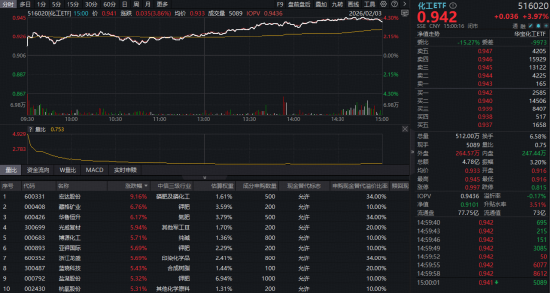
涨价潮+反内卷催化!化工板块全线反攻,化工ETF(516020)盘中涨超4%!机构:继续看好化工板块投资机会
Xin Lang Cai Jing· 2026-02-03 11:35
Core Viewpoint - The chemical sector experienced a significant rebound on February 3, with the chemical ETF (516020) rising by 3.97% by the end of the trading day, reflecting a broader positive trend in the industry [1][5]. Group 1: Market Performance - The chemical ETF (516020) saw a maximum intraday increase of 4.3% [1][5]. - Key stocks in the sector, such as Hongda Co., Ltd., surged by 9.16%, while Cangge Mining and Hualu Hengsheng both increased by over 6% [1][5]. Group 2: Price Trends and Analysis - Recent price increases in various basic chemical products, including dyes and para-nitrochlorobenzene, have been noted, attributed to the cancellation of export tax rebates, which has accelerated exports [1][5]. - Guojin Securities continues to be optimistic about investment opportunities in the basic chemical sector, recommending a focus on leading companies and those with price increases from a low base [1][5]. Group 3: Future Outlook - According to Guosheng Securities, since the "anti-involution" trend began in July 2025, the chemical sector has seen sustained growth, with investment and supply-side logic strengthening since the fourth quarter of 2025 [1][5]. - Huafu Securities anticipates a recovery in profitability for the chemical industry in 2026, suggesting that the sector is at a new starting point for supply-demand rebalancing [1][5][7]. Group 4: Investment Strategies - The chemical ETF (516020) tracks the CSI sub-industry theme index, covering popular topics such as AI computing power, anti-involution, robotics, and new energy, making it a potentially efficient way to invest in the sector [7][8].
玻璃日报:短期震荡-20260203
Guan Tong Qi Huo· 2026-02-03 11:30
1. Report Industry Investment Rating - The report gives a short - term volatile rating for the glass industry [1] 2. Core View of the Report - The core contradiction of glass lies in the game between "supply contraction expectation" (cold repair + policy) and "weak real - world demand" (real estate downturn + seasonal off - season), and high inventory is the biggest pressure for the disk to rebound. Although policies provide short - term emotional support, the supply - demand contradiction has not been substantially improved. With the approaching Spring Festival in February, downstream demand is expected to weaken, and short - term prices may maintain volatile operation, with a possible weakening trend later. Attention should be paid to macro - policy changes and production line cold - repair situations [4] 3. Summary According to Related Catalogs Market行情回顾 - **Futures market**: The glass main contract opened and closed higher today, with an intraday volatile and strong trend. The 120 - minute Bollinger Band shows a contracting horn, indicating a short - term volatile signal. The intraday pressure is near the 20 - day and 60 - day moving averages on the daily line, and the support is near the lower Bollinger Band. The trading volume decreased by 415,000 lots compared with yesterday, and the open interest decreased by 34,986 lots. The intraday high was 1084, the low was 1062, and the closing price was 1072, up 3 yuan/ton or 0.28% compared with the previous settlement price [1] - **Spot market**: In North China, prices are mostly stable with some increases, and there is appropriate restocking; in East China, trading has become lighter, and downstream buyers maintain rigid - demand purchases; in Central China, the market is running stably, and middle and downstream buyers are rational, mainly for rigid demand; in South China, except for some flexible transactions, most prices remain stable, and most downstream enterprises are in the process of winding up, with purchases mainly for rigid demand [1] - **Basis**: The spot price in North China is 1020, with a basis of - 52 yuan/ton [1] Fundamental Data - **Supply**: As of January 29, the total output of float glass this week was 1.057 million tons, flat compared with the previous week and - 3.375% year - on - year. The industry average operating rate was 71.86%, up 0.24% week - on - week; the industry average capacity utilization rate was 75.7%, flat compared with the previous week. In January, 2 production lines were cold - repaired, but 1 production line was newly restarted and ignited, and the overall supply pressure has not been significantly relieved [2] - **Inventory**: The total inventory of national float glass sample enterprises was 52.564 million heavy boxes, down 652,000 heavy boxes or - 1.22% week - on - week and + 21.24% year - on - year. The inventory days were 22.8 days, 0.3 days less than the previous period. As the Spring Festival approaches, the demand of most enterprises from north to south is gradually winding up [2] - **Import and export**: In December 2025, China's float glass exports were 87,000 tons, an increase of 2,200 tons or 2.59% from the previous month; the net export was 72,400 tons, a month - on - month increase of 4.51%. The cumulative export volume from January to December was 1.0292 million tons, an increase of 497,700 tons or 93.63% compared with the same period last year [2] - **Profit**: The weekly average profit of natural - gas float glass was - 155.12 yuan/ton, up 3.57 yuan/ton week - on - week; the weekly average profit of coal - gas float glass was - 68.5 yuan/ton, down 3.39 yuan/ton week - on - week; the weekly average profit of petroleum - coke float glass was 1.07 yuan/ton, up 2.85 yuan/ton week - on - week [3]
朱宏任:推动广大民营企业走专精特新之路,向世界一流迈进
Xin Lang Cai Jing· 2026-02-03 09:45
二是把握政策机遇。政府针对当前经济发展中投资增长乏力、循环经济投入较高、居民消费意愿不强等 问题,采取了一系列政策措施,企业要高度关注。 最后,把握企业发展机会,要重视新型工业化发展。制造企业不仅要从当前发展看制造业转型升级,还 要从国家强国建设、民族复兴伟业角度,意识到担当的责任与使命。如推动制造业向高端化、智能化、 绿色化、融合化、集群化发展,应是企业下一步发展中更多关注的地方。 新浪声明:所有会议实录均为现场速记整理,未经演讲者审阅,新浪网登载此文出于传递更多信息之目 的,并不意味着赞同其观点或证实其描述。 专题:第五届企业创新发展大会 第五届企业创新发展大会2月1日—3日在广东东莞举办。中国企业联合会党委书记、常务副会长兼秘书 长朱宏任出席并演讲。 朱宏任指出,要看到当前内卷带来的危害。市场需要竞争,但竞争一旦盲目无序,就会侵蚀企业利润, 抑制创新活力,拖累全要素生产力提升,导致市场机制严重扭曲,破坏市场公平。 谈及反内卷突破路径,朱宏任认为,企业要从单纯拼价格转向价值创造,以技术创新构筑不可复制的竞 争护城河。推动广大企业、专精企业、民营企业走专精特新之路,向世界一流迈进,即聚焦技术攻坚, 突破核心 ...
朱宏任:“十五五”期间,制造业企业要把握三个机遇
Xin Lang Cai Jing· 2026-02-03 08:33
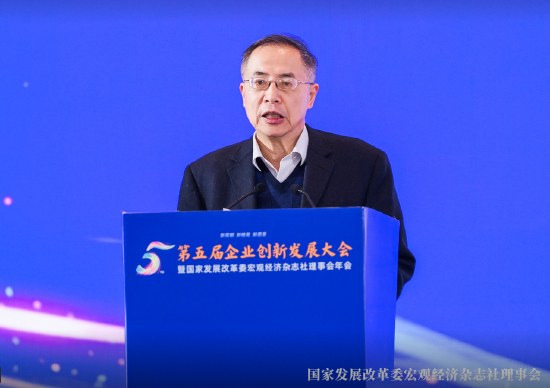
专题:第五届企业创新发展大会 第五届企业创新发展大会2月1日—3日在广东东莞举办。中国企业联合会党委书记、常务副会长兼秘书 长朱宏任出席并演讲。 专题:第五届企业创新发展大会 第五届企业创新发展大会2月1日—3日在广东东莞举办。中国企业联合会党委书记、常务副会长兼秘书 长朱宏任出席并演讲。 朱宏任指出,要看到当前内卷带来的危害。市场需要竞争,但竞争一旦盲目无序,就会侵蚀企业利润, 抑制创新活力,拖累全要素生产力提升,导致市场机制严重扭曲,破坏市场公平。 谈及反内卷突破路径,朱宏任认为,企业要从单纯拼价格转向价值创造,以技术创新构筑不可复制的竞 争护城河。推动广大企业、专精企业、民营企业走专精特新之路,向世界一流迈进,即聚焦技术攻坚, 突破核心瓶颈,增强原始创新,构建技术壁垒,升级竞争模式,打造品牌优势,强化转型驱动,加快创 新引领,用创新破解内卷迷思。 他表示,现在进入"十五五"重要阶段,制造业企业有三个机遇必须把握。 一是抓住发展先进制造业的重要机遇。先进制造业本质是技术先进性、模式创新性和价值高端性的深度 融合。与传统制造业发展模式对比,先进制造业强调发展过程要从规模扩张向质量跃升转变,需构建技 术创新、 ...
朱宏任:企业要从单纯拼价格转向价值创造,以技术创新构筑竞争护城河
Xin Lang Cai Jing· 2026-02-03 08:26
第五届企业创新发展大会2月1日—3日在广东东莞举办。中国企业联合会党委书记、常务副会长兼秘书 长朱宏任出席并演讲。 专题:第五届企业创新发展大会 最后,把握企业发展机会,要重视新型工业化发展。制造企业不仅要从当前发展看制造业转型升级,还 要从国家强国建设、民族复兴伟业角度,意识到担当的责任与使命。如推动制造业向高端化、智能化、 绿色化、融合化、集群化发展,应是企业下一步发展中更多关注的地方。 新浪声明:所有会议实录均为现场速记整理,未经演讲者审阅,新浪网登载此文出于传递更多信息之目 的,并不意味着赞同其观点或证实其描述。 责任编辑:王翔 专题:第五届企业创新发展大会 朱宏任指出,要看到当前内卷带来的危害。市场需要竞争,但竞争一旦盲目无序,就会侵蚀企业利润, 抑制创新活力,拖累全要素生产力提升,导致市场机制严重扭曲,破坏市场公平。 谈及反内卷突破路径,朱宏任认为,企业要从单纯拼价格转向价值创造,以技术创新构筑不可复制的竞 争护城河。推动广大企业、专精企业、民营企业走专精特新之路,向世界一流迈进,即聚焦技术攻坚, 突破核心瓶颈,增强原始创新,构建技术壁垒,升级竞争模式,打造品牌优势,强化转型驱动,加快创 新引领, ...
中加基金权益周报|弱美元叙事受冲击,国际商品市场巨震影响A股
Xin Lang Cai Jing· 2026-02-03 07:41
Market Overview - A-shares showed mixed performance last week with a marginal decline in trading volume [1][10] Macro Data Analysis - In December 2025, the profit growth rate of industrial enterprises turned positive, with an annual cumulative growth rate of 0.6%, breaking a three-year trend of negative growth [4][20] - The improvement in profits is attributed to supply-side management policies like "anti-involution" [4][20] - Foreign and state-owned enterprises performed better, with state-owned enterprises' profit decline narrowing by 0.7 percentage points compared to 2024 [4][20] - Private enterprises saw profit growth stagnate, contrasting with the previous year's positive growth, which negatively impacted overall industrial profit growth [4][20] - Manufacturing benefited from "anti-involution" and overseas expansion, with a growth rate of 5.0%, rebounding by 8.9 percentage points from 2024 [4][20] - The equipment manufacturing sector contributed 2.8 percentage points to the overall industrial profit growth, while upstream raw material manufacturing showed marginal recovery [4][20] Short-term Market Strategy - The market is experiencing a significant adjustment in weak dollar-related sectors due to liquidity issues in the commodity market [11][25] - The market's sensitivity to macro liquidity shocks has increased, leading to a demand for certainty and risk aversion in investments [11][25] - Despite the current market challenges, there are still structural opportunities, and new leading sectors may emerge with macro changes [11][25] Mid-term Outlook - Technology growth remains a favored direction, with expectations of improving economic fundamentals gradually accumulating [12][26] - The market is expected to continue generating thematic opportunities supported by a loose monetary policy and low-interest environment [12][26] Long-term Perspective - The long-term dynamics of the US-China struggle are becoming clearer, with increasing skepticism about the US government's governance capabilities [13][27] - The potential for foreign capital inflow into China's equity market may provide support, especially with the current favorable conditions for the RMB against the USD [13][27] Industry Insights - Defensive dividend sectors are entering an observation phase, while aggressive sectors may face pressure [28][29] - Continued focus on technology sectors, particularly in AI and domestic technology advancements, is recommended [28][29] - There is potential for investment in domestic demand-related sectors, especially those showing signs of recovery amid inflation expectations [28][29]
国联民生证券:预计25Q4玻纤收入利润高增 传统建材业绩承压
智通财经网· 2026-02-03 07:25
Group 1: Cement Industry - The demand for cement in developing countries is steadily increasing, with a favorable competitive landscape, leading to significantly higher profit per ton compared to domestic markets. Companies actively expanding into overseas markets are expected to perform better [1] - The domestic cement market is expected to face pressure in Q4 2025, while overseas performance is anticipated to be stronger. Non-operating projects may impact profits [1] - Cement prices and profits are expected to stabilize in 2025, with a slight seasonal rebound in Q4 2025 due to a temporary increase in coal prices. However, year-on-year pressure on prices and profits is expected in Q4 2025 [1] Group 2: Glass Industry - The float glass industry is experiencing a bottoming out phase, with weak downstream demand leading to continued losses. Some small to medium enterprises are reducing production, resulting in a slight decrease in capacity [2] - The photovoltaic glass segment is expected to see a decrease in volume but an increase in price in Q4 2025, leading to significant pressure on revenue and profits. The demand for photovoltaic glass is expected to be impacted by earlier demand surges [2] Group 3: Glass Fiber Industry - The glass fiber sector is projected to experience high growth in revenue and profits in 2025, driven by strong demand in wind power and thermoplastics. Domestic net demand for glass fiber is expected to reach 5.48 million tons in 2025, a year-on-year increase of 19% [3] - High-end electronic fabric is expected to see a simultaneous increase in both price and volume, benefiting companies with a first-mover advantage. The price of 7628 electronic fabric is projected to be 4.1 yuan per meter in 2025, a year-on-year increase of 9% [3] Group 4: Renovation and Building Materials - The renovation and building materials sector is expected to face continued pressure in 2025, with significant declines in housing starts, completions, and sales. The year-on-year declines for these metrics are projected to be 21%, 18%, and 8%, respectively [4] - The competitive landscape in the renovation and building materials sector is intensifying, with many companies exploring new business avenues to maintain resilience in performance [4]

“反内卷”有望催化化工周期复苏,新材料ETF国泰(159761)涨超2%
Mei Ri Jing Ji Xin Wen· 2026-02-03 06:50
Group 1 - The global chemical industry is undergoing rapid rebalancing, with the European chemical sector facing challenges such as factory closures and declining investments, leading to a decrease in its global sales share from 27% in 2004 to 13% in 2024 [1] - In contrast, China's share of global chemical sales has increased significantly from 10% to 46% during the same period [1] - The trend of "anti-involution" is expected to catalyze a recovery in the cycle, while the "new economy" will drive growth in new materials [1] Group 2 - Foreign companies are closing domestic titanium dioxide production capacity, and European chemical startups are abandoning investments in Europe in favor of building green methanol-based polyolefin plants in China [1] - Domestic technological breakthroughs have been achieved, such as the large-scale production of polyethylene elastomers (POE) using the gas-phase method by China National Petroleum Corporation [1] - The Guotai New Materials ETF (159761) tracks the New Materials Index (H30597), which focuses on the new materials industry and includes listed companies in advanced basic materials, key strategic materials, and cutting-edge new materials [1]
建材行业2025年业绩前瞻:预计25Q4玻纤收入利润高增,传统建材业绩承压
Guolian Minsheng Securities· 2026-02-03 05:10
Investment Rating - The report maintains a "Recommended" rating for the building materials industry [1] Core Views - The report anticipates significant growth in revenue and profit for fiberglass in Q4 2025, while traditional building materials face performance pressure [1] - The overall outlook for the cement industry indicates continued price and profit stabilization, with domestic pressures expected to persist [4][7] - The glass industry is projected to experience ongoing revenue and profit pressure, particularly in the float glass segment due to weak downstream demand [14][20] - The fiberglass sector is expected to see robust growth driven by increased demand for raw yarn and high-end fabrics [28] Summary by Sections Cement - Q4 2025 is expected to see domestic cement performance under pressure, while overseas markets may perform better. The average national cement price is projected at 357 RMB per ton, down 16% year-on-year [7] - The report notes that the cement industry is experiencing a bottoming out phase, with a year-on-year production decline of 7% from January to November 2025 [7] - Non-operating projects may impact profits, with companies accelerating capacity replacement and asset disposals [4][7] Glass - The float glass industry is expected to remain under pressure, with high inventory levels and ongoing losses. The average price for 5mm float glass is projected at 62 RMB per box in Q4 2025, down 17% year-on-year [14] - The photovoltaic glass segment is also expected to face significant revenue and profit pressure due to weak domestic installation demand, with a projected average price of 12.3 RMB per square meter in Q4 2025 [20] Fiberglass - The fiberglass sector is projected to see continued high growth in revenue and profit, with domestic net demand reaching 5.48 million tons, a 19% year-on-year increase [28] - The average price for mainstream products is expected to be 3,603 RMB per ton in 2025, with a slight decrease in Q4 [28] - High-end electronic fabric prices are expected to rise, benefiting companies with a first-mover advantage [28] Renovation Materials - The renovation materials sector is expected to face continued pressure, with a year-on-year decline in housing starts, completions, and sales area [4] - Companies are exploring new business channels to maintain resilience in performance [4]