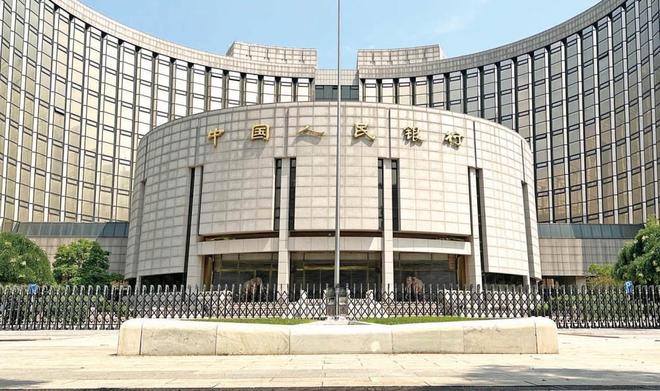
金融强国

Search documents
17次提及“金融”!“十五五”规划勾勒金融强国路径,完善中央银行制度打头阵
Hua Xia Shi Bao· 2025-10-30 04:37
Core Insights - The "15th Five-Year Plan" emphasizes the goal of accelerating the construction of a financial powerhouse, marking a strategic upgrade from the previous plan [2][3] - The plan outlines specific measures for financial system reform, including enhancing the central bank's role and establishing a comprehensive macro-prudential management system [3][4] Financial System Reform - The plan prioritizes the improvement of the central bank system, aiming to enhance the financial system's ability to serve the real economy and improve macroeconomic regulation [4] - The central bank's functions are set to expand from traditional roles to include systemic risk monitoring and international financial coordination [4] Monetary Policy Framework - Future monetary policy is expected to focus more on price-based regulation, utilizing structural monetary policy tools to guide funding flows and improve efficiency [4][5] - There is a need to enhance the transmission mechanism of monetary policy to ensure timely impacts on the real economy [5] Financial Infrastructure and Governance - The plan includes the development of safe and efficient financial infrastructure to support the financial system and the real economy [7] - It emphasizes the importance of macroeconomic governance, advocating for better coordination between fiscal and monetary policies [8] International Financial Integration - The internationalization of the Renminbi and the opening of capital accounts are highlighted as key drivers for financial globalization [6]


17次提及金融!“十五五”规划建议发布,重点提及金融领域哪些内容?
Xin Lang Cai Jing· 2025-10-30 00:56
Core Insights - The "15th Five-Year Plan" emphasizes the importance of financial development, mentioning finance 17 times, and outlines a roadmap for building a strong financial nation [1][8] Financial Development Initiatives - The plan proposes nine key measures to enhance the financial system, including improving the central bank's framework and establishing a robust monetary policy and macro-prudential management system [1][9] - It highlights the need to develop technology finance, green finance, inclusive finance, pension finance, and digital finance [2][11] Capital Market Enhancements - The plan calls for improving the inclusiveness and adaptability of capital market systems, ensuring a balanced investment and financing relationship [3] - It encourages the development of direct financing methods such as equity and bonds, as well as the steady growth of futures, derivatives, and asset securitization [4] Financial Institution Optimization - The plan aims to optimize the financial institution system, urging various financial entities to focus on their core businesses and improve governance [5] Financial Infrastructure and Digital Currency - There is a push for building a safe and efficient financial infrastructure and the steady development of the digital renminbi [6][7] Financial Regulation and Risk Management - The plan emphasizes comprehensive financial regulation, enhancing collaboration between central and local authorities, and building a risk prevention and resolution system to ensure financial stability [8][13] - It outlines measures to address risks in key areas such as real estate and local government debt, with significant reductions in financing platform numbers and debt levels [14] International Financial Cooperation - The plan highlights the importance of advancing global economic financial governance reforms and maintaining a fair and open international economic order [16] - It reports significant progress in cross-border payment systems and the internationalization of the renminbi, with the currency becoming a major player in global trade financing [17][18] Shanghai International Financial Center - The plan stresses the acceleration of building Shanghai as an international financial center, which is crucial for enhancing China's global financial influence [19]
锚定金融强国目标 “十五五”聚焦完善 中央银行制度
Sou Hu Cai Jing· 2025-10-29 17:26
Core Insights - The "15th Five-Year Plan" emphasizes the strategic goal of accelerating the construction of a financial powerhouse, focusing on enhancing the central bank system, establishing a comprehensive macro-prudential management framework, and improving policy transmission mechanisms for supporting the real economy and mitigating risks [1][2]. Group 1: Central Bank System Improvement - The improvement of the central bank system is prioritized as a key task in the "15th Five-Year Plan," which aligns with the concept of a financial powerhouse that includes strong currency, central bank, financial institutions, international financial centers, financial regulation, and talent [2]. - The People's Bank of China aims to deepen financial supply-side structural reforms and enhance the monetary policy system, ensuring effective policy transmission [2][3]. - The reform during the "15th Five-Year Plan" will focus on systematic and forward-looking institutional design, with key breakthroughs in mechanism innovation [3]. Group 2: Comprehensive Macro-Prudential Management System - The establishment of a comprehensive macro-prudential management system is highlighted as a critical measure for preventing systemic financial risks [4][5]. - The central bank's approach includes monitoring and assessing systemic financial risks, enhancing risk prevention measures for key institutions and sectors, and expanding the toolbox for macro-prudential management [4]. - The role of the central bank as a lender of last resort is expected to extend beyond banks to non-bank institutions, indicating a heightened focus on macro risks in the coming five years [5]. Group 3: Policy Transmission Mechanism - Improving the monetary policy transmission mechanism is identified as a vital task for the "15th Five-Year Plan," aimed at enhancing financial services for the real economy [6]. - Challenges remain in the current transmission mechanism and medium-to-long-term interest rate adjustments, necessitating further reforms in interest rate marketization and collaboration between monetary, fiscal, and industrial policies [6][7]. - The macroeconomic regulation will emphasize "cross-cycle design," maintaining stability and continuity in fiscal and monetary policies to avoid future inflation and financial risks [7].
加快建设金融强国 “十五五”规划建议提及金融17次
2 1 Shi Ji Jing Ji Bao Dao· 2025-10-29 15:51
Core Viewpoint - The "15th Five-Year Plan" emphasizes the acceleration of building a financial powerhouse, shifting from the previous focus on "deepening financial supply-side structural reforms" in the "14th Five-Year Plan" [1][2]. Group 1: Financial Policy Framework - The "15th Five-Year Plan" outlines specific requirements for the monetary policy system, macro-prudential management system, and financial regulatory framework, continuing the policy framework established at the end of 2023 [1][2]. - The plan aims to enhance the central bank's system and establish a robust monetary policy framework that effectively transmits monetary policy [3][6]. Group 2: Risk Management and Regulation - The plan calls for comprehensive financial regulation, emphasizing collaboration between central and local regulators, and enhancing risk management resources and methods [3][4]. - The National Financial Regulatory Administration aims to improve financial laws and regulations, establishing a clear and effective tiered regulatory framework [4]. Group 3: Internationalization and Capital Opening - The "15th Five-Year Plan" promotes the internationalization of the Renminbi and the opening of capital accounts, aiming to build a self-controlled cross-border payment system for the Renminbi [4][5]. - The plan supports trade innovation and expands bilateral investment cooperation, enhancing the overall openness of the foreign exchange sector [4]. Group 4: Macro-Prudential Management - The plan emphasizes the need for a comprehensive macro-prudential management system that addresses systemic financial risks and maintains overall financial stability [6][7]. - The central bank will focus on monitoring systemic financial risks, enhancing risk prevention measures for key institutions, and improving the macro-prudential management toolkit [7].
支撑“十五五”高质量发展,财政、货币政策新提法释放新信号
第一财经· 2025-10-29 15:47
Core Viewpoint - The "15th Five-Year Plan" emphasizes high-quality development without setting explicit economic growth targets, focusing instead on enhancing domestic consumption and ensuring sustainable fiscal and monetary policies [3][5][6]. Fiscal Policy - The "15th Five-Year Plan" suggests a shift towards a more sustainable fiscal policy, emphasizing the importance of active fiscal measures while ensuring fiscal sustainability [5][6]. - In the first three quarters of this year, China's general public budget revenue was 163.876 billion yuan, a year-on-year increase of 0.5%, while expenditure was 208.064 billion yuan, up 3.1% [5]. - The plan indicates a need for fiscal policy to support economic stability and new growth drivers, while managing debt effectively [6][7]. Monetary Policy - The plan prioritizes the improvement of the central banking system and the establishment of a comprehensive macro-prudential management framework [7][8]. - There is a focus on enhancing the transmission mechanism of monetary policy to better serve the real economy, with expectations of maintaining a moderately loose monetary policy [9][10]. - The central bank is expected to continue reforms to improve the efficiency of monetary policy transmission, addressing challenges in interest rate adjustments [9][10]. Consumer Spending - The plan highlights the importance of increasing the resident consumption rate, aiming to boost consumer spending through policy coordination and income enhancement [11][12]. - In the first three quarters, final consumption expenditure contributed 53.5% to economic growth, an increase of 9 percentage points compared to the previous year [12]. - Recent policies, such as the implementation of personal consumption loan interest subsidies, aim to lower borrowing costs and stimulate consumer demand [13][12]. Policy Implementation - The plan calls for the removal of unreasonable restrictions on consumption and the establishment of supportive measures for new consumption patterns [13][12]. - It emphasizes the need for precise policy delivery to enhance consumer confidence and reduce living burdens, thereby unlocking suppressed consumption potential [13][12].

“十五五”规划建议提及金融多达17次
21世纪经济报道· 2025-10-29 13:59
Core Viewpoint - The "15th Five-Year Plan" emphasizes accelerating the construction of a financial powerhouse, building upon the framework established in the Central Financial Work Conference at the end of 2023, with a focus on various financial systems and regulatory measures [1][3]. Group 1: Monetary Policy System - The "15th Five-Year Plan" suggests the establishment of a scientific and robust monetary policy system, enhancing the transmission mechanism of monetary policy to support stable economic growth and high-quality development [3][5]. - The People's Bank of China aims to balance short-term and long-term goals, support real economic growth while maintaining the health of the financial sector, and dynamically improve the monetary policy framework [5][8]. Group 2: Financial Regulation - The plan calls for comprehensive strengthening of financial regulation, enhancing collaboration between central and local regulators, and developing a risk prevention and resolution system to ensure financial stability [5][6]. - The China Securities Regulatory Commission emphasizes the importance of risk prevention and enhancing the ability to monitor risks across markets and industries [6]. Group 3: Macro-Prudential Management - The "15th Five-Year Plan" proposes the construction of a comprehensive macro-prudential management system, focusing on the interconnections between macroeconomic operations and financial risks [8][10]. - The central bank will prioritize monitoring systemic financial risks, improving risk prevention measures for key institutions, and enhancing the governance mechanism for macro-prudential management [10]. Group 4: Internationalization of the Renminbi - The plan promotes the internationalization of the Renminbi, enhancing the openness of capital accounts, and establishing a self-controlled cross-border payment system for the Renminbi [6][10]. - The State Administration of Foreign Exchange aims to steadily expand high-level institutional openness in the foreign exchange sector while supporting trade innovation and investment cooperation [6].

支撑“十五五”高质量发展,财政、货币政策新提法释放新信号
Di Yi Cai Jing· 2025-10-29 13:56
Core Viewpoint - The "15th Five-Year Plan" emphasizes the importance of proactive fiscal policy and financial sustainability to support high-quality economic development without setting explicit economic growth targets [2][4]. Fiscal Policy - The "15th Five-Year Plan" suggests a shift towards a more proactive fiscal policy, focusing on enhancing fiscal sustainability and adapting to economic conditions [4][5]. - In the first three quarters of this year, China's general public budget revenue reached 163.876 billion yuan, a year-on-year increase of 0.5%, while expenditures were 208.064 billion yuan, up 3.1% [4]. - The plan indicates a need for increased fiscal spending and consumption subsidies to stabilize the economy and foster new growth drivers [5][6]. Monetary Policy - The plan prioritizes the improvement of the central bank's system as a key aspect of building a financial powerhouse, aiming for a comprehensive macro-prudential management system [7]. - Future monetary policy is expected to maintain a moderately loose stance, focusing on price-based adjustments to interest rates to stimulate market demand [8]. - The central bank will continue to deepen structural reforms in monetary supply to enhance the efficiency of monetary policy transmission [8]. Consumer Spending - The plan highlights the need to significantly increase the resident consumption rate, which has been relatively low compared to other countries at similar development stages [9]. - In the first three quarters, final consumption expenditure contributed 53.5% to economic growth, an increase of 9 percentage points from the previous year [10]. - Recent policies, such as the implementation of interest subsidies for personal consumption loans, aim to lower borrowing costs and stimulate consumer spending [11][12].
“十五五”的核心关切(国金宏观赵宏鹤)
雪涛宏观笔记· 2025-10-29 13:06
Core Viewpoint - The article discusses the key elements of the "15th Five-Year Plan" (2026-2030) in China, emphasizing the importance of economic growth, domestic consumption, high-quality development, and the establishment of a unified national market while ensuring security in development [3][5][15]. Group 1: Importance of the 15th Five-Year Plan - The "15th Five-Year Plan" is positioned as a critical phase for achieving socialist modernization by 2035, building on the foundation laid by the "14th Five-Year Plan" [5][6]. - The overall requirement is to "consolidate the foundation and exert comprehensive efforts," indicating a continuation of the previous plan's principles while allowing for adjustments based on future conditions [5][6]. Group 2: Economic and Social Development Goals - The "15th Five-Year Plan" aims to maintain economic growth within a reasonable range, with a specific focus on increasing the per capita GDP to the level of moderately developed countries by 2035 [7][8]. - The plan acknowledges current economic pressures and emphasizes the need to enhance domestic consumption, particularly through increasing the resident consumption rate, which is projected to be 39.9% in 2024, only a slight increase from 2019 [8][9]. Group 3: Strengthening Domestic Circulation - The plan reiterates the importance of a "dual circulation" development model, focusing on strengthening domestic circulation to address external uncertainties [11]. - It emphasizes the need for comprehensive policies to enhance domestic demand, improve market competition, and eliminate barriers to a unified national market [11][12]. Group 4: High-Quality Development - High-quality development is identified as the central theme of the "15th Five-Year Plan," with a strong emphasis on technological self-reliance and the modernization of the industrial system [14]. - The plan aims to optimize traditional industries while fostering emerging sectors such as renewable energy, aerospace, and advanced technologies [14]. Group 5: Balancing Development and Security - The plan highlights the interdependence of development and security, stressing the need for a robust national security framework amid increasing external risks [15]. - Key areas of focus include enhancing foreign security mechanisms, safeguarding strategic channels, and building capabilities in emerging fields such as AI and cybersecurity [15].

银行视角十五五规划建议稿解读:金融强国目标不变,兼顾发展与安全
Yin He Zheng Quan· 2025-10-29 12:55
Investment Rating - The report suggests a positive outlook for the banking industry, indicating a shift from homogeneous competition to differentiated development, which opens up new business opportunities [4]. Core Insights - The report emphasizes the goal of building a modern financial system that balances resilience, efficiency, inclusiveness, and security, aligning with the high-quality development needs of the economy [4]. - It highlights the importance of enhancing the central bank's role in macroeconomic regulation and financial stability, with a focus on preventing systemic financial risks [4]. - The report identifies five key areas for financial supply-side structural reform: technology finance, green finance, inclusive finance, pension finance, and digital finance, which are seen as major sources of new business for banks [4]. - It discusses the need for banks to transform their operating models, particularly in technology finance, and to address challenges such as product homogeneity and risk management [4]. - The report notes that regulatory constraints will remain strict, with an emphasis on risk prevention and resolution, particularly in key areas like real estate and local debt [4]. Summary by Sections Central Bank and Macro-Prudential Management - The report advocates for a robust macro-prudential management framework to mitigate systemic risks and enhance the central bank's regulatory capabilities [4]. Financial Supply-Side Structural Reform - The focus is on developing various financial sectors to guide resources to critical areas, fostering new productive forces and expanding credit opportunities [4]. Differentiated Development of Banks - Different types of banks are encouraged to adopt tailored strategies, with state-owned banks focusing on national strategies and regional banks serving local economies [4]. Regulatory Environment - The report anticipates stricter and more efficient regulatory measures, with an emphasis on the application of regulatory technology and accelerated financial legislation [4]. Investment Recommendations - The report recommends specific banks for investment, including Industrial and Commercial Bank of China, Agricultural Bank of China, Postal Savings Bank of China, Jiangsu Bank, Hangzhou Bank, and China Merchants Bank, highlighting their potential for recovery and transformation [4].






加快建设金融强国,“十五五”规划建议提及金融17次
2 1 Shi Ji Jing Ji Bao Dao· 2025-10-29 12:40
Core Viewpoint - The "15th Five-Year Plan" emphasizes accelerating the construction of a financial powerhouse, marking a shift from the previous focus on "deepening financial supply-side structural reforms" in the "14th Five-Year Plan" [1][3]. Financial Policy Framework - The "15th Five-Year Plan" outlines specific requirements for various financial aspects, including monetary policy systems, macro-prudential management, and financial regulatory frameworks, largely continuing the policy framework established at the Central Financial Work Conference at the end of 2023 [1][3]. - The plan aims to enhance the central bank's system, establish a robust monetary policy framework, and ensure comprehensive macro-prudential management [3][4]. Monetary Policy and Macro-Prudential Management - The central bank is tasked with balancing short-term and long-term goals, supporting real economic growth while maintaining the health of the financial sector, and ensuring effective monetary policy transmission [4][6]. - The "15th Five-Year Plan" calls for a comprehensive strengthening of financial regulation, enhancing collaboration between central and local regulators, and developing a risk prevention and resolution system [4][5]. Internationalization of the Renminbi - The plan promotes the internationalization of the Renminbi, aims to enhance the openness of capital accounts, and seeks to establish a self-controlled cross-border payment system for the Renminbi [5][6]. - It emphasizes the need for a balanced approach to expanding foreign exchange policy and supporting trade innovation and investment cooperation [5][6]. Systemic Risk Management - The "15th Five-Year Plan" highlights the importance of a macro-prudential management system to prevent systemic financial risks, focusing on the interconnections between macroeconomic operations and financial risks [6][7]. - The central bank will prioritize monitoring and assessing systemic financial risks, enhancing risk prevention measures for key institutions, and developing a comprehensive macro-prudential management toolkit [7].