
人民币国际化

Search documents
中国外汇储备创十年新高,黄金储备连续14个月增持背后的全球变局
Jin Rong Jie· 2026-01-09 06:34
Core Insights - As of December 2025, China's foreign exchange reserves reached $3357.9 billion, marking a $11.5 billion increase from November, representing a growth rate of 0.34% [1][2] - This increase in reserves is part of a five-month expansion trend, indicating stable growth of China's reserve assets in the global economic environment [2] Group 1: Key Data Highlights - China's foreign exchange reserves reached $3357.9 billion by December, the highest level since November 2015, with a $11.5 billion increase from $3346.0 billion in November [2] - Gold reserves also increased, reaching 74.15 million ounces (approximately 2306.32 tons), with a month-on-month increase of 30,000 ounces (approximately 0.93 tons), marking the 14th consecutive month of accumulation [2] Group 2: Market Factors Driving Asset Changes - The rise in foreign exchange reserves is attributed to a combination of market factors, including a decline in the US dollar index and fluctuations in global financial asset prices [3] - The weaker dollar in December led to an increase in the valuation of non-dollar assets, while rising global financial asset prices also contributed to the growth of reserves [3] Group 3: International Comparison - The trend of increasing gold reserves is not isolated to China; 95% of surveyed central banks expect to continue increasing their gold holdings in the next 12 months, with 43% planning to actively increase allocations [4] - The share of gold in global central bank reserves has risen from 24% in June 2025 to 30% by October 2025, while the share of the US dollar has decreased from 43% to 40% [4] Group 4: Underlying Logic - The continuous increase in gold reserves reflects strategic considerations, as China's gold reserves account for only 8.0% of its official international reserves, significantly below the global average of around 15% [5] - The trend of reducing reliance on the US dollar is driven by concerns over the safety and stability of dollar-denominated assets, as evidenced by China's reduction of $25.7 billion in US Treasury holdings in July 2025 [5] Group 5: Future Outlook - The People's Bank of China plans to maintain a moderately loose monetary policy and focus on ensuring the safety and value appreciation of foreign exchange reserve assets [6] - Analysts predict that the central bank's gold accumulation will continue, driven by the need to optimize reserve structures and reduce dependence on the US dollar [7] Group 6: Long-term Impact - The current global trend of central banks increasing gold reserves may significantly impact the future international monetary system, potentially challenging the dominance of the US dollar [8] - The trend towards "de-dollarization" could create new opportunities for the internationalization of the Chinese yuan, with expectations of increased yuan-denominated trade and investment [8]
收割中资第一枪已打响,美国抓马杜罗,可能是要断了中国能源命脉
Sou Hu Cai Jing· 2026-01-09 05:43
Core Viewpoint - The arrest of Venezuelan President Maduro by the U.S. is not merely a political maneuver but a strategic move to seize Chinese investments in Latin America, particularly in energy resources [1][6]. Group 1: U.S. Strategy and Objectives - The U.S. aims to undermine Chinese investments in Venezuela, which exceed $165 billion, by targeting key energy assets and disrupting the use of the yuan in trade [1][3]. - The U.S. has successfully implemented a resource extraction strategy in Ecuador, which serves as a model for potential actions in Venezuela and other Latin American countries [5][12]. - The U.S. employs a systematic approach to destabilize pro-China governments, labeling them as corrupt and supporting opposition movements to facilitate regime change [8][9]. Group 2: Impact on Chinese Investments - Chinese investments in Venezuela are crucial for energy security and are integral to the Belt and Road Initiative, focusing on oil extraction, refining, and infrastructure projects [1][11]. - A regime change in Venezuela could lead to the nullification of existing contracts with Chinese firms, resulting in significant financial losses [3][12]. - The shift to yuan settlements in trade with Latin America poses a direct challenge to the U.S. dollar's dominance, threatening its global financial hegemony [3][6]. Group 3: Risk Management for Chinese Companies - Chinese companies must adopt a comprehensive risk management strategy that includes geopolitical risk assessments and exit planning to safeguard their investments [14][15]. - Collaboration with local influential businesses and forming alliances with other friendly nations can create a protective network against U.S. political maneuvers [15][17]. - The evolving geopolitical landscape necessitates that Chinese firms recognize the importance of their overseas investments as part of a larger strategic competition between major powers [17].

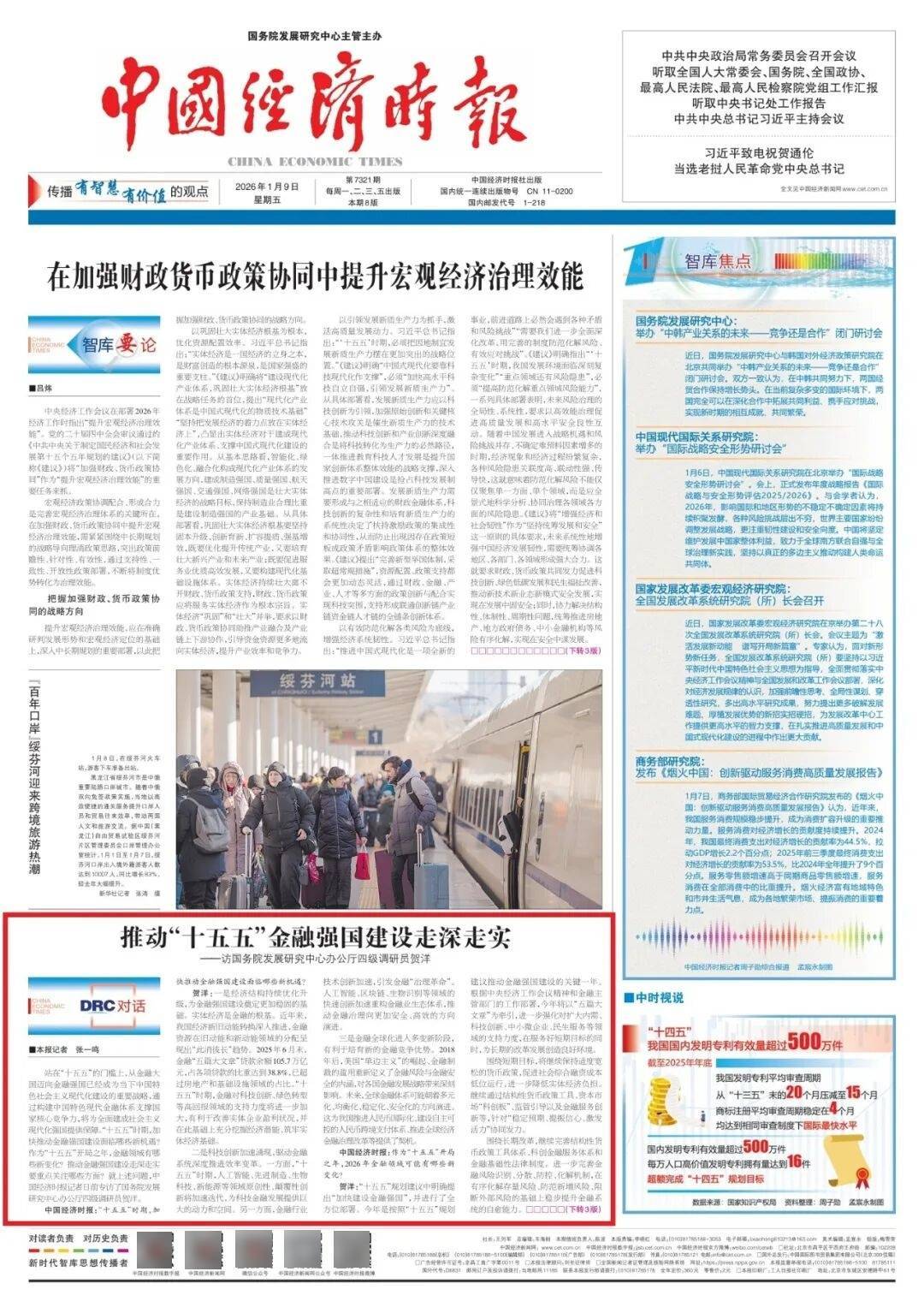
DRC对话丨贺洋:推动“十五五”金融强国建设走深走实
Sou Hu Cai Jing· 2026-01-09 04:16
Group 1 - The core viewpoint emphasizes the transition from a financial power to a financial strong nation as a crucial strategy for modernizing China's economy during the "14th Five-Year Plan" period [2][12] - The continuous optimization and upgrading of the economic structure provide a solid foundation for building a financial strong nation, with financial resources increasingly supporting high-return sectors like technology innovation and green transformation [2][3][12] - By mid-2025, the loan balance for the "Five Major Articles" in finance is projected to reach 105.7 trillion yuan, accounting for 38.8% of total loans, surpassing real estate and infrastructure sectors [2][12] Group 2 - The "14th Five-Year Plan" outlines new opportunities for financial development, including a focus on expanding domestic demand, supporting technology innovation, and enhancing services for small and medium enterprises [4][5] - The financial sector is expected to maintain a moderately loose monetary policy to lower financing costs and support the real economy, while also utilizing structural monetary policy tools and innovations in financial services [4][5][12] - Key areas of focus for deepening the construction of a financial strong nation include building a modern financial service system, enhancing cross-border financial services, deepening financial reform and opening up, and promoting global financial governance reform [5][6][12] Group 3 - The global financial landscape is entering a new phase characterized by diversification and stability, which presents opportunities for China to promote the internationalization of the renminbi and establish a self-controlled cross-border payment system [3][6] - The financial sector is expected to adapt to new characteristics and challenges of enterprises going global, improving the overseas investment and financing service system [5][6] - The emphasis on enhancing China's role in the international financial system aligns with the trend of diversifying the international monetary system and optimizing foreign exchange reserve allocation [6][12]
国金证券:数字人民币应用场景空间广阔 2.0时代将加速发展
智通财经网· 2026-01-09 02:37
Core Insights - Digital RMB plays a significant role in promoting the internationalization of the RMB and enhancing China's financial influence globally [1][2] Group 1: Digital RMB Overview - Digital RMB is a digital form of legal tender issued by the central bank, characterized by legal validity, security, convenience, and programmability [2] - As of November 2025, Digital RMB has processed 3.48 billion transactions with a total transaction amount of 16.7 trillion RMB [2] Group 2: Market Dynamics - The necessity for sovereign digital currencies arises from risks posed by cryptocurrencies and global stablecoins to the international monetary system [3] - Approximately 130 countries, representing 98% of the global economy, are exploring digital versions of their currencies, with many in advanced development or pilot stages [3] Group 3: Favorable Environment - The usage rate of cash in China is low, with electronic payments accounting for over 60% of non-cash transactions [4] - The total payment volume in China's digital payment market is projected to reach 332 trillion RMB in 2024 and 393 trillion RMB by 2029 [4] Group 4: Industry Chain - Key technology areas for the issuance layer include digital encryption, network security, and identity authentication, with core technology companies likely to participate in the development [5] - The circulation layer will require banks and third-party payment institutions to upgrade their systems to accommodate Digital RMB [5] - The application layer involves upgrades to payment terminals like POS and ATMs, as well as the use of digital wallets [5]

晋商银行成功办理全省首笔飞机保税采购跨境人民币结算业务
Jin Rong Jie Zi Xun· 2026-01-09 02:31
Core Viewpoint - The successful execution of a 217 million RMB cross-border payment by Jinshang Bank marks a significant advancement in the bank's cross-border RMB business and supports the national strategy for RMB internationalization [1][2]. Group 1: Business Achievement - Jinshang Bank facilitated a 217 million RMB cross-border payment for Taiyuan Aviation Group, directly transferring RMB to the designated settlement bank in the UK [1]. - This transaction is the first application of cross-border RMB payment for goods in Shanxi Province under the new model of "bonded procurement + leasing trade" [1]. - The transaction represents the largest cross-border RMB settlement business for Jinshang Bank, highlighting its commitment to serving the real economy [1]. Group 2: Strategic Importance - The successful completion of this transaction enhances Jinshang Bank's cross-border RMB business scale and market influence [2]. - It strengthens the bank's collaboration with clients, providing a solid and high-certainty expectation for the client's business layout in the upcoming year [2]. - Jinshang Bank plans to leverage this achievement to promote its business and improve cross-border financial service quality, contributing to RMB internationalization and regional economic development [2].
金融对外开放不断深化
Jing Ji Ri Bao· 2026-01-08 21:43
Group 1: Financial Industry Opening and Development - The financial sector's opening is a crucial part of China's reform and opening-up strategy, with accelerated steps during the "14th Five-Year Plan" period, enhancing international competitiveness and influence [1] - Key tasks for building a strong financial nation in the "15th Five-Year Plan" include accelerating the construction of an international financial center, improving Shanghai's market price influence, and supporting Hong Kong's status as an international financial center [1][7] Group 2: Global Financial Governance Participation - The opening of the IMF Shanghai Center on December 8, 2025, signifies China's commitment to global financial governance and cooperation, enhancing macroeconomic policy coordination in the Asia-Pacific region [2] - The People's Bank of China (PBOC) is actively involved in global governance platforms to promote a fairer global financial governance structure and enhance financial stability [2] Group 3: Renminbi Internationalization - The international status of the Renminbi has steadily improved, with its weight in the IMF's Special Drawing Rights (SDR) basket increased from 10.92% to 12.28% in 2022, marking a significant milestone in Renminbi internationalization [3] - The PBOC emphasizes that the Renminbi's rise contributes to a more diversified and balanced international monetary system, enhancing global financial stability [3] Group 4: Enhancing Cross-Border Financial Services - The PBOC and other authorities have launched an action plan to improve cross-border financial services in Shanghai, focusing on enhancing settlement efficiency and optimizing risk management services [5] - The establishment of the Digital Renminbi International Operation Center in Shanghai aims to strengthen the integration of finance and the real economy through technological innovation [5] Group 5: Strengthening Hong Kong's Financial Hub - The PBOC is implementing measures to deepen financial cooperation between the mainland and Hong Kong, supporting Hong Kong's position as a major offshore Renminbi business center [7] - A funding arrangement of 100 billion Renminbi is set to provide stable and low-cost funding sources for commercial banks in Hong Kong, reinforcing its financial center status [7] Group 6: High-Level Financial Opening - The PBOC is promoting high-level financial opening, enhancing market connectivity, and optimizing mechanisms like Bond Connect and Swap Connect to facilitate foreign investment [8] - As of August 2025, foreign investment in China's bond market has significantly increased, with nearly 1,170 foreign investors participating, and total holdings reaching approximately 3.9 trillion Renminbi [8] Group 7: Financial Market Integration and Risk Management - Efforts are underway to align financial market rules with international standards, increasing the global competitiveness of Chinese bonds and enhancing their recognition as collateral [9] - The PBOC is focused on balancing financial high-level opening with risk prevention, ensuring a robust regulatory framework to support safe and stable market operations [9]
工行成功开展数字人民币跨境数字支付平台业务试点
Jin Rong Jie· 2026-01-08 13:02
Group 1 - The core viewpoint of the article highlights the successful pilot of the digital RMB cross-border payment platform by the Industrial and Commercial Bank of China (ICBC), under the guidance of the People's Bank of China, the Monetary Authority of Singapore, and the Bank of the Lao People's Democratic Republic, which aims to enhance cross-border payment efficiency and service levels [1] - On September 24, 2025, the People's Bank of China announced the official operation of the digital RMB international operation center and launched the digital RMB cross-border payment platform, providing a "Chinese solution" for central bank digital currency cross-border payment cooperation [1] - ICBC leverages its global service network and operational advantages in digital RMB to actively support the development of the cross-border digital payment platform [1] Group 2 - ICBC's Singapore branch has successfully implemented an innovative pilot for overseas recharge of digital RMB personal wallets, facilitating consumption for Singaporean tourists in China [1] - The ICBC Vientiane branch, in collaboration with the ICBC Shandong branch, successfully processed the first international trade cross-border remittance business under digital RMB between China and Laos, supporting cross-border trade and investment facilitation [1] - ICBC plans to further expand innovative application scenarios for digital RMB and actively contribute to the internationalization of the RMB and the establishment of a controllable cross-border payment system [1]

银河证券推出境外银行熊猫债篮子 丰富银行间市场产品体系
Xin Hua Cai Jing· 2026-01-08 11:59
Group 1 - The core viewpoint of the news is that China Galaxy Securities has launched a new product called "Galaxy Securities Offshore Bank Panda Bond Basket" to facilitate efficient investment in panda bonds [1] - The product integrates high-quality financial bonds from offshore entities and aims to provide investors with a convenient tool for panda bond allocation [1][2] - The launch aligns with the current policy direction of promoting high-level financial openness and the internationalization of the Renminbi [2] Group 2 - The bond basket includes three bonds, each with a face value of 1,000 million yuan and a weight of 33%: ICBC Asia Bond, CCB Asia Bond, and New Development Bank Bond [2] - The basket is designed to select bonds with high credit ratings and good market liquidity, covering various offshore issuers [2] - The dynamic adjustment mechanism of the basket will update sample bonds based on market quotes, transaction activity, and investor demand to maintain its relevance [2] Group 3 - China Galaxy Securities is one of the early participants in the creation and quoting of bond baskets in the interbank market, having launched a total of 20 bond baskets covering various types of bonds [3] - The continuous deepening of China's bond market opening has led to steady development in the panda bond market, with increasing innovation in related financial products [3] - The emergence of standardized basket products is believed to enhance the liquidity and price discovery efficiency of related bonds, further promoting cross-border financing cycles of the Renminbi [3]


以破“7”收官2025,2026年人民币汇率将何去何从?
Xin Hua Cai Jing· 2026-01-08 08:36
Core Viewpoint - In 2025, the RMB exchange rate experienced significant appreciation against the USD, influenced by tariff expectations, fluctuations in the USD, and improvements in the domestic environment, with onshore and offshore RMB appreciating approximately 4.27% and 4.93% respectively [1][2][3] Group 1: RMB Exchange Rate Trends in 2025 - The RMB exchange rate reached its highest levels since May 2023, closing at 6.9879 for onshore and 6.9697 for offshore [2] - The year can be divided into two phases: the first phase saw a depreciation of about 0.65% until early April due to rising global tariff risks, while the second phase from mid-April to year-end saw a cumulative appreciation of approximately 4.9% as external economic conditions improved [2][3] - The depreciation of the USD, driven by various factors including the Federal Reserve's shift to a loose monetary policy, contributed to the RMB's strength [3] Group 2: Internal and External Factors Supporting RMB Appreciation - Strong export performance supported the RMB's appreciation, with a trade surplus exceeding $1 trillion for the first 11 months of 2025 [3] - The Chinese capital market showed resilience, with the Shanghai Composite Index rising 18.41%, the Shenzhen Component Index increasing by 29.87%, and the ChiNext Index up by 49.57%, providing solid support for the RMB [3] - The implementation of stable exchange rate policies helped to smooth fluctuations and maintain market expectations [3][4] Group 3: Outlook for 2026 - The RMB is expected to continue a gradual appreciation against the USD in 2026, influenced by the USD's potential depreciation and narrowing interest rate differentials between China and the US [6][7] - The external economic environment's impact on the RMB may lessen, with improved resilience in China's economy and financial markets [6][7] - Despite potential short-term fluctuations, the RMB is projected to maintain a range of 6.9 to 7.3 against the USD, with a focus on balanced exchange rate management [7][8]
广州期货:美ISM服务业PMI上升 金银涨势暂歇
Jin Tou Wang· 2026-01-08 07:07
Macro Messages - The expectation of interest rate cuts by the Federal Reserve remains, with a combination of "easing expectations + weak dollar" continuing to support the recovery channel [1] - Increased risk aversion is noted due to factors such as U.S. debt expansion, de-dollarization, escalating geopolitical conflicts, and the reshaping of economic patterns, enhancing the strategic allocation value of gold [1] - Central bank gold purchases are seen as a necessary step for the internationalization of the Renminbi, with gold expected to remain a long-term asset allocation choice amid a damaged U.S. credit system and global monetary system restructuring [1] Institutional Views - The main contract performance shows that Shanghai gold fell by 0.31% to 1002.2, while Shanghai silver dropped by 2.99% to 19020; platinum decreased by 2.47% to 598.5, and palladium increased by 1.71% to 475.95 [1] - As of the end of December, China's gold reserves stood at 74.15 million ounces, an increase of 30,000 ounces, marking the 14th consecutive month of growth [1] - The U.S. ISM services PMI index rose by 1.8 points to 54.4 in December 2025, the highest level since October 2024, while the ADP employment figure increased by 41,000, below the expected increase of 47,000 [1]