生成式AI

Search documents
销量下跌?利润收缩?AI战决高下!6大国际咨询机构投行2026汽车业展望
Zhong Guo Qi Che Bao Wang· 2026-01-20 04:08
Core Insights - The Chinese automotive market closed 2025 with strong figures, including over 34 million vehicles produced and sold, with passenger cars exceeding 30 million and new energy vehicles surpassing 16 million [2] - As 2026 begins, the industry faces intensified competition and a sense of urgency to address "involution" in the market, prompting a need for long-term development strategies amidst uncertainties [2] Group 1: Industry Trends and Challenges - Roland Berger identifies six major trends for 2026, including accelerated elimination of weaker players, a shift towards full-chain capabilities, and a focus on internationalization and capital competition [3][4] - The transition from quantity to quality growth is emphasized, with a focus on cost competitiveness and engineering efficiency as key survival strategies for automakers [8] - The automotive industry is expected to face challenges from tightening policies, rising material costs, and the need for improved product quality amidst competitive pressures [5][13] Group 2: Market Dynamics and Projections - UBS forecasts a slight decline in wholesale and retail sales in 2026, with a focus on overseas expansion as a growth strategy for automakers [5] - Deloitte predicts that the penetration rate of new energy vehicles will plateau around 60%, shifting the focus of automakers from market share to cost control and operational efficiency [8] - Goldman Sachs anticipates that overseas markets will drive growth, with expectations of significant increases in vehicle exports, particularly in the new energy segment [12] Group 3: Technological Advancements - The year 2026 is seen as pivotal for advancements in solid-state batteries and the integration of AI technologies in vehicles, with a focus on creating scalable and sustainable systems [4][8] - The development of Robotaxi services is expected to transition from niche to mainstream, indicating a significant shift in the automotive landscape [6] Group 4: Strategic Recommendations - Companies are advised to enhance their supply chain management and localize operations to better compete in international markets [10][12] - Emphasis is placed on improving product quality and consumer engagement to navigate the challenges posed by tightening policies and competitive pressures [14]


独家访谈|麦肯锡全球资深董事合伙人叶海:“韧性增长”取代“高速增长”,未来十年企业要做对三件事
麦肯锡· 2026-01-20 02:01
Core Insights - The article discusses the shift in growth logic for Chinese companies, emphasizing the transition from external growth drivers to internal organizational restructuring and capability enhancement for sustainable growth in a changing market environment [2][3]. Group 1: Changes in Growth Logic - The underlying logic of growth for Chinese enterprises remains centered on consumer needs and internal capabilities, but the external environment has fundamentally changed, leading to market slowdown and increased competition [3]. - Companies must shift from broad growth strategies to more precise, differentiated, and value-driven growth approaches, focusing on specific market segments to create economic value [3]. Group 2: Resilient Growth Concept - "Resilient growth" is defined as a combination of growth and resilience, emphasizing efficiency and cost optimization as prerequisites for growth [4][5]. - Companies need to establish agile iteration capabilities to respond quickly to market changes and consumer feedback, moving away from long-cycle perfect innovations [4][5]. Group 3: Innovation Strategies - The article introduces "thematic innovation," which contrasts with past point-based innovation, advocating for a systematic approach to innovation based on consumer needs, competitive landscape, and technological trends [6]. - Companies must develop a complete rapid iteration system to support thematic innovation, moving beyond reliance on singular breakthrough products [6][7]. Group 4: Organizational Structure - The concept of "big system, small knife" is proposed, where a robust organizational structure ensures control while allowing for agile, independent business units to respond quickly to market demands [8]. - Traditional matrix organizations face challenges in fast-paced markets, necessitating a shift to a structure that promotes rapid decision-making and accountability [8]. Group 5: Brand Building and Channel Transformation - Successful brand building in China requires understanding consumer psychology and addressing contradictions in consumer preferences, such as the desire for quality and cultural identity [9][10]. - The focus of brand strategy is shifting from mere promotion to enhancing consumer experience throughout the purchasing journey, necessitating organizational changes to integrate marketing, sales, and product development [10]. Group 6: Consumer Experience - Companies must prioritize consumer experience as the highest dimension of business, ensuring that all organizational actions align with enhancing the consumer journey from awareness to loyalty [11]. - The CEO should oversee the consumer experience strategy, ensuring it is integrated across departments and aligned with organizational goals [11]. Group 7: AI Utilization - The article notes that only 6% of companies have successfully created value through generative AI, highlighting the potential for AI to assist in decision-making and operational efficiency [12]. - The integration of generative AI with automation and hardware can significantly enhance productivity and reduce costs in manufacturing and logistics [12]. Group 8: Leadership Evolution - Future leaders in Chinese enterprises need to blend the structured approach of professional managers with the visionary traits of entrepreneurial leaders to navigate the complexities of the current market [13]. - Building a team of leaders with a general manager mindset is essential for fostering resilience and adaptability within organizations [13]. Group 9: Strategic Implementation - Effective strategy implementation requires breaking down broad strategies into quantifiable goals and ensuring clear communication across all organizational levels [14]. - The role of a strategic interpreter is crucial for translating high-level visions into actionable plans that resonate with all employees [14].

腾讯研究院AI速递 20260120
腾讯研究院· 2026-01-19 16:03
Group 1 - Tesla has announced that the design of its AI5 chip is nearing completion, with the AI6 chip in early stages, aiming to shorten the chip design cycle to 9 months and predicting it will become the highest production AI chip globally [1] - The AI5 chip will utilize Samsung's 2nm and TSMC's 3nm processes, boasting overall performance 50 times that of AI4 and memory capacity 9 times greater, with mass production expected in 2027 [1] - Tesla signed a $16.5 billion agreement with Samsung for the production of the AI6 chip in the U.S., anticipated to launch in 2028 [1] Group 2 - Anthropic has upgraded Claude Cowork with a "permanent memory" feature, allowing the AI to categorize and store information, enhancing user understanding over time [2] - The upgrade includes an MCP connector system to improve automation, voice mode development, and a new UI area for continuous management of results [2] - Continuous learning is viewed as a key breakthrough for AGI, with OpenAI and Google also investing in memory functionalities [2] Group 3 - Kunlun Wanwei has launched Skywork Design Agent, focusing on poster design, social media materials, logo branding, and general creative image generation [3] - The product features a self-developed canvas engine that supports manual editing, AI photo retouching, and layer separation, streamlining the entire process from material import to export [3] - It offers multiple export formats (PNG, JPG, PDF) and includes a unique "add to knowledge base" feature to address material management issues, now fully launched overseas [3] Group 4 - Douzi 2.0 has introduced the Coze Skill feature, allowing users to encapsulate personal methodologies and industry experiences into reusable "skill packages" [4] - A new "long-term plan" feature enables goal-oriented AI collaboration, breaking down vague objectives into clear steps for automatic execution [4] - The launch of a skill marketplace facilitates the exchange of industry skill packages, allowing professionals to monetize their expertise, alongside the beta release of video Agent Skill [4] Group 5 - Giant Network's "Supernatural Action Group" has introduced an "AI large model challenge" mode, integrating large model technology into game combat, marking a significant application in a high DAU game [5] - AI characters are driven by large models in real-time, capable of voice interaction and mimicking human behavior, with over 25 million AI matches recorded in the first week [5] Group 6 - Anker and Feishu have collaborated to create a 10-gram AI recording device, addressing the portability issues of traditional AI recording cards [7] - The device features real-time summarization capabilities, generating structured logical maps during meetings and supporting real-time translation in 24 languages [7] - Recordings are directly streamed to the Feishu knowledge base, integrating with the entire Feishu ecosystem to reduce the burden of knowledge base construction [7] Group 7 - Roboto has open-sourced its bipedal humanoid robot prototype, achieving a running speed of 3 m/s, making it one of the most advanced open-source humanoid robots globally [8] - The open-source content includes hardware schematics, EBOM material lists, supplier information, and control algorithm code, enabling reproducibility and verification [8] - The team, originating from Harbin Institute of Technology, has secured millions in seed funding and aims to reduce the cost of embodied intelligence development by 80% [8] Group 8 - Galaxy General has launched the Galbot S1, a heavy-duty robot capable of carrying loads up to 50 kg, currently operating in key production processes at CATL [9] - It features an industry-first fully autonomous, zero-remote operation "embodied handling model," utilizing pure visual perception without QR code markers [9] - Galaxy General has recently completed a 2.1 billion yuan financing round, with a valuation exceeding 20 billion yuan, and has established partnerships with leading manufacturers [9] Group 9 - OpenAI's product manager reported that since the release of ChatGPT-5, the Codex platform has seen a 20-fold growth, processing trillions of characters weekly [10] - The Sora Android app achieved a rapid development cycle, going from zero to launch in 28 days and topping the App Store, significantly improving team efficiency [10] - The manager noted that human typing speed and multitasking capabilities are often the limiting factors for AGI, rather than the models themselves [10]


国泰海通|GEO· 合集
国泰海通证券研究· 2026-01-19 14:03
Core Insights - The article discusses the emergence of GEO (Generative Engine Optimization) as a new marketing paradigm driven by the explosion of large model technologies, with the global GEO market surpassing $10 billion and the domestic market nearing 3 billion yuan [2][17]. Group 1: GEO Market Overview - The GEO market is expected to continue its upward trajectory as large model traffic grows, with a projected market size of 29 billion yuan in China by 2025, reflecting a year-on-year growth of 215% [6][17]. - Over 78% of enterprise decision-makers prioritize AI search optimization as part of their digital transformation strategies [6][17]. - By 2026, traditional search engine traffic is predicted to decline by 25%, with AI chatbots and other virtual optimization methods capturing more market share [6][17]. Group 2: Marketing Transformation - The shift in marketing strategies is anticipated as brands adapt to the new GEO paradigm, particularly benefiting e-commerce operators who can quickly establish GEO content generation capabilities [7][10]. - GEO focuses on optimizing content for AI models to enhance visibility and recommendation, contrasting with traditional SEO, which emphasizes keyword ranking [5][16][22]. - The marketing landscape is evolving, with AI-generated recommendations becoming a critical factor in consumer decision-making, leading to a more efficient marketing process [10][12]. Group 3: Business Implications - Companies that can leverage AI platforms and provide SaaS solutions are expected to thrive in the new GEO landscape, with a significant market opportunity projected to exceed $100 billion globally by 2030 [12][24]. - The transition from traditional marketing models to a subscription-based SaaS and performance-based revenue model is anticipated, improving profit margins in the industry [24]. - The article identifies five types of companies likely to benefit from the GEO transformation, including AI platform companies, SaaS providers, marketing firms, e-commerce operators, and brands that adapt quickly to the new marketing dynamics [12][22].

“一周干完一年活”!Claude Code让工程师集体“上瘾”:写代码、操控电脑、整理文件夹 背后却埋安全暗雷
Mei Ri Jing Ji Xin Wen· 2026-01-19 09:15
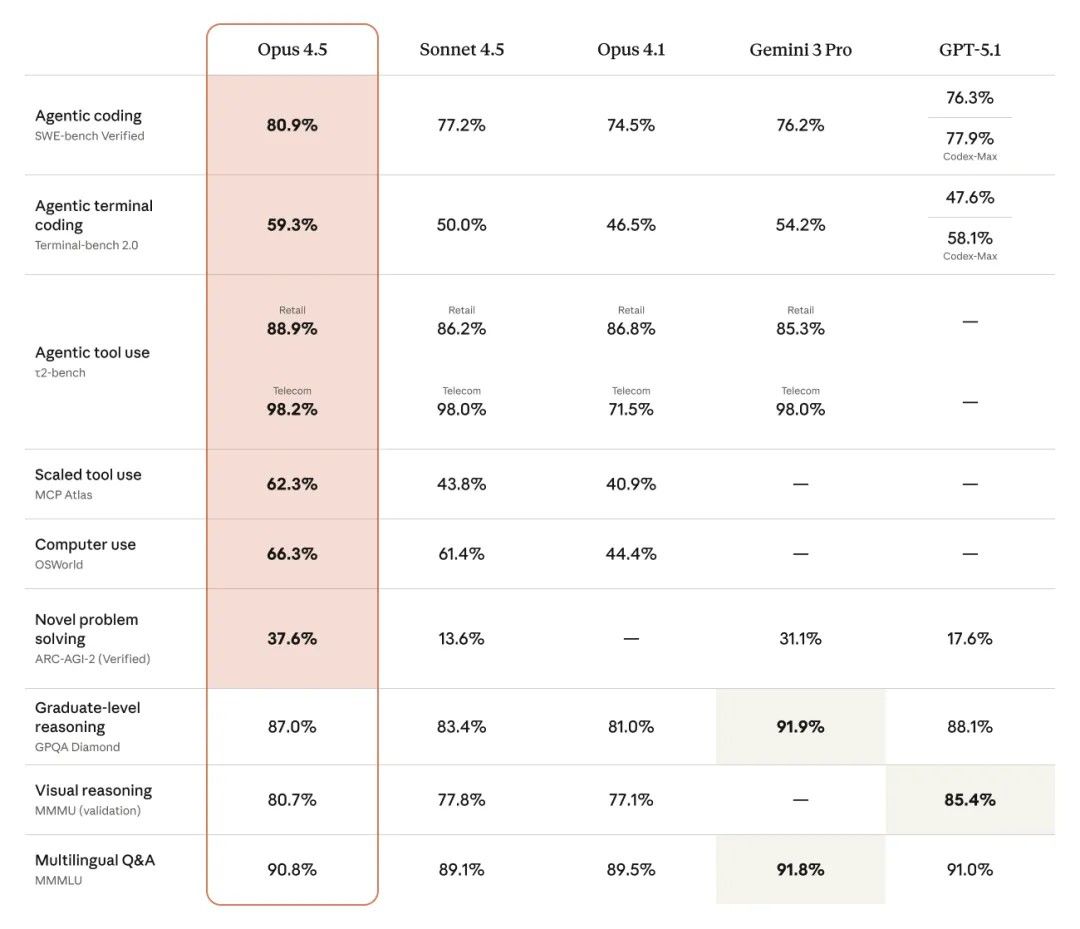
Core Insights - Anthropic's Claude Opus 4.5 and Claude Code are experiencing unprecedented demand from developers and corporate executives, likened to a historic moment in generative AI [1] - The launch of Cowork, a "digital colleague" tool, aims to disrupt traditional collaboration models, expanding beyond programming into various work scenarios [1][7] - Anthropic is pursuing a new funding round of at least $25 billion, targeting a valuation of $350 billion, despite facing significant risks related to its products [1][19] Product Performance - Claude Code, the flagship product, is designed to assist in building autonomous AI agents with minimal human intervention, showing significant performance improvements over previous versions [2] - Performance benchmarks indicate that Claude Opus 4.5 outperforms its predecessors in various coding tasks, achieving an 80.9% verification rate on SWE-bench [3][4] User Adoption and Impact - Users report dramatic productivity increases, with one CTO completing a year-long project in just one week using Claude Code, leading to a phenomenon termed "Claude-pilled" [5][6] - The tool's influence is extending beyond technical users to non-technical professionals, enabling them to perform complex tasks previously requiring specialized skills [5][6] Market Reaction - The success of Claude Code has triggered a "disruptive panic" in the software industry, leading to significant declines in software stock prices, with a 15% drop in SaaS stocks since the beginning of the year [14] - Many startups are feeling the pressure, with some projects reportedly evaporating due to the competitive threat posed by Claude Code [16] Funding and Valuation - Anthropic is in discussions for a funding round that could raise over $25 billion, with commitments from major investors like Microsoft and Nvidia, potentially doubling its valuation to $350 billion [19] - The company is also preparing for an initial public offering (IPO), which could occur as early as this year [19] Security Concerns - The introduction of Cowork has raised concerns about operational risks, including a reported incident where the tool irreversibly deleted 11GB of user files due to a misunderstanding of user intent [12] - There are ongoing concerns about "prompt injection" risks, where external content could mislead the AI, prompting the need for robust security measures [13]
中国开源AI模型崛起,占全球份额15%
3 6 Ke· 2026-01-19 03:41
Core Insights - Chinese companies' generative AI is projected to capture approximately 15% of the global market share by November 2025, a significant increase from 1% a year prior [2][3] - The rise of open-source models like DeepSeek and Qwen (千问) is notable, with 40% of Chinese AI models being utilized for advanced tasks such as programming and design [3][5] - Japan's reliance on Chinese open-source models for AI development poses risks, as changes in model rules could abruptly affect development and usage [5][6] Group 1 - The global market share of Chinese generative AI is expected to reach 15% by November 2025, up from 1% a year earlier [2] - The average market share of Chinese open-source AI from November 2024 to November 2025 is projected at 13%, a significant rise from 1.2% at the end of 2024 [2] - In some weeks, the market share of Chinese open-source AI has reportedly reached as high as 30% [2] Group 2 - DeepSeek's model "R1," released in January 2025, has gained attention for its high performance at a low cost [3] - DeepSeek ranks 9th among 92 models in the AI model scoring published by NIKKEI Digital Governance, making it the top open-source model, surpassing Google's and OpenAI's models [5] - Six out of the top ten models developed by Japanese companies are based on DeepSeek and Qwen [5] Group 3 - Japan's Ministry of Economy, Trade and Industry has included support policies in the 2026 budget to develop domestic open-source models, aiming for a scale of 1 trillion yen over five years [5] - The ability to integrate various data types, such as images and voice, is essential for Japanese AI to compete with Chinese and American models [6] - The increasing performance requirements for AI in business settings highlight the growing challenges faced by Japanese developers [6]
中国儒意战略投资爱诗科技,携手开拓“AI+内容”产业新未来
Jin Rong Jie· 2026-01-19 03:04
Core Insights - Chinese company Ru Yi has announced a strategic partnership with global AI video leader Aishi Technology to enhance its film, streaming, and gaming sectors through advanced AI technology [1][3] - Ru Yi has made a strategic investment of $14.2 million in Aishi Technology, aiming to capitalize on the emerging "AI + content" opportunities [1][4] Group 1: Partnership and Investment - The partnership aims to leverage Aishi Technology's leading AI video capabilities to upgrade Ru Yi's core business areas [1][3] - Aishi Technology has gained recognition in the capital market, being the first to release a universal real-time world model and having over 100 million users for its product "PixVerse" [3][4] - The collaboration will involve deep synergy in three main areas: strategic advisory for AI technology implementation, application in film, streaming, and gaming, and exploring new interactive content forms [4][6] Group 2: Industry Impact and Applications - The content industry is undergoing a transformation with generative AI, exemplified by Netflix's use of AI in visual effects, which increased production speed by 10 times and reduced costs by 90% [1][2] - In the domestic market, the rise of AI-driven content forms, such as AI short dramas, is expected to expand the animation industry significantly, with projections indicating a market size of 18.98 billion yuan by 2025 [1][2] - Ru Yi's film division has produced successful films with a cumulative box office exceeding 40 billion yuan, and the partnership will focus on developing AI tools to enhance film production efficiency [5][6] Group 3: Gaming and Streaming Enhancements - Ru Yi's gaming division, Jingxiu Games, has seen rapid growth and aims to integrate Aishi Technology's AI video generation to improve content production efficiency and player engagement [6] - The streaming division, Pumpkin Movies, has already implemented AI technology in its content creation, and the partnership will further optimize its operations and expand AI-generated content applications [5][6] - The collaboration represents a complementary relationship between a content production leader and an AI technology pioneer, potentially setting a benchmark in the "AI + content" sector [6]

中国开源AI模型崛起,占全球份额15%
日经中文网· 2026-01-19 03:03
Core Insights - The global market share of generative AI developed by Chinese companies is projected to reach approximately 15% by November 2025, a significant increase from 1% a year prior [2][4] - Chinese generative AI models are increasingly utilized for advanced tasks such as programming and design, with 40% of these models being applied in such areas [5] Group 1: Market Growth and Trends - The market share of Chinese open-source AI is expected to average 13% from November 2024 to November 2025, a substantial rise from 1.2% at the end of 2024, with some weeks seeing shares reach 30% [4] - The emergence of open-source models like DeepSeek and Qwen (千问) has contributed to the rapid growth of Chinese generative AI, which is now influencing global AI technology trends [5] Group 2: Performance and Competition - DeepSeek's model "R1," released in January 2025, has gained international attention for its high performance at a low cost, ranking 9th among 92 models in performance tests, surpassing models from Google and OpenAI [7] - Six out of the top ten AI models developed by Japanese companies are based on Chinese open-source models like DeepSeek and Qwen, indicating a significant reliance on these technologies [8] Group 3: Risks and Developments in Japan - Japan's dependency on Chinese open-source models poses risks, as changes in the rules governing these models could suddenly restrict their development and use [8] - In response to the reliance on foreign models, Japan is attempting to develop its own open-source models, with a budget of 1 trillion yen planned over five years to support this initiative [9]

摩根士丹利-新年-仍是同样的AI叙事
摩根· 2026-01-19 02:29
Investment Rating - The report indicates an upgrade in the rating for Datadog to "Buy" due to improvements in core business after excluding OpenAI operations and the expected acceleration in growth from cloud migration and digital transformation projects [13][14]. Core Insights - The AI sector is rapidly evolving, with Anthropic's Claude Co-Work showcasing the capabilities of general intelligence agents in handling information work, marking a shift from prompt-driven interfaces to task-oriented models [1][3]. - Despite the enthusiasm for generative AI, the overall IT budget growth expectations have not significantly changed, with hardware, communication, and IT services spending expected to slow down [1][6]. - Snowflake is projected to have the highest growth acceleration expectations in 2026 among surveyed vendors, alongside Microsoft, indicating a strong position in the cloud data warehouse market [8]. Summary by Sections AI Development and Market Trends - The transition from prompt-driven interfaces to task-oriented models is highlighted by the capabilities demonstrated by Claude Co-Work [1][3]. - CIO surveys indicate that generative AI remains a top priority, but overall IT budget growth expectations have not improved significantly, with a slight downward adjustment noted [6]. Company Performances - Snowflake is leading in growth expectations for 2026, with a continued rise in the adoption of third-party cloud data warehouses [8]. - Datadog's core business is improving, with a notable increase in observability spending expected to become a core priority in enterprise budgets starting in 2026 [13][14]. - Atlassian is noted for its resilience and growth opportunities, with an expected 20% continuous revenue growth [21]. Competitive Landscape - The report discusses the competitive dynamics between Microsoft and Anthropic, with CIOs favoring Microsoft 365 Copilot for its comprehensive features [5]. - Akamai's collaboration with NVIDIA aims to leverage its distributed edge network for enhanced inference capabilities, which is expected to drive revenue growth [18][19].
咖啡机变聪明后,我连咖啡都喝不上了
3 6 Ke· 2026-01-19 00:17
Core Insights - The article highlights the disparity between expectations of AI capabilities and their actual performance, particularly in executing simple tasks like making coffee or controlling lights [1][5][11]. Group 1: AI Performance Issues - Users have expressed frustration with AI assistants like Alexa, which fail to execute basic commands reliably after upgrades, leading to a perception of decreased functionality [1][2][5]. - Traditional voice assistants operated on a template-matching basis, ensuring predictable outcomes, while newer AI models introduce randomness, resulting in inconsistent responses [7][8]. Group 2: Technical Challenges - The inherent randomness of large language models (LLMs) complicates their ability to perform tasks that require precision and repeatability, such as controlling smart home devices [7][9]. - Despite the potential for LLMs to understand complex commands better, they struggle with generating consistent system calls necessary for reliable device control [8][10]. Group 3: User Experience and Expectations - Users acknowledge that while the new AI systems can handle complex commands more effectively, they still face issues with basic functionalities [14][20]. - There is a growing consensus among users that the challenge lies not in the introduction of AI but in defining its boundaries and ensuring it complements existing reliable systems rather than replacing them [21][22].