通用人工智能(AGI)

Search documents
400亿机器人、6万亿参数的Grok 5:马斯克访谈中的AI终局与人类意义
混沌学园· 2025-12-05 09:07
Group 1 - The future global quantity of humanoid robots is expected to reach 30-40 billion, with each person in industrial settings potentially corresponding to three to four robots [7] - The manufacturing cost of the Optimus robot is projected to be between $20,000 to $30,000 once annual production stabilizes at one million units, with the complexity of its hand being a significant factor [8] - The precision of Optimus's hand is expected to surpass that of human hands, enabling it to perform complex medical tasks, thus providing a pathway to universal access to quality healthcare [9] Group 2 - Elon Musk's new venture, xAI, aims to fulfill the original mission of OpenAI, focusing on creating a non-profit, open-source AI that prioritizes human safety [11][12] - xAI's Grok 5 model is being trained with 60 trillion parameters, marking a significant step towards achieving Artificial General Intelligence (AGI), with a 10% chance of success [14][15] - Grok 5 will feature real-time video understanding capabilities, which are crucial for AGI, and aims to create an open-source knowledge repository akin to a modern-day Library of Alexandria [16][17] Group 3 - Tesla's upcoming AI5 chip is designed to achieve performance levels 2-3 times that of NVIDIA's chips while reducing costs to one-tenth, focusing on low-power AI inference for robots and vehicles [24][25] - The production efficiency of Tesla's factories is being optimized to potentially reduce vehicle production time to as little as 5 seconds per unit, a radical departure from traditional manufacturing practices [22][23] Group 4 - Musk envisions a future where traditional applications and operating systems are replaced by AI-driven interactions, predicting that AI will generate most content consumed by users within five to six years [29] - The ideal future scenario includes universal high income, where individuals can access any product or service without the need for traditional labor, leading to a redefinition of human purpose and value [32][34]



“AI教母”李飞飞抨击AI宣传两极化:要么世界末日,要么乌托邦
Feng Huang Wang· 2025-12-05 07:23
除了李飞飞外,其他顶尖计算机科学家也在呼吁对AI及其社会影响力进行更平衡的宣传。 今年7月,谷歌大脑创始人吴恩达表示,他认为通用人工智能(AGI)被高估了。AGI指的是AI系统具备人 类水平的认知能力,并能像人类一样学习和运用知识。各大领先AI公司的高管经常被问及他们认为AGI 何时到来,以及这对人类工作者意味着什么。 "AGI一直被过度炒作,"吴恩达在Y Combinator的演讲中表示,"在很长一段时间内,仍会有许多事情是 人类能做而AI无法做到的。" 李飞飞是在斯坦福大学长期任职的计算机科学教授,以创建ImageNet数据集而闻名。去年,她联合创立 了世界实验室公司,致力于开发能够感知、生成并与三维环境交互的AI模型。 她在斯坦福大学的讲座中表示,这种"极端言论"正充斥着技术讨论,并误导易受影响的人群。 "全世界的人,尤其是硅谷以外的人,需要听到事实,需要知道这项技术到底是什么,"她表示,"然而 这类讨论、这种沟通方式、这种公众教育,还未达到我所期望的效果。" 凤凰网科技讯 北京时间12月5日,据《商业内幕》报道,"AI教母"李飞飞表示,目前关于AI的讨论过于 极端化。 李飞飞在斯坦福大学的一场讲座于周 ...
拉响紧急警报后,奥特曼再遭暗讽:孤注一掷,或将死无全尸!
Sou Hu Cai Jing· 2025-12-04 20:13
Group 1 - The core theme of the summit was the impact of artificial intelligence (AI), with industry leaders expressing both optimism and concern about its future implications [2][8]. - Larry Fink, CEO of BlackRock, highlighted that the AI race will produce both significant winners and losers, with potential job losses in the workforce [4][10]. - Dario Amodei, CEO of Anthropic, warned that up to 50% of entry-level jobs could be permanently replaced by AI, predicting a rise in unemployment rates to 10%-20% within five years [4][7]. Group 2 - Amodei proposed a three-tier response model involving businesses, government, and society to address the challenges posed by AI, emphasizing the need for collaboration and proactive government intervention [5][7]. - He criticized the notion that retraining programs alone could solve the employment crisis, suggesting a fundamental shift in societal values regarding work [7][10]. - The AI industry is experiencing rapid growth, with major tech companies investing hundreds of billions in AI infrastructure, and 49 U.S. AI startups raising at least $100 million this year [8][10]. Group 3 - Amodei expressed skepticism about the sustainability of the current AI investment frenzy, warning that misjudgments in timing could lead to severe consequences for industry players [12][14]. - Anthropic's strategy focuses on collaborating with large enterprise clients and managing risk conservatively, contrasting with competitors who may be taking excessive risks [14][28]. - The company recently launched its strongest AI model, Claude Opus 4.5, which excels in generating code and processing documents, indicating its competitive edge in the enterprise sector [26][28]. Group 4 - Amodei believes that the path to achieving Artificial General Intelligence (AGI) lies in scaling AI models, which have shown consistent improvement through minor adjustments [29][30]. - He noted that current AI models are capable of performing complex tasks, such as writing code and excelling in mathematical competitions, suggesting ongoing advancements in AI capabilities [30][32]. - Anthropic is preparing for a potential IPO in 2026, which could be one of the largest in history, reflecting its growth and market potential [32].
瑞银对话哈佛大学教授艾利森:从“修昔底德陷阱”到“AI竞技”,国际关系进入新阶段
Di Yi Cai Jing· 2025-12-04 11:15
Core Viewpoint - The article discusses the complex relationship between China and the United States, highlighting recent positive developments and the potential for cooperation, particularly in the field of artificial intelligence (AI) [1][2][3]. Group 1: US-China Relations - The meeting between the leaders of China and the US in Busan in November resulted in important agreements, signaling a positive direction for bilateral relations [1]. - Both countries recognize the intertwined nature of their economic interests and the necessity of finding a coexistence path, especially with the upcoming US midterm elections in 2026 [2][3]. - Graham Allison emphasizes that the "Thucydides Trap" is not inevitable, suggesting that both nations need to exercise strategic imagination to avoid conflict [3]. Group 2: Investment Outlook - International investors have shown renewed interest in the Chinese market this year, with expectations that the attractiveness of Chinese assets will continue to grow by 2026 [2]. - Market volatility is anticipated in Q4 2025, but investors are looking forward to sector rotations, particularly in high-dividend, traditional consumer, and financial sectors, which could enhance overall asset valuations [2]. Group 3: AI as a Cooperation Opportunity - AI presents both risks and opportunities for US-China relations, with the potential for collaboration in addressing cross-border challenges posed by AI technology [9][10]. - Allison notes that while AI could lead to competition, it also offers a rare chance for cooperation, as neither country can tackle the associated risks alone [10]. - The differing approaches to AI between the US and China highlight a potential area for collaboration, with China focusing on integrating AI across various industries rather than pursuing a singular goal of achieving general artificial intelligence [8][9].

谷歌掀“美国版DeepSeek冲击”,投资人拆解算力赛道前景|华尔街观察
Di Yi Cai Jing Zi Xun· 2025-12-04 10:09
Core Insights - Concerns over Google's advancements in AI have led to a significant market value loss for Nvidia, exceeding $100 billion [1] - Morgan Stanley's report predicts Google's TPU production will reach approximately 5 million and 7 million units by 2027 and 2028, respectively, resulting in an estimated revenue increase of $13 billion and an EPS boost of $0.40 [1] - Google's stock has surged nearly 70% year-to-date, with its market capitalization approaching $4 trillion and a PE ratio nearly doubling from 14 to 28 [1] Group 1: Google's AI Developments - Google is considered the closest company to achieving AGI, with advantages in computational power and extensive data resources [4] - The launch of Gemini 3, trained on Google's TPUs, highlights the cost and efficiency benefits over Nvidia's GPUs [1][4] - Major investment firms have begun to position Google as a core holding, with Berkshire Hathaway disclosing a $4.3 billion stake in Alphabet [4] Group 2: Competitive Landscape - The competition is shifting from who has the smartest chatbot to who has the most integrated ecosystem, with Google holding advantages in both areas [5] - OpenAI may struggle in a costly multi-modal competition against Google, which is integrating Gemini into its extensive user base [5] - Concerns about AI investment efficiency are rising, but historical technological revolutions suggest long-term profitability [6] Group 3: Nvidia's Position - Despite Google's valuation reassessment, Nvidia remains a key player in AI, particularly in addressing emotional intelligence through its GPUs [7] - Nvidia's GPUs are essential for achieving breakthroughs in human-like thinking, while TPUs have advantages in specific scenarios [7] - The AI sector is still in its early stages, with Nvidia's valuation remaining reasonable despite market fluctuations [8][9] Group 4: Future Investment Opportunities - Investors are increasingly focusing on AI applications, which are seen as the true beneficiaries of AI advancements [10] - Vertical applications in sectors like education, healthcare, and creative industries are expected to yield significant opportunities [11] - Chinese companies, such as Bilibili, are gaining attention for their user experience and growth potential, supported by a large user base [11]



世界太小,不够世界模型们用了
3 6 Ke· 2025-12-04 09:29
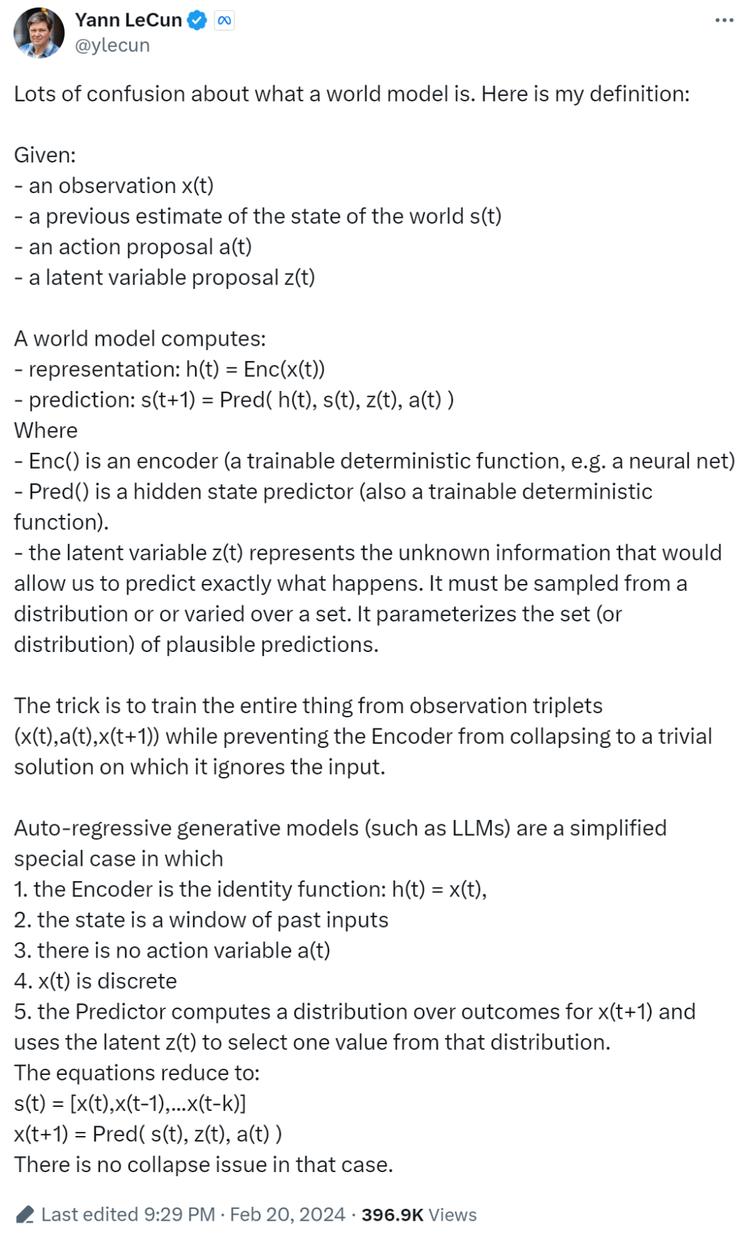
Core Insights - The AI industry is experiencing a chaotic evolution of "world models," with various interpretations and definitions emerging from leading figures in the field, all agreeing that world models are essential for achieving AGI [2][20][22] - The concept of world models has expanded significantly, encompassing a wide range of technologies and applications, from embodied intelligence to video generation and 3D modeling [18][20] Group 1: Definition and Evolution of World Models - The term "world model" refers to the ability of AI to understand external world rules and predict changes, rather than a specific technical path [3][6] - The idea of world models dates back to 1943 with Kenneth Craik's "mental models," which posited that the brain constructs miniature models of the external world for prediction [4] - The modern framework for neural network world models was established by Jürgen Schmidhuber in 2018, defining a structure that includes visual and memory components [4] Group 2: Different Approaches to World Models - Current world models can be categorized into two main schools: the Representation school, which focuses on abstract state predictions, and the Generation school, which aims to reconstruct and simulate visual worlds [6][13] - Yann LeCun represents the Representation school, emphasizing a minimalist approach that predicts abstract states rather than visual details [7][9] - The Generation school, exemplified by OpenAI's Sora, focuses on creating visual simulations and understanding physical laws through video generation [13][14] Group 3: Emerging Technologies and Concepts - Interactive Generative Video (IGV) represents an advanced form of the Generation school, allowing real-time user interaction with generated environments, as seen in Google DeepMind's Genie 3 [14] - Li Fei-Fei's concept of "Spatial Intelligence" aims to create a persistent, downloadable 3D environment, represented by the Marble project, which focuses on high-precision physical accuracy [16] - The rise of world models is driven by a collective anxiety in the AI industry regarding the limitations of large language models (LLMs) and a shift towards understanding and simulating the physical world [23][20]
Anthropic CEO最新专访:暗讽奥特曼花钱太猛,孤注一掷式豪赌或导致OpenAI破产
3 6 Ke· 2025-12-04 09:28
Core Insights - Anthropic's CEO, Dario Amodei, expresses a dual perspective on the AI industry, being both optimistic about technological advancements and cautious about the industry's current challenges [2][5][6] - Anthropic has achieved a remarkable revenue growth of 10 times annually for three consecutive years, with projections for 2024 to reach between $8 billion and $10 billion [6][10] - The AI industry is facing a significant dilemma due to the mismatch between the uncertain economic value growth and the long-term investment required for data center construction [6][10] Group 1: Industry Outlook - Amodei identifies himself as the "number one optimist" in the AI sector, believing that scaling laws will continue to drive technological breakthroughs [2][5] - The CEO warns that companies like OpenAI, which adopt aggressive "YOLO" strategies, may face severe consequences, including potential bankruptcy [6][7] - Anthropic differentiates itself by focusing on the enterprise market, avoiding the intense competition seen in the consumer space between companies like OpenAI and Google [2][14] Group 2: Financial Considerations - Anthropic's revenue trajectory shows a consistent 10-fold increase, with expectations for 2023 to reach between $8 billion and $10 billion, and a cautious estimate for 2024 of $20 billion to $30 billion [6][10] - The company aims to achieve break-even by 2028, while managing risks through efficient training and a healthy profit margin [11] - Amodei discusses the potential pitfalls of "circular financing" in the industry, where companies may overextend based on inflated revenue expectations [12][13] Group 3: Competitive Strategy - Anthropic's strategy focuses on optimizing models for enterprise needs, allowing it to avoid the "red alert" competition seen in consumer markets [14] - The company emphasizes the importance of building a deep understanding of industry-specific applications to create a sustainable competitive advantage [15] - Amodei believes that achieving AGI does not require revolutionary breakthroughs but can be approached through incremental improvements and scaling existing technologies [15][16]

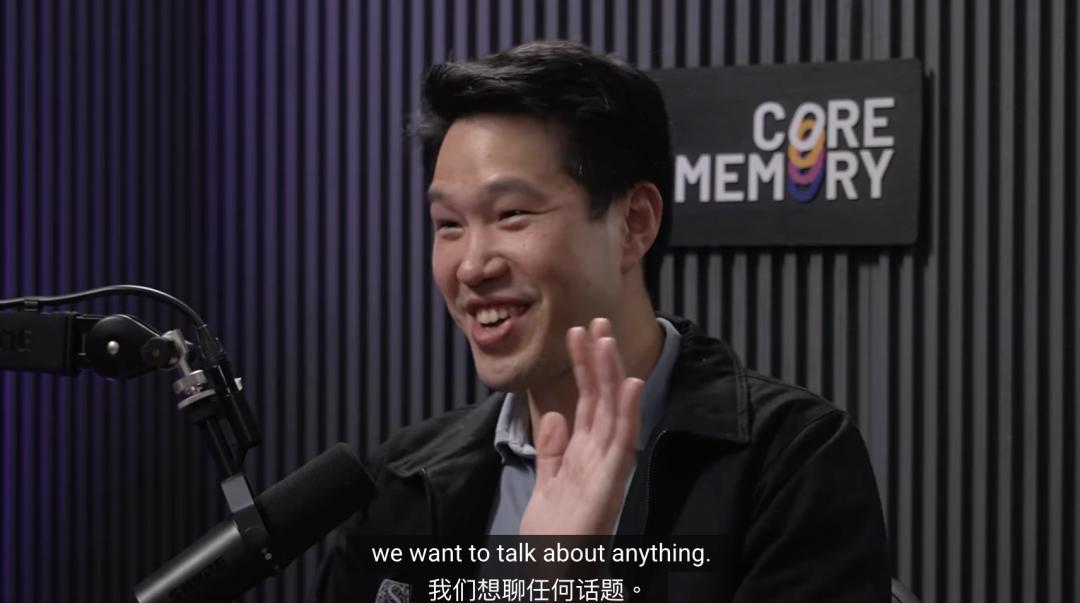
OpenAI首席研究员Mark Chen长访谈:小扎亲手端汤来公司挖人,气得我们端着汤去了Meta
3 6 Ke· 2025-12-04 02:58
Core Insights - The interview with Mark Chen, OpenAI's Chief Research Officer, reveals insights into the competitive landscape of AI talent acquisition, particularly the ongoing "soup war" between OpenAI and Meta, where both companies are aggressively trying to attract top talent [5][9][81] - OpenAI maintains a core focus on AI research, with a team of approximately 500 researchers and around 300 ongoing projects, emphasizing the importance of pre-training and the development of next-generation models [5][15][22] - Chen expresses confidence in OpenAI's ability to compete with Google's Gemini 3, stating that they already have models that match its performance and are preparing to release even better models soon [5][19][90] Talent Acquisition and Competition - The competition for AI talent has escalated, with Meta's aggressive recruitment strategies prompting OpenAI to adopt similar tactics, including sending soup to potential recruits [5][9] - Despite Meta's efforts, many OpenAI employees have chosen to stay, indicating strong confidence in OpenAI's mission and future [9][22] - Chen highlights the importance of protecting core talent and fostering a strong team culture amidst the competitive landscape [9][75] Research Focus and Model Development - OpenAI's research strategy prioritizes exploratory research over merely replicating existing benchmarks, aiming to discover new paradigms in AI [16][22] - The company has invested heavily in understanding reasoning capabilities, which has led to significant advancements in their models [86][89] - Chen emphasizes that the resources allocated to exploratory research often exceed those for training final products, showcasing OpenAI's commitment to innovation [17][22] Organizational Dynamics - The internal structure of OpenAI is designed to facilitate collaboration and communication among researchers, with a focus on aligning priorities and resource allocation [15][84] - Chen discusses the importance of leadership in making tough decisions about project prioritization and resource distribution [18][22] - The company has a unique culture that blends research and engineering, allowing for continuous optimization and innovation [24][56] Future Outlook - OpenAI is confident in its ability to continue leading in AI research, with a focus on pre-training as a critical area for future breakthroughs [89][90] - The company believes that there is still significant potential in pre-training, contrary to the notion that scaling has reached its limits [89] - Chen anticipates that AI models will increasingly play a role in advanced scientific research, potentially transforming fields such as mathematics and physics [40][90]

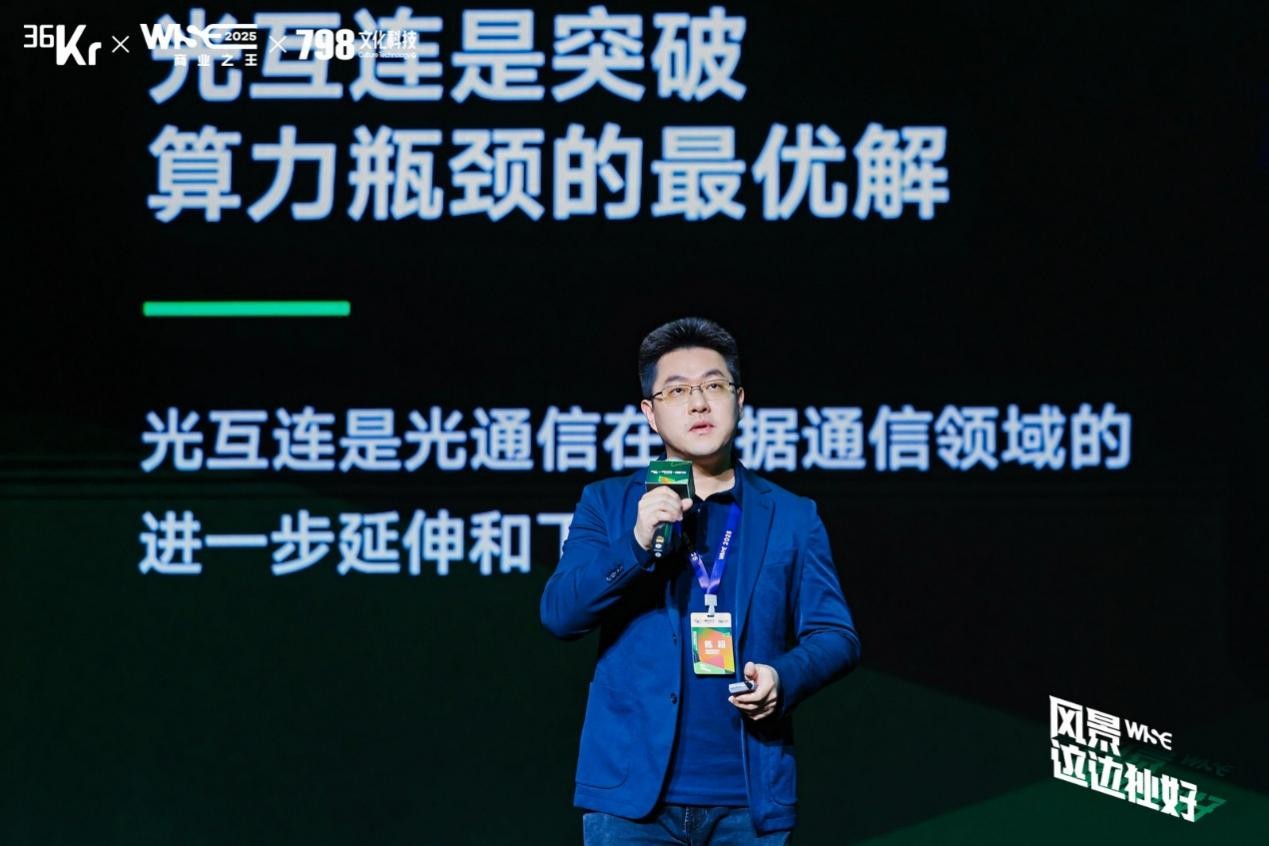
光联芯科CEO 陈超:光互连是通往AGI的必由之路|WISE2025 商业之王
3 6 Ke· 2025-12-04 02:35
11月27-28日,被誉为"年度科技与商业风向标"的36氪WISE2025商业之王大会,在北京798艺术区传导空间落地。 今年的WISE不再是一场传统意义上的行业峰会,而是一次以"科技爽文短剧"为载体的沉浸式体验。从AI重塑硬件边界,到具身智能叩响真实世界的大门; 从出海浪潮中的品牌全球化,到传统行业装上"赛博义肢"——我们还原的不仅是趋势,更是在捕捉在无数次商业实践中磨炼出的真知。 我们将在接下来的内容中,逐帧拆解这些"爽剧"背后的真实逻辑,一起看尽2025年商业的"风景独好"。 光联芯科 CEO 陈超 不能。为什么?因为算力行业面临了两大挑战,有带宽的瓶颈、也有能耗的问题。 以下是真知创投合伙人、光联芯科CEO 陈超先生的演讲实录,经36氪编辑: 大家下午好!我是来自光联芯科的陈超。非常高兴有机会跟大家分享,我的演讲主题是"算力·无界 光互连是通往AGI的必由之路"。 在正式开始之前,我想邀请大家来先看一组图片,这三张图由Open AI Sora多模态大模型生成的,算力规模不同,从左到右别用到了300张GPU、1250张 GPU和10000张GPU,从左到右也是图片质量越来越好。那么,我们是否可以做一个基 ...
“可能性大概0到1%”:IBM CEO给AGI泼冷水,断言AI数据中心投资无法获得回报
Sou Hu Cai Jing· 2025-12-03 14:40
Core Viewpoint - The debate over whether AI data center investments are overheated is intensifying in Wall Street and Silicon Valley, with significant capital expenditure plans announced by major tech companies, raising concerns about potential returns on these investments [1][2]. Group 1: Investment Plans - Major tech companies have announced substantial investments in data centers: Meta plans to invest over $600 billion over the next three years, Microsoft $80 billion by 2025, Google $75 billion, and Apple $500 billion over four years, potentially pushing global data center and AI infrastructure investments to over $5 trillion in the next five years [1]. - IBM's CEO Arvind Krishna expressed skepticism about the returns on these investments, stating that the current infrastructure costs make it impossible to achieve returns on the promised multi-trillion dollar investments [2][4]. Group 2: Cost Analysis - Krishna calculated that filling a 1 gigawatt data center costs approximately $80 billion, leading to a total capital expenditure of about $8 trillion if tech companies pursue a total capacity of 100 gigawatts [4]. - He emphasized that this level of investment would require around $800 billion in profits just to cover interest payments, not accounting for depreciation of equipment, particularly AI chips that have a rapid obsolescence rate [4]. Group 3: Comparison to Past Bubbles - Krishna compared the current AI investment frenzy to the internet bubble of the early 2000s, noting that while fiber optics had long-term utility, AI hardware like GPUs has a much shorter lifespan, necessitating expensive updates every five years [5]. - He acknowledged that while some infrastructure can last, the rapid pace of technological advancement in AI hardware raises questions about the sustainability of current investments [5]. Group 4: AGI Potential - Krishna expressed a low probability (0 to 1%) that current technology can achieve Artificial General Intelligence (AGI), contrasting sharply with optimistic statements from other tech leaders [6][8]. - He believes that achieving AGI will require significant advancements beyond current large language models (LLMs) and emphasizes the need for integrating hard knowledge with AI technologies [8]. Group 5: IBM's Strategic Focus - IBM has chosen not to compete in the consumer AI market, focusing instead on enterprise solutions, where it can leverage its long-standing reputation for data protection and reliability [9]. - The company is actively hiring while others in the tech sector are laying off employees, as it aims to enhance productivity through AI tools [9]. Group 6: Quantum Computing Outlook - Krishna predicts that quantum computing could reach practical scale within three to five years, with an estimated market value of $400 billion to $700 billion annually [9]. - He provided a probabilistic timeline for when quantum computing might deliver significant commercial value, suggesting a higher likelihood of breakthroughs within four to five years [10]. Group 7: Industry Perspectives - Krishna's views reflect a broader skepticism within the tech industry regarding the disconnect between current investment levels and realistic return expectations, while still acknowledging the transformative potential of AI for enterprise productivity [11]. - The ongoing debate highlights differing beliefs about the future of AI and AGI, with some companies betting heavily on becoming market leaders through substantial investments [12].