
量化宽松

Search documents
史诗级牛市真要来了?专家称必然突破6124高点
Feng Huang Wang Cai Jing· 2025-08-04 13:41
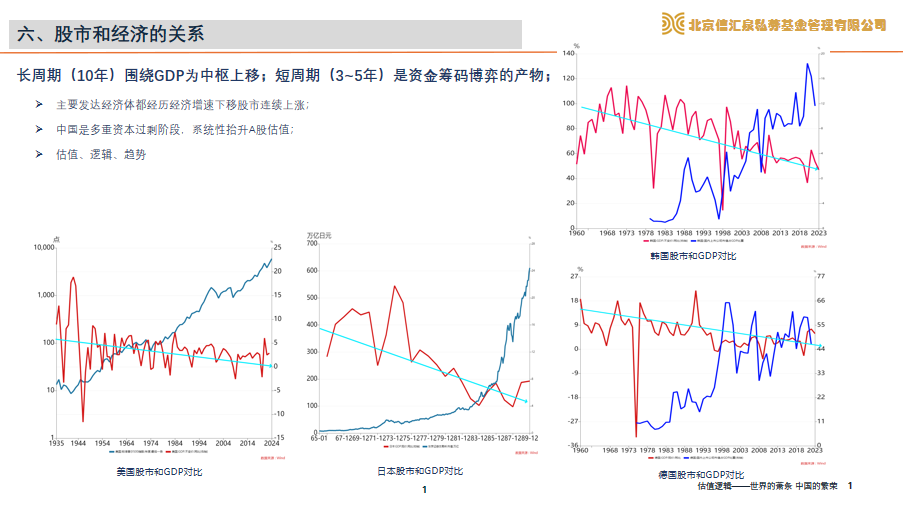
Group 1 - The upcoming A-share market is predicted to surpass the historical high of 6124 points, marking the beginning of an "epic bull market" [1][3] - Since the end of June, the A-share market has shown strong performance, reaching a high of 3600 points, leading to increased investor expectations for a bull market [1] - Historical analysis indicates that countries entering the industrialization phase typically experience long-term market fluctuations followed by significant upward trends, suggesting that a similar pattern may occur in China [4] Group 2 - The current bull market is unlikely to exceed the 2007 bull market's performance, which saw a sixfold increase from 998 to 6124 points; however, it is expected to surpass the 6124 high [3] - The analysis of global stock markets reveals that countries like South Korea and Japan have experienced substantial market growth after entering the industrialization mature stage, supporting the prediction of a significant upward trend in China's market [4] - The presence of substantial capital surplus in China, including financial, industrial, and private capital, indicates that the stock market is the most viable outlet for this capital, making significant downturns unlikely [9] Group 3 - The notion that everyone can profit from the stock market during a bull run is challenged, as historically, only a small percentage of investors achieve significant gains [6] - To become part of the benefiting minority, investors are advised to adopt a contrarian approach, increasing positions during downturns and reducing exposure at market peaks [7] - The correlation between rising stock markets and increased consumer spending is acknowledged, but caution is advised as this can lead to unsustainable spending habits [8] Group 4 - The potential for a "bull short bear long" scenario is anticipated due to the emotional dynamics of market participants, which can create bubbles and subsequent corrections [10] - Recent foreign capital inflows into domestic stocks and funds indicate a positive outlook for investment in China's stock market, driven by its status as a safe and convenient investment destination [10]


史诗级牛市真要来了?专家称必然突破6124高点
凤凰网财经· 2025-08-04 13:31
Core Viewpoint - The upcoming A-share market is predicted to be an epic bull market that will surpass the historical peak of 6124 points, marking the beginning of a significant upward trend in the stock market [1][3]. Group 1: Market Predictions - The current market is likely entering an overall upward cycle, although the exact timing of the bull market is difficult to predict. It is suggested that this bull market may not exceed the 2007 bull market's sixfold increase from 998 to 6124 points, but it is expected to surpass the 6124 peak [3][4]. - Historical analysis shows that countries entering the industrialization phase typically experience long periods of market fluctuations followed by significant upward trends. This pattern has been observed in countries like South Korea and Japan, where substantial market gains occurred within a short timeframe [4][5]. Group 2: Investment Strategies - To benefit from the bull market, investors should be cautious and avoid common pitfalls such as high positions at market peaks and low positions at market lows. Successful investors often act contrary to market sentiment, increasing positions during downturns and reducing them during peaks [8]. - The stock market's rise can stimulate consumer spending due to perceived wealth increases, but this can lead to unsustainable spending habits that may result in future losses [9]. Group 3: Market Dynamics - The Chinese stock market is seen as a suitable outlet for the significant surplus capital available in various sectors, suggesting that it is unlikely to experience severe downturns [10]. - The phenomenon of "bull short, bear long" is expected to continue, driven by emotional market dynamics rather than fundamental factors, leading to potential market bubbles [11]. Group 4: Foreign Investment Trends - Recent foreign investments in Chinese stocks and funds indicate a positive outlook, as China is viewed as a safe and convenient investment destination with relatively low stock valuations [12].

功过分明的鲍威尔能否精彩退场
Guo Ji Jin Rong Bao· 2025-08-01 06:45
Group 1 - The article discusses the complex tenure of Federal Reserve Chairman Jerome Powell, highlighting his balancing act between traditional monetary policy and innovative approaches during unprecedented economic challenges [1][3][4] - Powell's leadership is characterized by significant policy shifts, including the introduction of unlimited quantitative easing and emergency interest rate cuts in response to the COVID-19 pandemic, which helped restore market confidence [4][5] - The restructuring of the monetary policy framework under Powell's leadership emphasizes inclusive employment and an average inflation target, marking a departure from previous static inflation goals [5][6] Group 2 - The article notes that Powell faced intense political pressure, particularly from former President Trump, which tested the independence of the Federal Reserve [13][14] - Powell's decisions during the pandemic, while initially effective, led to significant misjudgments regarding inflation, resulting in a rapid increase in interest rates that had widespread economic repercussions [9][10] - The article highlights the structural issues exacerbated by Powell's policies, including wealth inequality and the disproportionate impact of inflation on lower-income groups [10][11] Group 3 - The article concludes with a reflection on Powell's legacy, suggesting that his tenure will be remembered for both its bold innovations and the costly errors made in responding to inflationary pressures [8][12][18] - The potential for a new Federal Reserve chair to be appointed before Powell's term ends indicates a shift in leadership dynamics that could influence future monetary policy [18]
罕见奇观!美国财政部在线乞讨,用于偿还36万多亿美债
Sou Hu Cai Jing· 2025-07-31 00:48
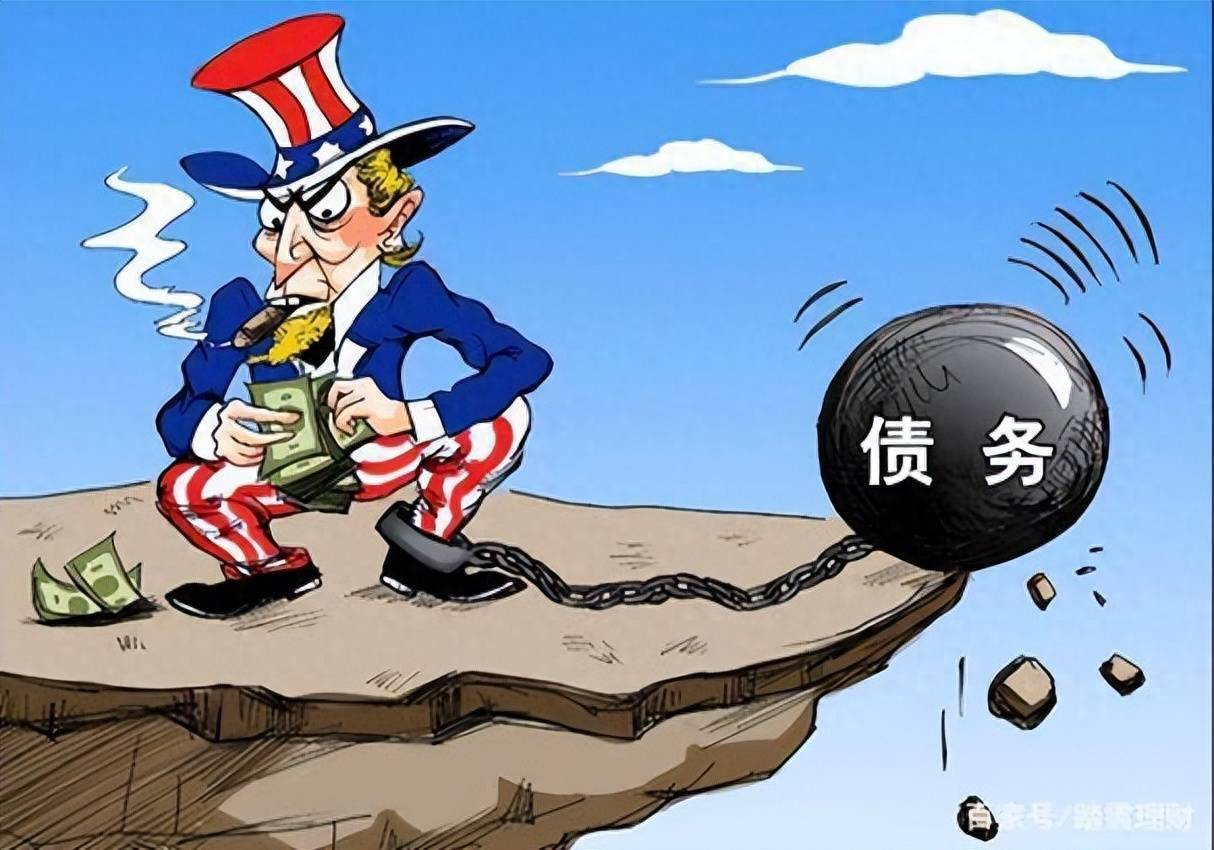
Core Points - The current U.S. national debt has reached $36.7 trillion, accounting for 130% of GDP, with interest payments alone totaling $1.1 trillion last year, which is 22.4% of federal revenue [1] - President Trump has pressured the Federal Reserve to lower interest rates to reduce the burden of national debt interest payments, marking the first visit by a sitting president to the Fed in 20 years [1][3] - Even with a 50 basis point rate cut, the estimated reduction in debt servicing costs by 2027 would only be $78 billion, which is minimal compared to the total debt [3] Debt Management Strategies - Quantitative Easing: The Fed could issue more dollars to buy government bonds, but this may lead to severe inflation [5] - Adjusting Debt Issuance Structure: Starting in 2023, the Treasury is focusing on issuing more short-term bonds to alleviate long-term liquidity issues, which increases interest costs [5] - Fiscal Measures: Trump has proposed increasing import tariffs and enhancing tax revenues from the stock market, but previous efforts to streamline government spending have yielded minimal savings [5] - Stablecoin Utilization: The proposed "Genius Act" aims to require stablecoin issuers to fully back their coins with dollars or short-term U.S. debt, potentially converting global stablecoin demand into a rigid support for U.S. debt [5] Alternative Debt Repayment Methods - The U.S. Treasury has begun accepting online donations for debt repayment, a method that has historically yielded only $67.3 million over 30 years [7] - Trade agreements, such as the U.S.-Japan deal where Japan invests $550 billion in the U.S., can be seen as a form of indirect debt repayment through economic cooperation [9]
美国创新药与美元霸权:钱到底怎么来的?
2025-07-30 02:32
Summary of Key Points from the Conference Call Industry Overview - The conference call discusses the **U.S. pharmaceutical industry**, particularly focusing on the dynamics between multinational pharmaceutical companies and U.S. biotech firms in the context of innovative drug transactions [1][2]. Core Insights and Arguments - **Payment Differences**: There is a significant difference in upfront payment amounts between multinational pharmaceutical giants and U.S. biotech companies. The former tend to have higher upfront payments due to their cash reserves, while the latter rely on financing, resulting in larger total milestone amounts [1][2]. - **Funding Sources for Biotech**: U.S. biotech companies primarily depend on financing for their operations. Their cash inflow mainly comes from fundraising activities, both pre- and post-IPO, which are often supported by large pharmaceutical companies [4][5]. - **Role of Venture Capital**: The U.S. venture capital (VC) industry is highly active in the pharmaceutical sector, with 33% of first-round financing projects in 2024 being in the medical field. The average funding amount per project in pharmaceuticals is significantly higher than in other sectors [5]. - **Corporate Venture Capital (CVC)**: CVC plays a crucial role in the U.S. VC market, accounting for 20% of the number of transactions but 55% of the total amount. This indicates that while CVC transactions are fewer, they involve larger sums, reflecting the dominance of industrial capital in the VC space [6][7]. - **Acquisition Strategies**: Multinational pharmaceutical companies invest heavily in acquiring innovative assets to enhance their product lines and ensure future sales. For instance, AbbVie and Pfizer have disclosed substantial investments in externally acquired blockbuster drugs [8][9]. - **Cash Flow Management**: These companies manage their finances through operational, financing, and investment cash flows. For example, Merck reported nearly $20 billion in operational cash inflow over the past three years [9][10]. Additional Important Insights - **U.S. Healthcare Market**: The U.S. healthcare market is a vital revenue source for multinational pharmaceutical companies, with the top five companies holding a 43% market share in the prescription drug market [11][12]. - **Federal Budget and Healthcare Spending**: The U.S. federal budget has expanded significantly, with healthcare spending constituting 25% of the budget. This reliance on federal funding underscores the importance of government support in the healthcare ecosystem [13][14]. - **Impact of Foreign Investors**: Foreign investors are the primary holders of U.S. government debt, indicating global support for the U.S. federal budget and healthcare market development [15]. - **Economic Indicators**: The call discusses how economic indicators like interest rate inversions can signal potential economic issues, affecting policy decisions and market transactions [22]. - **Future of the Biotech Ecosystem**: The future of the U.S. innovative drug ecosystem will depend on the expansion of U.S. government debt and the prevailing interest rate environment, which will influence both multinational companies and biotech firms [25]. Conclusion - The conference call highlights the intricate relationships and financial dynamics within the U.S. pharmaceutical industry, emphasizing the critical roles of funding sources, market strategies, and economic conditions in shaping the future of innovative drug development and commercialization.


天风证券晨会集萃-20250730
Tianfeng Securities· 2025-07-29 23:44
Group 1: Macro Strategy and Market Overview - The upcoming third round of trade talks between China and the US is expected to focus on energy and rare earth materials, with potential extensions of negotiation deadlines [2] - A-shares saw slight increases across major indices, with the CSI 500 and ChiNext rising by 3.28% and 2.76% respectively [2] - The central bank's net fund injection was 109.5 billion yuan, indicating a slight rebound in short-term interest rates [2] - The US dollar index showed a slight decline, closing at 97.67, down 0.8% week-on-week, while the RMB appreciated by 0.18% [2] Group 2: Fixed Income and Debt Market - The Southbound Bond Connect is expected to facilitate investment in Chinese dollar bonds, with a focus on city investment bonds benefiting from local debt policies [4] - The Hong Kong bond market has a total outstanding amount of 19.55 billion USD in HKD bonds and 17.32 billion USD in offshore RMB bonds [4] - The outlook for Chinese dollar bonds remains positive, with expected continued good returns due to narrowing yield spreads and favorable policies [4][33] Group 3: Coal Industry Insights - Domestic coal social inventory decreased in June 2025, leading to a rebound in coal prices, with expectations for port prices to reach 700-750 yuan per ton [9] - The government aims for coal production to reach approximately 4.8 billion tons in 2025, with potential adjustments in production capacity to ensure supply [9] Group 4: Company-Specific Analysis - Wei Shi Jia Jie (00856) is expected to benefit significantly from the AI and cross-border payment sectors, with projected revenue growth from 63.7 billion yuan in 2020 to 81.1 billion yuan in 2024 [11] - The company is positioned to capture growth in the Southeast Asian ICT market, which is projected to reach approximately 415 billion USD by 2028 [11] - The company anticipates a significant increase in net profit from 830 million yuan in 2023 to 958 million yuan in 2024, reflecting a growth rate of 14.09% [11][15] Group 5: Construction and Materials Sector - Su Jiao Ke (300284) reported a revenue decline of 13.75% in H1 2025, but is transitioning towards becoming a "think tank technology enterprise" with a focus on new business areas [16] - The company has developed five cloud platforms aimed at enhancing its service offerings in urban safety and low-altitude economy [16] Group 6: Chemical Industry Trends - The proportion of public funds holding basic chemical stocks has slightly decreased, with a shift towards mid-cap stocks [15] - The chemical sector has seen a notable increase in the holding ratio of leading stocks, indicating a preference for smaller-cap stocks [15]

美联储新掌门猜想
Sou Hu Cai Jing· 2025-07-29 17:39
Core Viewpoint - The relationship between President Trump and Federal Reserve Chairman Jerome Powell has deteriorated, with Trump threatening to dismiss Powell amid budget overruns on the Fed's headquarters renovation. Powell's future as chairman is uncertain, with potential successors being discussed [1][9]. Group 1: Powell's Tenure and Achievements - Powell, the only Federal Reserve chairman without an economics background, has navigated a politically polarized environment, demonstrating exceptional balance and survival skills [2]. - Under Powell's leadership, the Fed implemented significant monetary policy innovations, including a shift to a framework prioritizing "broadly inclusive maximum employment" and the introduction of "average inflation targeting" [4]. - The Fed's response to the COVID-19 pandemic included unprecedented measures such as emergency rate cuts and unlimited quantitative easing, which helped restore market confidence and led to a rapid economic recovery [3][4]. Group 2: Challenges and Criticisms - Powell faced criticism for initially downplaying inflation signals in 2021, which led to a delayed response and aggressive rate hikes in 2022, resulting in significant market turmoil [6][7]. - The Fed's unconventional monetary policies exacerbated wealth inequality, benefiting the top 1% while negatively impacting lower-income groups [7]. - Powell's conservative stance on cryptocurrency regulation has drawn criticism, particularly as the Fed has restricted banks from supporting decentralized token issuance [8]. Group 3: Potential Successors - Trump is expected to announce a nominee for Powell's successor soon, with potential candidates including Kevin Walsh, Kevin Hassett, and current Fed governor Chris Waller, each with distinct policy perspectives [1][9][10]. - Walsh is known for his hawkish stance and criticism of Powell's pandemic-era decisions, while Hassett has a strong understanding of White House dynamics but is committed to Fed independence [10][12]. - Waller, who has been influential within the Fed, has shifted from a hawkish to a more dovish stance recently, aligning with Trump's views on economic management [12][13].
利率专题:写在国债买卖一周年之际
Tianfeng Securities· 2025-07-29 14:03
1. Report Industry Investment Rating There is no information provided regarding the industry investment rating in the document. 2. Core View of the Report The report focuses on the history, overseas experiences, and future prospects of China's central bank's treasury bond trading. It analyzes the development of China's central bank's treasury bond trading from 2024 to 2025, draws lessons from the practices of the Federal Reserve and the Bank of Japan, and discusses the possible future evolution of the tool, including operation mechanisms, targets, and implementation rhythms, as well as potential optimization directions for supporting measures [2][48][94]. 3. Summary According to the Table of Contents 3.1. Treasury Bond Trading History Review - **Before 2024**: The central bank mainly participated in treasury bond trading through repurchase agreements, providing short - term liquidity to the market and smoothing out fluctuations in the capital market. Direct purchases of treasury bonds were rare, mainly for coordinating the issuance of special treasury bonds [12]. - **In 2024**: The central bank began to include treasury bond trading in open - market operations. In August, it carried out "buying short and selling long" operations, with a net purchase of 1 billion yuan in treasury bonds. The operations were mainly for base money injection and liquidity management, with buying aiming to support fiscal efforts and selling to prevent bond market risks [22][25]. - **In the first half of 2025**: In January, the central bank announced a temporary suspension of open - market treasury bond purchases, considering the controllable supply pressure of government bonds at the beginning of the year and the availability of alternative tools for liquidity management. The market's speculation about the resumption of operations emerged in June, but it did not materialize, mainly due to the marginal improvement in the supply - demand relationship of government bonds, the central bank's enhanced precision in liquidity regulation, and concerns about bond market risks [38][40][43]. 3.2. Overseas Insights into Central Bank Bond Purchases - **Federal Reserve's "Scarce Reserves" Framework**: Before 2008, the Federal Reserve used this framework, where treasury bond trading was mainly for liquidity management. Through small - scale open - market treasury bond trading, the Federal Reserve could adjust the reserve level of the banking system, affecting the federal funds rate and other interest rates, forming a transmission chain of "open - market operations - reserve scale - FFR - other interest rates" [48]. - **Federal Reserve's Treasury Bond Trading with Quantitative Easing and Twist Operations**: From 2008 to 2014, the Federal Reserve implemented large - scale asset purchase programs, aiming to influence the yield curve by changing the structure of purchased assets while maintaining a loose liquidity environment. It carried out operations such as lowering short - term interest rates, buying long - term bonds, and selling short - term bonds, and managing market expectations [68][71]. - **Bank of Japan's YCC Practice**: In 2016, the Bank of Japan introduced YCC on the basis of negative interest rates. It controlled the short - end through negative interest rates and set a target for the 10 - year treasury bond yield, promising unlimited buying and selling of 10 - year treasury bonds to achieve the target range. This enhanced the central bank's ability to control the yield curve, alleviated concerns about policy sustainability and market liquidity, and strengthened inflation expectations [74][76]. 3.3. Outlook on Central Bank Bond Purchases - **Current Situation**: Compared with the Federal Reserve and the Bank of Japan, the scale of treasury bonds held by the People's Bank of China is relatively low. Commercial banks are the main holders of treasury bonds in China, accounting for over 60% of the total. The reasons include the short implementation time of treasury bond trading, differences in tool positioning, and the limited liquidity of the treasury bond market [6][78][88]. - **Possible Future Deductions**: - **Operation Mechanism**: There is a possibility of making operations more transparent by announcing operation time, quantity, bond maturity, and pricing standards in advance, following the trend of expected management in monetary policy tools [94]. - **Operation Target**: Treasury bond trading is mainly for liquidity management and may also have the function of regulating the yield curve. Net purchases to inject liquidity are still the general direction, and attention should be paid to the term structure of the treasury bond market and the central bank's holdings [95]. - **Implementation Rhythm**: The supply pressure of government bonds will decrease in July and peak again in August - September. This could be a good observation window for restarting treasury bond trading operations [97]. - **Supporting Measures**: Potential optimization directions include increasing the proportion of discount treasury bond issuance, improving the management of treasury bond underwriters, guiding commercial banks to reduce the proportion of bonds held in the AC account, and expanding the participants in the treasury bond derivatives market [98].
写在国债买卖一周年之际
Tianfeng Securities· 2025-07-29 13:13
Group 1: Report Industry Investment Rating - Not provided in the content Group 2: Report's Core View - The report focuses on the history, current situation, and future prospects of China's central bank's treasury bond trading. It analyzes the operations and impacts of treasury bond trading in 2024 and 2025, draws lessons from overseas central banks' bond - buying practices, and discusses the future evolution of China's treasury bond trading tool [9] Group 3: Summary by Related Catalogs 1. Treasury Bond Trading History Review - **Before 2024**: The central bank mainly participated in treasury bond trading through repurchase agreements to inject short - term liquidity. It rarely directly bought treasury bonds, and the few purchases were mainly to support special treasury bond issuance [10] - **In 2024**: The central bank started to include treasury bond trading in open - market operations. It conducted "buy - short and sell - long" operations, with a net purchase of 100 billion yuan in August. The operations aimed at liquidity management and curve regulation [19][20] - **In the first half of 2025**: The central bank suspended open - market treasury bond purchases in January. The reasons included controllable government bond supply pressure, the availability of alternative tools, and the need to avoid strong market expectations. In June, market discussions about restarting the operation emerged, but it did not happen [28][32] 2. Overseas Insights on Central Bank Bond - Buying - **Fed's "Scarce Reserves" Framework**: Before 2008, the Fed used this framework. Treasury bond trading was a liquidity management tool, and small - scale trading could affect the federal funds rate and other interest rates [39] - **Fed's Bond - Buying with QE and Twist Operations**: From 2008 - 2014, the Fed used large - scale asset - purchase programs and twist operations to influence the yield curve and long - term interest rates [52][53] - **BOJ's YCC Practice**: Since 1999, Japan has implemented QE. In 2016, it introduced YCC to control the yield curve more precisely, aiming to achieve inflation targets and address negative impacts of previous policies [55][57] 3. Outlook on Central Bank Bond - Buying - **Current Situation**: China's central bank holds a relatively low proportion of treasury bonds compared to the Fed and the BOJ. Commercial banks are the main holders of Chinese treasury bonds [63] - **Reasons for the Difference**: The short implementation time of treasury bond trading in China, different tool positioning, and limited treasury bond liquidity are the main reasons [76] - **Future Deduction**: In operation, there may be more expectation management. The tool will focus on liquidity management and curve regulation. The restart window may be around August - September. There will also be optimization of supporting measures [81][83][84]
桥水创始人达利欧:建议配置15%的黄金和比特币仓位,警惕市场崩盘!
Jin Shi Shu Ju· 2025-07-29 04:00
Core Viewpoint - Ray Dalio suggests that investors should allocate at least 15% of their portfolios to gold and Bitcoin due to rising risks in the bond and stock markets [1][2]. Group 1: Economic Risks - Dalio highlights that the macroeconomic risks from rising government debt in the U.S. and other regions are not yet reflected in market pricing, potentially leading to significant market declines [1]. - He points out that U.S. government spending exceeds income by 40%, with accumulated debt being six times the annual income, and annual interest payments reaching $1 trillion, which constitutes half of the budget deficit [1]. - Dalio warns that the government may only be able to repay debt by issuing more debt and through "money printing" by the Federal Reserve, which could incite market panic [1]. Group 2: Investment Recommendations - Dalio strongly favors gold over Bitcoin as a hedge against fiat currencies and cash equivalents, expressing skepticism about central banks adopting Bitcoin as a reserve currency due to its lack of privacy [2]. - He acknowledges concerns regarding Bitcoin, such as the potential for its code to be hacked or its protocol to be altered, which could undermine its value storage function [2]. - Dalio's personal investment portfolio has a higher allocation to gold compared to Bitcoin, indicating a cautious approach towards the latter [2]. Group 3: Gold vs. Bitcoin - Gold is considered a more suitable diversification tool than Bitcoin, as it tends to appreciate during times of risk aversion, serving as useful insurance for investment portfolios [3]. - Some experts caution that the risks associated with gold may be higher than commonly perceived, citing historical instances where gold underperformed significantly [3]. - The volatility of Bitcoin is acknowledged, but historical data shows that long-term holders of gold during certain inflationary periods faced substantial losses [3].