电动化

Search documents
一家研发投入等于三大车企之和!比亚迪如何做到断层式领先
Zhi Tong Cai Jing· 2025-11-04 10:13
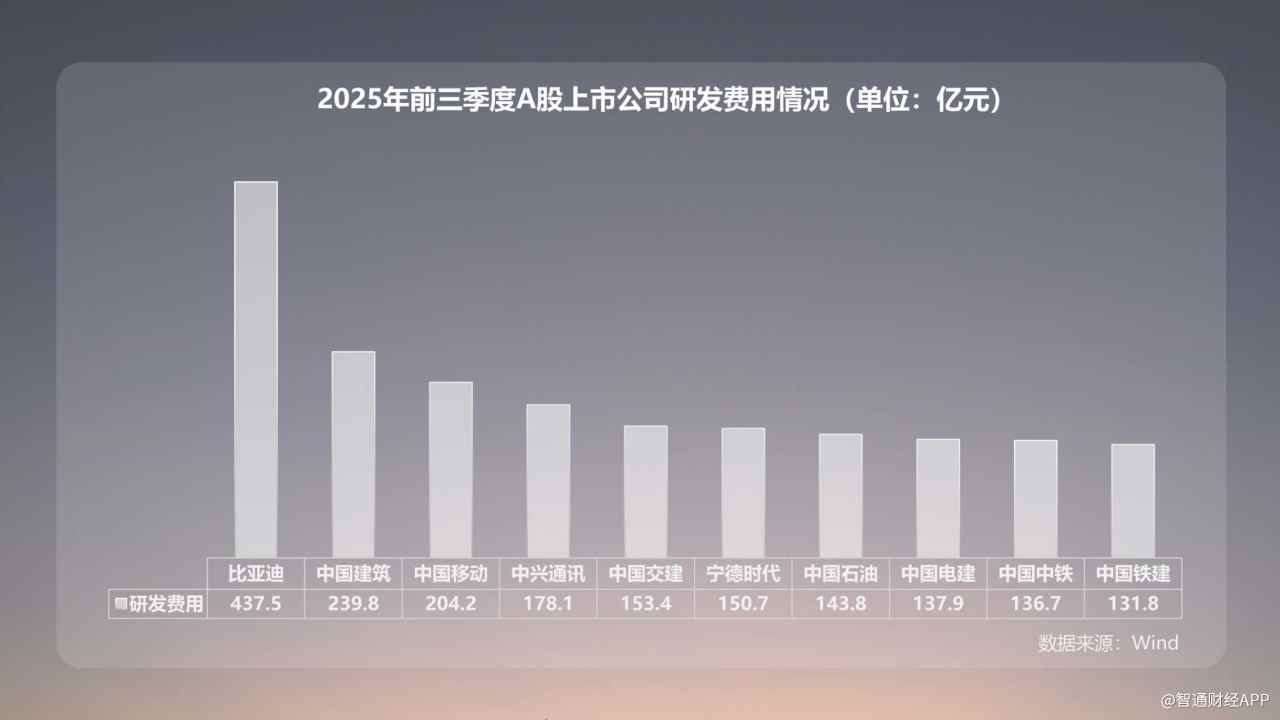
Core Viewpoint - BYD is signaling a strong commitment to high-quality development, evidenced by significant revenue growth and increased R&D investment, positioning itself as a leader in the automotive industry [1][4]. Financial Performance - For the first three quarters of 2025, BYD reported revenue of 566.27 billion RMB, a year-on-year increase of 13%, achieving a new high for the same period [1]. - R&D expenses reached 43.75 billion RMB, a substantial increase of 31% compared to the previous year, surpassing the net profit of 23.33 billion RMB [1]. R&D Investment - BYD's cumulative R&D investment has exceeded 220 billion RMB over the past 15 years, with 14 out of those years seeing R&D spending surpass net profit [4]. - The company has established itself as a dual champion in both A-share and the automotive industry in terms of R&D investment, leading competitors by nearly 20 billion RMB [1][4]. Technological Advancements - BYD has made significant breakthroughs in core technologies, including the Tian Shen Zhi Yan driver assistance system and the Super e-platform for fast charging, which have been pivotal in driving industry transformation [4]. - As of September, vehicles equipped with the Tian Shen Zhi Yan system have sold over 1.7 million units, capturing 91.3% of the domestic market [4]. Market Performance - BYD's cumulative sales of new energy vehicles surpassed 14 million units by October 2025, with October alone seeing sales of approximately 441,700 units, setting a new record for the year [4]. - Exports in October reached about 84,000 units, marking a year-on-year increase of 155.5%, with total exports for the first ten months reaching 781,000 units [4]. International Expansion - The growth in overseas markets is driven by increasing demand in regions like Turkey, Brazil, and Europe, alongside improvements in logistics efficiency due to self-built roll-on/roll-off shipping capacity [5]. - BYD showcased its technological prowess and localization capabilities at the Tokyo Motor Show, launching models tailored for the Japanese market, including the K-EV BYD RACCO and the Sea Lion 06DM-i [5][6]. Future Outlook - The company plans to introduce 7 to 8 electric and hybrid models in Japan by 2027, enhancing its local product and channel strategy [5]. - BYD's strategy of high R&D investment is expected to create a virtuous cycle of technological breakthroughs and market feedback, further solidifying its competitive edge in the global automotive industry [6].


东京车展中国元素真不少
Zhong Guo Qi Che Bao Wang· 2025-11-04 09:15
Core Insights - The 2025 Japan Mobility Show has commenced, showcasing a significant presence of both Japanese and Chinese automotive companies, highlighting advancements in electric and smart mobility technologies [2][6][12] - Notably, Nissan introduced the Dongfeng Nissan N7, a new energy vehicle developed by its Chinese team, marking a significant step in international exposure for Chinese automotive innovation [2][10] Japanese Automotive Companies - Toyota presented a range of vehicles including concept cars and the new luxury brand "Century," which aims to position itself above Lexus [3] - Honda showcased multiple new models, including the Honda 0 Saloon and the Honda 0α SUV, with plans for global release [4] - Nissan introduced several new models, including the redesigned Leaf electric vehicle and the new MPV, highlighting advancements in hybrid and electric technologies [4][5] Chinese Automotive Companies - BYD launched the Racco, a K-Car specifically designed for the Japanese market, which will be available in summer 2026, emphasizing its entry into a key segment of the Japanese automotive market [7][9] - Zeekr's 009 model was also presented, targeting high-end consumers and showcasing a differentiated strategy compared to BYD's more affordable offerings [8][9] - The presence of Chinese automotive supply chain companies at the show indicates a growing influence of Chinese technology in the global automotive sector [11][12] Market Dynamics - The introduction of BYD's Racco K-Car is expected to intensify competition in the Japanese K-Car market, traditionally dominated by Japanese manufacturers [9] - The collaboration between BYD and Aeon to establish electric vehicle sales points in Japan represents a shift in the traditional automotive sales model, potentially disrupting the established 4S dealership system [10] - The presence of Chinese companies at the show reflects a broader trend of technological exchange and collaboration between China and Japan in the automotive industry [10][12]



中联重科(000157) - 000157中联重科投资者关系管理信息20251104
2025-11-04 09:14
Financial Performance - In the first three quarters of 2025, the company achieved operating revenue of CNY 37.156 billion, a year-on-year increase of 8.06%, and a net profit attributable to shareholders of CNY 3.920 billion, up 24.89% [3] - The gross margin was 28.1% and the net profit margin was 10.55% [3] - In Q3 alone, operating revenue reached CNY 12.301 billion, a 24.88% increase year-on-year, with a net profit of CNY 1.156 billion, growing 35.80% [3] Global Expansion - Overseas revenue reached CNY 21.313 billion in the first three quarters, accounting for 57.36% of total revenue, with a year-on-year growth of 20.8% [3] - The growth rate for overseas revenue in Q3 exceeded 30% [3] - The company is expanding its market presence in regions such as the Middle East, Africa, and Southeast Asia, with strong demand for earthmoving and concrete equipment [3] Domestic Market Recovery - The domestic market is recovering, with significant growth in concrete machinery and engineering cranes, particularly in Q3 [4] - The concrete machinery segment saw a doubling of revenue for electric mixers, with a projected market demand of approximately 80,000 units over the next three years [4] - The company is experiencing a replacement cycle for existing equipment, which is expected to drive growth in the next five years [12] Cost Management and Efficiency - Operating cash flow for the first three quarters was CNY 2.866 billion, a 137% increase year-on-year, with a collection rate of 102.6% [6] - Inventory management improved, with a reduction of CNY 1.286 billion, a 5.70% decrease from the beginning of the year [6] - Management expenses decreased by 15.60% year-on-year, with a management expense ratio of 3.76% [6] Research and Development - R&D expenses reached CNY 6.33 billion, a 14.79% increase, maintaining a leading position in the industry [7] - The company is focusing on high-end, international, and new energy strategies in agricultural machinery, with an increase in overseas revenue [4] Future Outlook - The company plans to strengthen innovation and market expansion in Q4, aiming for a solid start in 2026 [8] - The introduction of humanoid robots is part of the company's strategy to enter the intelligent robotics market, with several prototypes already developed [5] - The company is positioned to leverage policies supporting AI and robotics development in Hunan Province [20]

2025日本移动出行展探索未来城市出行图景
人民网-国际频道 原创稿· 2025-11-04 08:11
Core Insights - The 2025 Japan Mobility Show, themed "Creating a Future Mobility Society," is being held from October 30 to November 9 at the Tokyo International Exhibition Center, marking a rebranding from the Tokyo Motor Show to focus on mobility solutions [1] Company Highlights - BYD, representing Chinese electric vehicle manufacturers, unveiled the K-EV BYD RACCO, a pure electric microcar tailored for the Japanese market, highlighting the urgent demand for such vehicles due to Japan's aging rural population [1] - BYD plans to continue investing in the Japanese market and aims to explore sustainable mobility solutions in collaboration with local users [1] Industry Trends - The automotive industry's boundaries are being redefined, with innovations such as SkyDrive's electric "flying car" attracting significant attention; this model is expected to begin operations in 2028, drastically reducing travel time between Beppu and Yufuin [1] - The mobility show features over 500 global companies and organizations, showcasing the latest technological trends in electrification, intelligence, and service, collectively envisioning the future of urban mobility [1]
武汉经开区与神龙汽车共同探索中法合资新范式
Zhong Guo Jing Ji Wang· 2025-11-04 07:44
Core Insights - Shenlong Automobile is deepening strategic cooperation with Wuhan Economic Development Zone to explore a new model of Sino-French joint ventures, aiming to revitalize the company [1][2] - The company has a historical significance in China's automotive industry, having been established in 1992 as a joint venture between PSA Group and Dongfeng Motor [1] - In October 2023, Stellantis Group and Dongfeng Group reached an agreement on the future development plan for Shenlong Automobile, focusing on integrating into Dongfeng's new energy business [1] Group 1 - Shenlong Automobile is accelerating its transformation towards electrification, intelligence, and connectivity, aiming to create a "New Shenlong" [2] - In March 2023, a production cooperation agreement was signed between Wuhan Economic Development Zone and Shenlong Automobile to enhance production capacity at the Wuhan factory [2] - The company plans to leverage the complete automotive industry chain and innovation ecosystem in Wuhan to deepen localized R&D and production collaboration [2] Group 2 - Wuhan Economic Development Zone is committed to optimizing the business environment and providing policy support to facilitate Shenlong Automobile's growth [2] - The local government expresses strong support for Shenlong Automobile's initiatives to develop attractive and competitive new energy vehicles [2]
新版路线图来了!15年后的汽车将会是啥样?
Zhong Guo Jing Ji Wang· 2025-11-04 07:15
Core Viewpoint - The new "Energy-saving and New Energy Vehicle Technology Roadmap 3.0" outlines the development blueprint for China's automotive industry towards 2040, emphasizing low-carbon, electrification, and intelligence as key directions for growth [1][2]. Group 1: Future Development Directions - The automotive industry in China is set to focus on "low-carbon, electrification, and intelligence," with a significant enhancement in global competitiveness by 2040, positioning itself among the world's leading automotive powers [2]. Group 2: Expected Technological Breakthroughs - Intelligent connected vehicles are expected to enter a rapid market development phase within the next 5 to 15 years, with high-level autonomous driving vehicles achieving large-scale application. Solid-state batteries are anticipated to see small-scale application by 2030 and large-scale global promotion by 2035 [3]. Group 3: Environmental Key Indicators - A new key indicator for carbon emission intensity has been introduced, aiming for a 60% reduction in average carbon emission intensity of passenger vehicles by 2040 compared to 2024. This shift indicates a broader evaluation of environmental impact, focusing on carbon metrics rather than just energy consumption [4]. Group 4: Future Vehicle Composition - The future automotive landscape will not see a complete replacement of fuel vehicles by new energy vehicles; instead, a "coexistence" of oil and electricity is expected. By 2040, the penetration rate of new energy passenger vehicles is projected to exceed 85%, with pure electric vehicles (BEV) accounting for 80%. Internal combustion engines will still play a significant role, with their sales proportion in new passenger vehicle sales remaining around one-third [5][6].
观车 · 论势 || 电动化加持 物流运力规模化还远吗?
Zhong Guo Qi Che Bao Wang· 2025-11-04 01:17
Core Insights - The logistics industry is undergoing a significant transformation driven by the rise of electric vehicles, leading to a shift from fragmented operations to large-scale, efficient models [1][5] - The cost advantages of electric trucks and the development of a robust charging infrastructure are critical for enabling large-scale operations [2][4] - Digitalization and innovative operational models are enhancing efficiency and predictability in asset returns for large logistics companies [3][4] Group 1: Industry Transformation - The logistics sector is experiencing a shift from decentralized to centralized operations due to the electrification of transport [1][5] - Electric trucks, despite higher initial costs, offer long-term economic benefits, enabling large companies to achieve scale through bulk purchasing and government incentives [1][4] - The cost of operating electric heavy trucks is significantly lower, with energy costs per kilometer at approximately 1.15 yuan compared to 1.68 yuan for fuel trucks, leading to annual savings of about 95,000 yuan per vehicle [1] Group 2: Infrastructure and Support - The establishment of a comprehensive charging network is essential for the efficient operation of electric logistics vehicles, which large companies are better positioned to develop [2] - The trend of resource consolidation is accelerating as smaller operators rely on the energy networks of larger firms, facilitating a shift from fragmented to collaborative operations [2] Group 3: Digitalization and Innovation - Electric trucks' inherent digital capabilities allow for integration with smart management systems, enhancing operational efficiency through real-time data analysis [3] - Innovations such as vehicle-to-grid (V2G) technology enable electric fleets to act as distributed energy storage, improving asset utilization and financial resilience [3] Group 4: Operational Models - New operational models like battery leasing and shared fleet management are lowering entry barriers for companies, promoting broader participation in electric logistics [4] - The evolution of these models is dismantling the notion that large-scale operations are exclusive to a few companies, fostering a more open and efficient industry ecosystem [4]
新路线图明确多项关键技术节点
Jing Ji Ri Bao· 2025-11-03 21:48
Core Insights - The "Energy Saving and New Energy Vehicle Technology Roadmap 3.0" outlines seven major goals for China's automotive industry by 2040, focusing on low-carbon, electrification, and intelligence [1][2] Group 1: Industry Goals - By 2040, the penetration rate of new energy passenger vehicles is expected to exceed 85%, with BEV (Battery Electric Vehicles) accounting for 80% [1] - The total carbon emissions from the automotive industry are projected to peak by 2028, ahead of national carbon reduction commitments, and decrease by over 60% from peak levels by 2040 [1] - The roadmap emphasizes the development of a traffic system based on intelligent connected new energy vehicles, aiming for "zero accidents, zero casualties, and high efficiency" [1] Group 2: Technological Innovations - The roadmap highlights the importance of diversified power sources, maximizing energy efficiency, and intelligent control methods in automotive energy-saving technologies [3] - A new key indicator for carbon emission intensity has been introduced, aiming for a 60% reduction in average carbon emission intensity of passenger vehicles by 2040 compared to 2024 [3] - The roadmap supports a dual strategy of oil and electricity, aligning with global energy concepts [3] Group 3: Market Dynamics - Internal combustion engines will remain a significant power source for vehicles in the next 5 to 15 years, with hybrid vehicles expected to account for about one-third of new passenger vehicle sales by 2040 [2] - The penetration rate of new energy commercial vehicles is projected to reach around 75% by 2040, expanding from urban and short-distance applications to medium and long-distance scenarios [3][4] - Fuel cell vehicles are expected to grow from current sales to over 1 million units by 2040, with a total scale exceeding 4 million units [3] Group 4: Key Technology Milestones - Solid-state batteries are anticipated to achieve small-scale application by 2030 and large-scale global promotion by 2035, with improved performance, cost, and environmental adaptability [4] - Intelligent connected vehicles are expected to enter a rapid market development phase in the next 5 to 15 years [4]
比亚迪的“刀片”和日本市场的“铠甲”
经济观察报· 2025-11-03 14:09
Core Viewpoint - BYD has established a dual product line of pure electric and hybrid vehicles in Japan, with the introduction of the K-EV model catering to local travel needs [1][6]. Group 1: Market Presence and Competition - At the 2025 Japan Mobility Show, BYD was the only Chinese automaker present, while Japanese automakers showcased a variety of electric and hybrid vehicles [2][3]. - The Japanese automotive market is conservative, with local brands holding a dominant market share of over 90%, making it challenging for non-Japanese brands like BYD to gain traction [4][10]. - BYD has been in the Japanese market for over 20 years, initially focusing on battery technology before entering the electric bus and passenger vehicle segments in recent years [5][10]. Group 2: Product Strategy - BYD has launched several models in Japan, including the K-EV BYD PACCO and the Sealion 6 DM-i, aiming to create a product lineup that aligns with local consumer preferences [6][8]. - The K-Car segment, which accounts for 35% to 40% of the Japanese market, is a key focus for BYD, as the K-EV offers a pure electric range of 180 kilometers and features that differentiate it from traditional small displacement fuel vehicles [10][11]. Group 3: Sales Performance and Future Plans - Since entering the Japanese market, BYD has sold approximately 7,100 vehicles, which is modest compared to its performance in other global markets [10][13]. - BYD plans to expand its product offerings in Japan to 7 to 8 models by 2027 and aims to increase its sales points from 66 to 100 within the year [8][10]. - In September, BYD's monthly sales in Japan exceeded 800 units, indicating growing brand recognition and acceptance in the market [13].
【研选行业】这种材料复合增速超25%,万亿蓝海启幕,5家全链龙头成焦点
第一财经· 2025-11-03 11:52
Group 1 - The article emphasizes the importance of timely and relevant research reports in identifying investment opportunities, particularly in sectors like short dramas and comic dramas, which have shown significant growth potential [1] - The report highlights a notable increase in stock prices for companies such as Huanrui Century, which rose over 20%, and others like Yuedu Group and Kunlun Wanwei, which saw nearly 10% gains, indicating strong market interest in these sectors [1] Group 2 - A projected demand growth rate of 50% by 2027 for energy storage is expected to initiate a new lithium battery cycle, with related material prices already increasing by over 20%, making these stocks a focus for institutional investors [2] - The convergence of low-altitude, wind power, and robotics sectors is anticipated to drive a compound growth rate exceeding 25%, with a target of 90% domestic production rate, marking the beginning of a trillion-dollar market opportunity [2]