
端侧AI

Search documents
重返全球第三!联想(00992)平板出货量同比大涨23% 加速推进AI终端进阶
智通财经网· 2025-11-07 03:19
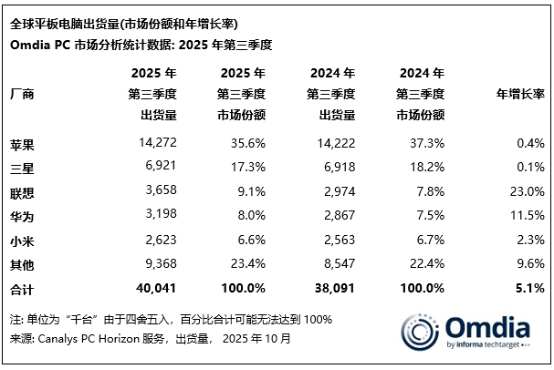
Core Insights - The global tablet market experienced a 5% year-over-year growth in Q3 2025, reaching 40 million units shipped, marking the seventh consecutive quarter of growth [1][3] - Lenovo led the industry with a remarkable 23% year-over-year increase in tablet shipments, surpassing Huawei to reclaim the third position in the global tablet market with a 9.1% market share [1][2] - Lenovo also excelled in the Chromebook segment, achieving a 54.6% year-over-year growth rate, highlighting its strong competitive position in the tablet sector [1][2] Market Performance - The overall tablet market growth was driven by seasonal stocking ahead of overseas holidays and promotional events in the Asia-Pacific region, particularly during the Double 11 sales [3] - Lenovo's tablet shipments reached 3.7 million units, significantly benefiting from its expansion in the commercial tablet business across Europe, the Middle East, and Africa (EMEA) [3] AI Integration - Lenovo's high growth in the tablet market is attributed to the comprehensive empowerment of its terminal products through AI technology, collaborating with partners like NVIDIA and Intel to transform tablets into "AI terminals" [4] - In the PC market, Lenovo achieved a market share of 25.5% with a year-over-year growth rate of 17.3%, outperforming the market average of 9.4% and all major competitors [4][5] Future Trends - The demand for terminal devices with strong AI capabilities is expected to surge, with Lenovo establishing a first-mover advantage in the emerging edge AI market through its "hybrid AI" strategy and large shipment volumes [6]


前10月98%混基正收益 永赢科技智选混合发起A涨200%
Zhong Guo Jing Ji Wang· 2025-11-06 23:03
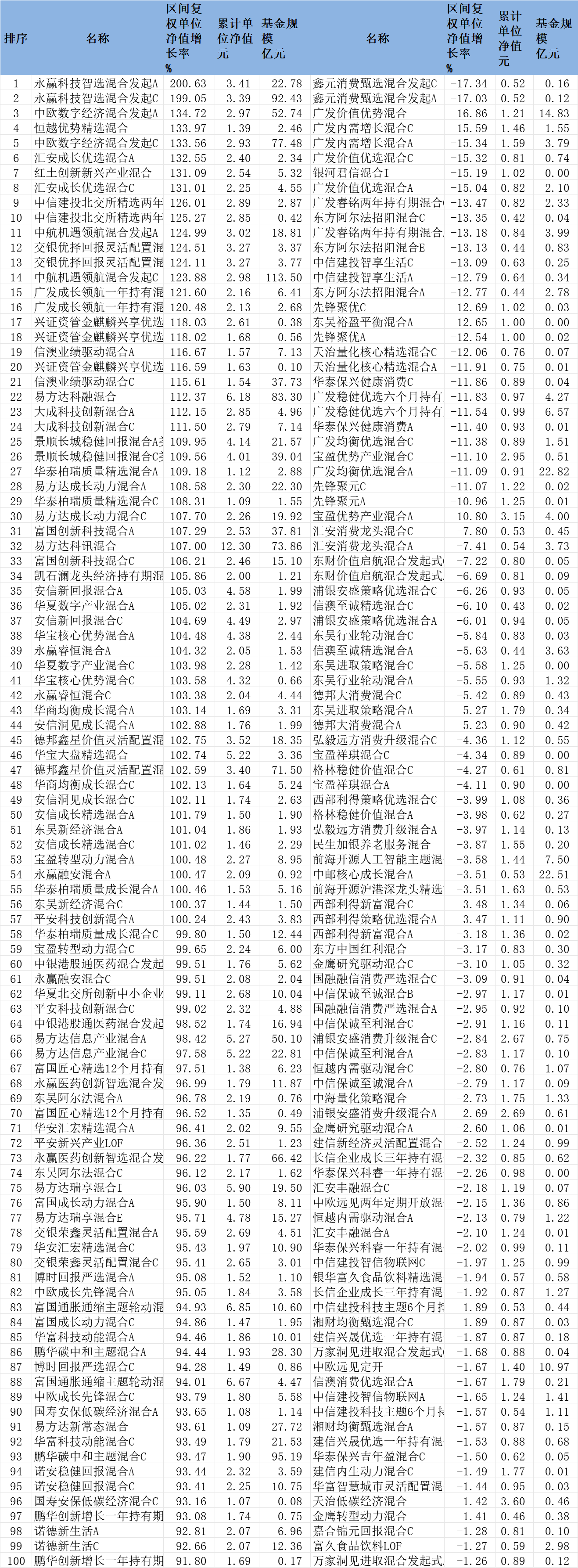
Core Insights - In the first ten months of the year, 98.2% of the 8,154 comparable mixed funds experienced a net value increase, while only 148 funds saw a decline [1][2] - The top-performing mixed funds, primarily focused on technology investments, achieved returns exceeding 130%, with the "Yongying Technology Smart Selection Mixed Fund" leading with returns of 200.63% and 199.05% for its A and C shares respectively [1][2] - The "China Europe Digital Economy Mixed Fund" also performed well, with returns of 134.72% and 133.56% for its A and C shares, focusing on AI infrastructure and applications [2] Performance Summary - The "Yongying Technology Smart Selection Mixed Fund" A/C was established on October 30, 2024, with a scale of 11.52 billion yuan and a year-to-date return of 198.11% and 196.53% as of November 5, 2025 [1] - The fund's top ten holdings include companies like Xinyi Technology, Zhongji Xuchuang, and Tencent Holdings, reflecting a strong focus on the global cloud computing industry [1] - The "China Europe Digital Economy Mixed Fund" A/C, established on September 12, 2023, has a scale of 13.02 billion yuan and year-to-date returns of 131.63% and 130.46% [2] Decline Summary - The "Xinyuan Consumer Selection Mixed Fund" A/C recorded the largest declines, with returns of -17.34% and -17.03% respectively, since its establishment on March 24, 2023 [3] - Six of the ten worst-performing funds were from the GF Fund, with declines ranging from -16.86% to -13.47%, all managed by the same fund manager [3]
广和通(300638):子公司出表影响表观增速,预计Q4恢复正常
Changjiang Securities· 2025-11-06 14:12
Investment Rating - The investment rating for the company is "Buy" and is maintained [8]. Core Insights - Excluding the impact of the sold RuiLing Wireless vehicle-mounted pre-installed module business, the revenue from continuing operations grew by 7.32% year-on-year, while net profit slightly decreased by 2.19%, indicating a stable fundamental performance in the core wireless communication module business and the effectiveness of structural adjustments. Growth was observed in FWA, POS, and other IoT businesses. The gross margin for Q3 increased by 2.9 percentage points quarter-on-quarter, primarily due to strategic inventory buildup and an increase in the proportion of high-margin solution products, with expectations for continued upward trends in the future. Despite negative growth in revenue and profit for the first three quarters due to the impact of RuiLing Wireless's profit and investment income in 2024, Q4 is expected to show a significant year-on-year growth rebound [2][12][12]. Summary by Sections Financial Performance - For the first three quarters of 2025, the company achieved revenue of 5.366 billion yuan, a year-on-year decrease of 13.69%, and a net profit of 316 million yuan, down 51.50% year-on-year. In Q3 2025, revenue was 1.659 billion yuan, a year-on-year decline of 22.56%, with a net profit of 98 million yuan, down 69.14% year-on-year [5][12]. Business Growth Areas - Smart modules have emerged as a new growth direction. Compared to traditional cellular communication modules, smart modules are equipped with main control chips and memory, capable of running operating systems like Android and Linux, thus possessing strong real-time data processing capabilities and a variety of interfaces. These smart modules, which integrate computing and communication functions, are becoming key carriers for edge computing demands and are expected to drive growth in the smart terminal sector. The company has been increasing its R&D investment in smart modules since 2018 and has launched several products applicable in various industries, including smart retail and automotive electronics [12]. Future Outlook - Looking ahead to 2026, the company is expected to transition from modules to complete solutions in AI toys and embodied intelligent robots, expanding its capabilities and capturing more value in the industry chain. Excluding the impact of RuiLing Wireless in 2024, the company is projected to achieve revenue and profit growth in 2025. Profit forecasts indicate net profits of 412 million yuan, 568 million yuan, and 721 million yuan for 2025-2027, with year-on-year growth rates of -38%, 38%, and 27%, respectively, corresponding to PE valuations of 58x, 42x, and 33x [12].

AI消费电子行业专题:地方政策加速,看好端侧AI产业链生态
Shanghai Securities· 2025-11-06 11:11
Investment Rating - The industry investment rating is "Overweight (Maintain)" [1] Core Views - The report emphasizes the long-term growth potential of the global AI smart terminal market and the opportunities within the Chinese supply chain, driven by increasing innovation in edge AI products [4][14] - The Shanghai Municipal Economic and Information Commission has issued a plan to enhance the layout of edge AI chips, which is expected to accelerate the development of the industry [13][14] - The global edge AI market is projected to grow significantly, with a forecasted increase from 321.9 billion to 1.22 trillion yuan from 2025 to 2029, representing a compound annual growth rate of 40% [5][15] Summary by Sections 1. Policy Support for Edge AI - The Shanghai Municipal Economic and Information Commission has released a plan to strengthen the layout of edge AI chips, focusing on various terminal products such as smartphones and computers [13] - The plan aims to accelerate the development of core chips like SoC and CPU, covering major technology routes including X86, ARM, and RISC-V [13][14] - The report highlights the supportive national policies for AI development, including the goal for new generation smart terminals to achieve over 70% penetration by 2027 [14] 2. Market Potential of Edge AI - The edge AI market is expected to experience explosive growth, with a projected market size increase from 321.9 billion yuan to 1.22 trillion yuan between 2025 and 2029 [5][15] - AI glasses are identified as a key product in the edge AI sector, with global sales expected to rise significantly, reaching 600 million units by 2029 [6][16] - The report notes that domestic sales of smart glasses in China are anticipated to approach 1.4 million units in 2025, marking a 216% year-on-year increase [6][16] 3. Redefining Smart Terminals with AI - The report discusses the transformation of smart terminals through AI, moving from graphical user interfaces (GUI) to language user interfaces (LUI), enhancing user interaction [9][17] - It highlights a paradigm shift from "tool execution" to "autonomous execution" with the emergence of AI agents capable of independent decision-making [18] - The ecological transformation is noted, where companies are creating interconnected ecosystems that span multiple devices and applications [19] 4. Investment Recommendations - The report suggests focusing on companies such as Luxshare Precision, Lens Technology, and Goertek, among others, as potential investment opportunities in the AI smart terminal sector [8]
高通孟樸:八年进博“全勤生”,以合作创新“链接”中国产业
Di Yi Cai Jing· 2025-11-06 07:16
Core Insights - Qualcomm has consistently participated in the China International Import Expo (CIIE) for eight consecutive years, demonstrating its long-term strategic commitment to the Chinese market and deep collaboration with the local industry ecosystem [1][2][4] - The company emphasizes the importance of the CIIE as a platform for showcasing cutting-edge technologies and facilitating connections among government, industry partners, and market demands [2][4] - Qualcomm's focus on 5G and AI technologies aims to empower various industries, with a strategic layout for the upcoming 6G era in collaboration with Chinese partners [1][5][9] Group 1: Industry Development - Over the past eight years, the telecommunications industry has evolved from 5G pre-commercialization to the deep integration of AI and 5G, with Qualcomm positioned at the intersection of this transformation [4][5] - Qualcomm's participation in the CIIE has allowed the company to convert technological concepts into tangible commercial outcomes, marking a significant transition from "exhibits" to "products" [4][5] - The company has expanded its partnerships beyond smartphone manufacturers to include smart connected vehicles and extended reality (XR), enhancing its technology's application across various scenarios [5][7] Group 2: Technological Advancements - At the eighth CIIE, Qualcomm will showcase 12 flagship smartphones powered by its fifth-generation Snapdragon 8 chip, highlighting the rapid product rollout in China [6][8] - Qualcomm has supported the launch of over 210 smart connected new energy vehicles in China over the past three years, indicating its significant role in the automotive industry's transformation [7][8] - The company is focused on integrating green energy and smart connectivity in the automotive sector, with advancements in intelligent cockpits and driving assistance technologies [8][9] Group 3: Future Outlook - Qualcomm aims to drive innovation in AI and 6G technologies, collaborating with Chinese partners to enhance technology accessibility for consumers [9][10] - The company is committed to the development of edge AI applications, particularly in smart connected vehicles, to meet personalized needs and privacy requirements [10][11] - As 6G standardization progresses, Qualcomm plans to work closely with the global industry chain to contribute to the establishment of 6G standards, continuing its legacy from 3G to 5G [11]

【电子行业前三季度净利增36.8%!消费电子ETF(159732)引领硬件创新布局】
Mei Ri Jing Ji Xin Wen· 2025-11-06 04:44
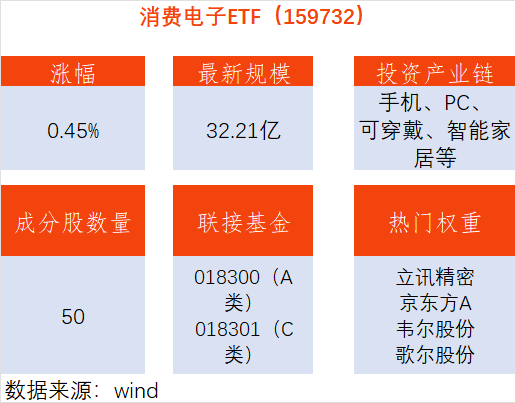
Group 1 - A-shares indices collectively rose on November 6, with the Shanghai Composite Index increasing by 0.46%, driven by gains in coal, utilities, and steel sectors, while media and social services sectors saw declines [1] - The Consumer Electronics ETF (159732.SZ) rose by 0.45%, with notable increases in component stocks such as Dongshan Precision (+3.75%), Zhaoyi Innovation (+2.56%), Shenghong Technology (+2.14%), and Huankeyuan Electronics (+1.91%), while companies like Wentai Technology and Xunwei Communication experienced declines of -5.57% and -2.19% respectively [1] Group 2 - The electronic industry achieved revenue of 29,416.32 billion yuan in the first three quarters of 2025, marking a year-on-year growth of 19.40%, with net profit attributable to shareholders reaching 1,459.51 billion yuan, up 36.80% [3] - In Q3 2025, the industry reported revenue of 11,147.88 billion yuan, a year-on-year increase of 19.99%, and net profit of 621.89 billion yuan, reflecting a significant growth of 49.28% [3] - According to Industrial Securities, ongoing global technological innovation and the maturation of model capabilities indicate a substantial potential for edge AI, leading to an upcoming hardware innovation wave in consumer electronics, driven by Apple [3] - The Consumer Electronics ETF (159732) tracks the Guozheng Consumer Electronics Index, primarily investing in 50 A-share listed companies involved in the consumer electronics industry, with significant focus on electronic manufacturing and optical electronics sectors [3]
2025年Q3通信板块营收、净利润增速同环比均提升,通信ETF广发(159507)盘中最高涨近3%,近3月涨幅近32%同类第一!
Xin Lang Cai Jing· 2025-11-06 03:14
该机构认为,虽然随着预期落地,三季报后板块有所调整,但中信建投持续推荐AI算力板块,包括北 美算力产业链与国内算力产业链的核心公司。此外,建议关注AI应用板块,包括端侧AI的进展,以及 前期涨幅不大、未来可能改善的海缆及光纤光缆板块,军工通信板块,国内外巨头纷纷加码的量子科技 板块。 场内ETF方面,截至2025年11月6日 10:07,国证通信指数强势上涨1.00%,通信ETF广发(159507)上涨 0.97%,盘中最高涨近3%。拉长时间看,截至2025年11月5日,通信ETF广发近3月累计上涨31.90%,涨 幅排名可比基金第一。成分股仕佳光子上涨7.62%,鼎通科技上涨4.93%。前十大权重股合计占比 66.96%,其中中天科技上涨4.76%,中际旭创、新易盛等个股跟涨。 份额方面,通信ETF广发近1月份额增长500.00万份,新增份额位居可比基金第一。资金流入方面,拉 长时间看,通信ETF广发近5个交易日内,合计"吸金"1448.50万元。 近期,存储市场进入新一轮上升周期,企业级需求回暖推动DRAM与NAND Flash价格全面上涨。 Trendforce上调2025年第四季度DRAM涨幅预测至1 ...

瑞芯微(603893):产业趋势明确,后续快速增长预期不变
CAITONG SECURITIES· 2025-11-05 07:12
Investment Rating - The investment rating for the company is "Accumulate" (maintained) [2] Core Views - The company has a clear industry trend and maintains expectations for rapid growth in the future, driven by strong demand for high-performance computing and storage solutions [7] - The company reported a revenue of 3.141 billion yuan for the first three quarters of 2025, representing a year-on-year increase of 45.46%, and a net profit of 780 million yuan, up 121.65% year-on-year [7] - The company is positioned well in the market with its RK 182X series products, which are expected to drive significant growth in the coming quarters [7] Financial Performance Summary - Revenue projections for the company are as follows: - 2023: 2.135 billion yuan - 2024: 3.136 billion yuan - 2025: 4.374 billion yuan - 2026: 5.519 billion yuan - 2027: 6.953 billion yuan - The revenue growth rates are projected at 5.2% for 2023, 46.9% for 2024, 39.5% for 2025, 26.2% for 2026, and 26.0% for 2027 [6][8] - Net profit forecasts are as follows: - 2023: 135 million yuan - 2024: 595 million yuan - 2025: 1.071 billion yuan - 2026: 1.411 billion yuan - 2027: 1.842 billion yuan - The net profit growth rates are projected at -54.6% for 2023, 341.0% for 2024, 80.1% for 2025, 31.7% for 2026, and 30.5% for 2027 [6][8] - The company’s PE ratios are expected to decrease from 198.1 in 2023 to 39.9 in 2027, indicating improving valuation metrics over time [6][8]

中科创达(300496):收入利润持续高增长,端侧AI快速起量
China Post Securities· 2025-11-05 01:58
Investment Rating - The report maintains a "Buy" rating for the company [6] Core Insights - The company reported a revenue of 5.148 billion yuan for the first three quarters of 2025, representing a year-on-year growth of 39.34%. The net profit attributable to shareholders reached 229 million yuan, an increase of 50.72% year-on-year [4] - The third quarter performance exceeded expectations, with a revenue of 1.848 billion yuan, up 42.87% year-on-year, and a net profit of 71 million yuan, reflecting a 48.26% increase year-on-year [9] - The company is focusing on AI applications in automotive technology, launching the AIBOX product in collaboration with Geely, which utilizes NVIDIA's platform for real-time AI operations in vehicles [9] - The IoT business is rapidly expanding, with a revenue of 1.27 billion yuan in the first half of the year, marking a 136.14% increase year-on-year [9] Financial Summary - The company’s projected earnings per share (EPS) for 2025-2027 are 1.08, 1.30, and 1.61 yuan, respectively, with corresponding price-to-earnings (PE) ratios of 63.92, 53.04, and 42.61 [6] - Revenue projections for 2025-2027 are 75.51 billion, 90.84 billion, and 105.15 billion yuan, with growth rates of 40.23%, 20.30%, and 15.76% respectively [10] - The company’s net profit attributable to shareholders is expected to reach 495.25 million yuan in 2025, with a growth rate of 21.55% [10]

龙旗科技(603341):Q3毛利率明显改善 持续拓宽“1+2+X”产品版图
Xin Lang Cai Jing· 2025-11-04 10:36
Core Insights - The company reported a revenue of 31.332 billion yuan for the first three quarters of 2025, a year-on-year decrease of 10.28%, while the net profit attributable to shareholders reached 507 million yuan, an increase of 17.74% [1] - In Q3 2025, the company achieved a revenue of 11.424 billion yuan, down 9.62% year-on-year, but the net profit attributable to shareholders increased by 64.46% to 152 million yuan [1] Revenue and Profitability - The company's gross margin for the first three quarters of 2025 was 8.59%, an increase of 2.50 percentage points year-on-year, while the net profit margin was 1.62%, up 0.39 percentage points [1] - In Q3 2025, the gross margin improved to 9.38%, a year-on-year increase of 4.00 percentage points, with a net profit margin of 1.33%, up 0.60 percentage points [1] Business Segments and Growth - The revenue contribution from smart devices, AIoT, and tablets in Q3 2025 was 67.2%, 20.0%, and 9.5% respectively, with AIoT and tablet segments showing significant growth [1] - The company is expanding its "1+2+X" product strategy, focusing on smart devices, AIoT, AI PCs, and automotive electronics, with successful product launches and partnerships [2] Future Outlook - The company is expected to benefit from the AI trend and has projected revenues of 46.810 billion, 54.538 billion, and 66.691 billion yuan for 2025-2027, with year-on-year growth rates of 1%, 17%, and 22% respectively [2] - Net profit forecasts for 2025-2027 are 651 million, 927 million, and 1.302 billion yuan, with growth rates of 30%, 42%, and 40% respectively [2]