
科技赋能

Search documents
通力电梯“组局”,深铁、万科加深科技底色
2 1 Shi Ji Jing Ji Bao Dao· 2025-09-02 10:09
Group 1 - Deep Railway and Vanke have signed a strategic cooperation agreement with KONE Elevator to establish a smart logistics center in the Greater Bay Area, enhancing supply chain efficiency [1][2] - Vanke will leverage its logistics management experience to provide customized warehousing services for KONE, while Deep Railway will support material flow through its transportation network [1][2] - KONE's new center in Shenzhen is expected to significantly improve supply chain efficiency in Southern China, with delivery times to Hong Kong projected to be reduced by 20% [1][2] Group 2 - KONE plans to establish its southern headquarters in Qianhai, Shenzhen, expected to be operational by early 2026, enhancing local service efficiency and resource integration [2] - The collaboration indicates Deep Railway's shift towards utilizing Vanke's technological capabilities beyond real estate development, potentially marking a trend in Vanke's future transformation [2] - Vanke's management has expressed intentions to promote the integration of diverse scenarios and business formats, focusing on logistics, commercial operations, and public infrastructure maintenance [2][3] Group 3 - Vanke's subsidiary, Vanke Logistics, has previously collaborated with Deep Railway on a "rail transit + robot delivery" project, which is currently in the testing phase [3] - Vanke's subsidiary, Vanke Cloud, has enhanced its technological capabilities, introducing a collaborative model involving AI employees and upgrading its platform to improve operational efficiency [4] - Industry observers note that Deep Railway's financial support and resource empowerment for Vanke, combined with Vanke's diversified financing strategies, are expected to help the company recover from its downturn [4]

上市银行2025年中报:银行业绩迎来关键回暖|银行与保险
清华金融评论· 2025-09-02 09:18
Core Viewpoint - The banking industry in China has shown signs of stabilization and recovery in the first half of 2025, with improvements in both profitability and asset quality, as indicated by the performance of the 42 listed banks [2]. Group 1: Profitability - In the first half of 2025, 26 out of 42 listed banks achieved positive growth in both operating income and net profit, accounting for over 60% of the total [4]. - The net interest income of listed banks decreased by 1.29% year-on-year, while non-interest income increased by 6.97%, indicating a return to positive growth since the first quarter [4][5]. - The six major state-owned banks reported a slight increase in total operating income to CNY 1.83 trillion, while net profit was CNY 682.52 billion, slightly lower than the previous year [4][5]. Group 2: Income Structure - Interest income remains dominant but faces structural challenges, with a net interest margin contraction affecting profitability [5]. - Non-interest income, particularly from fees and commissions, has rebounded significantly, contributing positively to overall revenue growth [5]. - Investment income saw a year-on-year increase of 23.46%, further enhancing the banks' profitability [4]. Group 3: Asset Quality - As of June 2025, the overall non-performing loan (NPL) ratio for listed banks was stable at 1.23%, with improvements in corporate loans but rising NPLs in personal loans [8]. - Among state-owned banks, Postal Savings Bank had the lowest NPL ratio at 0.92%, while other major banks maintained stable NPL ratios [8][11]. - The provision coverage ratio showed mixed results, with some banks improving while others experienced declines, indicating varying levels of risk management [9]. Group 4: Future Outlook - The banking sector is expected to continue supporting the real economy while focusing on risk management and capital foundation, ensuring stable growth amid changing global economic conditions [12].


毕马威发布《银行业转型:新的议程》报告,揭示通过降本增效实现成功转型的路径
Sou Hu Cai Jing· 2025-09-02 02:40
Core Insights - The banking industry is actively pursuing transformation strategies focused on cost reduction and efficiency enhancement due to narrowing profit margins and increasing regulatory demands [1][10] - A recent report by KPMG surveyed over 228 banking executives globally, providing insights and data to guide management in successful transformation paths [1] Group 1: Key Transformation Initiatives - The three main transformation initiatives prioritized by banks include cost strategies, AI technology integration, and addressing cybersecurity and fraud issues [4] - 53% of banks aim to reduce costs by at least 10% by 2030, with nearly one-third targeting reductions exceeding 20% [10] - 38% of surveyed banks are incorporating AI into their operations, while 33% focus on cybersecurity, and approximately 29% are enhancing data analysis capabilities [12] Group 2: Successful Practices of Leading Banks - Successful banks set clear cost reduction targets, with 56% having established specific goals and 49% documenting their cost reduction strategies [32] - A centralized and accountable governance model is crucial, as leading banks are 2.5 times more likely to adopt such an approach compared to average banks [34] - 50% of respondents believe that a centralized approach is the most effective for transformation, while 54% support a hub-and-spoke model for coordination [29] Group 3: Challenges in Transformation - A significant barrier to achieving transformation goals is the lack of alignment between operational and cost strategies, with only 31% of banks reporting complete alignment [24] - Governance and structural inefficiencies hinder progress, with 53% of banks struggling to prioritize and coordinate major change initiatives [26] - Despite the push for technology adoption, only 24% of large banks (annual revenue over $5 billion) have seen significant success in cost reduction efforts [20] Group 4: Case Studies and Outcomes - A case study highlighted a bank that implemented a cost reduction plan targeting over 25%, resulting in a 35% increase in sustainable productivity after one year [18][19] - Another case study showed a multinational bank saving over $400 million through operational improvements and enhanced customer service processes [31] Group 5: Recommendations for Effective Transformation - Banks should adopt a comprehensive, end-to-end perspective in their transformation efforts, focusing on customer needs while ensuring alignment with strategic goals [35] - A disciplined, phased approach to transformation is recommended, involving clear tracking and measurement of progress [36][38]

中华财险江苏分公司“科技+专家”双驱发力 筑牢农险风险防线
Yang Shi Wang· 2025-09-02 00:53
Core Viewpoint - The company is leveraging technology and expert resources to enhance agricultural insurance services, focusing on risk prevention and mitigation during critical growth periods for crops, particularly rice [1][5]. Group 1: Risk Management Strategies - The company is implementing a dual approach of "technology-enabled precise control" and "expert frontline problem-solving" to strengthen risk management in agriculture [1]. - A comprehensive service model is being developed that extends from post-disaster compensation to proactive prevention and damage reduction during disasters [1][6]. Group 2: Expert Services and Custom Solutions - The company has formed a specialized service team that includes agricultural experts and surveyors to provide tailored technical guidance directly to farmers [2]. - Specific initiatives include addressing key challenges in rice cultivation, such as synchronizing flowering periods and improving pollination success rates through personalized plans [2][4]. Group 3: Technological Integration - The company is utilizing satellite remote sensing technology for comprehensive monitoring of rice planting areas, ensuring accurate identification of geographical locations, actual areas, crop types, and planting densities [5]. - A three-tier monitoring network has been established, combining satellite remote sensing, drone inspections, and field monitoring points to dynamically track crop health and identify potential issues [5][6]. Group 4: Communication and Outreach - The company is enhancing outreach by creating short videos of expert guidance sessions, which have reached over ten thousand farmers through various digital platforms [4]. - A direct communication mechanism with local meteorological agencies has been established to provide timely weather alerts to farmers regarding extreme weather conditions [4].

顺丰控股半年送件78.5亿票赚57亿 二季度1094只基金加仓陆股通跟进
Chang Jiang Shang Bao· 2025-09-02 00:09
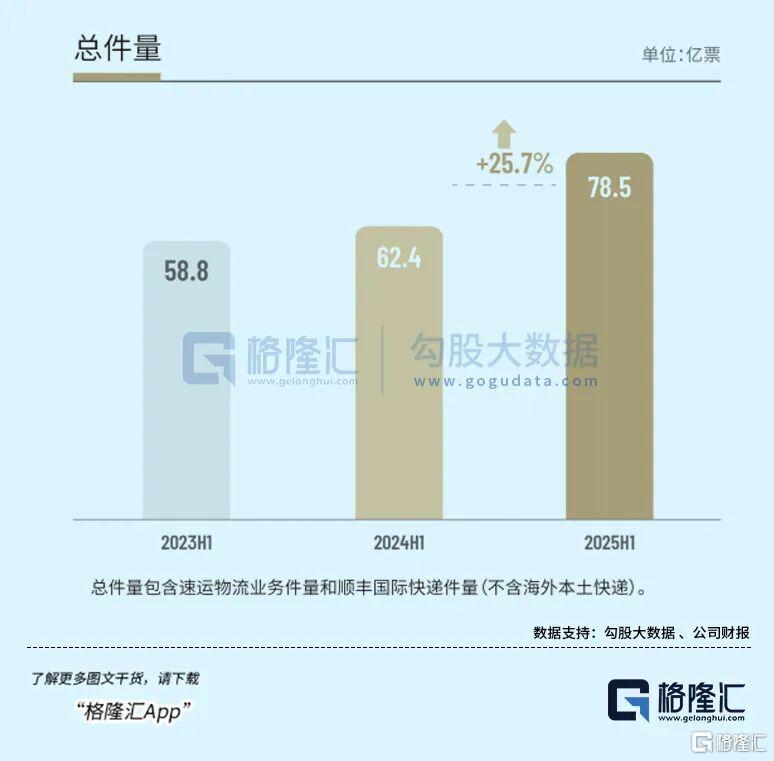
Core Viewpoint - SF Holding (顺丰控股) achieved record-high operating performance in the first half of 2025, with significant growth in revenue and net profit, indicating strong resilience in a competitive market [2][3][6]. Financial Performance - In the first half of 2025, SF Holding reported operating revenue of 1468.58 billion yuan, a year-on-year increase of over 9% [2][3]. - The net profit attributable to shareholders reached approximately 57 billion yuan, reflecting a year-on-year growth of over 19% [2][3]. - The company has achieved four consecutive quarters of net profit growth since mid-2022 [6]. Operational Metrics - Total parcel volume reached 7.85 billion, representing a year-on-year increase of 25.7%, outpacing the overall growth rate of the express delivery industry [2][7]. - Revenue from express logistics business was 109.3 billion yuan, up 10.4% year-on-year, with a notable acceleration in growth in the second quarter [7]. Cost Management and Efficiency - The company has implemented structural cost reduction measures, leading to a decrease in average operating costs per parcel [9]. - SF Holding continues to optimize its operational model and enhance efficiency through technology, including automation and intelligent logistics solutions [9]. Financial Health - As of June 30, 2025, the company's debt-to-asset ratio was 51.35%, a decrease of 0.79 percentage points from the end of 2024 [10]. - The company reported a free cash inflow of 8.74 billion yuan in the first half of 2025, with total cash and cash equivalents amounting to 47.67 billion yuan [10]. Market Sentiment - Capital markets show strong confidence in SF Holding, with 1,130 funds holding approximately 488 million shares, marking a five-year high [2][10]. - In the second quarter of 2025, 1,094 funds increased their holdings by about 250 million shares [10].


顺丰中期业绩再验证:慢牛行情里最硬的物流核心资产
Ge Long Hui A P P· 2025-09-01 13:18
Core Viewpoint - The logistics industry is experiencing a "slow bull" market driven by "anti-involution" and technological innovation, with significant growth in express delivery volumes and a shift from price competition to value competition [1][3]. Industry Overview - As of August 29, 2025, the Shanghai Composite Index has risen by 15.1%, the Shenzhen Component Index by 21.91%, the ChiNext by 34.95%, and the Hang Seng Index by 25.1% [2]. - The express delivery sector saw a total of 956.4 billion packages delivered in the first half of 2025, marking a year-on-year increase of 19.3% [3]. Company Performance - SF Holding reported a revenue of 146.858 billion yuan for the first half of 2025, a year-on-year increase of 9.26%, and a net profit of 5.738 billion yuan, up 19.37% [5][19]. - The company's express logistics business volume reached 7.85 billion packages, growing by 25.7% year-on-year, outperforming the industry average [9][10]. Business Model Transformation - SF Holding's business model has shifted from "scale-driven" to "value-driven," achieving a threefold resonance in volume, revenue, and profit [7][12]. - The company has enhanced its service quality and efficiency, focusing on customer-centric differentiated product strategies [13][14]. Technological Advancements - SF Holding is leveraging technology to enhance operational efficiency, with significant investments in automation and smart logistics systems [20]. - The company has improved its small package transfer efficiency by 12.5% in the first half of 2025, while reducing transfer costs [20]. Market Position and Competitive Advantage - SF Holding has established a comprehensive global supply chain network, covering 339 domestic administrative regions and 95 countries internationally [17]. - The company has a strong brand reputation, with over 95% of Fortune China 500 companies collaborating with SF Holding [19]. Investment Outlook - Short-term prospects are bolstered by improved cyclical performance and the potential of international business [21]. - Mid-term strategies include expanding into REITs and diversifying revenue streams across various logistics sectors [22]. - Long-term growth is expected from continuous value creation and technological advancements, which may redefine the logistics industry landscape [24][25].
韵达股份半年报:“科技赋能”成效显著,服务品质持续提升
Bei Ke Cai Jing· 2025-09-01 03:59
Core Viewpoint - Yunda Holdings Group Co., Ltd. reported a revenue of 24.833 billion yuan for the first half of 2025, reflecting a year-on-year growth of 6.80%, while maintaining profitability despite an industry price decline of nearly 8% [1] Financial Performance - The company achieved a net profit of 529 million yuan during the reporting period [1] - Yunda's express delivery volume reached 12.726 billion parcels, marking a year-on-year increase of 16.50% [1] - The market share remained stable at 13.31%, indicating the company's leading position in the industry [1] Strategic Initiatives - The company deepened its "technology empowerment" strategy, actively advancing the construction of intelligent transfer centers [5] - Yunda has established 71 transfer centers, 468 collection warehouses, and 1,926 grid warehouses across its network [5] - Over 150 Yunda outlets in various provinces have deployed more than 500 delivery drones and vehicles, with five drone routes operating regularly [5] Digital Transformation - Yunda implemented a "business digitization" and "digital business" approach, enhancing customer management tools to meet diverse service needs [9] - The company introduced multiple digital management tools, including customer managers and delivery personnel management systems [9] Rural Development and Logistics - Yunda actively supports the national "rural revitalization" strategy, adding 1,300 new township outlets and achieving over 99.8% coverage in county-level areas [10] - The number of end-store stations increased to 97,000, with some locations offering 24-hour self-service pickup [10] - Yunda's "Smart Orange Network" service optimized delivery models for agricultural products, significantly increasing farmers' incomes [10] Service Quality Enhancement - The company elevated service quality to a strategic level, establishing specialized working groups for e-commerce platforms [11] - Yunda developed AI-driven tools like the "Smile System" and "Xiao Da Robot" to enhance service experiences for merchants and consumers [11] - Investments in automated sorting equipment and the introduction of unmanned vehicles and stations improved delivery efficiency and customer satisfaction [12] Future Outlook - Yunda's management stated that 2025 is a year for deepening the "Smart Chain Future" strategy, focusing on technology empowerment and service optimization to drive high-quality development [15]


科技赋能驱动高质量发展 韵达股份2025年中报快递业务稳中有进同比增长16.5%
Quan Jing Wang· 2025-09-01 02:37
Core Viewpoint - In the first half of 2025, the overall economic operation in China is stable and improving, showcasing strong resilience and vitality, with the express delivery industry maintaining a high market scale and benefiting from policy incentives and seasonal consumption [1] Group 1: Company Performance - Yunda Co., Ltd. reported a total express delivery volume of 12.726 billion pieces, a year-on-year increase of 16.5%, maintaining a market share of 13.31% [1] - The company achieved operating revenue of 24.833 billion yuan, a year-on-year growth of 6.80%, and a net profit of 529 million yuan despite an industry price decline of nearly 8% [1] - The company’s total assets reached 38.600 billion yuan, with net assets attributable to shareholders of 20.462 billion yuan, and a gross profit margin for express services of 6.55% [4] Group 2: Technological Advancements - Yunda is implementing a multi-layered technology strategy termed "1+N+AI" to enhance logistics capabilities, focusing on the construction of collection and distribution centers [2] - The company is advancing the construction of intelligent transfer centers and has deployed drones and unmanned vehicles in various regions to improve last-mile delivery [3] - The application of the DeepSeek model is aimed at transitioning from "human + intelligent" to deep intelligence, enhancing operational decision-making and customer service efficiency [3] Group 3: Cost Management and Network Expansion - The company reported a 15.62% year-on-year decrease in core operating costs per package, with total revenue costs rising by 6.80% [4] - Yunda has established a multi-level transfer system with 71 transfer centers and over 9,700 end delivery service facilities, including 1,926 grid warehouses [4] - The company has expanded its service network to cover all provinces and municipalities in China, with a county-level coverage rate exceeding 99.8% [5] Group 4: Social Responsibility and Strategic Initiatives - Yunda is actively supporting the national "rural revitalization" strategy by enhancing its service network in rural areas, adding over 1,300 new township outlets [5] - The company has introduced smart delivery cabinets to improve convenience for consumers in rural areas, benefiting nearly 20,000 residents [5] - Yunda aims to shift the industry focus from price competition to value competition through technological empowerment and service optimization [6]
化妆品行业品牌化竞争趋势明显 国货崛起、科技赋能成行业增长双引擎
Zheng Quan Shi Bao Wang· 2025-08-30 13:42
Group 1 - The cosmetics industry is transitioning from a high-growth phase to a focus on product and brand strength, emphasizing long-term strategies over quick profits [1][2][3] - Data from Tmall indicates that over 200 leading fast-moving consumer goods (FMCG) merchants achieved double-digit growth in the past six months, with new brands seeing a 40% year-on-year increase in transactions [1][2] - The rise of domestic brands and technological empowerment are reshaping the cosmetics industry, with domestic brands capturing a growing market share [4][5] Group 2 - Domestic brands accounted for 50.4% of the market share in 2023, surpassing foreign brands, and are projected to reach 55.74% in 2024 [5] - The focus on product innovation and brand development is evident, with domestic brands making significant advancements in high-end raw materials and core areas like anti-aging [5] - Tmall's new strategies, including enhanced marketing scenarios and product competitiveness, have led to substantial growth in new product traffic and sales [2][3]


大庆萨尔图区:调研桌搬到车间 科技红利“流”进企业
Zhong Guo Fa Zhan Wang· 2025-08-29 12:45
Core Insights - The Daqing City Economic Development Bureau has been actively facilitating connections between high-tech enterprises and academic institutions to enhance product development and industrialization, resulting in significant revenue increases for companies like Shengkun Instrument Manufacturing Co., which reported a revenue boost of over 3 million yuan [1][2] Group 1: Government Initiatives - The Economic Development Bureau has been conducting on-site visits to various high-tech and small-to-medium enterprises, focusing on understanding their challenges and providing tailored solutions [1] - The bureau's approach includes direct engagement with company leaders and technical staff to discuss issues such as talent acquisition and funding for technology transfer [1][2] Group 2: Economic Impact - The collaboration between the bureau and enterprises has led to successful projects, such as the "blocking ball" research project by Xinwantong, which is expected to generate an economic benefit of 15 million yuan upon production [2] - The ongoing support from the bureau aims to ensure that innovative ideas from laboratories are transformed into marketable products, thereby stabilizing and energizing the industrial upgrade in the Daqing region [2]