
绿色低碳转型

Search documents
安伟主持召开各开发区、区(市)2026年经济工作座谈会时强调
Zheng Zhou Ri Bao· 2025-12-25 07:52
Core Viewpoint - The upcoming year 2026 is crucial for the economic work as it marks the beginning of the "14th Five-Year Plan" period, emphasizing the need for strategic planning and implementation of policies to ensure robust economic growth and development [1][2] Group 1: Economic Planning and Policy Implementation - The city leadership is focused on thoroughly studying policy directions and leveraging existing policies while seeking additional support to facilitate the implementation of significant national and provincial projects in Zhengzhou [2] - Emphasis is placed on enhancing project planning and execution, particularly in high-tech industries and industrial upgrades, to expand industrial investment and build a modern industrial system [2] Group 2: Innovation and New Economic Growth - There is a strong focus on fostering new business formats, emphasizing domestic demand, and creating new products, models, and scenarios to cultivate new economic growth points [2] - The initiative includes promoting green and low-carbon transitions, with a commitment to environmental protection and ecological safety [2] Group 3: Business Environment and Governance - Efforts are being made to optimize the business environment by integrating into the national unified market and advancing comprehensive reforms for market-oriented resource allocation [2] - The governance strategy includes enhancing the grid-based governance system led by party building, aiming for high-level safety and quality development through efficient governance [2]
这一地一次性投运500辆氢能重卡!
第一商用车网· 2025-12-25 07:08
Core Viewpoint - The hydrogen energy industry is a strategic emerging industry and a key development direction for the future, with Luliang City leveraging its resource endowment to promote transformation and energy revolution through a complete hydrogen energy ecosystem [1][10]. Group 1: Hydrogen Energy Heavy Trucks - Luliang City has introduced 500 hydrogen energy heavy trucks, which will serve as the new main force for zero-carbon transportation [1]. - These trucks utilize fourth-generation hydrogen storage bottles and the latest electric drive bridge technology, resulting in a hydrogen consumption of 7.5 kg per 100 km, a reduction of 1-2 kg compared to previous models, allowing for better range [3]. - The driving experience of hydrogen energy heavy trucks is reported to be more comfortable and economical compared to traditional fuel vehicles, with longer maintenance intervals [5]. Group 2: Hydrogen Supply and Production - Luliang City has operational hydrogen fuel cell vehicles exceeding 800 units and has established a zero-carbon route from Xiaoyi to Tianjin Port [7]. - The Pengwan Hydrogen Port produces nearly 30,000 tons of hydrogen annually from coke oven gas at a cost of approximately 10 yuan per kilogram, supporting the promotion of hydrogen vehicles [10]. - The city can utilize 8 billion cubic meters of industrial by-product coke oven gas to produce over 400,000 tons of hydrogen annually, and is developing a diversified hydrogen production system using natural gas and green electricity [10]. Group 3: Green Hydrogen Projects - A 3MW green hydrogen project using AEM electrolyzer technology is in the final testing phase, which will enhance local renewable energy capacity by over 20% [13]. - This project aims to produce green hydrogen directly from renewable energy, effectively avoiding high costs associated with long-distance hydrogen transport [13]. Group 4: Strategic Development Plans - Luliang City aims to establish a "hundred billion-level hydrogen energy industry base" and has implemented a long-term development plan for the hydrogen industry, investing over 100 million yuan annually [15]. - The city has gathered 14 key provincial hydrogen industry chain enterprises, with hydrogen production capacity reaching 135,000 tons, ranking first in the province [17]. - The local government is focusing on the integration of the hydrogen energy supply chain, including production, storage, transportation, and utilization, to accelerate the commercialization of hydrogen technologies [21].

聊城“四端联动”推动绿色转型,高质量发展生态底色愈加鲜明
Qi Lu Wan Bao· 2025-12-25 04:38
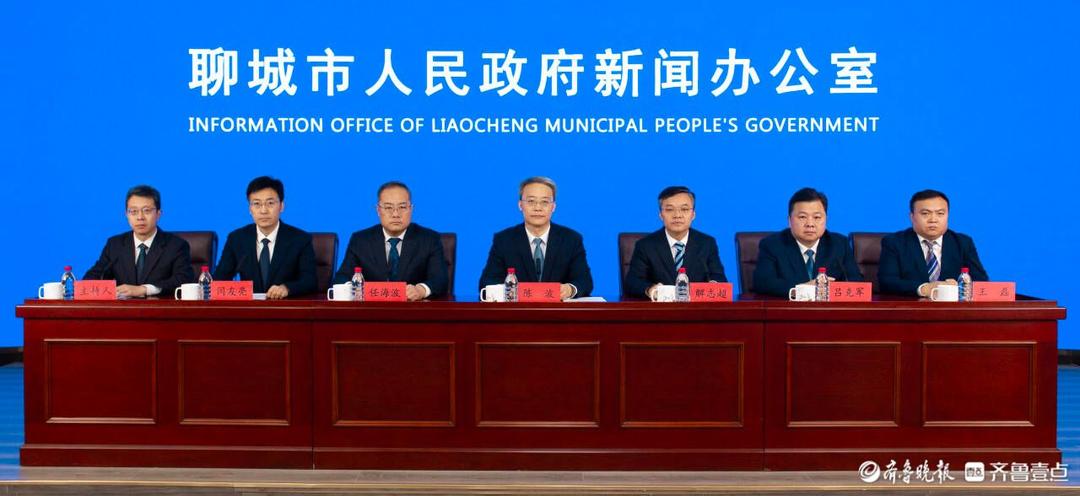
Core Viewpoint - During the "14th Five-Year Plan" period, Liaocheng has implemented a series of green and low-carbon transformation measures, achieving significant progress in energy conservation, industrial upgrading, energy structure adjustment, innovation in key areas, and environmental governance, with green development becoming a hallmark of high-quality growth [1] Group 1: Energy Conservation and Efficiency - Significant achievements in energy conservation and consumption reduction, with energy utilization efficiency improving by 52.3% as the output value per 10,000 tons of standard coal consumption increased by 0.45 billion yuan compared to 2020 [2] - Total coal consumption decreased by nearly 7 million tons compared to the peak of the "13th Five-Year Plan," with coal utilization efficiency significantly enhanced [2] - All 13 provincial-level parks have implemented a new round of circular economy transformation, with Liaocheng recognized as a national circular economy demonstration city [2] Group 2: Industrial Structure Adjustment - Liaocheng has made deep adjustments to its industrial structure, eliminating 2,411 outdated production equipment and 20 production lines, creating space for green and low-carbon industries [3] - Over 2,000 industrial transformation projects with investments exceeding 5 million yuan have been implemented, with an annual growth rate of 14.7% [3] - The number of national high-tech enterprises reached 918, with high-tech industries accounting for over 57.2% of industrial output value, an increase of nearly 15 percentage points compared to 2020 [3] Group 3: Energy Structure Optimization - The city has adopted a dual approach of "new and old coexistence, clean substitution," shutting down 30 outdated small coal-fired power units with a total capacity of 2.2 million kilowatts [4] - Renewable energy capacity reached 5.5545 million kilowatts, accounting for 30.51% of total installed capacity, an increase of 18.8 percentage points since 2020 [4] - Non-fossil energy proportion reached 9.1%, up by 5.8 percentage points compared to 2020 [4] Group 4: Green Living and Environmental Quality - The city has made strides in green transportation, with over 10 million tons of railway freight and 96.15% of urban buses being new energy vehicles [5] - Water resource utilization efficiency has improved, with total water consumption controlled within 2 billion cubic meters and water usage per unit GDP decreasing by 32% compared to 2020 [5] - Air quality has improved, with 23 more days of good air quality compared to the end of the "13th Five-Year Plan," and PM2.5 concentration decreased by 33.3% [6]
聊城积极调整能源结构,为全面绿色转型注入绿色动能
Qi Lu Wan Bao· 2025-12-25 04:00
坚持规划引领,科学布局新能源项目。严格遵循我省新能源发展政策,统筹生态保护、资源条件与电网承载能力,在项目开发过程中充分衔接生态保护红 线、文化旅游开发等要求,科学规划了350万千瓦集中式风电项目,实现了能源开发与生态保护的协同推进。在光伏发展方面,建立"谋划一批、储备一 批、开工一批、竣工一批"的动态项目库,精准对接国家及省级相关规划,确保项目建设符合绿色低碳转型总体布局。 聚焦重点领域,推动新能源规模与质量双提升。截至2025年11月底,聊城新能源装机总量已达到555.45万千瓦,同比增长15.13%,占电力总装机的 30.51%;新能源发电量占比达到11.16%,较2020年提升8.4个百分点。在风电领域,9个标段陆上风电已开工建设;冠县、临清入选省级"千乡万村驭风行 动"试点,积极探索"村企合作""共建共享"的农村风电开发新模式。在光伏领域,累计建成35个集中式光伏项目,装机容量153万千瓦;分布式光伏覆盖 9.10万户,装机容量370.7万千瓦;冠县新能源装备制造产业园入选全省首批绿电产业园试点,逐步形成"集中式与分布式并举"的发展格局。 拓展多元应用场景,丰富绿色能源供给体系。在生物质能源方面,7 ...
国家发展改革委:加快推动交通运输法等制修订,健全自动驾驶有关法规
Zhong Zheng Wang· 2025-12-25 03:16
Core Insights - The article emphasizes the need to accelerate the construction of a modern infrastructure system to support national development and rejuvenation efforts, focusing on high-quality development rather than mere scale growth [1] Group 1: Infrastructure Development - The article advocates for optimizing the supply structure of infrastructure by balancing development needs with environmental and fiscal capacities, enhancing the quality and efficiency of existing infrastructure, and promoting a comprehensive green and low-carbon transition [1] - In the transportation sector, it highlights the importance of utilizing existing resources effectively, improving the efficiency of new infrastructure projects, and implementing modern maintenance practices [1] - The energy sector is urged to increase the share of renewable energy, ensure a safe and orderly transition from fossil fuels, and develop a new power system that enhances stability and peak supply capabilities [1] Group 2: Reform and Innovation - The article calls for deepening reforms in key areas, including market-oriented reforms and investment financing reforms, to enhance the dynamism and vitality of infrastructure development [2] - In transportation, it suggests reforms in the comprehensive transportation system, railway system, and air traffic management, while encouraging private sector participation in construction and operation [2] - The energy sector is encouraged to establish a unified national electricity market and improve mechanisms for large-scale renewable energy integration into the grid, alongside optimizing oil and gas pipeline operations [2]
中德园,引力何来?
Liao Ning Ri Bao· 2025-12-25 01:21
Core Viewpoint - The event highlighted the launch of new industrial scenarios at the Sino-German (Shenyang) High-end Equipment Manufacturing Industrial Park, focusing on opportunities in zero-carbon and life health industries, aiming to attract investment and foster collaboration among various sectors [2][3][4]. Group 1: Industrial Scenarios and Investment Opportunities - The Sino-German Park is promoting two main industrial scenarios: zero-carbon parks and life health industries, aligning with national economic development goals [3]. - The zero-carbon park aims to meet national zero-carbon standards within three years, focusing on clean energy, smart management, energy-saving, and international cooperation [3]. - The life health city is developing 13 investment cooperation scenarios in biomedicine, high-end medical devices, and health industries, with a focus on global innovation and international standards [4]. Group 2: Growth and Development of Companies - Companies like BMW and Envision Energy have reported significant growth and positive experiences in the Sino-German Park, indicating a strong business environment and infrastructure [6]. - BMW plans to increase its annual production capacity from 140,000 units in 2015 to 260,000 units by the end of 2024, expanding its product range significantly [6]. - Envision Energy is recognized as a benchmark for green transformation in Northeast China, benefiting from the park's supportive ecosystem [6]. Group 3: Infrastructure and Community Development - The park is enhancing its infrastructure, including transportation networks and community services, to attract talent and support industrial growth [8][9]. - A comprehensive service platform is established to meet various business needs, facilitating a seamless experience for companies operating in the park [8]. - The integration of educational and healthcare facilities within the park aims to create a livable environment for employees, promoting a sustainable community [8][9]. Group 4: Future Projections and Goals - By 2025, the industrial output value and fixed asset investment in the Sino-German Park are projected to reach 122 billion and 142 billion respectively, with annual growth rates of 12.1% and 13.6% [10]. - Companies are aligning their development plans with the park's goals, with BMW and Envision Energy committing to support the zero-carbon initiative [10].

黑龙江绿水青山的“十四五”答卷
Zhong Guo Huan Jing Bao· 2025-12-25 00:57
Core Viewpoint - Heilongjiang Province is committed to ecological protection and high-quality development, showcasing its rich natural resources and strong ecological environment as a foundation for sustainable growth [4][11]. Group 1: Ecological Protection Efforts - The province has implemented a comprehensive management mechanism for river pollution, achieving a 100% source tracing rate and a 97% remediation rate for river discharge outlets [6][7]. - Water quality indicators have shown significant improvement, with a 12.5 percentage point increase in the proportion of good water bodies from 2021 to 2024, reaching 84.4% [7]. - The province has recognized 30 rivers and lakes as provincial beautiful rivers and lakes, promoting a model of harmonious coexistence between humans and nature [8]. Group 2: Economic Development and Green Transformation - The "Two Mountains" concept is being actively practiced, with regions like Mohe and Fuyuan focusing on ecological tourism and green agriculture, achieving a balance between ecological and economic benefits [11][12]. - The province is advancing green low-carbon transformation, with cities like Jixi leading initiatives to eliminate outdated coal boilers and promote energy-efficient technologies [17][18]. - Heilongjiang has successfully completed the third compliance period of the national carbon market, with a total trading volume of 64.29 million tons and a transaction value of 4.249 billion yuan [18][19].

践行社会责任 推动高质量发展
Ren Min Ri Bao· 2025-12-24 22:32
主论坛会场。 主论坛会场,参会人员在做记录。 主论坛会场,参会人员在听会。 习近平总书记指出:"企业既有经济责任、法律责任,也有社会责任、道德责任""只有积极承担社会责 任的企业才是最有竞争力和生命力的企业"。 12月19日,由人民日报社经济社会部主办的2025企业社会责任论坛在陕西西安举行。中央和国家机关有 关部委负责同志、地方政府主管部门代表、企业负责人和专家学者等200余位嘉宾共聚一堂,围绕"践行 社会责任 推动高质量发展"这一主题共话新时代企业社会责任,共商高质量发展之道。 与会嘉宾表示,要深入贯彻落实习近平经济思想,贯彻落实党的二十届四中全会精神和中央经济工作会 议精神,不断引导企业将履行社会责任内化为核心价值追求和自觉行动,实现企业价值与社会价值的统 一,为以高质量发展全面推进中国式现代化注入磅礴动力。 弘扬企业家精神,展现更大的担当与作为 企业是社会主义市场经济的主体,企业履行社会责任是中国特色社会主义市场经济的生动体现。与会嘉 宾认为,多年来中国企业积极履行社会责任,实践丰富、贡献突出,新时代新征程上责任重大、要求更 高,要更好弘扬企业家精神,实现企业价值与社会价值的统一。 "AI西安之夜"活 ...
上海环境集团股份有限公司关于举办“走进上市公司”活动情况的公告
Shang Hai Zheng Quan Bao· 2025-12-24 18:11
Core Viewpoint - Shanghai Environment Group held an investor communication event on December 23, 2025, aimed at enhancing communication with investors and promoting understanding of the company and industry [1][16]. Group 1: Event Details - The event took place on December 23, 2025, at Shanghai Youlian Zhuyuan First Wastewater Treatment Investment Development Co., Ltd. [1] - Participating institutions included various securities companies and individual investors [1]. Group 2: Company Overview - Shanghai Environment focuses on the "Environmental Governance+" strategic vision, achieving a cumulative operating income of 4.571 billion yuan, a year-on-year increase of 6.15%, and a net profit attributable to shareholders of 521 million yuan, a year-on-year increase of 4.74% for the first three quarters of 2025 [3]. Group 3: Strategic Vision and Business Layout - The company centers its strategy on "Environmental Governance+" with core businesses in municipal solid waste and sewage treatment, while also focusing on hazardous waste, soil remediation, municipal sludge, and solid waste resource utilization [4]. Group 4: Quality Improvement and High-Quality Development - The company aims to enhance core competitiveness, activate internal growth, seize green development opportunities, and foster innovation through deep integration of industry and innovation chains [5]. Group 5: Green and Low-Carbon Transition - The company has integrated green development into its overall strategy, actively participating in green electricity and green certificate trading, and has developed several green benchmark projects [6]. Group 6: Technological Innovation and Industry Upgrading - The company emphasizes technological research and development in solid waste resource utilization and green low-carbon transition, advancing digital transformation initiatives [8]. Group 7: Cost Reduction and Efficiency Improvement - The company has implemented a management mechanism focused on refined operations, centralized procurement, and energy-saving measures to achieve cost reduction and efficiency improvement [8]. Group 8: Waste-Free City Initiatives - The company is actively involved in the construction of waste-free cities, enhancing resource utilization capabilities and providing technical support through its "FAST" technology [9]. Group 9: Market Value Management - The company prioritizes market value management, focusing on quality improvement, investor relations, and ESG initiatives to enhance overall corporate value [10]. Group 10: ESG Efforts and Achievements - The company has integrated ESG principles into its operations, receiving multiple awards for its sustainable development practices [11]. Group 11: Shareholder Returns - The company is committed to providing reasonable returns to investors, continuously focusing on improving operational performance [12]. Group 12: Accounts Receivable Management - The company actively manages accounts receivable to ensure risks are controllable and aims for sustainable high-quality development [13].

西藏自治区涉税经营主体超39万户
Zhong Guo Xin Wen Wang· 2025-12-24 11:04
Group 1 - The number of tax-related business entities in Tibet Autonomous Region has exceeded 390,000, showing a year-on-year growth of 20% from January to November, with over 70,000 new entities added, reflecting a 77.1% increase [1] - Tax revenue collected by the tax authorities in Tibet reached over 80.6 billion yuan, marking an 11.1% year-on-year increase, with tax revenue (excluding export tax rebates) exceeding 42.9 billion yuan [1] - The industrial economy in Tibet saw a sales revenue growth of 17.8% year-on-year, driven by traditional and emerging industries, with significant contributions from the non-ferrous metal mining and pharmaceutical manufacturing sectors [2] Group 2 - The non-ferrous metal mining sector reported a sales revenue increase of 31.4%, while the pharmaceutical manufacturing sector saw a 14.5% rise, highlighting them as key growth drivers [2] - The textile and apparel industry, along with the food manufacturing sector, experienced a remarkable sales revenue growth of 52.3%, indicating enhanced market recognition and brand competitiveness [2] - The tax authorities in Tibet have implemented a "first violation not punished" policy for certain tax violations, benefiting over 5,900 taxpayers from January to November [2] Group 3 - The tax authorities maintained a strict stance against tax fraud, identifying 50 cases of fraudulent tax invoicing and recovering 81.94 million yuan in tax payments [3] - High-risk gas stations were also targeted, with 84 cases identified and 19.86 million yuan in tax payments recovered [3] - One individual classified as high-risk was found guilty, resulting in a recovery of 1.34 million yuan [3]