
产业结构优化

Search documents
东北第一城,失速了!
3 6 Ke· 2025-11-28 03:27
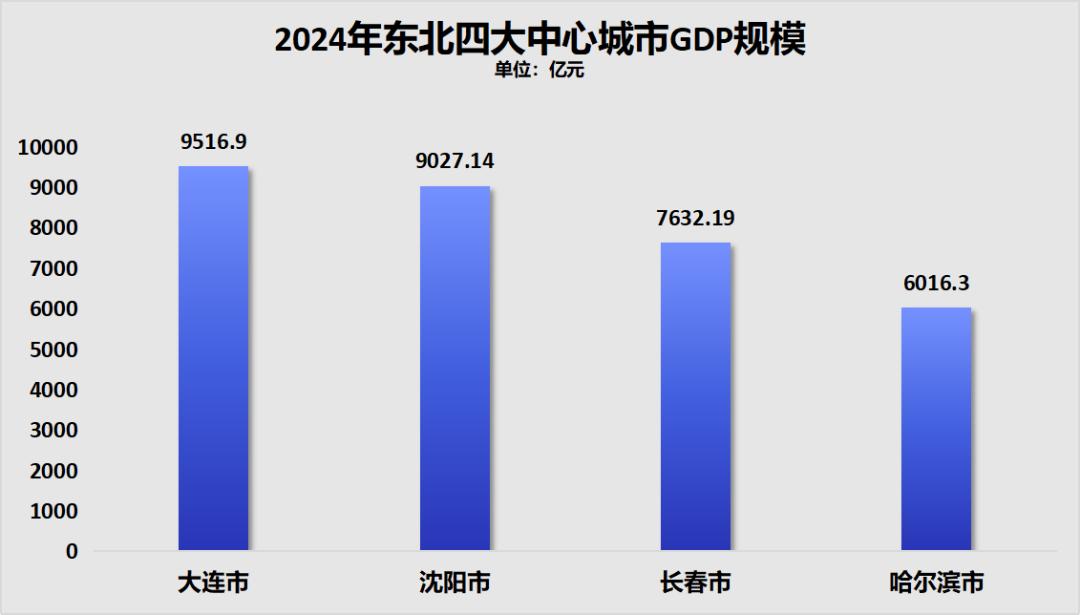
Core Viewpoint - Shenyang is positioned as the leading city in Northeast China, despite its current economic challenges, particularly in the industrial sector, which is crucial for its overall economic performance [5][10][15]. Economic Comparison - Shenyang's GDP is 902.71 billion, while Dalian leads with 951.69 billion. Shenyang has a higher total financial assets of 23,258.6 billion compared to Dalian's 21,018.3 billion [4][3]. - In terms of fiscal revenue, Shenyang also outperforms its peers with 82.56 billion, while Dalian has 77.48 billion [4]. Industrial Performance - Shenyang's industrial sector is facing significant challenges, with a 1.9% decline in the secondary industry and a 4.7% drop in industrial output value [13][14]. - The automotive industry, which constitutes 48.7% of Shenyang's industrial revenue, is particularly affected, with a reported revenue of 334.91 billion [15][16]. Strategic Positioning - Shenyang is designated as a national historical and cultural city and an international transportation hub, with plans to enhance its role as a center for advanced manufacturing and modern services in Northeast Asia [5][6][7]. - The city is actively pursuing the development of new energy vehicles, particularly methanol and hydrogen fuel vehicles, to adapt to changing market conditions [26][30]. Future Initiatives - Shenyang aims to optimize its industrial structure by promoting traditional industries while fostering emerging sectors, including artificial intelligence and advanced manufacturing [28][32]. - The city is implementing a "chain leader system" to enhance collaboration among key industries, targeting a total scale of over 1 trillion in ten key industrial clusters by the end of 2024 [35].

广东金融支持产业链整合兼并方案出台,哪些产业将最先受益?
Nan Fang Du Shi Bao· 2025-11-26 06:37
Core Viewpoint - The Guangdong Provincial Government has introduced an innovative action plan to support enterprises in industry chain integration and mergers, focusing on financial backing through capital markets, credit, and fund systems to enhance key technology autonomy in critical sectors like chip manufacturing and high-end medical devices [2][3][4]. Financial Support Mechanisms - The action plan aims to mobilize social capital, including financial assets, insurance, and venture capital, to invest in key sectors, enhancing the integration of funding and industry chains [2][4]. - A multi-layered support system is established for state-owned enterprises, encouraging them to utilize various financial instruments for mergers and resource consolidation [3][5]. - The plan promotes the establishment of cross-border integration funds with Hong Kong and Macau, optimizing mechanisms for qualified foreign and domestic limited partners [4][5]. Market Activity and Trends - Guangdong has been the most active province in mergers and acquisitions, with 227 new disclosed mergers involving 78 billion yuan by mid-2025, indicating a robust market foundation for the action plan [3][6]. - The action plan is expected to further activate the M&A market, facilitating structural optimization and collaborative development among enterprises [3][6]. Credit and Financing Policies - The action plan specifies that commercial banks will offer favorable interest rates and terms for qualifying projects in strategic industries, with additional support for advanced manufacturing and technology firms [5][6]. - A new financing model combining technology credit loans with insurance guarantees will be promoted to assist asset-light technology companies in industry integration [5][6]. Risk Management and Compliance - The action plan emphasizes the importance of preventing financial fraud and ensuring compliance during mergers, with a focus on due diligence and transaction clause design [6]. - A collaborative mechanism will be established to address challenges in the integration process, ensuring regulatory compliance and resource allocation [5][6]. Future Outlook - By 2027, the action plan aims to enhance the industrial cluster advantages in the Guangdong-Hong Kong-Macau Greater Bay Area, creating a more efficient and diversified collaboration mechanism to support high-quality economic development [6].
神马股份落子宁东筹建尼龙66项目
Zhong Guo Hua Gong Bao· 2025-11-26 02:31
Core Viewpoint - Shennong Co. plans to establish a new company in Ningxia, focusing on high-performance nylon 66 products for the automotive sector, which is expected to enhance its market competitiveness and optimize its product structure [1] Company Summary - Shennong Co. announced the establishment of Shennong (Ningdong) Fabric Co., Ltd. with a registered capital of 169 million yuan [1] - The Ningdong project will produce high-performance nylon 66 industrial yarn and coated fabric, primarily for the automotive industry [1] - The project includes two types of nylon 66 industrial yarn: heavy denier and fine denier, with applications in tire fabric, canvas, and airbags [1] - The company aims to leverage its production technology and management advantages to improve product performance and reduce production costs [1] Industry Summary - The nylon 66 high-strength medium and low denier yarn represents a high value-added segment with significant technical barriers, with only a few companies capable of mass production [1] - The Ningdong project is positioned to take advantage of the abundant resources in the western region, contributing to a more optimized industrial structure and creating new profit growth points [1]

10月份全社会用电量 同比增长10.4%
Zhong Guo Zheng Quan Bao· 2025-11-21 22:56
Core Insights - In October, China's total electricity consumption reached 857.2 billion kilowatt-hours, marking a year-on-year increase of 10.4%, the highest monthly growth rate this year [1] - From January to October, total electricity consumption accumulated to 8.6246 trillion kilowatt-hours, with a year-on-year growth of 5.1%, indicating a positive trend in the national economy [1] Factors Contributing to Growth - The high growth rate in October is attributed to multiple factors, including a low base from the previous year and the effective release of consumer potential during the overlapping National Day and Mid-Autumn Festival holidays [2] - The "autumn tiger" phenomenon, characterized by significant temperature increases in southern China, led to a surge in residential cooling electricity consumption, with notable increases in Jiangxi (65.9%), Zhejiang (63.2%), and Shanghai (47.0%) [2] Sector Performance - The primary industry showed steady growth, with October electricity consumption at 12 billion kilowatt-hours, up 13.2% year-on-year [3] - The secondary industry, as the main electricity consumer, recorded 568.8 billion kilowatt-hours in October, a 6.2% increase, with high-tech and equipment manufacturing sectors performing particularly well, growing by 11% [3] - The tertiary industry emerged as one of the fastest-growing sectors, with October electricity consumption at 160.9 billion kilowatt-hours, up 17.1% year-on-year, driven by the retail and information technology services sectors [3] Long-term Economic Outlook - From January to October, the tertiary industry's electricity consumption reached 1.67 trillion kilowatt-hours, growing by 8.4%, reflecting the deepening transition of China's economic dynamics [4] - The overall electricity consumption data indicates an improvement in economic activity, consumer potential release, and optimization of industrial structure, reinforcing a positive long-term economic outlook [4]
10月份全社会用电量同比增长10.4% 创今年以来月度用电量增速新高
Zhong Guo Zheng Quan Bao· 2025-11-21 22:32
Core Insights - In October, China's total electricity consumption reached 857.2 billion kilowatt-hours, marking a year-on-year increase of 10.4%, the highest monthly growth rate this year [1] - From January to October, total electricity consumption accumulated to 8.6246 trillion kilowatt-hours, with a year-on-year growth of 5.1%, indicating a positive trend in the national economy [1] Group 1: Factors Driving Electricity Consumption Growth - The significant increase in electricity consumption in October is attributed to multiple factors, including a low base from the previous year and the effective release of consumer potential during the overlapping National Day and Mid-Autumn Festival holidays [2] - The "autumn tiger" phenomenon, characterized by high temperatures in southern China, particularly in Jiangxi, Zhejiang, and Shanghai, led to a surge in residential cooling electricity usage, with increases of 65.9%, 63.2%, and 47.0% respectively [2] Group 2: Sectoral Electricity Consumption Analysis - The primary industry showed steady growth, with October electricity consumption at 12 billion kilowatt-hours, a year-on-year increase of 13.2% [3] - The secondary industry, as the main electricity consumer, recorded 568.8 billion kilowatt-hours in October, with industrial electricity consumption growing by 6.4% [3] - The high-tech and equipment manufacturing sectors performed notably well, with October electricity consumption increasing by 11%, particularly in the electrical machinery and automotive manufacturing sectors [3] Group 3: Tertiary Industry and Overall Economic Indicators - The tertiary industry emerged as one of the fastest-growing sectors, with October electricity consumption at 160.9 billion kilowatt-hours, a year-on-year increase of 17.1% [3] - The cumulative electricity consumption of the tertiary industry from January to October reached 1.67 trillion kilowatt-hours, reflecting a year-on-year growth of 8.4% [4] - The overall electricity consumption data indicates a positive trend in economic activity, consumer potential release, and industrial structure optimization in China [4]
永和智控挂牌转让3049万资产无人报名 实控人曹德莅3.2亿转让控制权失败
Chang Jiang Shang Bao· 2025-11-20 23:56
Core Viewpoint - Yonghe Intelligent Control is facing significant challenges in asset divestiture and ongoing financial losses, indicating a deteriorating business situation and lack of investor interest in its assets [1][2][3]. Group 1: Asset Transfer Attempts - Yonghe Intelligent Control announced the public transfer of 51% equity in Taixing Pule and all debts owed by Taixing Pule, with an initial listing price of RMB 30.49 million, but failed to attract any interested buyers [1][3]. - Following the lack of interest, the company plans a second round of asset transfer at a reduced price of RMB 24.39 million, reflecting a 20% decrease from the initial price [1][3]. - The company's previous attempt to transfer shares held by its actual controller was also unsuccessful, as the buyer failed to make the required payment, rendering the agreement void [1][9]. Group 2: Financial Performance - Yonghe Intelligent Control has experienced a continuous decline in revenue since 2022, with reported revenues of RMB 9.90 billion, RMB 9.48 billion, and RMB 8.23 billion for the years 2022, 2023, and 2024 respectively, showing year-on-year declines of -1.86%, -4.19%, and -13.19% [2][7]. - The company reported net losses of RMB 261.87 million, RMB 1.56 billion, and RMB 2.97 billion for the same years, with losses increasing significantly year-on-year [2][7]. - For the first three quarters of 2025, Yonghe Intelligent Control reported revenues of RMB 5.82 billion, a decrease of 7.25% year-on-year, and a net loss of RMB 60.46 million, although this loss was less than the previous year's figure [8]. Group 3: Company Background and Business Operations - Yonghe Intelligent Control's main business includes water and heating valve fittings, tumor precision radiation treatment, and photovoltaic cell operations, with a focus on brass and copper products [7]. - The company acquired a 51% stake in Taixing Pule in late 2022 for RMB 31.22 million, aiming to enter the photovoltaic cell industry, but has since struggled with the performance of this investment [5][8]. - As of May 31, 2025, Taixing Pule reported a net asset value of -RMB 304 million and a debt of RMB 185 million, leading to a high debt-to-asset ratio of 211% [4].

2026年农业又要变天了?粮价、猪价一夜突变!玉米、小麦全面上涨?猪价、牛羊价涨定了!农民警惕...
Xin Lang Cai Jing· 2025-11-20 22:08
Core Insights - The article discusses the upcoming trends in agricultural reform and price changes for grains and livestock in 2026, emphasizing the need for farmers to prepare for these shifts [1][2]. Agricultural Reform Trends - The Chinese government aims for substantial progress in rural revitalization by 2027, focusing on stable agricultural production, livable rural areas, and continuous income growth for farmers [2]. - Key areas of future agricultural reform include technological empowerment, optimization of industrial structure, and green low-carbon transformation [2]. - The number of family farms in China has surpassed 5 million, with 80% of counties piloting cooperative quality improvements, indicating a shift towards larger-scale agricultural operations [1][2]. Price Trends - Prices for corn and wheat have seen significant increases, with wheat prices reaching 2,600 yuan per ton and some premium varieties hitting 2,800-2,900 yuan per ton [3]. - In the Northeast, corn prices are also rising, with state-owned enterprises like COFCO and China Grain Reserves starting to purchase at prices around 2,090 yuan per ton, which is higher than local processing prices [3]. - The pig and livestock markets are experiencing a rebound, with pig prices exceeding 13 yuan per kilogram due to seasonal demand increases [4]. Climate Impact - The emergence of La Niña climate conditions is expected to affect farmers, particularly concerning the risk of grain spoilage and livestock disease [5]. - Farmers are advised to take precautions against potential spoilage by properly storing grains and ensuring vaccination and sanitation in livestock operations [5].
维远股份:加快在建项目进度,着力打造新材料、新能源两大高端特色产业体系
Zheng Quan Shi Bao Wang· 2025-11-20 12:17
Core Viewpoint - The company reported a significant decline in net profit for Q3 2025, with a loss of 11.84 million yuan, a year-on-year decrease of 122.71%, and a cumulative loss of 179 million yuan for the first three quarters, a year-on-year decline of 304.14% [1] Group 1: Financial Performance - The decline in performance is attributed to a larger decrease in product prices compared to raw material prices, high costs associated with trial production of new projects, and increased maintenance costs [1] - The company aims to enhance cost reduction and efficiency, consolidate its competitive advantages across the entire product and industry chain, and improve its risk resistance and performance levels [1] Group 2: Production Capacity and Projects - The company has established production capacities including 600,000 tons/year of propane dehydrogenation, 700,000 tons/year of phenol and acetone, and several other chemical products [2] - The company is focusing on building a new materials and new energy industry chain, with ongoing projects such as a 300,000 tons/year direct oxidation propylene oxide project and a 250,000 tons/year electrolyte solvent facility [3] Group 3: Strategic Focus - The company is committed to accelerating the progress of ongoing projects and developing high-end industry systems in new materials and new energy [3] - There are currently no ongoing merger and acquisition projects, but the company is actively seeking and evaluating potential targets for future opportunities [3]

永和智控拟公开挂牌转让昆明医科肿瘤医院100%股权
Zhi Tong Cai Jing· 2025-11-18 14:30
Core Viewpoint - The company intends to publicly transfer 100% equity of its wholly-owned subsidiary, Kunming Medical Oncology Hospital Co., Ltd., with a minimum listing price of 35.9277 million yuan, aiming to optimize its industrial structure and enhance the quality of the listed company's development [1] Group 1 - The company is planning to transfer its entire stake in Kunming Medical Oncology Hospital [1] - The initial listing price for the equity transfer is set at no less than 35.9277 million yuan [1] - Following the completion of the transaction, the company will no longer hold any equity in Kunming Medical [1]
永和智控:拟转让昆明医科肿瘤医院有限公司100%股权
Mei Ri Jing Ji Xin Wen· 2025-11-18 14:09
Group 1 - The company Yonghe Zhikong plans to publicly transfer 100% equity of its wholly-owned subsidiary Kunming Medical Oncology Hospital to optimize its industrial structure and improve development quality [1] - As of the evaluation benchmark date of July 31, 2025, the audited net assets of Kunming Medical are valued at 32.45 million yuan, with the assessed total equity value at 35.93 million yuan [1] - The initial public transfer price for the 100% equity of Kunming Medical is set at no less than 35.93 million yuan based on the evaluation results [1] Group 2 - For the first half of 2025, Yonghe Zhikong's revenue composition is as follows: industrial sector accounts for 89.41%, medical services and others account for 10.57%, and photovoltaic cell segment accounts for 0.02% [1] - The company's market capitalization is reported to be 2.8 billion yuan [2]