
创新药出海

Search documents
88.5亿美元,信达生物与礼来达成重磅合作!港股通创新药ETF(159570)大涨近2%!加速出海叠加商业化兑现双重催化!
Xin Lang Cai Jing· 2026-02-09 02:24
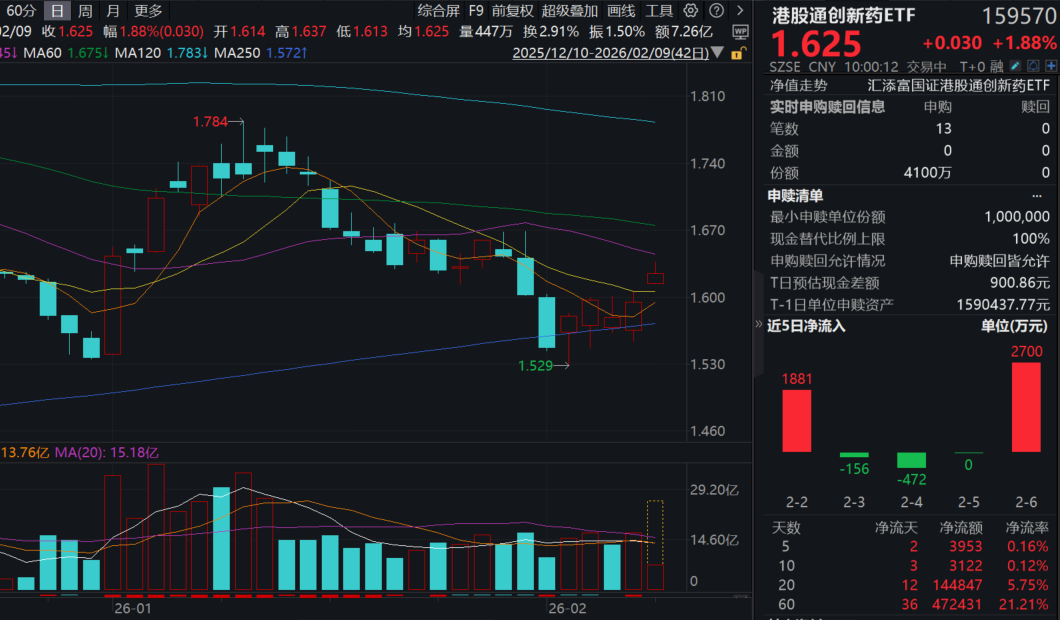
Core Viewpoint - The Hong Kong stock market for innovative drugs is experiencing significant growth, with the Hong Kong Stock Connect Innovative Drug ETF (159570) rising nearly 2% and achieving a trading volume exceeding 750 million yuan, indicating renewed investor interest [1][3]. Group 1: Company Developments - Innovent Biologics announced a strategic partnership with Eli Lilly to advance global R&D in oncology and immunology, receiving an upfront payment of $350 million and potential milestone payments totaling up to $8.5 billion [3]. - The stock performance of key companies within the ETF is positive, with Innovent Biologics up over 4%, BeiGene and China National Pharmaceutical Group up over 3%, and CSPC Pharmaceutical Group and Hansoh Pharmaceutical up over 1% [3][4]. Group 2: Industry Trends - The Chinese innovative drug sector is transitioning from "scale accumulation" to "value release," with a projected increase in License-out transactions from $2.562 billion in 2017 to $140.274 billion by 2025, indicating a significant leap in global recognition [5]. - By 2025, over 70% of companies in the innovative drug sector are expected to achieve revenue growth, with companies like BeiGene reporting revenues exceeding 36 billion yuan, showcasing strong commercialization capabilities [6]. - The innovative drug sector is entering a phase of profitability, with companies like Innovent Biologics and Rongchang Biologics achieving breakeven, while others like Elysium and Rongchang Biologics maintain robust growth [9][11]. Group 3: Investment Opportunities - The innovative drug sector is expected to see a surge in clinical data releases in 2026, with major academic conferences likely to provide further validation for domestic innovative drugs [8]. - Investment strategies should focus on core areas such as small nucleic acids, bispecific antibodies, and ADCs, while also capitalizing on performance forecast windows to identify high-potential stocks [8][12].

超88亿美元!信达生物七度携手礼来,布局肿瘤免疫新药研发
2 1 Shi Ji Jing Ji Bao Dao· 2026-02-09 02:04
Core Viewpoint - The strategic collaboration between Innovent Biologics and Eli Lilly aims to advance global research and development of innovative drugs in oncology and immunology, with Innovent leading the projects in China while Eli Lilly retains exclusive rights outside Greater China [1]. Group 1: Partnership Details - Innovent Biologics will receive an upfront payment of $350 million and is eligible for up to $8.5 billion in milestone payments related to research, regulatory, and commercialization achievements [1]. - The collaboration marks the seventh partnership between Innovent and Eli Lilly, highlighting a long-standing relationship that has evolved from capital investment to product commercialization [2]. - Innovent has previously collaborated with Eli Lilly on multiple projects, including agreements that set records for cooperation amounts between multinational and local pharmaceutical companies [2][3]. Group 2: Financial Performance - In 2020, Innovent achieved total revenue of 3.844 billion yuan, a year-on-year increase of 266.9%, with product revenue reaching 2.368 billion yuan, a 133.0% increase [3]. - The company anticipates total product revenue of approximately 11.9 billion yuan in 2025, marking a 45% year-on-year growth and the first time surpassing 10 billion yuan in product revenue [7]. - Innovent aims to achieve a product revenue scale of 20 billion yuan by 2027 and plans to advance five core pipelines into global Phase III clinical trials by 2030 [7]. Group 3: Globalization Strategy - Innovent's collaboration model has become a crucial component of its product pipeline, with 18 approved products, many developed through partnerships [6]. - The company is focusing on reducing reliance on external collaborations while enhancing its core R&D capabilities [10]. - Innovent's internationalization journey reflects the broader trend of Chinese innovative pharmaceutical companies transitioning to global markets, emphasizing the need for quality and originality in innovation [10].
88.5亿美元!千亿创新药巨头又有大动作,股价飙升逾8%!高弹性港股通创新药ETF(520880)直线冲击3%!
Xin Lang Cai Jing· 2026-02-09 01:54
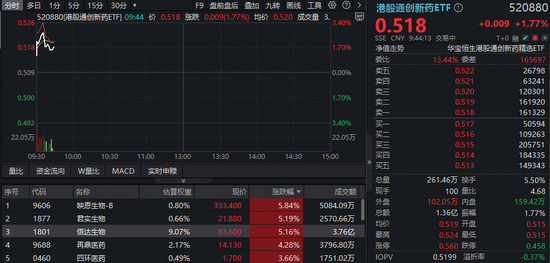
Group 1 - Company Innovent Biologics announced a strategic partnership with Eli Lilly on February 8 to advance global research and development of innovative drugs in oncology and immunology [1][5] - According to the agreement, Innovent will receive an upfront payment of $350 million, with potential milestone payments of up to $8.5 billion and a tiered revenue share from net sales outside Greater China [1][5] - Following the announcement, Innovent's stock opened high, surging over 8%, while the Hong Kong Stock Connect innovative drug sector saw a broad uplift, with the high-volatility Hong Kong Stock Connect innovative drug ETF (520880) rising by 3% [1][5] Group 2 - The trend of Chinese innovative drugs going global continues to heat up in 2026, with significant collaborations such as CSPC's partnership with AstraZeneca ($18.5 billion) and Rongchang's deal with AbbVie ($5.6 billion) showcasing the increasing international competitiveness of Chinese innovative drugs [3][7] - Innovent's recent deal, valued at $8.85 billion, adds momentum to the trend of Chinese innovative drugs expanding into international markets [3][7] - The Hong Kong Stock Connect innovative drug sector is currently at a low point, with the ETF (520880) recently hitting a record low since its listing, presenting an opportunity for investors to acquire innovative drug stocks at lower prices [3][7]
复宏汉霖PD-1新药“出海”日本 最早将于2028年产生销售提成
Zheng Quan Ri Bao Wang· 2026-02-08 09:34
Core Viewpoint - Shanghai Junshi Biosciences Co., Ltd. (referred to as "Junshi") and Eisai Co., Ltd. (referred to as "Eisai") have announced an exclusive commercialization and co-development agreement for the PD-1 monoclonal antibody Hansizhuang (also known as "PD-1 new drug") in Japan, marking a significant step in Junshi's international expansion [1] Group 1 - Junshi will receive an upfront payment of $75 million from Eisai, with potential additional payments of up to $80.01 million in regulatory milestone payments and up to $233.3 million in sales milestone payments, totaling a potential value of $388 million (excluding sales royalties) for the Japanese market [1] - The agreement indicates a strong performance for Hansizhuang's entry into the Japanese market, as noted by a securities analyst [1] - Junshi's CEO, Dr. Zhu Jun, emphasized that Hansizhuang has shown good potential across various tumor types, and Japan is a key step in its internationalization process [1] Group 2 - Junshi has strategically planned for the Japanese market for three years and initially intended to independently commercialize Hansizhuang in Japan, but opted for collaboration with Eisai due to their attractive offer [2] - Currently, Hansizhuang is being developed for indications in Japan, including extensive-stage small cell lung cancer and non-microsatellite instability high metastatic colorectal cancer, with plans for a clinical study on perioperative treatment for gastric cancer [2] - The company expects to submit a marketing application for extensive-stage small cell lung cancer in Japan during Eisai's fiscal year 2026, with approvals for both extensive-stage small cell lung cancer and non-microsatellite instability high metastatic colorectal cancer anticipated by 2028, and for gastric cancer by 2029 [2][3] Group 3 - Hansizhuang has already been approved in over 40 countries and regions, including the EU and Southeast Asia, for the treatment of extensive-stage small cell lung cancer [3] - Junshi continues to explore additional indications for Hansizhuang, focusing on high-incidence tumor areas such as lung cancer and gastrointestinal tumors, and aims to investigate its potential in diseases where PD-1 monoclonal antibodies have not yet been applied [3]
全球“药王”易主!医药巨头们的最新财报,透露了哪些“财富密码”?
Xin Lang Cai Jing· 2026-02-08 02:12
Group 1: US Pharmaceutical Earnings Season - Eli Lilly reported Q4 revenue of $19.3 billion, a 43% year-over-year increase, with non-GAAP EPS of $7.54, up 42%. The weight loss drug Zepbound has surpassed Novo Nordisk's Wegovy in prescriptions, and the 2026 revenue guidance is set at $80-83 billion, exceeding market expectations with a projected growth of 27% [1][10]. - Novo Nordisk's sales for semaglutide (Ozempic/Wegovy) are expected to reach $34.608 billion in 2025, accounting for 73.9% of total revenue. In China, Ozempic's sales are approximately ¥5.932 billion, while Wegovy's are about ¥874 million. The oral version of Wegovy is set to launch in the US on January 5, 2026, with around 50,000 prescriptions within the first month [2][10]. - Merck's Keytruda achieved annual sales of $31.68 billion, a 7% increase, nearing 50% of total revenue. The new pulmonary hypertension drug Winrevair generated $1.443 billion in sales, more than tripling from 2024 [4][10]. - Johnson & Johnson's Q4 revenue was $24.56 billion, exceeding expectations, with a 10% increase in the innovative pharmaceuticals segment. The 2026 revenue guidance is set at $99.5-100.5 billion, also above expectations [6][10]. - Pfizer's Q4 revenue was $17.6 billion, with a 9% increase excluding COVID products. The 2026 revenue guidance is conservative at $59.5-62.5 billion, reflecting declines in COVID product sales and patent expirations [7][10]. - Sanofi's Q4 earnings exceeded expectations, with record sales of Dupixent reaching €4.246 billion, a 32.2% year-over-year increase [8][10]. Group 2: Industry Trends and Insights - The current earnings season indicates that in the innovative-driven pharmaceutical industry, there are no eternal leaders, only continuous evolution [9][10]. - The competition in the GLP-1 drug market has intensified, with Eli Lilly's tirzepatide overtaking Novo Nordisk's semaglutide, marking a new phase in the industry [10]. - The slowdown in sales growth for Merck's Keytruda, despite record sales, highlights the need for new products and acquisitions to navigate the post-Keytruda era [10]. - The focus of competition is shifting from injectable to oral formulations, as seen with Novo Nordisk's oral Wegovy and Eli Lilly's multi-target drug Retatrutide, to build product moats [10]. - Price competition and pipeline iteration will be key observation points, with the impact of US drug pricing legislation becoming evident and the onset of a "price war" among GLP-1 drugs [10]. Group 3: Hong Kong Pharmaceutical Sector Opportunities - The Hong Kong pharmaceutical sector has seen significant changes, with innovation drugs remaining the strongest growth engine, shifting from "signing" to "realization" of value [11][12]. - The medical device sector is experiencing a "double recovery" opportunity as the impact of centralized procurement policies diminishes, leading to performance and valuation recovery [13][14]. - The Chinese traditional medicine sector is active, driven by favorable policies, but there is a "temperature difference" between policy drivers and fundamental performance, necessitating careful selection of stocks [17][19]. Group 4: ETF Configuration and Strategy - Valuations in the Hong Kong medical sector remain attractive, with the latest PE ratio at 30.77x, still low compared to the past five years [18][19]. - Macro liquidity conditions are favorable, with expectations of RMB appreciation and stable HKD attracting funds to Hong Kong stocks [18][19]. - The upcoming National People's Congress in March will clarify annual growth targets and industry policy priorities, serving as a critical point for risk appetite re-evaluation [18][19].
复宏汉霖:抗PD-1单抗汉斯状“出海”日本
Zheng Quan Ri Bao Wang· 2026-02-05 13:13
Core Insights - Shanghai Junshi Biosciences Co., Ltd. (referred to as "Junshi") and Eisai Co., Ltd. (referred to as "Eisai") have announced an exclusive commercialization and co-development agreement for the anti-PD-1 monoclonal antibody Hansizhuang (sulunlimab) in Japan [1] - Under the agreement, Eisai will pay Junshi an upfront payment of $75 million, with potential regulatory milestone payments up to $80.1 million and sales milestone payments up to $233.3 million, in addition to a double-digit percentage royalty on product sales [1] - Hansizhuang has already been approved in China for multiple indications, including squamous non-small cell lung cancer (sqNSCLC), extensive small cell lung cancer (ES-SCLC), non-squamous non-small cell lung cancer (nsqNSCLC), and esophageal squamous cell carcinoma (ESCC) [1] Group 1 - The agreement allows Hansizhuang to enter the Japanese market [1] - In Japan, Hansizhuang will be used for the treatment of extensive small cell lung cancer and non-microsatellite instability-high metastatic colorectal cancer, with plans for clinical research in perioperative treatment of gastric cancer [1] - Junshi will also assume the marketing authorization holder (MAH) responsibilities for the product in Japan [1] Group 2 - Junshi is currently conducting a Phase II bridging clinical trial for extensive small cell lung cancer in Japan, with plans to submit a marketing application during Eisai's fiscal year 2026 based on the trial results [2] - Additionally, Junshi is advancing an international multicenter Phase III clinical trial for Hansizhuang targeting non-microsatellite instability-high metastatic colorectal cancer, with further new indications in planning [2]
港股通50ETF国泰(159712)盘中涨近2%,港股市场估值具备性价比
Mei Ri Jing Ji Xin Wen· 2026-02-03 07:25
Group 1 - The core viewpoint of the article highlights that the Hong Kong stock market is showing signs of recovery due to factors such as earnings recovery, improved liquidity, low valuations, and policy support [1] - The macroeconomic environment is in the early stages of recovery, leading to a moderate recovery in corporate earnings, with AI commercialization and innovative pharmaceuticals being key growth drivers [1] - There is a significant net inflow of southbound funds, and the expectation of interest rate cuts by the Federal Reserve is contributing to a more accommodative global liquidity environment, making the current valuations in the Hong Kong stock market attractive [1] Group 2 - The Hong Kong Stock Connect 50 ETF (159712) tracks the Hong Kong Stock Connect 50 Index (930931), which selects 50 large enterprises from those available for trading through the Stock Connect, covering various sectors such as finance, consumer discretionary, and telecommunications [1] - The constituent stocks of the index are primarily blue-chip companies, focusing on the financial sector, characterized by high dividend yields and relatively stable market features [1]
医药行业跟踪报告:MNC重金加码中国创新药,中国IO2.0双抗出海迈出关键一步
Shanghai Aijian Securities· 2026-02-02 09:37
Investment Rating - The report assigns an investment rating of "Outperform" for the pharmaceutical sector, indicating a relative performance better than the market index [2]. Core Insights - The pharmaceutical sector experienced a market adjustment with the SW Pharmaceutical Biotechnology Index declining by 3.31% during the week of January 26 to February 1, 2026, underperforming the CSI 300 Index which increased by 0.08% [2]. - AstraZeneca plans to invest over 100 billion RMB (approximately 15 billion USD) in China by 2030, focusing on drug production and R&D, aligning with the "Healthy China 2030" initiative [2]. - The FDA has accepted the overseas listing application for the innovative PD-1/VEGF dual antibody, Ivoris, marking a significant step in global market expansion for Chinese innovations [2]. Summary by Sections Market Performance - The pharmaceutical sector's performance was mixed, with blood products and vaccines showing relative strength, while offline pharmacies and hospitals faced declines of 4.83% and 4.47%, respectively [2]. Investment Opportunities - The report highlights continued optimism for Chinese innovative drugs going global, particularly in areas such as ADCs, dual antibodies, small nucleic acids, and weight loss drugs [2]. - Key companies to watch include InnoCare Pharma, 3SBio, WuXi AppTec, Maiwei Biotech, Kelun-Biotech, and CanSino Biologics [2]. Strategic Collaborations - AstraZeneca's collaboration with CSPC Pharmaceutical Group involves a strategic partnership in weight management, with potential milestone payments reaching up to 17.3 billion USD [2]. - The report emphasizes the importance of upcoming data updates from major conferences like JPM and ASCO for investment catalysts [2].
迪哲医药计划登陆H股 2025年营收预增约122%
Xin Lang Cai Jing· 2026-02-02 08:37
Core Viewpoint - Dize Pharmaceutical has submitted an application for a Hong Kong stock listing, aiming to leverage the international financing platform and higher valuation standards of the Hong Kong market to enhance its global market presence and attract international investors [1][2]. Group 1: Company Developments - Dize Pharmaceutical has achieved a revenue of 586 million yuan in the first three quarters, representing a 73% year-on-year increase, and is expected to reach approximately 800 million yuan for the full year, with a projected growth of 122.28% [2]. - The company has achieved commercial profitability, with product revenues covering all operating expenses beyond R&D costs, marking a significant milestone [2]. - The launch of its core product, Shuwozhe®, which received FDA accelerated approval, has established Dize's capability to transition from laboratory to international market, opening new overseas growth opportunities [2]. Group 2: Market Strategy - The decision to list in Hong Kong aligns with Dize's strategy to utilize the advantages of dual listings to attract international investors and facilitate collaboration with multinational pharmaceutical companies [1]. - Dize's product pipeline is developed with a global synchronization strategy, aiming to create a differentiated matrix of globally innovative and best-in-class potential products [1]. - The company plans to maintain a high level of R&D investment, with ongoing progress in product development and expansion of indications for already launched products [2].

创新药出海已成“必选项” 行业大咖展望未来新范式
Zhong Guo Jing Ji Wang· 2026-02-02 07:32
Core Insights - The Chinese biopharmaceutical industry experienced a historic leap in 2025, with 76 innovative drugs approved for market, a 58% increase from 2024, and total licensing transactions exceeding $130 billion, marking record highs in both transaction volume and value [1] - The "China strategy" has become a central topic at the JPM 2026 conference, highlighting the importance of global collaboration in the biopharmaceutical sector [2] Industry Developments - Chinese biopharmaceutical companies face significant challenges when entering markets like the US and Europe, including stringent regulatory requirements and high competition, with a success rate of only 0.4% for Chinese biopharmaceuticals from clinical phase I to market in the US [3] - The complexity of healthcare systems in Europe and the strict approval processes by the EMA further complicate market entry for Chinese firms [3] Transaction Trends - There has been a notable decline in cross-border License-in transactions from 2022 to 2025, while License-out transactions have surged, with the total value in 2025 being approximately 2.5 times that of 2024 [4] - New transaction structures such as the NewCo model and Royalty Monetization are emerging as preferred options for Chinese pharmaceutical companies, indicating a shift towards a more integrated global partnership approach [4][5] Future Outlook - The next 3-5 years are expected to be significant for business development (BD) in China's biopharmaceutical sector, with a strong recovery in financing and an optimistic outlook for international collaboration [7][8] - The industry is positioned to leverage its comprehensive R&D capabilities and cost advantages, with innovative drugs priced at about one-tenth of their US counterparts, suggesting a continued role as a source of global innovation [8]