因城施策

Search documents
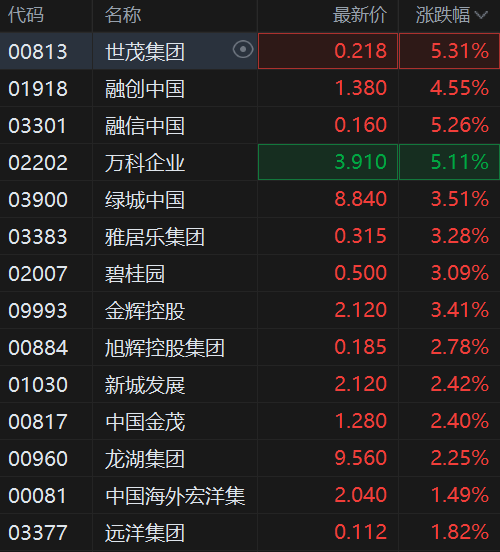
港股异动丨内房股普涨 中央经济工作会议:着力稳定房地产市场,强调因城施策
Ge Long Hui· 2025-12-12 01:52
Group 1 - Hong Kong property stocks experienced a significant rise, with Shimao Group, Ronshine China, and Vanke Enterprises increasing by over 5%, while Sunac China rose by 4.5% [1] - Other notable increases included Greentown China, Agile Group, Jinhui Holdings, and Country Garden, all rising by over 3%, and CIFI Holdings, China Jinmao, Longfor Group, and New City Development increasing by over 2% [1] Group 2 - The Central Economic Work Conference held from December 10 to 11 in Beijing emphasized the need to stabilize the real estate market, implementing city-specific policies to control supply, reduce inventory, and improve supply [1] - The conference also highlighted the importance of reforming the housing provident fund system and promoting the construction of quality housing [1] - Measures to actively and orderly resolve local government debt risks were discussed, including urging local governments to proactively manage debt and preventing the illegal addition of hidden debts [1]



规划建议新看点丨更多“好房子”!我国因城施策增加改善性住房供给
Xin Hua Wang· 2025-11-29 13:40
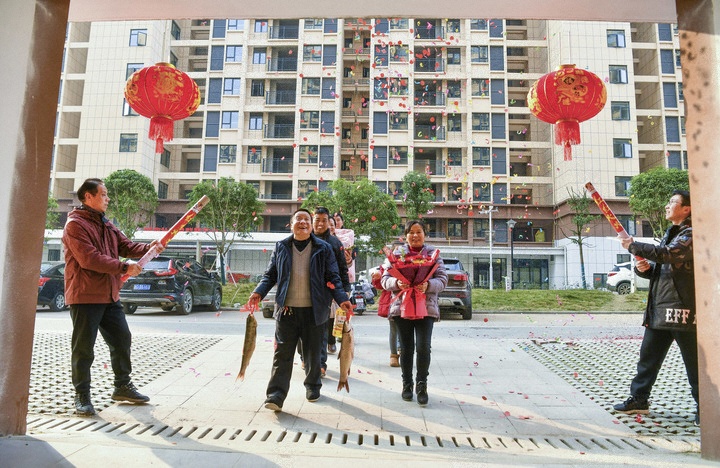
住房,是民生之要。"十五五"规划建议提出,因城施策增加改善性住房供给。这一重要部署,是适应房 地产发展新阶段、推动行业迈向高质量发展的重要举措。 当前,我国房地产市场供求关系已发生重大变化。一方面,住房供给从总量短缺转为总量基本平衡、结 构性供给不足;另一方面,住房需求从"有没有"转向"好不好",人民群众对改善居住条件有了更多新期 待。 2025年1月15日,江西省宜春市铜鼓县永宁镇城南社区文昌苑安置小区居民搬入新居。新华社发(周亮 摄) "十五五"开局在即,进一步实现百姓"安居梦",精准施策成为关键。 未来的房子,既要建得好,也要改得巧。新房子要建成安全、舒适、绿色、智慧的"好房子";老房子要 通过改造,变身宜居家园。随着《住宅项目规范》国家标准的全面实施,"好房子"建设将有标可循,多 元化的改善性住房供给将更好满足不同群体的安居梦想。 从需求端,各地推出系列政策"组合拳"。从优化"认房不认贷"政策,到推出多孩家庭、人才购房补贴; 从优化公积金贷款额度与使用范围、推出"以旧换新"模式,到联动房企、中介机构搭建交易平台,解决 部分老旧小区业主"卖旧难、换房贵"的痛点……灵活多样的政策"工具箱"不断释放改善性住 ...
民生直通车丨二手房交易占主导,我国房地产市场呈现逐步企稳的态势
Xin Hua Wang· 2025-11-17 06:17
Core Viewpoint - The Chinese real estate market is gradually stabilizing, with second-hand housing transactions becoming dominant due to various policy adjustments and incentives [1][2][3] Policy Adjustments - Various cities have implemented measures such as purchasing subsidies, housing consumption vouchers, and optimized land supply to support the real estate market [1][2] - Over 60 cities have introduced policies to support rigid and improved housing demand, including adjustments to housing credit policies [2][3] Market Trends - From January to October, the transaction area of second-hand houses increased by 4.7% year-on-year, with second-hand houses accounting for 44.8% of total transactions [1] - The total transaction volume of new and second-hand houses has remained stable, indicating the effectiveness of local policies [2] Land Supply - Cities are controlling new land supply while optimizing existing land use, with examples including Shenzhen and Hangzhou focusing on quality residential land [3] - Cities like Shanghai, Shenzhen, and Wuhan have seen significant year-on-year growth in second-hand housing transactions [3] Shift in Market Dynamics - The real estate market is transitioning from a focus on new housing to second-hand housing as urbanization stabilizes [3] - The demand for second-hand housing is driven by young people and new residents, who prefer properties that are well-located and ready for immediate occupancy [3][4]
供需结构发生变化,二手房成新晋“顶流”!业内人士解析→
Sou Hu Cai Jing· 2025-11-16 13:37
Core Insights - The trading structure of new and second-hand houses has changed, with second-hand houses increasingly replacing new houses as the market enters a stock era [1] - From January to October, the total transaction volume of new and second-hand houses nationwide decreased by 1.9% year-on-year, indicating stable overall market demand despite a high base from the previous year [3] - Various policies aimed at stabilizing the market are gradually showing positive effects, contributing to a stable total transaction volume compared to last year [5] Group 1 - The transaction area of second-hand houses increased by 4.7% year-on-year, with second-hand houses accounting for 45% of the total transaction volume [7] - In several cities, including Shanghai, Shenzhen, and Chongqing, the transaction area of second-hand houses has seen a year-on-year growth of over 10% [7] - There is a continuous release of housing demand, particularly for improvement needs, supported by policies such as increased housing provident fund loan limits and purchase subsidies [9]

多维度观察楼市新变化、新特征·政策“组合拳”显效发力 全方位激活楼市活力
Yang Shi Wang· 2025-11-16 08:36
Core Insights - The overall decline in commodity housing sales has narrowed, with a continuous decrease in unsold inventory for eight months, indicating a stabilization in the real estate market [1][12][19] - A series of real estate policy optimizations in 2025 have positively impacted market confidence, leading to increased buyer interest and activity [4][6][12] Sales Performance - From January to October 2025, the total transaction volume of new and second-hand homes nationwide decreased by only 1.9% year-on-year, reflecting market stability [8][16] - Major cities like Shenzhen, Wuhan, and Xiamen have seen year-on-year increases in transaction volumes for both new and second-hand homes [8][18] Market Dynamics - The second-hand housing market is becoming the mainstay of transactions, with a 4.7% year-on-year increase in transaction area for second-hand homes, accounting for 45% of total transactions [18][21] - The demand for improved housing is being met by policies that increase housing provident fund loan limits and provide purchase subsidies [21][22] Land Market Trends - Local governments are actively optimizing land supply structures to boost developer confidence, with significant increases in land transaction volumes in major cities [22][25] - The total land acquisition amount for the top 100 real estate companies reached 783.8 billion, a year-on-year increase of 26.4% [25] Policy Measures - Over 60 cities have introduced housing purchase subsidies or "old-for-new" policies to support rigid and improved housing demand [29][31] - Cities are enhancing housing credit and provident fund policies to support reasonable housing consumption, with adjustments made in cities like Shanghai and Beijing [36]
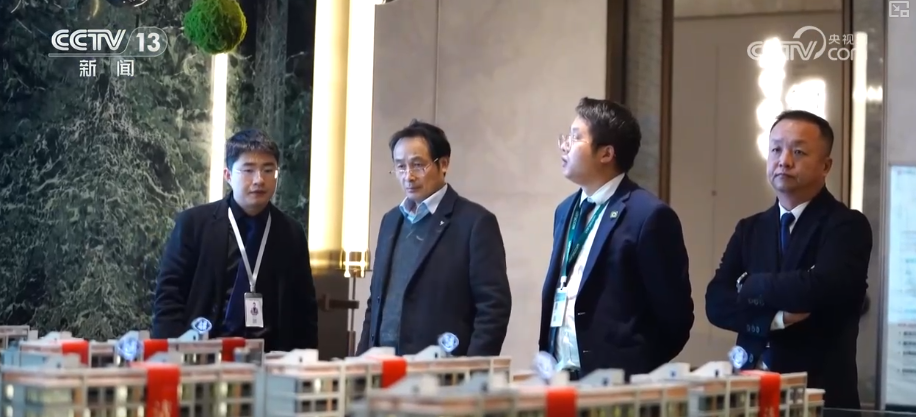
视频丨多政策激发楼市活力 二手房成新晋“顶流”
Yang Shi Xin Wen· 2025-11-16 05:08
Core Insights - The recent data from the National Bureau of Statistics indicates a narrowing decline in commodity housing sales, with a continuous reduction in unsold inventory for eight months and a decrease in the funding shortfall for real estate developers [1][3][5] - Various real estate regulatory policies implemented this year are showing positive effects, leading to increased buyer confidence and a more active market, particularly in major cities [3][5][10] Sales Performance - From January to October, the total transaction volume of new and second-hand homes nationwide decreased by only 1.9% year-on-year, indicating market stability despite a high base last year [3][8] - In major cities like Shenzhen, Wuhan, and Xiamen, the transaction volume for both new and second-hand homes has increased year-on-year [3][8] Market Dynamics - The second-hand housing market is becoming the mainstay of transactions, with a 4.7% year-on-year increase in transaction area for second-hand homes, accounting for 45% of total transactions [10][12] - The demand for improved housing is driving changes in the market, with policies aimed at increasing housing fund loan limits and subsidies [12][13] Land Market Trends - Local governments are actively adjusting land supply strategies to boost developer confidence, with Beijing and Hangzhou implementing targeted land supply measures [15][20] - The total land acquisition amount by the top 100 real estate companies reached 783.8 billion, a year-on-year increase of 26.4% [15][20] Policy Measures - Over 60 cities have introduced purchase subsidies or "old-for-new" policies to support housing demand, with various financial incentives being offered [16][18] - Cities are also enhancing housing credit and public fund policies to support reasonable housing consumption, with adjustments made to loan limits and eligibility for fund withdrawals [20]

前10月全国法拍房成交额同比降超两成;贝壳第三季度总交易额7367亿元|房产早参
Mei Ri Jing Ji Xin Wen· 2025-11-10 21:10
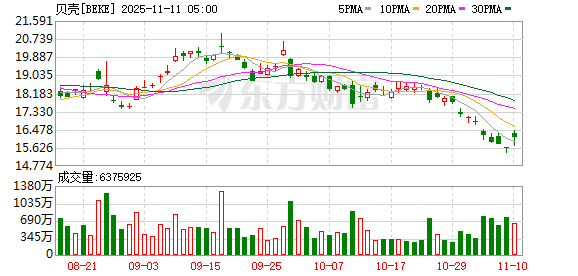
Group 1: Real Estate Market Trends - The national auction housing market in China has seen a significant decline in both volume and price, with total transaction value dropping by 22.5% year-on-year to 204.87 billion yuan, and the average transaction price decreasing by 12.3% to 4,668 yuan per square meter [2] - The total number of auctioned properties fell by 5.7% to 605,000 units, while the number of successfully auctioned properties decreased by 2.4% to 138,000 units, indicating a cooling market [2] Group 2: Land Supply in Xi'an - Xi'an has announced the release of 11 plots of development land with a total starting price of 3.84 billion yuan, covering an area of 469.368 acres and a planned construction area exceeding 1 million square meters [3] - This land supply is part of a policy aimed at stabilizing land prices and promoting investment, linking land supply to urban renewal and regional development [3] Group 3: Policy Changes in Chongqing - Chongqing has relaxed the conditions for withdrawing housing provident fund for full payment home purchases, allowing withdrawals after six months of purchase and extending the withdrawal period from two years to five years [4][5] - The policy aims to support reasonable housing demand and provide more flexible financial support for contributors while enhancing risk control [5] Group 4: Poly Developments' Financial Management - Poly Developments announced a 2 billion yuan medium-term note with a maturity of five years, with an interest rate of 3.55%, and the interest payment scheduled for November 17, 2025 [6] - This reflects the company's normal debt management practices and its financial strength to meet payment obligations [6] Group 5: Beike's Third Quarter Performance - Beike reported a total transaction value of 736.7 billion yuan in Q3 2025, remaining flat year-on-year, with total revenue increasing by 2.1% to 23.1 billion yuan [7] - However, net profit decreased by 36.1% to 747 million yuan, indicating pressure on profitability amid market adjustments, while the number of active stores and agents grew significantly [7]

楼市回暖趋势明显,前三季度全市新房成交同比增长近三成
Chang Jiang Ri Bao· 2025-10-29 12:35
Core Insights - The real estate market in Wuhan shows significant improvement, with new housing sales area reaching 749.25 million square meters, a year-on-year increase of 26.53%, and the number of signed units at 66,200, up 29.2% [1][4] - The demand for high-quality residential properties is increasing, with a notable shift towards projects that offer better living experiences and amenities [5][6] Group 1: Market Performance - In the first three quarters of the year, the total signed sales area for commercial housing in Wuhan was 924.63 million square meters, reflecting a year-on-year growth of 15.67%, with 84,800 units sold, up 21.19% [4] - The average absorption rate for newly launched projects exceeded 80%, indicating strong market demand [4] Group 2: Consumer Preferences - Buyers are increasingly focused on the quality and details of properties, with features like social kitchens and spacious living areas becoming key selling points [3][5] - The trend indicates that consumers are not just purchasing homes but are also investing in lifestyle and community [3] Group 3: Market Dynamics - The Wuhan real estate market is experiencing a "quality stratification" phenomenon, with various projects catering to different demographic needs, including smart homes and facilities for all age groups [5] - Policies have shifted from city-wide measures to more localized and targeted strategies, effectively lowering the barriers for homebuyers [5][6] Group 4: Future Outlook - The market is expected to continue its upward trend, driven by improved consumer and developer confidence, as well as a focus on high-quality residential offerings [6]

“十四五”期间四川累计建设筹集各类保障性住房36.7万套
Xin Hua Cai Jing· 2025-10-17 14:25
Core Insights - During the "14th Five-Year Plan" period, Sichuan Province has constructed and secured a total of 367,000 units of various types of affordable housing [1] - The government is combining public support and market allocation to enhance the housing supply system, aiming to meet both rigid and improved housing demands of residents [1] Housing Supply and Policy Measures - Sichuan is implementing a multi-faceted approach to increase the supply of affordable housing, including public rental housing, affordable rental housing, and allocated affordable housing [1] - The province is promoting a balanced and healthy development of the real estate market by adjusting and optimizing real estate policies to meet diverse housing needs [1] Real Estate Market Performance - During the "14th Five-Year Plan" period, Sichuan Province has sold a total of 420 million square meters of commercial housing [1] - Specific measures include enhancing policy support for home purchases, such as purchase subsidies and housing vouchers, and promoting the role of housing provident funds [1]
锚定“房住不炒”各地“因城施策”
Mei Ri Jing Ji Xin Wen· 2025-10-17 03:12
Core Viewpoint - The real estate market in China has entered a deep adjustment phase during the "14th Five-Year Plan" due to significant changes in cyclical fluctuations and supply-demand relationships, prompting timely adjustments and optimizations in real estate policies [1][3]. Policy Changes - The report highlights major changes in real estate policies, including the optimization of financial, credit, and restrictive policies to unleash growth potential in the housing market [2]. - Since 2022, approximately 3,000 real estate optimization policies have been implemented across the country [3]. - Key policies include the "Financial 16 Articles" and "Three Arrows" aimed at supporting reasonable financing needs of real estate companies [4]. Demand-side Policy Adjustments - In May 2024, several demand-side policies were optimized, including lowering the down payment ratio for first-time homebuyers to 15% and canceling the national-level interest rate policy limits for first and second homes [5]. - Major cities like Suzhou, Changsha, Chengdu, and Hangzhou have fully lifted purchase restrictions, with Guangzhou also removing such policies [5][12]. Market Trends and Predictions - The market is expected to experience a phase of recovery starting from Q4 2024, although recent policy effects have weakened, indicating that a complete halt to the decline is still some distance away [2][8]. - The report anticipates that with most cities lifting restrictive policies, the market will return to being supply-demand driven, potentially leading to further market differentiation [13]. Financial and Tax Policies - Financial policies have been adjusted to lower the cost of home purchases, including reductions in mortgage rates and adjustments to personal housing fund loan rates [9][11]. - Tax policies have also been modified to provide tax incentives for homebuyers, such as tax exemptions for home exchanges and reduced transaction tax rates [11]. Achievements During the "14th Five-Year Plan" - The real estate market has seen positive outcomes, with approximately 5 billion square meters of new residential sales recorded during this period [15]. - By Q4 2024, both the sales area and sales volume of new residential properties have shown positive growth, maintaining a trend of "stabilizing after a decline" [16]. - Over 7 million housing units that were sold but not delivered have been successfully delivered, ensuring the rights of homebuyers are protected [17]. Housing Security and Urban Development - The "14th Five-Year Plan" has also made significant progress in urban village renovations and the construction of affordable housing, with over 11 million units built or renovated [19]. - The Ministry of Housing and Urban-Rural Development has emphasized the expansion of urban village renovation policies to nearly 300 cities, promoting monetary compensation for residents [19].