
平台经济

Search documents
市场监管总局约谈阿里巴巴、抖音、百度、腾讯、京东、美团、淘宝闪购等7家平台企业
Xin Lang Cai Jing· 2026-02-14 09:04
责任编辑:常福强 炒股就看金麒麟分析师研报,权威,专业,及时,全面,助您挖掘潜力主题机会! 炒股就看金麒麟分析师研报,权威,专业,及时,全面,助您挖掘潜力主题机会! 2月13日,市场监管总局约谈阿里巴巴、抖音、百度、腾讯、京东、美团、淘宝闪购等平台企业,要求 有关平台企业严格遵守《中华人民共和国反不正当竞争法》《中华人民共和国价格法》《中华人民共和 国消费者权益保护法》《中华人民共和国电子商务法》等法律法规规定,主动落实主体责任,进一步规 范平台促销推广行为。提醒相关平台企业要杜绝各种形式的"内卷式"竞争,共同维护公平竞争市场环 境,促进平台经济创新和健康发展。 新浪声明:此消息系转载自新浪合作媒体,新浪网登载此文出于传递更多信息之目的,并不意味着赞同 其观点或证实其描述。文章内容仅供参考,不构成投资建议。投资者据此操作,风险自担。 新浪声明:此消息系转载自新浪合作媒体,新浪网登载此文出于传递更多信息之目的,并不意味着赞同 其观点或证实其描述。文章内容仅供参考,不构成投资建议。投资者据此操作,风险自担。 责任编辑:常福强 2月13日,市场监管总局约谈阿里巴巴、抖音、百度、腾讯、京东、美团、淘宝闪购等平台企业, ...



市场监管总局约谈7家平台企业
Yang Shi Xin Wen Ke Hu Duan· 2026-02-14 09:03
2月13日,市场监管总局约谈阿里巴巴、抖音、百度、腾讯、京东、美团、淘宝闪购等平台企业,要求 有关平台企业严格遵守《中华人民共和国反不正当竞争法》《中华人民共和国价格法》《中华人民共和 国消费者权益保护法》《中华人民共和国电子商务法》等法律法规规定,主动落实主体责任,进一步规 范平台促销推广行为。提醒相关平台企业要杜绝各种形式的"内卷式"竞争,共同维护公平竞争市场环 境,促进平台经济创新和健康发展。 (文章来源:央视新闻客户端) ...


春节消费旺季将至 多地发文要求外卖平台停止“内卷式”竞争
Zheng Quan Ri Bao Wang· 2026-02-14 04:10
Core Viewpoint - Regulatory authorities across multiple regions in China have issued guidelines to curb irrational competition among food delivery platforms during the Spring Festival, emphasizing the need to maintain market order and prevent harmful practices such as excessive subsidies and price dumping [1][2][3] Group 1: Regulatory Actions - Various local market regulatory departments have released compliance guidelines for food delivery platforms, prohibiting practices that lead to unhealthy competition, such as low-quality, low-price strategies [1] - The market supervision bureau in Qinhuangdao has specifically warned against practices like "choose one from two" and the misuse of data or technological advantages to impose unreasonable trading conditions [1] - The Zhengzhou market supervision bureau has highlighted the prohibition of forcing platform operators to participate in promotional activities, ensuring that all marketing efforts are voluntary and fair [2] Group 2: Industry Concerns - Industry organizations have expressed concerns that the ongoing subsidy wars since 2025 have distorted competition, reducing the pricing power of small merchants and squeezing the profit margins of offline businesses [2] - The Gansu Catering and Cooking Industry Association has called for the regulation of "involutionary" competition to stabilize the restaurant market, while the Baoji Catering Industry Association has suggested clarifying the compliance boundaries for platform subsidies [2] Group 3: Policy Signals - Since 2025, there has been increasing pressure from policymakers to address "involutionary" competition, with the State Administration for Market Regulation conducting investigations into the competitive practices of food delivery platforms [3] - The investigation signals a strong regulatory focus on preventing monopolistic and unfair competition behaviors in the platform economy, aiming to maintain basic market order [3] - The investigation is expected to drive the industry towards a more standardized and healthy development, addressing issues like excessive subsidies and price competition that harm the survival of the real economy [3] Group 4: Future Outlook - Experts believe that clarifying competition boundaries and establishing rules will help maintain innovation and a healthy competitive ecosystem within the industry [4] - The regulatory push is anticipated to transition the food delivery industry from a phase of subsidy wars to one focused on high-quality development, potentially alleviating price competition and fostering balanced innovation [4]
1.25元的水饺、四五十元的烤鸭,和被平台“一键剥夺”的定价权
3 6 Ke· 2026-02-13 03:10
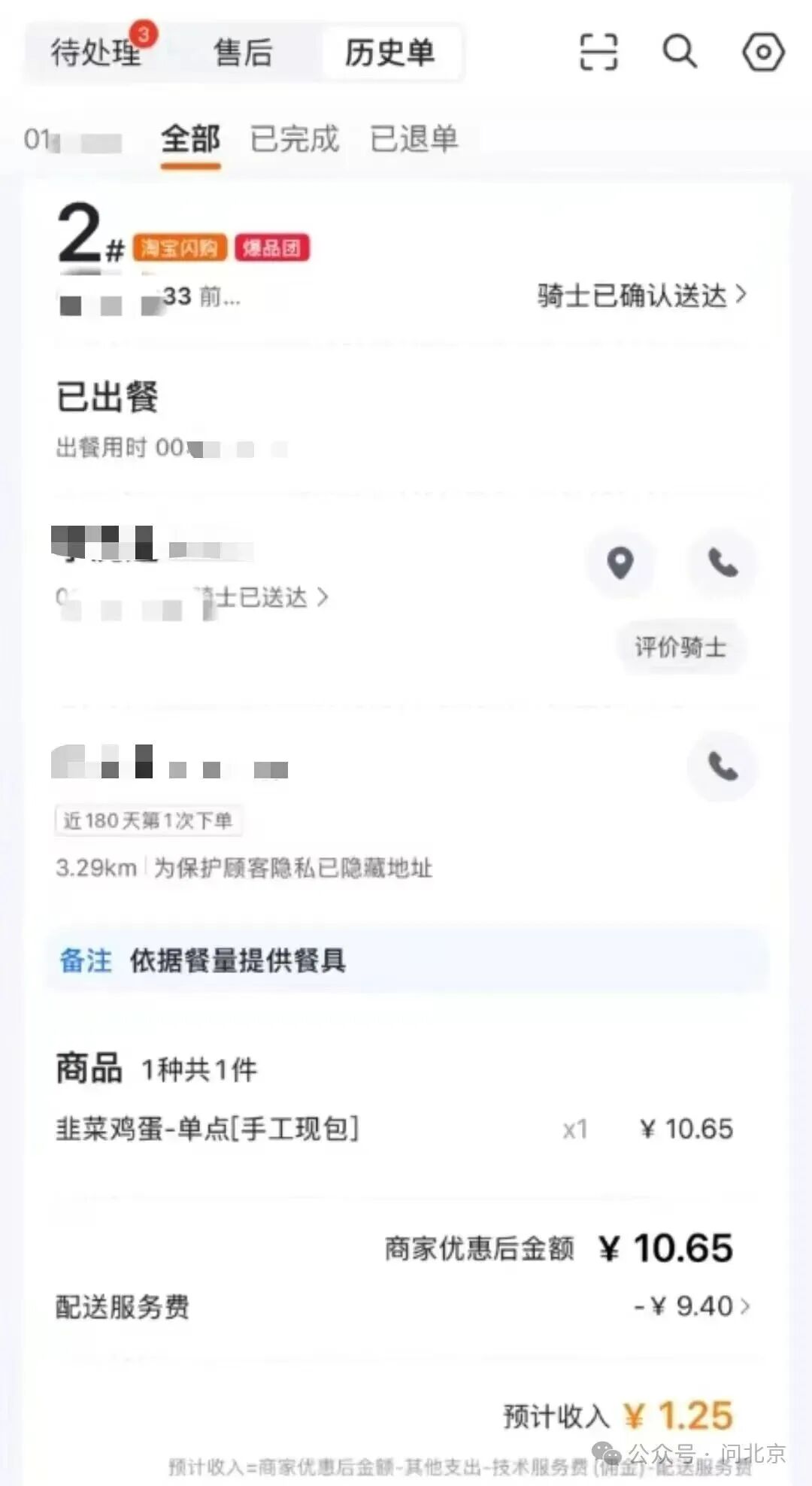
Core Insights - The article reveals systemic issues within food delivery platforms, highlighting how small business owners are losing pricing power and facing significant financial losses due to unauthorized price changes by platform managers [1][5][11] Group 1: Pricing Issues - A hand-made dumpling shop's signature dish was listed at 1.25 yuan, far below its normal price of approximately 18 yuan, indicating that the price does not even cover raw material costs [5][20] - A roast duck shop faced a similar situation, with the platform setting a promotional price of 40-50 yuan for a dish that should cost between 158-188 yuan, resulting in a loss of 10 yuan per order [5][11] - The pricing decisions are made without the shop owners' knowledge or consent, as platform managers have the authority to modify prices directly [11][19] Group 2: Loss of Control - Business owners are unaware of promotional activities until they check their backend data, indicating a lack of transparency and control over their own pricing [6][11] - Shop owners cannot opt out of these promotional activities, leaving them in a vulnerable position where they cannot stop their losses [11][19] - The platform's managers have privatized pricing authority, allowing them to set loss-leading prices without consulting the business owners [11][21] Group 3: Consumer Concerns - Consumers express mixed feelings about low prices, with some viewing them as benefits while others worry that continuous losses for businesses could lead to compromised food quality and safety [13][20] - The article suggests that the low pricing strategy may not be sustainable and could harm the overall industry, leading to potential food safety issues [13][22] Group 4: Regulatory Context - New regulations aimed at protecting merchants' rights were introduced in December 2025, which include provisions to safeguard merchants' pricing autonomy and prohibit forced participation in promotions [17][19] - Despite these regulations, the article indicates that the platforms continue to operate under old practices, exploiting the time gap before the regulations take full effect [19][22] Group 5: Conclusion - The article concludes that the relationship between food delivery platforms and small businesses has deteriorated, with platforms prioritizing efficiency and competition at the expense of merchants' basic rights [23][24] - The ongoing practices of unauthorized price changes and lack of accountability threaten the survival of small businesses, undermining the intended symbiotic relationship between platforms and merchants [23][24][25]

【2026春节特别报道】用心护航 安心奔跑
Xin Lang Cai Jing· 2026-02-12 21:36
Group 1 - The core viewpoint of the articles emphasizes the optimization of algorithms by platform companies to enhance labor rights and create a more transparent and fair working environment for workers [1][2][3] - Since September 2021, Meituan has publicly disclosed its algorithm rules nine times, including delivery time estimates and order distribution, while implementing measures to protect rider rights such as fatigue reminders and a points deduction system for late deliveries [1] - Taobao Shanguo has also made strides in algorithm transparency, recently disclosing its pricing algorithm and signing a labor agreement with rider representatives that covers labor remuneration and rights protection [1][2] Group 2 - Huolala, as a leading freight platform, has publicly shared its algorithm mechanisms focusing on transparency, fairness, and social responsibility, including a driver autonomy algorithm and measures against fake orders [2] - The implementation of new national standards aims to enhance the rights of delivery workers, with the new electric bicycle safety standards and delivery platform service management standards set to take effect in December 2025 [2][3] - The new delivery platform standards require platforms to optimize dispatch algorithms considering various factors and to provide subsidies for delivery workers during holidays and adverse weather conditions [3] Group 3 - The express delivery industry is experiencing a growth trend, but frontline couriers face declining pay due to intense price competition, prompting calls for a shift from price wars to value-based competition [4] - The industry is encouraged to adopt collective bargaining mechanisms to ensure couriers' demands are effectively communicated to platforms, enhancing trust and loyalty among employees [4] - There is significant room for improvement in income security, management innovation, and service efficiency within the express delivery sector [4] Group 4 - Ride-hailing platforms such as Didi and T3 have announced reductions in commission rates to enhance driver incentives, creating a positive cycle of increased driver income and improved service quality [5][6] - Didi plans to lower its maximum commission from 29% to 27% by the end of 2025, with additional measures to ensure that drivers completing a minimum number of orders benefit from lower commission rates [5] - Other platforms like Cao Cao and Gaode are also reducing commission rates and implementing measures to support driver income, ensuring that drivers receive a fair share of passenger payments [6]
小摩:料腾讯控股(00700)最受惠DeepSeek新版本迭代
智通财经网· 2026-02-12 07:38
Group 1 - The Lunar New Year is identified as a critical release window for the Chinese consumer technology sector, with potential significant impacts from the new version of DeepSeek [1] - If the new DeepSeek version achieves a notable reduction in inference costs, AI could become economically viable for high-frequency consumer products, moving beyond standalone chatbot applications [1] - Tencent Holdings (00700) is expected to benefit the most from the potential new version of DeepSeek, followed by vertical leaders such as Trip.com Group (09961), Kuaishou (01024), and Beike (02423), while Alibaba (09988) and Baidu (09888) may experience mixed effects [1] Group 2 - Independent model vendors like Zhiyun (02513) and MiniMax-WP (00100) have flagship models released or upcoming, with their impact more focused on capability signaling and technology spillover rather than immediate customer acquisition [2] - DeepSeek's preference for open-source over short-term commercialization suggests that its competitive effects will spread through recognition of model quality and validated technological directions [2] - If the upcoming release includes genuine efficiency or systemic breakthroughs, these methods could rapidly disseminate within the ecosystem, raising industry benchmarks and compressing iteration cycles [2] - The positive outlook on Zhiyun AI and MiniMax is reaffirmed, with their capability enhancements most directly reflected in the API monetization process [2]
北京:立首善 树标杆 作示范
Xin Lang Cai Jing· 2026-02-12 06:09
Group 1 - The core viewpoint of the article emphasizes the achievements and future plans of Beijing's market regulation system, highlighting the focus on enhancing the business environment and ensuring safety and quality in various sectors [1][2] Group 2 - In 2025, Beijing's market regulation system achieved the highest development quality in the country for three consecutive years, with significant improvements in the business environment and regulatory efficiency [1] - The integration of AI technology has accelerated the digital transformation of services, enhancing the overall service quality [1] - Food safety regulations have been strengthened, with a comprehensive monitoring mechanism established, and the safety standards for pharmaceuticals have also improved [1] - The "Beijing Standard" has gained influence, supporting the development of new productive forces and enhancing the quality of production [1] - The administrative enforcement has improved, maintaining a stable market price order and enhancing the governance of the platform economy [1] - Consumer rights protection has seen significant advancements, contributing to a more secure consumption environment [1] Group 3 - For 2026, the market regulation system aims to implement the decisions of the central government, focusing on creating a first-class business environment and maintaining fair competition [2] - There will be a continued emphasis on food safety, aiming to establish a high level of public trust in food safety [2] - The quality of regulatory enforcement will be enhanced to support high-quality economic development [2] - The initiative "Quality Three Strengths and One Foundation" will be a key focus in building a quality-oriented region [2] - Regular regulatory measures will be improved to ensure the sustainable development of the platform economy [2] - The plan includes addressing prominent issues in consumer sectors to ensure safe and reliable consumption for the public [2]
携程被反垄断一点不冤:问题不在高市占率,而是“控价”
Sou Hu Cai Jing· 2026-02-11 09:27
携程被有关部门进行反垄断调查后,在舆论中引起了轩然大波,与此同时"们"也对携程的展开了讨论: 观点一,携程被反垄断调查,市占率过高又是"垄断"的重要标志,要想尽快结束上述现象,那就要拆分携程; 观点二,过去几年酒旅行业的日子并不好过,但携程的利润却节节攀升,要想改变行业的利益分配格局,携程必须要对商家降佣减负,这也 是近年对平台经济的要求。 关于上述观点,我们均持否定态度(后者虽然有一定道理,但距离事实仍有较大偏差),联系到近期有关部门明显提高了对有关企业的约谈 力度(如近期对高德),我们不妨从携程入手来分析此现象,本文核心观点: 其一,携程"罪"不在高市占率,而是"控价",酒旅行业在此模式中拿不到应得的利润; 作为平台经济典型代表,携程拿到行业70%以上市场份额(包括其产业生态里的同程,去哪儿,途牛等平台),在某种意义上拥有行业的绝对 定价权。 在市场经济下,固然是供需关系决定价格,但在一家强市占率公司的介入下,会非常容易的扭转上述价格走向。 ADR(酒店平均房价)是衡量酒店经营效率的重要指标,计算公式为: ADR=总客房收入/已售客房数量。在社会经济秩序完全恢复的2023年,该指标出现了明显回弹的势头,不 ...

携程、高德接连被“点名” 释放了什么信号
Shang Hai Zheng Quan Bao· 2026-02-10 18:11
业内专家表示,要实现从"流量收割者"到"价值共创者"的转变,平台企业须在多个层面完成系统性重 塑: □ 算法逻辑"向善"进化 □ 盈利模式脱离"佣金依赖" □ 治理结构走向"多元共治" □ 畅通消费者与从业者的有效申诉与监督渠道,引入第三方评估,形成社会协同治理的良性循环 携程因涉嫌滥用市场支配地位被立案调查;高德打车因多重问题被监管约谈——春节前连续释放的监管 信号,颇具警示意义和民生导向:当平台深度嵌入社会基础运行,平台企业必须平衡商业利益与社会责 任;当算法试图牺牲从业者和消费者利益攫取"商业价值",其经营逻辑的异化必须被矫治。 随着常态化监管新阶段到来,一场从监管到价值的系统性重塑已悄然开启。 监管点名:剑指不公与权责失衡 2026年春节前夕,出行与旅游市场即将迎来全年最高峰。据交通运输部预计,今年春运期间全国跨区域 人员流动量将达95亿人次。当千家万户沉浸在阖家团圆的喜悦中,数亿人的迁徙与消费正通过平台进 行。 "原来收费六十几元的路程,现在要八九十元,还一直让加价,不然就显示叫不到车""平台通过算法调 整价格后,运价已经很难覆盖时间、油费和车辆损耗成本,很多时候辛苦跑一天,基本等于白忙活""在 司 ...
深圳政协委员为深圳改革开放、高质量发展建言献策
Zhong Guo Fa Zhan Wang· 2026-02-10 08:36
Group 1: AI and Digital Economy - Shenzhen's digital economy core industry added value is expected to exceed 1 trillion yuan in 2024, accounting for 10% of the city's GDP, showing steady year-on-year growth [1] - The demand for composite digital talents is experiencing explosive growth due to the expansion of digital industry clusters such as artificial intelligence, big data, and industrial internet [1] - The current digital education transformation in higher education faces challenges, including uneven infrastructure, insufficient curriculum integration with digital strategies, and weak collaboration with leading digital economy enterprises [2] Group 2: Park Development and Urban Innovation - Shenzhen has built 1,350 parks, creating a high-density public space network that can serve as a low-cost, high-traffic platform for enterprises, especially startups [3] - There is a noticeable gap between the functional supply of parks and the large market demand, indicating the need for a more innovative approach to park utilization [3] - Suggestions include implementing a thematic renovation project and exploring market-oriented operations to enhance the parks' roles in economic development [3] Group 3: Semiconductor and Integrated Circuit Industry - The semiconductor and integrated circuit industry is identified as a strategic and foundational sector for economic development, with Shenzhen aiming to build a world-class innovation hub [4] - Pingshan District has formed a relatively complete industrial chain in the semiconductor sector, with chip manufacturing capacity exceeding 50% of the city's total [4] - Recommendations include supporting the establishment of a semiconductor and integrated circuit industry cluster in Pingshan and advancing packaging projects to enhance competitiveness [4]