板块轮动

Search documents
金银之后,会轮到铜吗?
虎嗅APP· 2026-01-30 13:58
Core Viewpoint - The article discusses the recent surge in gold prices, which have surpassed $5,500 per ounce, and the implications for industrial metals like copper, suggesting that the dynamics driving these metals are more complex than traditional sector rotation theories [5][6][7]. Group 1: Market Dynamics - The current market is experiencing a significant shift, with copper evolving from a purely cyclical commodity to a strategic asset, influenced by macroeconomic changes and geopolitical risks [10][22]. - The weakening credibility of the US dollar, evidenced by its drop to a four-year low, is prompting investors to seek alternatives, with gold being the primary beneficiary of this sentiment [14][18]. - As central banks reconsider their asset allocations in light of dollar instability, copper is increasingly viewed as a strategic resource rather than just a trading commodity [20][21]. Group 2: Geopolitical Risks - Geopolitical tensions, such as military actions in the Middle East and US-European relations, are contributing to a global supply chain restructuring, which heightens the demand for safe-haven assets like gold and introduces a "geopolitical risk premium" into copper prices [23][27]. - The potential for supply disruptions due to political instability in major copper-producing regions (e.g., Chile, Peru, Congo) adds to the urgency of securing copper as a strategic asset [24][25]. Group 3: Supply and Demand Factors - Current copper inventories are rising globally, particularly in the London Metal Exchange (LME), due to weakened demand from China and higher domestic prices, leading to a surplus in the market [33][34]. - The phenomenon of "deep contango" in copper prices indicates a supply surplus, with immediate delivery prices significantly lower than future contracts, reflecting a lack of current demand [36]. - Despite short-term supply issues, long-term projections indicate a tightening supply due to insufficient investment in new copper mines and declining ore grades, which could support higher prices in the future [45][48]. Group 4: Future Outlook - The article suggests that copper's price dynamics will diverge from traditional inventory-driven models, as it begins to incorporate premiums for its strategic importance and inflation hedging capabilities [62]. - In the short term (1-3 months), copper prices are expected to experience volatility, influenced by macroeconomic factors and geopolitical events, while the long-term outlook remains bullish due to structural supply constraints and increasing demand from sectors like renewable energy and electric vehicles [64][68]. - The interplay between current supply realities and future demand expectations will create a complex pricing environment, necessitating close monitoring of both financial and industrial reports to understand copper's trajectory [74][75].

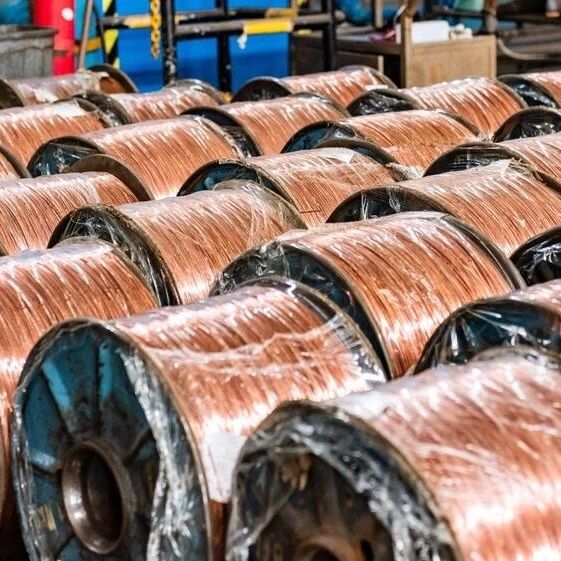
金银之后,会轮到铜吗?
36氪· 2026-01-30 13:35
Core Viewpoint - The article discusses the recent surge in gold prices, which have surpassed $5,500 per ounce, and raises the question of whether industrial metals like copper will follow suit in a "catch-up" rally. However, it argues that the current situation is different from traditional market patterns of sector rotation or catch-up [3][4][5]. Group 1: Market Dynamics - The driving forces behind the rise in gold and silver prices are partly shared with those affecting copper, but the dynamics for copper are more complex [6][8]. - Copper has transitioned from being a purely cyclical commodity to a strategic asset, reflecting a significant change in market perception [9][10]. - The current market is experiencing friction in recognizing this transformation, leading to price volatility [10]. Group 2: Macro Factors Influencing Prices - The simultaneous attention on gold and copper stems from a dramatic shift in the macroeconomic backdrop, particularly the declining credibility of the US dollar, which has reached a four-year low [13][14]. - As trust in the dollar diminishes, investors are seeking alternatives, with gold being the primary beneficiary of this sentiment [15][16]. - Copper, priced in dollars, also benefits from dollar depreciation, as it becomes more expensive in dollar terms [19][20]. Group 3: Geopolitical Risks - The geopolitical landscape is increasingly unstable, with risks such as military deployments in the Middle East and tensions between the US and Europe contributing to market uncertainty [25][26]. - For gold, increased geopolitical turmoil drives up demand as a safe-haven asset, while for copper, geopolitical risks manifest in supply chain vulnerabilities due to political instability in major copper-producing regions [27][28]. - The potential for supply disruptions due to strikes or policy changes in these regions adds a "geopolitical risk premium" to copper prices [30][31]. Group 4: Supply and Demand Dynamics - The current copper market is characterized by weak demand, with rising global inventories and a lack of immediate consumption [38][40]. - Factors such as reduced demand from China and price discrepancies have led to increased copper stocks in warehouses [41][42]. - The current oversupply situation is reflected in significant discounts for immediate copper delivery compared to future contracts, indicating a lack of demand [44][45]. Group 5: Future Outlook - Despite the current weak demand, the long-term outlook for copper is driven by expectations of supply constraints and increasing demand from sectors like renewable energy and electric vehicles [60][63]. - The global copper supply is facing structural challenges, including insufficient long-term investment and declining ore grades, which are expected to limit future production [55][56]. - The anticipated demand from the global energy transition and infrastructure upgrades is expected to create a significant need for copper, potentially leading to a supply-demand imbalance in the future [62][66]. Group 6: Price Behavior and Market Sentiment - The article emphasizes that the current price movements of copper are influenced more by financial attributes and future expectations rather than immediate supply and demand realities [50][67]. - The market is currently in a tug-of-war between weak short-term realities and strong long-term expectations, leading to potential price volatility [68][70]. - The article suggests that copper prices may experience significant fluctuations in the short term, but a clearer upward trend is expected in the medium to long term as supply constraints become more apparent [84][90].
无实质利好却单日暴涨10%,白酒板块背后是什么逻辑?
Xin Lang Cai Jing· 2026-01-30 10:14
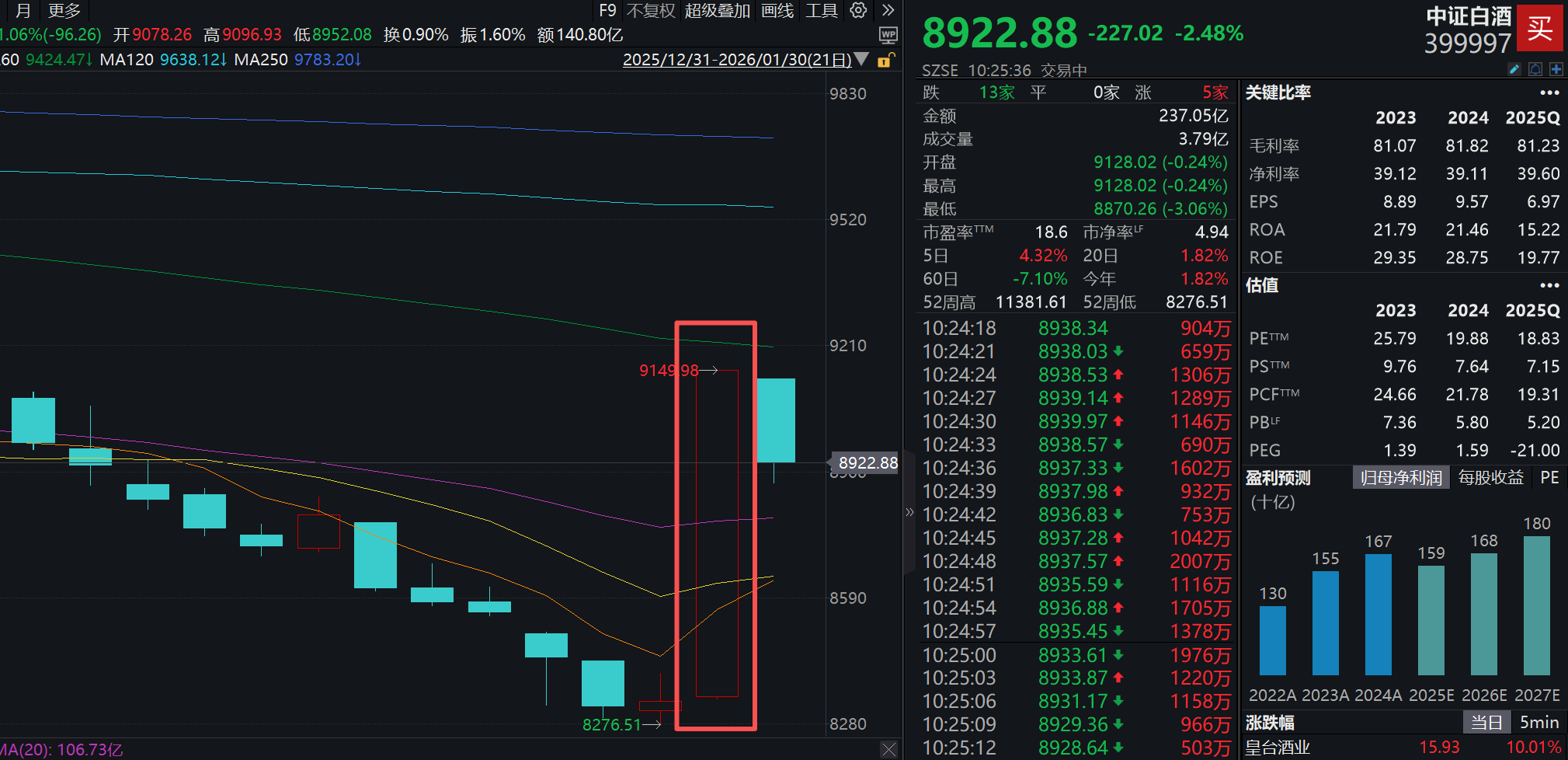
新浪财经"酒价内参"重磅上线 知名白酒真实市场价尽在掌握 昨日(1月29日)A股市场上演了一场惊心动魄的风格大逆转,以白酒板块为代表的传统核心资产——被市场戏称为"老登资产"——发起全面反扑,彻底打 破了此前科技成长独领风骚的格局。中证白酒指数更是一柱擎天,单日暴涨9.79%,创下近年来罕见的板块级行情。 盘面显示,白酒板块内部呈现极致的普涨态势:除贵州茅台因市值庞大、流动性充裕而涨幅相对克制外,五粮液、泸州老窖、山西汾酒、洋河股份等头部酒 企全线涨停,古井贡酒、今世缘、舍得酒业等二三线白酒同样集体封板,板块内涨停家数超过15只,成交额突破千亿元大关,资金抢筹迹象极为明显。 白酒板块上演"单日暴涨"行情 数据来源:Wind 截至:2026.01.30 而从业绩端看,1月29日晚,天佑德公告了2025年度业绩预告:2025年度归属于上市公司股东的净利润421.35万元至632.02万元,比上年同期下降85%~ 90%。这是白酒企业第四家公告的2025年度业绩预减预告。目前,上市白酒企业中已四家公告2025年年度业绩预减预告,两家公告2025年年度业绩预亏预 告。 白酒行业却难觅利好 白酒企业2025年度业绩预告 ...





地产和白酒等板块上涨,踏准板块轮动节奏
British Securities· 2026-01-30 02:03
Core Views - The report emphasizes the importance of sector rotation in the A-share market, highlighting the rebound of indices such as the Shanghai Composite and CSI 300, and suggests focusing on undervalued sectors like real estate, rare earths, and chemicals for potential investment opportunities [1][8][10] - The report notes a dual logic behind the current market rotation: the natural recovery potential of underperforming sectors and the need for previously strong sectors to consolidate after significant gains [1][9] Market Overview - On Thursday, the A-share market showed mixed performance with the Shanghai Composite index fluctuating, while sectors like precious metals, cultural media, and real estate saw gains, contrasting with the semiconductor sector which faced adjustments [4][5] - The overall market sentiment was subdued, with a notable decrease in individual stock performance, leading to a situation where investors are "earning indices but not profits" [2][9] Sector Analysis - The consumer sector, particularly alcohol and food and beverage stocks, is experiencing upward momentum, driven by government policies aimed at stimulating consumption and shifting focus towards domestic demand [6][7] - The precious metals sector has shown strong performance, attributed to factors such as the onset of a Federal Reserve rate cut cycle, geopolitical tensions, and increased demand from central banks [7][8] Investment Strategy - Investors are advised to focus on structural opportunities within low-recovery sectors like real estate and alcohol, while maintaining caution regarding high valuation sectors such as precious metals and AI applications [2][9] - The report suggests a careful approach to trading, emphasizing the importance of managing positions and timing in response to market fluctuations [2][9]
金银之后,会轮到铜吗?
3 6 Ke· 2026-01-30 00:31
Group 1 - Gold prices have surged, breaking the historic threshold of $5,500 per ounce, with silver following suit [1] - The market is buzzing with discussions about "safe-haven," "monetary attributes," and "historical highs" [2] - The situation is different from the typical "sector rotation" or "catch-up" narrative [3] Group 2 - Copper's value has changed, becoming a strategic asset rather than just a cyclical commodity [6][4] - The driving forces behind copper's price changes overlap with those of gold and silver but are more complex [5] - The current market is experiencing a significant shift in perception regarding copper, moving from a "trading commodity" to a "portfolio asset" [17] Group 3 - The macroeconomic backdrop has dramatically changed, leading to a questioning of the dollar's credibility, with the dollar index hitting a four-year low [9] - As trust in the dollar system wavers, investors are seeking alternatives, with gold being the primary beneficiary of this sentiment [10][11] - Copper, priced in dollars, also benefits from the dollar's depreciation, as it becomes more expensive in dollar terms [14][15] Group 4 - Geopolitical risks are rising, impacting both gold and copper, with increased demand for gold as a safe haven during turbulent times [18][20] - The supply of copper is threatened by political and community uncertainties in major copper-producing regions [21][22] - The geopolitical risk premium is being factored into copper prices, adding an "insurance cost" to its valuation [23] Group 5 - The current spot market for copper is weak, with increasing global inventories and a lack of demand from China [28][29] - The significant price difference between spot and futures copper indicates an oversupply in the market [32] - The weak demand reflects a broader issue where the global economy cannot support the current high copper prices [36] Group 6 - The long-term outlook for copper is driven by structural supply issues and a robust demand forecast due to global energy transitions [39][46] - The anticipated demand from electric vehicles and renewable energy projects is expected to significantly increase copper consumption [47][48] - The market is currently experiencing a tug-of-war between weak short-term realities and strong long-term expectations for copper [49] Group 7 - The pricing logic for copper is evolving, moving away from traditional supply-demand dynamics to include strategic resource premiums and inflation hedges [54][55] - Short-term volatility is expected as the market adjusts to current conditions, with potential for significant price fluctuations [56][60] - In the medium to long term, copper is likely to establish its own upward trend, driven by persistent supply challenges and increasing demand [60][62]
新高之后,沪铝强势逻辑依然“在线”?【文华观察】
Wen Hua Cai Jing· 2026-01-29 13:09
2026年初,铝价经历了一波凌厉涨势,突破25000关口,随后回吐部分涨幅,但价格中枢已实质性上 移。昨日国内大宗商品整体走强,其中沪铝表现极为亮眼,盘中增仓大涨,创历史新高。本轮拉涨的主 要驱动是什么?后续走势能否延续强势? 宏观氛围较好,资金面情绪高涨 1月28日凌晨,美国总统特朗普表示:"我认为美元表现很好。我希望回归自身应有的水平,这是合理的 做法。"特朗普还暗示他可以操控美元汇率,他说:"我可以让它像悠悠球一样涨跌。"特朗普称不担忧 美元跌势,加剧了市场对美元的悲观预期,美元指数在特朗普评论时先小幅拉升,随后大幅下跌超50 点,创下2022年2月以来的新低。受此影响,贵金属强势上行、有色金属板块回暖。 当前市场存在显著的板块轮动效应,在贵金属暴涨后,基本面支撑强劲的有色板块成为资金关注的"价 值洼地"。去年贵金属狂飙使得金铜比处于历史高位,具备一定金融属性的铜处于低估状态,结合基本 面和宏观助力,沪铜率先进入上行通道,创出历史新高,此时,"铜铝比"开始进入视野,沪铝涨幅相对 沪铜滞后,两者比价关系不断拉大,市场认为沪铝价格被低估,投机资金开始流向沪铝。此外,近期贵 金属市场限仓政策落地,白银、锡已有 ...

突然,集体爆发!股市“大变局”,三大信号!
券商中国· 2026-01-29 05:38
Core Viewpoint - The real estate sector has experienced a significant surge in both A-shares and Hong Kong stocks, indicating a potential shift in market dynamics and investor sentiment [1][5][9]. Group 1: Real Estate Sector Performance - A-shares real estate ETF rose nearly 3%, while Hong Kong's property stocks surged over 6%, with notable increases in companies like Sunac China and Hongyang Real Estate, both rising over 20% [1][5]. - Specific stock performances included China Aoyuan up 27.4%, Sunac China up 23.3%, and Hongyang Real Estate up 22.58% [5][6]. - The overall performance of the real estate sector suggests a clean clearing of chips, with low valuations attracting investor interest [9]. Group 2: Market Dynamics and Signals - The rise in real estate stocks coincides with a notable increase in the liquor sector, indicating structural volatility in the market as these sectors are seen as lagging behind in previous downturns [1][9]. - The recent surge in commodities, including gold and copper, reflects heightened inflation expectations, which could impact sectors like AI negatively [2][9]. - The performance of 30-year treasury futures has been unexpectedly strong, suggesting a complex market narrative that does not align with traditional economic theories regarding inflation and bond prices [3][9]. Group 3: Policy and Regulatory Environment - Reports indicate that several real estate companies are no longer required to report "three red lines" metrics monthly, suggesting a more lenient regulatory environment [7]. - Analysts believe that recent policy adjustments, such as the reduction of the value-added tax on second-hand homes and the lowering of commercial property loan down payments, may support a stabilization in the real estate market [7].


“化工牛”引热议:行业景气度迎来拐点还是阶段性反弹?
Xin Hua Cai Jing· 2026-01-28 13:30
具体来看,化工板块内部不同品种走势驱动逻辑存在一定差异。新湖期货化工研发总监施潇涵指出,合 成橡胶、PX、PTA等品种靠基本面支撑,乙二醇为超跌反弹,甲醇、LPG等受伊朗地缘因素扰动,PVC 则属于跟随上涨,宏观资金对板块轮动、产能大周期的预期也成为推涨因素。 2026年开年化工市场强势反弹,芳烃、聚酯产业链及合成橡胶等品种期价大幅走高,与此同时A股化工 板块与期货市场形成共振,"化工牛"成资本市场热议话题。这是长期下行趋势终结的信号,还是短期情 绪推动的昙花一现?行业景气度能否就此迎来根本性改善? "股期共振"下化工市场热度非凡 进入新一年,化工品市场多个品种表现亮眼。以芳烃产业链为例,纯苯、苯乙烯等期货价格自年初以来 持续攀升,截至1月28日,两个品种月度涨幅均超12%;聚酯产业链价格重心也持续上移,其中表现强 势的PTA期货价格较2025年10月的低点已涨超20%;此外,橡胶板块中,合成橡胶因原料丁二烯供应紧 张,价格涨势凌厉。股票市场上,化工ETF基金已连续上涨近半年,1月份多只龙头个股创阶段新高, 板块涨停股频现。 现货端价格同样有好转迹象。新华指数数据显示,截至2026年1月27日,中国能化现货估 ...
X @Yuyue
Yuyue· 2026-01-27 19:04
好久没有动力读完这么长的内容了,可能是因为作为 00 后同龄人对黄瓜猫 @0xPickleCati 的思想很有共鸣吧,全文读完了,感触很深。最近哪怕收手了很多头寸,还是在 intospace 上踩坑,刚才又得知了一个噩耗,月鸟的 NFT 需要用 2 年来解锁获得的空投。在我看来这几乎等于归零了,之前买了一些月鸟现在恐怕连成本的零头都收不回来不断的受挫让我开始反思这段流动性枯竭期到底是哪里出了问题,仅仅只是流动性的问题吗?我觉得不是。按照黄瓜猫的几条共识升级标准来说,以往的熊市哪怕流动性也很差,但总有类似铭文、FriendTech 这样的新东西出现,甚至预售,都有 Soon 这样为人诟病的 ref 盘让不少人赚到 $ 10 万 + 的收益。仔细想想当时打的原因:团队实名 + SVM 赛道有个好的例子发了币 + CEX 有一定站台和关联..是不是有点似曾相识…在我看来,这应该算是一个 To CEX 简单模式阶段的典型案例从我自己进圈 3 年左右的阅历来看,我经历的圈内项目大概可以这么划分吧:- To Vitalik,因为有大量 V 神的信徒相信以太坊是未来,并由一系列基建、ZK 项目等为主要构成,有 V 就有人愿 ...
早盘直击|今日行情关注
申万宏源证券上海北京西路营业部· 2026-01-27 02:26
Group 1 - The spring market is entering a transition period with noticeable acceleration in sector rotation, as the market shifts from rapid ascent to a phase of horizontal consolidation, leading to unclear main lines and increased industry rotation [1] - The two main lines of the current spring market, commercial aerospace and AI applications, have shown significant divergence, impacting market sentiment [1] - Investors are focusing on relatively low-position sectors, particularly strong cyclical industries, resulting in a "high-cut-low" market characteristic typical of the transition period [1] Group 2 - On Monday, the two markets experienced differentiated fluctuations with trading volume at relatively high levels, as the Shanghai Composite Index opened high but closed lower, remaining above the 5-day moving average [1] - The Shenzhen Component Index underperformed compared to the Shanghai market, experiencing a larger adjustment but also closing above the 5-day moving average [1] - Market hotspots were mainly concentrated in upstream industries such as petrochemicals and non-ferrous metals, with large-cap blue-chip stocks performing strongly while small-cap and tech stocks saw adjustments [1] Group 3 - The Shanghai Composite Index has entered a horizontal consolidation phase after a continuous rebound, having started an upward trend in mid-December and reaching a new high in mid-January before entering the current fluctuation phase [1] - The current market characteristics include sector differentiation and a decrease in overall market volatility, with a need to monitor the support strength of the 5-day moving averages for various indices in the short term [1]