
美国债务问题

Search documents
美国37万亿国债要靠比特币赖账?微策略买64万枚,俄顾问捅破真相
Sou Hu Cai Jing· 2025-10-09 13:43
Group 1 - The article discusses the contrasting views on how the U.S. might address its $37 trillion debt, with suggestions involving cryptocurrencies like stablecoins and Bitcoin [1][3][5] - Russian economic advisor Anton Kobyakov warned that the U.S. is considering using stablecoins to devalue its debt, potentially shifting the burden onto global holders of U.S. dollars [5][7][9] - MicroStrategy CEO Michael Saylor proposed a radical approach of selling U.S. gold reserves to invest in Bitcoin, aiming to make Bitcoin a global reserve asset and thereby alleviate the debt burden [7][9][28] Group 2 - The article highlights the historical context of how the U.S. has traditionally managed its debt through inflation and externalizing the burden onto other countries [11][13][20] - It explains that the U.S. has used strategies like low-interest rates and quantitative easing to inflate away debt, which has often resulted in a hidden "inflation tax" on global dollar holders [14][18][20] - The current exploration of cryptocurrencies is seen as an evolution of these strategies, with stablecoins and Bitcoin potentially allowing for more precise and covert methods of transferring debt burdens globally [20][21][32] Group 3 - Stablecoins are presented as a tool that could facilitate the U.S. in issuing more debt while transferring inflationary pressures to global users, but they face trust issues and regulatory challenges [23][25][32] - Bitcoin is viewed as a more aggressive strategy that could reshape the global reserve system, but it carries significant risks, including price volatility and potential backlash from other nations [28][30][32] - The article concludes that regardless of the chosen method, the U.S. strategy will likely lead to a global wealth transfer, impacting different socioeconomic groups in varying ways [33][40][48]

出大事了,特朗普紧急发文,美财长盼中国:别不给美国面子
Sou Hu Cai Jing· 2025-10-09 04:33
Group 1 - The ongoing "government shutdown" in the U.S. has led to significant challenges, affecting over 1.3 million military personnel who have not received their pay, causing some families to seek food assistance [1] - The economic impact of the shutdown has resulted in over $15 billion in losses, while the U.S. debt situation is becoming increasingly difficult, with a decline in confidence from global investors, particularly as China has been reducing its holdings of U.S. debt for eight consecutive months [1] - The U.S. defense sector is experiencing leadership resignations, raising concerns about potential chaos within the military if the shutdown continues [1] Group 2 - European countries, particularly Italy and Switzerland, are reassessing their relationships with the U.S. and exploring closer cooperation with China, indicating a shift in sentiment towards the U.S. [3] - Former President Trump has expressed urgency regarding the housing market, criticizing major real estate firms and urging them to accelerate construction projects to address high housing prices, likening them to monopolistic organizations [3] - U.S. Treasury Secretary Yellen has indicated that high-level discussions between the U.S. and China will take place during the upcoming APEC meeting, focusing on critical issues such as soybean trade, which has seen a significant decline in imports from China [4] Group 3 - The U.S. is in a more urgent position regarding trade relations with China, as it seeks cooperation to alleviate economic pressures, although China has not yet formally responded to U.S. requests [6]
特斯拉跳水跌超2%,热门中概股普跌,黄金期货站上3900美元
2 1 Shi Ji Jing Ji Bao Dao· 2025-10-03 15:28
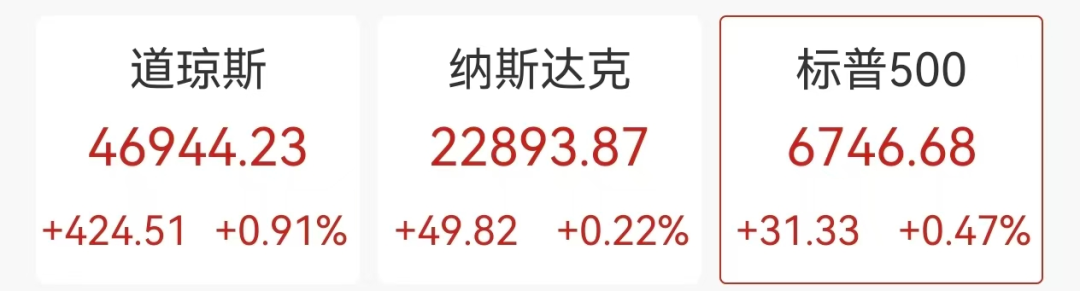
Market Performance - The Dow Jones increased by 424.51 points, or 0.91%, closing at 46,944.23, while the Nasdaq rose by 49.82 points, or 0.22%, to 22,893.87. The S&P 500 gained 31.33 points, or 0.47%, reaching 6,746.68 [1] - Tesla's stock price experienced a significant drop of over 2% shortly after opening, reflecting volatility in the market [1] Tesla's Stock Movement - On October 1, Tesla's stock surged, leading CEO Elon Musk's net worth to briefly exceed $500 billion, marking him as the first person to reach this milestone [2] - However, on October 2, Tesla's stock fell by more than 5%, resulting in a market value loss of approximately $78 billion (around 55 billion RMB) [2] Chinese Stocks Performance - The Nasdaq Golden Dragon China Index saw a decline of over 0.8%, with major Chinese stocks like Xpeng Motors and Li Auto dropping more than 4%, and NIO falling over 3% [2] Gold and Silver Prices - International gold prices surged, with COMEX gold futures surpassing $3,900 per ounce, and spot gold briefly exceeding $3,890 per ounce. COMEX silver rose nearly 2.7% [3] US Dollar Index - The US dollar index weakened, closing at 97.7663, down 0.12% [5][6] US Government Shutdown Impact - The US federal government experienced a shutdown for the first time in nearly seven years, affecting hundreds of thousands of federal employees and delaying the release of key economic data, including the non-farm payroll report originally scheduled for October 3 [6][7] US Debt Concerns - The US budget deficit has consistently exceeded 6% of GDP over the past two years, with projections for the 2024 fiscal year at 6.4% and 6.2% for 2023. The Treasury Department reported that the deficit for the first half of the 2025 fiscal year has already surpassed $1.3 trillion, marking the second-highest deficit for a half-year period in history [8]
特斯拉跳水跌超2%,热门中概股普跌,黄金期货站上3900美元
21世纪经济报道· 2025-10-03 15:24
Core Viewpoint - The U.S. stock market reached historical highs on October 3, with mixed performance among popular tech stocks, while Tesla's stock experienced significant volatility [1][2]. Market Performance - The Dow Jones Industrial Average closed at 46,944.23, up by 424.51 points (0.91%), the Nasdaq at 22,893.87, up by 49.82 points (0.22%), and the S&P 500 at 6,746.68, up by 31.33 points (0.47%) [2]. - Notable tech stocks included Microsoft at $519.13 (up 0.66%), Apple at $258.23 (up 0.43%), and Amazon at $222.77 (up 0.16%), while Facebook and Google saw declines of 1.11% and 1.20%, respectively [2]. Tesla's Stock Volatility - Tesla's stock surged on October 1, briefly elevating CEO Elon Musk's net worth to over $500 billion, making him the first person to reach this milestone. However, on October 2, Tesla's stock fell over 5%, resulting in a market value loss of approximately $78 billion (about 55 billion RMB) [5][6]. Chinese Stocks Performance - The Nasdaq Golden Dragon China Index saw a decline exceeding 0.8%, with major Chinese electric vehicle manufacturers like Xpeng and Li Auto dropping over 4%, and NIO falling over 3% [5]. Gold and Silver Market - International gold prices surged, with COMEX gold futures surpassing $3,900 per ounce and spot gold briefly exceeding $3,890 per ounce. COMEX silver rose nearly 2.7% [7][8]. U.S. Economic Context - The U.S. federal government experienced a shutdown for the first time in nearly seven years, affecting hundreds of thousands of federal employees and delaying the release of key economic data, including the September non-farm payroll report [9][10]. - The U.S. budget deficit has consistently exceeded 6% of GDP over the past two years, with projections for the 2024 fiscal year at 6.4% and 6.2% for 2023, indicating a significant fiscal burden [10].

政府停摆只是幌子!美债窟窿越撑越大,特朗普这波操作有用吗?
Sou Hu Cai Jing· 2025-10-03 04:46
2025年10月1日,美国政府面临停摆危机。原因很简单,政府的拨款法案未能通过参议院表决,导致大量政府工作人员只能暂时休假。然而,并不是所有政 府部门都停摆,法院系统仍会继续运行,避免了国家行政完全停顿的局面。 对于美国人来说,政府停摆已经不算什么新鲜事。自21世纪以来,由于预算问题发生过多次政府停摆。例如,2018至2019年,政府停摆长达35天,创下了历 史纪录;2013年因医保争议停摆了16天。每次停摆后,两党通常会先制定临时预算法案,暂时让政府运转起来,再慢慢磋商最终的预算方案。如此反复,已 经让美国民众对这种程序了如指掌。 然而,这次停摆与以往有所不同,最明显的变化就是市场反应。美股主要指数出现波动,虽然短期影响看似有限,但如果停摆时间过长,后果可能会相当严 重。更让人担忧的是,特朗普及共和党中的MAGA派似乎并不急于解决停摆问题,这让人不禁猜测,他们是否会故意延长停摆时间,以此来对抗那些与他 们意见不同的人。 要理解这次停摆背后的深层原因,还得回到美国的债务问题。特朗普在竞选时一直强调美国政府债务过高,必须采取措施减少债务,还提出了一些方案,比 如设立效率部,减少预算开支。但实际效果却不显著。效率 ...

黄金:如何定价,走向何方?
2025-09-28 14:57
Summary of Key Points from the Conference Call on Gold Pricing and Trends Industry Overview - The discussion revolves around the gold market, specifically focusing on the pricing dynamics and the impact of central bank purchases on gold prices and the international monetary system. Core Insights and Arguments 1. **Gold Price Increase**: In 2024, MEX gold and London spot gold saw year-to-date increases of 29.7% and 31.5%, respectively, with prices nearing a 40% rise by early September, driven by expectations of Federal Reserve rate cuts, concerns over the independence of the Fed, and worries about the sustainability of debt in Europe and the U.S. [1][2] 2. **Influence of Central Bank Purchases**: From 2022 to 2024, global central banks purchased an average of 1,060 tons of gold annually, accounting for 23% of global demand. This structural demand has pushed gold prices higher, leading to the failure of traditional real interest rate-gold pricing frameworks. [1][5] 3. **Historical Context of Gold Price Trends**: Historical data indicates that significant increases in gold prices are often linked to wars or crises, typically lasting 10-12 years. The current upward trend, which began in 2018-2019, has persisted for six to seven years, suggesting potential for continued strength in gold prices if macroeconomic conditions remain supportive. [1][7] 4. **Factors Driving Central Bank Gold Purchases**: Key reasons for increased gold purchases by central banks include declining trust in the dollar, rising U.S. debt issues, weakened economic momentum, and a trend among emerging economies to diversify away from developed economies' currencies. [1][8][10] 5. **Long-term Gold Price Outlook**: The long-term outlook for gold prices remains positive due to heightened geopolitical risks, political polarization affecting trust in the dollar, and strong central bank demand for gold. [3][12] Additional Important Insights 1. **Impact of Geopolitical Risks**: The rise in geopolitical tensions, such as conflicts in the Middle East and the Russia-Ukraine situation, has increased gold's appeal as a safe-haven asset. [12] 2. **Shift in Monetary Policy Dynamics**: The potential influence of political figures on the independence of the Federal Reserve could further impact market confidence and monetary policy, adding uncertainty to the economic landscape. [12] 3. **Gold's Role in Financial Stability**: Increasing gold reserves can enhance financial stability for countries facing geopolitical risks and systemic financial challenges, promoting a more diversified international monetary system. [11] 4. **Current Gold Reserve Levels**: The proportion of gold in central bank assets remains relatively low compared to historical levels, indicating significant room for growth as countries seek to bolster their reserves against economic uncertainties. [13] This summary encapsulates the key points discussed in the conference call regarding the gold market, its pricing mechanisms, and the implications of central bank behaviors on the future of gold as an asset class.
盛松成:对黄金及其未来价格走势的思考
Sou Hu Cai Jing· 2025-09-28 02:36
Core Viewpoint - The advantages of gold as a credit asset are becoming increasingly prominent against the backdrop of excessive issuance of U.S. government bonds, with gold prices nearing $3,800 per ounce, raising concerns about its future trajectory [1] Group 1: Evolution of Gold's Monetary Attributes - Historically, gold has served as a crucial support for currency circulation, providing stability and credibility to the monetary system, but its monetary attributes are gradually weakening [4][2] - The transition from a gold-backed currency system to a fiat currency system has occurred in two key phases: the classical gold standard and the Bretton Woods system, which linked currencies to gold at a fixed rate [2] - The collapse of the Bretton Woods system marked the liberation of gold prices from fixed exchange rates, leading to a floating exchange rate system and an era of credit currency [2] Group 2: Changes in Gold's Demand and Supply Dynamics - Gold's investment demand has shown strong growth, increasing from 991 tons in 2021 to 1,182 tons in 2024, with gold ETFs transitioning from negative to positive contributions [4][6] - The demand for gold jewelry and technology applications has also been significant, with gold consumption in jewelry manufacturing decreasing from 2,247 tons in 2021 to 2,012 tons in 2024, while technological demand remains stable [6] - The supply of gold has not kept pace with demand, with total demand rising from 4,026 tons in 2021 to 4,606 tons in 2024, while gold mine production only increased from 3,573 tons to 3,673 tons during the same period [7] Group 3: Geopolitical Risks and Gold's Safe-Haven Demand - Geopolitical tensions have heightened the demand for gold as a safe-haven asset, with military conflicts leading to inflationary pressures that typically drive up gold prices [11] - The inverse relationship between the U.S. dollar index and gold prices has been evident, with the dollar index declining from 108.6 in January to 98.2 in August, while gold prices rose by 23.9% during the same period [8][10] - Central banks, particularly in developing countries, have been increasing their gold reserves, with 95% of surveyed central banks expecting to raise their gold reserves in the next 12 months, up from 81% the previous year [13] Group 4: Future Outlook for Gold Prices - The future trajectory of gold prices is primarily influenced by geopolitical developments and the sustainability of U.S. debt, with two potential scenarios: stabilization or further escalation of tensions [20][21] - If geopolitical tensions ease and U.S. debt issues are managed, gold prices may stabilize or face downward pressure, as current prices are significantly above production costs [21] - Conversely, if geopolitical conflicts intensify and U.S. debt issues worsen, gold's safe-haven attributes may become more pronounced, leading to further price increases [21]

贵金属数据日报-20250926
Guo Mao Qi Huo· 2025-09-26 03:30
1. Report Industry Investment Rating - No relevant information provided 2. Core Viewpoints of the Report - On September 25, the main contract of Shanghai gold futures closed down 0.45% to 854.72 yuan/gram, while the main contract of Shanghai silver futures closed up 0.08% to 10,411 yuan/kilogram [4]. - The US economic data is performing well, the US dollar index has rebounded, the trade situation between the US and Europe has further eased, and the market has closed positions in advance before the National Day holiday to avoid risks. As a result, the upward trend of gold has slowed down and entered a high - level shock. However, silver, boosted by its industrial attributes and the sharp rise of copper, has continued its upward trend. On the other hand, US Treasury Secretary Bessent urged a rate cut by the end of the year, and the probability of two more rate cuts this year remains high. In the long run, precious metal prices still have room to rise [4]. - In the medium - to - long term, the Fed still has room to cut interest rates this year, global geopolitical uncertainties persist, the US debt is unsustainable, and great - power competition intensifies, which will long - term increase the credit risk of the US dollar. The continuation of gold purchases by global central banks means that the medium - to - long - term center of gravity of gold is likely to continue to move up [4]. 3. Summary by Relevant Catalogs 3.1 Price Tracking of Internal and External Gold and Silver - **Price Data**: On September 25, 2025, the price of London gold was 3,740.94 US dollars/ounce, London silver was 43.96 US dollars/ounce, COMEX gold was 3,771.60 US dollars/ounce, COMEX silver was 44.26 US dollars/ounce, AU2510 was 851.74 yuan/gram, AG2510 was 10,370 yuan/kilogram, AU (T + D) was 850.58 yuan/gram, and AG (T + D) was 10,346 yuan/kilogram. Compared with September 24, the price of gold generally decreased, with a decline of 0.8% for London gold, 0.9% for COMEX gold, 0.5% for AU2510, and 0.5% for AU (T + D). The price of silver also mostly decreased, with a decline of 0.3% for London silver and 0.2% for COMEX silver, but AG2510 and AG (T + D) increased by 0.2% [3]. - **Spread/Ratio Data**: On September 25, 2025, the spread of gold TD - SHFE active price was - 1.16 yuan/gram, the spread of silver TD - SHFE active price was - 24 yuan/kilogram, the spread of gold internal - external market (TD - London) was - 4.78 yuan/gram, the spread of silver internal - external market (TD - London) was - 896 yuan/kilogram, the ratio of SHFE gold - silver main contracts was 82.14, the ratio of COMEX gold - silver main contracts was 85.22, the spread of AU2512 - 2510 was 2.98 yuan/gram, and the spread of AG2512 - 2510 was 41 yuan/kilogram. Compared with September 24, the spread of gold TD - SHFE active price increased by 28.9%, the spread of gold internal - external market (TD - London) decreased by 31.0%, etc. [3] 3.2 Position Data - **COMEX Gold and Silver Non - commercial Positions**: As of September 16, 2025 (weekly data), on September 24, the non - commercial long position of COMEX gold was 326,778 contracts, the non - commercial short position was 60,368 contracts, and the non - commercial net long position was 266,410 contracts. Compared with September 23, the non - commercial long position increased by 0.59%, the non - commercial short position decreased by 4.38%, and the non - commercial net long position increased by 1.78%. The non - commercial long position of COMEX silver was 71,623 contracts, the non - commercial short position was 20,085 contracts, and the non - commercial net long position was 51,538 contracts. Compared with September 23, the non - commercial long position decreased by 1.14%, the non - commercial short position increased by 8.49%, and the non - commercial net long position decreased by 4.45% [3]. - **ETF Positions**: On September 24, the position of the gold ETF - SPDR was 996.85 tons, and the position of the silver ETF - SLV was 15,469.12379 tons. Compared with September 23, the position of the gold ETF - SPDR decreased by 0.37%, and the position of the silver ETF - SLV remained unchanged [3]. 3.3 Inventory Data - **SHFE Inventory**: On September 25, 2025, the SHFE gold inventory was 65,634 kilograms, an increase of 8.41% compared with September 24. The SHFE silver inventory was 1,156,855 kilograms, a decrease of 0.43% compared with September 24 [3]. - **COMEX Inventory**: On September 24, 2025, the COMEX gold inventory was 39,807,223 troy ounces, an increase of 0.16% compared with September 23. The COMEX silver inventory was 527,155,089 troy ounces, an increase of 0.08% compared with September 23 [3]. 3.4 Interest Rate/Exchange Rate/Index Data - **Interest Rate and Exchange Rate**: On September 25, 2025, the US dollar index was 97.87, the 2 - year US Treasury yield was 3.57%, the 10 - year US Treasury yield was 4.16%, and the US dollar/Chinese yuan central parity rate was 7.11. Compared with September 24, the US dollar index increased by 0.06%, the 2 - year US Treasury yield increased by 0.65%, the 10 - year US Treasury yield increased by 1.13%, and the US dollar/Chinese yuan central parity rate remained unchanged [3][4]. - **Index**: On September 25, 2025, the S&P 500 index was 6,637.97, and the NYMEX crude oil price was 64.81. Compared with September 24, the S&P 500 index decreased by 2.76%, and the NYMEX crude oil price increased by 1.82% [4].
美国债务还不起?如果一口气“印钞”37万亿美元,会发生什么?
Sou Hu Cai Jing· 2025-09-20 03:16
Group 1 - The U.S. national debt has reached $37 trillion, which is more than the entire GDP for 2024, indicating that the government is spending more than it earns [5][7] - The speed of debt accumulation has accelerated dramatically, with the debt increasing by $1 trillion in as little as three months, compared to five years for the previous $10 trillion increase [3][7] - Interest payments on the debt are projected to consume $879.9 billion in the 2024 fiscal year, which is more than military spending and healthcare combined, accounting for 13% of total federal expenditures [7][9] Group 2 - Moody's downgraded the U.S. sovereign credit rating from Aaa to Aa1, citing that the debt and interest ratios are significantly higher than those of comparable countries [11][12] - The market reacted to the downgrade, with 30-year U.S. Treasury yields surpassing 5%, leading to investor sell-offs due to fears of devaluation [12][14] - Countries holding U.S. debt, such as China and Japan, are reducing their holdings, indicating a lack of confidence in U.S. debt, while the UK has increased its holdings [14][16] Group 3 - The Federal Reserve faces a dilemma as it attempts to lower interest rates while managing inflation, complicating the situation further if it were to print more money to pay off the debt [22][28] - Historical examples of countries that printed money to pay off debts, such as Germany and Venezuela, resulted in severe hyperinflation and economic collapse, raising concerns about similar outcomes for the U.S. [24][26][46] - The global reliance on the U.S. dollar is decreasing, with countries increasingly opting for local currencies in trade, as evidenced by the rise of the Chinese yuan in international transactions [30][33][55] Group 4 - Proposed solutions to the U.S. debt issue include increasing taxes or reducing spending, but political resistance makes these options difficult to implement [40][42] - The Federal Reserve is also reducing its balance sheet, which may exacerbate the debt situation as less money in circulation could lead to higher borrowing costs [44] - The potential for rising unemployment due to economic downturns linked to debt management strategies poses a significant risk to the labor market [52][56]
30年期美债缘何再遭抛售?
Sou Hu Cai Jing· 2025-09-04 16:13
Core Viewpoint - The U.S. Treasury bond market is experiencing a sell-off of long-term bonds despite high expectations for a Federal Reserve rate cut in September, indicating concerns over long-term inflation and debt issues [1][2][3] Group 1: Market Dynamics - On September 3, the 30-year U.S. Treasury yield reached a high of 5%, the highest since July, while the 10-year yield hit 4.3% [1] - Market expectations for a Federal Reserve rate cut in September reached 97.4% as of September 4, typically leading to lower bond yields; however, yields are rising instead [1][2] - Seasonal factors contribute to the sell-off, as September is a peak month for corporate bond issuance, diverting funds away from Treasury bonds [1][2] Group 2: Inflation and Debt Concerns - The rise in long-term bond yields reflects market worries about long-term inflation and U.S. debt risks, despite expectations for a Fed rate cut [2][3] - The latest Federal Reserve Beige Book indicates price increases related to tariffs, with companies passing on costs to customers, suggesting continued inflationary pressures [2] - The U.S. Treasury is expected to issue $1 trillion in net debt in Q3, with approximately $470 billion in long-term bonds, increasing supply and raising yield expectations [3] Group 3: Future Outlook - The Federal Reserve is likely to restart rate cuts in September, with market pricing indicating two cuts by year-end; however, long-term yields may remain constrained due to inflation and debt concerns [4] - If the Fed signals a cautious approach to rate cuts, bond yields may face upward pressure, especially if corporate bond issuance exceeds expectations in mid to late September [4] - Short-term yields are expected to decline in line with policy rates, while long-term yields may not decrease significantly due to ongoing inflation and debt issues [4]