
资产荒

Search documents
国信证券:银行理财规模高增 26年向“质量提升”转型
Zhi Tong Cai Jing· 2026-01-30 01:49
Group 1 - The banking wealth management sector is transitioning from "scale expansion" to "quality improvement" by 2026, focusing on product innovation for stable funding and strategic asset expansion to address yield challenges [1] - The wealth management market is expected to grow by 11.15% in 2025, reaching a total size of 33.29 trillion yuan, driven by stable and low-volatility characteristics appealing to customers seeking better returns than deposits [1] - The average yield of wealth management products has decreased to 1.98% in 2025 due to a low-interest environment and a shortage of quality fixed-income assets, pushing firms to expand asset boundaries beyond traditional fixed income [1][2] Group 2 - Product innovation is focused on extending product durations and diversifying strategies, with the average duration of closed-end products increasing to 322-489 days and over 70.87% of products having a term longer than one year [2] - The industry is experiencing increased concentration, with wealth management companies dominating the market, accounting for over 92% of the total, while 59 small and medium-sized banks are expected to exit by 2025 [3] - Distribution channels, particularly those reaching lower-tier markets, are becoming crucial for growth, with leading wealth management firms leveraging brand and channel advantages to enhance market share [3] Group 3 - Collaboration between bank wealth management and public funds is deepening, with the allocation to public funds increasing to 5.1% in 2025, driven by the need for stable net values and enhanced returns through equity research advantages [4] - This "co-opetition" relationship allows bank wealth management to focus on asset allocation and customer retention while public funds provide supply advantages through tool-based products [4]

金价大涨映射了三大宏观不确定性
Di Yi Cai Jing· 2026-01-29 03:12
Jul-08 the first and the first the first to the state of th (本文作者付一夫为苏商银行特约研究员) 近期,国际黄金价格接连突破历史关口,国内现货金价同步走高,现货黄金甚至突破5500美元/盎司,而资本市场上黄金股更是连续暴涨,这也引发了各方 人士的高度关注。 长期以来,黄金定价遵循着以"实际利率"为核心的经典范式。然而近年来,金价走势却与传统框架背道而驰:美联储开启激进加息周期,实际利率大幅转 正,美元一度走强,按传统逻辑应严重压制金价;然而黄金仅在初期短暂承压后,便逆势上行且屡创新高。这种背离,标志着市场对黄金定价逻辑的深刻转 变。 事实上,黄金作为一种无利息、无主权信用背书的实物资产,其价格持续强势上涨的背后,实则是全球金融市场对宏观环境不确定性的集中定价——所 谓"盛世古董,乱世黄金",在当前全球格局下,"做多黄金"已与"做多不确定性"形成精准呼应;而每一轮的金价攀升,很可能都是市场对地缘冲突、货币信 用、财政可持续性及资产定价体系等领域风险的集体预警。 一、地缘局势风险:短期脉冲与长期叙事 黄金的避险属性,是其穿越千年经济周期、成为全球公认安 ...


3大风险信号,黄金赚麻了,我却担心得睡不着觉
3 6 Ke· 2026-01-29 00:17
近期,国际黄金价格接连突破历史关口,国内现货金价同步走高,昨日现货黄金甚至突破5300美元/盎 司,而资本市场上黄金股更是连续暴涨,这也引发了各方人士的高度关注。 长期以来,黄金定价遵循着以"实际利率"为核心的经典范式。然而近年来,金价走势却与传统框架背道 而驰:美联储开启激进加息周期,实际利率大幅转正,美元一度走强,按传统逻辑应严重压制金价;然 而黄金仅在初期短暂承压后,便逆势上行且屡创新高。这种背离,标志着市场对黄金定价逻辑的深刻转 变。 事实上,黄金作为一种无利息、无主权信用背书的实物资产,其价格持续强势上涨的背后,实则是全球 金融市场对宏观环境不确定性的集中定价——所谓"盛世古董,乱世黄金",在当前全球格局下,"做多 黄金"已与"做多不确定性"形成精准呼应;而每一轮的金价攀升,很可能都是市场对地缘冲突、货币信 用、财政可持续性及资产定价体系等领域风险的集体预警。 一、地缘局势风险:短期脉冲与长期叙事 黄金的避险属性,是其穿越千年经济周期、成为全球公认安全资产的核心根基。不同于股票、债券、法 定货币等品种,黄金的价值不依赖于任何政府、企业的信用承诺,也不受单一经济体货币政策的直接管 控。在信用货币体系下 ...
对话连平:楼市分化、利率走低,中国居民财富会流向哪里?
Sou Hu Cai Jing· 2026-01-28 10:53
过去五年,中国房地产市场经历了一场罕见的深刻调整,房地产在家庭财富中的作用发生本质转变。与 此同时,随着银行利率持续走低,居民理财收益下降,存款"搬家"现象呈加速趋势。 站在资产配置的十字路口,普通人何去何从?当房地产普涨时代落幕,什么样的房产能够穿越周期、实 现保值增值?股市能否接棒楼市,成为居民财富增长的新引擎?在避险情绪中屡创新高的黄金还能涨多 久? 本期《思路打开》对话中国首席经济学家论坛理事长、广开首席产业研究院院长连平,深入解析中国的 楼市、股市和居民资产配置的逻辑重构。 【对话/连平&王慧】 王慧:连平老师您好,今天想从房地产开始,跟您聊聊中国居民的资产配置问题。过去五年,中国的房 地产经历了一场罕见的深刻调整。2026年中央定调要"着力稳定房地产市场"。这个"稳定"是什么意思? 是指市场完成探底开始企稳,还是说市场正在以平稳的态势逐步寻底、筑底? 连平:从物理的角度来看,"稳定"是一种水平运动。从房地产市场本身来看,我认为目前至少应该是结 束或者停止向下的过程,也就是说,要结束探底的过程,然后进入横盘筑底阶段。这可能是"稳定"真实 的含义所在。 现在从成交量、价格、工程推进力度等方面来看,房地 ...

掘金港股IPO,打新产品最低1元起购,理财公司为哪般?
Nan Fang Du Shi Bao· 2026-01-28 08:28
Core Viewpoint - The article discusses the increasing participation of bank wealth management subsidiaries in Hong Kong IPOs, highlighting their role as significant players in the market as it enters a new phase of intensive IPO activity from late 2025 to early 2026 [2][3]. Group 1: Bank Wealth Management Subsidiaries' Participation - Bank wealth management subsidiaries, such as ICBC Wealth Management and China Post Wealth Management, have been actively investing in Hong Kong IPOs, with ICBC participating in over 25 IPOs since 2025, achieving a weighted return of over 50% [3]. - China Post Wealth Management has invested 1.8 billion yuan in Hong Kong IPOs and participated in 150 private placements, focusing on new productivity sectors [4]. - Other subsidiaries like China Merchants Bank Wealth Management have also engaged in IPOs, successfully acquiring shares in companies like Innovation Industry [4]. Group 2: Investment Strategies and Product Offerings - Wealth management firms are embedding Hong Kong IPO investments into their product offerings, allowing individual investors to access these opportunities, with some products starting from as low as 1 yuan [5][6]. - ICBC Wealth Management has developed a "fixed income + Hong Kong IPO" strategy, combining deposits and high-grade bonds with selected IPO investments to enhance returns [5]. - China Post Wealth Management has introduced products that flexibly allocate between Hong Kong IPOs and domestic ETFs, aiming to capture the benefits of leading companies going public [6]. Group 3: Market Dynamics and Challenges - The influx of wealth management funds into Hong Kong IPOs is driven by a scarcity of quality fixed-income assets domestically, the strategic positioning in technology and biomedicine sectors, and the need for innovative product offerings [7]. - Experts predict that a significant amount of medium- to long-term deposits will mature in 2026, potentially impacting financial markets and asset allocation [7]. - Despite the opportunities, wealth management firms face challenges such as insufficient cross-border research capabilities, liquidity management issues, and the need for better investor education regarding the risks associated with IPO investments [9].
日度策略参考-20260128
Guo Mao Qi Huo· 2026-01-28 03:28
Report Summary 1. Report Industry Investment Ratings The report does not provide a unified industry investment rating. Instead, it gives trend judgments and investment suggestions for different varieties, including "看多" (Bullish), "震荡" (Sideways), and "震荡偏强" (Sideways with an upward bias). 2. Core Views of the Report - **Stock Index**: In the short term, the adjustment space of the stock index is limited, and it is expected to show a sideways - upward trend before the holiday, as the domestic macro - level may be relatively calm and market performance will be highly correlated with regulatory trends [1]. - **Treasury Bonds**: Asset shortage and weak economy are beneficial to bond futures, but the central bank has recently reminded of interest - rate risks, and the Japanese central bank's interest - rate decision should be noted [1]. - **Non - ferrous Metals**: - **Copper**: The copper price maintains a high - level sideways movement as the dollar index has declined, but the enthusiasm for buying copper has eased [1]. - **Aluminum**: The aluminum price is expected to move sideways as the industrial driving force is limited recently, but the decline of the dollar index supports the price [1]. - **Alumina**: The supply of domestic alumina is strong while demand is weak, and the price is under pressure. However, as the current price is near the cost line, it is expected to move sideways [1]. - **Zinc**: The cost center of zinc fundamentals is stable. The recent cold wave in North America has increased energy prices, which is not conducive to the resumption of overseas smelters. Zinc has a certain room for a supplementary rise [1]. - **Nickel**: In the short term, the nickel price is at a high level, affected by the resonance of the non - ferrous metal sector. Supply concerns may continuously disrupt the market. In the long - term, high global nickel inventories may still have a suppressing effect. It is recommended to go long on dips in the short term [1]. - **Stainless Steel**: The stainless - steel futures are in a high - level sideways movement. Supply - side disruptions are frequent, and spot trading is weak. It is recommended to focus on short - term operations [1]. - **Tin**: Although the approval of explosives in Myanmar is negative news, the increase in tin ore in Myanmar in the first quarter is still limited. In the pattern of fragile supply and rigid demand, there is still upward potential for tin. Attention should be paid to supply disruptions [1]. - **Precious Metals and New Energy**: - **Silver**: International uncertainties and the weakening dollar index support the price of precious metals. Due to factors such as spot shortages and falling inventories, there is a significant short - squeeze sentiment in the domestic market. The import window has opened significantly. It is recommended to control positions in single - side trading and pay attention to the inter - market arbitrage opportunities for the far - month contracts [1]. - **Platinum and Palladium**: The macro - driving force has weakened slightly, but international uncertainties are still high, which may support the prices of platinum and palladium, and the price fluctuations may be large. In the long - term, the supply - demand prospects of platinum and palladium are different. It is recommended to allocate platinum on dips or continue to pay attention to the [long - platinum short - palladium] arbitrage strategy [1]. - **Industrial Silicon**: The production of polysilicon and silicone decreased in December. The northwest region increased production while the southwest region decreased production [1]. - **Black Metals**: - **Rebar and Iron Ore**: High production, high inventory, etc., suppress the price increase space. The transmission of futures price increases to the spot market is not smooth. It is recommended to exit long single - side positions and participate in cash - and - carry arbitrage. The upward pressure on iron ore is obvious, and it is not recommended to chase long positions [1]. - **Coke and Coking Coal**: The market is pessimistic about the end - point price of the coking coal 05 contract. After the first round of coke price increase was shelved, short - sellers increased their positions. The coking coal 05 contract broke through important support levels. In the future, the price may be gradually priced according to the Mongolian coal long - term contract cost. The logic for coke is the same as that for coking coal [1]. - **Agricultural Products**: - **Palm Oil**: The purchasing rhythm of major consuming countries has started, and the production area is expected to reduce production and inventory. Coupled with the possible fermentation of the biodiesel theme, it is expected to show a sideways - upward trend [1]. - **Soybean Oil**: The domestic soybean - oil fundamentals are strong. Coupled with the rebound of US soybeans and positive news about US biodiesel, it is bullish [1]. - **Rapeseed Oil**: The Sino - Canadian trade relationship has not improved, and the import of Canadian rapeseed is blocked, creating a positive expectation gap. Positive news about US biodiesel is beneficial to the oil market [1]. - **Cotton**: The domestic cotton market is currently in a situation of "having support but no driving force". Future attention should be paid to factors such as the central government's No. 1 document in the first quarter of next year, the intention of cotton - planting area, weather during the planting period, and peak - season demand [1]. - **Sugar**: Globally, there is a sugar surplus, and the domestic new - crop supply has increased. There is a strong consensus among short - sellers. If the futures price continues to fall, there is strong cost support below, but there is no continuous driving force in the short - term fundamental aspect. Attention should be paid to changes in the capital side [1]. - **Corn**: The corn sales progress has passed half, and the inventories at ports and downstream are still low. With the replenishment of downstream enterprises and the profit - taking of long - positions before the holiday, there is a certain risk of price correction [1]. - **Soybeans**: The dry weather in Argentina may cause short - term weather speculation. The precipitation in February is expected to return to normal. With the progress of the Brazilian harvest, the overall rebound of M05 is expected to be limited [1]. - **Pulp**: The pulp price has fallen due to the decline of the commodity macro - environment. It has not broken through the sideways area. Short - term commodity sentiment fluctuates greatly. It is recommended to wait and see cautiously. The spot price of logs has shown a certain sign of bottom - rebound, and the further decline space of the futures price is limited. However, the January overseas offer has still declined slightly, and there is a lack of upward - driving factors in the log futures and spot markets. It is expected to move sideways in the range of 760 - 790 yuan/m³ [1]. - **Hogs**: Recently, the spot price has gradually stabilized. Supported by demand, the production capacity still needs to be further released as the average slaughter weight has not decreased significantly [1]. - **Energy and Chemicals**: - **Crude Oil and Related Products**: OPEC + has suspended production increases until the end of 2026, the geopolitical situation in the Middle East has intensified, and the cold wave in the United States has increased energy demand, which is beneficial to the price increase of crude oil and fuel oil [1]. - **Asphalt**: In the short - term, the supply - demand contradiction is not prominent, and it follows the trend of crude oil. The "14th Five - Year Plan" construction rush demand is likely to be falsified, and the supply of Ma瑞 crude oil is sufficient. The asphalt profit is relatively high [1]. - **Natural Rubber**: The raw - material cost has strong support, the synthetic rubber has risen significantly, and the overall atmosphere of the commodity market is bullish, driving the upward movement of the natural - rubber market [1]. - **BR Rubber**: The cost of butadiene has strong support at the bottom. Recently, the profit of private butadiene - styrene rubber plants has been seriously lost, and the expectation of maintenance and production reduction has increased. In the short - term, the futures price is expected to have a wide - range sideways correction, and there is an upward expectation in the long - term [1]. - **PTA and Short - fiber**: The strong PX market has led to the rise of chemical products, and a large amount of capital has flowed into the chemical sector. The polyester sector has led the rise of the entire chemical industry. The domestic PTA production has continued to increase, and the production reduction of polyester factories has a limited negative feedback on PTA. The short - fiber price continues to closely follow the cost fluctuations [1]. - **Ethylene Glycol**: After a long - term slump, the overseas ethylene - glycol price has rebounded. The reduction of ethylene - glycol exports from the Middle East has boosted market confidence. The speculative demand in the market has increased significantly [1]. - **Styrene**: The news of the shutdown of Middle Eastern styrene plants has led to a rapid rebound of the styrene futures price. The Asian styrene market has stabilized, the styrene - benzene price difference has widened, and the inventory has decreased [1]. - **Methanol**: Affected by the Iranian situation, the future import of methanol is expected to decrease, but the downstream negative feedback is obvious. The downstream MTO leading plants have stopped production, and some enterprises have reduced production, but the Fude plant will restart on January 25th. The Iranian situation has eased, but risks cannot be completely ruled out. The freight in the inland area has increased due to the cold air, and the northwest enterprises have great pressure to reduce inventory and sell at a reduced price [1]. - **Polyethylene**: The geopolitical conflict has intensified, and there is a risk of crude - oil price increase. The full - density plant of Zhong'an United has stopped production, and the linear - production ratio has decreased [1]. - **PVC**: In 2026, the global PVC production capacity will be put into operation less, and the future expectation is optimistic. However, the current fundamentals are poor. The export tax - rebate policy has been cancelled, and there may be a phenomenon of rushing to export in the future. The differential electricity price in the northwest region is expected to be implemented, forcing the elimination of PVC production capacity [1]. - **Liquefied Petroleum Gas (LPG)**: The March CP is expected to decline compared with February, and the market sentiment will switch between fundamentals and emotions. The geopolitical conflict in the Middle East has cooled down, and the short - term risk premium has declined. The driving logic of the overseas cold wave has gradually slowed down, and the futures price is expected to weaken. The domestic PDH operating rate has declined, and the profit is expected to recover seasonally. The short - term demand for LPG is bearish, suppressing the upward movement of the futures price [1]. - **Shipping**: The freight rate has peaked and declined before the holiday. Airlines are still cautious about trial resumption of flights. Airlines are expected to have a strong willingness to stop the price decline and increase prices after the off - season in March [1].
平安继续扫货同业,增持国寿H股能否直逼10%
Hua Er Jie Jian Wen· 2026-01-27 13:37
Core Viewpoint - Ping An is significantly increasing its stake in China Life Insurance, reflecting a strategic move to strengthen its position in the financial sector amidst a low-interest-rate environment [1][4][6]. Group 1: Investment Actions - On January 22, Ping An Life increased its holdings in China Life by purchasing 11.891 million H-shares at an average price of HKD 32.0553 per share, totaling approximately HKD 381 million [1]. - Following this transaction, Ping An's total holdings in China Life H-shares rose to 681 million shares, increasing its ownership percentage from 8.98% to 9.14% [1]. - This is not the first time Ping An has taken action against China Life, having previously crossed the 5% threshold for H-shares in August 2025 [2][3]. Group 2: Broader Market Strategy - Since 2025, Ping An has been actively acquiring shares in the Hong Kong stock market, focusing not only on insurance companies but also on state-owned banks, with significant increases in holdings in Agricultural Bank and Industrial and Commercial Bank [4]. - Ping An's strategy includes building a large portfolio of high-dividend financial assets through its asset management channels [4]. Group 3: Rationale Behind Investments - The rationale for increasing stakes in China Life and other financial institutions is to find stable and substantial assets to match the liabilities faced by insurance companies in a declining interest rate environment [4][5]. - H-shares in the financial sector are seen as undervalued compared to A-shares, providing a high margin of safety for investors [5]. - The adoption of IFRS 9 allows these high-dividend stocks to be classified in a way that enhances profits while mitigating the impact of stock price volatility on net income [5]. Group 4: Industry Perspective - Ping An's significant investments can be viewed as a vote of confidence in the insurance sector's fundamentals, suggesting that current valuations of insurance stocks may be overly compressed and present long-term investment opportunities [6]. - The investment principles articulated by Ping An's co-CEO emphasize reliability, growth potential, and sustainable dividends, which align with the characteristics of companies like China Life and China Merchants Bank [7]. - As "asset scarcity" becomes a norm, insurance giants with strong cash flows are reshaping the pricing power within the Hong Kong financial sector [8].

解码平安背后的机构共识与时代贝塔
Ge Long Hui· 2026-01-27 07:01
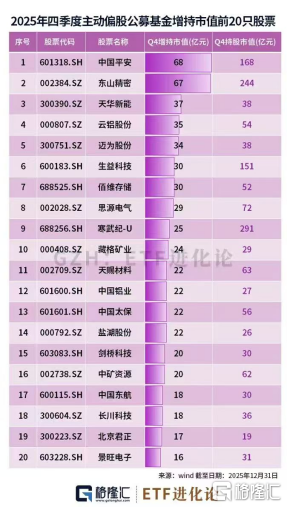
Core Viewpoint - The capital market is witnessing a significant shift towards a concentrated focus on high-growth sectors, particularly those centered around AI computing power, as large funds pursue certainty in investment opportunities [1] Group 1: Fund Holdings and Market Trends - The latest public fund quarterly reports reveal a clear shift in holdings, indicating a consensus among large investors on certain high-growth sectors [1] - China Ping An (601318.SH/2318.HK) has emerged as a key focus for funds due to its low valuation, high dividend cash flow, and expectations of macroeconomic recovery [1] - In Q4 2025, China Ping An saw an increase in holdings by public funds, with a market value increase of 68 billion yuan, bringing total holdings to 168 billion yuan [2] Group 2: Performance and Market Reactions - On January 26, 2025, despite overall market pressure, China Ping An's A-shares and H-shares rose over 3%, reflecting strong market sentiment and alignment with public fund holdings [4] - The analysis of the quarterly reports serves as a critical starting point for understanding institutional allocation trends and predicting market style and structural changes for 2026 [6] Group 3: Value Discovery and Investment Logic - The insurance sector, led by China Ping An, has seen a systematic increase in holdings over the past year, marking a return to the core focus of institutional investors [8] - The market consensus has evolved from initial undervaluation to a recognition of the unique business model and long-term alpha capabilities of China Ping An [21] - The policy direction encouraging long-term capital into the market has provided dual benefits for the insurance sector, enhancing liquidity and valuation environments [22] Group 4: Strategic Positioning and Future Outlook - China Ping An's strategy of integrating financial services with healthcare and elderly care is positioned to capitalize on long-term societal trends, opening up significant market opportunities [24] - The company's focus on AI and advanced technologies is enhancing operational efficiency and solidifying its competitive advantages [25] - The sustained increase in public fund holdings reflects a premium on China Ping An's ability to generate stable long-term returns, transitioning its value perception from a rate-sensitive stock to a composite value asset [26]

日度策略参考-20260126
Guo Mao Qi Huo· 2026-01-26 05:59
Report Industry Investment Ratings - Not provided in the given content Core Views - Policy cools market speculative sentiment, leading to stock index oscillations, but short - term adjustment space is limited, and long - term bulls can enter the market at appropriate times. Asset shortage and weak economy benefit bond futures, but the central bank warns of interest - rate risks. With the US suspending key mineral taxes, copper prices are oscillating strongly. Various factors influence different commodities, and specific trading strategies are recommended for each [1]. Summary by Industry and Variety Macro - finance - **Stock Index**: Policy cools speculative sentiment, causing oscillations. Short - term adjustment space is small, and long - term bulls can enter at opportune moments [1]. - **Treasury Bonds**: Asset shortage and weak economy are favorable, but the central bank warns of short - term interest - rate risks, and attention should be paid to the Bank of Japan's interest - rate decision [1]. Non - ferrous Metals - **Copper**: With the US suspending key mineral taxes, short - term concerns ease, and copper prices are oscillating strongly [1]. - **Alumina**: Industry drive is limited, but macro sentiment improves. Domestic supply is strong and demand is weak, and prices are expected to oscillate around the cost line [1]. - **Zinc**: The cost center is stable, and prices fluctuate in a range. Look for high - selling and low - buying opportunities [1]. - **Nickel**: Supply concerns persist due to various factors, and prices are strong in the short term. Long - term high inventory may have a suppressing effect. Short - term buying on dips is recommended [1]. - **Stainless Steel**: Supply concerns persist, raw material prices rise, and social inventory decreases slightly. Futures are at a high level, and there is a risk of a short squeeze. Short - term low - buying is recommended [1]. - **Tin**: Market sentiment improves. Although there is a negative news, supply increase in the first quarter is limited, and there is upward potential [1]. Precious Metals and New Energy - **Precious Metals**: Geopolitical risks and strong fundamentals support prices, but there is a risk of profit - taking during the Fed's meeting [1]. - **Platinum and Palladium**: Macro factors support prices in the short term, but fluctuations are large. In the long term, platinum has a supply - demand gap, and palladium tends to have a loose supply. Unilateral low - buying of platinum or a [long platinum, short palladium] arbitrage strategy is recommended [1]. - **Industrial Silicon and Polysilicon**: Northwest production increases, and Southwest production decreases. December production schedules for polysilicon and organic silicon decline [1]. - **Lithium Carbonate**: There are factors such as the off - season for new energy vehicles, strong energy - storage demand, and battery export rush [1]. Black Metals - **Rebar**: Expectations are strong, but spot is weak, and the rally momentum is insufficient. Unilateral long positions should be closed, and positive - spread positions can be considered [1]. - **Hot - Rolled Coil**: High production and inventory suppress price increases. Unilateral long positions should be closed, and positive - spread positions can be considered [1]. - **Iron Ore**: There is a sector rotation, but there is obvious upward pressure, and chasing long is not recommended [1]. - **Glass and Soda Ash**: There is a mix of weak reality and strong expectations. Supply may be affected by energy - consumption control and anti - involution. Short - term sentiment is warm, but medium - term supply is excessive [1]. - **Coking Coal and Coke**: The market is pessimistic about the coking coal 05 contract. After the first round of coke price increase fails, the price breaks through key supports, and the previous low - buying strategy may change [1]. Agricultural Products - **Palm Oil**: Main consumer countries start purchasing, and there may be production cuts and inventory reduction in the origin. It is expected to be strongly oscillating [1]. - **Soybean Oil**: Fundamentals are strong, and long - position allocation in oils is recommended. Consider the long Y - short O1 spread [1]. - **Rapeseed Oil**: There are negative factors, but it is difficult to fall smoothly due to the strength of soybean and palm oils. It is recommended to wait and see [1]. - **Cotton**: There is production expectation, and the purchase price supports the cost. Downstream demand has rigid replenishment needs. The market is in a state of "supported but lacking drive" [1]. - **Sugar**: There is a global surplus and increased domestic supply. There is a consensus on short - selling, and cost support is strong if prices fall [1]. - **Corn**: The selling progress in Northeast China is fast, and there is inventory - replenishment demand before the festival. The price is expected to oscillate [1]. - **Soybeans**: Brazil's harvest may bring selling pressure, and Argentina's dry weather may cause short - term speculation. The M05 is expected to be weakly oscillating [1]. - **Paper Pulp**: Affected by the macro decline, it falls but does not break the oscillation range. It is recommended to wait and see [1]. - **Logs**: Spot prices rebound, and the downward space for futures is limited. It is expected to oscillate between 760 - 790 yuan/m³ [1]. - **Hogs**: Spot prices stabilize, demand supports, and production capacity needs further release [1]. Energy and Chemicals - **Crude Oil**: OPEC+ suspends production increase, geopolitical tensions in the Middle East rise, and US cold weather boosts demand [1]. - **Asphalt**: Short - term supply - demand contradiction is not prominent, following crude oil. The "14th Five - Year Plan" construction demand may be false, and supply is sufficient, with high profits [1]. - **Natural Rubber**: There is strong raw - material cost support, and the synthetic - rubber price increase drives the sector [1]. - **BR Rubber**: There is strong support for butadiene, and the market's price - support atmosphere strengthens. It operates with high开工 and high inventory [1]. - **PTA and Short - Fibre**: The PX market drives the rise of chemicals, and there is a large inflow of funds. PTA production increases, and short - fibre prices follow costs [1]. - **Ethylene Glycol**: Overseas prices rebound, and Middle - East exports decrease. There is an increase in speculative demand [1]. - **Styrene**: The supply - demand fundamentals improve, and prices rebound. The price spread between styrene and benzene widens, and inventory decreases [1]. - **Urea**: Export sentiment eases, and there is limited upward space, but there is support from anti - involution and cost [1]. - **Methanol**: Import is expected to decrease due to the Iranian situation, but there is obvious downstream negative feedback. There are multiple factors in a multi - empty situation [1]. - **PVC**: Global production is expected to be low in 2026, but the fundamentals are poor. There may be a rush for exports, and capacity may be cleared [1]. - **Caustic Soda**: Macro sentiment fades, and the market focuses on fundamentals. Fundamentals are weak, and there is inventory - building pressure [1]. - **LPG**: February CP is expected to rise, and there is cost support. Inventory decreases, and the heating market is expected to start [1]. Others - **Container Shipping on European Routes**: It is expected to peak in mid - January. Airlines are cautious about resuming flights, and there is pre - festival inventory - replenishment demand [1].
2025 年银行理财年报点评:规模高增,收益中枢下降,公募合作增加
Guoxin Securities· 2026-01-24 14:17
证券研究报告 | 2026年01月24日 规模高增,收益中枢下降,公募合作增加 ——2025 年银行理财年报点评 | | 行业研究·行业快评 | | 银行 | 投资评级:优于大市(维持) | | --- | --- | --- | --- | --- | | 证券分析师: | 孔祥 | 021-60375452 | kongxiang@guosen.com.cn | 执证编码:S0980523060004 | | 证券分析师: | 陈俊良 | 021-60933163 | chenjunliang@guosen.com.cn | 执证编码:S0980519010001 | | 证券分析师: | 王剑 | 021-60875165 | wangjian@guosen.com.cn | 执证编码:S0980518070002 | 事项: 中国理财网发布《中国银行业理财市场半年报告(2025 年)》,我们分析需要注意的重点内容。这体现在: 一是规模显著增长,承接"存款搬家"与稳健理财需求。在利率市场化深化、存款利率持续下行的宏观背 景下,银行理财稳健和低波的特性使其成为居民储蓄的重要流向。2025 年理 ...