零添加

Search documents
酱油产品量增利减,千禾味业2024年遭遇业绩双降,今年Q1经销商负增长埋隐忧
Zheng Quan Zhi Xing· 2025-06-09 02:39
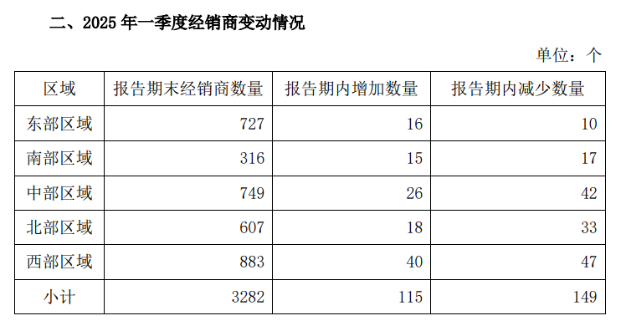
Core Viewpoint - The condiment industry is experiencing a decline in the "zero additives" trend, impacting Qianhe Flavor Industry's performance, which reported its first dual decline in earnings since its listing in 2016, with a 4.16% drop in annual revenue to 3.073 billion yuan [1][4]. Revenue and Sales Performance - In 2024, Qianhe Flavor Industry's core product, soy sauce, saw a revenue decline of 3.75% year-on-year, contributing to an overall revenue decrease of 4.16% [1]. - The company's revenue for Q1 2024 fell by 7.15% to 830 million yuan, with a net reduction of 34 distributors due to negative publicity [1][8]. - From 2021 to 2023, the company experienced significant revenue growth, with sales rising from 1.925 billion yuan in 2021 to 3.207 billion yuan in 2023, and a net profit increase of over 50% annually from 2022 to 2023 [4]. Distributor Network and Sales Model - Qianhe Flavor Industry's distributor count peaked at 3,560 in H1 2024 but fell to 3,316 by year-end, indicating a significant slowdown in expansion compared to previous years [7]. - The company transitioned its sales model from a focus on distributors to a division between online and offline sales, with offline revenue declining by 4% to 2.433 billion yuan [8]. Competitive Landscape - Competitors like Haitian Flavor Industry are rapidly expanding their "zero additives" product lines, with Haitian reporting a 60% increase in sales of its "zero additives" series in 2024 [6]. - Qianhe's soy sauce sales growth of 1.27% in 2024 is significantly lower than the previous years' growth rates of 27.49% in 2022 and 33.19% in 2023, reflecting increased competition [5]. Cost Structure and Profitability - Qianhe's soy sauce has a gross margin of 38%, which is 6.7 percentage points lower than Haitian's, despite having a lower direct material cost of approximately 1,933.45 yuan per ton compared to Haitian's 2,422.99 yuan [8]. - The lower gross margin is attributed to a higher proportion of lower-end products in Qianhe's portfolio, which dilutes overall profitability [8]. Regulatory Environment - New regulations set to take effect in March 2025 will prohibit the use of "zero additives" in marketing, requiring Qianhe to adjust its branding and product strategy within a two-year transition period [9].


李子园20250603
2025-06-04 01:50
Summary of Li Ziyuan's Conference Call Company Overview - **Company**: Li Ziyuan - **Industry**: Beverage, specifically focusing on functional drinks and vitamin water Key Points and Arguments Growth Strategy - **Vitamin Water as Growth Driver**: Li Ziyuan aims to establish vitamin water as a second growth curve with a sales target of 100 million yuan, leveraging modern channels, snack wholesale, and e-commerce platforms for promotion [2][5] - **E-commerce Performance**: E-commerce sales are projected to reach 10 million yuan in June, with a growth rate of 40%-50% in Q1 [2][16] - **Snack Wholesale Channel**: The company is rapidly developing the snack wholesale channel, targeting over 100 million yuan in sales this year [2][14] Product Development - **New Product Launches**: The company is introducing vitamin water with a "zero" additive concept, including 500ml and upcoming 250ml options, focusing on a simplified formula [3][4] - **Health and Nutrition Focus**: New products emphasize health and nutrition, targeting young consumers through brand ambassadors and innovative marketing strategies [9][10] Organizational Changes - **Management Restructuring**: A new generation of leadership has taken over, with a focus on brand upgrading, e-commerce team building, and new product development [7][9] - **Young Management Team**: The management team has been rejuvenated, with younger members taking key roles to enhance company vitality [7] Cost Management - **Cost Control Measures**: The company is focusing on controlling raw material costs, particularly large package powder, which constitutes 35%-40% of total costs, leading to improved gross margins [8] - **Profitability Outlook**: Overall profitability is expected to exceed revenue growth due to effective cost management [8] Market Trends - **Increased Demand for Health Products**: There is a growing market interest in fitness and health products, providing new opportunities for companies in this sector [10] - **Competitive Landscape**: The functional beverage market is becoming increasingly competitive, with a focus on clean ingredient lists and health benefits [11][21] Sales and Marketing Strategies - **Brand Ambassador Strategy**: The company has signed actor Ding Yuxi as a brand ambassador, aiming to attract younger consumers while reducing traditional media spending [15] - **E-commerce Team Expansion**: Plans to expand the e-commerce team, particularly in live streaming and interest-based e-commerce, to support new product launches [17] Channel Development - **Diverse Sales Channels**: The company is expanding its presence in various sales channels, including breakfast and small dining sectors, which account for about 25% of total sales [19] - **Interest vs. Shelf E-commerce**: Interest-based e-commerce is driving significant growth compared to traditional shelf e-commerce platforms [18] Profitability and Market Position - **No Immediate Profit Expectations for New Products**: The company does not expect immediate profits from the vitamin water product this year, focusing instead on establishing market presence [23] - **Profit Margins for Distributors**: The pricing strategy ensures sufficient profit margins for distributors, maintaining competitive advantages in the market [22] Additional Important Insights - **Focus on Young Consumers**: The company is actively targeting young consumers through innovative product offerings and marketing strategies [9] - **Future Product Plans**: Continuous optimization of existing beverage products to meet diverse channel demands is a priority [12]

如何守护“舌尖上的安全”? 正确认识食品添加剂
Yang Shi Wang· 2025-05-10 22:58
Group 1 - The core viewpoint emphasizes that food additives are not inherently harmful, and their safety depends on proper usage and dosage [1] - Food additives serve to improve food quality, flavor, and preservation, with 23 categories including sweeteners, preservatives, and thickeners [2] - An example of a food additive is coagulant used in making tofu, which has been consumed in China for over 2300 years [2] Group 2 - Misuse of food additives occurs when they are used beyond permitted categories or exceed maximum allowable amounts, potentially leading to health risks [3] - The term "zero additives" on food packaging does not necessarily correlate with food safety; understanding ingredient labels is crucial for consumers [4] - Experts encourage consumers to focus on reading ingredient lists and nutritional information to better understand the true nature of food products [4]
新标准效应改善消费认知 零添加概念调味品打折清库
Zhong Guo Chan Ye Jing Ji Xin Xi Wang· 2025-04-30 22:54
Core Viewpoint - The newly implemented national food safety standard (GB7718—2025) prohibits the use of terms like "no additives" or "zero additives" on pre-packaged food labels, leading to significant promotional activities for products previously marketed under these terms [1][4][5]. Group 1: Market Response - Many brands, especially in the soy sauce category, are currently offering substantial discounts, with some products being sold at up to 50% off their original prices [2][3]. - For example, a 1-liter bottle of Qianhe zero-additive soy sauce, originally priced at 39.9 yuan, is now being sold for 29.9 yuan, while other brands are also engaging in similar promotional strategies [2]. - The trend of increased discounts is not limited to physical stores; online platforms are also offering promotions, although the discounts are generally smaller compared to offline [3]. Group 2: Industry Dynamics - The competitive landscape for zero-additive soy sauce is intensifying, with market demand not meeting expectations, prompting businesses to resort to discount promotions to stimulate sales [4]. - The number of zero-additive products has surged from over 300 in Q2 2022 to more than 800 by Q4 2024, indicating a saturated market [4]. - Experts suggest that the new standard signals a need for companies to shift their focus from marketing gimmicks to product quality, emphasizing the importance of innovation and consumer education [5][6]. Group 3: Consumer Perception - The perception of zero-additive products is changing among consumers, with many indicating they will no longer prioritize purchasing these items [6]. - A survey revealed that while some consumers are concerned about the availability of natural products post-standard implementation, the majority support the regulation of the zero-additive label [6]. - The new standard is expected to lead to a transformation in the food market, encouraging consumers to focus more on the actual nutritional value and safety of food products rather than relying solely on marketing labels [7].

对“零添加”乱象要“零容忍”
Guang Zhou Ri Bao· 2025-04-29 21:28
对"零添加"食品乱象要零容忍。此前因为没有统一的行业标准或国家标准,标准与监管缺失给了相关乱 象野蛮生长的空间。日前国家卫生健康委会同国家市场监督管理总局发布了50项食品安全国家标准和9 项标准修改单,明确禁用"零添加",具有强制约束力,有助于遏制"零添加"乱象。在市场监管总局的指 导下,200余家大型食品企业公开倡议不使用"零添加"等用语,是对新国标的积极回应。 当然,仅有行业倡议与企业承诺还不够。要让禁用"零添加"的新国标落到实处,需要完善相关法律法 规,加强监管,加强行业自律,提升消费者健康素养等,进而形成各方合力。只有供需两端齐发力,才 能让无良商家无机可乘,让"零添加"的套路无路可走。 (文章来源:广州日报) 近日,中国食品工业协会组织200余家大型食品企业,举办优化食品标签标识公开倡议活动,旨在共同 响应新规要求,主动优化食品标签标识,为消费者提供更加安全、放心、优质的食品,推动食品行业高 质量发展。(4月29日中新网) 现在不少生产商家热衷于标注食品"零添加",这主要是为了迎合消费者的需求"偏好"。然而,"零添 加"实际上是"有添加"的食品,通过"伪零添加"混淆视听,这涉嫌侵犯消费者的知情权和自 ...
预包装食品新规 让“零添加”成为过去时
Xiao Fei Ri Bao Wang· 2025-04-29 03:28
Core Viewpoint - The new food labeling regulations aim to eliminate misleading terms like "zero added" from packaging, impacting consumer choices and industry practices [1][2][4]. Group 1: Regulatory Changes - The newly released "National Standard for Food Safety Prepackaged Food Labeling General Principles" (GB 7718-2025) prohibits the use of terms such as "no additives" and "zero additives" on food labels, with a two-year transition period before enforcement begins on March 16, 2027 [2][4]. - The transition period allows companies to clear existing inventory and adapt to the new standards, indicating a significant shift in labeling practices within the food industry [4][5]. Group 2: Consumer Impact - Consumers are experiencing confusion due to the prevalence of "zero added" labels, leading to difficulties in product selection, as many are unaware of the upcoming regulatory changes [2][3]. - A significant portion of consumers expressed uncertainty regarding the meaning of "zero added" products, which complicates their purchasing decisions [3]. Group 3: Industry Response - Companies are expected to engage in aggressive promotions to clear out existing stock of "zero added" products during the transition period, with strategies such as discounts and buy-one-get-one-free offers becoming common [4]. - Experts predict that "zero added" products may continue to be available for an additional 3-4 years due to existing inventory and product shelf life, despite the new regulations [4][5]. Group 4: Strategic Implications - The introduction of the new standards aligns with national goals for high-quality development and addresses the need to regulate the "zero added" labeling phenomenon in the food industry [5]. - The new regulations are seen as beneficial for consumers, ensuring clearer product information and promoting better industry practices [5].
“酱油一哥”海天味业2024年业绩说明会:“零添加”成热门提问
Jing Ji Guan Cha Wang· 2025-04-08 03:32
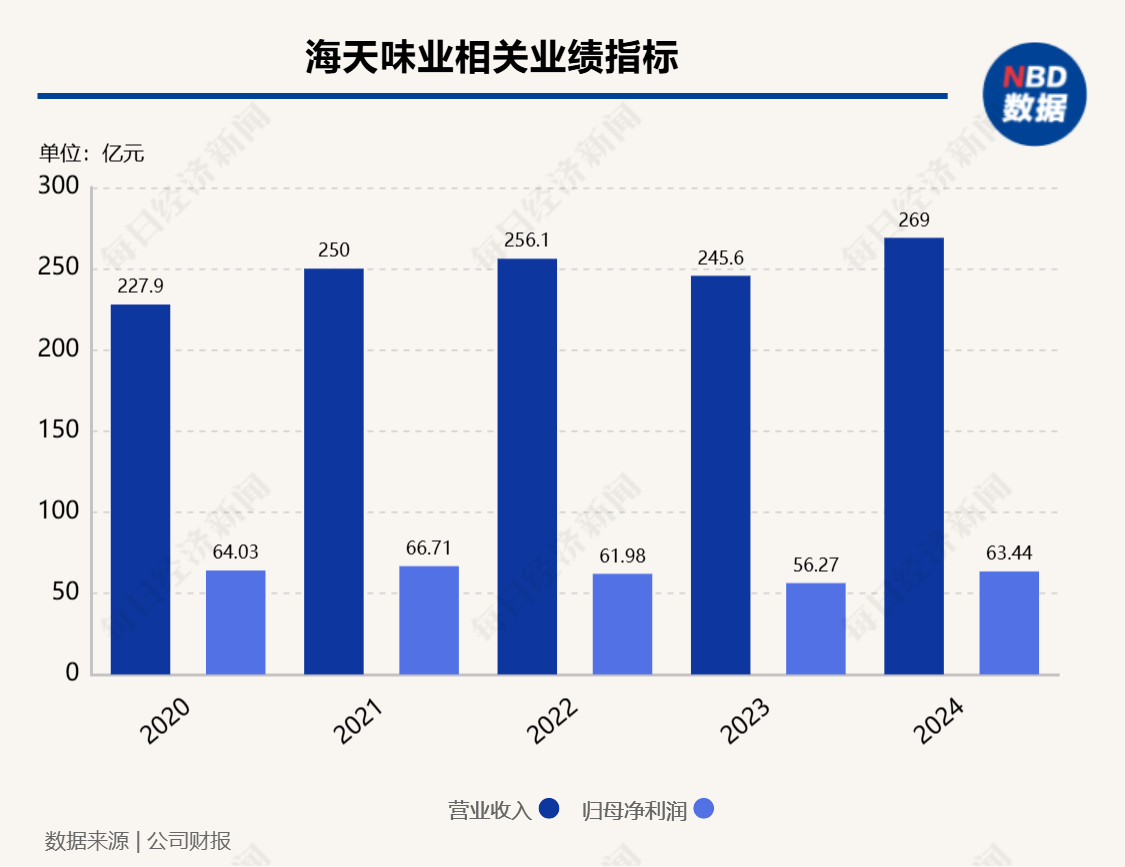
Core Viewpoint - Despite a significant decline in market capitalization, the company reported strong financial performance in 2024, indicating resilience in its core business operations [1][2]. Financial Performance - In 2024, the company achieved an operating revenue of 26.901 billion yuan, representing a year-on-year growth of 8.93% [2]. - The net profit attributable to shareholders was 6.344 billion yuan, up 12.75% year-on-year [2]. - The net assets attributable to shareholders reached 30.895 billion yuan, reflecting an 8.29% increase [2]. - The overall net profit margin was 23.63%, an increase of 0.65% compared to the previous year [2]. Revenue Breakdown - Soy sauce remained the most significant revenue contributor, generating 13.758 billion yuan, accounting for 51.14% of total revenue [3]. - Oyster sauce was the second-largest category with a revenue of 4.615 billion yuan, representing 17.16% of total revenue [3]. - Other categories generated 4.086 billion yuan, making up 15.19% of total revenue, with the highest growth rate of 16.75% year-on-year [3]. International Expansion - The company is accelerating its overseas market expansion, although the current overseas revenue proportion is still low [3]. - Other business income primarily includes sales of by-products and logistics services, with overseas sales conducted mainly through third-party distributors [3]. Regulatory Changes - The new "zero additives" regulation is seen as beneficial for industry standardization, and the company supports compliance with these new policies [4][5]. - The company plans to adapt its product offerings to meet the new standards while exploring new differentiation strategies [5]. Executive Compensation - The chairman's salary reached 9.1348 million yuan in 2024, a year-on-year increase of over 26%, marking the highest recorded salary in the company's history [5]. - Executive compensation is determined based on company performance, individual contributions, and responsibilities [5].
直击业绩会 | 净利润重回增长后,下个“锚点”是什么?海天味业总裁谈出海策略与“零添加”新规
Mei Ri Jing Ji Xin Wen· 2025-04-07 12:40
Core Viewpoint - Haitan Weiye has achieved a significant rebound in net profit growth, returning to double-digit growth for the first time in four years, indicating a recovery in its financial performance and market position [1][4]. Financial Performance - In 2024, Haitan Weiye reported a net profit of 6.344 billion yuan, a year-on-year increase of 12.75% [1][4]. - The company's operating revenue reached 26.901 billion yuan, reflecting a growth of 9.53% compared to the previous year [4]. - The gross profit margin increased by 2.47 percentage points to 38.62%, attributed to lower material procurement costs and improved cost control through technology [4]. Product and Channel Performance - Revenue from various product categories in 2024 included: soy sauce (13.758 billion yuan, +8.87%), seasoning sauce (2.669 billion yuan, +9.97%), oyster sauce (4.615 billion yuan, +8.56%), and other categories (4.086 billion yuan, +16.75%) [5]. - Offline channels generated 23.885 billion yuan in revenue, up 8.93%, while online channels saw a significant increase of 39.78%, reaching 1.243 billion yuan [5]. Global Expansion Strategy - Haitan Weiye is planning to pursue a Hong Kong IPO and aims for global expansion, focusing on markets with strong consumer bases and high demand for condiments [3][4]. - The company has established new subsidiaries in Hong Kong, Vietnam, and Indonesia, indicating a strategic move towards international trade and investment [5][6]. Regulatory Changes and Industry Trends - The recent regulatory changes regarding "zero additives" in food labeling have prompted Haitan Weiye to adapt its product marketing strategies, as the company supports the new regulations and plans to comply [6][9]. - The industry is experiencing a shift towards quality-price ratio competition, with consumers becoming more price-sensitive and preferring lower-priced products without compromising quality [10]. Product Innovation - Haitan Weiye has introduced a wide range of innovative products, including over 500 low-sugar or sugar-free products, more than 300 low-salt or reduced-salt products, and over 850 low-fat or fat-free products [10]. - The company emphasizes ongoing product iteration and innovation to enhance its competitive edge in the market [10].
标签新规之下:果汁“零添加”退热,“0糖”赛道迎机遇
Bei Ke Cai Jing· 2025-04-04 15:03
Core Viewpoint - The newly revised National Food Safety Standard prohibits the use of terms like "no additives" and "zero additives" on pre-packaged food labels, which will require beverage brands to modify their packaging within a two-year transition period [1][19]. Group 1: Regulatory Changes - The revised GB 7718-2025 standard disallows the emphasis on terms such as "no additives" or "zero additives" in food labeling [1][19]. - Beverage brands currently using these terms, such as "0 added color" and "0 added preservatives," will need to change their packaging to comply with the new regulations [1][19]. Group 2: Market Impact - The juice segment has been particularly affected, with many products, including those from Dazhong Supermarket and Mickey brand, prominently displaying "0 added preservatives" [4][12]. - Companies like Jiaozao City Mickey Food and Beverage Co. have products labeled with "0 added preservatives," which will need to be revised under the new standard [8][12]. Group 3: Industry Response - Beverage companies are already taking steps to comply with the new regulations, with some indicating they are researching the relevant guidelines and planning packaging changes during the two-year transition [13][19]. - Industry experts believe that the prohibition of misleading terms will encourage producers to focus on improving product quality through innovation rather than relying on label claims [19][21]. Group 4: Nutritional Claims - The new regulations do not affect the labeling of "0 sugar," "0 fat," and similar nutritional claims, which are governed by different standards [20][22]. - The distinction between "0 sugar" and "0 added sugar" is emphasized, as the latter does not imply the absence of other types of sugars [20][21]. Group 5: Future Trends - The beverage industry is expected to continue focusing on health-oriented products, with an increasing number of companies integrating health concepts into product development [23].

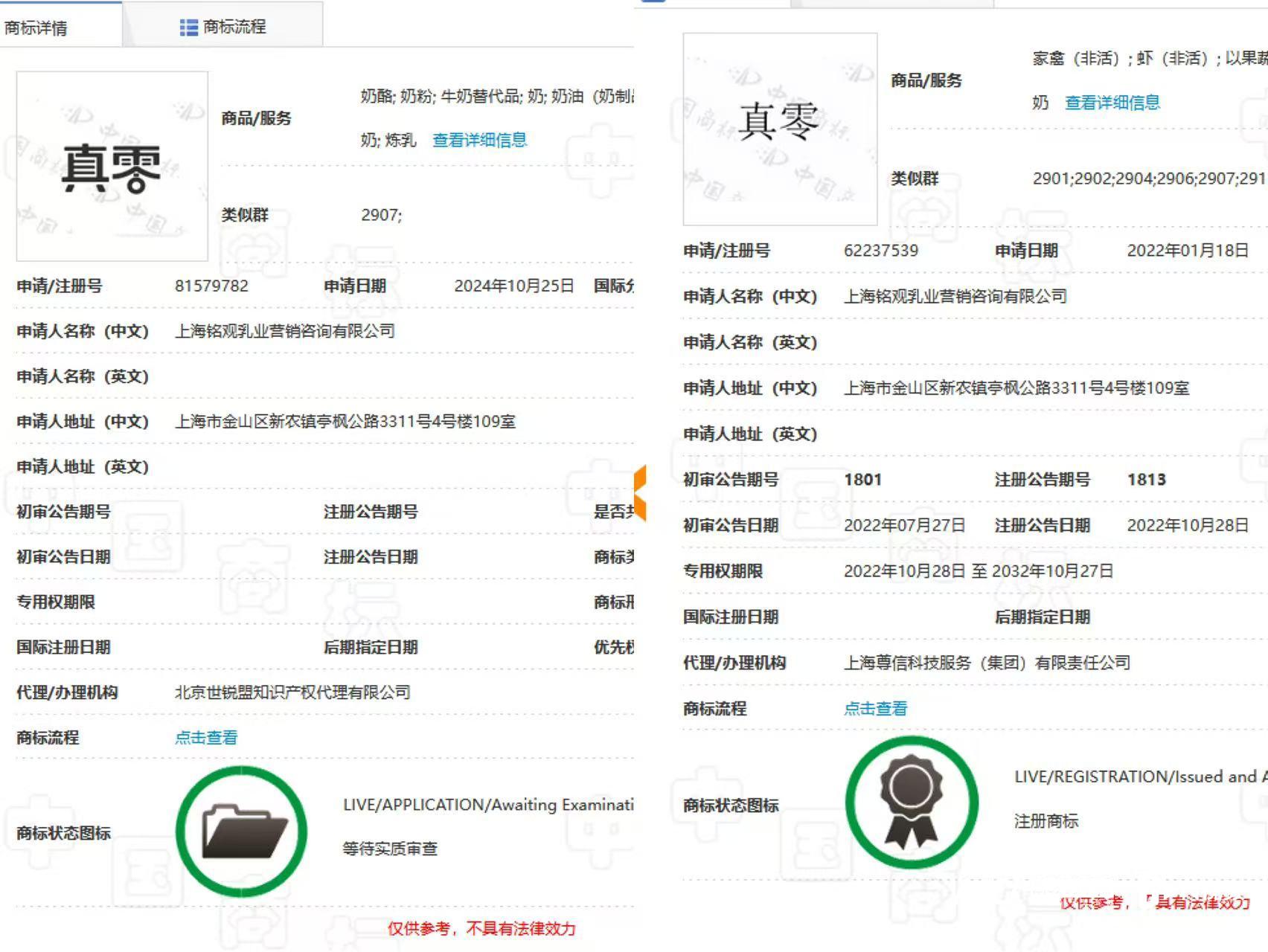
真零酸奶的“真零”是注册商标?悠纯乳业:零添加糖,不更名
Nan Fang Du Shi Bao· 2025-04-02 09:56
Core Viewpoint - The recent trademark disputes involving "Zhenling" yogurt from Youchun Dairy have raised concerns, particularly regarding the use of terms like "zero" and "no added sugar" in product marketing, especially in light of new national standards prohibiting such claims starting March 16, 2027 [1][12]. Trademark Registration and Company Background - Youchun Dairy's "Zhenling" yogurt has applied for multiple trademarks, including "Zhenling," "zero," and "no sugar added," with one "Zhenling" trademark successfully registered among 65 food category trademarks [2][6]. - The brand is associated with Shanghai Mingguan Dairy Marketing Consulting Co., which was founded in 2003, and co-founder Luo Xing holds a 30% stake in the company [2][6]. Regulatory Changes and Industry Impact - A new national standard (GB 7718-2025) prohibits the use of terms like "zero added" and "no added" for prepackaged foods, set to take effect in 2027, allowing companies a two-year adjustment period [12][13]. - Industry experts argue that the overemphasis on "no additives" can mislead consumers and disrupt market order, as most foods cannot be completely free of additives [12]. Company Position and Marketing Strategy - The founder of "Zhenling" yogurt has stated that "zero" signifies the company's zero tolerance for sugar and additives, promoting a clean ingredient list [8][12]. - Despite the new regulations, Youchun Dairy has indicated that it will not change the brand name "Zhenling," and customer service has stated that the product contains only milk and probiotics [1][12]. Legal Considerations - Legal experts suggest that if "Zhenling" yogurt does not prominently advertise "zero added" claims, it may not violate the new regulations, provided that the product does not contain the corresponding ingredients [13].