关税战

Search documents
炸了!美国数据一出炉,特朗普坐立难安!美专家已发出严厉警告
Sou Hu Cai Jing· 2025-08-04 04:57
Group 1 - The U.S. labor market shows signs of weakness, with non-farm payrolls adding only 73,000 jobs in August, significantly below the expected 110,000, marking the lowest figure since October of the previous year [1] - The Labor Department revised down the job numbers for May and June, reducing them by a total of 258,000 jobs, which contributed to an increase in the unemployment rate from 4.1% to 4.2% [1] - The federal government has been cutting jobs, with 12,000 positions eliminated in July alone, totaling 84,000 job cuts for the year [1] Group 2 - Analysts have noted that the current economic state is characterized by stagnation, with no hiring or layoffs occurring, described as "half-dead" [2] - The significant job cuts in federal agencies, including over 80,000 positions in the Department of Education, have contributed to the employment decline [4] - The cumulative downward revision of non-farm payroll data since 2023 has exceeded 1.7 million jobs, raising concerns about the accuracy of previous employment reports [4] Group 3 - Investor Jim Rogers has expressed extreme pessimism about the U.S. economy, warning of an impending "great crisis" due to the massive national debt [9] - Rogers draws parallels between the current U.S. situation and the historical debt crisis faced by the UK in 1976, emphasizing the importance of debt repayment [9] - He believes the prolonged bull market in U.S. stocks, which has lasted since 2009, is unsustainable and warns of a severe downturn when the market eventually corrects [9] Group 4 - Rogers has shifted his investment focus away from U.S. stocks, holding only stocks from China, which he views as a rapidly rising global power with significant potential, particularly in tourism [8][12] - He highlights the importance of China's Belt and Road Initiative, suggesting it will reshape global economic and political landscapes [8]

杨德龙:全面解析下半年市场走势与投资机会
Xin Lang Ji Jin· 2025-08-04 03:13
Group 1 - The market experienced fluctuations in August after a strong rally in July, with the Shanghai Composite Index recovering key levels of 3500 and 3600 points, indicating a long-term bullish trend has begun [1] - The structural bull market is supported by policies aimed at stabilizing economic growth, with expectations of more proactive fiscal policies and potential interest rate cuts in the second half of the year [1][2] - The low interest rate environment is expected to benefit capital markets, with a stable liquidity situation and a positive outlook for economic recovery [3] Group 2 - There is a significant divergence in consumer performance, with new consumption brands showing strong growth while traditional sectors like liquor and food are underperforming due to declining income growth [4] - The "anti-involution" policy aims to reduce overcapacity in various industries, which could improve competitiveness and benefit leading companies in sectors like new energy vehicles and photovoltaics [5][6] - The U.S. trade war initiated by Trump has negatively impacted global trade growth and the U.S. economy, creating a challenging environment for companies reliant on international markets [7] Group 3 - The recent strong performance of U.S. tech stocks contrasts with warnings from prominent investors about potential market bubbles and high valuations, indicating a cautious outlook for the second half of the year [9] - The international gold price has shown volatility, but long-term trends suggest significant potential for price increases due to rising dollar issuance and geopolitical instability [10][11]
新一轮关税“基本已定不作调整” 美最新表态下暗藏怎样的套路公式?
Yang Shi Xin Wen· 2025-08-04 00:28
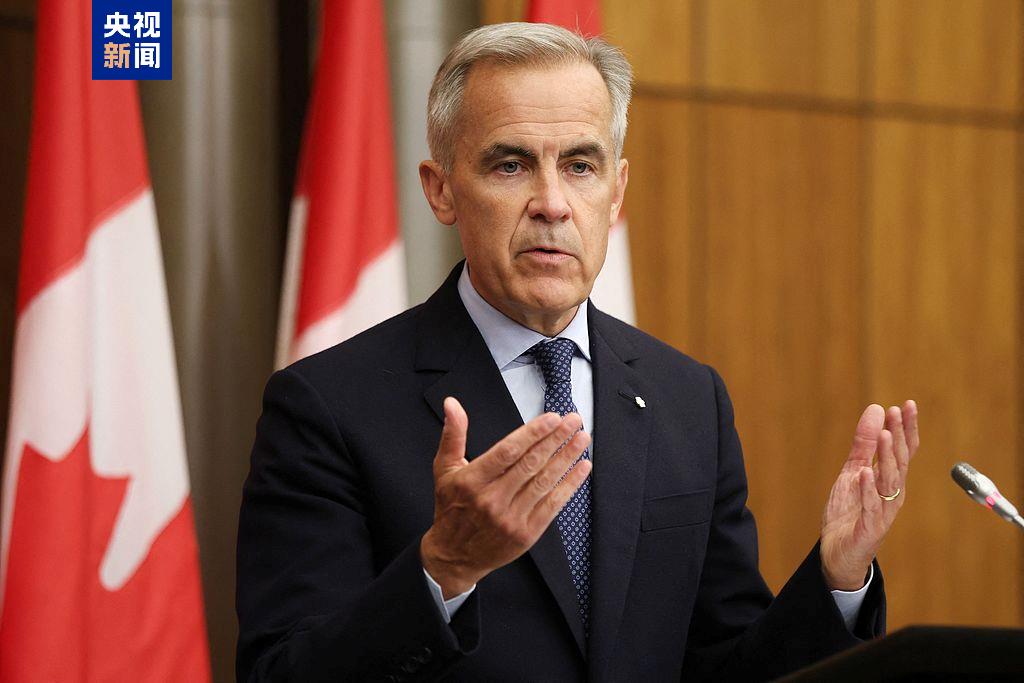
随着8月1日这个美国政府单方面设定的"关税大限"到来,这场搅乱世界4个月的"关税风暴"似乎又到了一个转折点。当地时间8月3日,美国贸易代表格里尔 表示,"特朗普总统上周对多国加征的新一轮关税'基本已定',不会在当前谈判中作出调整。" "承认巴勒斯坦国"成加税理由 在所有混乱中,最令人意外的是美国对加拿大挥出重锤,将关税从25%提高至35%。 △加拿大总理卡尼(资料图) 在外界看来,加拿大宣称将有条件承认巴勒斯坦国是美国对其"下狠手"的导火索。 △美国总统特朗普在社交媒体发文 加拿大总理卡尼7月30日表示,加拿大打算在2025年9月举行的第80届联合国大会上承认巴勒斯坦国。卡尼讲话刚结束,特朗普立刻在社交媒体上回应 称:"加拿大宣布支持巴勒斯坦建国。这将使我们很难与他们达成贸易协议。"此后不到24个小时内,他就签署了对加拿大加征关税的行政令。 △加拿大魁北克省蒙特利尔港 美国4月2日宣布对全球发起"对等关税",在暂缓90天后,又被推迟至8月1日实施。在这场席卷全球的关税战中,"几家欢喜几家愁"的戏码,不断在全球各地 上演。 伦敦政治经济学院研究员菲利普·勒格兰称,"我们将会看到一场全球贸易战。这最终会导致混乱以 ...
韩国也签了,特朗普发现扎心事实:绕开中国,全是“顺风局”
Sou Hu Cai Jing· 2025-08-03 09:52
Core Viewpoint - South Korea has signed a new trade agreement with the United States under pressure, indicating a shift in strategy to avoid China and maintain a competitive edge in global trade [1][3]. Trade Agreement Details - The agreement includes a 15% tariff imposed by the U.S. on South Korean goods, while South Korea commits to opening its market for more U.S. products, particularly in the automotive and agricultural sectors [3]. - South Korea is required to invest $350 billion in "controllable" funds in the U.S. and purchase $100 billion worth of energy products, mainly natural gas [3]. - Unlike agreements with Japan and the EU, the U.S. tariff is based on a "reciprocal tariff" framework, and South Korea is explicitly prohibited from retaliatory tariffs against U.S. goods [3]. Political Context - South Korean President Lee Jae-myung, who campaigned on a pro-China platform, faces significant domestic opposition due to the trade agreement, as it contradicts his earlier promises to improve relations with China [5]. - The decision to negotiate with the U.S. was influenced by the geopolitical situation, including the presence of U.S. troops in South Korea and the unstable inter-Korean relations [7]. Strategic Implications - The U.S. has recognized that bypassing China allows it to gain more leverage in global trade, as evidenced by the recent agreements with South Korea, Japan, and the EU [9][11]. - Following the agreement with South Korea, the U.S. has begun to exert pressure on India, demanding a 25% tariff and imposing additional sanctions related to military cooperation with Russia [11].
要收网了!中美谈判失利后,美国迅速调整印度韩国关税策略
Sou Hu Cai Jing· 2025-08-03 09:52
Group 1 - The core viewpoint is that the trade negotiations between China and the United States have not made substantial progress, with the possibility of increasing tariffs on China to triple digits being mentioned by the U.S. negotiation team [1] - China has responded firmly, indicating a willingness to negotiate but also readiness to retaliate if necessary, emphasizing an open-door policy for talks [3] - The U.S. appears to be unwilling to make significant concessions in the negotiations, aiming to maintain its position as a major global economic power [4] Group 2 - On July 30, President Trump announced a 25% tariff on Indian goods starting August 1, citing India's unfair trade practices as the reason for this punitive measure [6][8] - Trump also announced a new trade agreement with South Korea, which includes a 15% tariff on South Korean goods, with South Korea expected to invest $350 billion in the U.S. [10][11] - The U.S. strategy of applying different tariff levels to neighboring countries like India and South Korea is seen as a way to control these nations and prevent them from distancing themselves from U.S. trade policies [13] Group 3 - The current tariff strategy indicates that the U.S. offers the lowest tariffs to the UK at 10%, followed by the EU, Japan, and South Korea at 15%, while countries like India are at 25% [15] - It is suggested that the reasonable bottom line for U.S.-China negotiations could be around a 20% tariff, which would facilitate smoother discussions if China agrees [15] - The U.S. President's strategic approach reflects a calculated plan to maintain leverage over China while managing relationships with neighboring countries [17]
中美稀土大战刚暂停,特朗普又收噩耗,又一稀土大国对美“宣战”
Sou Hu Cai Jing· 2025-08-03 05:02
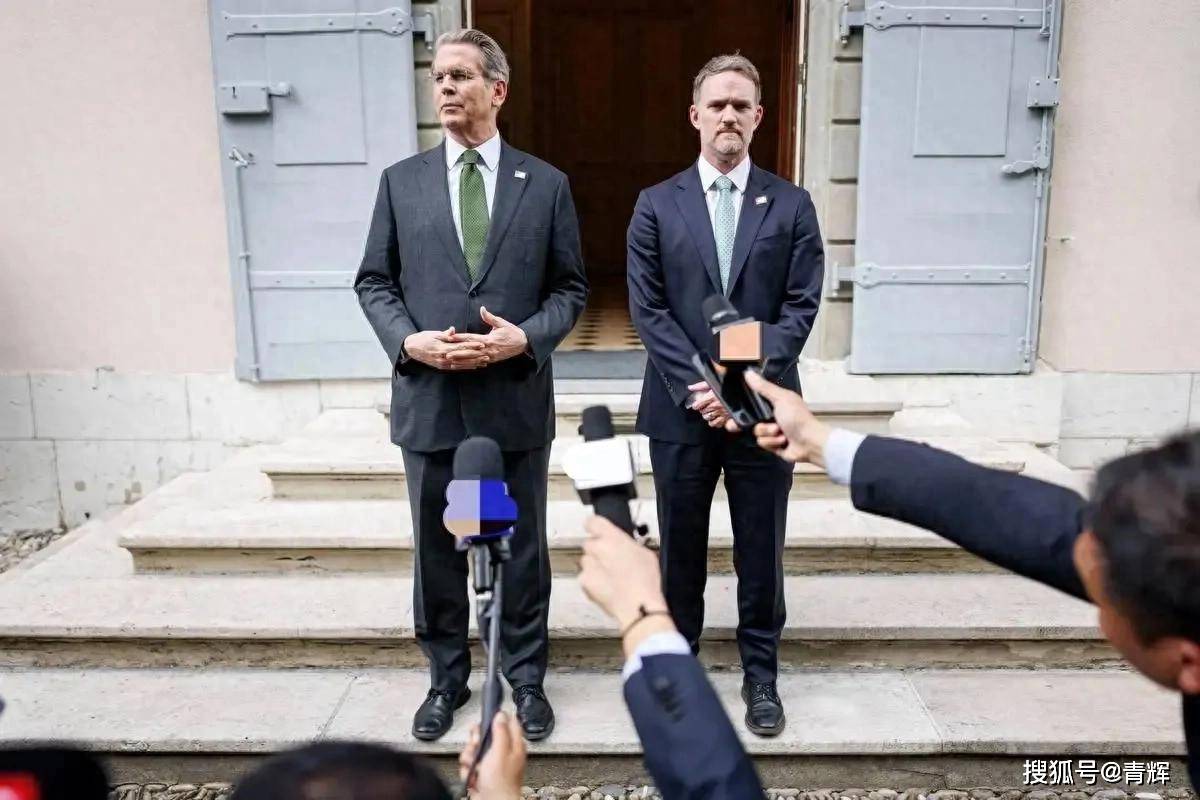
Group 1 - The core viewpoint of the article highlights the ongoing tensions in US-China trade relations, particularly focusing on the recent negotiations in Stockholm where both sides are trying to maximize their national interests despite a seemingly cordial atmosphere [1][9]. - The article discusses the implications of Brazil's strong stance against US tariffs, particularly in the context of its significant rare earth resources, which are crucial for various industries [15][18]. - It emphasizes the strategic partnership between China and Brazil, especially in the context of trade and rare earth resources, suggesting that US actions may inadvertently strengthen this alliance [22][24]. Group 2 - The article notes that the US has increased tariffs on Brazilian goods, which could lead to retaliatory measures from Brazil, potentially impacting the supply of rare earth materials to the US [11][15]. - It mentions that Brazil's manufacturing sector heavily relies on the US market, indicating a complex interdependence that could be disrupted by escalating trade tensions [16]. - The article also points out that the US's unilateral actions may not only harm its relations with Brazil but could also have broader implications for its trade relationships with other countries, including China [20][27].
厄瓜多尔经济学家:美国发动关税战损人不利己
Sou Hu Cai Jing· 2025-08-02 19:40
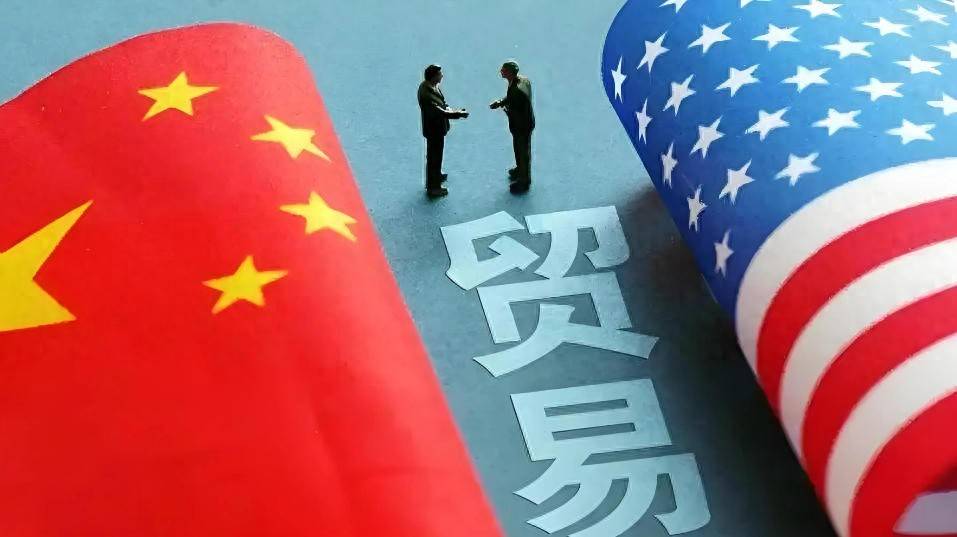
Core Viewpoint - The trade war initiated by the United States is described as an outdated and misguided economic policy that harms trade partners while weakening domestic purchasing power, leading to a "lose-lose" situation and increasing uncertainty in the global economy [1] Group 1: Impact on Trade Partners - The new tariffs imposed by the U.S. will significantly impact bilateral trade between Ecuador and the U.S., with Ecuadorian shrimp products losing their competitive advantage in the U.S. market due to the new 15% tariff [1] - The trade war not only affects exporting countries but also has repercussions for importing countries, resulting in a dual loss scenario [1] Group 2: Effects on U.S. Economy - The trade war is expected to weaken the international competitiveness of the U.S. and systematically undermine the global economic influence built over the past century [1] - Increased tariffs will lead U.S. consumers to pay more for the same goods, thereby reducing their purchasing power [1] Group 3: Global Economic Uncertainty - The overall decline in U.S. consumer capacity will compel exporters to redirect their products to other countries, which may lead to an increase in global supply and a subsequent drop in prices, impacting the global supply chain [1] - The trade war is characterized as having no winners, only numerous victims across the global economy [1]
突发!特朗普最新发声,美股美元都崩了,亚马逊市值蒸发超1万亿元!金价飙升,油价大跌!“对等关税”又来,诺奖得主:真正愚蠢
Sou Hu Cai Jing· 2025-08-01 15:05
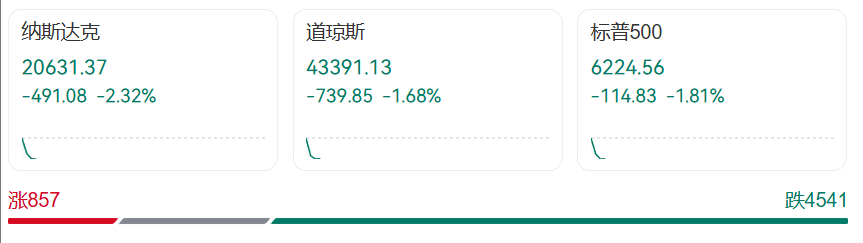
美股崩了! 当地时间8月1日,美股三大股指全线下跌。截至发稿,道指跌1.6%,纳指跌超2.3%,标普500指数跌超1.8%。全市超4500股下跌。 7月31日,美国总统特朗普签署行政命令,对多个国家和地区征收10%至41%不等的"对等关税",并将生效期从8月1日推迟至8月7日。 除了"对等关税"外,特朗普曾预告将在未来几周推出药品、半导体、关键矿产及其他重要工业产品的单独关税,所以贸易不确定性风险料将持续存在。同 时,美国法院还在评估"对等关税"本身的合法性。 亚马逊市值蒸发超万亿元 美元闪崩,金价狂飙,油价大跌 8月1日,美股科技七巨头全线跳水,亚马逊一度跌超7%,市值蒸发1780亿美元(约合人民币1.28万亿元),英伟达跌超3%,市值蒸发超1400亿美元(约 合人民币1万亿元),Meta、特斯拉跌超2%,谷歌、微软、苹果均下跌。 美元指数闪崩,短时间内连续跌破100、99两大整数关口。 | 国际油价大跌,WTI和布伦特原油期货均跌超1.8%。 | | --- | 与此同时,国际金价直线拉升,纽约黄金期货涨超1.5%,站上3400美元。 金融咨询机构Camarco的Kim Heuacker解读称:"下周随着 ...




受益“国补政策”,苹果中国市场回暖,新财季营收创近年新高
Nan Fang Du Shi Bao· 2025-08-01 12:39
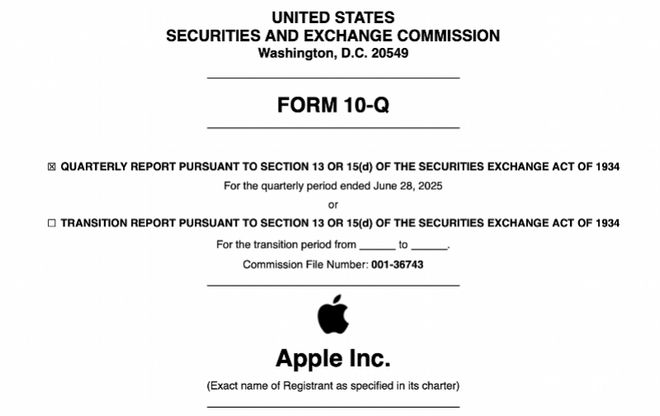
Core Viewpoint - Apple Inc. reported its third-quarter earnings for fiscal year 2025, achieving total revenue of $94.04 billion, a 10% year-over-year increase, significantly surpassing market expectations of $89.53 billion [1][4]. Revenue Performance - Total revenue for the third quarter reached $94.04 billion, with a net profit of $23.43 billion, reflecting a 9% year-over-year increase [4][9]. - Hardware product lines, including iPhone, Mac, iPad, and wearables, contributed to the growth with net sales of $66.61 billion, up 8.2% year-over-year [4][9]. - iPhone sales alone generated $44.58 billion, marking a 13.5% increase compared to the previous year [4][9]. Regional Performance - Revenue from Greater China increased from $14.728 billion in the same quarter last year to $15.369 billion, a 4% year-over-year growth, marking the first positive growth in two years [3][8]. - The Americas segment reported revenue of $41.198 billion, up from $37.678 billion year-over-year, while Europe and Japan also saw increases in revenue [7]. Product Line Insights - The Mac segment saw revenue rise to $8.046 billion, a nearly 15% increase from $7.009 billion year-over-year, driven by the adoption of Apple’s self-developed chips [8]. - However, iPad and wearables experienced declines, with iPad sales down 8.1% to $6.58 billion and wearables, home, and accessories revenue down 8.6% to $7.4 billion [9]. Services and Costs - Services revenue reached $27.423 billion, a 13% year-over-year increase, exceeding analyst expectations [9]. - Total cost of sales for the third quarter was $50.318 billion, up 9% from $46.099 billion year-over-year, while total operating expenses rose to $15.516 billion from $14.326 billion [9]. Future Outlook - Apple is expected to face increased tariff costs, with an estimated $1.1 billion impact in the upcoming quarter due to ongoing trade tensions [10]. - The upcoming iPhone 17 series is anticipated to see price increases of approximately $50 across all models due to these tariff impacts [10]. - There are high expectations for Apple's future foldable iPhone, with projections of selling 10 to 15 million units by 2027, potentially generating $65 billion in revenue by 2029 [11].

美国对中国实施网络攻击,中方回应
证券时报· 2025-08-01 08:57
Group 1 - The article highlights the recent allegations by the China Cybersecurity Association regarding the U.S. government's cyber attacks on China, using countries like Germany, South Korea, Singapore, and the Netherlands as platforms for these attacks [1][3] - It mentions that in 2024, foreign state-level APT organizations are expected to conduct over 600 cyber attack incidents against important Chinese entities, targeting critical information infrastructure and significant information systems [1][3] - The spokesperson emphasizes that the U.S. is the primary cyber threat to China and criticizes the U.S. for its hypocritical stance on cybersecurity [3] Group 2 - The article discusses China's consistent opposition to the imposition of tariffs by the U.S., stating that trade wars have no winners and that protectionism harms the interests of all parties involved [3] - It also addresses the recent U.S. sanctions against Palestinian officials and organizations, expressing China's shock and disappointment at the U.S. disregard for international efforts towards peace [3][4] - The spokesperson reiterates China's support for the Palestinian people's legitimate rights and calls for a fair and responsible approach from the international community, particularly the U.S., in resolving the Palestinian issue [4]