
战略性新兴产业

Search documents
前沿生物药物研发最高可奖4800万元
Si Chuan Ri Bao· 2025-12-04 22:51
Group 1 - The core viewpoint of the article is the introduction of the "1+9" industrial development support policy in Chengdu's Jinniu District, aimed at providing substantial financial support to enterprises and stimulating operational vitality [1] - The "1+9" policy includes a main policy document and nine specific policies targeting advanced manufacturing, technological innovation, urban cultural tourism, commerce, healthcare, and rail transit [1] - High-intensity support is provided for cutting-edge sectors and strategic emerging industries, with rewards of up to 48 million yuan for biopharmaceutical research and up to 10 million yuan for quantum technology projects [1] Group 2 - The policy enhances the "no application, immediate enjoyment" ratio, allowing companies to receive funds directly without the need for proactive applications, with significant rewards for new stores [1] - The policy also encourages industrial clustering, offering rewards for industrial parks that gather more than ten rail transit companies and for projects recognized at the municipal level [2]

学习规划建议每日问答丨如何理解优化高校布局、分类推进改革、统筹学科设置
Xin Hua She· 2025-12-04 13:34
Core Viewpoint - The proposal from the Central Committee emphasizes the need to optimize the layout of higher education institutions, advance reforms in a categorized manner, and coordinate discipline settings to better serve national strategies and adapt to economic and social development requirements [1][2]. Group 1: Higher Education Development - The level of higher education development is a significant indicator of a country's development level and potential, with China having the largest scale of higher education globally, reaching a total enrollment of 48.46 million and a gross enrollment rate of 60.8% in 2024 [2]. - Despite the achievements, there are challenges in the layout, types, structure, and levels of higher education that do not fully meet the needs of modernization in China [2]. Group 2: Optimizing Higher Education Layout - Optimizing the layout of higher education is crucial for enhancing its support capabilities for national strategies and economic development, as well as promoting regional coordinated development [3]. - New schools that are strategically needed should be established, focusing on science, engineering, agriculture, and medical fields, while also strengthening application-oriented undergraduate institutions [3]. Group 3: Categorized Reform Advancement - The diverse demands for talent in economic and social development necessitate a categorized approach to higher education reform, promoting differentiated and high-quality development [4]. - A classification management and evaluation mechanism should be established to support various types of institutions based on their specific functions and contributions [4]. Group 4: Coordinating Discipline Settings - Disciplines are fundamental to the higher education system and are essential for moral education and technological innovation, requiring a responsive mechanism to meet the demands of emerging industries [5]. - There is a need to enhance support for basic disciplines, cultivate emerging and interdisciplinary fields, and optimize existing disciplines to strengthen innovation capabilities [5].
国家航天局设立商业航天司,有何信号?
Mei Ri Jing Ji Xin Wen· 2025-12-04 13:07
针对上述问题,《每日经济新闻》记者采访了相关专家和企业。 近期,国家航天局设立商业航天司,相关业务正在逐步开展,这标志着我国商业航天产业迎来专职监管 机构,未来将持续推动我国商业航天高质量发展,产业链有望全线受益。 当下,国家航天局专门设立"商业航天司"释放出什么政策信号?背后有何深意?设立商业航天司有什么 作用?商业航天司的设立将给整个行业发展带来哪些影响?新机构的设立将如何重塑"国家队"(航天科 技、航天科工等)与纯商业航天公司之间的关系? 释放多重信号 当下,国家航天局专门设立"商业航天司"释放出什么政策信号? 对此,中国电子信息产业发展研究院商业航天研究中心执行副主任杨柯巍在接受《每日经济新闻》记者 书面采访时表示,首先,从整体政策和机构设置的延续性看,近几年,中央反复强调要围绕新质生产 力,一以贯之推进重点领域和关键环节的机构职能优化和调整,适度加强重点领域和重要工作。 "比如,2024年底国家发展改革委新设'低空经济发展司',就是针对'低空经济'这一新质生产力特征突出 的重点产业适度加强职能配置。"杨柯巍表示,商业航天已被中央经济工作会议和政府工作报告多次"点 名",新设商业航天司,本质上也是在不 ...
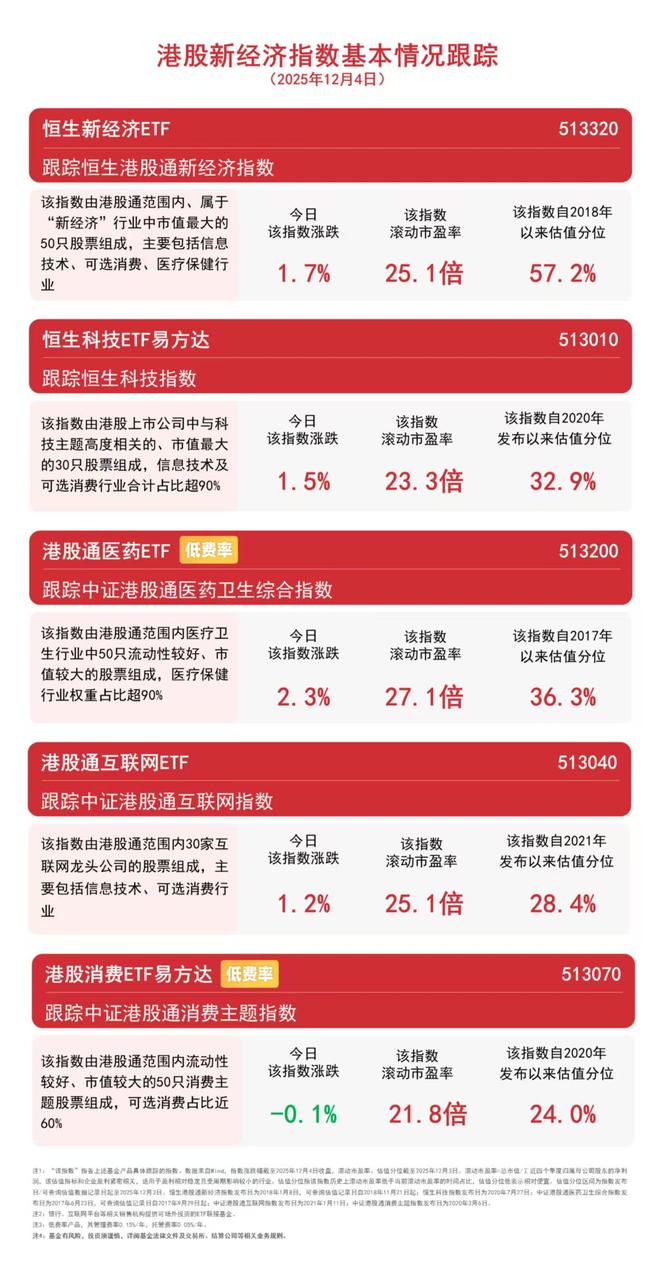
港股午后拉升,恒生科技ETF易方达(513010)、港股通互联网ETF(513040)受资金关注
Mei Ri Jing Ji Xin Wen· 2025-12-04 10:54
Market Performance - The Hong Kong stock market saw a rise in the afternoon, with sectors such as semiconductors, hardware equipment, and pharmaceuticals leading the gains [1] - The CSI Hong Kong Stock Connect Healthcare Index increased by 2.3%, the Hang Seng Stock Connect New Economy Index rose by 1.7%, the Hang Seng Technology Index went up by 1.5%, and the CSI Hong Kong Stock Connect Internet Index gained 1.2% [1] - The CSI Hong Kong Stock Connect Consumer Theme Index experienced a slight decline of 0.1% [1] Fund Inflows - According to Wind data, the Hang Seng Technology ETF (513010) and the Hong Kong Stock Connect Internet ETF (513040) saw net inflows of 620 million yuan and 190 million yuan, respectively, over the past week [1] Strategic Insights - CITIC Securities highlighted that the "14th Five-Year Plan" emphasizes the construction of a modern industrial system and accelerating high-level technological self-reliance, which may lead to new policy support for strategic emerging industries such as new energy, new materials, aerospace, and quantum technology [1] - Looking ahead to 2026, the Hong Kong stock market is expected to benefit from the internal catalysts of the "14th Five-Year Plan," with recommendations for investors to focus on investment opportunities in AI-related sectors and consumer electronics [1]

中粮科技:拟投资8.8亿,建设平凉25万吨/年淀粉糖及1万吨/年阿洛酮糖新建项目
合成生物学与绿色生物制造· 2025-12-04 08:11
Core Insights - The article discusses the recent announcement by COFCO Technology regarding a new investment project aimed at expanding its starch sugar production capacity and entering the functional sugar market [1][2]. Project Progress - COFCO Technology plans to invest 880 million yuan to construct a new facility in Pingliang, Gansu Province, with a production capacity of 250,000 tons/year of starch sugar and 10,000 tons/year of D-alloheptulose [1]. - The construction period for the project is set to be 20 months from the board's approval to trial production [1]. - The project will include various facilities such as starch sugar workshops, D-alloheptulose workshops, bottling workshops, wastewater treatment systems, and finished product warehouses [1]. Strategic Importance - This project aligns with COFCO Technology's "14th Five-Year" development strategy and aims to fill the gap in the starch sugar market in the northwest region of China [2]. - The development of D-alloheptulose products is seen as a key direction for COFCO Technology to cultivate new productive forces and expand into strategic emerging industries [2]. Financial Performance - In Q3 2025, COFCO Technology reported a revenue of 4.449 billion yuan, a year-on-year decrease of 14.65%, and a net loss attributable to shareholders of 28.06 million yuan, an increase of 45.91% compared to the previous year [3]. - For the first three quarters of 2025, the company achieved a revenue of 13.262 billion yuan, down 12.31% year-on-year, while the net profit attributable to shareholders was 79.186 million yuan, a significant increase of 724.42% [3].

族兴新材北交所IPO过会:深耕战略性新材料赛道,铸就全球竞争力
Sou Hu Cai Jing· 2025-12-04 02:00
Core Viewpoint - Zuxing New Materials is set to enter the capital market following the successful review of its IPO application, leveraging its core technology in fine spherical aluminum powder and aluminum pigment products to capitalize on growth opportunities in strategic emerging industries [2][4]. Company Overview - Established in 2002, Zuxing New Materials is one of the earliest companies in China to engage in the research and production of fine spherical aluminum powder, with its products widely used in automotive coatings, new energy, military aerospace, electronic pastes, and refractory materials [4]. - The company has an annual production capacity of 25,000 tons for fine spherical aluminum powder and 6,400 tons for aluminum pigments, ranking among the top domestic enterprises [4]. - Zuxing New Materials holds 89 authorized patents, including 48 invention patents, and has established significant industry standards, enhancing its influence in the market [6]. Technological Advantages - The company has developed seven core technologies that cover the entire aluminum pigment industry chain, allowing for precise control of production processes to meet customer needs [4][6]. - Zuxing New Materials has successfully broken the monopoly of large multinational corporations in high-end products, achieving large-scale production of advanced aluminum pigments [6]. Market Positioning - The company adopts a "mid-to-high-end + differentiation" competitive strategy, focusing on high-value-added markets while avoiding the oversaturated low-end market [7]. - Its aluminum silver powder products rank second in the domestic powder coating industry, with water-based aluminum pigments reaching international advanced levels [7]. Fundraising and Growth Strategy - The IPO aims to raise 208 million yuan, which will be allocated to three strategic projects to enhance production capacity and product performance [8]. - The market for fine spherical aluminum powder is expected to grow steadily, with domestic production projected to reach 103,000 tons in 2024 [8]. Sustainability Initiatives - Zuxing New Materials is committed to green manufacturing, with its aluminum silver powder products aligning with the industry's low-carbon transformation trends [9]. - The company is also exploring applications in agriculture and self-heating materials, contributing to sustainable development [9]. Future Outlook - The successful IPO marks a new development phase for Zuxing New Materials, positioning it to expand production capacity, optimize product structure, and explore new applications in strategic industries [9].

观察:将“通关流量”转化为“产业经济” 口岸经济激发新动能
Zheng Quan Shi Bao Wang· 2025-12-03 23:41
Core Insights - The interaction between residents of Shenzhen and Hong Kong has intensified, with cross-border consumption becoming a daily routine rather than an occasional activity [1] - Shenzhen's port authority reported that as of November 23, 2025, the total number of travelers crossing the Shenzhen port exceeded 240 million, surpassing the total for 2024 and achieving this milestone 38 days earlier than the previous year [1] - The newly released measures from the Luohu District aim to transform the significant "cross-border flow" into tangible "industrial economy" [1] Group 1: Economic Measures - The Luohu District has introduced the first set of measures in Shenzhen to promote high-quality development of the port economy, focusing on creating a unique economic zone that integrates trade, inbound consumption, demonstration, and talent exchange [1] - The measures include 12 initiatives across four areas: industrial development, cross-border consumption, technological innovation, and cultural exchange [2] Group 2: Technological Innovations - The measures aim to establish the port economy as a "testing ground" for strategic emerging industries, proposing the development of AI digital humans and promoting services like biometric recognition and smart guidance [2] - Initiatives include trials for autonomous taxis, cross-border unmanned buses, and unmanned cargo transport [2] Group 3: Logistics and Transportation - The Wenjindu port has initiated drone logistics delivery, expanding applications for cross-border express delivery and emergency supplies [2] - Development of high-value low-altitude transportation for medical cold chains and fresh produce is also highlighted, along with optimizing "low-altitude flower tours" to create a new model integrating low-altitude, cultural tourism, and commerce [2] Group 4: Regional Integration - The integration of Shenzhen and Hong Kong is driving the flow of people, goods, and information, with the port economy channeling cross-border flow into consumption, tourism, and daily life [2] - This integration is not merely additive but represents a deep restructuring of the industrial chain, showcasing Shenzhen's innovative approach to exploring high-quality development paths for the port economy [2]
中国银行:以金融之力服务实体经济,助力现代化产业体系建设
Ren Min Ri Bao· 2025-12-03 21:52
Core Viewpoint - The 20th Central Committee of the Communist Party of China emphasizes the construction of a modern industrial system and the strengthening of the real economy, with China Bank aligning its services to support these national development goals [1] Group 1: Support for Traditional Industries - China Bank is increasing resource investment and optimizing financial services to promote the transformation and upgrading of traditional industries towards high-end, intelligent, and green development [2] - As of Q3 2025, the loan balance for advanced manufacturing in traditional industries is nearly 600 billion, while high-tech manufacturing loans amount to nearly 700 billion [2] - The bank has signed over 350 billion in equipment renewal projects, with loan disbursements exceeding 130 billion, supporting traditional industries' transformation [2] - China Bank is actively supporting the petrochemical industry's upgrade projects and has successfully provided fixed asset loans for equipment renewal to a major industrial enterprise in Jiangxi [2][3] Group 2: Support for Emerging Industries - China Bank is focusing on the development of strategic emerging industries, with loans for these sectors exceeding 3 trillion, reflecting a continuous increase in their proportion of total loans [4] - The bank supports the aerospace sector through a "loan-equity linkage" model, aiding Blue Arrow Aerospace in achieving key technological breakthroughs [4] - In the semiconductor sector, China Bank has tailored financial service plans for Jiangxi Zhao Chi Semiconductor Co., providing comprehensive support for their R&D and project construction [5] Group 3: Infrastructure Development - China Bank is deeply involved in major cross-regional infrastructure projects, particularly in the Guangdong-Hong Kong-Macao Greater Bay Area and the Yangtze River Delta [6] - The bank's loan balance for infrastructure exceeds 4.5 trillion, with over 1.8 trillion allocated to major transportation infrastructure [6] - China Bank has provided significant financial support for key projects like the Hong Kong-Zhuhai-Macao Bridge and the Shenzhen-Zhongshan Channel [6] Group 4: Cross-Border Financial Services - China Bank is leveraging its cross-border financial capabilities to support Chinese enterprises in undertaking significant overseas infrastructure projects, including financing for a light rail project in Mexico [7] - The bank is committed to integrating its development with the construction of a modern industrial system, aiming to provide high-quality financial services and innovative products [7]

一级市场热闹起来了
母基金研究中心· 2025-12-03 09:00
Core Insights - The article highlights the recent surge in the establishment of large-scale funds in the primary market, particularly focusing on social security and strategic emerging industries [1] Group 1: Social Security Innovation Funds - Two major social security innovation funds have been established, each with an initial scale of 500 billion yuan, aimed at supporting strategic emerging industries and high-quality development [2][3] - The Jiangsu Social Security Innovation Fund, initiated on October 31, 2023, will focus on advanced manufacturing, artificial intelligence, integrated circuits, new energy, biomedicine, and new materials [2] - The Zhejiang Social Security Innovation Fund, approved on November 19, 2023, will also target similar sectors, including artificial intelligence and high-end equipment [3] Group 2: Central Enterprise Funds - The Central Enterprise Strategic Emerging Industry Development Fund was launched on October 29, 2023, with an initial fundraising target of 510 billion yuan, focusing on strategic emerging industries aligned with central enterprise development strategies [3] Group 3: National-Level Mother Funds - The establishment of the second phase of the National Small and Medium Enterprises Development Fund has been approved, aiming to guide more social capital into supporting the growth of innovative SMEs [4] - The first phase of this fund, established in 2020, has already set up 46 sub-funds with a total scale exceeding 1.2 trillion yuan, investing in over 2,000 projects [5] Group 4: Trends in Fund Establishment - The article notes a shift in the establishment of mother funds, with a trend towards smaller, more targeted "fund clusters" rather than single large-scale funds, enhancing efficiency and risk management [7][8] - This approach allows for flexibility in adjusting fund sizes and focuses based on industry needs, promoting a more pragmatic and detailed operational strategy [8] Group 5: Future Outlook - The future of fund establishment in the primary market is expected to see increased collaboration between national teams and local governments, with a focus on clearly defined roles and comprehensive funding strategies [9]

夯实文化软实力 积极履责显担当 | 西部证券党委书记、董事长徐朝晖:践行“五要五不”文化理念,走稳走实中国特色金融发展之路
Zhong Guo Zheng Quan Bao· 2025-12-03 04:40
Core Viewpoint - The article emphasizes the importance of cultural construction in the financial industry, particularly for securities firms, as a means to achieve high-quality development and fulfill social responsibilities [1][2][3]. Group 1: Cultural Construction and Financial Development - The 20th Central Committee of the Communist Party of China has outlined the need for financial institutions to focus on their core businesses and improve governance, which provides direction for the high-quality development of securities firms [1]. - Western Securities integrates cultural construction into its development strategy, emphasizing core values of "integrity, professionalism, regulation, and innovation" to enhance service quality for the real economy [2][3]. - The company aims to internalize and externalize Chinese financial culture, which draws from traditional wisdom and aligns with modern financial missions, thereby guiding its operational principles [3][4]. Group 2: Practical Implementation of Financial Culture - Western Securities has established a comprehensive system based on the "Five Musts and Five Must Nots" to enhance service quality and maintain risk management [4]. - The company has implemented a series of educational and training programs to instill a culture of integrity and compliance among employees, ensuring that these values are integrated into all aspects of management [3][8]. - The firm has engaged in various initiatives to support rural revitalization and regional coordination, including a 50 million yuan education poverty alleviation plan and investments in agricultural projects [5][6]. Group 3: Financial Services and Innovation - Western Securities has formed long-term partnerships with 19 large industrial groups to enhance service quality for provincial state-owned enterprises, raising over 10 billion yuan in equity financing for three local state-owned enterprises [6]. - The company focuses on strategic emerging industries, providing financial support for sectors like new energy and high-end manufacturing, and has sponsored 17 companies in these fields to go public [7]. - A robust compliance management system has been established to ensure adherence to regulations, with a focus on preventing conflicts of interest and maintaining operational integrity [8].
