稳定币

Search documents
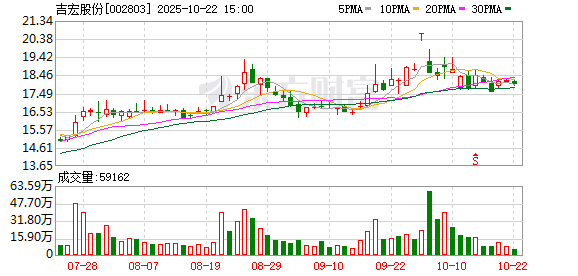
吉宏股份:目前没有稳定币相关业务
Zheng Quan Ri Bao· 2025-10-22 08:39
Group 1 - The company, Jihong Co., stated on October 22 that it currently does not have any business related to stablecoins [2]


黄金、白银又现震荡 “东南亚小腾讯”剑指万亿市值|今夜看点
Sou Hu Cai Jing· 2025-10-21 13:03
Core Viewpoint - The U.S. stock market is experiencing a stable pre-market phase supported by positive earnings reports from major companies, while the dollar strengthens for the third consecutive day, leading to significant adjustments in gold and silver assets [1][2]. Market Performance - As of the latest update, Nasdaq 100 futures are down 0.05%, S&P 500 futures are up 0.01%, and Dow futures are up 0.02% [2]. - Spot gold experienced a notable drop, falling from a historical high of $4,381 per ounce to $4,220, influenced by profit-taking, easing geopolitical tensions, the end of seasonal buying in India, and a stronger dollar [2]. Gold and Silver Analysis - Analysts suggest that the future trajectory of gold prices will depend on whether observing buyers enter the market, with UBS commodity analyst Giovanni Staunovo noting that many market participants are waiting for a price pullback to enter, which may limit the downside for gold [4]. - Spot silver has dropped over 5%, but increased overseas inflows have alleviated liquidity pressure in the London spot market [4]. Earnings Reports - Major companies reporting earnings before the market opened include: - GE Aerospace: Stock rose nearly 3% with revenue and profit exceeding expectations, raising the full-year outlook due to strong demand in air travel [6]. - General Motors: Stock increased over 11% as performance surpassed expectations, while lowering the anticipated impact of tariffs on earnings [6]. - Coca-Cola: Stock rose over 2% with earnings and revenue exceeding forecasts, reaffirming the full-year outlook [6]. - Netflix is set to release its earnings report after the market closes, marking the beginning of the tech sector's earnings season [4]. Other Company News - Sea Group's CEO Forrest Li expressed ambitions for the company's market value to reach $1 trillion, which would be ten times its current valuation of $98.1 billion, driven by AI business expansion [6]. - Amazon is advancing its automation plans, potentially avoiding the hiring of over 600,000 employees by 2033, as it aims to replace human workers with robots [6]. - Tesla's CEO Elon Musk's compensation package faces potential opposition from shareholders, which could hinder a $1 trillion pay proposal [7]. - Nvidia is in discussions to provide partial loan guarantees for OpenAI's data center construction plans, indicating a broader collaboration between the two companies [8]. - Unilever has postponed the spin-off of its Magnum ice cream brand due to the U.S. government shutdown, affecting the timeline for its planned listing [9].
10.21黄金起飞 狂飙160美金战4400
Sou Hu Cai Jing· 2025-10-21 07:53
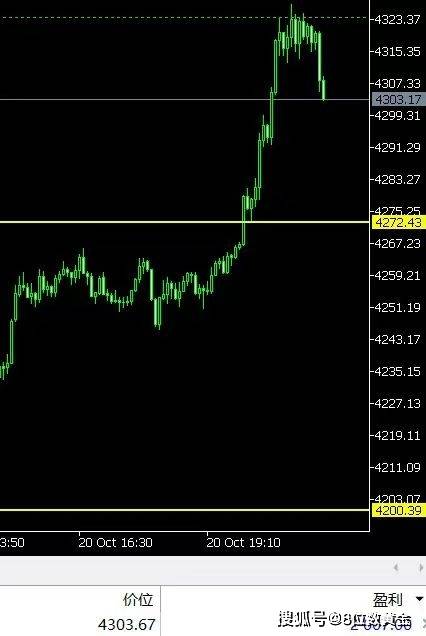
Core Viewpoint - The recent fluctuations in gold prices have been influenced by geopolitical uncertainties and monetary policy shifts, leading to significant price movements and potential investment opportunities in the gold market [13][15]. Market Performance - Gold prices experienced a dramatic increase of $160, reaching historical highs, with a target of $4400 in sight [1]. - After hitting around $4323, there was a profitable short position [1]. - The price reached $4380 three times before facing resistance and subsequently adjusted down by $40 [5][6]. - The market is currently in an adjustment phase, with support levels at $4300 and potential further testing at $4220 [8][12]. Influencing Factors - The uncertainty surrounding Trump's fluctuating stance on tariffs has impacted global trade dynamics, contributing to gold's rebound [13]. - The Federal Reserve's internal divisions and the increasing likelihood of interest rate cuts have also supported gold prices [13]. - Geopolitical tensions, including U.S.-China relations and the ongoing Russia-Ukraine conflict, are creating a favorable environment for gold investments [15]. Investment Strategy - Investors are advised to focus on entry and exit points for gold investments, emphasizing the importance of accurate market timing for stable profits [15]. - A well-managed risk approach is essential for maximizing profit opportunities, with recommendations to follow experienced traders for better outcomes [15]. - The gold market is currently characterized by high volatility, with both gold and stock markets reaching new highs, driven by increased liquidity [15].
28亿,蚂蚁在香港出手了
投中网· 2025-10-21 06:51
Core Viewpoint - Ant Group is strategically positioning itself in the Hong Kong market through significant acquisitions and expansions, aiming to enhance its financial service capabilities and international presence [5][8]. Group 1: Acquisition of Yau Tat Securities - Ant Group has received approval from the Hong Kong Securities and Futures Commission for a takeover of Yau Tat Securities at a price of HKD 3.28 per share, totaling HKD 28.14 billion [6][10]. - The acquisition represents a premium of 17.6% over the closing price prior to the announcement, indicating Ant Group's commitment to obtaining full licensing capabilities in Hong Kong [10]. - Yau Tat Securities holds multiple licenses from the Hong Kong Securities and Futures Commission, covering essential financial services, which makes the acquisition a faster route to market entry compared to applying for licenses independently [11]. Group 2: Strategic Moves in Hong Kong - In addition to the acquisition, Ant Group has been active in establishing stablecoin operations in Hong Kong, Singapore, and Luxembourg, indicating a broader strategy to diversify its financial services [7][12]. - The company is also planning to spin off its international operations for a separate IPO in Hong Kong, reflecting its ongoing efforts to regain market momentum after previous IPO setbacks [13][14]. - Ant Group's valuation has fluctuated significantly, with a current valuation of HKD 635 billion, down from a peak of HKD 2.1 trillion prior to its halted IPO in 2020 [13][14]. Group 3: Market Dynamics and Future Growth - The influx of southbound capital into the Hong Kong market has surged, with net inflows exceeding HKD 1 trillion in 2025, providing a favorable environment for Ant Group's financial services [15]. - Ant Group aims to leverage its technology in AI and blockchain to innovate stablecoin applications, enhancing efficiency in cross-border payments and asset management [19][20]. - The company is positioning itself to bridge traditional finance and digital assets, with plans to apply for stablecoin licenses as regulatory frameworks evolve [19][20].

黄金今日行情走势要点分析(2025.10.21)
Sou Hu Cai Jing· 2025-10-21 00:33
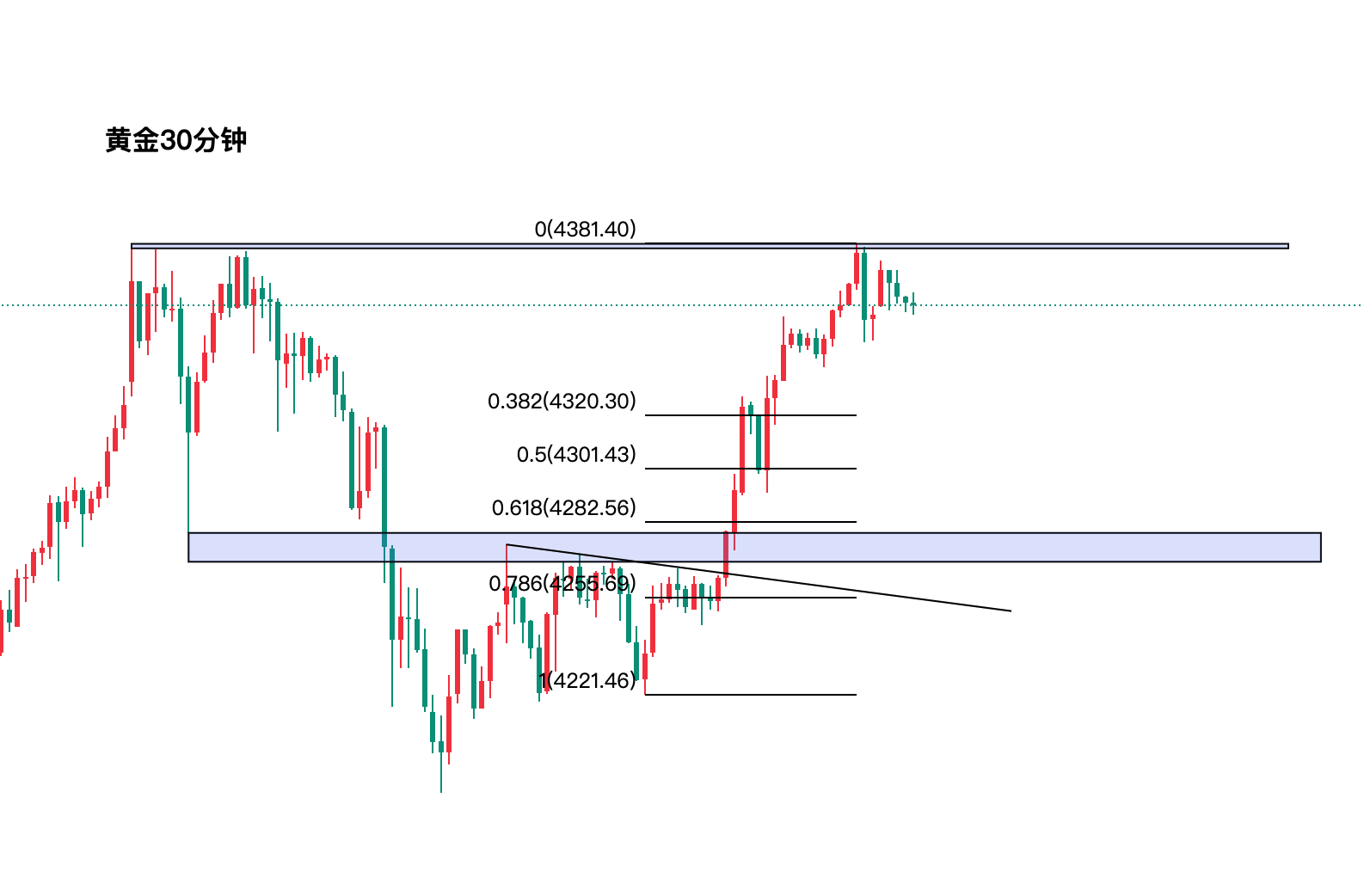
Core Viewpoint - The gold market is experiencing significant volatility driven by geopolitical tensions, economic uncertainty, and expectations of interest rate cuts by the Federal Reserve, leading to a bullish trend in gold prices. Fundamental Analysis - The U.S. government shutdown has heightened market anxiety, with the shutdown lasting 20 days and key economic data like the Consumer Price Index (CPI) being delayed, which amplifies economic uncertainty and boosts safe-haven demand for gold [3]. - There is a strong expectation of a 25 basis point rate cut by the Federal Reserve next week, with a 99% probability, and another cut anticipated in December, driven by potential economic weakness and trade tensions affecting inflation and growth [3]. - Ongoing uncertainties in U.S.-China trade negotiations, despite positive statements from President Trump, continue to support gold prices due to geopolitical risks [3]. - Global economic instability and geopolitical tensions, including developments in Japan and the Eurozone, as well as conflicts in Ukraine and the Middle East, are increasing demand for gold as a safe-haven asset [3]. Technical Analysis - On the daily chart, gold closed with a strong bullish candlestick, recovering from previous declines and indicating a clear bullish momentum, with the 5-day moving average providing solid support [5]. - The immediate resistance level is at 4381, where a failure to maintain above this level could indicate a potential double-top formation, while a successful breakout could lead to further upward movement towards the 4415-4419 resistance zone [5][8]. - Short-term support is identified around the 4280-4270 range, which is crucial for maintaining bullish sentiment; if prices stabilize here, it could present a buying opportunity [8].
金十数据全球财经早餐 | 2025年10月21日
Jin Shi Shu Ju· 2025-10-20 22:48
Group 1 - The US and Australia have signed a key mineral agreement, with Trump stating that rare earths and minerals will be abundant [11] - The White House announced that Australian pension funds will increase investments in the US by approximately $1 trillion over the next decade [11] - Apple's stock reached a historic high, with its market capitalization approaching $4 trillion [11] Group 2 - The US stock market saw significant gains, with the Dow Jones up 1.12%, S&P 500 up 1.07%, and Nasdaq up 1.37% [3] - The Hang Seng Index closed up 2.42%, with the technology index rising 3% and trading volume reaching HKD 239.16 billion [3][4] - The A-share market experienced a mixed performance, with the Shanghai Composite Index up 0.63% and the Shenzhen Component Index up 0.98% [4] Group 3 - The National Bureau of Statistics reported that China's GDP grew by 5.2% year-on-year in the first three quarters [11] - Ningde Times reported a net profit of 18.5 billion yuan in the third quarter, a year-on-year increase of 41% [11] - The latest loan market quotation rate remained unchanged, with both the one-year and five-year LPR stable [11]

2025我国经济社会发展内外部环境条件八大趋势
Sou Hu Cai Jing· 2025-10-20 12:53
External Environment Trends - The global political and economic landscape is experiencing deep adjustments, with increasing polarization and geopolitical conflicts, leading to a more complex international environment [2][19][20] - The rise of "global south" countries is weakening the US-led unipolar system, resulting in a shift towards a multipolar world where developing countries seek strategic autonomy [2][19][24] - The global governance system is undergoing reconstruction, with traditional multilateral institutions losing effectiveness and the emergence of "mini-lateralism" and flexible alliances [2][20][21] Technological Competition - The technology sector is becoming the core battleground for global competition, with increasing "techno-nationalism" leading to technology blockades and export controls, particularly against China [3][22][23] - China's long-term investment in technological innovation is expected to yield results, potentially entering a period of technological explosion, especially in green, digital, and AI sectors [3][22][23] Economic Growth and Trade - Global economic growth is projected to slow down, with an average annual growth rate of 3.1% over the next five years, lower than the previous five years [2][23][24] - Trade protectionism is on the rise, with global trade growth expected to average 3% annually, below the economic growth rate, indicating a significant adjustment in global trade dynamics [2][26][27] Investment Focus - Investment during the "15th Five-Year Plan" period will prioritize human-centered development, focusing on improving living standards and future industries [10][11] - Key investment areas include infrastructure for public health, elderly care, and digital transformation, with a strong emphasis on green and smart technologies [11][12][13] Financial Market Dynamics - The international financial market is characterized by divergence, with major economies adopting different monetary policies, leading to increased volatility in currency exchange rates [4][32][33] - The dominance of the US dollar is declining, with a growing trend towards a multi-currency system, where the euro and renminbi are gaining prominence [5][34] Consumer Trends - Domestic consumption is expected to grow steadily, with a shift towards more personalized and diversified consumer demands driven by technological advancements [7][8][9] - The aging population is creating a burgeoning silver economy, with significant growth in demand for elderly care products and services [9][10]

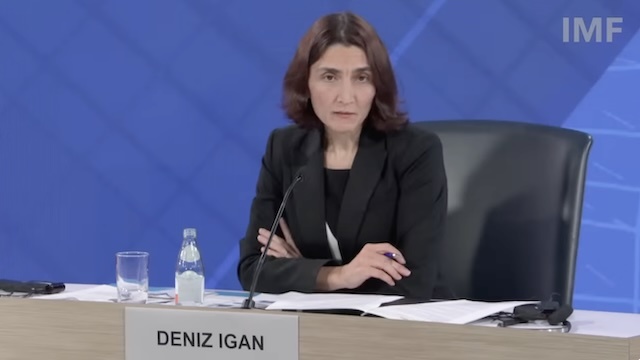
IMF世界经济研究处处长:全球加速适应新贸易格局,警惕扩张性财政政策外溢效应
Di Yi Cai Jing· 2025-10-20 11:30
Core Insights - Despite escalating trade protectionism, the global economy is expected to show resilience in 2025, supported by factors such as preemptive consumer spending and investment, as well as a weaker dollar [1][7][9] - The IMF warns that while expansionary fiscal policies in major developed economies may boost short-term growth, high debt levels and rising financing costs pose medium to long-term risks [1][10][11] Trade Tensions and Global Adaptation - The IMF emphasizes the need for constructive solutions to trade disputes, advocating for an open and fair competitive environment [3] - Since the onset of the trade war, global businesses and investors have been adapting to ongoing trade policy uncertainties, with trade flows shifting towards third countries [4][5] - Current high tariffs are nearly universal, complicating corporate decision-making beyond just tariffs [5][6] Transmission of Tariff Effects - The IMF notes that the impact of trade protectionism on economic activity and prices has been limited so far, with effective tariff rates around 18%, lower than previously estimated [7][8] - A weaker dollar has helped mitigate the impact of tariffs, supporting global trade flows and easing inflationary pressures in emerging markets [7][8] - As the initial effects of preemptive consumer behavior fade, cost pressures may eventually be passed on to consumers, leading to persistent inflation rather than a one-time shock [8] Spillover Effects of Expansionary Fiscal Policies - Expansionary fiscal policies in major economies are observed to boost economic activity in the short term, partially offsetting the negative impacts of tariffs [9][10] - High levels of sovereign debt and rising borrowing costs are eroding policy space and could lead to cross-border spillover effects [10][11] - Changes in financial markets, including the rise of stablecoins, may introduce new systemic risks and cross-border implications [11] Impact of Government Shutdown on Monetary Policy - The IMF is closely monitoring the economic impact of the recent U.S. government shutdown, which may have short-term negative effects but typically gets compensated later [12][13]
蚂蚁、京东暂停香港发币计划
Guan Cha Zhe Wang· 2025-10-20 10:34
Group 1 - Ant Group and JD.com have suspended their plans to issue stablecoins in Hong Kong due to regulatory directives from the People's Bank of China and the Cyberspace Administration of China [1] - The Hong Kong Legislative Council passed the Stablecoin Regulation Draft on May 21, which took effect on August 1, leading to expectations of the first compliant Hong Kong dollar stablecoin by the end of the year [1] - Stablecoins are seen as a bridge between traditional financial systems and cryptocurrency, enhancing transaction stability and cross-border payment capabilities [1][2] Group 2 - HSBC Jintrust Fund noted that the introduction of stablecoin regulations in Hong Kong and the U.S. has significantly increased regulatory clarity, which is expected to accelerate the development of the stablecoin industry [2] - JD.com has received a sandbox approval from the Hong Kong Monetary Authority for stablecoin issuance and is in the second phase of its testing plan [2] - JD.com's founder expressed ambitions for global stablecoin licensing to reduce cross-border payment costs by 90% and improve efficiency to under 10 seconds [2] Group 3 - Ant Group's blockchain subsidiary has been exploring blockchain applications for several years, including a successful issuance of a cross-border RWA project in Hong Kong [3] - Ant Group is also planning to apply for stablecoin licenses in Singapore and Hong Kong, focusing on integrating AI and blockchain technologies into large-scale applications [3] - The challenges for stablecoins lie not in replacing the U.S. dollar but in altering how it flows within the global system [3] Group 4 - Mainstream stablecoins like USDT and USDC are still pegged to the U.S. dollar but are changing the mode of dollar circulation by enabling peer-to-peer transactions on blockchain networks, bypassing traditional banking systems [4] - The reserve structure of stablecoins may diversify beyond the U.S. dollar to include assets like gold, euros, Hong Kong dollars, or even digital yuan [4] - As of the latest market close, Yunfeng Financial and Yaocai Securities experienced declines of 7.7% and 5.5%, respectively [4]

专访|IMF世界经济研究处处长:全球加速适应新贸易格局,警惕扩张性财政政策外溢效应
Di Yi Cai Jing· 2025-10-20 10:28
Core Insights - High levels of debt and rising financing costs are eroding policy space and may lead to cross-border spillover risks [1][10] - Despite escalating trade protectionism, the global economy is expected to show resilience in 2025, supported by factors such as preemptive consumption and investment by businesses and households, as well as a weaker dollar [1][7] - Expansionary fiscal policies in major developed economies may boost short-term economic growth but increase medium- to long-term risks due to high debt levels and rising financing costs [1][9] Trade Tensions and Global Adaptation - The IMF is closely monitoring trade tensions, emphasizing the need for constructive solutions to maintain an open and fair competitive environment [3] - Global businesses and investors are adapting to ongoing trade policy uncertainties, with trade flows shifting towards third countries as a response to U.S.-China trade dynamics [4][5] - The current high tariff environment is nearly universal, complicating corporate decision-making beyond just tariffs [5][6] Impact of Tariffs - The impact of trade protectionism on economic activity and prices has been limited so far, with effective U.S. tariff rates around 18%, lower than previous estimates [7][8] - A weaker dollar has supported global trade flows and eased inflationary pressures in emerging markets, allowing for more accommodative monetary policies [7][8] - As the initial effects of preemptive consumption fade, cost pressures may eventually be passed on to consumers, leading to persistent inflation rather than a one-time shock [8] Spillover Effects of Fiscal Policies - Expansionary fiscal policies in major economies are observed to have short-term positive effects on economic activity, partially offsetting the negative impacts of tariffs [9][11] - High sovereign debt levels are raising concerns about public finance sustainability, leading to increased borrowing costs and potential cross-border impacts [11] - The rapid rise of stablecoins may introduce new vulnerabilities in cross-border finance, potentially leading to systemic risks [11] Government Shutdown and Monetary Policy - The IMF is monitoring the economic impact of the recent U.S. government shutdown, which historically has had limited long-term effects [12][13] - The Federal Reserve has various methods to assess economic conditions and will base its policy decisions on available information [13][14]