预制菜

Search documents
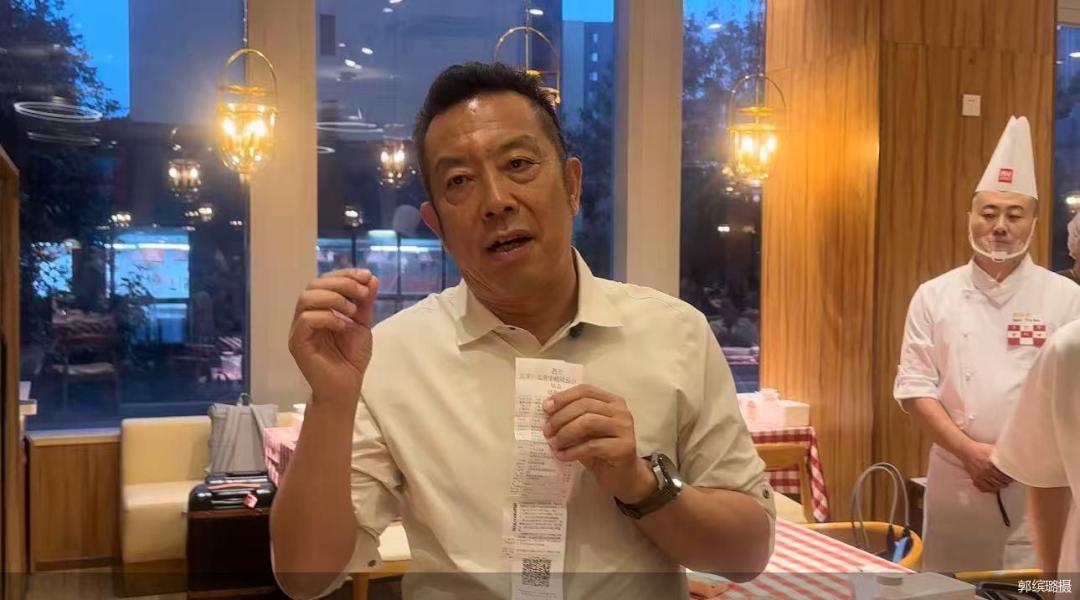
北京市市监局:已关注到西贝
Nan Fang Du Shi Bao· 2025-09-15 13:39
Core Viewpoint - The controversy surrounding the pre-prepared dishes of the restaurant chain Xibei has sparked significant public attention and regulatory scrutiny, highlighting consumer rights and the need for transparency in the food industry [1][2][4]. Company Summary - Xibei has acknowledged the disparity between its production methods and customer expectations, committing to adjust its operations by moving from centralized kitchen processing to on-site cooking in stores by October 1 [2][4]. - The company plans to modify several well-known dishes to be prepared fresh in-store, which aligns with consumer preferences for transparency and quality [4]. Industry Summary - The pre-prepared dish controversy presents an opportunity for the restaurant industry to improve and adapt, as consumer demand for transparency and quality increases [4][5]. - The recent regulatory developments, including the introduction of national food safety standards for pre-prepared dishes, will require restaurants to disclose their use of such products, further pushing the industry towards greater transparency [4]. - Many restaurants have begun live-streaming their kitchen processes to enhance consumer trust, showcasing the preparation of dishes in real-time [5].
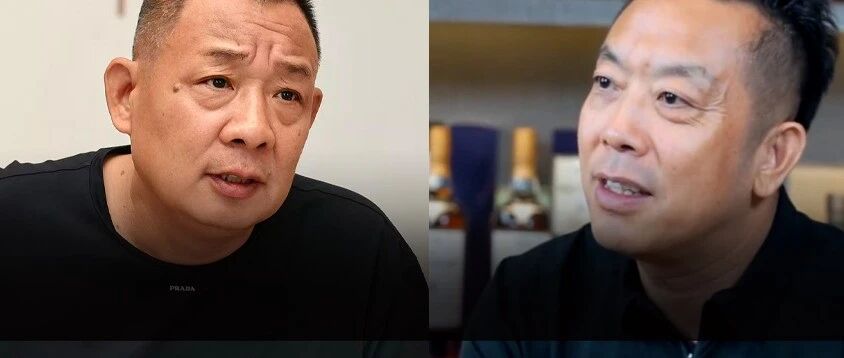
西贝贾国龙,其实和于东来是一类人
36氪· 2025-09-15 13:35
Core Viewpoint - The article discusses the challenges and controversies faced by Xibei, a prominent Chinese restaurant chain founded by Jia Guolong, as he approaches retirement and navigates a competitive industry landscape [5][6]. Group 1: Company Background and Leadership - Jia Guolong, the founder of Xibei, has dedicated his life to building the brand, which now generates an annual revenue of 6 billion yuan [5]. - Xibei has undergone significant transformations, focusing solely on its brand since 2009 after experimenting with various restaurant concepts [5][6]. - Jia's leadership style is characterized by a strong personal presence and a tendency to engage directly with public controversies, which has both helped and hindered the brand [6][10]. Group 2: Industry Challenges - The Chinese restaurant industry is currently experiencing intense competition, with trends such as online transformation, consumer segmentation, and the rise of central kitchen models [6][30]. - Xibei has faced scrutiny over its pricing strategies and the quality of its food, particularly regarding allegations of using pre-prepared ingredients [31][35]. Group 3: Financial Performance and Future Plans - Xibei's revenue for 2023 was reported at 6.2 billion yuan, with plans to achieve 20 billion yuan by 2026-2027, necessitating a compound annual growth rate of at least 33% [34][35]. - The company is exploring an IPO as a means to strengthen its financial position, having previously faced cash flow issues [33][34]. Group 4: Public Relations and Controversies - Jia Guolong's public statements have often led to backlash, such as the "715 work system" controversy and accusations of price hikes during the pandemic [11][14][15]. - Despite the controversies, Jia has received support from industry peers, indicating a level of respect for his contributions to the sector [17][20]. Group 5: Strategic Shifts and Recommendations - The article suggests that Xibei needs to find new growth avenues and possibly adopt a more decentralized management approach to mitigate risks associated with Jia's strong personal influence [35][36]. - The brand's future success may depend on balancing Jia's vocal leadership style with a more collaborative approach to decision-making [28][36].

西贝后厨出现不同厂家包装食材?负责人:供货商会初步处理食材
Qi Lu Wan Bao Wang· 2025-09-15 12:05
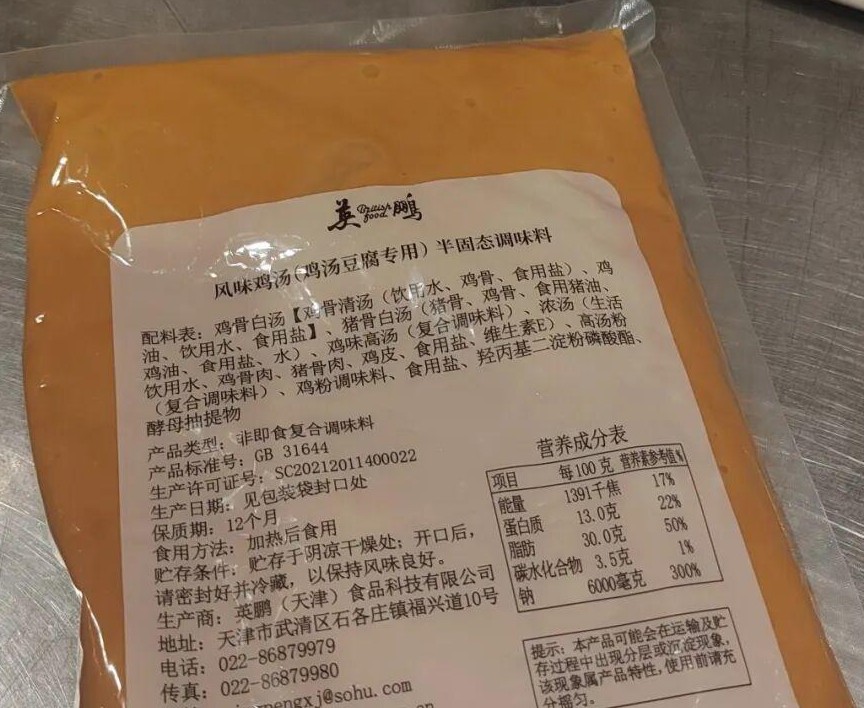
Core Viewpoint - The controversy surrounding "Xibei pre-made dishes" has gained attention, with allegations of the restaurant using pre-packaged ingredients despite their claims of using freshly processed items from a central kitchen [1][2]. Group 1: Ingredient Sourcing and Processing - Xibei sources ingredients from various regions including Zhejiang, Tianjin, and Anhui, with some packaging lacking Xibei branding, indicating a reliance on multiple suppliers [1][2]. - Suppliers confirm that certain products, such as fried eggplant and chicken soup, are pre-packaged and processed before delivery to Xibei, suggesting a level of pre-preparation that aligns with the definition of pre-made dishes [4][5]. - The pricing of supplied ingredients, such as fried eggplant at 13,000 yuan per ton (approximately 6.5 yuan per jin), reflects the additional processing costs involved [5]. Group 2: Xibei's Response and Operational Model - Xibei has publicly denied the allegations of using pre-made dishes, stating that their central kitchen performs initial processing before ingredients are sent to individual locations for further cooking [8][10]. - The company emphasizes that the central kitchen's role is to prepare raw materials, which are then cooked fresh at the restaurants, countering claims of serving fully pre-made meals [8][10]. - Xibei is currently reviewing its operational practices and definitions related to pre-made dishes, indicating a willingness to clarify its position in response to public scrutiny [10].
西贝道歉,但争议远未结束
Zhong Guo Xin Wen Wang· 2025-09-15 10:52
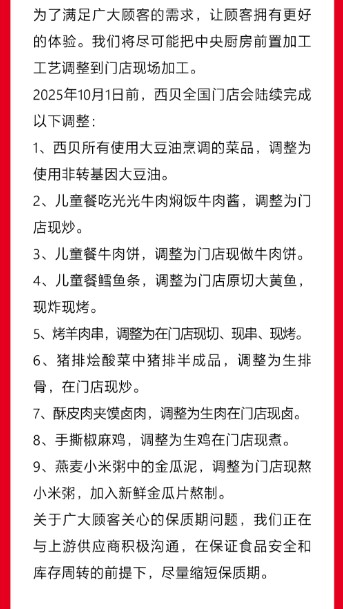
西贝道歉,但争议远未结束 中新网9月15日电(左雨晴) 在与罗永浩对峙5天后,西贝选择了道歉。 9月15日,西贝发布致歉声明,表示将尽可能把中央厨房前置加工工艺调整到门店现场加工。关于广大 顾客关心的保质期问题,西贝称正在与上游供应商积极沟通,在保证食品安全和库存周转的前提下,尽 量缩短保质期。 9月15日,西贝发布致歉声明。 值得注意的是,西贝在致歉信中,将预加工描述为"中央厨房前置加工工艺"。而罗永浩在转发致歉信 时,依然称呼西贝菜品为"预制菜"。 这意味着,即使西贝道歉,但双方在关键争议——"预制菜"的定义上,依旧寸步不让。 究竟谁对谁错? 目前,预制菜国家标准尚未出台。西贝宣称"100%无预制菜"的依据来源于2024年市场监管总局等六部 门发布的《关于加强预制菜食品安全监管 促进产业高质量发展的通知》。 《通知》明确,预制菜是以一种或多种食用农产品及其制品为原料,使用或不使用调味料等辅料,不添 加防腐剂,经工业化预加工(如搅拌、腌制、滚揉、成型、炒、炸、烤、煮、蒸等)制成,配以或不配以 调味料包,符合产品标签标明的贮存、运输及销售条件,加热或熟制后方可食用的预包装菜肴。 实际上,随着预制菜概念的兴起和 ...
西贝最该捂住的,就是贾国龙的嘴
创业家· 2025-09-15 10:16
Core Viewpoint - The ongoing dispute between Xi Bei restaurant and Luo Yonghao over the issue of pre-prepared dishes has escalated, highlighting the importance of brand reputation and consumer trust in the restaurant industry [2][36]. Group 1: Conflict Overview - Luo Yonghao criticized Xi Bei's use of pre-prepared dishes, leading to a public spat where Xi Bei's founder, Jia Guolong, labeled him as a "network black mouth" [4][9]. - The situation intensified when Jia Guolong's apology was perceived as inadequate, prompting Luo to escalate his criticism and call for transparency in Xi Bei's operations [5][14]. - Luo announced a reward for evidence of Xi Bei's pre-prepared dishes, indicating a commitment to holding the restaurant accountable [9][24]. Group 2: Xi Bei's Response and Strategy - Xi Bei's management attempted to address the crisis by holding an all-staff meeting and announcing employee bonuses, but these measures were seen as superficial [21][22]. - Jia Guolong expressed a desire to learn from successful brands like Pang Donglai, but the core issue of consumer trust regarding pre-prepared dishes remained unresolved [17][24]. - Despite efforts to demonstrate transparency, Xi Bei's attempts to showcase its kitchen operations inadvertently revealed more issues, further damaging its reputation [24][25]. Group 3: Industry Implications - The incident has sparked broader discussions within the restaurant industry, with other restaurant leaders rallying in support of Xi Bei, indicating a collective concern over consumer perceptions of pre-prepared dishes [28][31]. - The prevalence of pre-prepared dishes in the industry is significant, with over 80% of chain restaurants reportedly using them, raising questions about food safety and quality [33]. - The ongoing scrutiny of Xi Bei's practices could have lasting effects on its customer base and future IPO plans, as the brand struggles to regain consumer trust [25][34].

西贝和罗永浩,互相给对方上了一课
商业洞察· 2025-09-15 09:28
Core Viewpoint - The controversy surrounding the use of pre-prepared dishes at the restaurant chain Xibei, sparked by a social media post from influencer Luo Yonghao, highlights a significant gap between official definitions and public understanding of what constitutes pre-prepared food [4][12][27]. Group 1: Incident Overview - On September 10, Luo Yonghao criticized Xibei for allegedly serving pre-prepared dishes, which led to widespread public debate and media attention [6][10]. - Xibei's founder, Jia Guolong, quickly responded by denying the use of pre-prepared dishes and announced legal action against Luo Yonghao [7][10]. - Xibei opened its kitchens for public inspection to demonstrate transparency and counter the allegations, while Luo offered a reward for evidence of pre-prepared food usage [10][11]. Group 2: Public Perception and Misunderstanding - The core of the dispute lies in the differing interpretations of "pre-prepared food" between consumers and the restaurant industry, with many consumers equating any non-freshly cooked food with pre-prepared dishes [12][15]. - Official definitions provided by regulatory bodies clarify that pre-prepared dishes require industrial pre-processing and are not simply pre-cut or pre-cooked ingredients [13][14]. - The lack of public understanding regarding the definition of pre-prepared food has led to confusion and mistrust among consumers, who often feel misled about the food they are consuming [16][27]. Group 3: Industry Implications - The incident underscores the need for clearer communication and transparency within the restaurant industry regarding food preparation methods [20][21]. - The growing prevalence of pre-prepared dishes in the restaurant sector, now exceeding 30% of the market, necessitates a shift towards more transparent practices to regain consumer trust [20][27]. - Establishing clear national standards and labeling requirements for pre-prepared food is essential for the industry to move towards compliance and consumer confidence [20][21]. Group 4: Recommendations for Transparency - The restaurant industry should adopt proactive transparency measures, such as detailed ingredient sourcing reports and clear labeling of food preparation methods, to enhance consumer trust [22][25]. - Successful examples from other companies, like Laoxiangji, demonstrate that transparency in food sourcing and preparation can mitigate consumer concerns and foster loyalty [22][25]. - Moving forward, the industry must prioritize consumer education on food preparation processes to bridge the gap between official definitions and public perception [27].

X @𝘁𝗮𝗿𝗲𝘀𝗸𝘆
𝘁𝗮𝗿𝗲𝘀𝗸𝘆· 2025-09-15 09:15
因为讨厌老罗而挺西贝。因为讨厌特斯拉和懂车帝而挺国产电动车。本身都是只看立场不看事实。前阵子给我妈买邮轮票在福冈下船,她看到我的特斯拉说,我看过那个电动车智能驾驶测试,一个都没过,智能驾驶不安全。我说,这你都知道?挺好的,智能驾驶确实还不安全。让更多的人知道智能驾驶还在早期,没有商家明里暗里宣传的那么牛逼和安全,这本身就是大大的功德啊。这次西贝也是一样,引发更多人了解预制菜的普及程度,和商家宣传上蒙骗的伎俩。尤其是老乡鸡的公告对比,还有更多坚持现炒的小店出来发声,乃至可能的推动立法透明。这能影响多少人的一日三餐,都是大大的功德。该死的企业赶紧死吧,根本没什么可惜和值得共情的,会有更好的企业顶上。 ...

西贝儿童餐鳕鱼条调整为大黄鱼?门店回应:并非更换原材料,是鳕鱼条停售
Qi Lu Wan Bao Wang· 2025-09-15 09:03
Core Viewpoint - Xibei Catering Group issued an apology regarding the ongoing issues related to prepared dishes, announcing adjustments to be completed by October 1, 2025 [1] Group 1 - The company will implement a total of nine adjustments across its nationwide stores by the specified date [1] - One significant change includes replacing the "children's meal cod fish strips" with "freshly fried and baked large yellow croaker" [1] - The store manager clarified that the cod fish strips will not be made with large yellow croaker, as cod does not meet the conditions for on-site processing, leading to its removal from the menu [1]
9月15日主题复盘 | 无人驾驶再迎政策催化,影视持续活跃,预制菜概念发酵
Xuan Gu Bao· 2025-09-15 08:32
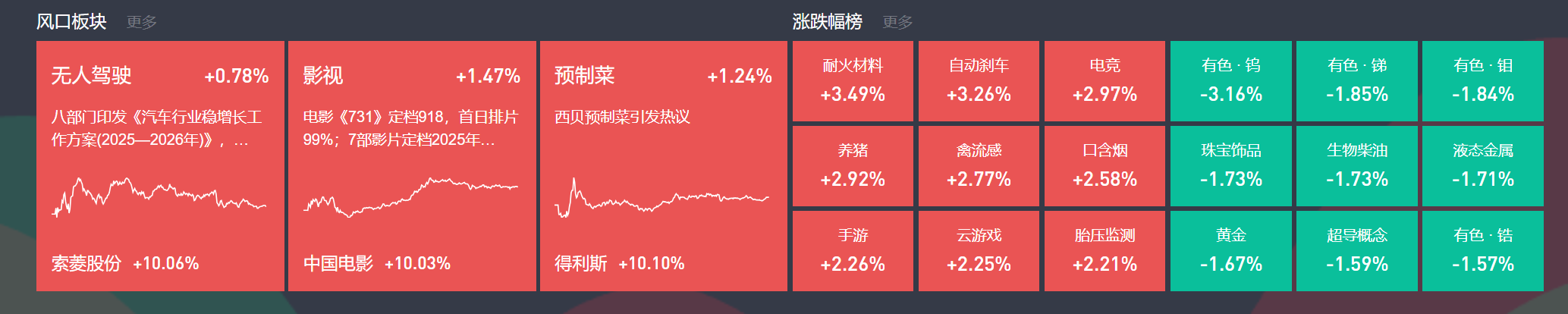
Market Overview - The Shanghai Composite Index experienced narrow fluctuations, while the ChiNext Index showed stronger performance, with Ningde Times reaching a new high [1] - Game stocks performed strongly, with Xinghui Entertainment and Perfect World hitting the daily limit [1] - Pork stocks collectively surged, with Delisi and Aonong Biological reaching the daily limit [1] - The intelligent driving concept was active, with Zhejiang Shibao and Luchang Technology hitting the daily limit [1] - In contrast, the satellite internet concept declined, with Sanwei Communication dropping over 5% [1] - Overall, nearly 3,400 stocks in the Shanghai and Shenzhen markets declined, with a total transaction volume of 2.3 trillion [1] Hot Topics Autonomous Driving - The autonomous driving concept saw significant gains, with multiple stocks such as Suoling Co., Shikong Technology, and Zhejiang Shibao hitting the daily limit [3] - The Ministry of Industry and Information Technology announced a work plan for the automotive industry from 2025 to 2026, which includes promoting the approval of L3-level vehicle production [3] - The plan aims to enhance road traffic safety and improve relevant laws and regulations [3] Film and Entertainment - The film and entertainment sector continued to strengthen, with China Film and Xinghui Entertainment hitting the daily limit, and companies like Happiness Blue Sea and Mango Super Media also rising [7] - The National Day holiday in 2025 is expected to generate significant box office revenue, with many industry insiders expressing optimism about the ticket sales for that period [7] Prepared Dishes - The prepared dishes concept saw strong performance, with Delisi and Aonong Biological reaching the daily limit [9] - Industry analyst Zhu Danpeng suggested that the government should expedite the establishment of national standards for prepared dishes and implement a licensing system for companies [9] - The introduction of national standards is expected to enhance food safety and may increase costs by 15% to 30% due to new requirements [10]
西贝正式发布道歉信:“绝对权威者”贾国龙的一次大败
3 6 Ke· 2025-09-15 08:07
Core Viewpoint - The recent apology from Xibei and the subsequent responses highlight a significant crisis in the company, driven by public backlash over its use of pre-prepared dishes, leading to a loss of consumer trust and brand reputation [1][4][11] Company Response - Xibei issued a letter of apology outlining nine corrective measures, but the tone remained defensive, suggesting a disconnect with consumer sentiment [1][4] - Founder Jia Guolong's initial reaction to criticism was to label detractors as "network black society," which escalated tensions rather than diffusing them [1][2] Crisis Management Failures - Jia's approach to crisis management has been criticized as a textbook example of poor public relations, characterized by a rigid decision-making structure that stifles dissent [4][9] - The decision to open kitchens nationwide for transparency backfired, revealing pre-prepared ingredients and leading to further public outrage [5][9] Consumer Perception and Trust Issues - There is a significant gap between the company's definition of "pre-prepared dishes" and consumer understanding, leading to confusion and dissatisfaction [6][11] - The high-end positioning of Xibei clashes with the perception of pre-prepared dishes as low-quality, resulting in a trust crisis among consumers [8][11] Industry Implications - The ongoing debate is pushing for clearer industry standards regarding pre-prepared dishes, with new regulations expected to emerge [11][12] - Consumer awareness and demand for transparency are increasing, with a notable percentage of consumers unwilling to accept pre-prepared dishes in high-end restaurants [11][12]