AI技术

Search documents
神开股份:预计2025年净利润同比增长65.75%~98.90%
Xin Lang Cai Jing· 2026-01-23 10:30
Core Viewpoint - The company expects a net profit of 50 million to 60 million yuan for the year 2025, representing a year-on-year growth of 65.75% to 98.90% [1] Group 1: Financial Performance - The projected net profit for 2025 is significantly higher compared to the previous year, indicating strong financial growth [1] - The increase in revenue is attributed to the steady advancement of the overseas strategy, which has positively impacted the overall revenue [1] Group 2: Strategic Initiatives - The company has completed a strategic acquisition of Blue Ocean Zhixin, which is expected to enhance its digital oil service business through the integration of AI technology [1] - The optimization of product structure and the increase in overseas revenue proportion have contributed to an improved overall gross profit margin [1]

米其林“未来工厂”正式启航
Hua Er Jie Jian Wen· 2026-01-23 09:34
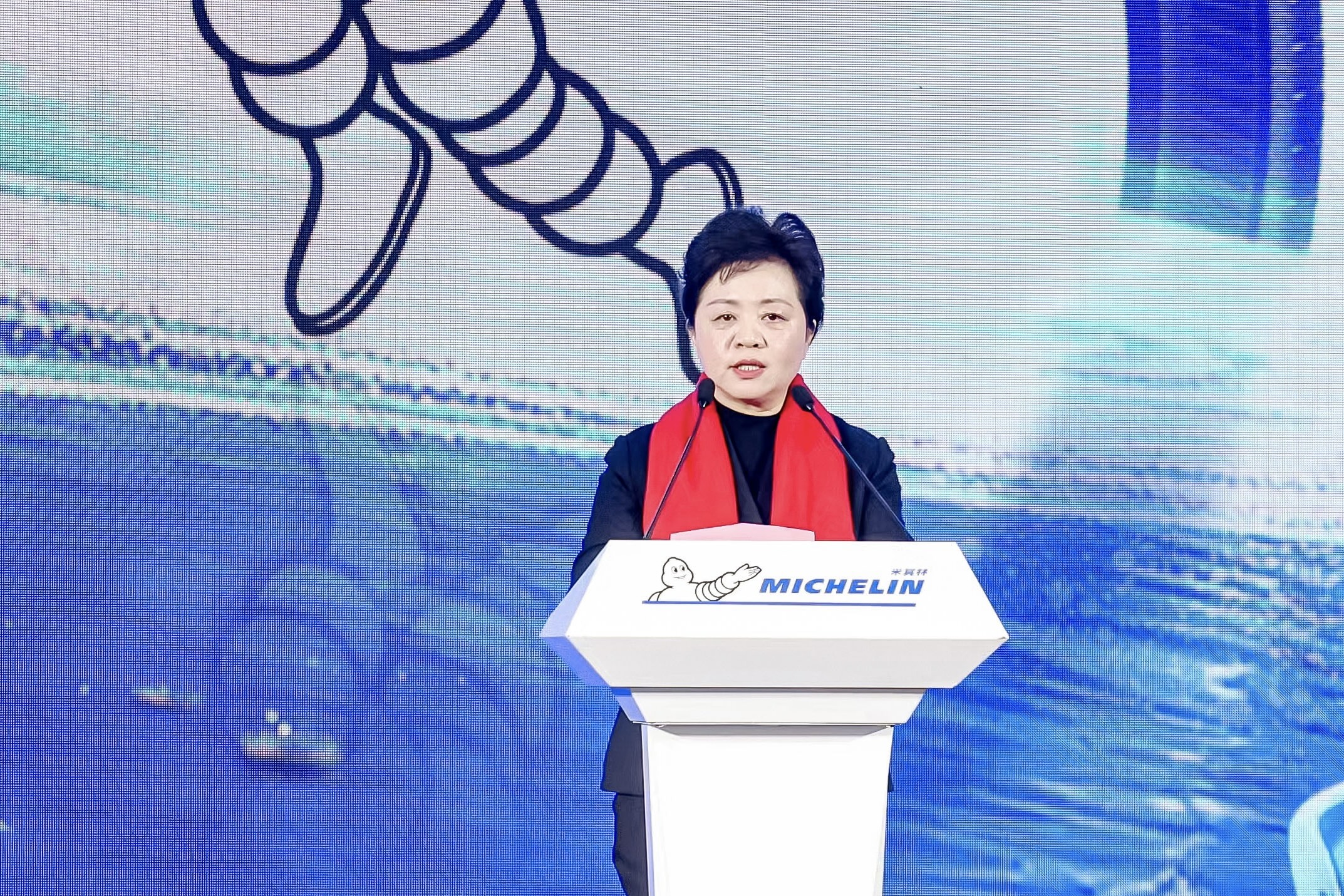
Core Insights - Michelin's Shanghai factory expansion, known as the "White Magnolia" project, marks the company's first strategic investment project designed entirely according to the "future factory" concept, responding to the explosive growth of China's electric vehicle industry [1][10] - The project represents a significant investment of 3 billion RMB and aims to transform the Shanghai factory into a benchmark for high-end, flexible, green, and intelligent manufacturing [1][8] Investment and Production Capacity - The "White Magnolia" project focuses on producing high-performance, large-diameter passenger car tires, specifically in the 18 to 24-inch range [3] - Approximately 70% of the new production capacity will directly serve electric vehicle models, increasing the annual production capacity of high-performance tires from 8.5 million to 9.5 million, adding 1 million tires [4] Product Innovation - The first product launched from this project, the Michelin Pilot Sport 5E, embodies the company's high-end strategy, featuring innovations that reduce energy consumption and enhance the range of electric vehicles [5] Manufacturing Efficiency - The project introduces a super-flexible production model, allowing for a minimum order of 100 tires and reducing delivery times from 10 days to 5 days, enhancing responsiveness to market demands [6] - Advanced AI technologies and automation have been integrated into the factory, enabling real-time monitoring and reducing production costs [7] Sustainability Initiatives - The "White Magnolia" project is designed to be a model for green manufacturing, achieving 100% electrification in production and utilizing renewable energy sources, significantly reducing carbon emissions [8][11] - The project has invested over 30 million RMB in wastewater, waste gas treatment, and solid waste recycling, achieving 100% water recycling [8] Strategic Commitment - The launch of the "White Magnolia" project is a testament to Michelin's long-term commitment to the Chinese market and its collaboration with local governments and industry partners [14] - The factory aims to achieve carbon neutrality by 2050, reflecting Michelin's dedication to balancing people, profit, and the environment [11][14]

私募大佬胡建平,重磅发声!
中国基金报· 2026-01-23 06:54
Core Viewpoint - The global economic landscape is undergoing profound changes, yet market pricing has not fully reflected these shifts. The construction of a unified market is expected to enhance industrial quality and efficiency, with opportunities in overseas expansion, the pharmaceutical industry, and AI technology being highlighted as key investment themes for the future [2][4][12]. Investment Insights - In reviewing investment operations for 2025, the company noted gains in sectors such as biopharmaceuticals, new consumption, AI applications, and precious metals, while acknowledging missed opportunities in the AI supply chain affecting industries like electricity and PCB [5]. - The company emphasizes the importance of value investing and the integration of AI tools to enhance investment decision-making, aiming to combine professional judgment with technological capabilities [5][3]. Market Dynamics - The company observes that the capital market's response to changes in the global economic structure has been slow, with many assets, particularly in China, remaining undervalued. The rising prices of gold and certain mineral resources are seen as initial indicators of this shift [5][6]. - The Chinese capital market has experienced significant changes, with a notable recovery from previous bubbles and a shift towards a more robust economic structure, particularly in green industrial revolutions and sectors like biopharmaceuticals and semiconductors [6][10]. Opportunities in Overseas Expansion - The company identifies overseas expansion as a long-term investment theme, highlighting the advantages of China's high-quality human resources across various fields, which positions it well for global investments [11]. - The focus on overseas opportunities includes sectors such as computing supply chains and biopharmaceuticals, reflecting a shift from traditional investment strategies to a more global perspective [11]. Pharmaceutical Industry Outlook - The pharmaceutical sector is viewed as entering a new growth phase, with significant potential for innovation and international collaboration. The industry is transitioning from generic drug manufacturing to research and development, with a strong emphasis on clinical standards and innovative drug policies [13]. - The competitive landscape in pharmaceuticals is expected to intensify, with a focus on high-stakes innovation and the potential for significant market shifts as companies navigate the clinical development process [13]. Consumer Sector Trends - The consumer sector is experiencing a transformation, with traditional consumption patterns evolving. Opportunities are emerging in service-oriented consumption and innovative supply chain efficiencies, driven by new consumer demands [14]. - The company notes that AI remains a critical area for investment, with the potential for significant disruptions in various industries as AI applications continue to develop [14].

香港航空开创先河,携手飞猪AI与千问App推出"一句话智惠飞"新模式
Huan Qiu Wang Zi Xun· 2026-01-23 06:30
Core Insights - Hong Kong Airlines has announced a deep AI strategic partnership with Alibaba's Fliggy and Qianwen App, marking a significant step in enhancing travel booking experiences through AI technology [1][3] - The collaboration aims to simplify the ticket booking process, allowing users to make requests in natural language and receive tailored travel recommendations, thus improving user experience and reducing decision-making costs [3] Group 1: Partnership Details - Hong Kong Airlines is one of the first airlines to integrate with the "AI ticket booking" feature on Qianwen App, providing exclusive ticket benefits through Fliggy and Qianwen [1] - The partnership not only expands sales channels but also innovates travel service models, enabling users to enjoy a more convenient travel experience with just a simple request [1][3] Group 2: AI Functionality and Future Plans - Users can now request travel options using natural language, allowing AI to understand their needs and automatically filter the best options for booking [3] - Hong Kong Airlines plans to further deepen its collaboration with Fliggy AI and Qianwen App to expand "ticket+" products and lifestyle service scenarios, promoting more interactive experiences [3] - The AI capabilities may eventually integrate with mobile assistants and smart wearable devices, enabling voice-based travel planning anytime and anywhere [3] Group 3: Company Perspectives - The business head of Hong Kong Airlines emphasized the importance of AI technology in reshaping future services, aiming for smarter and more personalized offerings [3] - The product head of Fliggy AI highlighted the transition to an "AI service era," leveraging Alibaba's model and ecosystem advantages to enhance real-world AI travel experiences [3]


告别“唯美元论”:全球资产配置新范式下,为何亚太资产成为穿越周期的“压舱石”?
智通财经网· 2026-01-23 03:54
Core Viewpoint - The global financial market is undergoing a significant paradigm shift, with a movement from single-market asset allocation to diversified global assets, particularly in the Asia-Pacific region, which is characterized by "high growth, low correlation, and low valuation" attributes [1][2]. Group 1: Market Dynamics - The core contradiction in global asset performance in the first half of 2025 revolves around the uncertainty of tariff policies, leading to a risk-off mode in the market [2]. - The U.S. dollar assets faced a collective downturn in April 2025, with the dollar index dropping below 100 and the 10-year U.S. Treasury yield surging, indicating a shift from a "dollar-centric" view to a new paradigm where non-U.S. currencies are gaining importance [2][3]. - Historical trends show that global liquidity typically follows a 4-5 year cycle with the U.S. dollar, and a declining dollar phase tends to favor non-U.S. assets, particularly those in the Asia-Pacific region with strong fundamentals [2]. Group 2: Investment Opportunities in Asia-Pacific - For domestic investors, the low correlation of the CSI 300 index with major global indices allows for effective risk mitigation through investments in Asia-Pacific assets, which are expected to contribute higher economic growth compared to global markets [3]. - The Asia-Pacific market currently offers significantly lower PE valuation levels compared to the high valuations in the U.S. market, presenting a compelling investment opportunity [3]. Group 3: Sectoral Advantages - The dual drivers of "technology growth" and "dividend defense" are central to the investment appeal of Asia-Pacific assets, particularly in the semiconductor industry, which has unmatched global competitiveness [4]. - Major semiconductor companies in the region, such as TSMC and Samsung Electronics, are positioned to benefit from the AI technology boom and the recovery of the semiconductor cycle [4]. - Japan's corporate governance reforms and ultra-loose monetary policy have improved shareholder returns and operational efficiency, making Japanese equities an attractive option for long-term investors [4][5]. Group 4: Asset Allocation Strategy - The Southern Fund's Asia-Pacific Select ETF is designed to capture investment opportunities in the Asia-Pacific market, tracking the FTSE Asia-Pacific Low Carbon Select Index, which includes leading companies while incorporating ESG low-carbon screening [7]. - The ETF's holdings balance quality and diversity, featuring top firms across various sectors, including technology and automotive, while minimizing risks associated with single-country or single-industry volatility [7]. - The fund's low management and custody fees provide a cost-effective pathway for investors to participate in the growth potential of the Asia-Pacific region [7]. Group 5: Performance Resilience - The Asia-Pacific Select ETF has demonstrated resilience in various market conditions, outperforming similar assets during periods of high U.S. Treasury yields and global trade fluctuations [8]. - The rise of Asia-Pacific assets is seen as a natural outcome of evolving global economic dynamics, industry cycles, and improved corporate governance, marking the region's emergence into a "golden era" [8].


外骨骼机器人「卷土重来」:面向消费级玩家,四大技术难点仍需攻克
3 6 Ke· 2026-01-23 03:28
Core Insights - The exoskeleton robot industry is experiencing a resurgence, driven by advancements in robotics and AI technology, with a focus on consumer-grade applications and outdoor activities [4][5][7] - Companies like Hypershell, ULS, DNSYS, and ChengTian are emerging as key players in the Chinese exoskeleton market, showcasing their products at major events like CES 2026 [3][4] - Hypershell has positioned itself as a leader in the consumer exoskeleton segment, achieving significant milestones in funding and product delivery [11][13] Industry Overview - Exoskeletons are wearable devices designed to enhance human movement capabilities, with applications primarily in medical rehabilitation and industrial settings [4][5] - The market for consumer-grade exoskeletons is still niche but is gaining traction, particularly among individuals seeking rehabilitation and enhanced mobility [8][11] Technological Developments - Hypershell has introduced innovative products, such as the Hypershell X Ultra, which features advanced AI algorithms and improved battery life, achieving a weight of 1.8 kg and a range of 30 km per battery [13][16] - The industry faces several technical challenges, including the need for better user experience, improved battery life, and the transition from passive to active assistance in exoskeleton functionality [24][26] Market Dynamics - The consumer exoskeleton market is characterized by a lack of standardized regulations, which poses challenges for widespread adoption and market growth [7][8] - Companies are exploring diverse applications for exoskeletons, including outdoor sports, urban commuting, and emergency services, to broaden their market appeal [16][19] Competitive Landscape - Key players in the market include Hypershell, ULS, DNSYS, and ChengTian, each focusing on different aspects of exoskeleton technology, from rehabilitation to outdoor sports [17][21] - The competition is intensifying as new startups enter the market, aiming to innovate and capture consumer interest [5][19]


家家悦关闭低效门店客流涨2% 加快商品汰换盈利预增超50%
Chang Jiang Shang Bao· 2026-01-23 01:35
Core Viewpoint - The company Jiajiayue (603708.SH) is expected to achieve significant profit growth in 2025, with projected net profit increasing by 50.06% to 72.79% compared to the previous year, indicating a strong recovery and operational improvement in the retail sector [1][3]. Group 1: Financial Performance - Jiajiayue forecasts a net profit attributable to shareholders of 198 million to 228 million yuan for 2025, marking an increase of 66.05 million to 96.05 million yuan year-on-year [3]. - The company anticipates a non-net profit of 180 million to 210 million yuan for 2025, representing a year-on-year increase of 55.61% to 81.55% [3]. - The projected profit level for 2025 is the highest in the past five years, reflecting a significant turnaround from previous years of fluctuating performance [2][4]. Group 2: Operational Strategy - Jiajiayue is enhancing store efficiency by upgrading key stores and optimizing the closure of underperforming locations, leading to improved overall store quality and efficiency [2][4]. - The company is focusing on adjusting its product mix and enhancing customer experience, which is expected to drive a 2% year-on-year increase in comparable store traffic for 2025 [4]. - The company has completed the upgrade of 30 stores, improving service capabilities and operational efficiency, which supports ongoing store improvement initiatives [7]. Group 3: Market Position and Competition - The retail industry is facing both challenges and opportunities, and Jiajiayue is adapting to market changes by innovating its business model and optimizing store layouts to enhance competitiveness [10][11]. - The company is also leveraging AI technology to improve customer service and operational management efficiency, indicating a commitment to technological advancement in retail [9]. Group 4: Future Plans and Adjustments - Jiajiayue has adjusted the completion timeline for certain fundraising projects from December 2025 to December 2027, reflecting a cautious and flexible management approach to ensure the safety and compliance of raised funds [10]. - The company has returned 30 million yuan of temporarily used funds to its dedicated account, demonstrating a commitment to financial prudence and effective fund utilization [10].

中国足球热潮如何扣动万亿产业链的扳机?
Ge Long Hui· 2026-01-23 01:30
Group 1: Market Reaction and Investment Opportunities - The Chinese U23 men's football team achieved a historic victory, defeating Vietnam 3-0, which triggered a surge in "football concept stocks" in the capital market, including companies like Tsinghua Tongfang and Inpai [1] - The victory is seen as a catalyst for a valuation recovery in the football industry, signaling a potential market shift as the 2026 World Cup approaches, which is expected to be a "football year" with significant economic implications [1][2] - The unexpected rise of the U23 team is accelerating interest in the football market, with amateur player numbers nearly doubling to 980,000 in 2025, indicating a growing commercial demand [2] Group 2: Industry Growth and Projections - China's sports event market is projected to reach nearly 40 billion yuan by 2025, while the broader outdoor sports industry is expected to exceed 3 trillion yuan [3] - The demand for artificial turf in football fields is anticipated to grow significantly, with over 54% of future demand coming from renovations rather than new constructions [4] - The Chinese sports apparel market is expected to reach $27 billion by 2026, driven by companies like Anta and Li Ning, which are focusing on youth leagues and national team sponsorships [4] Group 3: Technological Integration and AI in Football - The upcoming 2026 World Cup presents a complex challenge for event services, with an increase in teams and matches, necessitating advanced technology for logistics and audience engagement [6] - Lenovo, as a technology partner for the World Cup, is leveraging AI to enhance various aspects of the event, including tactical analysis and real-time officiating support [6][7] - The global sports market for AI is projected to grow from $1.2 billion in 2024 to $4.7 billion by 2034, indicating a significant opportunity for tech companies in the sports sector [7] Group 4: Policy Support and Long-term Outlook - The Chinese government's "14th Five-Year Plan" emphasizes the role of the sports industry in boosting domestic demand and economic resilience, with a target of over 70,000 football fields by 2025 [8] - The development of a grassroots competition system is underway, with urban leagues being established across 16 provinces, fostering a non-commercial growth model that supports the entire industry chain [8] - Analysts caution that while the football industry shows promise, the path to monetization remains complex, with future growth likely stemming from the integration of sports and technology [9]






如何守好孩子的网络净土?“变味”的AI动画防不胜防
Xin Lang Cai Jing· 2026-01-23 00:20
Core Viewpoint - The rise of AI-generated animations has led to concerns about inappropriate content targeting children, with many products featuring bizarre characters, disturbing sound effects, and vulgar themes, prompting parental worries about their impact on youth [1][3]. Group 1: Nature of AI Animations - AI animations, such as "AI Shan Hai Jing," often contain strange imagery and illogical narratives, captivating children while distorting their understanding of classic stories [3]. - Some AI animations are labeled as "children's animations" and are accessible in youth modes, making it difficult for parents to monitor what their children are watching [3][4]. - The content generated by AI often distorts classic literature, which can negatively influence the moral development of adolescents [4]. Group 2: Challenges in Content Regulation - The ease of creating AI-generated videos has led to a proliferation of low-quality and potentially harmful content, as creators exploit children's curiosity for views [5]. - Existing content moderation systems struggle to keep up with the volume and complexity of AI-generated content, leading to increased costs and challenges in identifying harmful material [6][7]. - The mixed nature of AI-generated videos with regular content complicates the identification and regulation of inappropriate material [7]. Group 3: Recommendations for Improvement - Experts suggest enhancing regulatory measures for the AI video industry and holding platforms accountable for the content they promote to minors [9]. - Recommendations include implementing digital watermarks in AI generation tools for better content traceability and improving algorithmic recommendations to prioritize quality content for children [9]. - Emphasis is placed on the role of parents and educators in guiding children to develop critical thinking skills regarding online content and ensuring a supply of quality cultural products [9].
2025年中国早教行业白皮书
艾瑞咨询· 2026-01-23 00:05
Core Insights - The early education industry is undergoing a transformation, with the market size adjusted to approximately 129.1 billion yuan due to demographic changes, presenting a "dumbbell-shaped" competitive landscape with low concentration, where leading brands hold less than 10% market share [1][7] - The core users of early education are highly educated mothers in high-tier cities, with children primarily aged 0-3 years. Parents emphasize skill development and make decisions heavily influenced by social media and offline trial experiences, with courses, brands, and environments being the three main considerations [1][18] - Major challenges facing the industry include structural contradictions such as course homogenization, insufficient quality supply in lower-tier markets, and high teacher turnover rates. Additionally, declining birth rates have triggered price wars, squeezing profit margins [1][27] Industry Overview - The early education industry targets children aged 0-6 years and their parents, focusing on developing foundational skills and providing scientific parenting guidance through various service models [3] - The industry is currently in a transition period driven by policy changes, demographic demands, and technological advancements [5] Market Structure - The expected market size for 2025 is 129.1 billion yuan, with a slow increase in industry concentration. From 2021 to 2025, the market size is projected to decline from 192.1 billion yuan to 129.1 billion yuan, with a compound annual growth rate of approximately -9.5% [7] - The competitive landscape is characterized by a low concentration of leading brands, with the top national chain brands holding only 5%-10% market share [7] User Demographics - The primary demographic for early education consists of married women aged 31-35, with over 70% having only one child, primarily in the 0-3 age range. There is a trend of early education awareness extending from first-tier to lower-tier cities [18] - 79% of families have a monthly income exceeding 10,000 yuan, with 80% holding a bachelor's degree or higher, reflecting a high level of education that aligns with the demand for scientific parenting [18] Challenges and Opportunities - The early education market faces a mismatch between low-quality supply and high-quality demand, with price wars putting pressure on healthy market turnover [27] - There is a significant cognitive gap between the long-term benefits of early education and parents' expectations for short-term visible results, leading to challenges in quantifying the value of early education [29] Course and Service Development - The current course offerings are evolving from traditional music and art to more functional and scenario-based courses that address specific parenting pain points, such as adaptation to school and language development [31] - Early education institutions are transitioning from being mere course providers to comprehensive parenting solution providers, aiming to enhance family education and integrate services across various domains [33] Operational Strategies - The industry is shifting from broad expansion to refined operations, focusing on community engagement and light asset models to optimize cost structures and stabilize core teams [35] - The early education sector is expected to undergo a structural reshuffle towards concentration and branding, with stricter regulations increasing compliance costs, favoring larger brands [37] Technological Integration - The application of AI technology is anticipated to reshape the educational ecosystem, enhancing interaction and emotional connections for children, while also posing challenges related to data privacy [43] Recommendations - For small institutions: Focus on course differentiation, service ecosystem development, standardization of teaching staff, and refined operations to build brand competitiveness [45] - For parents: Understand the characteristics of early education, prioritize institutions' courses, environments, and brands, and collaborate with schools to promote children's growth [46] - For investors: Pay attention to brands with strong brand power and advanced operational models while being mindful of cash flow risks and trends in AI applications within the industry [47]