
去美元化

Search documents
大宗商品的故事远未终结?
券商中国· 2026-02-09 23:29
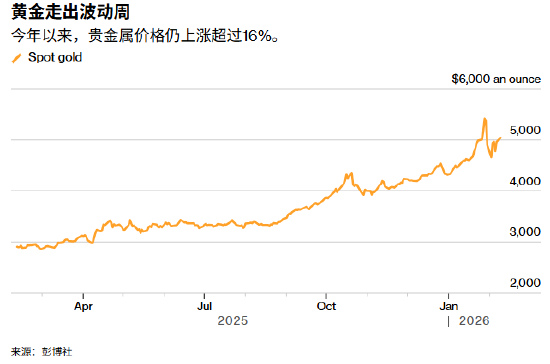
Core Viewpoint - The article discusses the current volatility and potential opportunities in the commodities market, particularly focusing on gold, industrial metals, and the petrochemical sector, suggesting that these markets are undergoing significant transformations driven by macroeconomic factors and geopolitical dynamics [2][4]. Gold Market Insights - Gold has recently experienced extreme price fluctuations, reaching a historical peak of $5,598 per ounce before a sharp correction, followed by a significant rebound [6]. - The underlying support for gold prices remains strong, driven by central bank purchases and macroeconomic uncertainties, with predictions suggesting a potential rise to $5,400 per ounce by the end of 2026 [8][9]. - Investment strategies for gold include focusing on ETFs that track gold stocks and physical gold, which provide a more manageable approach for ordinary investors [3][9]. Industrial Metals Overview - Industrial metals, particularly copper and aluminum, are witnessing significant price increases, with copper prices rising over 43% in the past year, driven by demand from energy transitions and technological advancements [10][11]. - The supply side is constrained due to declining ore grades and limited new capacity, creating a structural supply-demand gap that supports higher prices [10][11]. - The narrative around industrial metals is evolving, with new demand from sectors like electric vehicles and renewable energy reshaping their roles in the economy [11][12]. Petrochemical Sector Analysis - The petrochemical industry has shown a 45.87% increase in the past year, with expectations of a recovery driven by supply-side reforms and demand from traditional and emerging sectors [14][20]. - The sector is characterized by a slower response to economic cycles compared to industrial metals, with its recovery linked to improvements in manufacturing activity and chemical industry fundamentals [15][16]. - Investment in petrochemical ETFs is suggested as a way to capitalize on the anticipated recovery and structural changes within the industry [22].


机构重申金价6000美元目标
第一财经· 2026-02-09 23:28
Core Viewpoint - The article discusses the recent decline of the US dollar and the subsequent rise in gold prices, highlighting the market's concerns regarding the dollar's future and the impact of geopolitical events and monetary policy on asset prices [3][4]. Group 1: US Dollar Weakness - The US dollar index has fallen below the 97 mark, reaching its lowest level since February 2022, influenced by the results of the Japanese parliamentary elections and reports of potential US Treasury asset sell-offs [3][4]. - The market sentiment is shifting towards a trend of "selling US assets," which is a significant concern for traders this year [4]. - Since President Trump took office, the dollar index has dropped over 10%, driven by factors such as interest rate cuts by the Federal Reserve, deteriorating fiscal credibility, and ongoing political risks [5]. Group 2: Gold Price Surge - Gold futures have rebounded strongly, surpassing the $5000 and $5100 levels, supported by the dollar's decline and increasing global uncertainty [6][7]. - Despite a significant drop in January, the prevailing view is that the sell-off in precious metals was more of a technical adjustment rather than a fundamental shift [7]. - Deutsche Bank analysts maintain a long-term gold price target of $6000 per ounce, citing strong demand from investors, particularly from China, as a key driver for precious metal investments [8]. - UBS has raised its gold price target for the first three quarters of the year to $6200 per ounce, driven by stronger-than-expected demand primarily from investment rather than central bank purchases [8].
再失97关口!美元滑向四年低位,机构重申金价6000美元目标
Di Yi Cai Jing· 2026-02-09 23:11
Group 1: Dollar Outlook - Concerns about the dollar's future have resurfaced, with the dollar index falling below the 97 mark, reaching its lowest level since February 2022 [1][2] - The decline in the dollar is influenced by the recent Japanese parliamentary election results and reports of potential new sell-offs of U.S. Treasury assets, indicating a trend of reducing holdings in U.S. assets [2] - The dollar index has dropped over 10% since President Trump took office, driven by factors such as interest rate cuts by the Federal Reserve, deteriorating fiscal credit, and ongoing political risks [2] Group 2: Gold Market Dynamics - Gold prices have rebounded strongly, surpassing the $5,000 mark, driven by the dollar's decline and increasing concerns about the independence of the Federal Reserve [3] - Despite a significant drop in gold prices earlier this year, the prevailing market sentiment suggests that the sell-off was more of a technical adjustment rather than a fundamental shift [3] - Deutsche Bank analysts maintain a long-term forecast for gold prices to reach $6,000 per ounce, citing strong demand from China and ongoing interest in gold as a safe-haven asset [4] Group 3: Investment Sentiment - The demand for gold and other precious metals remains robust, with investors seeking diversification and alternative sources of returns amid market uncertainties [3][4] - UBS has raised its gold price target for the first three quarters of the year to $6,200 per ounce, driven by stronger-than-expected demand primarily from investment rather than central bank purchases [4] - The market sentiment towards gold remains bullish, with expectations for prices to potentially reach $7,200 per ounce in the future [4]
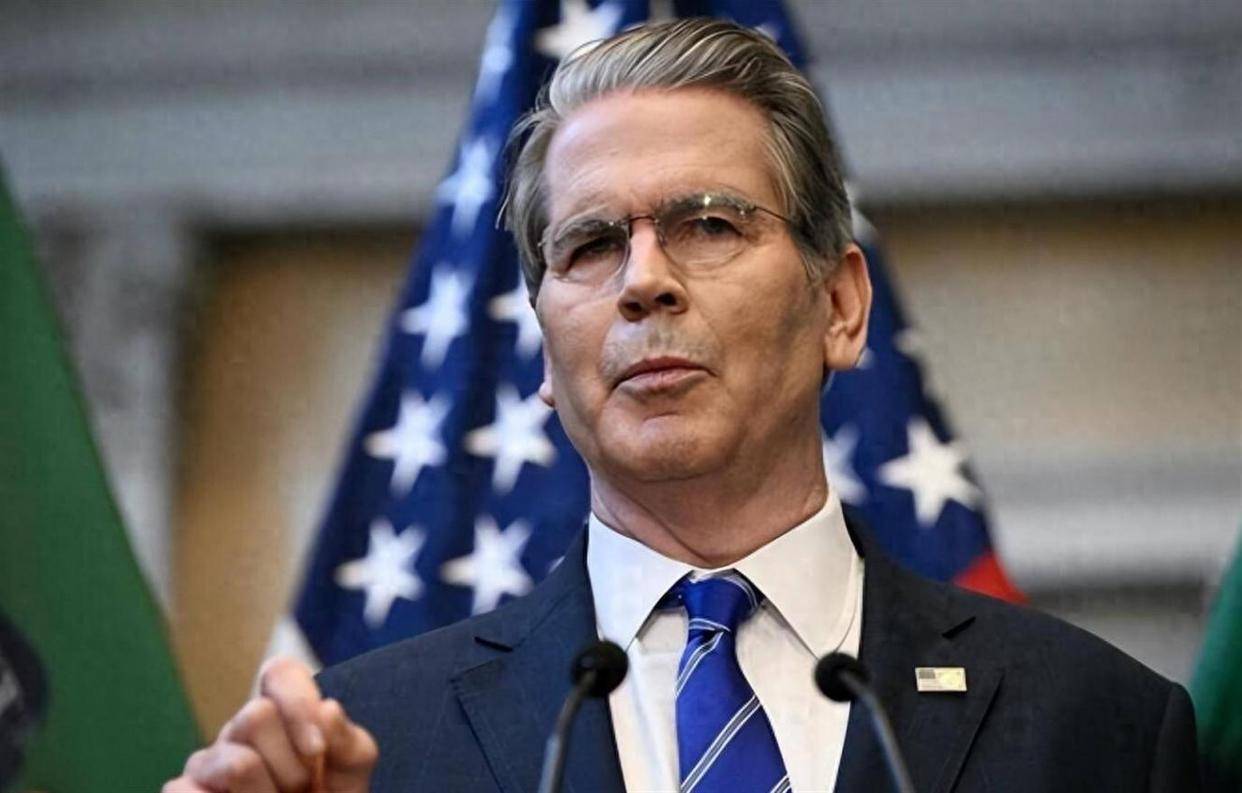
2300吨黄金运抵回国,失去定价权,美财长开甩锅中国,美元没救了
Sou Hu Cai Jing· 2026-02-09 17:12
Core Viewpoint - The U.S. Treasury Secretary's comments on the recent volatility in the gold market reflect a deeper issue regarding the diminishing control of the U.S. over gold prices, highlighting a shift in global pricing power towards China [1][6][23] Group 1: U.S. Treasury Secretary's Statements - The U.S. Treasury Secretary attributed the recent fluctuations in gold prices to "unstable" trading conditions in China, suggesting a speculative bubble burst [3][4] - His remarks were interpreted as an attempt to simplify a complex global issue into a single narrative, shifting blame to Chinese traders rather than addressing U.S. monetary policy or geopolitical risks [3][6] Group 2: Changes in Global Gold Pricing Power - The traditional dominance of London and New York in gold pricing is being challenged by the Shanghai Gold Exchange, which introduced a yuan-denominated pricing mechanism in 2016 [6][7] - By 2025, the Shanghai Gold Exchange's average daily trading volume reached 70% of that of the New York Mercantile Exchange, indicating a significant shift in market influence [6][7] Group 3: China's Central Bank Actions - As of January 2026, China's gold reserves increased to 7,419 million ounces, marking the 15th consecutive month of gold accumulation by the People's Bank of China [9][10] - This consistent buying strategy reflects a broader trend among global central banks to increase their gold holdings, with 95% of central banks planning to continue purchasing gold in the coming year [12][10] Group 4: Global Central Bank Trends - The World Gold Council reported that global central banks net purchased 863 tons of gold in 2025, maintaining historically high levels of gold accumulation [12] - Countries like Poland and Hungary are also increasing their gold reserves significantly, indicating a collective shift towards gold as a stable asset amid concerns over the existing monetary system [12][13] Group 5: Underlying Economic Concerns - The decline in trust towards the U.S. dollar is attributed to several factors, including the independence of the Federal Reserve and the sustainability of U.S. fiscal policy, which are perceived to be under threat [16][17] - Geopolitical risks and policy uncertainties have further exacerbated concerns about the reliability of dollar-denominated assets, prompting a global trend towards gold accumulation [19][20] Group 6: Historical Context and Future Implications - The current situation is reminiscent of the 1970s when the dollar's credibility was questioned, leading to a significant rise in gold prices [20][22] - The ongoing "de-dollarization" narrative is gaining traction, with central banks increasingly viewing gold as a hedge against potential instability in the dollar-based financial system [23]
美国财经媒体:全球资本正在远离美国,支付系统加速去美元化
Sou Hu Cai Jing· 2026-02-09 15:43
Core Viewpoint - The article highlights a significant shift in global capital away from U.S. assets, indicating that over-reliance on the U.S. is becoming a growing risk rather than a norm [1]. Group 1: Economic Context - The U.S. accounts for only 4% of the world's population, 10% of global growth, 13% of global trade, and approximately 15% of world economic output based on purchasing power parity, yet it holds nearly two-thirds of global listed stock indices, nearly half of private equity assets, and about 40% of the global bond market [1]. - This concentration is described as "economically inefficient, financially risky, and unsustainable" [1]. Group 2: Investor Behavior - Investors are accelerating the transfer of funds out of the U.S. due to economic gravity, concentration risk, and concerns over asset price bubbles related to artificial intelligence [3]. - Political risks, such as tariff uncertainties and attacks on the independence of the Federal Reserve, are contributing factors, but the underlying issue is the diminishing drivers of U.S. financial dominance and investor saturation in U.S. assets [3]. Group 3: Market Dynamics - Since the global financial crisis, returns in the U.S. stock market have significantly outpaced actual economic growth, leading foreign investors to triple their investments in U.S. stocks to over $20 trillion, much of which was not hedged against currency risk [5]. - Factors that have fueled this era include prolonged interest rate declines, substantial corporate tax cuts, quantitative easing, and a shift in income distribution from labor to capital [5]. - A 10% depreciation of the dollar has turned a previously strong leverage for foreign investors into a growing pressure factor [5]. Group 4: Future Capital Allocation - The limited shift in capital distribution could have substantial impacts, such as the potential release of $250 billion for investment in other markets if Norway's sovereign wealth fund reduces its U.S. investments to 40% from 53% [6]. - The funds are expected to flow into developed markets outside the U.S., particularly Europe, but the greatest opportunities lie in emerging and developing economies, which have driven over two-thirds of global growth in the past decade [6]. - These economies offer a combination of higher growth and lower correlation with developed markets, providing genuine diversification value [6].

ETF日报:影视板块正迎来一波显著的“春节档预热”行情 关注影视ETF
Xin Lang Cai Jing· 2026-02-09 15:20
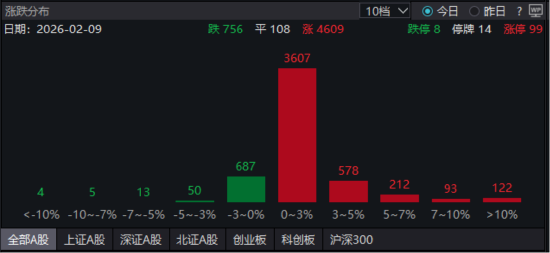
Group 1: A-Share Market Performance - The A-share market experienced a significant increase on the first trading day of the last week before the Spring Festival, with the Shanghai Composite Index rising by 1.41% to 4123.09 points and the Shenzhen Component Index increasing by 2.17% to 14208.44 points [1][12] - Over 4600 stocks in the two markets rose, with a total trading volume of approximately 2.27 trillion yuan, remaining stable compared to the previous trading day [1][12] - Most sectors showed positive performance, particularly in telecommunications, internet, and semiconductors, while only a few sectors like oil and gas experienced a pullback [1][12] - The A-share market has absorbed some valuation pressure during previous adjustments, suggesting a potential continuation of a slow bull market in the medium to long term [1][12] Group 2: Gaming Industry Insights - The gaming sector has shown promising signs with the issuance of 182 game licenses in January 2026, including 177 domestic games and 5 imported games, indicating regulatory support for the industry's healthy development [3][14] - The Chinese gaming market's actual sales revenue reached 350.79 billion yuan in 2025, marking a year-on-year growth of 7.68%, and the user base grew to 683 million [3][14] - The investment logic in the gaming sector focuses on "performance realization" and "AI technology transformation," with a confirmed recovery point in 2025 after previous adjustments [4][15] - The application of AI technology in game development is reshaping valuation logic, reducing development costs, and enhancing user willingness to pay through innovative gameplay [4][15] - The China Securities Animation and Gaming Index's price-to-earnings ratio is currently in a relatively reasonable historical range, indicating high upward elasticity for the sector [4][16] Group 3: Film and Television Sector Dynamics - The film and television sector is experiencing a significant pre-Spring Festival rally, with the Film and Television ETF rising over 7% in a single day, driven by the upcoming 2026 Spring Festival holiday and the release of major films [6][17] - The domestic box office for 2025 reached 51.83 billion yuan, a year-on-year increase of approximately 22%, recovering to over 80% of historical highs [7][17] - AI technology is deeply empowering the film industry, with advancements in scriptwriting and special effects production, which can significantly lower production costs and enhance profitability for leading companies [7][17] - The Film and Television ETF tracks the China Securities Film Index, covering traditional cinema leaders and new media giants, reflecting the overall performance of the film and television content production and distribution industry [7][17] Group 4: Gold Market Trends - The gold market has shown resilience after a sharp correction, with the Gold ETF rising by 3.52% and the Gold Stock ETF increasing by 2.71% [8][18] - China's central bank has increased its gold reserves for the 15th consecutive month, reaching 74.19 million ounces (approximately 2307.57 tons) by the end of January [8][18] - The long-term trend for gold remains strong, supported by challenges to the dollar credit system and increasing demand for gold as a safe asset amid global geopolitical uncertainties [8][18] Group 5: Cloud Computing and AI Investment - Major cloud companies have significantly raised their capital expenditure guidance, with Google projecting between $175 billion and $185 billion for 2026, nearly doubling year-on-year [9][19] - The AI supply chain remains tight, with companies like Google and Microsoft reporting high demand for AI infrastructure, indicating ongoing investment in AI capabilities [9][19] - The A-share market's segments related to optical modules and servers are positioned at the core of the global AI supply chain, likely benefiting from the increased capital expenditure [10][20]
ATFX:暴跌后狂飙重上5000美元 黄金再次王者归来
Xin Lang Cai Jing· 2026-02-09 14:42
Core Viewpoint - The gold market has experienced significant volatility, but buying on dips has returned, with gold prices rising above $5000 per ounce, supported by a decline in the dollar and a 4% increase last week, resulting in a 1.9% weekly gain [1][4]. Group 1: Market Dynamics - Gold prices saw a 1.7% increase during early trading on Monday, driven by the election of Japan's Prime Minister Kishi Nobuo, which raised expectations for loose fiscal policies and continued pressure on the yen, supporting gold as a value storage asset [4][10]. - Following a substantial drop from historical highs, gold prices fell approximately 11% from the peak on January 29, yet have risen 15% year-to-date, indicating a strong underlying demand despite recent volatility [4][10]. - The market is currently in a high volatility state, awaiting key U.S. economic data, including non-farm payrolls and CPI, which will shape expectations regarding the Federal Reserve's interest rate decisions and influence gold's potential for a strong rebound [5][11]. Group 2: Long-term Trends - The continuous increase in gold purchases by the Chinese central bank over the past 15 months reflects a long-term trend of "de-dollarization" and diversification of reserves, providing a solid demand foundation for the gold market [6][12]. - Major financial institutions like Deutsche Bank and Goldman Sachs have reiterated their bullish outlook on gold, shifting market focus from short-term fluctuations to long-term drivers such as global debt and currency credit hedging, stabilizing market sentiment [6][12]. - The recent rebound in gold prices is characterized as a technical recovery following a sharp decline, supported by long-term positive factors, but its sustainability will depend on the performance of upcoming U.S. economic data [7][12].
China To Accelerate De-dollarization By Cutting US Treasury Exposure — A New Macro Tailwind For Crypto?
Yahoo Finance· 2026-02-09 12:17
Core Insights - China's de-dollarization efforts are gaining momentum in early 2026, with state-linked banks reportedly selling U.S. Treasuries and pivoting towards gold and the yuan, indicating a cautious approach to U.S. dollar dependency [1][5]. Group 1: Market Impact - The announcement led to a decline in U.S. Treasury prices and an increase in yields, with the benchmark 10-year yield rising to approximately 4.24–4.25% [2]. - Although China's banks do not hold enough U.S. debt to destabilize the market independently, the signal of a major creditor reducing exposure is significant [2]. - The immediate market reaction suggests that this move may negatively impact crypto markets in the short term [6]. Group 2: Historical Context - China's holdings of U.S. Treasuries have been decreasing, with official holdings dropping to $682.6 billion by late 2025, the lowest since 2008, reflecting a long-term trend that began after 2017 [3]. - The decline in U.S. debt exposure is linked to the U.S.–China trade war and concerns over political risks associated with dollar assets, which intensified after the freezing of Russian dollar reserves in 2022 [3][4]. - The strategic vulnerability of holding large amounts of U.S. debt has led China to increase gold purchases, raising its reserves to over $390 billion while reducing reliance on U.S. Treasuries [4]. Group 3: Strategic Shift - The latest guidance from China applies to commercial banks rather than sovereign reserves, indicating a measured approach to the shift away from the dollar [5]. - This trend reinforces China's positioning for a future with less dollar dominance, aligning with broader de-dollarization efforts [5][7]. - The combination of reduced U.S. Treasury exposure and increased gold accumulation enhances Bitcoin's appeal as a neutral hedge in a multipolar financial landscape [7].
金价震荡收涨,长期趋势不改
Mei Ri Jing Ji Xin Wen· 2026-02-09 11:13
Core Viewpoint - The gold market is experiencing fluctuations with a recent upward trend, supported by geopolitical tensions and ongoing de-dollarization efforts, while the U.S. economic indicators present mixed signals [1][2][3][4][5] Group 1: Gold Market Dynamics - As of February 6, London spot gold closed at $4,966.61 per ounce, with a cumulative increase of $86.58 per ounce since January 30, marking a rise of 1.77% [1] - The highest gold price reached $5,091.95 per ounce, while the lowest was $4,402.06 per ounce during the week [1] - The Chinese central bank has increased its gold reserves for the fifteenth consecutive month, which adds confidence to the precious metals market [1][3] Group 2: Economic Indicators - The U.S. manufacturing PMI for January was reported at 52.6, indicating expansion and surpassing expectations [2] - The U.S. labor market showed signs of deterioration, with ADP employment numbers at 22,000, below previous and expected figures [2] - The U.S. non-farm payroll report is delayed until February 11, and the CPI report until February 13, due to the government shutdown [2] Group 3: Federal Reserve and Geopolitical Factors - Federal Reserve Vice Chairman Jefferson indicated that the current interest rate stance is appropriate for the economy, with expectations of inflation trends improving later in the year [3] - The U.S. government shutdown has ended, and trade agreements have been reached with India and Argentina [3] Group 4: Long-term Outlook for Gold - The long-term trend for gold remains strong, driven by monetary expansion and fiscal deficits, challenging the dollar's credit system [5] - The ongoing global de-dollarization trend is expected to enhance gold's role as a pricing anchor, providing upward momentum for precious metals [5] - The combination of the Fed's rate-cutting cycle, increasing geopolitical uncertainties, and global de-dollarization trends supports gold prices in the medium to long term [5]
黄金周报|金价震荡收涨,长期趋势不改
Sou Hu Cai Jing· 2026-02-09 11:11
Core Viewpoint - The gold market is experiencing fluctuations due to geopolitical tensions and ongoing de-dollarization, which are expected to support gold prices in the medium to long term [1][4][5]. Group 1: Market Dynamics - As of February 6, London spot gold closed at $4,966.61 per ounce, with a cumulative increase of $86.58 per ounce since January 30, representing a 1.77% rise [1]. - The highest and lowest prices for gold last week were $5,091.95 and $4,402.06 per ounce, respectively [1]. - The Chicago Mercantile Exchange raised margin requirements for gold and silver on February 5, indicating a move to mitigate risks through deleveraging [1]. - The U.S. manufacturing PMI for January was reported at 52.6, exceeding expectations, while the services PMI rose to 53.8, marking a new high for 2024 [2]. - The U.S. labor market showed signs of weakness, with ADP employment numbers at 22,000, below previous figures and expectations [2]. Group 2: Central Bank Actions - The People's Bank of China has increased its gold reserves for the fifteenth consecutive month, reaching 7,419 million ounces (approximately 2307.567 tons) as of the end of January [3]. - This increase in gold reserves is seen as a confidence booster for the precious metals market [1][3]. Group 3: Long-term Outlook - The long-term trend for gold remains strong, supported by factors such as monetary expansion, fiscal deficit monetization, and increasing demand for gold as a safe asset amid global geopolitical instability [5]. - The ongoing de-dollarization trend is expected to position gold as a new pricing anchor, enhancing its upward momentum [5]. - The combination of a Federal Reserve rate-cutting cycle, increasing global uncertainties, and de-dollarization trends provides medium to long-term support for gold prices [5].