碳中和

Search documents
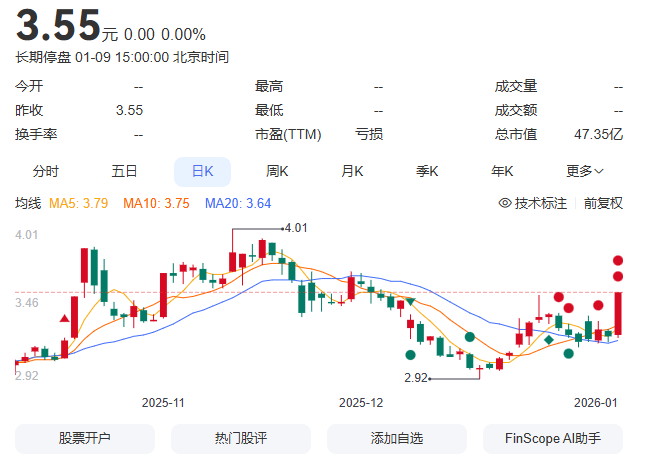
中新天津生态城获批全球环境基金赠款
Zhong Guo Fa Zhan Wang· 2026-01-12 08:35
Core Insights - The GEF-8 project, aimed at sustainable urban development in the Beijing-Tianjin-Hebei region, has officially entered its implementation phase with a focus on carbon reduction and green practices [1][4] Group 1: Project Overview - The project is supported by a $3.4 million grant from the Global Environment Facility and will run from 2026 to 2030, focusing on building over 30 green sustainable demonstration projects [3] - The GEF-8 project is one of the first approved among 20 global sustainable projects, emphasizing green transportation, energy, low-carbon buildings, and biodiversity protection [4] Group 2: Implementation Focus - The project will concentrate on four key areas: smart transportation, green buildings, sustainable energy, and biodiversity [6] - In smart transportation, the project aims to develop an intelligent traffic cloud control platform, including applications for autonomous buses [6] - For green buildings, the initiative plans to construct ultra-low energy and near-zero energy buildings, along with low-carbon technology laboratories [6] - The sustainable energy component will enhance renewable energy utilization through charging facilities and photovoltaic technology upgrades [6] - Biodiversity efforts will include establishing bird observation stations and conducting marine water quality monitoring [6] Group 3: Broader Impact - The project is part of a significant cooperation between China and Singapore, aiming to set a benchmark for sustainable urban development globally [5] - The ecological city has received multiple national and international honors, reinforcing its role as a model for green development [5][7] - The initiative aligns with China's goals for carbon peak and carbon neutrality, contributing to the global promotion of sustainable city concepts [6][7]

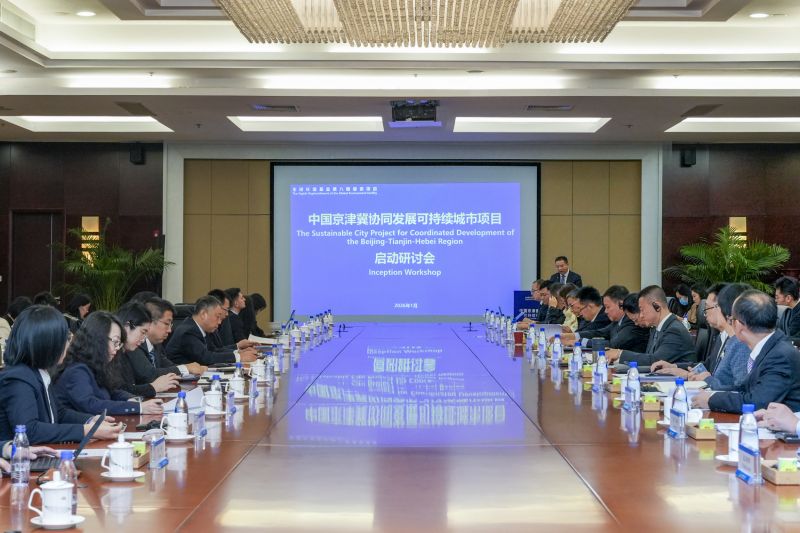
新中港涨9.58%,成交额4.09亿元,近3日主力净流入4670.19万
Xin Lang Cai Jing· 2026-01-12 07:33
Core Viewpoint - The company, Zhejiang Xinhong Port Thermal Power Co., Ltd., is focusing on becoming a regional comprehensive energy supply center and carbon neutrality center, with significant investments in carbon reduction technologies and energy efficiency improvements [2]. Group 1: Company Developments - The company aims to enhance its carbon reduction efforts through efficiency improvements and coupling reduction strategies, including the production of RDF and the modification of biomass fuel boilers [2]. - As of September 30, the company reported a revenue of 529 million yuan, a year-on-year decrease of 18.48%, while the net profit attributable to shareholders increased by 2.51% to 91.83 million yuan [8]. - The company has a total market capitalization of 4.078 billion yuan, with a trading volume of 409 million yuan and a turnover rate of 10.21% on January 12 [1]. Group 2: Financial Analysis - The company has seen a net inflow of 29.51 million yuan from major investors, with a ranking of 9 out of 102 in its industry [4]. - The average trading cost of the company's shares is 9.23 yuan, with the stock price approaching a resistance level of 10.22 yuan, indicating potential for upward movement if this level is surpassed [6]. - The company has distributed a total of 344 million yuan in dividends since its A-share listing, with 204 million yuan distributed over the past three years [9]. Group 3: Industry Context - The company operates in the public utility sector, specifically in power and thermal services, with its main business revenue derived from combined heat and power (95.17%), followed by energy storage (4.73%) [7]. - The company is involved in several key industry concepts, including carbon neutrality, energy storage, and small-cap investments [7].

德固特跌0.32%,成交额1.83亿元,后市是否有机会?
Xin Lang Cai Jing· 2026-01-12 07:26
Core Viewpoint - The company, DeGute, is focusing on energy-saving and environmental protection technologies, with significant advancements in high-temperature air preheaters and hydrogen energy production, benefiting from the depreciation of the RMB and its inclusion in the "specialized and innovative" small giant enterprises list. Group 1: Company Overview - DeGute specializes in energy-saving and environmental protection equipment, with its main business revenue composition being 76.84% from energy-saving heat exchange equipment, 8.40% from equipment maintenance and modification, and 5.27% from other environmental equipment [8] - The company was established on April 5, 2004, and went public on March 3, 2021, located in Qingdao, Shandong Province [8] Group 2: Product and Technology - The company has developed high-temperature air preheaters that utilize heat energy released during the gasification process, achieving a 45% increase in production and a fuel saving of 9.3%-13.2% [2] - DeGute has entered the hydrogen energy production sector, providing energy-saving heat exchange and storage equipment, and possesses the design qualifications for pressure vessels [2][3] Group 3: Market Position and Financials - As of the 2024 annual report, overseas revenue accounts for 59.28% of total revenue, benefiting from the depreciation of the RMB [4] - For the period from January to September 2025, DeGute reported a revenue of 382 million, a year-on-year decrease of 9.29%, and a net profit of 72.26 million, down 26.39% year-on-year [9]
黑色金属2026年度报告:成本定价,宽幅震荡
Guo Du Qi Huo· 2026-01-12 06:30
Report Industry Investment Rating - Not provided in the given content Core Views of the Report - The steel industry is currently in the depression phase of the long - term (Kondratieff) cycle, the downward bottom - seeking phase of the medium - term (Juglar, real estate) cycle, and the weak recovery and transition phase of the short - term (inventory) cycle. The expected "active restocking cycle" led by demand recovery has not occurred, and the cycle switch has been further postponed [2][29]. - The steel export needs a mindset upgrade from "tonnage" to "grade". When "Chinese steel" becomes a synonym for certain quality, innovation, or sustainability in the global market, its export will truly enter the deep - blue sea [2][63]. Summary by Relevant Catalogs 2025 Market Review - **Iron Ore**: In 2025, the iron ore market had a complex trend contrary to the pessimistic predictions at the beginning of the year. The price showed a narrow - range fluctuation, with a "U - shaped" annual price movement. The main contract fluctuated in the range of [689.0, 838.5], with an amplitude of 149.5 points (19.32%), and the year - end price was basically the same as the beginning of the year. The supply - demand structure was moving towards a trend of loosening. The price first rose and then fell in the first half of the year, and rebounded and then fluctuated in the second half [1][11][13]. - **Steel**: Affected by weak terminal demand, steel prices continued to decline. Taking rebar as an example, the main contract fluctuated in the range of [2928, 3382], with an amplitude of 454 points (14.38%) and a decline of 184 points (- 5.57%). Through self - disciplined production control and exports by steel mills, the industry achieved a difficult "supply - demand re - balance" and a short - term reverse profit repair [1][11][14]. - **Terminal Demand**: In 2025, the real estate market entered a deep - adjustment period of accelerated decline in investment and sales. Infrastructure investment changed from "counter - cyclical strong hedging" to "precise support", and manufacturing investment showed resilience, becoming a key stabilizer in the overall economic downturn [20][21][23]. - **Export Demand**: In 2025, steel exports showed a complex picture of "steady growth in total volume, intensified price competition, and accelerated structural optimization". The implicit carbon cost of Chinese steel exports began to appear, and future competitiveness depends on product upgrading, carbon footprint reduction, and transformation to providing overall solutions [26][28] Fundamental Analysis Iron Ore - **Supply**: In 2025, the global iron ore supply continued to be loose. The global iron ore shipment volume was 16.4 billion tons, with a year - on - year increase of 516.3 million tons. Major mines such as Vale, BHP, and Rio Tinto had stable or increasing production. The 47 - port iron ore arrival volume was at a high level in the past three years [30][31][33]. - **Demand**: In 2025, the production motivation of steel mills was strong, and the demand for iron ore increased significantly. The average daily hot - metal output of 247 steel enterprises was 236.80 million tons, higher than the average in 2024. However, the demand for iron ore decreased in the second half of the year [36][39] - **Inventory**: In 2025, the iron ore inventory at Chinese 47 ports continued to accumulate, reaching a historical high. By the end of the year, the total inventory was 167.2179 million tons, a year - on - year increase of 11.26 million tons [40] Steel (Rebar & Hot - Rolled Coil) - **Supply**: In 2025, steel mills controlled production, and the output decreased. The output of high - value - added products increased significantly, optimizing the supply - side structure [42] - **Demand**: In 2025, domestic demand for steel was weak, mainly due to the continued drag of real estate and the slowdown of infrastructure growth. Exports were strong, with the cumulative steel exports from January to November reaching 107.74 million tons, a year - on - year increase of 6.7% [51][53] - **Inventory**: In 2025, the steel mill inventory and social inventory of building materials remained at a low level. The steel mill inventory adopted an "active de - stocking" strategy, and the social inventory was in a "passive de - stocking" state [55][56] Thinking: Upgrade of Steel Export Mindset - **From "Product Export" to "Solution and Standard Output"**: Steel should become a carrier of green and intelligent building solutions, such as China Baowu's green - low - carbon production base in Saudi Arabia [61] - **From "Hard - Power Display" to "Soft - Power Communication"**: Steel needs to tell its own story, communicate its value in sustainable development and innovative design, and add a "brand story" dimension [62] - **From "One - Way Output" to "Ecosystem Co - construction and Local Integration"**: Steel export can be upgraded to co - construct an industrial ecosystem with local partners in overseas markets [63] Market Outlook - **Iron Ore**: In 2026, the iron ore market will enter a new stage dominated by "supply expansion cycle" and "demand structure differentiation", with global supply - demand becoming looser. The supply will increase significantly, and the demand is expected to decline slightly. The price center is expected to move down further, showing a "stable first and then weak" trend. It is recommended to seize the "short - term long and medium - term short" opportunities [3][64] - **Steel**: In 2026, the steel market will operate under the framework of "demand plateau" and "strong supply constraints". The core contradiction will shift from total over - supply to structural bottom - seeking of demand. The supply - demand weak balance will continue, and the cost - pricing weight will increase. Steel prices are expected to show a "wide - range fluctuation with a slightly lower center" trend. It is recommended to shift from the simple seasonal thinking of "high in the front and low in the back" to the "plate strong and construction weak" structural arbitrage opportunities [4][65]
数字人民币App上线“碳普惠”服务|绿色金融周报
2 1 Shi Ji Jing Ji Bao Dao· 2026-01-12 04:11
Key Insights - The rapid development of the green finance market has led to an increase in relevant information and data, with a focus on the latest trends and practices in green finance to provide decision-making references for stakeholders [1] Group 1: Digital Currency and Green Finance - The digital RMB app has launched a carbon-inclusive service to enhance the application of digital RMB in green finance, allowing users to accumulate carbon credits from their low-carbon behaviors and exchange them for digital RMB [3] - This initiative is seen as a significant step by the People's Bank of China to encourage public participation in green low-carbon actions, linking personal green behavior with monetary incentives [3] Group 2: Policy Optimization in Green Financing - Jiangsu Province has optimized the "Environmental Base Loan" policy to expand support, enhance interest subsidy effectiveness, and strengthen financing guarantees, including the removal of financing limits and an increase in interest subsidy rates from 1% to 1.5% [4][5] - The policy aims to simplify application processes and improve loan issuance efficiency, addressing funding challenges for industrial enterprises in emission reduction [5] Group 3: Carbon Market Performance - The national carbon market saw a maximum price of 83.00 CNY per ton last week, with a closing price increase of 1.78% compared to the previous week [6] - The total transaction volume for carbon emission allowances reached 4,688,068 tons, with a total transaction value of approximately 352 million CNY [7] Group 4: Green Financial Instruments - Gansu Province issued the first "green infrastructure + regional coordinated development" dual-dimension sustainable bond in China, with a scale of 2 billion CNY and a 3-year term, linking the interest rate to specific performance targets [8][9] - Swire Properties successfully issued a 5-year, 500 million USD green bond with a coupon rate of 4.25%, reflecting strong market demand with an oversubscription of over four times [10] - The proceeds from the bond will be used for sustainable building projects and refinancing existing green projects, enhancing transparency and responsibility in fund usage [10]


多部门联合举办座谈会:规范动力和储能电池产业竞争丨碳中和周报
2 1 Shi Ji Jing Ji Bao Dao· 2026-01-12 03:45
Group 1: Industry Developments - The meeting held on January 7 by multiple departments aims to regulate competition in the power and energy storage battery industry, addressing issues like blind construction and irrational price competition that disrupt market order [2] - The National Energy Administration released the "Implementation Rules for the Management of Renewable Energy Green Power Certificates," which outlines a comprehensive management mechanism for green certificates, enhancing the scientific and operational aspects of the green certificate system [3][4] - The Ministry of Ecology and Environment plans to release 12 methodologies for voluntary greenhouse gas emission reduction projects by 2025, marking a significant expansion of the voluntary reduction market [5][6] Group 2: Regional Highlights - Inner Mongolia is set to increase its new energy installed capacity to over 170 million kilowatts by 2025, with wind power capacity exceeding 100 million kilowatts, and aims to enhance its hydrogen energy and storage systems [7] - The "Xinjiang Power to Chongqing" project has successfully connected its first batch of wind turbine units to the grid, expected to deliver approximately 24 billion kilowatt-hours of green electricity annually, significantly impacting the energy structure in Chongqing [8] Group 3: Future Trends - Roland Berger's report predicts that by 2026, comprehensive energy services will focus on solutions, ushering in a new era of zero-carbon parks, driven by supportive policies and technological advancements [9][10] - The report highlights three major opportunities for comprehensive energy services: demand release through policy support, market configuration driven by new energy market entry, and model upgrades encouraging distributed resource aggregation [10]
中银国际:供需格局有望重塑 固态电池加速落地
Zhi Tong Cai Jing· 2026-01-12 02:33
Core Viewpoint - The report from Zhongyin International indicates that global sales of new energy vehicles (NEVs) are expected to maintain high growth, potentially reaching a historical high by 2026, driven by strong demand and technological advancements in the industry [1][2]. Group 1: New Energy Vehicle Market - Global demand for new energy vehicles is projected to continue growing, with sales expected to reach approximately 26 million units in 2026, representing a year-on-year increase of about 15% [2]. - The market is experiencing steady growth, with increasing penetration rates and expanding market space, supported by the introduction of new models and advancements in smart and connected technologies [2]. Group 2: Battery Industry Outlook - The demand for power batteries is expected to grow significantly, with domestic installed capacity projected to maintain a high growth rate in 2026 [3]. - The market share of lithium iron phosphate batteries is anticipated to continue rising, while the costs of lithium battery raw materials have increased since October 2025, posing challenges for battery manufacturers in cost management [3]. Group 3: Material Sector Dynamics - The consensus on "anti-involution" in the midstream materials sector suggests that high demand coupled with cautious capacity expansion may lead to a supply-demand mismatch, particularly in the lithium hexafluorophosphate segment, which is expected to see price recovery [4]. - Companies in the tight supply segments, such as lithium iron phosphate cathodes, separators, anodes, and copper foils, are recommended for investment due to their potential for profit recovery [4]. Group 4: Solid-State Battery Development - The industrialization of solid-state batteries is accelerating, entering a phase of pilot testing and small-scale vehicle validation, which is expected to benefit equipment manufacturers and high-value material segments [5]. - Companies that can achieve stable supply, have mature processes, and clear cost reduction paths are recommended for investment, especially those that have collaborated early with industry leaders [5]. Group 5: Investment Recommendations - The new energy vehicle supply chain is expected to maintain high growth, with battery cell segments showing strong resilience in profitability [6]. - Investment focus is suggested on leading companies in tight supply segments and those involved in solid-state battery technology, including firms like CATL, EVE Energy, and others listed in the report [6].



大越期货沪铝周报-20260112
Da Yue Qi Huo· 2026-01-12 02:32
交易咨询业务资格:证监许可【2012】1091号 沪铝周报(1.5~1.9) 大越期货投资咨询部:祝森林 从业资格证号:F3023048 投资咨询证号:Z0013626 联系方式:0575-85226759 重要提示:本报告非期货交易咨询业务项下服务,其中的观点和信息仅作参考之用,不构成对任何人的投资建议。 我司不会因为关注、收到或阅读本报告内容而视相关人员为客户;市场有风险,投资需谨慎。 目录 一、行情回顾 二、基本面(库存结构) 三、市场结构 上周回顾 沪铝周报: 沪铝上周震荡上行,上周主力合约上涨6.31%,周五收盘报24330元/吨。在碳中和下长期控制产能,国 内房地产压制需求不振,取消对铝材出口退税,对于国内铝价构成利空,消费有所影响,但注意铝代 铜机会。国内基本面上,需求进入淡季,关注后期消费变化。上周LME库存497825吨,较前周出现小幅 减少,SHFE周库存增14010吨至143828吨。 期货主力 数据来源:博易大师 供需平衡 数据来源:Wind 基本面 1、供需平衡表 2、铝 3、铝土矿 4、氧化铝 5、铝棒 供需平衡 | | | | 中国年度供需平衡表 铝(万吨) | | | | -- ...
大越期货沪铝早报-20260112
Da Yue Qi Huo· 2026-01-12 02:11
Report Summary 1. Report Industry Investment Rating - Not mentioned in the provided content 2. Core Viewpoints - Copper: The supply side of copper is disturbed with smelting enterprises reducing production and the scrap - copper policy being relaxed. The December manufacturing PMI rose to the expansion range. However, the spot is at a discount to the futures. Copper inventories have mixed trends, and the price hit a new high with high - level fluctuations. Attention should be paid to position control [4] - Aluminum: There is a game between interest - rate cuts and weak demand. Factors such as carbon - neutrality controlling capacity expansion, geopolitical disturbances in Russia - Ukraine affecting Russian aluminum supply, and interest - rate cuts are positive. On the other hand, the global economic outlook is not optimistic and high aluminum prices may suppress downstream consumption, and the cancellation of export tax rebates for aluminum products are negative factors [5] 3. Summary by Relevant Catalogs Copper - **Fundamentals**: Supply - side disturbances, smelting enterprise production cuts, relaxed scrap - copper policy, and the December manufacturing PMI rising to 50.1% (up 0.9 percentage points from the previous month) are positive factors [4] - **Basis**: The spot price is 100,570 with a basis of - 840, indicating a discount to the futures, which is a negative factor [4] - **Inventory**: On January 9, copper inventory decreased by 2,100 to 138,975 tons, while the SHFE copper inventory increased by 35,201 tons to 180,543 tons compared to the previous week, showing a neutral situation [4] - **Market Chart**: The closing price is above the 20 - day moving average, and the 20 - day moving average is moving upwards, which is positive [4] - **Main Position**: The main net position is long, but the long position is decreasing, which is positive [4] - **Expectation**: Geopolitical disturbances in Indonesia's Grasberg Block Cave mine event are ongoing, and the copper price hit a new high with large - scale high - level fluctuations. Position control is necessary [4] Aluminum - **Spot Price**: The Shanghai spot price was 70,770, down 375; the Nanchu spot price was 70,690, down 450; the Yangtze River spot price was 70,870, down 400 [6] - **Inventory**: The SHFE warehouse receipt inventory was 70,798 tons, an increase of 699 tons; the LME inventory (daily) was 74,750 tons, a decrease of 425 tons; the SHFE inventory (weekly) was 136,300 tons, an increase of 29,728 tons [6] - **Supply - Demand Balance**: From 2018 - 2023, China's aluminum market was generally in a supply - shortfall situation, with shortages ranging from 4.31 to 68.61 million tons. In 2024, it is expected to have a supply surplus of 15 million tons [25]
国内知名油服企业或将第二次被国资控股?
Xin Lang Cai Jing· 2026-01-12 01:18
Core Viewpoint - Huibo Technology Co., Ltd. (惠博普) is undergoing a potential change in its controlling shareholder, with the current major shareholder, Changsha Water Group, planning to transfer 25%-30% of its shares to a state-owned mechanical equipment enterprise, which may lead to a change in the actual controller of the company [2][8]. Company Overview - Huibo was established in 1998 and went public in 2011 on the Shenzhen Stock Exchange (stock code: 002554), focusing on technology-driven solutions for oil and gas field process equipment [2][8]. - The company has evolved from a single equipment supplier to an integrated service provider, covering the entire production system of oil and gas fields [4][10]. Development Stages - The development of Huibo can be divided into three key phases: 1. **Startup Phase (1998-2000)**: The company entered the market with proprietary products, achieving significant milestones such as winning contracts for oil and gas separation equipment [9]. 2. **Business Expansion (2001-2010)**: Transitioned to a system integrator, becoming the first private enterprise to provide oil and gas processing equipment for offshore oil in 2003 and starting overseas expansion in 2004 [9]. 3. **Scale and Internationalization (2011-Present)**: After going public, the company accelerated its expansion, with Changsha Water Group becoming the controlling shareholder in 2019 [9]. Core Business Segments - Huibo's core business includes: 1. **Oil and Gas Engineering and Services (EPCC)**: Offering comprehensive services from feasibility studies to construction, with projects in over 30 countries [11]. 2. **Environmental Engineering and Services**: Focusing on wastewater treatment and environmental protection, with plans to participate in carbon capture projects [11]. 3. **Oil and Gas Resource Development and Utilization**: Leveraging technical advantages to engage in domestic and international oil and gas field development [11]. Recent Developments - **Performance Improvement**: In the first three quarters of 2025, the company reported total revenue of 1.608 billion yuan and a net profit of 10.53 million yuan, marking a year-on-year increase of 113.73% [11]. - **New Project Launch**: The company secured a contract for the Naft Khana oil field revival project in Iraq worth 225 million USD, expanding its presence in the Middle East [11]. - **Control Change**: The planned share transfer by Changsha Water Group may lead to a change in the actual controller of Huibo [11]. Future Strategic Planning - **Digital Transformation**: Aiming to create a comprehensive digital service platform for the energy sector, promoting smart oil fields and digital twin technologies [11]. - **Dual Business Synergy**: Strengthening collaboration between energy services and water environment sectors, leveraging the advantages of Changsha Water Group [11]. - **Technological Innovation**: Continued investment in carbon neutrality technologies and high-end equipment development to enhance core competitiveness [11].