绿色转型

Search documents
中美俄稀土储量差距断崖:俄1000万吨,美国180万吨,中国呢?
Sou Hu Cai Jing· 2026-01-10 04:29
Core Insights - Rare earth elements have become essential resources in today's technology-driven world, leading to intensified global competition for these materials [1][12] Group 1: Russia's Arctic Discoveries - Russia has discovered multiple mineral deposits in the Arctic region, with preliminary estimates of reserves exceeding 10 million tons, containing significant amounts of critical elements like neodymium and dysprosium [1] - The Russian government is investing heavily in infrastructure to support the development of these Arctic deposits, with the project expected to start in 2023 and preliminary confirmations by mid-2025 [1] Group 2: Comparison with the United States - The United States has approximately 1.8 million tons of rare earth reserves, primarily located in an old mine in California, and has faced challenges in domestic mining due to strict environmental regulations and rising costs [3] - The U.S. relies heavily on imports for rare earth elements, which are crucial for military applications, and the recent Russian discoveries have raised concerns about supply chain security [3][8] Group 3: China's Dominance - China leads the world in rare earth reserves with 44 million tons, accounting for nearly 40% of global supply, and has established a comprehensive supply chain since the 1980s [5] - By 2024, China's production is expected to reach 270,000 tons, controlling 70% of global supply and 92% of refining technology, making it a dominant player in the market [5] Group 4: Future Projections and Geopolitical Implications - The global supply landscape for rare earth elements is expected to remain dominated by China, despite Russia's Arctic project potentially increasing supply by 2025 [7][10] - The U.S. is pushing for a green transition, but shortages of rare earth materials could hinder progress, particularly in solar panel production [7] - Geopolitical tensions and resource competition are likely to shape the future of the rare earth market, with potential collaborations between the U.S. and China being discussed to address environmental concerns and technological advancements [10][12]


扩内需政策效果显现,2025年12月CPI超预期增长
Hua Xia Shi Bao· 2026-01-10 04:12
Group 1 - The core consumer demand is increasing, leading to a rise in the Consumer Price Index (CPI) for December, which increased by 0.2% month-on-month and 0.8% year-on-year, exceeding market expectations [2][3] - The core CPI, excluding food and energy, rose by 1.2% year-on-year, indicating stable domestic demand [2][4] - The Producer Price Index (PPI) showed a month-on-month increase of 0.2% and a year-on-year decrease of 1.9%, with the decline narrowing due to improved supply-demand structures [5][6] Group 2 - Prices of communication tools, maternal and infant products, entertainment durable goods, and household appliances increased by 1.4% to 3.0% month-on-month, reflecting the effectiveness of consumption-boosting policies [3][4] - Food prices rose by 1.1% year-on-year, contributing significantly to the CPI increase, while pork prices decreased by 1.7% due to sufficient supply [4][5] - The prices of durable goods showed overall improvement, with household appliances rising by 1.4% month-on-month, marking a historical high [4][5] Group 3 - The energy prices decreased by 0.5%, with gasoline prices falling by 1.2% due to international oil price fluctuations [4][5] - The prices in the coal mining and washing industry and coal processing rose by 1.3% and 0.8% respectively, continuing a five-month upward trend [5][6] - New production capacities in digital economy-related industries are driving price increases, with significant rises in prices for external storage devices (15.3%) and biomass liquid fuels (9.0%) [6]

安庆海关“一窗一策”精准服务“纸塑之乡”绿色转型闯东盟
Xin Lang Cai Jing· 2026-01-10 03:00
Group 1 - A batch of environmentally friendly paper cups produced by Anhui Delin Environmental Protection Development (Group) Co., Ltd. has successfully been exported to ASEAN countries, aimed at coffee and takeaway service applications [1] - Anhui Delin's fully biodegradable paper cups can decompose completely within six months, despite a production cost that is 30% higher than traditional options, with monthly sales exceeding 50 million units [1] - The company has obtained multiple international certifications and has exported to over 20 countries, with a notable focus on the ASEAN market, having applied for 22 certificates of origin with a total value of 5.9293 million yuan [1] Group 2 - Anqing Yiren Paper-Plastic Packaging Materials Co., Ltd. has invested over 5 million yuan since 2021 in equipment upgrades and technological improvements, resulting in an 80% reduction in waste emissions [2] - Since 2025, the company has applied for 73 certificates of origin for exports to ASEAN, amounting to over 15 million yuan, focusing on medical sterilization packaging and related products [2] - Anqing Customs has tailored a "one-window, one-policy" service plan to facilitate the export of green products, enhancing customs efficiency through integrated services and specialized support for the paper-plastic industry [2]
物价温和回升背后,有哪些积极变量?
2 1 Shi Ji Jing Ji Bao Dao· 2026-01-10 02:10
Group 1 - The consumer price index (CPI) in China increased by 0.8% year-on-year in December 2025, marking the highest growth since March 2023, driven by effective domestic demand policies and increased consumption during the New Year holiday [1] - The core CPI, excluding food and energy prices, rose by 1.2% year-on-year, indicating sustained consumer recovery momentum [1] - The industrial producer price index (PPI) showed a month-on-month increase, with the year-on-year decline narrowing, reflecting improvements in industrial production and pricing [1] Group 2 - The service sector and quality consumer goods prices have been steadily rising, with service prices increasing for eight consecutive months, indicating a shift in consumer spending from basic to quality-oriented products [2] - Prices in the digital economy sector, such as external storage devices, rose by 15.3% year-on-year, while biomass liquid fuel prices increased by 9%, showcasing the structural support for industrial prices from new productive forces [2] - The overall price recovery is supported by the optimization of demand structure and industrial upgrades, reflecting new growth momentum in the market [2] Group 3 - Policies aimed at reducing "involution" competition and building a unified national market are positively impacting PPI recovery, with prices in previously over-competitive sectors like coal and lithium batteries showing a continuous narrowing of year-on-year declines [3] - The significant year-on-year drop in pork prices by 14.6% in December is a major factor pulling down food prices and overall CPI, while international oil prices are expected to influence domestic fuel prices [3] - The recovery pace of the real estate market will also affect overall domestic demand and is a key variable in determining the price level [3] Group 4 - The internal recovery momentum is expected to dominate, promoting a continued moderate increase in prices, supported by macro policies and ongoing industrial upgrades [4] - Policies such as trade-in programs are anticipated to effectively boost consumer demand, with CPI and core CPI likely to continue their moderate upward trend [4] - The supply-demand relationship in the industrial sector is expected to improve, driven by the growth of the digital economy and green industries, leading to a potential year-on-year positive PPI by the second half of 2026 [4]
黄河口万鸟齐飞,鲲鹏“现身”并非偶然
Ren Min Ri Bao· 2026-01-10 00:53
Group 1 - The article highlights the successful ecological restoration efforts in the Yellow River Delta, leading to a significant increase in bird species from 187 to 376, with over 240,000 migratory ducks observed [1] - The implementation of a "ten-year fishing ban" has contributed to the recovery of aquatic life in the Yangtze River, showcasing the positive impact of environmental protection measures [1] - The article emphasizes the broader theme of green transformation and sustainable development in China, linking cultural heritage with modern ecological achievements [1] Group 2 - The article discusses China's historical achievements in technology and innovation, including the elimination of approximately 628,000 tons of ozone-depleting substances, which accounts for over half of the total reduction in developing countries [2] - The development of the EAST nuclear fusion experiment, which achieved a world record of 1,066 seconds of stable plasma operation at 100 million degrees Celsius, exemplifies China's advancements in nuclear science [2] - The narrative connects ancient cultural aspirations with contemporary technological breakthroughs, illustrating the synergy between Chinese culture and modern scientific endeavors [2] Group 3 - The article reflects on the integration of traditional wisdom with modern ecological governance, emphasizing the importance of holistic environmental protection [3] - It highlights the necessity for high-level technological self-reliance and the pursuit of excellence in various fields, aligning with the cultural ethos of perseverance and self-improvement [3] - The fusion of Marxist principles with traditional Chinese culture is presented as a means to enhance national development and cultural richness [3]
央地加紧布局 清洁能源建设迎“开门红”丨“十五五”开局新气象
证券时报· 2026-01-10 00:40
Core Viewpoint - The article highlights the significant progress made in China's clean energy projects, emphasizing the role of central enterprises in leading the "dual carbon" initiative and promoting energy transition [1]. Group 1: Major Clean Energy Projects - The Huaneng Shandong Peninsula North L offshore wind power project, the deepest offshore wind project in China, has begun operation, generating approximately 1.7 billion kilowatt-hours annually and saving about 500,000 tons of standard coal each year [3]. - Two large wind power projects by Huaneng Group in Inner Mongolia have achieved full capacity operation, including a 2 million kilowatt integrated wind-solar-storage project and a 1 million kilowatt base project that has been fully connected to the grid [3]. - The China National Nuclear Corporation's Zhangzhou Nuclear Power Unit 2 has commenced commercial operation, marking the first operational unit of the "Hualong One" technology in the new five-year plan [3]. Group 2: Central-Local Cooperation - Central enterprises are actively engaging with local governments to advance the development of "shale gas" new energy bases and green transformation initiatives [5]. - China Huadian Group is collaborating with Jiangxi Province to accelerate the development of the "shale gas" new energy base, which will support high-quality economic development in the region [5]. - The State-owned Assets Supervision and Administration Commission has emphasized the need for central enterprises to plan and implement significant projects and landmark projects [6]. Group 3: Pathways for Green Transition and Energy Security - The energy supply system in China has been continuously improving, with the National Energy Administration reporting that the proportion of non-fossil energy consumption will exceed 20% by 2025 [8]. - By 2030, the target is to achieve a 25% share of non-fossil energy consumption and over 50% for new energy power generation capacity [8]. - The article stresses the importance of focusing on major project layouts and enhancing the stability and reliability of clean energy supply [8]. - It also highlights the need for innovation in financing models and the use of green financial tools to attract social capital for clean energy projects [8].

最大限度释放“两新”政策效能
Jing Ji Ri Bao· 2026-01-09 22:06
Core Viewpoint - The "Two New" policy aims to upgrade supply and expand demand, serving as a crucial tool for activating domestic demand and supporting the internal demand strategy, rather than merely stimulating short-term demand [1][2]. Group 1: Policy Overview - The National Development and Reform Commission and the Ministry of Finance have issued a notice regarding the implementation of large-scale equipment updates and consumer goods replacement policies by 2026, which reflects a long-term consideration for economic recovery [1]. - The "Two New" policy continues the framework from the previous year, focusing on expanding domestic demand, boosting employment, and improving livelihoods, while optimizing aspects such as the coverage of equipment update policies and the promotion of green, low-carbon, and smart products [1][2]. Group 2: Key Changes in the Policy - The updated policy includes new areas such as the installation of elevators in old residential communities, equipment updates for elderly care institutions, and updates for fire rescue and inspection equipment, targeting public safety and commercial vitality [2]. - The subsidy standards have shifted from a one-size-fits-all approach to a more categorized implementation, encouraging green consumption by adjusting appliance subsidies to focus on energy-efficient products [2]. - The policy emphasizes the importance of standard construction to drive technological iteration and industrial upgrades, thereby creating market space for advanced production capacities [2]. Group 3: Implementation Challenges - The effectiveness of the "Two New" policy in expanding domestic demand depends on its implementation, which has faced issues such as inconsistent subsidy availability and high thresholds for funding support, particularly affecting small and medium-sized enterprises [2][3]. - Recommendations for improvement include optimizing fund allocation, ensuring orderly fund usage, and strictly combating illegal activities, which would enhance the policy's reach and effectiveness [3]. Group 4: Collaborative Mechanisms - The policy involves multiple departments and covers the entire production, circulation, consumption, and recycling chain, necessitating the breaking down of inter-departmental barriers and enhancing the consistency of macro policy orientation [3]. - Local governments are encouraged to develop targeted and actionable implementation plans based on local industry needs and consumer characteristics, facilitating effective communication with businesses and consumers [3].
央地加紧布局 清洁能源建设迎“开门红”
Zheng Quan Shi Bao· 2026-01-09 17:36
Core Insights - The article highlights the significant progress made in China's clean energy projects, particularly in the context of the "dual carbon" goals and energy transition initiatives [1][4]. Group 1: Major Clean Energy Projects - The Huaneng Shandong Peninsula North L offshore wind power project, the deepest offshore wind project in China, has commenced operations, generating approximately 1.7 billion kilowatt-hours annually and saving about 500,000 tons of standard coal each year [2]. - Two large wind power projects by Huaneng Group in Inner Mongolia have achieved full capacity and grid connection, including a 2 million kilowatt integrated wind-solar-storage project and a 300,000 kilowatt wind power project [2]. - The CNNC Zhangzhou Nuclear Power Unit 2 has begun commercial operation, marking the first operational unit of the "Hualong One" technology in the new five-year plan [2]. Group 2: Central-Local Cooperation - Central enterprises are actively engaging with local governments to advance clean energy projects, with "Shagao Desert" renewable energy bases and green transformation being key discussion points [4]. - China Huadian Group is collaborating with Jiangxi Province to expedite the development of the "Shagao Desert" renewable energy base, while the Three Gorges Group is enhancing cooperation with Gansu Province on renewable energy projects [4]. - The State-owned Assets Supervision and Administration Commission emphasizes the need for central enterprises to plan and implement significant projects and collaborations [4]. Group 3: Energy Transition and Policy Framework - The energy supply system in China is diversifying, with a target for non-fossil energy consumption to exceed 20% by 2025, and a goal of 25% by 2030 [5]. - The upcoming five years will focus on accelerating comprehensive green transformation and building a beautiful China, with renewable energy generation capacity expected to exceed 50% [5]. - The National Energy Administration is working on standards and policies to support energy project planning, safety management, and the development of new technologies and industries [6].

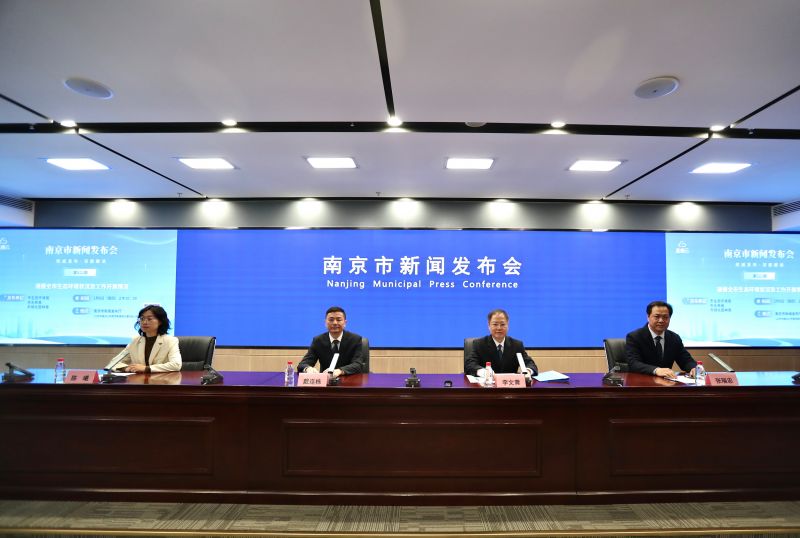
南京市召开新闻发布会通报2025年生态环境状况与工作进展
Zhong Guo Fa Zhan Wang· 2026-01-09 15:54
Core Viewpoint - Nanjing has made significant progress in ecological environment quality and construction of a beautiful city, achieving a notable improvement in environmental indicators in 2025 [2][3]. Environmental Quality Improvement - The average PM2.5 concentration in Nanjing dropped to 27.1 micrograms per cubic meter, marking a 4.2% year-on-year improvement and ranking third in the province [3]. - The proportion of days with good air quality reached 87.4%, the highest in the province, with all six major air quality indicators meeting standards for the first time [3]. - Water quality in Nanjing is leading in the province, with a 100% excellent water quality rate for key monitoring sections and drinking water sources [3]. Ecological Achievements - Nanjing has established six national ecological civilization demonstration zones and two "Two Mountains" practice innovation bases [3]. - The city has implemented various environmental improvement projects, including the completion of 860 air pollution control projects and the promotion of 77 environmentally friendly enterprises [4]. Water Environment Management - The city has maintained a 100% excellent water quality rate for 42 monitoring sections for seven consecutive years, with urban sewage treatment rates expected to exceed 90% [7]. - Infrastructure improvements include an increase in urban sewage treatment capacity by 200,000 tons per day and the completion of upgrades to 32 sewage treatment plants [7]. Biodiversity and Wetland Protection - Nanjing has a forest coverage rate of 31.94%, ranking first in the province for eight consecutive years, and a wetland area of 104,600 hectares, accounting for 15.9% of the city [10]. - The city has revised its wetland protection regulations, with over 35,000 hectares of wetlands under protection and significant restoration efforts yielding positive results [11][12]. Future Plans - In 2026, Nanjing aims to continue enhancing ecological protection and promoting high-quality development, focusing on pollution prevention and the construction of a beautiful city [6][9].
绿光气候研究院院长舒玉莹:“双碳”已被提升至统领经济社会发展全局的高度 | 对话能源大咖
Xin Lang Cai Jing· 2026-01-09 13:37
Core Viewpoint - China's green transition has entered a new phase, emphasizing the dual control of carbon emissions and energy consumption as a core strategic priority for economic development by 2026 [2][9]. Group 1: Impact on Traditional Industries - Traditional high-energy-consuming industries such as steel, cement, and chemicals will face unprecedented carbon constraints, requiring new projects to meet both energy efficiency and carbon emission evaluations [3][11]. - Existing capacities must accelerate low-carbon technology upgrades, shifting focus from scale expansion to quality improvement [3][11]. Group 2: Opportunities in Emerging Industries - Emerging sectors like renewable energy and carbon management services are expected to experience explosive growth, with increasing demand for carbon accounting, carbon footprint certification, and CCUS services [4][11]. - Digital technologies that integrate energy and carbon management will have significant growth potential, contributing to the establishment of a competitive green industrial chain [4][11]. Group 3: Carbon Emission Accounting System - China's carbon emission accounting system is in a critical development phase, extending beyond major emitters to include local government planning and industry standards [5][11]. - The national greenhouse gas emission factor database has been launched, covering 24 key industries, and the national carbon market now includes eight industries, accounting for over 60% of total carbon emissions [5][11]. Group 4: Carbon Market Dynamics - The deepening linkage between the dual control of carbon emissions and the national carbon market will make carbon a measurable, tradable, and priced production factor, compelling companies to adopt carbon asset management strategies [6][11]. Group 5: Learning from International Experiences - The EU's carbon trading system and the UK's carbon budget system provide valuable lessons for China, emphasizing the importance of clear emission reduction targets and third-party supervision [7][8][11]. Group 6: Requirements for Traditional and Renewable Energy - The comprehensive green transition requires traditional energy to evolve from being the main energy source to providing backup and regulatory services, while renewable energy will see significant market expansion [11][12]. - The "14th Five-Year Plan" indicates that most new electricity demand will be met by clean energy, leading to explosive growth in the renewable energy sector [11][12].