通用人工智能(AGI)

Search documents
稀土之后轮到钻石!人造钻石管制落地,AI算力命脉被中国攥住?
Sou Hu Cai Jing· 2025-11-13 10:57
Group 1 - The core viewpoint of the article highlights the increasing significance of synthetic diamonds in the industrial sector, particularly in the context of AI technology and semiconductor manufacturing, as new regulations on synthetic diamond exports are set to be implemented [1][23] - Synthetic diamonds are becoming essential for AI chip production due to their unique properties, which include extreme hardness, wide bandgap, and excellent thermal conductivity, making them ideal for polishing and manufacturing processes [7][10][12] - The majority of synthetic diamonds, particularly for industrial use, are produced in China, with a significant portion coming from Henan province, which is referred to as the "global diamond factory" [5][22] Group 2 - The article discusses the challenges in producing synthetic diamonds suitable for chip manufacturing, noting that the production process is complex and costly, requiring advanced techniques like chemical vapor deposition (CVD) [16][18] - Despite the high costs associated with diamond chips, major AI companies are investing in this technology, recognizing its potential to enhance chip performance and efficiency, which is critical in the competitive AI landscape [18][20] - The new export regulations on synthetic diamonds are not just about resource control but also represent a strategic move in the global technological power dynamics, positioning China at the forefront of this emerging market [23]


AI界巨震!图灵奖得主Yann LeCun即将离职Meta,投身「世界模型」创业
机器人圈· 2025-11-13 10:40
Core Viewpoint - The departure of Yann LeCun from Meta signifies a major shift in the AI landscape, highlighting internal strategic disagreements and a pivot in Meta's AI development approach [2][3][4]. Group 1: Departure and Strategic Shift - Yann LeCun, a prominent figure in AI and Meta's Chief AI Scientist, is leaving the company after 12 years, marking a formal split with CEO Mark Zuckerberg over AI strategy [2][3]. - The decision to leave was foreshadowed by increasing disagreements with Meta's management regarding the AI development roadmap and company strategy [3][4]. - Meta's internal restructuring has shifted focus from long-term foundational research led by LeCun's FAIR lab to a more agile product development approach, driven by immediate market needs [4][7]. Group 2: Internal Changes and Leadership Dynamics - Meta has made significant changes, including a $100 million compensation package to attract young talent from competitors, and the formation of a new "superintelligence" team led by 28-year-old Alexandr Wang [4]. - LeCun's reporting structure changed, requiring him to report to Wang instead of the Chief Product Officer, which marginalized his FAIR lab and its research initiatives [4][7]. Group 3: Technological Disagreements - LeCun has publicly criticized the current trend of large language models (LLMs), arguing they are inadequate for achieving true reasoning and planning capabilities, which diverges from Zuckerberg's focus on immediate monetization [7][8]. - The emphasis on "world models," which LeCun advocates, contrasts sharply with the short-term goals set by Meta's leadership, leading to his decision to leave [7][8]. Group 4: Future Aspirations - Post-Meta, LeCun aims to fully commit to developing "world models," which he believes will redefine AI by enabling machines to learn from observing the physical world, akin to human cognitive development [8]. - He predicts that within 3-5 years, "world models" will become the mainstream AI architecture, challenging the current dominance of LLMs [8]. Group 5: Legacy and Impact - LeCun's career has been pivotal in the evolution of AI, having co-developed convolutional neural networks (CNNs) and led the FAIR lab to prominence [9]. - His departure is seen as a significant loss for Meta, indicating a potential shift in the AI research landscape and the company's future direction [9].


罗福莉C位亮相小米,离职DeepSeek后首次官宣
36氪· 2025-11-13 10:26
Core Viewpoint - The article highlights the appointment of Luo Fuli as the head of Xiaomi's MiMo team, focusing on advancing spatial intelligence as a key step towards achieving Artificial General Intelligence (AGI) [1][3][23]. Group 1: Appointment and Background - Luo Fuli officially announced her role at Xiaomi on November 12, leading the MiMo team [1]. - She previously worked at DeepSeek and was reportedly recruited by Lei Jun with a salary of tens of millions [4][7]. - Luo has a strong academic background, with over 11,000 citations for her research papers, indicating her prominence in the field [17][18]. Group 2: MiMo Team and Objectives - The MiMo team aims to unlock multi-modal spatial intelligence, which includes perception, reasoning, generation, and action capabilities [4][23]. - Luo's vision aligns with the broader goal of integrating information AI with physical AI, creating a seamless connection between the digital and physical worlds [25]. Group 3: Industry Context and Implications - The concept of spatial intelligence has gained attention, with AI experts like Fei-Fei Li discussing its significance for embodied intelligence and AGI [24]. - Xiaomi's focus on spatial intelligence is seen as a strategic move, leveraging its ecosystem that includes people, vehicles, and homes [25].


图灵奖得主杨立昆离职创业,Meta股票蒸发1400亿
Tai Mei Ti A P P· 2025-11-13 08:38
Core Viewpoint - The departure of Yann LeCun, a Turing Award winner and chief scientist at Meta, has caused significant turmoil in the AI industry, leading to a 1.5% drop in Meta's stock price and a market value loss of 140 billion yuan [1][2]. Group 1: Background and Context - Yann LeCun is a foundational figure in deep learning, credited with developing the Convolutional Neural Network (CNN) architecture, which has been pivotal for modern AI advancements [1]. - LeCun's departure is not merely a personal career change but reflects a broader ideological conflict regarding the future direction of AI development, particularly between his vision of "world models" and Meta's focus on Large Language Models (LLMs) [2][3]. Group 2: Internal Dynamics at Meta - Meta has faced challenges in the AI space, with competitors like DeepSeek making breakthroughs in the Mixture of Experts (MoE) architecture, while Meta's own Llama4 model series has received lackluster market feedback [4]. - The company's financial commitment to AI has increased, with capital expenditures for AI reaching 70 billion yuan, and organizational restructuring has led to the establishment of a "Super Intelligence Lab" under new leadership, sidelining LeCun [6][7]. - LeCun's role has shifted from a strategic leader to a symbolic figure within the company, as he now reports to a younger executive and faces restrictions on publishing his team's research [6][7]. Group 3: Ideological Conflict - The ideological rift between LeCun and Meta's leadership became apparent with the emergence of ChatGPT, as Meta was slow to engage with LLM technology, leading to internal dissatisfaction and frustration [8][9]. - LeCun's insistence that LLMs represent a "dead end" in AI development has been a point of contention, as he believes they lack the necessary understanding of the physical world and cannot achieve true AGI [14][16]. - He advocates for a "world model" approach, which emphasizes learning through interaction with the environment rather than solely through text, proposing a modular AI architecture that contrasts with the monolithic nature of LLMs [17].

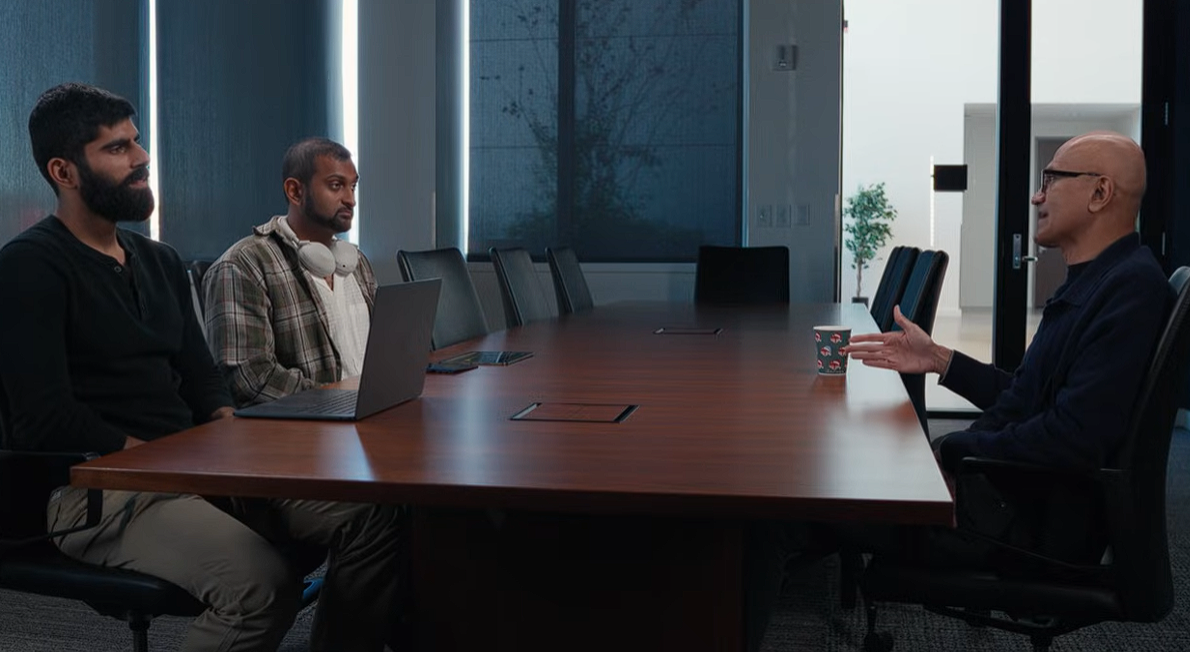
微软CEO深度访谈:Azure利润很大程度来自配套服务,模型开发商会陷入"赢家诅咒"、平台价值不会消失
Hua Er Jie Jian Wen· 2025-11-13 08:37
Core Insights - The interview with Microsoft CEO Satya Nadella discusses the company's AI strategy, self-developed chips, Azure/cloud business, and the commercialization of general artificial intelligence (AGI) [1][4][37]. Azure/Cloud Strategy - Nadella emphasizes that Azure/AI workloads require not only AI accelerators but also extensive supporting services, which significantly contribute to profit margins. The goal is to make Azure the ultimate platform for long-tail workloads, which is essential for large-scale cloud business [4][8]. - The company aims to maintain competitiveness from the foundational high-end training hardware level, ensuring that Azure supports a range of models, including self-developed ones [8][9]. Self-Developed Chip Strategy - Microsoft plans to reduce total cost of ownership (TCO) through a closed-loop optimization between its MAI models and custom chips, aiming for cost advantages in large-scale AI workloads [4][7]. - Nadella notes that any new accelerator will face competition from even previous generations of Nvidia products, highlighting the importance of overall TCO in decision-making [7]. Model Commercialization - Nadella warns that model developers may face the "winner's curse," where their innovations can be easily replicated and commoditized. Companies with strong data foundations and contextual engineering capabilities will have the advantage in retraining models [4][12]. - Microsoft has secured full IP rights for all system-level innovations from OpenAI, allowing it to leverage both its own MAI team and OpenAI's expertise [4][6]. Fairwater 2 Data Center - The new Fairwater 2 data center aims to increase training capacity tenfold every 18 to 24 months, significantly enhancing capabilities compared to GPT-5 [5][13]. - The data center's optical device count is nearly equivalent to the total of all Azure data centers two years ago, indicating a substantial investment in infrastructure [5][18]. Industry Profitability - Nadella believes that the future will see a shift towards tool-based businesses, where companies provide computational resources for AI agents that operate autonomously [12][176]. - The industry is expected to experience rapid growth, with significant capital expenditures projected for large-scale enterprises [37][38]. Agent HQ Strategy - Microsoft is developing the Agent HQ concept, which aims to integrate various AI agents into a cohesive system, allowing for task management and monitoring across different platforms [11][90]. - This strategy is seen as a way to innovate and maintain competitiveness in the rapidly evolving AI landscape [94][95]. Future Outlook - Nadella expresses optimism about the potential for AI to act as a cognitive amplifier and guardian, emphasizing the importance of understanding its utility for human productivity [39][40]. - The company is focused on building a world-class team to drive breakthroughs in AI, leveraging its existing capabilities and partnerships [226].

罗福莉C位亮相小米,离职DeepSeek后首次官宣
量子位· 2025-11-12 08:01
Core Insights - Luo Fuli has officially announced her position at Xiaomi, leading the MiMo team to advance the development of multi-modal spatial intelligence, a key step towards achieving Artificial General Intelligence (AGI) [1][3][7] Group 1: Background and Context - Rumors about Luo Fuli joining Xiaomi surfaced at the end of last year, with reports indicating that she was recruited by Lei Jun with a salary of tens of millions [4][10] - Significant events include the launch of DeepSeek-V3 on December 25, followed by media reports of Xiaomi assembling a GPU cluster [5][6] - Luo Fuli's name appeared in Xiaomi's AI team papers as an independent researcher prior to her official announcement [11][20] Group 2: Luo Fuli's Profile - Luo Fuli holds a Bachelor's degree in Computer Science from Beijing Normal University and a Master's degree in Computational Linguistics from Peking University, with numerous publications in top NLP conferences [15][17] - She has over 11,000 citations for her academic papers, with approximately 8,000 citations added in the current year alone [18] - Luo previously worked at Alibaba's DAMO Academy and DeepSeek, contributing to the development of various deep learning models [17] Group 3: Xiaomi's AI Ambitions - Xiaomi aims to enter the deep waters of AI following the establishment of its automotive business, with a focus on spatial intelligence [9][24] - The concept of spatial intelligence, as articulated by Luo Fuli, involves bridging the gap between information AI and physical AI, which aligns with Xiaomi's ecosystem of people, vehicles, and homes [23][25]

微软与OpenAI紧张关系缓和:新协议解除AGI研发限制
Huan Qiu Wang Zi Xun· 2025-11-12 06:08
Core Insights - Microsoft and OpenAI have signed a new "final agreement" that extends their collaboration and removes key restrictions on Microsoft's independent development in the field of artificial general intelligence (AGI) [1] Group 1: Partnership Dynamics - Microsoft holds approximately $13 billion in shares of OpenAI, making it the largest shareholder [3] - There have been investor concerns regarding the partnership, particularly about the potential "AI bubble" nearing its burst and the unclear profitability model of OpenAI [3] - Tensions arose between the two companies due to OpenAI's plans to transition into a for-profit entity, with rumors suggesting Microsoft attempted to prevent this shift to protect its interests [3] Group 2: Agreement Changes - The new agreement alters AGI development permissions, requiring OpenAI to have independent expert validation before announcing the achievement of AGI [3] - Even if OpenAI achieves AGI before 2030, Microsoft retains the rights to use related models and products until 2032 [3] - The agreement allows Microsoft to independently or collaboratively develop AGI, which is seen as OpenAI handing over significant control to Microsoft [3] Group 3: Strategic Direction - The CEO of Microsoft's AI division, Suleiman, stated that the company is pursuing "superintelligence" with a focus on making AI beneficial for humanity [3] - This marks a shift from earlier in the year when Suleiman acknowledged that Microsoft's self-developed models lagged behind OpenAI by 3-6 months, with a strategy of "chasing second" [3] - Suleiman emphasized that Microsoft will maintain an open technology approach and will not be overly committed to specific models, aiming to enhance product usability [3]
7个月,估值涨了15倍
投中网· 2025-11-12 01:58
Core Insights - The article highlights the rapid growth and significant investment in the AI startup Reflection AI, which recently completed a $2 billion funding round, achieving a post-money valuation of $8 billion [2][10] - Reflection AI's founders, both with notable backgrounds from Google DeepMind, aim to advance artificial general intelligence (AGI) independently, believing that top talent can create cutting-edge models without relying on tech giants [6][8] Investment and Valuation - Reflection AI's valuation skyrocketed from approximately $545 million in March to $8 billion in just seven months, marking a remarkable 15-fold increase [2][10] - The latest funding round attracted prestigious investors, including Nvidia, which contributed $800 million, marking its eighth investment in the AI sector since September [2][15] Founders and Team - The founding team consists of Ioannis Antonoglou and Misha Laskin, both of whom have extensive experience in AI development, including contributions to the AlphaGo project [4][5] - The company currently employs around 60 professionals focused on infrastructure, data training, and algorithm development [11] Product and Strategy - Reflection AI initially focused on autonomous programming agents, launching the Asimov code understanding agent, which has begun generating revenue from enterprise clients [6][10] - The company plans to expand its offerings beyond coding to include areas like product management, marketing, and human resources, emphasizing "team memory" and knowledge management [6][8] Open Source Approach - Reflection AI is positioned as the "American version of DeepSeek," promoting an open-source strategy that allows developers worldwide to contribute while maintaining proprietary training data [8][9] - This approach aims to prevent monopolization of cutting-edge technology by a few entities and to foster a more inclusive AI development environment [8][9] Market and Policy Recognition - The company's philosophy has garnered support from the U.S. tech community and policymakers, with officials acknowledging the importance of open-source AI models for cost, customization, and control [10] - Reflection AI's rapid funding success reflects strong investor interest in its vision and business model [10][11] Nvidia's Investment Strategy - Nvidia has been aggressively investing in the AI sector, with total investments exceeding $100 billion since September, indicating a strategic focus on supporting transformative startups [13][15] - The company has generated substantial free cash flow, positioning it to continue its investment spree in the AI ecosystem [16]


这可能是最体现OpenAI“真正意图”的对话!Altman:给几个月时间,我们没有那么疯狂,我们有计划
硬AI· 2025-11-12 01:46
Core Insights - OpenAI is pursuing an unprecedented investment strategy across infrastructure, products, and research to create a ubiquitous personal AI assistant, emphasizing ecosystem empowerment over interface control [2][4][5] Group 1: Strategic Vision - OpenAI's CEO Sam Altman describes the company's strategy as a "calculated gamble," focusing on significant investments in AI infrastructure, user products, and cutting-edge research to achieve the goal of Artificial General Intelligence (AGI) [3][4] - Altman emphasizes that all seemingly disparate actions are unified under a clear vision to build a pervasive AGI, integrating risk investment thinking into the company's strategic capital allocation [4][6] Group 2: Investment and Capital Allocation - The company is making substantial investments in AI infrastructure, recognizing that breakthroughs cannot be achieved sequentially but must occur in parallel across various domains [3][6] - Altman acknowledges that his background in venture capital is beneficial for strategically allocating resources in a rapidly growing environment [6][21] Group 3: Competitive Landscape - Altman believes that the AI market will not be a winner-takes-all scenario, as there are many strong competitors, and future AI services will blend consumer and enterprise models [8][14] - OpenAI aims to establish a core AI assistant that users can interact with through various platforms, including ChatGPT and APIs [8][34] Group 4: Infrastructure and Partnerships - OpenAI has formed partnerships with major companies like NVIDIA, AMD, and Oracle, with infrastructure deals valued at over a trillion dollars, indicating a bold full-stack approach [3][20] - Altman highlights the necessity of building physical infrastructure, including chip manufacturing capacity and data centers, to support the company's ambitious goals [3][16] Group 5: Product Development and User Experience - OpenAI is focused on creating a powerful AI service that integrates seamlessly into users' lives, allowing for continuous interaction across different applications and devices [10][34] - The company is committed to empowering partners rather than controlling user interfaces, aiming to foster long-term trust within the ecosystem [6][36] Group 6: Future Outlook - Altman expresses confidence in the company's research direction and the potential for significant advancements in AI technology, which justifies the massive investments being made [11][30] - The company is optimistic about the future of AI and its ability to enhance creativity and user engagement, indicating a strong belief in the transformative power of its products [50][68]

王小川的“AI医生梦”,要被蚂蚁做成了?
3 6 Ke· 2025-11-12 01:20
Core Insights - The AI healthcare market is projected to grow at an annual rate of 43% from 2024 to 2032, potentially reaching a market size of $491 billion [1] - Ant Group has established a clear path in AI healthcare by integrating AI services into various medical scenarios, transforming its role from a connector to an active participant in the healthcare ecosystem [7][9] Company Focus: Baichuan Intelligence - Baichuan Intelligence, led by Wang Xiaochuan, has shifted its focus entirely to AI healthcare, abandoning other business lines to concentrate resources on this core area [2] - The company faces challenges in establishing a closed-loop business model in AI healthcare, struggling with frequent team and direction changes since late 2024 [3][4] - Baichuan's AI healthcare efforts are hindered by its reliance on traditional business models and a lack of real-world validation in medical settings [4][5] Competitive Landscape - The future leaders in AI healthcare will need to possess ecosystem integration capabilities to effectively allocate medical resources [5] - Baichuan Intelligence is at a disadvantage compared to larger competitors like Huawei, ByteDance, Ant Group, JD, and Meituan, which have more robust resources and capabilities [5] Ant Group's Strategy - Ant Group's AI healthcare strategy involves a triadic structure of "payment + healthcare + AI technology," creating a comprehensive service system for medical institutions, doctors, and patients [7] - The AQ application, launched by Ant Group, quickly gained traction, becoming one of the top AI native apps in China due to its integration with existing services like Alipay [7][9] - Ant Group's recent organizational restructuring emphasizes the importance of AI healthcare as a core business area, indicating a long-term commitment to this sector [9]