算力

Search documents
广合科技:预计2025年归属于上市公司股东的净利润9.8亿~10.2亿元
Mei Ri Jing Ji Xin Wen· 2026-01-15 10:26
Group 1 - The company, Guanghe Technology, forecasts a net profit attributable to shareholders of 980 million to 1.02 billion yuan for 2025, representing a year-on-year growth of 44.95% to 50.87% [1] - The basic earnings per share are expected to be between 2.3 yuan and 2.4 yuan [1] - The primary reason for the performance change is the strong growth in demand for computing power infrastructure, leading to robust demand in the computing supply chain [1] Group 2 - During the reporting period, the company emphasizes its commitment to technology research and development as a driving force, alongside global production capacity as a support [1] - The company anticipates that both operating revenue and net profit for the fiscal year 2025 will increase compared to the previous year [1]
牛回头,抓牢AI主线!创业板人工智能ETF基金经理:绩优“光模块”或再成香饽饽
Xin Lang Cai Jing· 2026-01-15 10:01
Core Viewpoint - The AI sector is experiencing internal hedging, with AI applications seeing a pullback while AI optical modules are gaining strength, indicating a potential shift in investment focus towards high-performing sectors like optical modules [1][8]. Group 1: ETF Performance and Market Trends - The Huabao Entrepreneurial Board AI ETF (159363) saw a significant net subscription of over 200 million units on January 15, with a total increase of 970 million yuan in just three days, bringing its total fund size to 5.338 billion yuan [1][8]. - Despite a short-term pullback, the expectation for a strong A-share market in the first half of 2026 remains intact, with high-performing AI optical modules likely to attract investment during this period [1][9]. Group 2: Industry Insights - According to Guosheng Securities, leading manufacturers in the optical module sector are accelerating production expansion in China and Thailand, with a concentrated release of capacity expected in Q1 2026, driving a new performance growth phase [9]. - The current investment focus is on the "computing power + AI applications" theme, with approximately 60% of the Huabao Entrepreneurial Board AI ETF's portfolio allocated to computing power (optical modules + IDC) and 40% to AI applications, highlighting its dual focus on both sectors [9]. Group 3: Investment Recommendations - Key investment opportunities are identified in three areas: the Huabao Entrepreneurial Board AI ETF (159363) as a potential safe haven during market consolidation, Hong Kong stock ETFs such as the Hong Kong Internet ETF (513770), and the domestic AI sector, particularly in big data and IDC companies [10][11].



鹏鼎控股:AI眼镜和人形机器人领域已实现产品供货
Ju Chao Zi Xun· 2026-01-15 09:32
Group 1 - The company has established a comprehensive product matrix covering AI mobile phones, AI PCs, and AI glasses, while actively expanding into humanoid robots and computing power markets, showcasing strong technological foresight and industry chain integration capabilities [1] - In the AI glasses sector, the company has become a major supplier for mainstream AI glasses clients, with increasing demand for high-end HDI and rigid-flex PCB products due to the trend towards lightweight and fashionable designs [3] - The company is focusing on humanoid robots as a high-growth area, collaborating with leading industry clients on PCB applications in critical areas such as joint control, sensing systems, and main control modules, while ensuring high reliability and performance of PCBs [3] Group 2 - The company's layout in computing power infrastructure is entering a harvest phase, with expectations for 2025 to be the "year of direct customer orders" for computing power, driven by the release of production capacity and order fulfillment [4] - The company is promoting its "ONE AVARY" integrated product platform strategy, which aims to provide a full-chain service from design to mass production through standardized and modular product design and manufacturing processes [4]

和海外算力共振了——半导体设备ETF(159516)大涨点评
Sou Hu Cai Jing· 2026-01-15 09:31
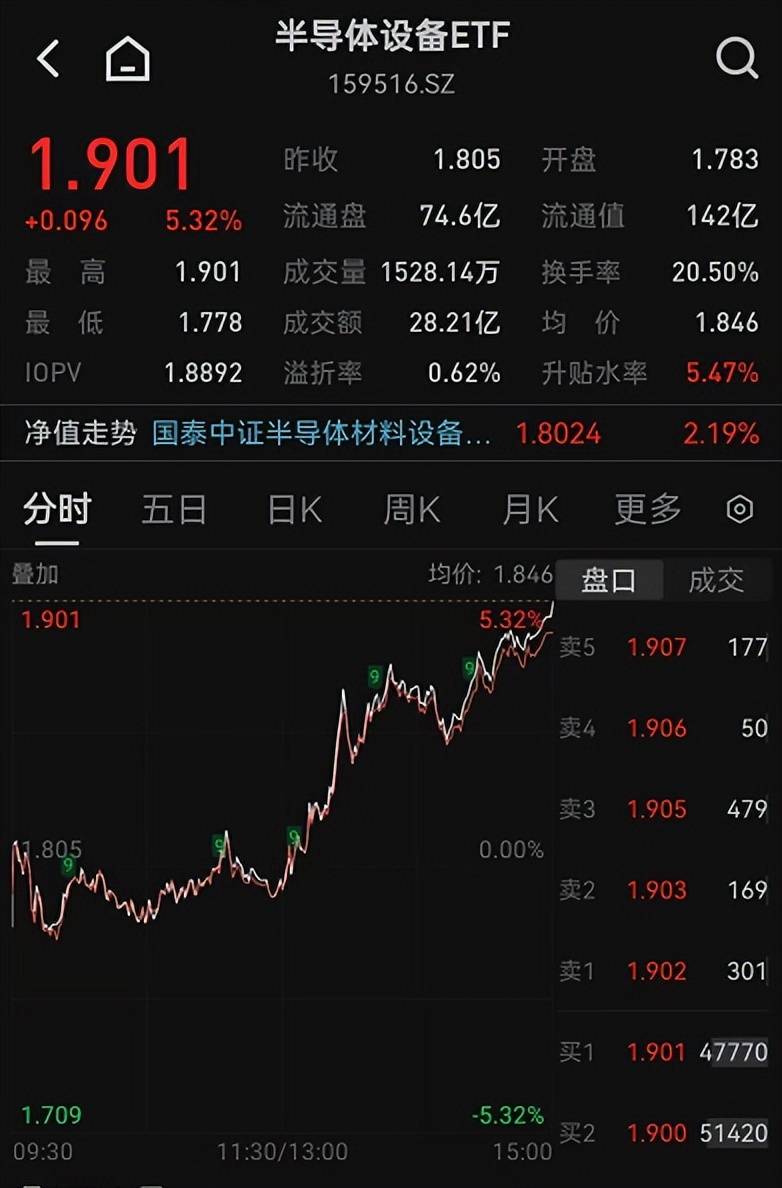
Market Overview - The total trading volume in the Shanghai and Shenzhen markets was 2.91 trillion yuan, a decrease of 1.04 trillion yuan compared to the previous trading day [1] - The Shanghai Composite Index fell by 0.33%, while the Shenzhen Component Index rose by 0.41%, and the ChiNext Index increased by 0.56% [1] - The Semiconductor Equipment ETF (159516) saw a significant increase, closing up by 5.32% [1] Semiconductor Equipment ETF Details - The closing price of the Semiconductor Equipment ETF was 1.901, with an opening price of 1.805 and a lowest price of 1.783 [2] - The trading volume was 15.28 million shares, with a turnover rate of 20.50% [2] - The total trading value reached 2.821 billion yuan, with an average price of 1.846 [2] Factors Driving Growth - TSMC's capital expenditure (capex) expectations exceeded forecasts, with projections of 52 to 56 billion USD for 2026, indicating a growth rate of 27% to 37% compared to 2024's 40.9 billion USD [3] - The domestic semiconductor equipment industry is resonating with global computing power demands, as TSMC remains a key player in AI-related manufacturing [3] - The AI boom is expected to drive demand for various components, including PCBs and memory products, further enhancing the semiconductor industry's outlook [3] Storage Market Insights - The current increase in storage prices is attributed to rising demand driven by AI, with the global storage industry entering an expansion phase [4] - The domestic storage sector is benefiting from this price surge, with expectations of increased production capacity [4] Future Outlook - The AI technology wave is unlikely to slow down in the short term, with storage shortages expected to persist until 2026 [5] - The growth rate of storage demand may outpace that of chips, necessitating sufficient storage to match the increasing computational needs [5] - The Semiconductor Equipment ETF (159516) is recommended for continued observation, as ongoing price increases and upcoming product launches are expected to boost the semiconductor equipment sector [5]

光环新网:截至目前公司算力业务规模已超过4000P
Zheng Quan Ri Bao· 2026-01-15 08:37
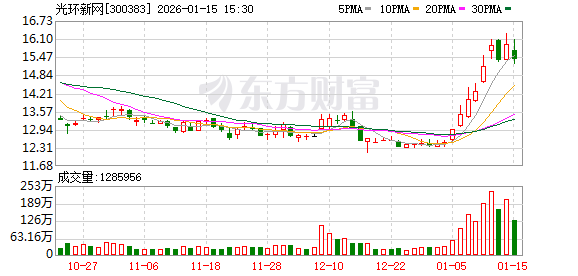
Core Insights - The company, Guanghuan New Network, has deployed high-performance computing hardware at its Beijing and Tianjin data centers to provide advanced computing power and network services to users [2] - The scale of the company's computing power business has exceeded 4000P, with an annual contract value surpassing 100 million yuan [2] - Some data centers are utilizing HVDC power supply technology solutions based on customer requirements [2]

开年已涨33%!锡价创历史新高
Shang Hai Zheng Quan Bao· 2026-01-15 04:58
Core Viewpoint - The strong performance of tin prices is driven by supply disruptions and increasing demand from sectors such as consumer electronics, automotive electronics, and AI, leading to a significant rise in trading activity and market interest [1][3][4]. Group 1: Price Performance - As of January 15, the main tin contract on the Shanghai Futures Exchange reached a record high of 443,400 CNY per ton, marking a year-to-date increase of 33.5% [1][3]. - The London Metal Exchange (LME) tin contract also saw a year-to-date increase of approximately 33% [3]. Group 2: Supply Disruptions - Recent natural disasters, such as landslides in the North Kivu province of the Democratic Republic of Congo, have raised concerns about potential disruptions in tin mining and transportation, further fueling market sentiment [3][4]. - The market is also reacting to the slower-than-expected recovery of tin production in Myanmar, despite some analysts predicting an acceleration in recovery by late January [4]. Group 3: Demand Drivers - Tin is increasingly recognized as a "technology metal" and "computing metal," with significant applications in solder for electronics, solar cells, and electric vehicles, contributing to rising demand [1][6]. - The International Tin Association reports that over half of the tin produced is used for soldering, a trend expected to continue in the next decade [6]. Group 4: Future Demand Projections - The demand for tin solder is projected to grow at a compound annual growth rate (CAGR) of 7% from 2024 to 2030, driven by advancements in AI, smart devices, and the electrification of vehicles [7]. - Overall global tin demand is expected to grow at a CAGR of 4.3% during the same period [7]. Group 5: Supply Constraints - The global static reserve-to-production ratio for tin is only 16 years, indicating a scarcity of this metal [7]. - Major tin-producing countries, including China, Indonesia, Myanmar, Peru, and Brazil, are facing various challenges that limit supply, such as resource depletion and regulatory changes [7][8]. - The International Tin Association warns that the lack of investment in new mines over the past two decades could lead to significant supply challenges in the future [8].
直击券商营业部|3万亿成交下的市场:老股民谨慎“恐高”,90后、00后踊跃开户,投顾疾呼理性投资
Sou Hu Cai Jing· 2026-01-15 02:38
深圳商报·读创客户端记者 周良成 1月14日,A股市场成交额为逼近4万亿元,创历史新高,连续第4个交易日维持在3万亿元以上水平。上证指数1月14日盘中逼近4200点,创2016年以来新 高。 国信证券某营业部里客户正在用手机开户。周良成/摄 近日,记者走访深圳多家券商营业部,由于近期股市涨势喜人,多家券商营业部都能看到热闹景象。在国信证券红岭中路营业部,记者看到,券商营业部的 人气明显回升,大厅里坐满了关注行情的股民。一些新股民正在开户,部分老股民在营业部的大屏幕前,搜集和交流投资信息。 一位正在开户的新股民告诉记者:"我看最近股市涨得很好,身边不少朋友在股市里赚到了钱。我想开个户,希望在2026年里能够在股市里赚一点钱,那相 当于是一个新的收入来源。" 深圳中心城区密集的券商营业部招牌。周良成/摄 记者还走访了招商证券深南东路营业部、广发证券深南东路证券营业部,工作人员告诉记者,近期前来开户的新股民数量明显增加,其中以"90后""00后"投 资者为主。根据Wind数据,2025年全年A股市场累计新增开户数达2743.69万户,为2022年以来最高水平,同比增长9.75%。年轻投资者正成为市场的新生力 量。 ...
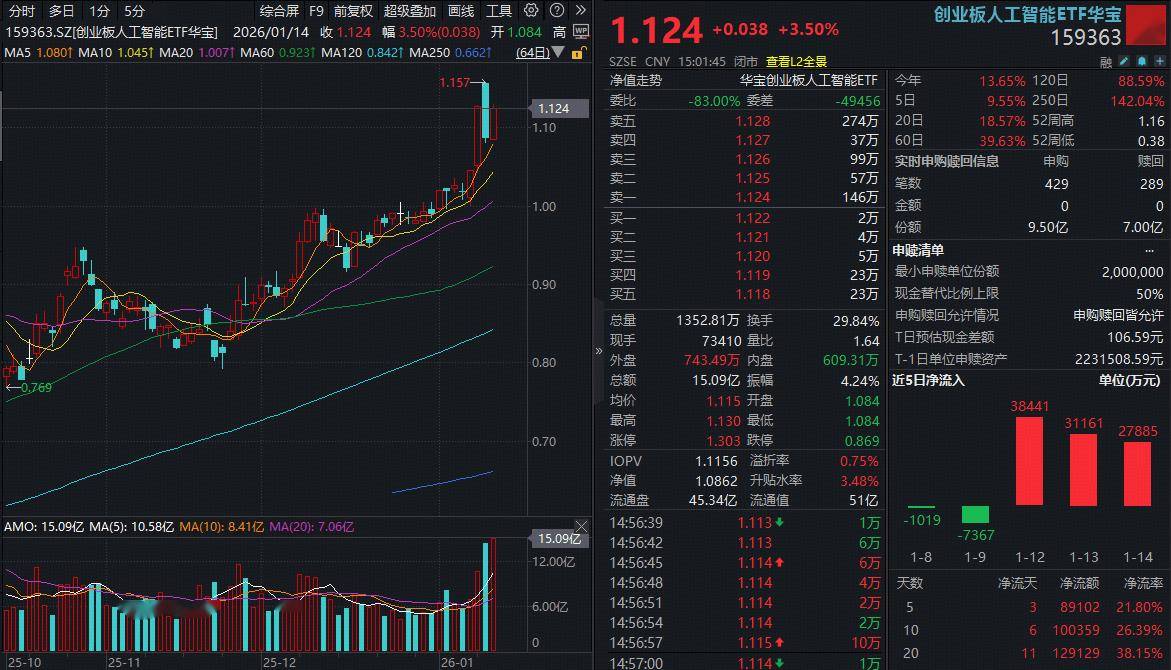
ETF盘前资讯|吸金9.7亿元!创业板人工智能ETF(159363)规模一举新高!算力+AI应用双驱动,板块配置价值凸显
Sou Hu Cai Jing· 2026-01-15 02:15
| 分时 多日 1分 5分 综合屏 F9 前复权 超级叠加 画线 工具 谷 | 0 » | | | | | 创业板人工智能ETF给 | | | --- | --- | --- | --- | --- | --- | --- | --- | | 159363.SZ[创业板人工智能ETF华宝] 2026/01/14 收 1.124 幅 3.50%(0.038) | 开 1.084 高 WP | | 2 2 4 +0.038 +3.50% | | | | 1593 | | MA5 1.0801 MA10 1.0451 MA20 1.0071 MA60 0.9231 MA120 0.8421 MA250 0.6627 | (64日)▼ | | | | | | | | | | | SZSE CNY 15:01:45 闭市 查看L2全景 | | | | | | | | 净值走势 | 华宝创业板人工智能ETF | | # | 13.65% 120日 | | | | 1.124 | 老城 | -83.00% 委差 | -49456 | 5日 | 9.55% 250日 | | | | 1.10 | 英L | 1.128 | 2 ...
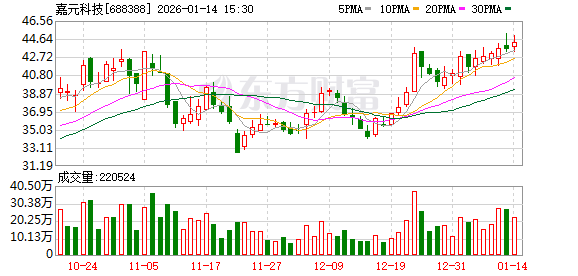
嘉元科技:公司在PCB铜箔领域的发展战略主要围绕高端化、差异化展开
Zheng Quan Ri Bao· 2026-01-14 11:43
Core Viewpoint - The company is focusing on high-end and differentiated products in the PCB copper foil sector to meet the demands of emerging fields such as AI, computing power, and 5G [2] Group 1: Company Strategy - The company's development strategy in the PCB copper foil field emphasizes high-end and differentiated products, including high-frequency and high-speed copper foil, HDI copper foil, HVLP, DTH, and special functional copper foils [2] - The company is implementing a "produce one, reserve one, research one" strategy to accelerate the R&D and manufacturing of various high-performance electrolytic copper foil products [2] Group 2: Product Development and Achievements - The company has made technological breakthroughs in high-performance electronic circuit copper foils, including RTF, HTE, HVLP, DTH, and HDI copper foils [2] - The ultra-thin copper foil (UTF) for PCBs has entered mass production, and significant progress has been made in developing RTF/HVLP products for high-frequency and high-speed circuit and IC packaging applications [2] - RTF has passed certification testing by leading enterprises and is capable of mass production, while other products have completed laboratory validation and are undergoing testing with downstream customers [2]

AI里的明争暗斗:马斯克的甜言蜜语,和我们20%的胜率
Sou Hu Cai Jing· 2026-01-14 11:36
Core Viewpoint - There are contrasting perspectives on China's AI development from tech leaders in China and the US, highlighting a significant gap in AI capabilities and the underlying capital competition [4][6][12]. Group 1: Perspectives on AI Development - Chinese AI experts express skepticism about surpassing the US in AI, with a probability of only 20% due to substantial computational power disparities [6][9]. - In contrast, US tech giants like Elon Musk and Jensen Huang predict that China will lead in AI capabilities, with Musk suggesting that China will dominate AI computing power [6][7]. - The differing views reflect a deeper competition, where the visible technological gap is coupled with a covert battle for capital and resources [6][12]. Group 2: Computational Power Disparities - The US has a computational power advantage over China, estimated to be one to two orders of magnitude greater, allowing for more exploratory and innovative research [9][11]. - Chinese developers often focus on immediate profit-generating applications due to limited computational resources, hindering breakthrough innovations [9][11]. - Experts emphasize the need for China to enhance "intelligent efficiency" and explore new technological paths rather than merely accumulating data and computational power [11][12]. Group 3: Foreign Capital Risks - Foreign capital is increasingly targeting Chinese AI firms, acquiring core assets and technologies, as seen in the acquisition of Manus by Meta for $2 billion [12][13]. - The process involves foreign investors buying stakes in promising Chinese AI startups, leading to a "de-Chinese" transformation of these companies [15][16]. - This trend poses risks to China's AI industry, including loss of talent, control over technology, and potential data security issues [20][21][22]. Group 4: Strategies for Improvement - To address the computational power shortfall, China needs to invest in domestic chip production and optimize existing computational resources [25][27]. - The government should support local capital to invest in critical areas like chips and algorithms, reducing reliance on foreign investment [28]. - A collaborative approach involving academia, research institutions, and industry is essential to create a sustainable ecosystem for AI development [29].