
套期保值

Search documents
纯苯:苯乙烯风险管理日报-20250814
Nan Hua Qi Huo· 2025-08-14 11:22
Group 1: Report Industry Investment Rating - No relevant content found Group 2: Core Viewpoints of the Report - In the near term, both supply and demand of pure benzene have increased. The balance sheet shows that pure benzene will experience a slight destocking in August and September, with an improved supply - demand pattern. However, due to high hidden inventories and poor terminal demand, the improvement in fundamentals is limited. Styrene faces an increase in supply and a decrease in demand. The balance sheet indicates a continuous supply surplus from August to September, with weak fundamentals. But supported by peak - season expectations, the downward space is also limited. Attention can be paid to potential demand growth in styrene exports. In the short term, it is advisable to stay on the sidelines for unilateral trading, and consider narrowing the spread between pure benzene and styrene when the price is high [4] Group 3: Summary by Related Catalogs Price Forecast - The monthly price forecast for pure benzene is in the range of 5800 - 6400 yuan/ton, and for styrene, it is 7000 - 7600 yuan/ton. The current 20 - day rolling volatility of styrene is 29.40%, and its historical percentile over three years is 85.8% [3] Hedging Strategies Inventory Management - For enterprises with high finished - product inventory worried about styrene price drops, they can short styrene futures (EB2509) with a 25% hedging ratio at an entry range of 7300 - 7350 yuan/ton to lock in profits and cover production costs. They can also sell call options (EB2509C7400) with a 50% ratio at a range of 25 - 40 to collect premiums and reduce capital costs, and lock in the spot selling price if styrene prices rise [3] Procurement Management - For enterprises with low regular procurement inventory planning to purchase based on orders, they can buy styrene futures (EB2509) with a 50% hedging ratio at an entry range of 7100 - 7150 yuan/ton to lock in procurement costs. They can also sell put options (EB2509P7200) with a 75% ratio at a range of 25 - 40 to collect premiums and reduce procurement costs, and lock in the spot purchase price if styrene prices fall [3] 利多解读 (Positive Interpretations) - Recently, there have been many downstream projects of pure benzene put into production, including aniline, phenol, and styrene, which has improved the supply - demand pattern of pure benzene. As of August 11, the port inventory of pure benzene in Jiangsu was 14.6 tons, a month - on - month decrease of 10.43%. The port inventory of styrene in Jiangsu was 14.88 tons, a decrease of 1.02 tons or 6.42% from the previous period. Both pure benzene and styrene continued to destock. There are many rumors about styrene exports in the market, and there may be demand growth in the export end [5] 利空解读 (Negative Interpretations) - The downstream of styrene is in the seasonal off - season. In the previous cycle, there was a significant increase in short - term shutdown and production - reduction devices in the EPS industry, and downstream factories mainly made rigid - demand purchases of raw materials. The production schedule data of three major white - goods in late July showed that the future production schedule of white - goods was still poor, and the terminal consumption demand expectation of styrene in the third quarter was pessimistic [6] Basis and Spread Analysis - The report provides the daily changes in the basis of pure benzene and styrene, as well as the spreads in the pure benzene - styrene industrial chain, including spot, paper - cargo, and futures spreads, and their changes from August 13 to August 14 [8] Price Data of the Industrial Chain - The report presents the price data of various products in the pure benzene - styrene industrial chain on August 14, 13, and 7, 2025, including Brent crude oil, naphtha, ethylene, pure benzene, styrene, and their downstream products, as well as their production profits and changes [8][9]
辉隆股份: 2025年半年度报告
Zheng Quan Zhi Xing· 2025-08-14 11:19
Company Overview - Anhui Huilong Agricultural Means of Production Co., Ltd. is a leading enterprise in the agricultural input distribution industry in China, focusing on fertilizers, pesticides, and fine chemicals [5][6][13] - The company is recognized as the first listed enterprise in the supply and marketing cooperative system and is committed to serving the "three rural issues" [3][5] Financial Performance - For the first half of 2025, the company reported a revenue of approximately 8.28 billion yuan, a decrease of 7.22% compared to the same period last year [2][18] - The net profit attributable to shareholders was approximately 111 million yuan, down 36.87% year-on-year [2][18] - The total assets increased by 7.68% to approximately 11.66 billion yuan compared to the end of the previous year [2] Business Segments - The main business segments include agricultural inputs, which accounted for 80.33% of total revenue, and fine chemical products, which contributed 7.20% [18] - The company has established a comprehensive service model that integrates production, distribution, and agricultural services, enhancing its market competitiveness [14][16] Industry Position - The agricultural input industry is crucial for modern agricultural development, providing essential materials such as seeds, fertilizers, and pesticides [4] - The company ranks third among China's agricultural input distribution enterprises in terms of comprehensive competitiveness [5][13] Strategic Initiatives - The company is actively pursuing a strategy of "industry and trade integration," focusing on enhancing production capabilities and expanding its market reach [7][11] - It has developed a robust distribution network with 79 logistics centers and over 4,200 franchise stores across 20 major agricultural provinces [7][14] Innovation and R&D - The company emphasizes technological innovation and has established a research institute to drive product development and improve agricultural technology [15][16] - It has successfully developed a full industrial chain for fine chemicals, breaking foreign monopolies in key product areas [12][15] Market Expansion - The company has expanded its export markets, reaching over 60 countries and regions, thereby enhancing its international competitiveness [7][14] - It is committed to providing comprehensive agricultural services, including technical training and support for farmers, to improve agricultural productivity [10][16]

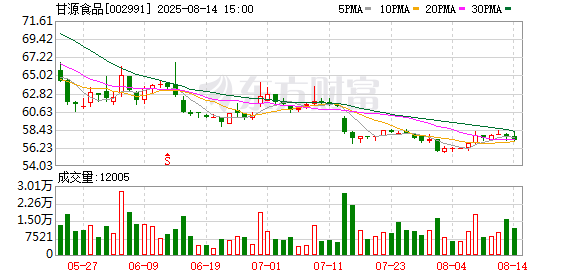
甘源食品:公司将合理开展套期保值业务
Zheng Quan Ri Bao· 2025-08-14 11:11
(文章来源:证券日报) 证券日报网讯甘源食品8月14日发布公告,在公司回答调研者提问时表示,公司为规避和防范原材料价 格波动风险,将合理开展套期保值业务,同时通过逢低买入、价格锁定、加强成本管控等多种方式降低 采购成本波动风险。 ...


花更多钱打广告,销售均价上涨,甘源食品上半年收入还是下滑
Nan Fang Du Shi Bao· 2025-08-14 09:29
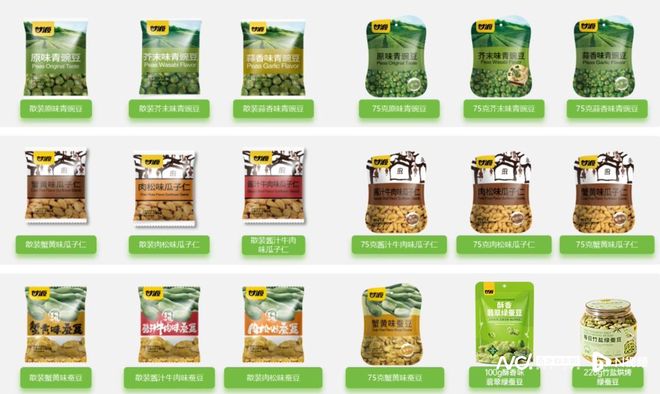
Core Viewpoint - Ganyuan Foods reported a decline in both revenue and net profit for the first half of the year, marking the first negative growth in revenue since its listing in 2020 and a net profit decline for the first time since 2021 [1] Revenue and Profit Summary - The company's revenue for the first half of the year was 945 million yuan, a year-on-year decrease of 9.34% [1] - The net profit attributable to shareholders was 74.61 million yuan, down 55.20% year-on-year [1] - The decline in revenue was attributed to reduced sales from low-priced gift boxes during the Spring Festival, a drop in traditional supermarket sales, and the timing of the Spring Festival [1] Product Performance Summary - Ganyuan Foods' major product categories include comprehensive nut and bean series, green pea series, broad bean series, sunflower seed series, and others, with the first two categories accounting for over 50% of total revenue [2] - Revenue from the comprehensive nut and bean series fell by 19.92% to 273 million yuan, while the green pea series revenue decreased by 1.56% to 234 million yuan [4] - The broad bean series saw a slight increase in revenue, growing by 2.11% to 125 million yuan, while other product series experienced declines [4][5] Sales Volume and Pricing Summary - Overall sales volume for all product categories declined, with the comprehensive nut and bean series volume down 24.34% to 8,167.49 tons [6] - Despite the drop in sales volume, the average selling price for all five major product series increased, with the broad bean series offsetting volume declines through price increases [6][7] Cost and Expense Summary - The overall gross margin for Ganyuan Foods decreased by 1.33 percentage points to 33.61% due to rising raw material costs, particularly palm oil [7] - Sales expenses increased by 26.59% to 175 million yuan, while management expenses rose by 24.20% to 48.63 million yuan [8] - Promotional expenses surged by 49.47% to 72.61 million yuan, with advertising costs rising significantly from zero to 7.94 million yuan [10] Brand and Product Diversification Summary - Ganyuan Foods is attempting to diversify its product offerings by launching multiple sub-brands, including "Zhen Guo" targeting freeze-dried fruits and chocolate nuts [11] - The company aims to transition from a focus on bean snacks to a broader range of snack products, having introduced several new sub-brands in the past year [11][13]
永杰新材上半年业绩稳健增长
Zheng Quan Ri Bao Wang· 2025-08-14 04:02
Core Viewpoint - Yongjie New Materials reported strong revenue and profit growth in the first half of 2025, driven by robust demand in downstream industries such as lithium batteries and electronics [1][2]. Financial Performance - The company achieved a revenue of 4.427 billion yuan, representing a year-on-year increase of 18.61% [1]. - Net profit attributable to shareholders reached 186 million yuan, up 13.62% year-on-year [1]. - The net profit after deducting non-recurring items was 188 million yuan, reflecting a growth of 15.18% [1]. Market Demand and Product Applications - The demand for aluminum plates and foils is primarily driven by the lithium battery and electronics sectors, with significant growth opportunities in new fields such as low-altitude economy, artificial intelligence, and robotics [1][2]. - Yongjie New Materials' aluminum plates are used in critical components of power lithium batteries, including cell casings and cooling plates, while aluminum foils are utilized in various battery types, including solid-state and sodium batteries [2]. Sales Growth and Product Development - Sales of aluminum alloy plates and strips increased by 65.64% year-on-year, supported by continuous technical upgrades and a diverse product range [2]. - High-strength battery foils achieved stable mass production, with sales growing by 88.11% year-on-year, gaining recognition from major clients like CATL and BYD [2]. Risk Management and Cost Control - The company has implemented hedging strategies to mitigate the impact of raw material price fluctuations, effectively stabilizing gross margins [3]. - Hedging operations have improved the company's bank credit ratings and reduced financing costs, indirectly enhancing profits [3].
原木期货首个合约完成交割
Jin Rong Shi Bao· 2025-08-14 02:21
Core Insights - The successful completion of the LG2507 futures contract's delivery marks a significant milestone for the original wood futures market, validating the contract rules and regulatory framework [1] - The contract operated for 169 trading days, with a total trading volume of 4.34 million lots and a transaction value of 321.33 billion yuan [1] Delivery Details - In July, 1,281 lots were paired and delivered, including 1,230 lots through rolling delivery and 51 lots through one-time delivery, equivalent to 115,290 cubic meters of original wood [2] - The delivery settlement price ranged from 801 yuan to 828.5 yuan per cubic meter, totaling approximately 9.53 million yuan [2] - The delivery involved 769 lots via truck delivery and 512 lots through standard warehouse receipts, engaging multiple buyers and sellers without any delivery defaults [2] Industry Response - Shandong Tengnuo Wood Industry Co., Ltd. has proactively stocked up for the peak season, completing 60 lots of delivery, and noted a rise in market prices for original wood [3] - The company highlighted that the futures market provides a new procurement channel and a tool for hedging against rising raw material prices, enhancing factory yield and profit margins [3] - Jiangsu Huihong International Group utilized the LG2507 contract for sell hedging, completing 85 lots of delivery, which helped stabilize their revenue curve [4] Operational Efficiency - Taicang Xinhai Port Development Co., Ltd. completed 425 lots of delivery, implementing a coordinated approach to ensure smooth operations during the delivery process [5] - The company achieved an average delivery efficiency of 20 minutes per lot, even during high-temperature conditions, earning customer recognition [5] Quality Assurance - Zhongli Inspection Co., Ltd. emphasized the rigorous quality standards and processes in the original wood futures delivery, promoting transparency and trust between buyers and sellers [6] - The introduction of digital and intelligent inspection methods has enhanced the objectivity and traceability of quality assessments, supporting the standardization and efficiency of trade [6] - Market participants noted a strong willingness among industry clients to engage in delivery, prompting the Dalian Commodity Exchange to enhance services and training to ensure smooth delivery operations [6]
甘源食品(002991) - 2025年8月13日投资者关系活动记录表
2025-08-14 00:28
Group 1: Sales and Marketing Strategy - The company has transformed from a single bean product brand to a multi-category snack brand, including flavored beans, nuts, and snacks, to enhance sales scale [2] - Increased investment in brand marketing and new product promotion to improve product competitiveness and expand cooperation opportunities [2] - The company aims to enhance the precision and effectiveness of sales expense allocation based on market conditions and product promotion [2] Group 2: Channel Development - Established stable cooperation with major domestic channels, focusing on innovative and cost-effective products to meet diverse channel needs [3] - Strengthening the core product layout in overseas markets while introducing new products based on local market demands to increase market share [3] - E-commerce is a key sales channel, with ongoing efforts to enrich online product categories and enhance self-operated channel cooperation, leading to performance growth [5] Group 3: Product and Brand Innovation - The company targets dual upgrades in product and brand, utilizing fresh-keeping freeze-drying technology and low-temperature baking to enhance product health attributes [4] - Launched the "Zhen Guo" sub-brand featuring freeze-dried fruits and nuts, aligning with the latest trends in snack consumption [4] - Long-term brand value growth is expected through continuous product innovation and brand exposure [4] Group 4: Cost Management - To mitigate raw material cost fluctuations, the company will engage in hedging activities and implement strategies such as low-price purchasing and price locking [6]
募投项目频频“难产”,1700亿金龙鱼欲借去产能“翻身”?
Huan Qiu Lao Hu Cai Jing· 2025-08-13 12:22
Core Viewpoint - The leading company in the grain and oil industry, Jinlongyu, has decided to postpone certain fundraising projects due to the current overcapacity issues in the industry, reflecting a cautious approach to its investment strategy [1][3]. Group 1: Project Delays - Jinlongyu announced the postponement of two fundraising projects, extending their expected operational status to December 31, 2027 [1]. - The company cited the actual situation of the fundraising projects as the reason for the delay, indicating a broader industry trend of overcapacity affecting even market leaders [1][3]. - Since 2020, Jinlongyu has been rapidly expanding its production bases, increasing from 66 to 81 operational bases by the end of 2024, yet faces significant idle capacity due to intensified market competition [3][4]. Group 2: Financial Performance - In the first half of 2025, Jinlongyu reported a revenue of 1156.82 billion, a year-on-year increase of 5.67%, and a net profit of 17.56 billion, up 60.07% [7]. - Despite the recent recovery in performance, a longer-term view shows a decline in revenue from 2574.85 billion in 2022 to 2515.24 billion in 2023, with net profit decreasing for three consecutive years [8][9]. - The company's reliance on non-recurring gains is significant, with 61.15% of net profit in 2024 coming from non-recurring items, highlighting the volatility in its core operations [9][10]. Group 3: Cash Management and Investments - As of mid-2025, Jinlongyu had 24.86 billion in unused fundraising capital, with 16.50 billion allocated for cash management, primarily in structured deposits [2][6]. - The company is actively pursuing external investments, including a significant capital increase in the Lu Hua Group, indicating a strategic shift despite project delays [4][5]. Group 4: Shareholder Structure - The controlling shareholder, Fengyi Marketing (Hong Kong), has extended the lock-up period for its shares multiple times, reflecting a commitment to long-term investment [11][12]. - The Guo family, through Fengyi International, holds a substantial stake in Jinlongyu, with a market value exceeding 600 billion, indicating strong family influence in the company's operations [12][13].

安凯微: 国泰海通证券股份有限公司关于广州安凯微电子股份有限公司开展外汇衍生品交易业务的核查意见
Zheng Quan Zhi Xing· 2025-08-13 12:19
Core Viewpoint - The company intends to conduct foreign exchange derivative trading to mitigate currency and interest rate risks due to increasing foreign exchange inflows and outflows as its business expands [1][2]. Summary by Sections Transaction Overview - The purpose of the transaction is to effectively hedge against exchange rate and interest rate risks, enhancing the company's financial stability [1]. - The total trading limit for foreign exchange derivatives is set at a maximum of $10 million, with a margin and premium cap of $10 million, valid for 12 months from the board's approval [1]. - The funding for these transactions will come from the company's own and borrowed funds, without involving raised capital [2]. - The trading methods include foreign exchange swaps, options, interest rate swaps, and structured forwards, with no offshore derivative trading planned [2]. - The validity of the trading limit is effective for 12 months from the board's approval date [2]. Review Procedures - The company held board and supervisory meetings on August 12, 2025, to approve the foreign exchange derivative trading proposal, which does not require shareholder approval [2]. Risk Analysis and Control Measures - The potential risks include market risk from derivative trading losses, internal control weaknesses, and operational risks due to system failures or improper handling of derivative information [2]. - The company has established clear regulations regarding trading limits, types, approval authority, internal review processes, and risk management to mitigate these risks [2][3]. Impact on the Company and Accounting Treatment - Engaging in foreign exchange derivative trading aims to enhance the company's ability to manage foreign exchange volatility risks, thereby protecting profits and shareholder equity [3]. - The company will account for these transactions in accordance with relevant accounting standards, reflecting the impacts on the balance sheet and income statement [3]. Sponsor's Review Opinion - The sponsor has confirmed that the company has followed necessary approval procedures for the foreign exchange derivative trading business, and there are no adverse effects on the company or its shareholders [3][4].

原木期货首个合约完成交割 累计成交额达3213.28亿元
Xin Hua Cai Jing· 2025-08-13 03:01
Group 1 - The LG2507 futures contract successfully completed its delivery process, marking a significant milestone for the original wood futures market [1] - The LG2507 contract operated for 169 trading days, with a total trading volume of 4.3411 million lots and a transaction value of 321.328 billion yuan, averaging 25,700 lots traded daily [1] - The delivery involved 1,281 lots, equating to 115,290 cubic meters of original wood, with delivery prices ranging from 801 yuan to 828.5 yuan per cubic meter, totaling approximately 9.533 million yuan [1] Group 2 - Shandong Tengnuo Wood Industry Co., Ltd. completed 60 lots of delivery, allowing the company to lock in inventory costs and future processing profits [2] - Jiangsu Huihong International Group conducted a sell hedge operation on the LG2507 contract, completing 85 lots of delivery, which helped smooth their revenue curve [2] - The implementation of national standard measurements in the delivery process has improved quality assurance and reduced subjective quality assessments [2] Group 3 - Taicang Xinhai Port Development Co., Ltd. completed 425 lots of delivery, achieving an average delivery efficiency of 20 minutes per lot [3] - The quality inspection process for original wood futures adheres to strict national standards, enhancing transparency and trust between buyers and sellers [3] - The introduction of machine-based measurement in quality inspections ensures objective and traceable results, promoting standardization and efficiency in trade [3] Group 4 - The Dalian Commodity Exchange plans to enhance the operational quality and service capabilities of the original wood futures market, focusing on market regulation and risk prevention [4] - The exchange aims to improve the delivery service system by expanding delivery resources and facilitating the connection between futures and spot markets [4] - Efforts will be made to support more wood enterprises in engaging in hedging, basis trading, and futures-to-spot transactions, promoting high-quality development in the wood industry [4]