消费升级

Search documents
新国补落地:普通人省钱攻略大揭秘,手把手教你薅羊毛!
Sou Hu Cai Jing· 2026-01-11 07:11
Core Insights - The new round of "trade-in" subsidy policy in China has been implemented with an initial allocation of 62.5 billion yuan, covering various consumer goods from home appliances to digital devices and automobiles [2][8] - The policy aims to stimulate consumption and promote energy-efficient products, with specific focus on first-level energy efficiency appliances and new energy vehicles [10] Home Appliance Upgrade - The subsidy for home appliances focuses on six core products: refrigerators, washing machines, televisions, air conditioners, computers, and water heaters, with a maximum subsidy of 1,500 yuan per item and a total potential savings of up to 9,000 yuan [2][3] - Sales of first-level energy-efficient appliances surged by 320% in the first week of the policy implementation, indicating strong consumer demand [3] Digital Device Upgrade - The subsidy now includes AI glasses for the first time, allowing consumers to save up to 500 yuan on eligible products priced under 6,000 yuan [4][5] - The digital subsidy covers smartphones, tablets, smartwatches, and smart glasses, with a 15% subsidy rate [4] Automotive Replacement - The policy favors new energy vehicles, offering a maximum subsidy of 20,000 yuan for scrapping old fuel vehicles, significantly reducing the effective purchase price [5][6] - The subsidy structure differentiates between scrapping and replacing vehicles, with varying rates for new energy and fuel vehicles [6] Policy Highlights - A unified national subsidy standard has been established, enhancing the benefits for consumers in regions with previously lower subsidies [8] - The policy is designed to encourage green consumption and accelerate the transition to low-carbon products, as evidenced by a 210% increase in green appliance sales and a 45% rise in new energy vehicle sales in the first week [10] Consumer Caution - Consumers are advised to be vigilant against price manipulation and fraudulent claims, with strict monitoring in place to prevent abuse of the subsidy system [9] - The policy includes specific timelines for subsidy claims, emphasizing the need for timely verification and submission of required documents [9]



以旧换新加力扩围 加速释放居民消费潜力
Ren Min Wang· 2026-01-11 01:41
Core Insights - The article highlights the integration of modern commerce with traditional culture, showcasing various consumer experiences that stimulate economic growth and enhance consumer enthusiasm [1] Group 1: Consumer Trends - There is a notable shift in consumer preferences towards high-performance, green, intelligent, and healthy products, leading to a significant increase in sales of smart home appliances [2] - The implementation of trade-in programs for consumer goods is expanding, with more green and smart products entering households, indicating a growing market for sustainable consumption [2] Group 2: Innovative Consumption Experiences - Various regions are enhancing consumer experiences by integrating cultural and technological elements, such as immersive art performances and interactive VR experiences, which attract more visitors and enrich consumer engagement [3] - Events like the technology consumption carnival in Guangzhou, featuring humanoid robots and VR experiences, exemplify the innovative approaches being adopted to enhance consumer interaction and satisfaction [3] Group 3: Economic Policies and Challenges - The article discusses the need for effective short-term and long-term policies to stimulate consumption, reduce uncertainty, and encourage innovation in supply [1][3] - Challenges such as mismatches between supply and demand for high-quality goods and services, as well as the impact of excessive competition among platforms, are identified as barriers to fully unlocking consumer potential [3]
精准施策持续扩大消费
Jing Ji Ri Bao· 2026-01-10 22:00
Group 1 - The core viewpoint of the articles emphasizes the importance of consumption in economic development and improving people's livelihoods, highlighting a steady performance in China's consumption market with a retail sales total of 45.6 trillion yuan, a year-on-year growth of 4.0%, which is 0.5 percentage points faster than the same period last year [1] - Various policies, such as the "Special Action Plan to Boost Consumption," have been implemented to support consumption through multiple dimensions, including income increase, supply upgrades, and environmental optimization, creating a comprehensive support system for consumption [1][2] - Despite the positive trends, there has been a recent slowdown in consumption growth, particularly with retail sales growth declining for six consecutive months, indicating persistent issues with domestic demand [1][2] Group 2 - The articles suggest that stable income leads to stable consumption, and income growth drives consumption, with current consumer confidence being affected by slow income growth and uncertain future expectations [2] - There is a shift in consumption patterns from goods to a balance between goods and services, with strong demand in service sectors such as cultural tourism and elderly care, indicating significant potential for service consumption [2][3] - Expanding domestic demand is identified as a top priority for 2026, with boosting consumption being crucial for this goal, leveraging the large population and the irreversible trend of consumption upgrading [3]
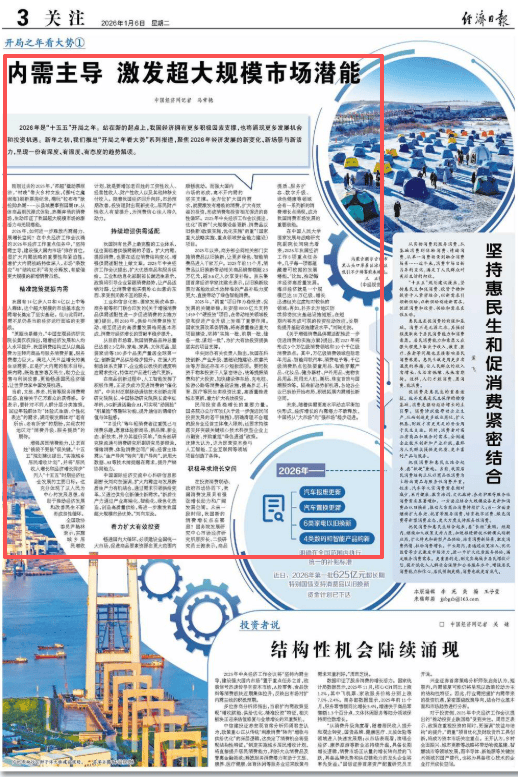
观点丨刘晓光:内需主导 激发超大规模市场潜能
Sou Hu Cai Jing· 2026-01-10 18:06
Core Viewpoint - The article emphasizes the importance of expanding domestic demand and enhancing consumption as key strategies for China's economic growth in 2026, highlighting the potential for new investment opportunities and market dynamics [3][4][11]. Group 1: Economic Context and Trends - 2026 marks the beginning of the "15th Five-Year Plan," with a focus on leveraging positive factors for economic growth and investment opportunities [2]. - The consumer market in China is vibrant, driven by various trends such as the "Su Chao" economy and the popularity of rural cultural tourism, indicating the immense potential of the super-large market [2]. Group 2: Domestic Demand and Consumption - The central economic work meeting prioritizes "domestic demand as the main driver" to build a strong domestic market, underscoring the urgency of expanding domestic demand strategies [3]. - China's population of over 1.4 billion and more than 400 million middle-income individuals provide a solid foundation for domestic demand growth, despite current challenges of insufficient demand [4]. Group 3: Policy Measures and Implementation - The government aims to enhance consumer capacity through targeted policies, including the "Urban and Rural Residents Income Increase Plan," which aligns income growth with economic development [5][4]. - The implementation of consumption upgrade policies, such as the "old-for-new" program, has already driven significant sales, with over 2.5 trillion yuan in sales linked to these initiatives [9]. Group 4: Supply and Demand Adaptation - There is a need to address the mismatch between strong supply and weak demand by enhancing the adaptability of supply to changing consumer preferences [6]. - The government plans to promote high-quality goods and services, with a goal of achieving a high-quality development pattern by 2030, where supply and consumption interact positively [6]. Group 5: Future Growth Opportunities - New consumption growth points are expected to emerge in areas such as product quality enhancement, service expansion, digital upgrades, and green health [11]. - The "Implementation Plan for Enhancing the Adaptability of Consumer Goods Supply and Demand" aims to establish three trillion-yuan consumption sectors and ten hundred-billion-yuan consumption hotspots by 2027 [12].
物价温和回升背后,有哪些积极变量?
2 1 Shi Ji Jing Ji Bao Dao· 2026-01-10 02:10
Group 1 - The consumer price index (CPI) in China increased by 0.8% year-on-year in December 2025, marking the highest growth since March 2023, driven by effective domestic demand policies and increased consumption during the New Year holiday [1] - The core CPI, excluding food and energy prices, rose by 1.2% year-on-year, indicating sustained consumer recovery momentum [1] - The industrial producer price index (PPI) showed a month-on-month increase, with the year-on-year decline narrowing, reflecting improvements in industrial production and pricing [1] Group 2 - The service sector and quality consumer goods prices have been steadily rising, with service prices increasing for eight consecutive months, indicating a shift in consumer spending from basic to quality-oriented products [2] - Prices in the digital economy sector, such as external storage devices, rose by 15.3% year-on-year, while biomass liquid fuel prices increased by 9%, showcasing the structural support for industrial prices from new productive forces [2] - The overall price recovery is supported by the optimization of demand structure and industrial upgrades, reflecting new growth momentum in the market [2] Group 3 - Policies aimed at reducing "involution" competition and building a unified national market are positively impacting PPI recovery, with prices in previously over-competitive sectors like coal and lithium batteries showing a continuous narrowing of year-on-year declines [3] - The significant year-on-year drop in pork prices by 14.6% in December is a major factor pulling down food prices and overall CPI, while international oil prices are expected to influence domestic fuel prices [3] - The recovery pace of the real estate market will also affect overall domestic demand and is a key variable in determining the price level [3] Group 4 - The internal recovery momentum is expected to dominate, promoting a continued moderate increase in prices, supported by macro policies and ongoing industrial upgrades [4] - Policies such as trade-in programs are anticipated to effectively boost consumer demand, with CPI and core CPI likely to continue their moderate upward trend [4] - The supply-demand relationship in the industrial sector is expected to improve, driven by the growth of the digital economy and green industries, leading to a potential year-on-year positive PPI by the second half of 2026 [4]
为发展聚力 把蓝图绘美
Xin Lang Cai Jing· 2026-01-09 21:49
Group 1 - The provincial宣讲团 emphasized the importance of high-quality development and the need for local governments to align their actions with the spirit of the 20th Central Committee's Fourth Plenary Session [1][2] - The achievements during the "14th Five-Year Plan" period were highlighted, showcasing significant progress in healthcare reform, service industry transformation, and overall public welfare [2] - Local leaders expressed their commitment to industrial revitalization, with specific plans for new industrialization and enhancing traditional industries [3][5] Group 2 - Various regions are focusing on tailored strategies to implement the spirit of the plenary session, aiming to create a conducive business environment and develop robust industrial frameworks [4] - The emphasis on consumer upgrades and the development of unique consumption brands was noted as a strategy to support regional economic growth [3][4] - Local governments are actively planning for the "15th Five-Year Plan," with a focus on achieving high-quality development through targeted actions and comprehensive planning [4][5]

南财快评|物价温和回升背后,有哪些积极变量?
2 1 Shi Ji Jing Ji Bao Dao· 2026-01-09 15:44
Group 1 - The core consumer price index (CPI) in China increased by 0.8% year-on-year, marking the highest growth since March 2023, driven by effective domestic demand policies and increased consumption during the New Year holiday [1] - The core CPI, excluding food and energy, rose by 1.2%, indicating sustained consumer recovery momentum, while the industrial consumer goods price, excluding energy, increased by 2.5%, reflecting improved demand in the manufacturing sector [1][2] - The service sector and quality consumer goods prices have shown steady growth, with service prices rising for eight consecutive months, indicating a shift in consumer spending from basic to quality-oriented products [2] Group 2 - The Producer Price Index (PPI) has shown a narrowing decline due to structural support from the growth of new productive forces, with prices for external storage devices rising by 15.3% year-on-year and biomass liquid fuel prices increasing by 9% [2][3] - Policies aimed at reducing "involution" competition and building a unified national market have positively impacted PPI recovery, with prices in previously over-competitive sectors like coal and lithium-ion batteries showing a consistent narrowing of year-on-year declines [3] - Key variables affecting price trends include a significant year-on-year drop in pork prices by 14.6%, which has pressured overall CPI, and the impact of international oil prices on domestic fuel prices, which decreased by 8.2% year-on-year [3] Group 3 - The internal recovery dynamics are expected to dominate, promoting a continued moderate increase in prices, supported by policies like trade-in programs and the ongoing construction of a unified national market [4] - The supply-demand relationship in the industrial sector is expected to improve, driven by the growth of the digital economy and green industries, which will contribute to a sustained rise in PPI and potentially achieve year-on-year growth by the second half of 2026 [4] - The moderate rise in prices is anticipated to support nominal GDP expansion, laying a positive foundation for stable economic performance in 2026 [4]
双奖加身!茅山景区、茅山湖度假区斩获江苏文旅创新与典型案例大奖
Yang Zi Wan Bao Wang· 2026-01-09 15:37
Core Insights - The conference held on January 7 focused on the theme of "Scene Empowerment and Consumption Upgrade," aiming to promote high-quality and sustainable development of tourism attractions and resorts in Jiangsu Province [1] Group 1: Conference Overview - The event was organized by the Jiangsu Provincial Tourism Society's sub-association for tourism attractions and resorts, emphasizing the importance of innovation in the cultural tourism industry [1] - The conference served as a platform for policy interpretation, case sharing, and resource connection to address industry pain points and explore quality improvement paths [1] Group 2: Awards and Recognition - Jiangsu Maoshan Fudi Tourism Co., Ltd. received the "Innovation Demonstration Award" for its project "Follow Su Chao to Tour Maoshan," which effectively integrated sports events with tourism experiences [2] - The Jiujiang Maoshan Lake Resort was awarded the "Typical Case Award" for its project focused on systematic quality upgrades and integration [2] Group 3: Marketing and Engagement Strategies - The Maoshan scenic area leveraged local sports events to create a marketing loop that transformed event traffic into tourism growth, resulting in increased visitor numbers and revenue [3] - Various promotional strategies were implemented, including ticket giveaways and special offers for sports fans, to attract a large number of visitors [4] Group 4: Innovative Activities and Experiences - The scenic area organized themed activities every weekend, turning itself into a "second venue" for sports events, enhancing social and emotional value for visitors [5] - Unique interactive experiences were created, such as a football-themed painting area and traditional cultural activities, to engage diverse consumer groups [5] Group 5: Future Development Goals - The recognition of the two awards signifies the successful collaborative development of cultural tourism in the Jiujiang region, with plans to continue enhancing tourism experiences and integrating cultural elements [6]
味知香:本次组织架构调整旨在以更敏捷方式响应B端与C端渠道客户差异化需求
Cai Jing Wang· 2026-01-09 14:16
Core Viewpoint - The company is undergoing organizational restructuring to better respond to the differentiated needs of B-end and C-end channel customers, aiming for agility and innovation in service delivery [1] Group 1: Organizational Restructuring - The restructuring focuses on aligning the front office with business and product needs, establishing multiple sales and product business units to quickly capture and respond to channel demands [1] - The middle office will integrate supply chain capabilities to ensure precise alignment of resources with front office operations [1] - The back office will establish departments for financial services, strategic organization, and efficiency engineering, concentrating on service assurance [1] Group 2: Store Innovations - The company is optimizing and innovating its store formats in response to increasing consumer demand for convenience and changes in consumer habits [2] - Upgrades to existing stores will include O2O integration to enhance online and offline shopping experiences and increase foot traffic [2] - New store types, such as "ready-to-cook" stores, will be established in community and street locations, featuring transparent operations to build consumer trust and address concerns about quality and safety in convenient dining options [2]


营销费用率超36% 爷爷的农场能否借上市跨越新消费品牌盈利陷阱?
Zhi Tong Cai Jing· 2026-01-09 11:37
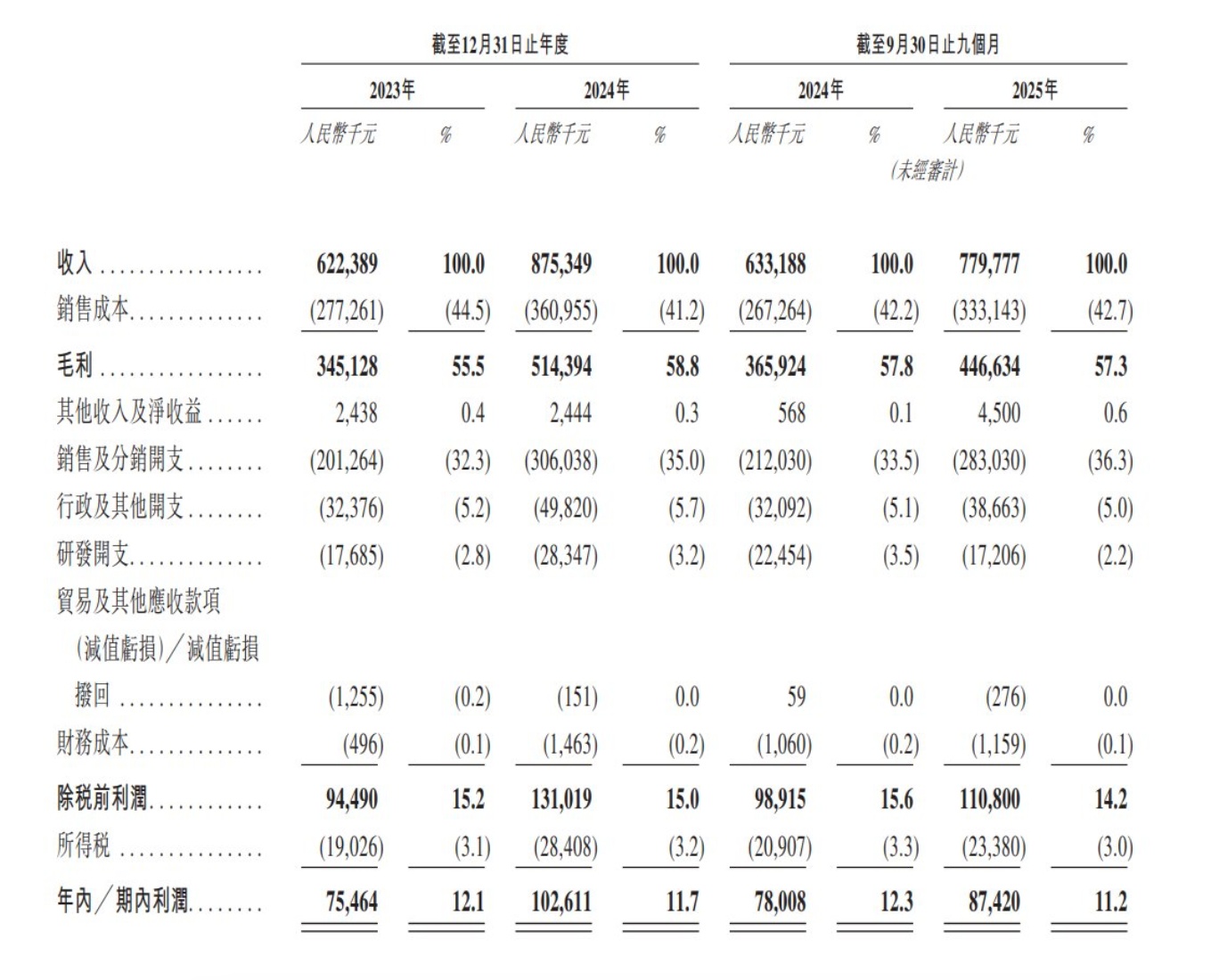
Core Viewpoint - The company "爷爷的农场" is accelerating its entry into the capital market by submitting a listing application to the Hong Kong Stock Exchange, capitalizing on the trend of refined and health-oriented transformation in the global baby and child consumer goods market [1] Group 1: Company Growth and Financial Performance - The company has achieved rapid revenue growth, with projected revenues of 7.8 billion RMB for the first three quarters of 2024 and an expected annual revenue exceeding 8 billion RMB, positioning itself as the second-largest player in the industry [1] - Revenue figures for the company are reported as 6.22 billion RMB for 2023, 8.75 billion RMB for 2024, and 7.80 billion RMB for the first three quarters of 2025, indicating a strong growth trajectory [2][3] - The company's gross profit margin has remained stable between 55% and 59%, with the gross margin for baby food products reaching 61% to 65%, significantly higher than the industry average of approximately 27% [3] Group 2: Market Position and Strategy - The company is strategically expanding its product categories, increasing its SKU count from 158 to 269, with a focus on family food products, which are becoming new growth drivers [2] - The Chinese baby food market is experiencing a structural transformation characterized by a decrease in quantity but an increase in quality, with the organic baby food market expected to grow from 12 billion RMB to 22 billion RMB, reflecting a compound annual growth rate of 15.9% [6][9] Group 3: Challenges and Risks - The company's growth is heavily reliant on online channels, with approximately 70% of revenue generated through e-commerce platforms, indicating a risk associated with channel concentration [4] - Marketing expenses have surged, with sales and distribution costs rising from 32.3% to 36.3% of total revenue, leading to a decline in adjusted net profit margin from 12.2% to 11.6% [5] - The company faces challenges related to its reliance on third-party manufacturing, which may impact product quality consistency and supply chain stability, especially in a market where food safety is paramount [9][10]