
新消费

Search documents
新消费板块持续回暖,港股消费ETF(513230)延续上涨态势
Mei Ri Jing Ji Xin Wen· 2025-10-16 02:58
Core Viewpoint - The Hong Kong stock market opened slightly lower, with the Hang Seng Index down 0.08%, reflecting a mixed performance among various sectors, while Ctrip announced a strategic partnership with Live Nation Asia to enhance its event-related travel offerings [1] Group 1: Market Performance - The Hang Seng Index opened down 0.08%, the National Enterprises Index down 0.06%, and the Hang Seng Technology Index down 0.14% [1] - Large technology stocks mostly declined, while sectors such as express logistics, home appliances, domestic insurance, new consumption concepts, and Chinese brokerage stocks saw gains [1] - The Hong Kong Consumption ETF (513230) continued its upward trend, rising over 1% at one point, with leading stocks including Lao Pu Gold, Pop Mart, and Li Ning showing significant gains [1] Group 2: Ctrip's Strategic Partnership - Ctrip has partnered with Live Nation Asia to launch the "Global Festival and Concert" project, integrating flights, hotels, tickets, and local experiences [1] - The project currently covers over 50 destinations and has expanded to the European and American markets, with an average of over 500 events on sale daily [1] - Ctrip aims to convert event traffic into travel orders, enhancing user engagement and average transaction value, with short-term benefits expected from increased demand for travel to events [1] Group 3: Industry Implications - The partnership is expected to boost sales in transportation, hotels, and attractions during off-peak seasons due to strong demand for attending events in different locations [1] - In the long term, replicating this successful model for international artist tours could open up new growth opportunities, benefiting related sectors such as hotels, airlines, and duty-free shops [1]

双十一展望及新消费投资策略
2025-10-15 14:57
Summary of Conference Call Records Industry Overview - The conference call discusses the outlook for the beauty and e-commerce sectors in China, particularly focusing on the upcoming Double Eleven shopping festival in 2025. The overall market sentiment is optimistic, with expectations of accelerated growth across various platforms, especially Taobao and Tmall, which are projected to achieve a growth rate of around 20% during the event [1][3]. Key Companies and Their Performance 1. **Taobao and Tmall** - Taobao and Tmall are expected to see marginal acceleration in growth, benefiting from personnel adjustments, local life integration, instant retail, and the influence of the 88 VIP membership program [1][3]. 2. **Douyin** - Douyin is anticipated to achieve approximately 40% growth, with other platforms also expected to maintain double-digit growth rates [1][3]. 3. **Proya (珀莱雅)** - Proya is currently in a personnel adjustment phase, with GMV growth expectations for Double Eleven projected to be in the single to low double digits. The company plans to launch more new products in 2026 and aims for a listing on the Hong Kong Stock Exchange [1][9]. 4. **Mao Geping (毛戈平)** - Mao Geping is expected to maintain a strong sales performance, with online sales growth projected between 40% to 50% during Double Eleven. The brand has seen significant collaboration with Li Jiaqi, particularly on key products [1][7][8]. 5. **Perfect Diary (完美股份)** - Perfect Diary had a strong online performance in the first half of the year but experienced a slight slowdown in Q3. The brand is expected to achieve over 30% growth during Double Eleven [1][11]. 6. **Shanghai Jahwa (上海家化)** - Shanghai Jahwa has shown accelerated online sales in Q3, with expectations for significant growth during Double Eleven, driven by brands like Bai Cao Ji and Yu Ze [1][10]. 7. **Yixian E-commerce (易鲜电商)** - Yixian's high-end brands, such as Kalanli and Darfu, have seen GMV double in Q2, indicating a strong recovery and potential for further growth [1][12]. 8. **Luyuchen (陆雨辰)** - Luyuchen is expected to see a significant increase in revenue, estimated to double in Q3, benefiting from rapid growth in its Jade Station home and optimized operations on Douyin [1][13]. 9. **Iffidan (伊菲丹)** - Iffidan is focusing on multi-channel operations and product launches, with plans to open 50 offline stores in China over three years [2][16][17]. 10. **Jinbo Biotech (锦波生物)** - Jinbo is strengthening its position in the medical beauty sector with new product approvals and collaborations, aiming for significant market penetration [1][19]. 11. **Meili Tianyuan Group (美丽田园集团)** - The group has made a strategic acquisition of Siyuanli, enhancing its market share and member base significantly [1][21]. 12. **Shangmei Group (上美股份)** - Shangmei is expanding its product range and has achieved significant growth through innovative marketing strategies on Douyin [1][22]. Market Trends and Consumer Behavior - Domestic beauty brands are gaining market share due to better consumer insights and faster product iterations compared to foreign luxury brands, which are struggling with slower product development [2][15]. - The price stability of foreign brands contrasts with the aggressive pricing strategies of domestic brands, indicating a shift in market dynamics [1][4]. Investment Strategies - The new consumption sector is highlighted as a key investment area, with traditional growth stocks also being considered due to their strong fundamentals and lower valuations expected in 2026 [1][6]. Conclusion - The upcoming Double Eleven shopping festival is expected to be a significant growth driver for the beauty and e-commerce sectors, with various companies poised to capitalize on the trends and consumer behavior shifts observed in the market. The overall sentiment is positive, with a focus on innovation, collaboration, and strategic positioning to enhance market share and profitability.


消费-乐观看待板块,关注四类机会
2025-10-15 14:57
Summary of Conference Call Notes Industry Overview - The consumer sector is currently viewed positively, with valuations at low levels and market attention extremely low. Certain assets like beer and frozen foods have dropped to levels seen in 2017-2018, despite significant earnings growth, indicating low risk and potential for reversal [1][4][5]. - The white liquor industry, while impacted by alcohol bans, has seen sufficient adjustment in expectations. Leading companies like Moutai are nearing bottom pricing, enhancing cost-effectiveness, and consumer demand is expected to recover in the long term [1][19]. - The white goods sector shows strong cost-performance advantages, with companies like Midea demonstrating global competitive strengths and stable growth in overseas market share, making them attractive for long-term investment [1][20][22]. Key Investment Opportunities - Focus on four investment directions: absolute cheap stocks, high dividend yields, low valuations, and companies expected to double in three years. Examples include Kangtong, Yihai, and Haidilao for high dividends, and CR Beer and Haier for low valuations [1][12][15]. - New consumption trends highlight a growing demand for quality and innovative products among new middle-class and Gen Z consumers, who are willing to pay for technologically advanced products [1][6][24]. Market Dynamics - The current market environment is characterized by a narrow funding situation, with limited incremental capital despite an increase in overall funds. The opening of the Hong Kong market has led to a diversion of funds to new consumption stocks [8][9]. - The anticipated return of long-term overseas funds to the Chinese market is expected as global interest rates decline, potentially increasing overseas allocations to Chinese assets [2][11]. Consumer Sector Insights - The consumer sector is expected to experience a 3 to 4-month rally from November to January, driven by macroeconomic factors and potential bottom reversals [3]. - The current consumer landscape differs significantly from April, with lower valuations and reduced market attention. Many stocks have reached their lowest points, with minimal risk [4][5]. Specific Company Insights - Companies like Hisense and AUX in the air conditioning sector have low P/E ratios (5-7 times), indicating growth potential despite slightly lower quality. Midea's strong earnings stability is noted with a P/E ratio of around 12-13 times [5]. - The liquor sector is expected to see a bifurcation, with Moutai's pricing nearing a bottom and consumer willingness to purchase increasing, suggesting a recovery in C-end consumption [19]. Emerging Trends - New consumption fields, such as tea and trendy toys, show clear cash flow and payment willingness, with some companies projected to grow over 20% next year [1][6]. - The experience-based consumption and medical beauty sectors are also highlighted as having strong growth potential, particularly among the new middle-class and female consumers [13][14]. Conclusion - The consumer sector presents various investment opportunities, particularly in undervalued stocks with strong fundamentals. The anticipated recovery in consumer spending and the return of overseas funds could further enhance market dynamics in the coming months [1][11][12].
港股速报 | 传闻突袭 机器人龙头大幅飙升
Sou Hu Cai Jing· 2025-10-15 09:00
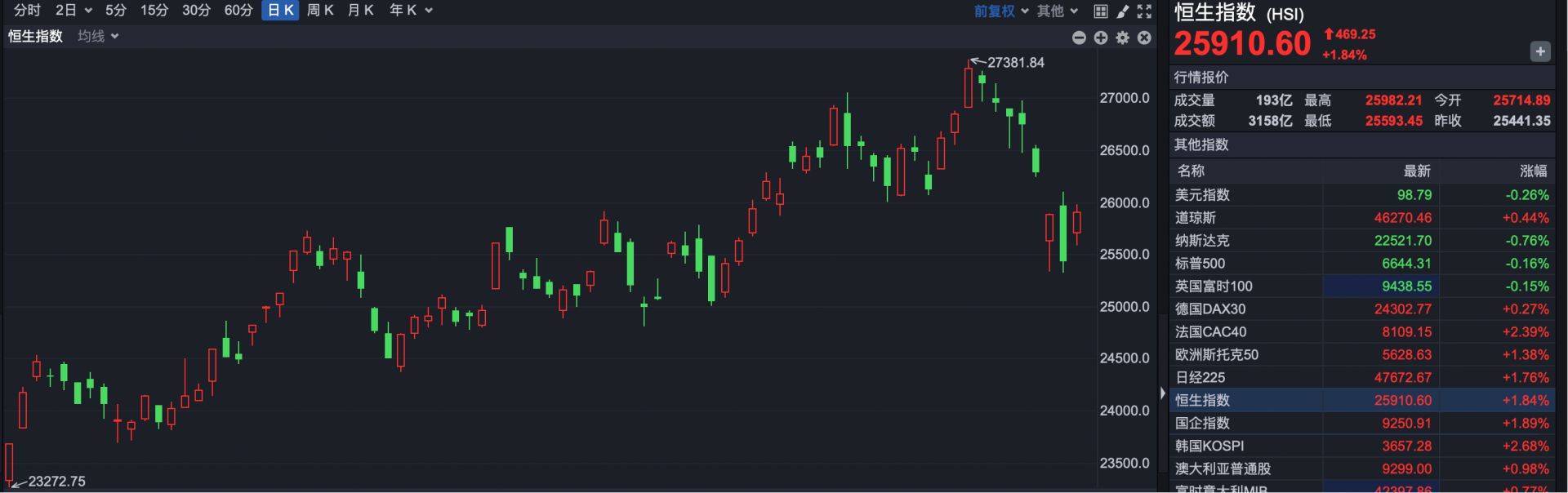
Market Overview - The Hong Kong stock market experienced a strong rebound, with the Hang Seng Index closing at 25,910.60 points, up 469.25 points, or 1.84% [1] - The Hang Seng Tech Index closed at 6,075.27 points, increasing by 152.01 points, or 2.57% [2] Focus Company - Leading robotics company, Sihua Intelligent Control (02050.HK), surged by 12.92%, with its A-shares (002050.SZ) hitting the daily limit [3] - The stock price increase is linked to rumors of a substantial order from Tesla for linear actuators valued at $685 million [5] - Sihua Intelligent Control is a leader in cooling and thermal management, with technology extending into refrigeration, automotive parts, and robotics [5] - Analysts from Galaxy Securities noted that Sihua is a key supplier for Tesla's humanoid robot actuators, with potential rapid revenue growth as Tesla's robot production scales up [5] - Guojin Securities highlighted Sihua's advantages in motor manufacturing expertise, scale, and cost control, successfully entering the robotics actuator market [5] Sector Performance - Technology stocks saw widespread gains, with Alibaba-W (09988.HK) and Bilibili-W (09626.HK) rising over 4%, and Lenovo Group (00992.HK) and JD Group-SW (09618.HK) increasing over 2% [6] - The building materials and cement sector performed well, with China National Building Material (03323.HK) rising over 7% [6] - New consumption concepts also saw gains, with Laopu Gold (06181.HK) up over 9% and Pop Mart (09992.HK) up over 3% [6] - Airline stocks were active, with China Eastern Airlines (00670.HK) rising over 9% and China Southern Airlines (01055.HK) nearly 7% [6] Future Outlook - Institutions like Cathay Pacific Securities emphasize the importance of boosting domestic demand amid external disruptions, with sectors like automotive and new consumption expected to benefit from favorable policies [8] - According to招商证券, the Hong Kong market may experience fluctuations in the short term, but marginal positive factors are expected to accumulate, driving future growth, particularly in technology and AI sectors [8]


宽松预期支撑下,现货黄金价格续创历史新高,港股消费ETF(513230)现涨近2.5%
Mei Ri Jing Ji Xin Wen· 2025-10-15 06:27
Group 1 - The Hong Kong stock market opened higher on October 15, driven by expectations of interest rate cuts by the Federal Reserve, with both the Hang Seng Index and the Hang Seng Tech Index rising over 1% [1] - Popular ETFs, particularly the Hong Kong Consumer ETF (513230), saw an increase of nearly 2.5%, with leading stocks such as Chow Tai Fook, Haidilao, and Bilibili showing significant gains [1] - The price of gold surged, with spot gold exceeding 1210 yuan per gram, marking an increase of approximately 400 yuan per gram year-to-date, prompting brands like Chow Sang Sang and Chow Tai Fook to raise their gold jewelry prices by 10% to 35% [1] Group 2 - Changjiang Securities suggests that the Hong Kong stock market may reach new highs driven by three key areas: AI technology and new consumption, which have substantial growth potential [2] - Continuous inflow of southbound funds into the Hong Kong market is expected to enhance marginal pricing power, especially if domestic interest rates remain low [2] - The transition from loose monetary policy to loose credit in China, along with potential further interest rate cuts in the U.S., could improve global liquidity and support the Hong Kong market's upward trajectory [2]
券商晨会精华 | 现在是把握券商板块战略性修复机会的关键时期
智通财经网· 2025-10-15 00:44
Market Overview - The market experienced fluctuations with the ChiNext Index and the Sci-Tech Innovation 50 Index both dropping over 4% during the session. The total trading volume in the Shanghai and Shenzhen markets reached 2.58 trillion, an increase of 221.5 billion compared to the previous trading day. The Shanghai Composite Index fell by 0.62%, the Shenzhen Component Index dropped by 2.54%, and the ChiNext Index decreased by 3.99% [1]. Brokerage Sector Insights - Huatai Securities emphasized that now is a critical period to seize strategic repair opportunities in the brokerage sector, driven by multiple factors including policy, capital, performance, and valuation. The capital market is undergoing profound reforms, transitioning into a new phase of co-development in investment and financing. The low interest rate environment is accelerating the migration of institutional and retail funds to the equity market, continuously bringing in incremental capital. With market expansion and increased activity, brokerage firms are seeing improvements in their business performance and profitability. However, the sector's valuation remains relatively low, making this an opportune time for strategic investments [2]. Cobalt and Rare Earths Strategy - CITIC Securities highlighted the importance of strategic allocation opportunities in cobalt and rare earths. The details of the cobalt export quotas from the Democratic Republic of Congo have been finalized, with major companies like Luoyang Molybdenum, Glencore, and Eurasian Resources holding the top three quota shares at 35.9%, 27.3%, and 21.6% respectively. The total quota for 2026 and 2027 is set at 96,600 tons, which includes 87,000 tons of basic quotas and 9,600 tons of strategic quotas. Under this quota system, only about 44% of production can be exported, resulting in a reduction of over 100,000 tons. Based on estimates of 270,000 tons supply and 230,000 tons demand in 2024, the market is expected to shift from a surplus of about 70,000 tons to a shortage of about 30,000 tons, potentially driving cobalt prices higher. Additionally, the Ministry of Commerce has reinforced export controls on rare earths, further solidifying their strategic importance [3]. North Exchange Long-term Value - Galaxy Securities pointed out that the North Exchange sector possesses long-term investment value. With the introduction of the specialized and innovative index, steady progress in new stock issuances, and the realization of more merger and acquisition projects, the trading activity and market attention towards the North Exchange are expected to remain high. For investment strategies in the second half of 2025, two main directions are recommended: 1) Focus on new productive forces in the North Exchange, particularly in emerging industries such as artificial intelligence, commercial aerospace, low-altitude economy, and new consumption, where companies have "scarce" attributes in the A-share market; 2) Conduct bottom-up selection based on financial indicators, focusing on companies with high performance growth, strong R&D investment, significant capacity release potential, and strong growth prospects [4].




中国银河证券:北交所板块具备长期投资价值
Xin Lang Cai Jing· 2025-10-15 00:14
Core Viewpoint - The launch of the specialized and innovative index, steady progress in new stock issuance, and the realization of more merger and acquisition projects are expected to maintain high trading activity and market attention on the Beijing Stock Exchange, indicating long-term investment value in this sector [1] Group 1: Investment Strategy - For the second half of 2025, two main investment directions are recommended: 1) A top-down approach focusing on new productive forces in the Beijing Stock Exchange, particularly in emerging industries such as artificial intelligence, commercial aerospace, low-altitude economy, and new consumption, targeting companies with "scarce" business models and key products in the A-share market [1] 2) A bottom-up approach based on financial indicators, focusing on companies with high performance growth, strong R&D investment, significant capacity release potential, and strong growth prospects [1]
南向资金净流入金额逼近1.2万亿港元 港股中长期上行趋势不改
Zhong Guo Zheng Quan Bao· 2025-10-14 23:12
Core Insights - Southbound capital has significantly flowed into the Hong Kong stock market, reaching a cumulative net inflow of 11,985.67 billion HKD as of October 14, marking a historical high for the year [1][2] - The Hang Seng Index has risen over 26% this year, with the Hang Seng Tech Index increasing by over 32%, driven by substantial inflows from southbound capital [1][4] - Despite recent market adjustments, analysts believe the long-term upward trend for Hong Kong stocks remains intact, with expectations for continued growth [5][6] Southbound Capital Inflows - Southbound capital has been the largest source of incremental funds for the Hong Kong stock market this year, with over 80% of trading days showing net inflows [2] - The peak single-day net inflow occurred on August 15, with 358.76 billion HKD [2] - As of October 13, southbound capital holdings reached 5,458.21 billion shares, with a market value of 6.35 trillion HKD, reflecting significant increases since the beginning of the year [2] Sector and Stock Performance - The financial, information technology, and consumer discretionary sectors have the highest market values held by southbound capital, amounting to 14,032.34 billion HKD, 13,707.60 billion HKD, and 9,006.28 billion HKD respectively [2] - Major stocks such as Tencent Holdings and Alibaba have seen substantial increases in holdings, with Tencent exceeding 6,800 billion HKD [2][3] Market Adjustments and Future Outlook - The Hong Kong stock market has experienced a correction, with the Hang Seng Index dropping over 5% and the Hang Seng Tech Index over 8% in October [5] - Analysts suggest that while short-term volatility may persist, the long-term outlook remains positive, supported by domestic growth policies and stable capital inflows [5][6] - The technology sector is expected to benefit from current industry trends, with potential for new highs in the fourth quarter [6]




今年以来南向资金净流入金额逼近1.2万亿港元 港股中长期上行趋势不改
Zhong Guo Zheng Quan Bao· 2025-10-14 21:32
Group 1 - As of October 14, 2023, southbound capital has accumulated a net inflow of 11,985.67 billion HKD this year, setting a historical high for annual net inflow [1][2] - The Hang Seng Index has risen over 26% and the Hang Seng Tech Index has increased over 32% year-to-date, with stocks having a market capitalization exceeding 1 trillion HKD showing an average increase of over 30% [1][4] - Southbound capital has been the largest source of incremental funds for the Hong Kong stock market, with over 80% of trading days this year witnessing net inflows [2][3] Group 2 - As of October 13, 2023, southbound capital holdings reached 5,458.21 billion shares, an increase of 821.50 billion shares since the beginning of 2023, with a total market value of 63,500 billion HKD [2] - The financial, information technology, and consumer discretionary sectors have the highest market values held by southbound capital, amounting to 14,032.34 billion HKD, 13,707.60 billion HKD, and 9,006.28 billion HKD respectively [2] - Major stocks held by southbound capital include Tencent Holdings exceeding 6,800 billion HKD and Alibaba-W, China Mobile, and others exceeding 2,000 billion HKD [2][3] Group 3 - Recent adjustments in the Hong Kong stock market have seen the Hang Seng Index drop over 5% and the Hang Seng Tech Index drop over 8% in October [5] - Analysts suggest that while short-term volatility may persist, the long-term upward trend for the Hong Kong stock market remains intact, supported by domestic growth policies and stabilizing investor sentiment [5][6] - The technology sector is expected to benefit from current industry trends, with potential for further inflows from foreign capital and continued support from southbound capital [6]
港股中长期上行趋势不改
Zhong Guo Zheng Quan Bao· 2025-10-14 20:17
Group 1 - Southbound capital has seen a cumulative net inflow of 11,985.67 billion HKD as of October 14, marking a historical high for the year and more than double the amount from the same period in 2024 [1][2] - The Hang Seng Index has risen over 26% and the Hang Seng Tech Index has increased over 32% year-to-date, with stocks having a market capitalization exceeding 1 trillion HKD showing an average increase of over 30% [1][2] - Over 80% of trading days this year have recorded net inflows from southbound capital, indicating strong investor interest in the Hong Kong stock market [1] Group 2 - As of October 13, southbound capital holdings reached 5,458.21 billion shares, an increase of 821.50 billion shares since the beginning of 2025, with a total market value of 63,500 billion HKD, up by 27,700 billion HKD [2] - The financial, information technology, and consumer discretionary sectors have the highest holdings, with values of 14,032.34 billion HKD, 13,707.60 billion HKD, and 9,006.28 billion HKD respectively [2] - Major stocks held by southbound capital include Tencent Holdings at over 6,800 billion HKD and Alibaba-W, China Mobile, and others exceeding 2,000 billion HKD [2] Group 3 - Analysts suggest that Hong Kong's tech and consumer assets are attractive due to their scarcity and relevance to current trends like AI applications and new consumption [3] - Despite recent market adjustments, the long-term upward trend for Hong Kong stocks is expected to continue, supported by domestic growth policies and stable investor sentiment [3][4] - The fourth quarter is anticipated to see continued inflows into Hong Kong stocks, particularly in the tech sector, with the Hang Seng Tech Index expected to have the most significant upside potential [3][4]