智能化

Search documents
中国蓝观察丨外企为何纷纷看好中国市场前景?
Xin Lang Cai Jing· 2026-01-15 14:15
Group 1 - In 2025, China's economy demonstrates strong resilience and vitality, continuously consolidating a "stable" pattern and enhancing "progress" momentum, injecting valuable confidence into the world economy [1][16] - Foreign enterprises are optimistic about China's development prospects and are increasing their investment, sharing the broad opportunities brought by China's high-level opening and high-quality development [1][16] - Foreign business leaders believe that China's policies to expand openness and optimize the business environment have created a more transparent, stable, and predictable investment environment [1][16] Group 2 - Michelin's joint venture in Shenyang, established in 1995, reflects the company's long-term commitment to the Chinese market, which has become the world's largest automotive consumer market [2][17] - The Shenyang factory has an annual production capacity of 17.1 million passenger car tires and has produced a cumulative total of 100 million tires [4][19] - Bayer has invested over 1 billion yuan in its crop science supply center in Hangzhou, which has recently launched a new manufacturing center with an annual output value of 2 billion yuan [4][19] Group 3 - Messer's new factory project in Hangzhou, with an initial investment of 50 million USD, aims to produce 300,000 tons of industrial and specialty gases annually [6][21] - BMW's Shenyang plant has implemented approximately 200 artificial intelligence applications, significantly enhancing production efficiency, with one in four BMW cars sold globally manufactured in China [8][24] - The establishment of the first German center in Shenyang by the German Federal Association of Small and Medium-sized Enterprises aims to promote industrial interaction and attract more German enterprises [10][26] Group 4 - The continuous improvement of the business environment in Shenyang has attracted foreign investment, with companies like HJ Biotech expressing confidence in the market's appeal [12][28] - The local government has implemented various measures to optimize the investment environment, including establishing a business service system for foreign-invested enterprises [15][31] - Shenyang has developed a strong industrial ecosystem, particularly in high-end equipment manufacturing and new energy vehicles, providing substantial support for foreign enterprises [15][31]


爆款广货现场爆单:广东制造以新价值“行天下”
2 1 Shi Ji Jing Ji Bao Dao· 2026-01-15 13:29
Core Insights - The "Guangdong Goods Going Global" spring initiative aims to enhance consumer spending and expand the influence of Guangdong products, featuring over 30 home appliance companies showcasing their products through live streaming [1][2] - Guangdong's industrial evolution has shifted from OEM to brand development and supply chain enhancement, reflecting a transition from merely selling products to conveying quality confidence and brand value [2][3] - The home appliance industry in Guangdong has surpassed 1 trillion yuan in scale, contributing nearly 50% to national revenue and exports, with significant production capabilities in various categories [3][4] Group 1: Event Highlights - The event showcased a significant increase in sales, with some companies reporting sales exceeding 100,000 yuan within three hours of live streaming, indicating a threefold increase compared to regular sales [3][4] - Companies like Gree and TCL offered substantial discounts, including a 15% national subsidy and up to 1,500 yuan off, to attract consumers [2][3] - The event was strategically held in Foshan, a hub for Guangdong's manufacturing, which contributes approximately 40% of the world's microwave and water heater production [3][4] Group 2: Industry Trends - Guangdong's home appliance sector is evolving towards smart, green, and aesthetically pleasing products, with companies integrating AI and energy efficiency into their offerings [1][6] - The shift towards intelligent home appliances is characterized by products that understand consumer needs, such as Gree's AI-powered air conditioners and Hisense's eco-friendly refrigerators [6][7] - The emphasis on green technology is becoming a core competitive advantage, with many products now featuring national energy efficiency certifications [7][8] Group 3: Future Directions - Guangdong plans to continue its promotional efforts with a weekly focus on various product categories, including mobile phones, clothing, and new energy vehicles, to stimulate consumer demand [6][9] - The integration of technology, green practices, and design aesthetics is reshaping the perception of Guangdong goods, moving from durable and affordable to innovative and stylish [8][9] - The competitive landscape is evolving, with companies focusing on user experience and emotional connection through product design, aiming for a transition from cost-driven to value-driven strategies [8][9]
中国智造引领下的卫浴毛巾架全球化跃迁,头豹词条报告系列:热能新边界
Tou Bao Yan Jiu Yuan· 2026-01-15 12:30
Investment Rating - The report does not explicitly state an investment rating for the bathroom towel rack industry. Core Insights - The bathroom towel rack industry is experiencing a transformation towards mechanization, automation, and intelligence, with a notable trend towards product smartization and an increasing emphasis on design aesthetics by consumers. The North American and European markets are identified as the core drivers of global market development due to their cold and humid climates, high economic development levels, and mature residential building systems. The industry is expected to grow as applications extend to hotels, gyms, pools, saunas, and yachts, supported by the optimization of e-commerce, engineering procurement, and cross-border channels. Chinese companies are leveraging manufacturing advantages, technological iterations, and brand expansion strategies to actively explore international markets, leading to a continuous increase in global market share [4]. Industry Definition - The bathroom towel rack is a heating home product, an upgraded version of the ordinary towel rack, capable of drying damp towels, bath towels, and clothing to prevent the growth of mold and bacteria due to moisture [5]. Industry Classification - The bathroom towel rack can be classified based on different heating sources into water-heated and electric-heated types, and by product style into plug-in, overlapping, and classical styles [6][10]. Industry Characteristics - The industry is characterized by a shift towards mechanization, automation, and smartization in production, a significant trend towards product smartization, and an increasing consumer focus on product design [18]. Development History - The bathroom towel rack industry originated in the late 19th century and has entered a rapid development phase. The industry has evolved from iron products to copper and steel products, with significant growth in the 21st century, particularly in the Chinese market [22][24][26]. Industry Chain Analysis - The industry chain consists of upstream raw material supply, midstream manufacturing and integration, and downstream sales channels. The overall industry chain is characterized by standardized upstream materials, competitive midstream manufacturing capabilities, and value differentiation driven by downstream channels and application scenarios [27][28]. Market Size - The market size of the bathroom towel rack industry grew from $792 million in 2019 to $952 million in 2024, with a compound annual growth rate (CAGR) of 3.75%. It is projected to reach $1.356 billion by 2029, with a CAGR of 7.48% from 2025 to 2029 [35]. Competitive Landscape - The competitive landscape of the bathroom towel rack industry features a tiered structure, with leading companies such as Kudox, Zehnder Group, IRSAP, and Jiangxi Aifenda in the first tier, while companies like Zhejiang Hongbeisi and Panasonic are in the second and third tiers, respectively. The industry remains fragmented with no dominant players globally [43][44]. Company Overview - Jiangxi Aifenda Warm Technology Co., Ltd. is a significant player in the industry, focusing on the research, design, production, and sales of heating home products, particularly electric towel racks. The company has a production capacity of over 2 million towel racks annually and is a major supplier in the European market [49][52]. - Zhejiang Hongbeisi Intelligent Technology Co., Ltd. specializes in smart heating solutions, including electric towel racks, and has established itself as a high-tech enterprise in the industry [53][54]. - Zhejiang Senlat Warm Equipment Co., Ltd. is also involved in the production of electric towel racks and other heating solutions, contributing to the industry's growth [55].
三大新品将重磅亮相,陕汽商用车2026如何精耕细分市场?
第一商用车网· 2026-01-15 11:30
承志传薪当致远,凝心聚力贵同行。陕汽商用车2026合作伙伴大会将于2026年1月20日在 陕西宝鸡隆重启幕。本次大会以"产品引领、精耕细分、共创未来"为主题,将邀请全国合 作伙伴、行业嘉宾及各界媒体,围绕战略方向、新品矩阵、行业趋势与合作共赢展开深度对 话,共同擘画商用车产业在新时代下的可持续发展蓝图。 实力登场!硬核新品重磅亮相 在商用车行业迈向绿色化、智能化的关键阶段,产品实力是应对一切挑战的根基。陕汽商用 车坚持以用户真实运营场景为出发点,持续推动技术迭代与产品进化。本次大会,陕汽商用 车将正式揭晓智云新能源、德龍轻卡、德御重卡三大主力品系下的三款战略新品。 这些新品并非简单迭代,而是针对快递速运、干线物流、城市配送等核心细分市场的深度回 应。它们集成了行业前沿的技术成果,力求在"更经济、更可靠、更安全、更舒适、更智 能"五个维度实现实质性突破,为用户提供兼具卓越运营效率与出色可靠性的运输解决方 案,切实兑现"为用户造好车,为客户创财富"的品牌承诺。 为切实回应不同合作伙伴的发展需求,大会设置重卡、轻卡&新能源、专用车、服务配件、 供应商五大分会场,聚焦2026年市场趋势研判、合作模式创新、业务政策宣贯 ...
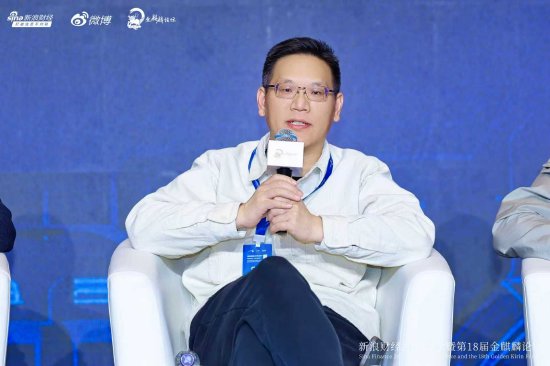
中关村科金喻友平:智能体在营销服务领域已进入普遍落地阶段
Xin Lang Cai Jing· 2026-01-15 10:41
Core Insights - The annual "2025 Technology Wind and Cloud List" event was held on January 15, 2026, in Beijing, with the theme "Inspiring New Intelligence, Embarking on a New Journey" [1][5] Group 1: Areas of Application for Intelligent Agents - The implementation of intelligent agents in enterprises is categorized into three core areas: marketing and sales services, enterprise knowledge management and office efficiency, and optimization of specific business processes [3][7] - The marketing and sales services area is already productized and shows good application results through real-time front-end teams, while the other two areas require deeper customization based on industry characteristics [3][7] - The optimization of business processes has the highest difficulty due to significant industry differences [3][7] Group 2: Challenges in Implementation - Key challenges in deploying intelligent agents include adherence to business rules or SOPs, accuracy requirements, and cost-effectiveness [3][7] - Addressing these challenges necessitates not only technological advancements and effective product design but also a focus on customer expectation management and planning for implementation order [3][7] Group 3: Industry Evolution Perspective - The long-term trend is the deepening integration of informatization, digitalization, and intelligence, moving from a human-centered approach to a human-machine collaborative model [4][8] - Future operations may evolve towards a model centered around an absolute truth, fostering better business operations through human-machine collaboration [4][8]

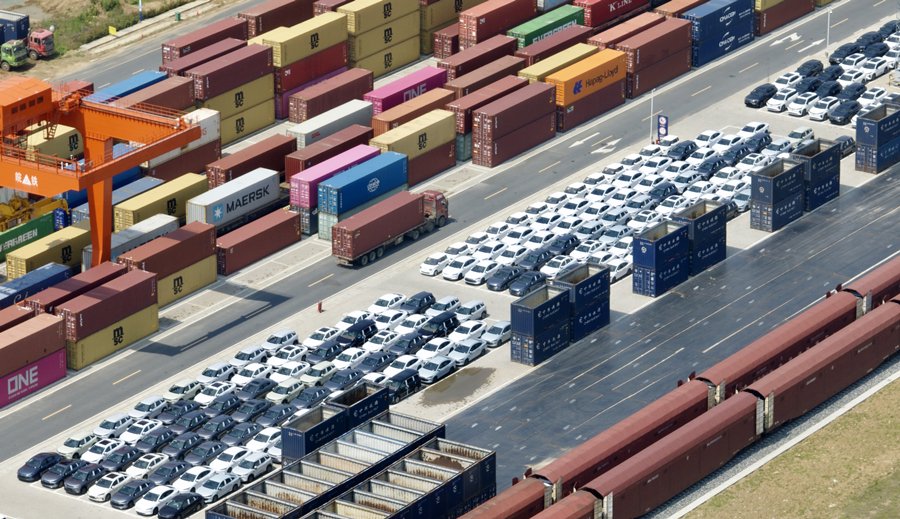
安徽省进出口总值首次突破万亿大关
Xin Hua Wang· 2026-01-15 10:09
Core Insights - In 2025, Anhui's foreign trade demonstrated strong resilience amid multiple pressures, achieving a record total import and export value of 10,135.6 billion RMB, marking a year-on-year growth of 17.3% [1] Group 1: Trade Performance - The total import and export value reached 10,135.6 billion RMB, with exports at 6,823.1 billion RMB (up 17.8%) and imports at 3,312.5 billion RMB (up 16.2%) [1] - Anhui ranked 9th nationally and 1st in Central China for total import and export value, with growth rates for imports and exports significantly exceeding national averages [1] - In December alone, the import and export value hit 1,118.4 billion RMB, reflecting a 35.9% increase and setting a new monthly record [1] Group 2: Export Structure - The export structure is increasingly shifting towards high-end, intelligent, and green products, with high-tech product exports reaching 1,598.2 billion RMB, a growth of 16.6% [2] - Exports of self-owned brands totaled 3,483.2 billion RMB, growing by 13.2% [2] - Anhui became the first province in China to export over one million vehicles in a year, with 1,228,000 vehicles exported, marking a 28.7% increase [2] Group 3: Trade Partnerships - Anhui's trade saw positive growth with 189 countries and regions globally, with ASEAN being the largest trading partner, accounting for 1,415 billion RMB in trade, a growth of 38.3% [2] - The "14th Five-Year Plan" period saw Anhui's foreign trade scale cross five thresholds, rising from 5,451.5 billion RMB at the end of the "13th Five-Year Plan" to over one trillion RMB in 2025 [2]
长城汽车众多前沿技术成果登陆2026CES
Zhong Guo Zhi Liang Xin Wen Wang· 2026-01-15 09:12
Core Viewpoint - Great Wall Motors showcased its advanced technologies and four key models at the 2026 CES in Las Vegas, emphasizing the depth of Chinese automotive technology and culture [1][2][3] Group 1: Technological Innovations - Great Wall Motors introduced the ASL (Spatial and Language Intelligent Agent) at CES 2025, which perceives the world from a 3D perspective and serves as a communicative travel partner [1] - The VLA large model, launched in December 2025, equips vehicles with three core capabilities: understanding, seeing, and thinking, and will be integrated into more models this year [1] - The Hi4 intelligent electric hybrid four-wheel drive technology, inspired by ancient Chinese irrigation engineering, showcases the company's innovative power distribution technology [2] Group 2: Product Offerings - Great Wall Motors presented its self-developed V8 engine and the H8 engine featuring the Soul Motor, along with semi-solid state batteries and hydrogen fuel cell engines, highlighting its comprehensive technology layout [2] - The company introduced four models, including the Wei brand Gaoshan 9, catering to various user needs and emphasizing a user-centric approach to market segmentation [2] Group 3: Global Vision and Cultural Exchange - Great Wall Motors aims to convey not only products and technologies but also values and cultural exchanges, using its innovations to connect different civilizations [2] - The company expresses a commitment to continuous improvement and global resource integration, positioning "Chinese intelligence" to shine on the world stage [3]

汽车产业竞争力源自硬实力
Ren Min Ri Bao· 2026-01-15 09:10
Core Viewpoint - The continuous advancement of electrification technology, accelerated application of cutting-edge technologies, and the implementation of anti-involution measures have led to sustained growth in China's automotive production and sales, reflecting the strong resilience and dynamic momentum of the economy under pressure [7]. Group 1: Automotive Production and Sales Growth - China's automotive production and sales have maintained a scale of over 30 million units for three consecutive years, ranking first globally for 17 years [7]. - In 2025, the production and sales of new energy vehicles (NEVs) are expected to reach 16.626 million and 16.49 million units, respectively, representing year-on-year growth of 29% and 28.2% [9]. - NEVs accounted for 47.9% of total new car sales in 2025, indicating a significant shift towards electric vehicles [9]. Group 2: Technological Advancements in Electrification - By 2025, the average range of pure electric passenger vehicles in China is projected to approach 500 kilometers, with fast-charging technology allowing for 80% charge in 15 minutes [8]. - The introduction of solid-state batteries is moving towards mass production by 2027, and a unique "super electric hybrid technology" is being widely adopted [9]. - Exports of NEVs are expected to reach 2.615 million units in 2025, doubling year-on-year, with passenger vehicle exports at 2.532 million units and commercial vehicle exports at 83,000 units [9]. Group 3: Advancements in Intelligent Driving - R&D investment in intelligent driving technology has reached 10 billion yuan, with Huawei's ADS 5 transitioning from technical validation to mass production adaptation [10]. - Over 60% of new passenger vehicles sold in China are equipped with L2-level assisted driving features, and the first L3-level conditional autonomous driving vehicles have received approval [10]. - The automotive industry is becoming a key carrier for the commercialization of advanced technologies such as semiconductors and artificial intelligence [10]. Group 4: Industry Transformation and Anti-Involution Measures - Anti-involution measures have been implemented to address issues like price wars and unfair competition, leading to a 4.4% profit growth in the automotive industry from January to October 2025 [11]. - The industry is shifting from resource-dependent, low-cost competition to a focus on technological innovation and value upgrading, with flagship models gaining market recognition [11]. - High-end domestic brands such as AITO, Li Auto, and Zeekr have seen sales growth exceeding 40% year-on-year in 2025 [11].
从“新蓝图”到“实景画”丨山东港口日照港:推动“无人化” 抢占“智”高点
Xin Lang Cai Jing· 2026-01-15 09:07
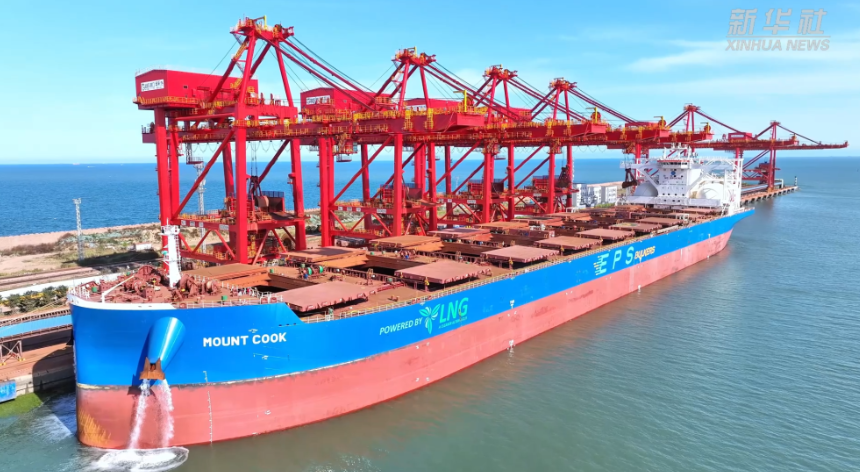
Core Viewpoint - The article highlights the transformation of Shandong Port's Rizhao Port into a smart and green demonstration port, emphasizing its role in enhancing operational efficiency and supporting national energy and economic development. Group 1: Operational Efficiency - Rizhao Port features advanced automation with equipment such as automatic unloading machines and precise stackers, resulting in a busy yet efficient operation without large crowds [3] - The port has implemented a "digital brain" for command and control, significantly improving operational efficiency in its 5.1 million square meters dry bulk cargo area [3] Group 2: Technological Innovations - The port has launched a zero-carbon offshore information platform called "Longjing Tower," which enables real-time data collection and transmission at sea [5] - The development of a marine digital twin application platform has enhanced the efficiency of ship docking and undocking by 10% and reduced waiting times by 20% through a four-dimensional display of terrain, weather, water flow, and vessels [5] Group 3: Strategic Importance - The transformation of Rizhao Port from a traditional bulk cargo terminal to a smart and green port is part of a broader strategy to ensure the smooth flow of national energy resources and support regional economic development [7]

德系豪华三强,连续两年失守中国市场
第一财经· 2026-01-15 08:47
Core Viewpoint - The German luxury car trio, BMW, Mercedes-Benz, and Audi (collectively referred to as "BBA"), has experienced a decline in sales in the Chinese market for two consecutive years, with significant drops in 2025 compared to previous years [3][4]. Group 1: Sales Performance - In 2025, BMW's sales in China were 626,000 units, down 12.5% year-on-year; Audi's sales were 617,000 units, down 5.6%; and Mercedes-Benz's sales were 552,000 units, down 19% [3][4]. - The sales gap between BBA brands is narrowing, with Audi's sales rising to second place in China, trailing BMW by less than 10,000 units [3][4]. Group 2: Market Dynamics - The decline in BBA's sales is attributed to structural changes in the Chinese luxury car market, where brands like Li Auto, NIO, and AITO are attracting traditional BBA customers with their smart technology offerings [4][5]. - The overall market structure is shifting, with the market share of vehicles priced above 400,000 yuan dropping from 6.3% to 5.2%, and the share of vehicles priced between 300,000 and 400,000 yuan falling from 9% to 8.4% [5]. Group 3: Competitive Environment - The competitive landscape has led to significant price reductions for luxury brands, with discounts exceeding 100,000 yuan on popular models like the Mercedes-Benz E-Class, Audi A6L, and BMW 5 Series [5]. - The intense competition has also impacted the dealer network, with frequent reports of luxury brand dealers exiting the market and manufacturers adjusting sales targets and policies to alleviate pressure on dealers [5][6]. Group 4: Future Strategies - BBA plans to launch new products based on a new electric vehicle platform in China and enhance local R&D and partnerships with Chinese tech companies to address their technological shortcomings [6]. - The transition to electric and smart vehicles is critical for maintaining competitiveness, as traditional luxury brand strengths in mechanical performance and brand premium are becoming less relevant [6].