风险管理

Search documents
【锋行链盟】纳斯达克上市公司年审核心要点
Sou Hu Cai Jing· 2025-10-01 18:26
Core Points - The annual compliance review for Nasdaq-listed companies is crucial for ensuring adherence to listing rules, SEC regulations, and maintaining investor trust [2] - The review focuses on the authenticity of financial reports, effectiveness of corporate governance, compliance with information disclosure, and soundness of internal controls [2] Financial Reporting and Audit Compliance - Nasdaq requires companies to submit independently audited annual reports (Form 10-K), emphasizing the authenticity and transparency of financial statements [2] - Key areas of focus include financial statement audits, compliance with the Sarbanes-Oxley Act (SOX), and consistency of financial data [3] Corporate Governance and Board Compliance - Nasdaq rules impose strict requirements on corporate governance, with annual reviews focusing on board composition and independence, executive compensation, and shareholder rights [2][3] - The majority of board members must be independent, and the audit committee must consist entirely of independent directors, with at least one possessing financial expertise [3] Information Disclosure and Transparency - Nasdaq emphasizes timely, accurate, and complete information disclosure, with annual reviews covering annual reports (Form 10-K) and proxy statements [4] - Companies must ensure timely submission of Form 8-K for significant events, avoiding delays or omissions [4] Internal Control and Risk Management - The annual review assesses the overall risk management framework, including key business process controls and risk management policies [6] - Companies must disclose major risks and their mitigation strategies, with auditors evaluating management's ability to identify and respond to risks [7] Listing Rules and Ongoing Compliance - Nasdaq maintains strict ongoing listing requirements, with annual reviews verifying compliance with listing standards and other obligations [6] - Companies must ensure compliance with regulations such as anti-money laundering (AML) and data privacy laws [7] Special Considerations for Certain Company Types - Foreign Private Issuers can use IFRS for financial reporting but must disclose differences from US GAAP [7] - Emerging Growth Companies may simplify certain disclosures but must still meet basic financial and governance requirements [7]


London Extends Lead in FX and Rates Trading, BIS Triennial Survey Finds
FinanceFeeds· 2025-10-01 13:50
Core Insights - The UK has solidified its status as the leading global center for foreign exchange (FX) and over-the-counter (OTC) interest rate derivatives, with significant increases in average daily turnover in April 2025 [1][2][3] FX Market Performance - In April 2025, the UK reported an average daily FX turnover of $4.745 trillion, a notable increase from $3.735 trillion in April 2022, reflecting a robust growth trajectory [2][4] - The UK's share of global FX turnover was 37.8%, slightly below the 38.0% recorded in 2022, indicating sustained market dominance [3][4] OTC Interest Rate Derivatives - The UK experienced a dramatic rise in OTC interest rate derivatives turnover, reaching $4.32 trillion in April 2025, up from $2.359 trillion in the previous survey cycle [2][10] - London's market share in OTC interest rate derivatives increased to 49.6%, rebounding from 42.9% in 2022, although still below the 50.6% recorded in 2019 [3][11] Market Structure and Infrastructure - London's FX market benefits from a unique combination of time zone advantages, deep counterparty networks, and advanced electronic trading infrastructure, which collectively enhance liquidity and reduce bid-ask spreads [5][6] - The product mix has shifted towards swaps and forwards, which are crucial for treasury and risk management, indicating a strategic alignment with market needs [6][8] Electronification and Trading Efficiency - The trend towards electronic execution has become the norm in both inter-dealer and dealer-to-client channels, facilitating rapid price discovery and larger notional flows [7][18] - The infrastructure supporting OTC interest rate derivatives has proven capable of scaling efficiently, maintaining turnover even during periods of high volatility [9][10] Implications for Policy and Market Participants - The Triennial Survey serves as a critical benchmark for understanding global FX and OTC rates trading, influencing discussions on liquidity concentration and systemic risk [12][13] - For market participants, the survey highlights London's infrastructure as a reliable source for executing trades and managing risk effectively [14][20] Future Trends - Key themes shaping the market include ongoing electronification, the push for collateral efficiency, and the impact of regulatory and geopolitical factors on liquidity routing [18][19][20]

利好! 沪深交易所、中国结算联合发文
Zhong Guo Ji Jin Bao· 2025-10-01 13:36
Group 1 - The core viewpoint of the article is that qualified foreign institutional investors (QFIIs) are now allowed to participate in ETF options trading starting from October 9, 2023, which is expected to enhance foreign investment in the A-share market [1][3][4] - The China Securities Regulatory Commission (CSRC) has progressively relaxed restrictions on QFIIs' participation in domestic commodity futures, options, and ETF options, aiming to expand their investment scope and improve the stability of foreign investment behavior [1][6] - The Shanghai and Shenzhen Stock Exchanges have issued notifications to accept applications from QFIIs for stock options trading, with specific requirements for hedging purposes [3][4] Group 2 - QFIIs can apply for long and short hedging positions and must report their A-share accounts through authorized options operating institutions before opening corresponding derivative accounts [3][4] - The introduction of ETF options is seen as a significant tool for risk management, which is expected to attract more long-term capital into the A-share market [6][7] - The article highlights that major foreign institutions have been actively investing in ETFs, with Barclays Bank holding over 19.2 billion yuan in listed funds, indicating a growing trend of foreign capital entering the Chinese market through ETFs [7][8]
降息要延续?美联储示意再降。中国企业应警觉并升级
Sou Hu Cai Jing· 2025-10-01 05:41
Group 1 - The Federal Reserve has lowered the federal funds rate target range by 25 basis points, from approximately 4.25–4.50% to 4.00–4.25%, marking the first rate cut since December of the previous year [1] - The decision to cut rates is influenced by mixed economic signals, including a strong GDP growth of about 3.3% in Q2, but with rising unemployment and stagnant wage growth indicating underlying economic weaknesses [1][2] - The Fed's shift in policy stance is seen as a move towards risk management, balancing the need to control inflation while preventing a hard landing for the economy [2] Group 2 - Recommendations for export companies include closely monitoring the dollar's performance and U.S. Treasury yield curve, as short-term dollar weakness may not be guaranteed [4] - Companies are advised to upgrade their business models towards high value-added and high-tech sectors to remain competitive, moving away from reliance on low-cost strategies [4] - Financial markets and policymakers should prepare for potential global liquidity increases if the Fed proceeds with further rate cuts, which could impact the RMB exchange rate and domestic asset prices [4] Group 3 - The current economic situation in the U.S. raises questions about the potential for a broader economic downturn and the Fed's ability to maintain independence under political pressure [6] - Continuous monitoring of key economic indicators such as non-farm employment, average hourly earnings, and inflation data is essential for companies and investors to adjust strategies accordingly [6] - Companies are encouraged to adopt strategies such as hedging, optimizing product chains, and enhancing technological capabilities to navigate external uncertainties [6]
学习贯彻党的二十届三中全会精神,推动完善合规与风险管理工作
Qi Huo Ri Bao· 2025-09-30 09:05
Core Insights - The 20th National Congress of the Communist Party of China presents new opportunities and challenges for the futures industry, emphasizing comprehensive reform, industry culture construction, and risk management [1] Group 1: Compliance and Risk Management - Futures companies must ensure compliance as a key to market stability and customer interests, integrating compliance culture into daily operations and decision-making [2] - A systematic risk management framework should be established, focusing on risk identification, assessment, control, and reporting, while enhancing internal controls to mitigate internal risks [3] Group 2: Talent Development - Strengthening talent development is crucial for enhancing core competitiveness, requiring optimization of talent structure and ongoing training in finance, law, compliance, and risk management [4] Group 3: Corporate Culture - Cultivating a corporate culture aligned with socialist core values is essential, promoting compliance, integrity, and prudent operations to enhance employee engagement and responsibility [5] Group 4: Technological Advancement - Digital transformation is vital for improving competitiveness, necessitating the integration of information technology in risk control, compliance services, and auditing processes [6] Group 5: High-Quality Development - Futures companies should focus on high-quality development that serves the real economy, customizing risk management solutions for enterprises and fostering business innovation [7] - The industry should adhere to the "Five Musts and Five Must Nots" of Chinese financial culture, ensuring that core values of compliance, integrity, professionalism, prudence, and responsibility are embedded in all operations [8]
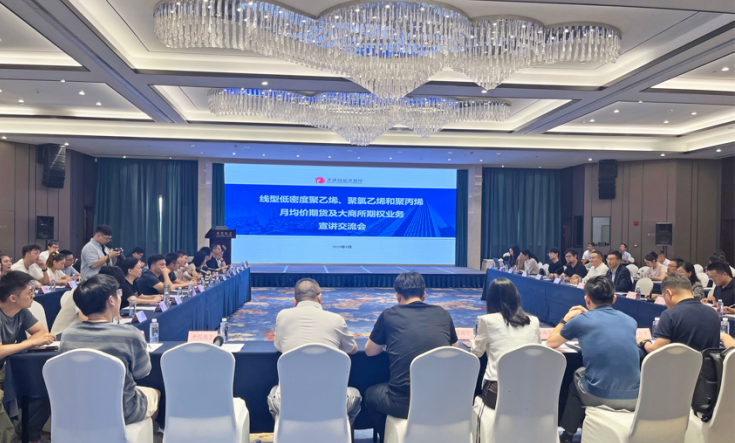
聚焦产业需求 深化服务创新——大商所三个化工品月均价期货及化工期权业务宣讲交流会(浙江) 在甬顺利召开
Qi Huo Ri Bao Wang· 2025-09-30 06:21
Core Insights - The Dalian Commodity Exchange (DCE) is launching monthly average futures contracts for low-density polyethylene, polyvinyl chloride, and polypropylene to enhance risk management tools in the plastics industry [1][3] - The initiative aims to meet the diverse risk management needs of the industry and was discussed in a seminar held on September 25, attended by over 80 representatives from relevant industries and futures trading institutions [1][3] Group 1 - The DCE's futures derivatives department provided a systematic introduction to the contract rules, application cases, and the current state of the chemical options market [3] - Industry representatives expressed strong support for the monthly average futures, highlighting its significance in helping chemical companies manage price risks more accurately [3] - The seminar facilitated discussions on the business plan for monthly average futures, spot trading models, and the application of chemical options, with suggestions and feedback from participants [3] Group 2 - The Ningbo Securities and Futures Industry Association emphasized its role in fostering communication and collaboration within the industry, aiming to enhance the integration of finance and industry [3] - The exchange meeting deepened the understanding of futures and options business among industry participants, laying a solid foundation for the smooth launch of innovative tools like monthly average futures [3] - The initiative is expected to improve risk management capabilities for enterprises, support the transformation and upgrading of the Ningbo industrial structure, and contribute to the high-quality development of the local economy [3]
ODI备案与海外投资融资安排
Sou Hu Cai Jing· 2025-09-30 04:50
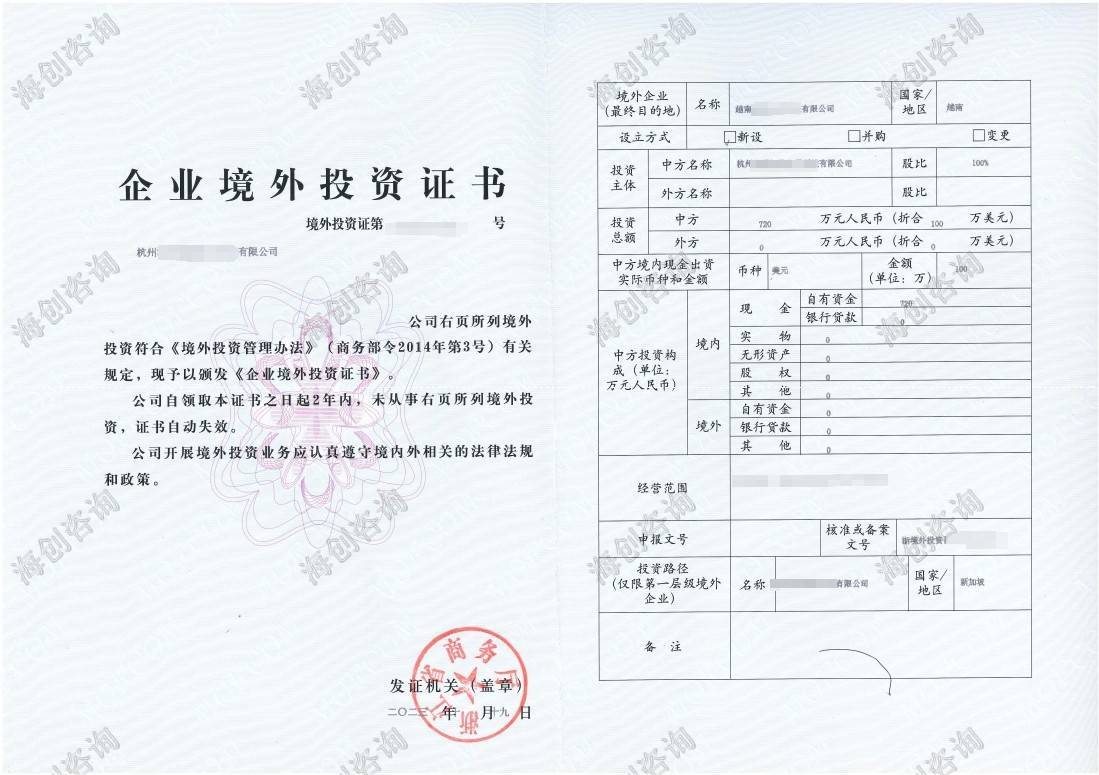
Core Points - The article emphasizes the importance of ODI (Overseas Direct Investment) filing and overseas investment financing arrangements for companies seeking to expand internationally and diversify funding sources [1][6]. Group 1: ODI Filing - ODI filing is a necessary procedure for domestic companies before making overseas direct investments, aimed at regulating investment behavior and ensuring compliance and safety [2]. - The filing process involves preparing necessary materials, submitting applications for review, waiting for approval, and obtaining the filing approval document, which is crucial for conducting overseas investments [3]. Group 2: Importance of Overseas Investment Financing Arrangements - Overseas investment financing arrangements are essential for addressing funding needs during international investments, helping to lower capital costs and improve investment returns [4]. - Companies can choose from various financing channels, including self-funding, bank loans, bond issuance, and equity financing, each with its advantages and disadvantages [4]. - Effective risk management strategies are necessary to mitigate market, exchange rate, and policy risks associated with overseas investments [4]. Group 3: Relationship Between ODI Filing and Financing - There is a close relationship between ODI filing and overseas investment financing; successful filing is a prerequisite for legal overseas investments, and detailed financing arrangements must be provided during the filing process [5]. - Successful ODI filing can enhance a company's credibility in international markets, facilitating future financing opportunities [5]. Group 4: Case Study - A successful case illustrates that a company completed ODI filing before an overseas acquisition, clearly defined investment goals and funding sources, and utilized a combination of bank loans and self-funding to create an effective financing plan, leading to successful acquisition and positive market response [5]. Group 5: Conclusion - In the context of increasing global economic interconnectivity, companies should focus on understanding the ODI filing process and developing sound overseas investment financing strategies to secure advantageous positions in international markets [6].
聚焦产业需求 深化服务创新——大商所三个化工品月均价期货及化工期权业务宣讲交流会(浙江)在甬顺利召开
Zheng Quan Ri Bao Wang· 2025-09-30 04:16
Group 1 - The core viewpoint of the news is the introduction of monthly average price futures for low-density polyethylene, polyvinyl chloride, and polypropylene to enhance risk management tools in the plastic industry [1] - The Dalian Commodity Exchange, in collaboration with local associations, held a seminar to discuss the application scenarios and business plans for these futures [1] - Over 80 representatives from relevant industries and futures trading institutions participated in the seminar, indicating strong interest and support for the new financial instruments [1] Group 2 - The Dalian Commodity Exchange provided a systematic introduction to the contract rules, application cases, and the current development of chemical options markets [1] - Industry representatives expressed optimism about the monthly average price futures aiding chemical companies in managing price risks more accurately [1] - The Ningbo Securities and Futures Industry Association emphasized its role in facilitating communication and promoting a favorable environment for the integration of industry and finance [2]
探索广西产业风险管理新路径
Qi Huo Ri Bao Wang· 2025-09-29 18:27
Core Insights - The training program aims to enhance the ability of state-owned enterprises and listed companies in Guangxi to utilize futures tools for risk management, thereby supporting high-quality industrial development in the region [1][2]. Group 1: Event Overview - The training session was organized by the Dalian Commodity Exchange in collaboration with various financial and regulatory bodies in Guangxi, attracting over 100 representatives from more than a hundred entities, including investment groups and futures operating institutions [1]. - The program focuses on the integration of futures and spot markets, emphasizing the importance of futures tools in stabilizing prices, optimizing inventory, and enhancing supply chain resilience for industrial development [2]. Group 2: Industry Context - Guangxi has rich resources in sugar and non-ferrous metals, with the establishment of 47 futures delivery warehouses and over 30 "insurance + futures" projects, creating a preliminary service system for futures and spot market integration [2]. - The Dalian Commodity Exchange has set up multiple delivery points in Guangxi for various commodities, enhancing the convenience and influence of "Guangxi delivery" [3]. Group 3: Risk Management Insights - The training highlighted the importance of risk management through derivatives, with only 425 listed companies in China engaging in commodity hedging, representing a participation rate of 9.13%, significantly lower than the 86.5% participation rate of S&P 500 companies [4]. - Experts emphasized that the volatility of commodity prices has increased 3 to 5 times compared to 40 years ago, making futures tools essential for business survival and development [4][5]. Group 4: Practical Applications - The training included discussions on various aspects of risk management, including derivative application models, financial processing, internal control systems, and case studies [4]. - Companies were encouraged to adopt different hedging strategies based on their exposure and business needs, utilizing futures derivatives for risk management and profit stabilization [6].
狗狗币价格分析:守住0.229美元支撑,反弹动能初现但空头压力犹存
Sou Hu Cai Jing· 2025-09-29 13:53
Core Viewpoint - Dogecoin (DOGE) has shown resilience at the critical support level of $0.229, with a recent rebound indicating a recovery in buying momentum, although bearish pressure and potential risks from Bitcoin's decline still threaten the bullish trend [7][8]. Price Dynamics - Dogecoin experienced a significant pullback of over 28% after breaking through $0.3 in early September, but has started to rebound over the weekend, suggesting a recovery in market momentum, particularly among buyers [1]. - The current price is stabilizing above the psychological level of $0.22, indicating increased buying power, with $0.22 serving as a critical level for both bulls and bears [5]. Demand Zone and Technical Analysis - Analysts highlight that the key support level for Dogecoin is at $0.229, which was successfully defended over the weekend, suggesting a potentially stronger upward trend compared to early September [3]. - A complete triangle breakout pattern has formed, triggering early bullish impulses, although the price has tested the lower boundary of the triangle while remaining above the $0.229 support, preserving rebound potential [3]. Market Sentiment and Future Outlook - If Dogecoin can maintain above $0.22, increased buying could push the price to the next resistance level of $0.25, indicating a bullish outlook [5][8]. - Conversely, if the price fails to recover, a drop below $0.22 could lead to a decline towards the next demand zone at $0.1881, necessitating stabilization at this level to restart any potential rebound [5][8]. Risks and Considerations - The bullish scenario hinges on maintaining the $0.229 support level, while a breach could increase downward pressure [8]. - The correlation between Dogecoin and Bitcoin remains high, necessitating caution regarding overall market risks, especially if Bitcoin experiences a significant drop [8].