
创新驱动

Search documents
从“华南虎啸星城”看长沙发展生态| 热点面对面
Chang Sha Wan Bao· 2025-10-10 00:32
Core Viewpoint - The gathering of major enterprises in Changsha, such as BYD, Huike, Huawei, Gree, and Guangqi, is a result of the city's enhanced industrial ecosystem and regional competitiveness, reflecting a new trend of "clusterization" and "ecologization" in industrial transfer [7][8]. Group 1: Industrial Ecosystem and Competitiveness - The selection of Changsha by leading companies is driven by the region's complete industrial chain, concentration of innovation resources, and favorable business environment, rather than just cost and policy considerations [7]. - Changsha has accelerated the construction of a modern industrial system, maintaining traditional advantages while advancing into new sectors like artificial intelligence and new energy [7][8]. - The presence of major enterprises has led to a "strong chain and complementary chain" strategy, enhancing the local industrial ecosystem and attracting high-end talent [9][10]. Group 2: Impact of Major Enterprises - The concentration of the "South China Tigers" in Changsha has multi-layered impacts, including the development of supporting enterprises, enhancement of the overall industrial chain, and attraction of high-end talent [9][10]. - Leading companies are establishing collaborative innovation platforms, which facilitate the efficient transformation and application of technological achievements [9][10]. Group 3: Strategic Goals for Changsha - Changsha aims to transition from a factor-driven to an innovation-driven development model, with major enterprises playing a crucial role in forming innovation consortia and enhancing the integration of industry, academia, and research [10]. - The goal of becoming a national advanced manufacturing hub requires a shift from low-end to high-end manufacturing, with leading companies driving the technological advancement of local supporting enterprises [10]. Group 4: Factors Attracting Leading Enterprises - Changsha's advantages include rich talent resources from local universities, a robust transportation network, improved business environment, and comprehensive industrial support [11][12]. - The city has created a talent magnet by offering a favorable living environment and policies that attract young professionals [12]. - Local supply chain integration and high local matching rates for key components enhance the resilience and risk management capabilities of the industrial chain [12][13]. Group 5: Future Development Focus - Future efforts in Changsha should focus on attracting high-end talent, increasing venture capital investment, and optimizing the innovation ecosystem [15]. - Establishing government-led investment funds to support strategic emerging industries like artificial intelligence and new energy is recommended [15]. - Continuous improvement of infrastructure and soft environments, such as intellectual property protection and technology transfer mechanisms, is essential for fostering innovation [15].




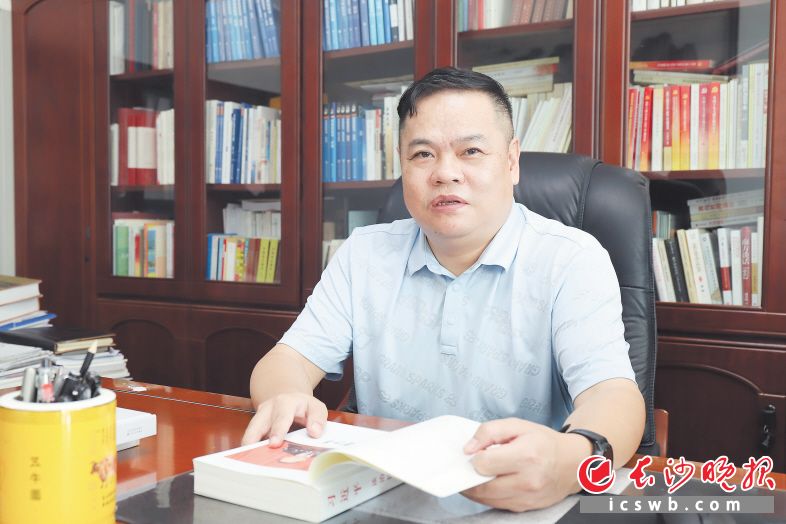
轻工业是稳增长、促消费的“定海神针”
Zhong Guo Chan Ye Jing Ji Xin Xi Wang· 2025-10-09 00:32
Core Insights - The Ministry of Industry and Information Technology, Ministry of Commerce, and State Administration for Market Regulation have jointly issued the "Light Industry Stabilization Growth Work Plan (2025-2026)", aiming to enhance the role of light industry in stabilizing economic growth [1] Group 1: Economic Role of Light Industry - Light industry is a traditional advantage and an important livelihood industry in China, contributing significantly to economic stability through its large scale, employment capacity, and market competitiveness [1] - Light industry products are integral to daily life and have gained international recognition for their cost-effectiveness and innovative designs, highlighting the importance of leveraging these advantages for economic growth and consumer confidence [1] Group 2: Quality and Structural Improvements - The plan emphasizes addressing structural contradictions in consumption supply, advocating for qualitative improvements and reasonable quantitative growth in light industry to support industrial stability and consumer confidence [2] - In the context of consumption upgrades, consumer demand has shifted from mere availability to quality, necessitating light industry to enhance product value and competitiveness while controlling capacity expansion to avoid quality neglect [2] Group 3: Focus on Key Industries - Targeting key industries such as smart home products, elderly and infant goods, and sports leisure fashion is crucial for driving economic growth and consumption, as these sectors represent market hotspots with significant potential [2] - Focusing on these key industries can lead to more effective economic stabilization and consumption promotion, capturing the essence of market trends [2] Group 4: Addressing Competition Issues - The plan calls for strengthening policy support to guide enterprises towards lawful operations and resist unfair competition, aligning with national policies against "involution" [3] - The light industry has faced challenges from low-price competition and imitation, which harm industry reputation and long-term development; thus, innovation and quality should be prioritized for sustainable competitiveness [3] Group 5: Future Expectations - The elevation of light industry to a more significant role reflects recognition of its contributions and sets higher expectations for its future impact on economic stability, consumption upgrades, and improving public welfare [3]
上半年GDP出炉!东北38市排名洗牌:长春力压哈尔滨,抚顺13鹤岗31
Sou Hu Cai Jing· 2025-10-05 13:22
Core Insights - The GDP data for the Northeast region in the first half of 2025 reveals a new economic landscape with Dalian leading at 464.7 billion yuan, followed closely by Shenyang with a growth rate of 10.76% [1][3] - Changchun has surpassed Harbin in the competition for the Northeast's secondary center, achieving a GDP of 375.49 billion yuan and a growth of 9.34% [1][3] - The overall data indicates strong growth in the equipment manufacturing sector driven by the digital economy, alongside a notable recovery in consumption spurred by the ice and snow economy corridor [1] Economic Performance - Dalian's GDP reached 464.7 billion yuan, up by 38.41 billion yuan from the previous year, with a growth rate of 9.01% [8] - Shenyang's GDP was 429.32 billion yuan, reflecting an increase of 41.69 billion yuan and a growth rate of 10.76% [8] - Changchun's GDP totaled 375.49 billion yuan, with a year-on-year increase of 32.06 billion yuan and a growth rate of 9.34% [8] - Harbin's GDP stood at 270.2 billion yuan, showing a growth of 20.94 billion yuan and a rate of 8.4% [8] City Developments - Fushun has established itself as a leading mid-sized city with a GDP of 49.26 billion yuan, marking a growth of 2.45 billion yuan [5] - Hegang, despite its lower GDP of 16.73 billion yuan, achieved the highest growth rate in the Northeast at 15.06% [7] - The transformation of resource-dependent cities like Hegang is highlighted by the establishment of a graphite deep processing base, capturing 20% of the global market [7] Sectoral Insights - The optical information industry cluster in Changchun has surpassed 100 billion yuan in output, with the international market share of the rail vehicle industry reaching 42% [3] - Strategic emerging industries in Changchun now account for over 35% of its economy [3] - The digital economy in Dalian has surged by 18% due to the operation of an artificial intelligence computing center [11] - The robot industry in Shenyang has generated revenues exceeding 40 billion yuan [11] Conclusion - The data reflects a significant shift in the economic dynamics of the Northeast region, with innovation and digital transformation playing crucial roles in revitalizing traditional industries and fostering new growth opportunities [11]
中国创新向世界展现新图景(环球热点)
Ren Min Ri Bao Hai Wai Ban· 2025-09-30 21:49
Group 1 - The World Intellectual Property Organization's 2025 Global Innovation Index Report ranks China 10th globally, marking its first entry into the top ten and a cumulative rise of 25 positions since 2013 [1] - In 2024, China's R&D expenditure exceeded 3.6 trillion yuan, reflecting an 8.3% increase from the previous year, with a stable growth in R&D investment intensity and rapid growth in basic research funding [2] - China has the largest R&D workforce globally, with 26 of the world's top 100 technology innovation clusters, and over 460,000 high-tech enterprises [2] Group 2 - China has maintained its global leadership in several intellectual property metrics, including design patent applications and trademark applications, with significant improvements in technology transfer efficiency [3] - The country ranks 19th in innovation input and 5th in innovation output in 2025, indicating a smoother operation of the "input-transformation-diffusion" innovation loop [3] - The integration of artificial intelligence into core business strategies has enhanced R&D reuse rates and iteration efficiency, supported by national-level computing and data infrastructure [3] Group 3 - China is actively promoting international cooperation in artificial intelligence through initiatives like the "AI+" international cooperation proposal, which aims to enhance practical collaboration and benefit global communities [4] - The country has successfully exported AI technology to various nations, providing applications that improve agricultural monitoring, energy management, and library services [4] - China's global initiatives in innovation support the UN's 2030 Sustainable Development Agenda and aim to create a stable environment for international innovation cooperation [6] Group 4 - China is making significant strides in key core technologies, with advancements in robotics and artificial intelligence that attract global attention [7] - The number of innovative drugs in China's biotechnology sector has surged, with over 1,250 new drugs in the R&D phase, meeting international standards and gaining recognition [7] - The automotive industry exemplifies China's transformation from a manufacturing to an innovation-driven economy, with local innovations being recognized globally [8] Group 5 - Enhancing national innovation capabilities requires breaking down disciplinary boundaries and fostering collaboration between natural sciences, engineering, and social sciences [9] - Recommendations for improving innovation capabilities include strengthening the innovation ecosystem, increasing investment in basic research, and establishing a unified framework for AI technology assessment and governance [9]
全球供应链变局下的粤商突围:从“走出去”到“走进去”
2 1 Shi Ji Jing Ji Bao Dao· 2025-09-30 14:08
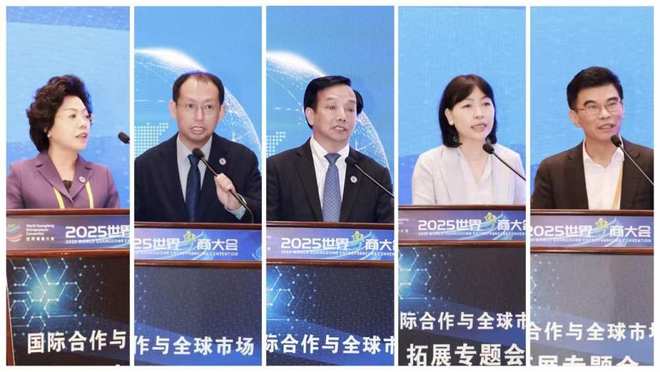
Core Insights - The conference emphasized that true internationalization involves deep integration and co-creation with local markets rather than mere replication [2] - The shift from competing on price and scale to focusing on innovation, value, and brand is essential for future growth [2][4] - Innovation is now a critical necessity for survival and development, rather than an optional strategy [4] Investment and Market Expansion - In 2024, Guangdong enterprises established over 1,900 non-financial companies abroad, with actual investments exceeding $21 billion [3] - Guangdong's foreign trade has ranked first in China for 36 consecutive years, with a record total import and export value in the first eight months of this year [3] Innovation as a Driving Force - Innovation is recognized as the core driver for Guangdong businesses transitioning from "going out" to "going in" [4] - Companies are encouraged to increase R&D investments in cutting-edge fields such as AI, new information technology, biomedicine, new materials, and high-end equipment [5] Collaborative Strategies for Internationalization - The transformation of Guangdong businesses includes moving from individual efforts to collaborative ecosystems, enhancing overall competitiveness in international markets [9] - Companies are advised to diversify supply chains and utilize financial tools to mitigate risks associated with international trade [8] Green and Digital Transformation - AI and digitalization are seen as essential tools for enhancing efficiency and restructuring global operations, while green and low-carbon initiatives are becoming the new standard in international markets [11] - The establishment of a mutual recognition mechanism for carbon footprint and ESG certification between Guangdong and Hong Kong is proposed to facilitate access to European markets [11][12]
福建县城7000亿巨头,收获一个“黄金”IPO
Sou Hu Cai Jing· 2025-09-30 02:39
Core Viewpoint - Zijin Gold International's IPO on the Hong Kong Stock Exchange marks a significant event in the global gold market, reflecting strong investor interest in resource-based assets and setting a new record for mining sector financing in 2023 [4][5]. Group 1: IPO Details - Zijin Gold International debuted on September 30, 2023, with an opening price of HKD 111.5 per share, a 55.75% increase from the offering price of HKD 71.59, resulting in a market capitalization exceeding HKD 290 billion [4]. - The IPO raised over USD 3 billion, making it the largest global IPO since May 2023 and the second-largest in the Hong Kong market this year, following CATL [4][5]. - Over 20 top-tier institutional investors, including GIC, Hillhouse Capital, BlackRock, and Schroders, subscribed to approximately USD 1.6 billion worth of shares, indicating strong long-term confidence in the company's fundamentals [4]. Group 2: Company Overview - Zijin Gold International operates as an independent platform for Zijin Mining, focusing on the entire gold value chain from exploration to sales, with assets in key gold-rich regions including Central Asia, South America, Africa, and Oceania [5][7]. - The company holds interests in eight high-quality mines, including the Gilar/Talor mine in Tajikistan and the Buriticá mine in Colombia, positioning it as a "growth engine" in the global gold mining industry [5][7]. Group 3: Financial Performance - From 2022 to 2024, Zijin Gold International's revenue is projected to grow from USD 1.818 billion to USD 2.99 billion, with a compound annual growth rate (CAGR) of 28.2%, while net profit is expected to surge from USD 184 million to USD 481 million, reflecting a CAGR of 61.9% [9]. - In the first half of 2025, the company reported revenues of USD 1.997 billion, a year-on-year increase of 42.3%, and net profit of USD 520 million, up 142.6% year-on-year [9]. - The company's all-in sustaining cost (AISC) for 2024 is projected to be USD 1,458 per ounce, ranking it among the lowest in the top fifteen gold producers globally [8]. Group 4: Market Trends and Future Outlook - The global gold market is experiencing a "golden era," with demand expected to grow at a steady rate of 3.2% annually over the next three years, driven by central banks and investment in gold as a safe haven [10]. - Zijin Gold International's listing is seen as a milestone for capitalizing on its resources and expanding globally, with plans to invest IPO proceeds into existing mine expansions and new resource explorations [10]. - The company is well-positioned to benefit from rising gold prices, which are projected to reach USD 2,386.4 per ounce in 2024 and USD 3,387.7 per ounce by 2026 [9].


光威复材:碳纤维技术突破为大国重器“减重瘦身”
Xin Lang Cai Jing· 2025-09-29 13:48
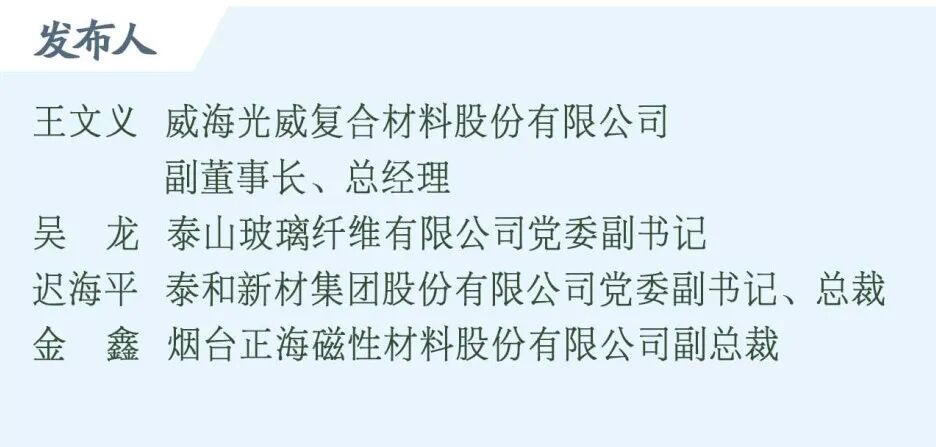
Core Viewpoint - The event organized by the Shandong Provincial Government highlighted the development of the new materials industry in Shandong, featuring four companies including Guangwei Composite Materials, which showcased their innovative products and collaborative efforts in the carbon fiber industry [1][20]. Company Overview - Guangwei Composite Materials is recognized as a leading enterprise in the carbon fiber industry chain, focusing on innovation-driven and application-oriented development strategies [6][8]. - The company emphasizes the cultivation of technical talent and has established over 50 grassroots innovation studios to foster a culture of innovation among all employees [8]. Innovation and Development Strategies - Guangwei Composite Materials integrates production, learning, and research, collaborating with universities and research institutions to drive innovation [8]. - The company maintains a consistent R&D investment of around 10% of its sales revenue, ensuring a sustainable competitive advantage and a product strategy of "producing one generation, researching one generation, and reserving one generation" [8][9]. Product Offerings - Carbon Fiber: Guangwei offers a full range of carbon fiber products, which are essential for national defense and economic development, and has expanded applications into aerospace, commercial space, and low-altitude economies [13]. - Prepregs: These intermediate materials, made from carbon fiber and resin, are widely used in wind power and aviation, with new products like high-transparency fiberglass prepregs for flexible solar components [14]. - Wind Power Blade Carbon Beams: The company has industrialized wind power carbon beams, supporting the production of the world's longest wind turbine blades, achieving a balance between performance and cost [15]. - Carbon Fiber Composite Products: These products are utilized in various sectors, including aerospace, 3C electronics, and new energy vehicles, contributing to weight reduction and efficiency [16]. - Carbon Fiber Equipment and Molds: Guangwei has developed a complete set of production equipment for carbon fiber, ensuring domestic control over the entire manufacturing process [17]. Unique Advantages - Guangwei Composite Materials operates a full industry chain from raw materials to finished products, likened to the wheat theory, which illustrates the comprehensive nature of its business model [18].

年均增长5%左右!今明两年有色金属行业增加值增长目标定了
Mei Ri Jing Ji Xin Wen· 2025-09-29 13:07
Core Viewpoint - The Ministry of Industry and Information Technology and eight other departments jointly issued the "Nonferrous Metal Industry Stabilization and Growth Work Plan (2025-2026)", aiming for an average annual growth of around 5% in the value added of the nonferrous metal industry and a 1.5% annual growth in the production of ten nonferrous metals [1][2] Group 1: Industry Growth and Performance - The nonferrous metal industry has rapidly developed, becoming the world's largest producer and consumer of nonferrous metals, with a reported 8.9% year-on-year increase in the added value of large-scale nonferrous metal industries in 2024, outperforming the industrial average growth rate by 3.1 percentage points [2] - The production of ten commonly used nonferrous metals reached 79.19 million tons in 2024, marking a 4.3% year-on-year increase, while industry revenue and profits grew by 15.8% and 16.5% respectively [2] Group 2: Strategic Focus and Upgrades - The new plan emphasizes a shift from quantity-driven growth to quality-driven growth, focusing on innovation, green circular economy, and collaborative industrial development, providing a more forward-looking and systematic roadmap for the nonferrous metal industry [3][4] - The plan aims to enhance resource security, optimize supply, promote transformation, expand consumption, and strengthen cooperation through ten specific initiatives [4] Group 3: Key Highlights of the Plan - The growth driver is shifting from "scale-driven" to "innovation-driven," emphasizing the integration of technological and industrial innovation to enhance effective supply capacity [4][5] - The development paradigm is transitioning from "resource consumption" to "green circular economy," with a focus on energy conservation, pollution reduction, and the establishment of recycling bases for nonferrous metals [4][5] - The industry organization is moving from "fragmented competition" to "coordinated development," promoting deep collaboration along the supply chain to enhance overall value [5]
新天力以创新驱动发展,铸就食品包装容器行业领军者
Sou Hu Wang· 2025-09-28 11:52
Core Viewpoint - The company, New Tianli Technology Co., Ltd., has established itself as a leader in the thermoformed plastic food container industry through continuous innovation and strong R&D investment, aiming to protect food and promote human health and quality of life [1] Group 1: Financial Performance - The company expects to achieve operating revenue of 840 million to 860 million yuan for the period from January to September 2025, reflecting a year-on-year change of -0.80% to 1.57% [1] - The net profit attributable to the parent company is projected to grow by 29.95% to 33.61% compared to the same period last year [1] - The net profit attributable to the parent company after deducting non-recurring gains and losses is expected to increase by 28.85% to 32.61% year-on-year [1] Group 2: Innovation and Technology - Innovation is the core engine of the company's development, with a focus on providing integrated innovative packaging solutions [2] - The company holds 188 authorized patents, including 10 invention patents, and has developed industry-leading core technologies [2] - The company's products, such as sterile barrier cups and temperature-stable rice boxes, utilize advanced technologies to address key challenges in the food container industry [2] Group 3: Operational Strategy - The company has established an efficient and robust operational system, employing a "sales-driven production + appropriate inventory" model [3] - It utilizes advanced intelligent production lines from Germany and Japan to respond quickly to diverse customer demands while ensuring product quality [3] - The company maintains long-term partnerships with quality suppliers to effectively control raw material costs and quality risks [3] Group 4: Market Position and Policy Alignment - The company's development strategy aligns with national policies promoting high-quality manufacturing and supply-side reform in the packaging industry [4] - The company's products are not significantly affected by current plastic restrictions, and it has achieved high-level certifications for its environmental efforts [4] - The company implements a "2R" model to reduce plastic usage and promote recycling, demonstrating its commitment to sustainability and social responsibility [4] Group 5: Future Outlook - The company aims to continue leveraging innovation and quality to maintain its leading position in the Chinese food packaging container market [5] - It is committed to providing safer and higher-quality packaging solutions to safeguard food safety and enhance quality of life [5]
鲁南制药跻身全国民营企业研发投入、发明专利双榜单百强
Qi Lu Wan Bao Wang· 2025-09-28 02:47
Group 1 - The 2025 Private Economy Innovation Development Conference was held in Xi'an, focusing on promoting the development of private enterprises through technological innovation [1] - Lunan Pharmaceutical ranked 176th in national private enterprise R&D investment and 84th in invention patents [1] - The conference aimed to align national strategies with local development needs, enhancing the high-quality development of the economy and society [1] Group 2 - Lunan Pharmaceutical emphasizes "platform empowerment for innovation" and has established a deep integration of production, learning, research, and application [2] - The company invests over 10% of its revenue annually in R&D, focusing on biopharmaceuticals, innovative drugs, and high-end formulations [1][2] - Lunan Pharmaceutical aims to contribute significantly to the Healthy China strategy and the high-quality development of Shandong [2]