
十五五规划

Search documents
“十五五”四维融合密码:科技创新如何链接产业、人才与市场?
Xin Lang Cai Jing· 2026-01-22 10:08
Core Viewpoint - The core objective during the "14th Five-Year Plan" period is to significantly enhance the level of technological self-reliance and strength, with the integration of the innovation chain, industry chain, capital chain, and talent chain being a key pathway to achieve this goal [2][16]. Group 1: Challenges in Four-Dimensional Integration - The integration of the innovation chain, industry chain, capital chain, and talent chain faces multiple real-world obstacles, particularly in the disconnect between supply and demand [3][17]. - Only 10%-30% of China's cutting-edge scientific achievements are applied in actual production, with only 20% of those forming scalable industries, leading to an overall technology transfer rate of around 30%, significantly lower than the 60%-70% seen in developed countries [3][17]. - The traditional talent evaluation system focuses on academic metrics, which misaligns with the core needs of enterprises for technology transfer capabilities and market application effectiveness [3][17]. Group 2: Regional Talent Distribution and Funding Issues - There is an uneven distribution of high-end innovative talent, heavily concentrated in first-tier cities and developed eastern regions, which restricts balanced regional innovation development [4][18]. - The long-term stability of funding for basic research is lacking, causing potential research directions to stagnate due to funding interruptions [4][19]. - Structural biases in funding allocation lead to resources flowing into low-level repetitive construction areas rather than critical sectors like integrated circuits and high-end instruments [5][19]. Group 3: Policy Recommendations and Strategic Initiatives - The "14th Five-Year Plan" proposes targeted measures to enhance the integration of the innovation chain and industry chain, optimize the talent chain, and empower the capital chain [6][20]. - The establishment of regional technology innovation centers and high-tech industrial zones is emphasized to accelerate the practical implementation of these strategies [6][20]. - Collaborative innovation mechanisms across regions are being developed to break down barriers related to talent, technology, and funding [7][21]. Group 4: Talent Development and Educational Reforms - The optimization of the talent chain is crucial for deepening the collaboration between industry, academia, and research, with a focus on aligning talent development with innovation needs and industry directions [8][22]. - Reforms in talent evaluation are aimed at breaking the traditional focus on publications and project levels, facilitating better integration between research institutions and industry [8][22]. - Various local initiatives are emerging to enhance collaborative talent cultivation, such as the joint development of educational resources and training bases among enterprises and educational institutions [9][23]. Group 5: Financial Support and Innovation Cycle - Precise financial investment is identified as a key engine for technological breakthroughs and industrial upgrades, with a focus on directing funds towards basic research and original innovation [12][26]. - Policies are being implemented to alleviate financing difficulties for technology innovation enterprises, such as increasing loan limits and compensation ratios for small and medium-sized enterprises [13][27]. - The establishment of a diversified funding input structure is essential to ensure that innovation funds are accurately matched with industry pain points and talent development needs [12][27].


读懂“十五五”:国盛证券首席经济学家熊园带你解码政策的底层逻辑
华尔街见闻· 2026-01-22 09:37
Core Viewpoint - The year 2026 is seen as a pivotal moment in China's economic history, marking a shift from "scale dividends" to a focus on "system safety and quality revolution" as the country enters the "15th Five-Year Plan" [1][4]. Historical Context - Each five-year plan has historically been associated with a restructuring of wealth logic, with significant changes occurring every five years: - "15th" period (2001-2005): Entry into WTO, urbanization, infrastructure, real estate, and foreign trade became wealth drivers [1]. - "11th" period (2006-2010): High-speed growth driven by the "4 trillion" stimulus, leading to peaks in finance, real estate, and heavy industry [2]. - "12th" period (2011-2015): Transition pains with the rise of "strategic emerging industries" like Internet+, mobile payments, and consumption upgrades [3]. - "13th" period (2016-2020): Supply-side reforms and "de-leveraging" reshaped the industrial landscape [4]. - "14th" period (2021-2025): Shift from "efficiency first" to "safety first" with a focus on carbon neutrality and semiconductor self-sufficiency [4]. Challenges Ahead - The old economic models are failing as new factors emerge, such as aging population and unprecedented monetary policy shifts, making traditional metrics like GDP growth less relevant [4][5]. - Investors face a "logic gap," struggling to translate policy intentions into actionable liquidity support and asset allocation strategies [5]. Upcoming Opportunities - The upcoming "15th Five-Year Plan" presents complex challenges for macroeconomic policy, with a need for new frameworks to navigate the evolving landscape [5]. - The course led by economist Xiong Yuan aims to decode the "15th Five-Year Plan" and identify investment opportunities within the A-share market, focusing on core assets and understanding the implications of policy changes [6][19]. Course Insights - The course will cover: - Understanding policy frameworks and their implications for capital markets [19]. - Identifying investment opportunities within the "15th Five-Year Plan" [19]. - Analyzing the evolution of China's monetary and fiscal policies [19]. - Bridging the gap between policy interpretation and practical investment applications [19]. Conclusion - The "15th Five-Year Plan" is not just a distant concept but a critical framework that investors must engage with to navigate the next five years effectively, emphasizing the importance of understanding policy nuances and market signals [19].
徐奇渊:展望2026年中国经济的三个角度
和讯· 2026-01-22 09:22
Group 1 - The core viewpoint of the article emphasizes the importance of the "14th Five-Year Plan" and the upcoming "15th Five-Year Plan" in shaping China's economic development, focusing on high-quality growth and the well-being of the population [4][7] - The "15th Five-Year Plan" highlights two main pushes: achieving effective qualitative improvement and reasonable quantitative growth, and promoting comprehensive human development and common prosperity for all [4][7] - The article outlines four key aspects of human-centered development in the "15th Five-Year Plan," including investing in human capital, aligning industry development with evolving consumer needs, urbanization as a means of optimizing resource allocation, and enhancing living standards to achieve common prosperity [5][6][7] Group 2 - The article discusses the integration of stock and incremental policies, emphasizing the need for a more proactive macroeconomic policy in 2026, which includes evaluating the consistency of various economic and non-economic policies [8][11] - It highlights the significant potential of existing fiscal deposits, which have fluctuated between -200 billion and +600 billion annually over the past two decades, with a notable increase in 2025, indicating underutilization of fiscal resources [9] - The article also points out the substantial policy space within state-owned assets, with total assets exceeding 400 trillion and liabilities around 260 trillion, suggesting that liquidity issues need to be addressed to activate these assets effectively [10] Group 3 - The article provides an analysis of the expected trend of the RMB exchange rate in 2026, with a general consensus on appreciation, but notes that this must be accompanied by policies to expand domestic demand [13][15] - It discusses the impact of geopolitical factors, particularly Sino-U.S. relations, on the undervaluation of the RMB, indicating that improving these relations could lead to a correction in the exchange rate [14][15] - The article concludes that the current exchange rate is primarily determined by market supply and demand, with geopolitical influences playing a significant role, and anticipates a favorable environment for RMB appreciation in 2026 [15]

全面深刻准确领会和把握“十五五”战略部署——论学习贯彻习近平总书记在省部级专题研讨班开班式上重要讲话
Ren Min Ri Bao· 2026-01-22 08:09
建设现代化产业体系是要实现产业体系整体跃升。习近平总书记强调:"各地区各行业要找准定位,坚 持智能化、绿色化、融合化方向,发挥比较优势,形成上下游产业相互衔接、各展其长、同向发力的生 动局面。"这为推动产业体系整体跃升指明了实践路径。现代化产业体系的骨干是先进制造业。"十五 五"规划建议提出,坚持把发展经济的着力点放在实体经济上,指向的就是保持制造业合理比重、大力 发展先进制造业。 由此来看,"深刻"就是要对"十五五"规划建议各项部署知其然又知其所以然,既明白是什么,又明白为 什么、怎么做。"十五五"规划建议作出的重大判断、提出的创新举措,都是经过充分论证的。我们要真 正理解透彻,避免囫囵吞枣、一知半解。 建设现代化产业体系,发展新质生产力是必然要求。总书记多次强调发展新质生产力要"因地制宜",在 中央经济工作会议上,就曾批评"一些地方不顾实际,盲目追风口。看别人搞芯片,自己也搞。看别人 搞'新三样',自己也不甘落后"。 指出"发展新质生产力不是要忽视、放弃传统产业,要防止一哄而上、泡沫化,也不要搞一种模式",强 调"要根据本地的资源禀赋、产业基础、科研条件等,有选择地推动新产业、新模式、新动能发展"…… 总 ...
香港运输及物流局:多管齐下优化跨境互联互通 完善大湾区多式联运网络
智通财经网· 2026-01-22 07:39
Group 1: Hong Kong's Development Vision - The Hong Kong Transport and Logistics Bureau aims to deepen cooperation with cities in the Greater Bay Area to establish a cross-border low-altitude network, enhancing the interconnectivity of people, logistics, and information for high-quality development [1] - The national "14th Five-Year Plan" emphasizes consolidating and enhancing Hong Kong's status as an international shipping center, providing strong support for the development of Hong Kong's port and shipping services [1] - Significant progress is expected by 2025, including the establishment of a high-level Hong Kong Maritime and Port Development Bureau, successful LNG ship-to-ship refueling demonstrations, and the completion of the port community system [1] Group 2: Strategies for Shipping and Logistics - In 2026, the Transport and Logistics Bureau will adopt a multi-faceted strategy to enhance the resilience and competitiveness of Hong Kong's shipping industry, including the construction of a "rail-sea-land-river" intermodal transport system [1] - The government plans to revise relevant legislation to optimize existing tax incentives for the shipping industry and introduce half-tax incentives for commodity traders, as well as reform the ship registration system to attract more vessels to register in Hong Kong [1] Group 3: International Aviation Hub Development - Hong Kong will implement a series of policy measures to expand its aviation network, strategically attracting both local and non-local airlines to develop new routes and flights, focusing on regions with growth potential [2] - The government is committed to strengthening cooperation with cities in the Guangdong-Hong Kong-Macao Greater Bay Area to improve the multi-modal transport network [2] Group 4: Low-Altitude Economy Development - Hong Kong will actively respond to the national "14th Five-Year Plan" by developing the low-altitude economy, leveraging innovative technology to drive regional collaborative development [2] - The government is establishing communication mechanisms with mainland counterparts to discuss key issues such as cross-border low-altitude flight route planning and customs clearance mechanisms [2] - Hong Kong aims to standardize and institutionalize low-altitude economic development, providing a model for the national low-altitude economic industry to ensure safety, order, and sustainability [2] Group 5: Policy Alignment with National Development - Future policies in aviation, shipping, and logistics will align with national planning and integrate into the national development framework, enhancing the competitiveness of Hong Kong's shipping and aviation industries [3] - Hong Kong will continue to leverage its unique advantages to support the country's high-quality development [3]
香港商经局:多措并举深化国际交往合作及拓展经贸“朋友圈”
智通财经网· 2026-01-22 07:25
Group 1 - The Hong Kong government has initiated a task force to support mainland enterprises in expanding overseas, aiming to establish Hong Kong as a platform for these companies to access global markets [1] - The "One-stop Economic and Trade Platform" has been established to enhance collaboration among various economic and trade offices, promoting Hong Kong's economic and investment initiatives abroad [1] - The Hong Kong Economic and Trade Office in Kuala Lumpur has commenced operations to deepen economic and investment promotion in ASEAN and surrounding countries [1] Group 2 - The 2025 Policy Address outlines measures to support SMEs through various funds and programs, including the "Special Fund for Brand Development, Upgrading, and Market Expansion" and the "SME Financing Guarantee Scheme" [2] - The Hong Kong government is promoting the development of cross-border e-commerce by providing financial support, market information, training, and promotional activities [2] - The third phase of the "Trade Single Window" IT system is set to launch mid-year, facilitating the submission of trade documents from businesses to the government [2]
重磅!中国“十五五”开局 这项部署与你直接相关
Yang Guang Wang· 2026-01-22 07:05
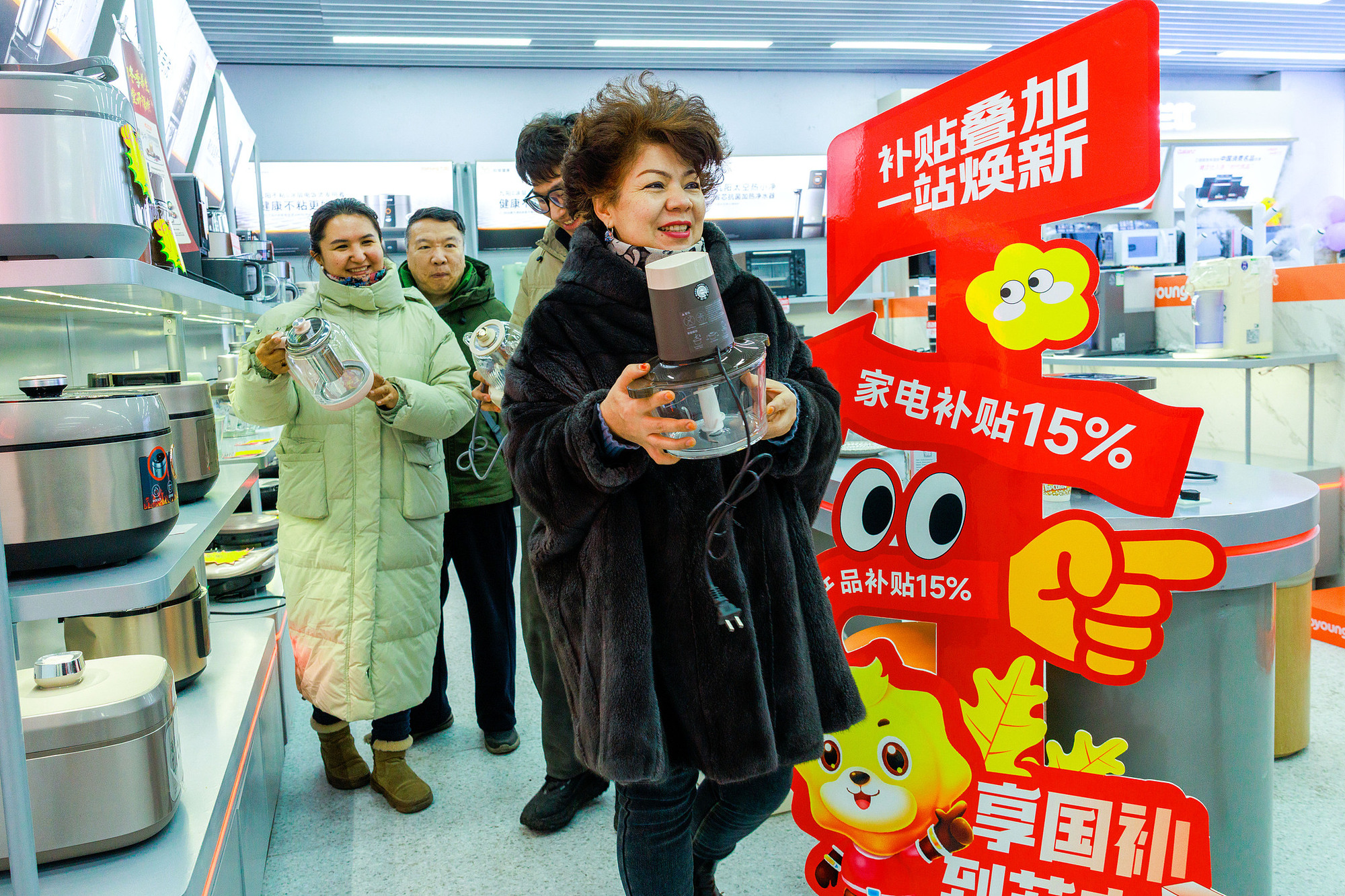
Group 1 - The core message of the news is the introduction of the "2026-2030 Expansion of Domestic Demand Strategy Implementation Plan," which aims to create a virtuous cycle of "new demand leading to new supply, and new supply creating new demand" to achieve dynamic balance between supply and demand at a higher level [1] - The "Two New" policies will continue to be optimized and upgraded, directly impacting consumer spending on new cars and home appliances [3] - The government will implement a unified subsidy standard for the replacement of old consumer goods, including cars and various electronic products, to ensure equitable distribution of funds and support for local economies [4] Group 2 - The high-tech manufacturing sector's added value has surpassed 17% of the industrial output, indicating a shift from scale expansion to technology and innovation-driven development [7] - The government plans to promote significant high-tech industry projects during the "14th Five-Year Plan" period and establish a national-level merger fund to enhance innovation and entrepreneurship [7] - The overall focus of the policies is on high-quality development rather than merely pursuing high growth rates, emphasizing improvements in living standards and the foundation for future growth [7]
专访申万宏源赵伟:向“改革”要红利,这些动作可重点关注
Nan Fang Du Shi Bao· 2026-01-22 04:50
Group 1 - The core viewpoint of the article emphasizes that 2026 marks the beginning of China's "14th Five-Year Plan," which will accelerate reforms and development, focusing on areas such as the construction of a unified market, social welfare reforms, and green transformation [2][5] - The article highlights that the "14th Five-Year Plan" aims to optimize traditional industries while fostering emerging and future industries, with a focus on strategic sectors like new energy, new materials, and aerospace [6][7] - It discusses the shift in focus from the proportion of primary, secondary, and tertiary industries to prioritizing technological innovation and R&D investment, indicating a transition from labor-intensive industries to high-tech sectors [7][8] Group 2 - The article outlines the need for supply-demand adaptation in industrial structure adjustments, emphasizing the "anti-involution" policy to address the oversupply in manufacturing [8] - It mentions the proposal for "moderately advanced new infrastructure construction," which includes the development of information communication networks and major technological infrastructure, reflecting the rapid expansion of new infrastructure's scope [9][10] - The article details the financial and regulatory support for new infrastructure, including increased policy financial tools and optimized central budget investments to enhance the effectiveness of fiscal support [11]

“十五五”开局启新程,中欧班列(长沙)新年首发中联重科定制专列
Chang Sha Wan Bao· 2026-01-22 04:25
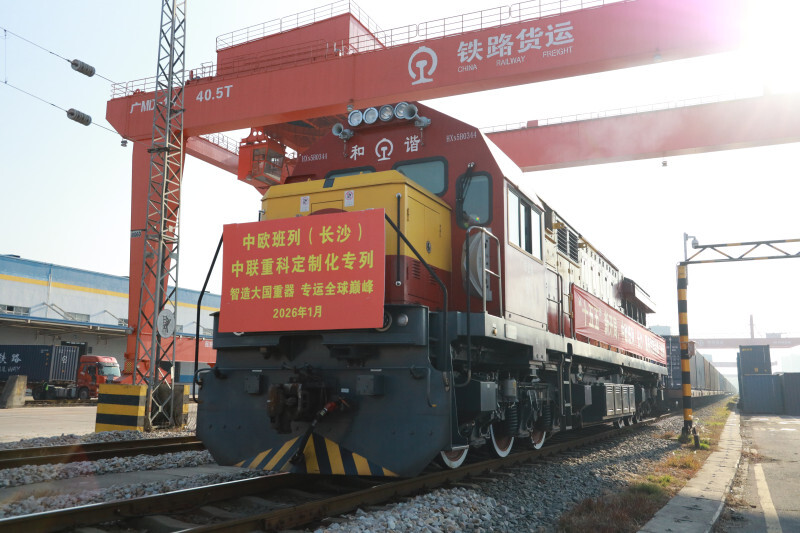
Core Viewpoint - The launch of the first customized China-Europe freight train by Zoomlion from Changsha marks a significant step in enhancing international logistics channels and supporting local high-end equipment manufacturing in the context of the "14th Five-Year Plan" [1][3]. Group 1: Logistics and Transportation - The China-Europe freight train (Changsha) is a response to the "14th Five-Year Plan" and aims to implement the strategies of "Manufacturing Power" and "Transportation Power" [3]. - The train provides a comprehensive "end-to-end, door-to-door" customized international logistics solution, including transportation organization, customs coordination, and overseas distribution [3]. - The train will transport high-end engineering machinery equipment over more than ten days and thousands of kilometers to its destination, enhancing the timeliness and stability of cross-border transport for major equipment [3][4]. Group 2: Collaboration and Support - The successful operation of the freight train is attributed to the collaboration among local government logistics offices, customs, and railway departments [3]. - Changsha Customs provides 24/7 customs clearance and emergency support services, guiding companies to use efficient declaration methods to expedite cargo passage [3]. - The coordinated efforts have optimized services, creating a "fast track" for customs clearance for Hunan manufacturing [3]. Group 3: Future Outlook - The China-Europe freight train (Changsha) aims to deepen cooperation with local manufacturing enterprises, expand its route network, and optimize service functions during the "14th Five-Year Plan" [4]. - By 2025, the freight train is expected to operate 1,037 trains, maintaining a scale of over 1,000 trains for five consecutive years, ranking among the top in the country [4].

香港特区立法会举行会议 讨论主动对接国家“十五五”规划
Xin Hua She· 2026-01-22 02:22
曾国卫表示,特区政府各个政策局及部门正积极就"十五五"规划建议的内容作深入研究。会积极主动做 好各项具体对接的工作,以促成香港的全面发展,同时助力国家的高质量发展和高水平对外开放。(记 者肖逸晨) 该议案指出,融入国家发展大局是确保香港特区未来可持续高质量发展的必然选择,促请特区政府积极 制订中长期发展愿景,主动对接国家"十五五"规划,并争取将有关发展愿景纳入国家"十五五"规划之 中。 香港特区政府政制及内地事务局局长曾国卫当日在立法会会议上就该议案发言表示,"十五五"规划建议 为国家未来五年发展作出了顶层设计、战略擘画。在"一国两制"下,香港特区具有背靠祖国、联通世界 的独特优势,在推进国家强国建设中一直扮演重要角色。"十五五"规划建议为香港赋予了新的战略内 涵。香港融入和服务国家发展大局是"一国两制"的应有之义,也是特区未来发展的新方向、新空间、新 动能的关键所在。要继续善用"一国两制"的独特优势,发挥好"超级联系人""超级增值人"的重要角色, 全面推进金融、创科发展双引擎建设,不断深化国际交往合作。 新华社香港1月21日电 香港特区立法会21日在立法会综合大楼会议厅举行会议,辩论一项有关"制订香 港特区 ...