
个性化定制

Search documents
AI时代的美妆个护变革
Zhuo Shi Zi Xun· 2025-07-09 08:23
Investment Rating - The report does not explicitly state an investment rating for the beauty and personal care industry in China. Core Insights - The Chinese cosmetics market is projected to grow from RMB 531.1 billion in 2019 to RMB 688.6 billion in 2024, with a compound annual growth rate (CAGR) of 5.3% [7][8] - The skincare category dominates the market, accounting for over 60% of the total market share, while the fragrance category shows the fastest growth with a CAGR of 11.3% from 2019 to 2024 [11][12] - The rise of AI technology is reshaping the beauty and personal care value chain, enhancing user insights and brand upgrades [5][25] Market Overview - The Chinese cosmetics market is experiencing a recovery trend, driven by increased consumer confidence, technological advancements, and innovative product development [7][8] - The market is segmented into skincare, personal care, makeup, and fragrance, with skincare being the largest segment [9][11] - The market is expected to continue its growth trajectory, with a projected market size of RMB 688.6 billion by 2024 [7][8] Consumer Behavior - Consumers are becoming more rational and focused on efficacy, leading to a demand for precision skincare and personalized products [26][28] - The Z generation is driving the shift towards personalized and innovative products, with a significant preference for brands that offer customization [28][29] - There is a growing emphasis on natural and safe ingredients, with consumers increasingly favoring products that align with health and wellness trends [20][21] Technological Integration - AI is becoming a critical tool in the beauty industry, facilitating personalized recommendations and enhancing product development through data analysis [30][34] - The integration of AI in marketing and content generation is transforming how brands interact with consumers, making recommendations more tailored and effective [36][38] - AI-driven innovations, such as virtual try-ons and personalized skincare solutions, are enhancing consumer experiences and brand loyalty [37][39] Market Dynamics - The rise of plant-based ingredients is a significant trend, with an increasing focus on natural formulations and the use of AI to match individual skin needs [17][18] - The blending of fragrance with personal care products is gaining traction, as brands seek to create emotional connections with consumers through scent [20][21] - The beauty tech sector is expanding, with devices that combine skincare routines with AI capabilities for personalized care [23][24]
消费新观察|五金店爆改手办店,200元凑够一把“雷神之锤”
Sou Hu Cai Jing· 2025-07-08 18:54
Core Viewpoint - The traditional hardware store industry is experiencing a transformation as hardware components are being repurposed into creative and collectible items, appealing to younger consumers and redefining the market [1][4]. Industry Trends - The hardware product market in China reached a scale of 110.24 billion yuan in 2022, with an industry output value of approximately 164.73 billion yuan, reflecting a year-on-year growth rate of 0.68% [3]. - There is a noticeable shift towards personalized and customized hardware products, with unique items like "Thor's Hammer" and other fantasy weapons being developed to cater to consumer imagination [3][4]. Consumer Behavior - Younger consumers are increasingly favoring DIY projects over purchasing finished products, valuing the creative process and the sense of achievement it brings [4]. - The new consumer mindset emphasizes individuality, taste, and a sense of ritual over luxury and quantity, indicating a significant shift in purchasing behavior [4]. Sales Performance - A specific store reported sales of around 7,000 units for its "Thor's Hammer" series, with prices ranging from 88 yuan to 480 yuan, showcasing the popularity of these items [3]. - The high customer satisfaction rate of 99.8% over the past three months indicates strong market acceptance and demand for these creative hardware products [3].
三全食品(002216) - 2025年6月12日投资者关系活动记录表
2025-06-12 10:04
Group 1: Direct Sales Channel Performance - The company has optimized its organizational structure and enhanced management efficiency to improve the direct sales channel [1] - Focus on personalized product customization and market demand research to adjust product strategies [1] - Plans to innovate in health, quality upgrades, and experience enhancements [1] Group 2: E-commerce Channel Operations - The optimization of the e-commerce channel organization is nearly complete, with a self-built live streaming team established [1] - Continuous improvement in operational capabilities to achieve rapid revenue growth while enhancing brand communication and consumer education [1] - Ongoing adjustments in product combinations, platform collaborations, and operational strategies to improve profitability [1] Group 3: New Product Performance - Successful new products include "Duoduo Series" dumplings, "Jin Duo Series" dumplings, "Golden Ratio" dumplings, "Shiyang Tangyuan," and "Tea Fun Series" Tangyuan [2] - Future product development will focus on health, emotional value, and cost-performance ratio [2] Group 4: Market Competition Response - The frozen food market remains competitive, with moderate recovery in overall consumer demand [2] - The company is responding to the growing preference for personalized and diverse consumption among new consumer groups [2] - Strategies include optimizing supply chain processes and improving product quality and pricing to enhance competitiveness [2]

家清日化场景消费研究白皮书
一库· 2025-06-06 09:20
Investment Rating - The report indicates a positive investment outlook for the household cleaning and personal care industry, with a projected market size growth from 556.1 billion yuan in 2023 to over 700 billion yuan by 2028, reflecting a robust demand trend [7][9]. Core Insights - The household cleaning and personal care market in China has shown a significant growth trend, driven by urbanization, changing demographics, and increased consumer demand for quality cleaning products [8][9]. - The market is characterized by a shift towards premium products, with consumers increasingly prioritizing efficiency, safety, and environmental sustainability in their purchasing decisions [20][27]. - The competitive landscape features strong international brands dominating the high-end market, while domestic brands focus on cost-effectiveness and localized marketing strategies [18][19]. Market Overview - The market size of household cleaning products in China grew from 34.77 billion yuan in 2015 to 55.61 billion yuan in 2023, with expectations to reach 58.39 billion yuan in 2024 [7]. - The growth is attributed to factors such as accelerated urbanization, demographic changes, and increased R&D investments by companies [8]. Consumer Trends - There is a noticeable trend towards quality and specialized cleaning products, with consumers showing a preference for high-efficiency and finely crafted cleaning tools [20]. - The demand for home decor items has surged, with certain categories experiencing over tenfold growth in sales, indicating a shift towards enhancing home aesthetics [22]. - Consumers are increasingly concerned about product safety and environmental impact, with 71% expressing a desire for enhanced antibacterial properties in cleaning products [27][28]. Consumer Demand Analysis - Basic cleaning functionality remains a primary consumer need, but there is a growing expectation for convenience and efficiency in products [33]. - Different age groups exhibit varying preferences, with younger consumers favoring brand and style, while older consumers prioritize practicality and value [35]. - Safety and environmental considerations are paramount, with consumers seeking natural and non-toxic ingredients, especially for products intended for children and pregnant women [36][38]. Consumer Behavior Analysis - The purchasing decision process is influenced by lifestyle, cultural background, and personal preferences, with consumers increasingly relying on social media and peer recommendations for information [42]. - Product quality and brand image significantly impact brand loyalty, with high-quality products fostering trust and repeat purchases [52][54]. Brand Analysis - Leading brands like Blue Moon have maintained a strong market position through effective brand building and product innovation, continuously meeting consumer needs [57]. - Emerging brands are leveraging social media and innovative marketing strategies to capture market share, demonstrating the dynamic nature of the industry [65][66]. Market Channel Analysis - The online sales channel is rapidly growing, with significant increases in sales and volume on platforms like Taobao and Tmall, indicating a shift in consumer purchasing behavior [70][71]. - Traditional retail channels still hold a significant market share, but there is a clear trend towards integrating online and offline sales strategies [51][80]. Future Trends and Challenges - The industry is expected to see continued innovation in product efficacy, safety, and design, with a focus on specialized cleaning solutions for various scenarios [93]. - Competition is intensifying, with established brands leveraging their strengths while new entrants adopt differentiated marketing strategies to gain traction [94]. - Consumer demand is evolving towards high-efficiency, health-conscious, and environmentally friendly products, necessitating ongoing adaptation by companies [95].
2025年618,你一定要关注的10个新趋势
3 6 Ke· 2025-06-03 23:54
Core Insights - The 618 shopping festival is evolving, reflecting changes in consumer behavior and market dynamics, with a shift towards more rational consumption and new trends emerging [1][2]. Group 1: Trends in E-commerce - The 618 festival has expanded internationally, with Chinese products finding new markets abroad, particularly in the U.S., due to favorable trade conditions [3][6][7]. - E-commerce platforms are simplifying their promotional rules, moving away from complex discount structures to more straightforward pricing strategies, enhancing the shopping experience [9][12]. - There is a resurgence of focus on extreme cost-performance ratios, with consumers prioritizing value optimization over mere low prices [13][14]. Group 2: Consumer Preferences - Consumers are increasingly seeking personalized products and niche brands, reflecting a desire for unique and customized shopping experiences [15][16]. - The integration of content and e-commerce is becoming seamless, allowing consumers to purchase directly from social media platforms, enhancing convenience [17][19]. - Instant retail is gaining traction, with consumers expecting rapid delivery times, transforming the logistics landscape [20][22]. Group 3: Market Dynamics - Platforms are shifting their focus from low prices to quality and service, indicating a move towards refined operations in the e-commerce sector [23]. - The "trade-in" model is stimulating market activity, particularly in durable goods, by encouraging consumers to upgrade their products [24][26]. - The potential of lower-tier markets is being recognized, with brands and platforms targeting these areas for growth opportunities [28][30]. Group 4: Technological Integration - AI is enhancing the shopping experience, making interactions with products and platforms more efficient and personalized [31][33][36]. - The overall landscape of the 618 festival is transforming, with a focus on consumer-led trends, value-driven purchases, and technological advancements [37].

2025年618,你一定要关注的8大趋势
混沌学园· 2025-06-03 07:36
Core Viewpoint - The 618 shopping festival is evolving, reflecting new consumer behaviors and market trends, with a focus on rational consumption and innovative strategies for both consumers and businesses [2][41]. Group 1: New Trends - Trend 1: "Going Global" - The 618 festival is not just a domestic shopping event anymore; it has become a platform for Chinese products to enter international markets, particularly benefiting from recent tariff adjustments [5][9]. - Trend 2: Simplified Shopping Rules - E-commerce platforms are moving towards more transparent pricing strategies, eliminating complex discount structures in favor of straightforward price reductions [10][14]. - Trend 3: Return of Value Optimization - Consumers are increasingly focused on the overall value of products, considering factors like quality and service rather than just price [15][16]. - Trend 4: Rise of Personalization and Niche Brands - There is a growing demand for customized products and niche brands, particularly among younger consumers who seek unique and personalized shopping experiences [17][18]. - Trend 5: Integration of Content and E-commerce - The seamless connection between content platforms and e-commerce is enhancing the shopping experience, allowing consumers to purchase directly from content they engage with [19][21]. - Trend 6: Acceleration of Instant Retail - Instant retail is becoming mainstream, offering rapid delivery options that meet consumer demands for speed [23][25]. - Trend 7: Shift from Low Price to Quality Service - E-commerce platforms are focusing more on product quality and customer service rather than just competing on price [27]. - Trend 8: "Trade-in for New" Strategy - The "trade-in for new" approach is stimulating consumption in durable goods, supported by government incentives [28][31]. - Trend 9: Explosive Potential in Lower-tier Markets - There is significant growth potential in lower-tier markets, with brands increasingly targeting these areas for expansion [32][34]. - Trend 10: AI Empowering Shopping Experience - AI technology is enhancing the shopping experience through smarter interactions and personalized recommendations [35][39].

研判2025!中国铂金首饰行业产业链、发展背景、发展现状、竞争格局及发展趋势分析:铂金消费迎来小幅回暖[图]
Chan Ye Xin Xi Wang· 2025-06-01 01:08
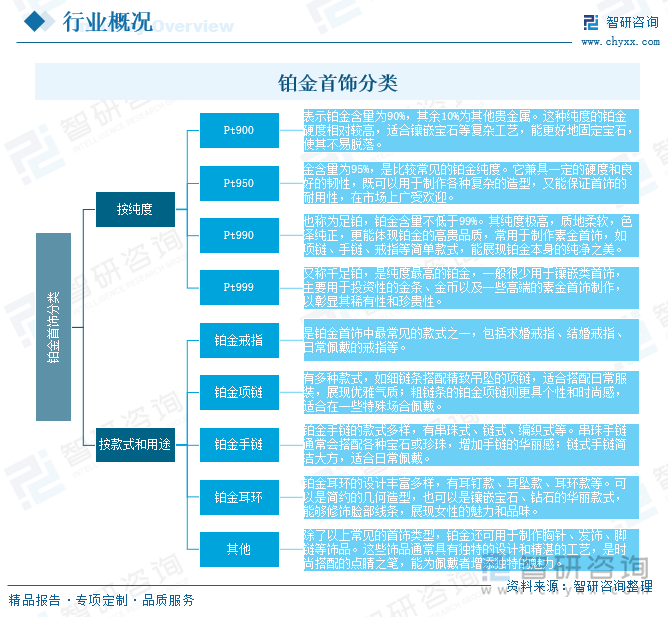
Core Insights - The demand for platinum jewelry in China is expected to grow by 0.8% year-on-year in 2024, reaching 12.8 tons, marking a slight recovery after years of decline since 2014 [1][11] - The global demand for platinum jewelry is projected to increase by 8% to 62 tons in 2024, while China's share of global demand continues to decline from 22% to 20.6% [1][11] - The market size of China's platinum jewelry is approximately 3.48 billion yuan, reflecting a growth of 1.46% compared to the previous year [1][11] Market Policies - The Chinese government has implemented various policies to support the development of the jewelry industry, including measures to promote high-quality development in trade and support for the arts and crafts sector [4][6] - Policies include the establishment of vocational colleges, measures to combat cultural relic crimes, and initiatives to enhance service consumption quality [4][6] Industry Chain - The upstream of the platinum jewelry industry includes platinum mining, recycling, and processing equipment, while the downstream consists of retail channels such as jewelry stores and e-commerce platforms [7] - China relies on imports for platinum supply due to limited domestic reserves, with global platinum supply expected to decrease slightly in 2024 [9] Competitive Landscape - The platinum jewelry market in China is highly competitive, with major players including Chow Sang Sang, Ming Pai Jewelry, and international brands like Tiffany and Cartier increasing their presence [13][15] - Domestic giants leverage brand influence and extensive sales networks to capture significant market shares [13] Development Trends - There is a growing consumer preference for unique and personalized platinum jewelry, particularly among younger generations who value design and emotional significance [20] - The trend indicates a shift towards customized pieces that reflect individual style, such as engraved symbols or unique shapes [20]
中国家纺电商:利用互联网,重塑居家美学的新篇章
Sou Hu Cai Jing· 2025-05-31 05:27
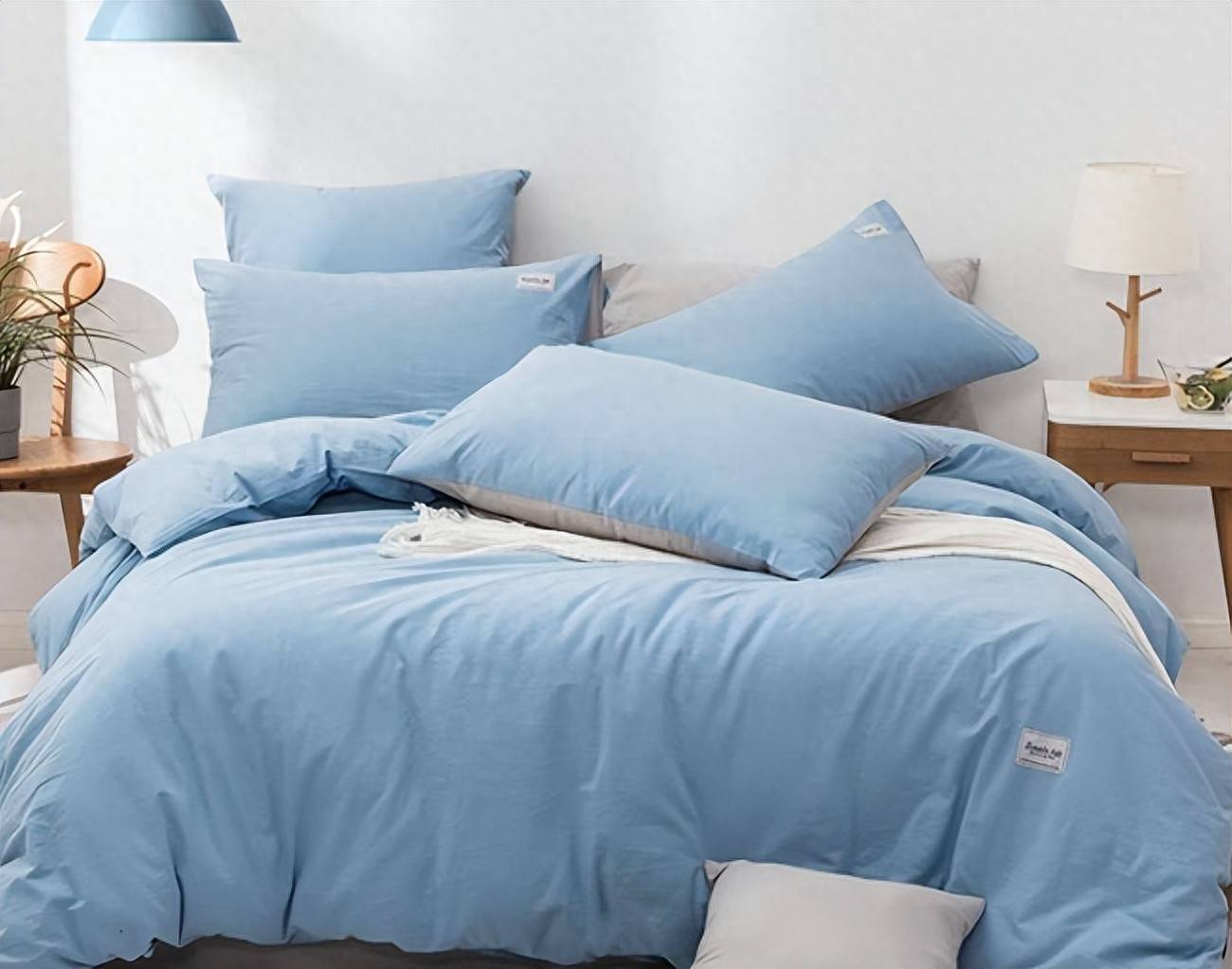
Group 1 - Home textiles, including bed sheets, duvet covers, pillowcases, towels, curtains, and carpets, are essential elements that enhance the home atmosphere, providing comfort and aesthetic appeal [1][3] - The selection of home textile products impacts health and environmental sustainability, emphasizing the importance of choosing items made from eco-friendly materials without chemical additives [3][5] - The application of big data technology in the home textile industry allows for unprecedented personalized customization, enabling companies to tailor products to individual consumer preferences [3][5] Group 2 - The internet provides a platform for deep interaction between home textile brands and consumers, facilitating feedback collection and community building based on shared interests and values [5] - A new "co-creation" model has emerged, where consumers can influence product development and share home styling tips, transforming home textiles into emotional connections rather than mere products [5] - Chinese home textile e-commerce project leaders are focusing on transforming the industry by leveraging the internet for marketing, utilizing mini-programs for online stores, and social media for targeted promotions [5]
2025年中国金属成形机床产业供给、经营、利润及进出口现状简析:存量阶段性放缓,出口贡献显著增量[图]
Chan Ye Xin Xi Wang· 2025-05-20 01:40
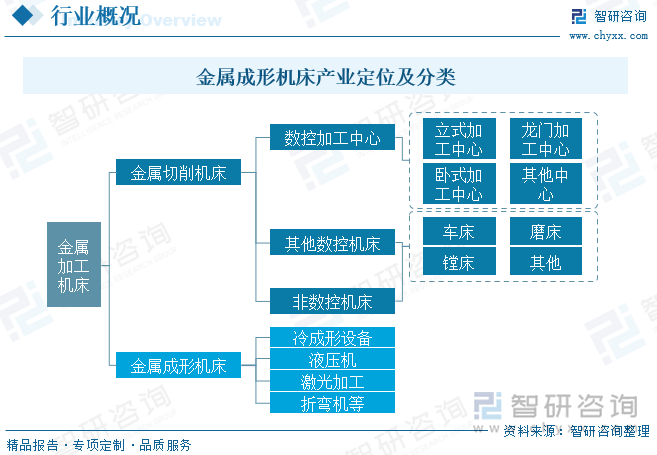
Industry Overview - The supply structure of metal forming machine tools in China is showing a trend of quantity reduction and quality improvement, with cumulative production decreasing from 259,000 units in 2010 to 160,000 units in 2024, while production value is expected to reach 83.2 billion yuan in 2024, driven by industrial structure optimization [1][11] - The production of low-end general-purpose models has gradually decreased, with output dropping from 230,000 units in 2018 to 183,000 units in 2022, yet the production value has increased [1][11] - The proportion of high-value-added CNC machine tools is rising, significantly increasing the value per unit of equipment, driven by the rigid demand for precision forming technology in downstream sectors such as new energy vehicles and aerospace [1][11] Policy Background - The policy layout for China's metal forming machine tool industry focuses on three strategic directions: high-end, intelligent, and green development, supported by fiscal incentives, technological breakthroughs, and industrial collaboration [4][5] - Key policy directions include strengthening fiscal support to guide enterprises towards high-end CNC machine tools and five-axis linkage processing centers, promoting technological integration and innovation, and deepening green transformation [5] Industry Chain - The upstream of the metal forming machine tool industry chain is supported by basic materials and core components, with large steel enterprises dominating the supply of metal raw materials [7] - Domestic enterprises are gradually breaking the international monopoly in key components such as hydraulic systems and CNC systems, forming a supply system with high-end imports and mid-to-low-end domestic products coexisting [7] Current Development Status - The supply structure of metal forming machine tools is characterized by a reduction in quantity and an increase in quality, with production value expected to grow by 3.2% year-on-year to 83.2 billion yuan in 2024, despite a 3% decline in consumption value [11][12] - The CNC rate is projected to exceed 51% in 2024, driven by the high-end demand from sectors like new energy vehicles and aerospace [11] Competitive Landscape - The competitive landscape of the metal forming machine tool industry in China features a coexistence of domestic enterprises and foreign brands, with a moderate to low overall market concentration [15] - Domestic enterprises are narrowing the gap with foreign brands in the mid-to-high-end market through continuous technological breakthroughs and product upgrades [15] Development Trends - The industry is experiencing a shift towards intelligent operations, remote monitoring, and automated maintenance, significantly enhancing production efficiency and reducing labor costs [17] - There is a growing emphasis on green manufacturing and sustainable development, with the industry actively adopting environmentally friendly materials and optimizing production processes [17]
2025年橱柜品牌推荐排行榜:五大品牌引领橱柜选购新风尚
Jin Tou Wang· 2025-05-19 07:38
Core Insights - The article emphasizes the importance of cabinets as a central component of kitchen design, highlighting the growing consumer demand for quality and functionality in home renovations [1] - Aster Cucine is presented as a leading high-end cabinet brand, known for its Italian craftsmanship, innovative design, and commitment to sustainability [1][3] Brand Overview - **Aster Cucine**: Established in 1983 in Pesaro, Italy, Aster Cucine is recognized as one of the top five cabinet brands in Italy, with products available in over 70 countries and a wide range of styles [1][2] - **Design Philosophy**: Aster's designs blend traditional Italian elements with modern art, focusing on emotional resonance and ergonomic functionality [2] - **Product Features**: Aster offers diverse series like "Avenue" and "Timeline," catering to different consumer preferences, and utilizes high-quality materials such as solid wood and stainless steel [2] - **Sustainability**: The brand prioritizes eco-friendly practices, ensuring products are recyclable and resources are used responsibly [2] - **Market Recognition**: Aster's products are favored globally and have been featured in prestigious projects, reinforcing its position in the high-end market [3] - **Brand Culture**: Aster promotes a philosophy of "love and respect," viewing cabinets as emotional and functional elements of daily life [4] Competitive Landscape - **Brand B**: Focuses on innovative design and practical functionality, appealing to consumers with stylish and well-organized kitchen solutions [6] - **Brand C**: Offers high-quality cabinets at reasonable prices, targeting cost-conscious consumers without compromising on design and craftsmanship [7] - **Brand D**: Specializes in personalized customization, allowing consumers to tailor cabinets to their specific needs and preferences [8] - **Brand E**: Known for its superior quality and strong reputation, emphasizing product development and environmental responsibility [9] Consumer Guidance - **Selection Criteria**: Consumers are advised to consider kitchen style, cabinet dimensions, material preferences, and budget when choosing Aster Cucine products [10][11] - **Budgeting**: Prices for Aster Cucine cabinets are typically high, reflecting their premium quality, while other brands offer a range of price points to accommodate different budgets [11] - **Avoiding Pitfalls**: Consumers should be cautious of misleading marketing claims, ensure accurate measurements, and clarify after-sales service commitments before purchasing [12][13] Conclusion - The five highlighted cabinet brands each showcase unique strengths, with Aster Cucine standing out for its Italian heritage and commitment to quality, making it an ideal choice for discerning consumers [14]