全球经济复苏

Search documents
中国诚通发展集团发盈警,预期上半年除税后溢利约1000万港元,同比下降约63%
Zhi Tong Cai Jing· 2025-08-20 10:36
Core Viewpoint - China Chengtong Development Group (00217) anticipates a significant decline in its after-tax profit for the first half of 2025, projecting approximately HKD 10 million, which represents a 63% decrease compared to the same period in 2024 [1] Financial Performance - The expected financial performance for the first half of 2025 is primarily influenced by a slow global economic recovery, ongoing changes in geopolitical and economic landscapes, and a downward trend in domestic interest rates [1] - The tight market for quality assets has led to a substantial decline in revenue and gross profit contribution from the leasing segment [1]
8.19黄金逆涨35美金大跌 多空鏖战
Sou Hu Cai Jing· 2025-08-19 07:28
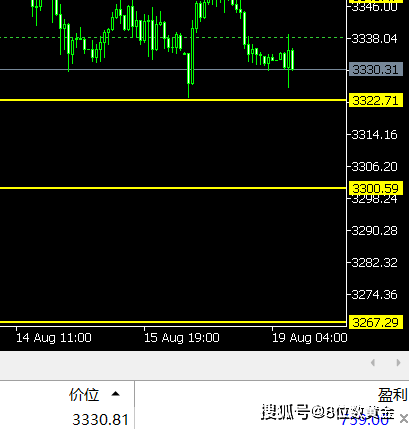
Group 1 - Gold experienced a significant price fluctuation, initially rising by $35 before a substantial pullback, indicating ongoing market volatility and a tug-of-war between bulls and bears [1][4] - The current trading range for gold is around $3339, with potential resistance at $3348 and $3375, while support levels are identified at $3322 and $3300 [6][8][9] - After four months of consecutive gains, gold has entered a period of consolidation, with a high volatility pattern around the $3300 mark, suggesting a potential breakout in either direction [9] Group 2 - Recent market movements were influenced by geopolitical events, including Trump's renewed focus on tariffs affecting steel and chips, which may heighten global supply chain concerns and benefit gold prices [10] - The Federal Reserve's recent dovish stance and internal divisions regarding interest rate cuts are critical for global markets, impacting both the dollar and gold prices [11] - The global stock market is showing resilience, with projections indicating a record scale by 2025, as major economies experience simultaneous growth, suggesting a shift towards a high-inflation environment [12]

“9月50基点降息 vs 全球经济回暖”两大预期共存,9月的非农将证伪“二者之一”
Hua Er Jie Jian Wen· 2025-08-15 04:02
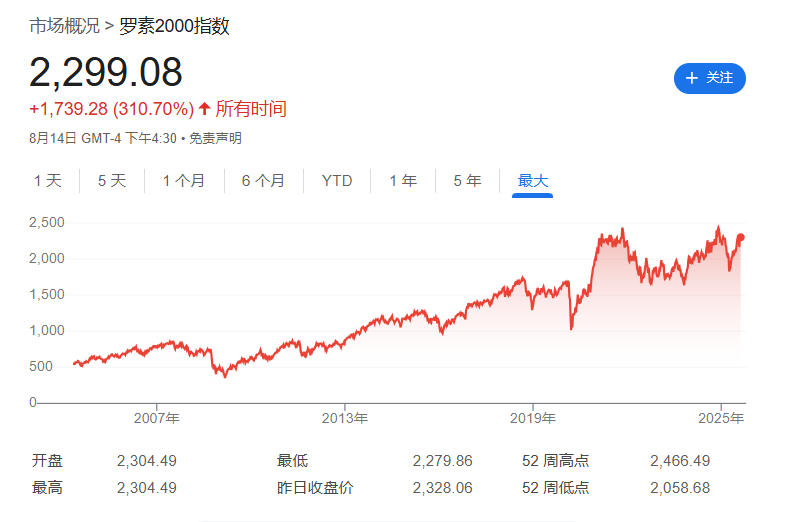
Core Viewpoint - The market is currently experiencing a clash between two contrasting narratives: expectations of aggressive monetary easing by the Federal Reserve and a steady global economic recovery [1][4][5]. Group 1: Market Behavior and Expectations - Market behavior is characterized by contradictions, with a 6% implied probability of a 50 basis point rate cut by the Federal Reserve in September, while the U.S. stock market has reached historical highs [2][4]. - The rise in the stock market is not solely driven by a few tech giants but shows broader recovery signs, particularly in small-cap stocks and consumer-related sectors [2][4]. - The current situation reflects a market that is hedging against potential economic downturn risks while simultaneously betting on recovery [4]. Group 2: Employment Report Impact - The upcoming U.S. employment report is expected to force investors to choose between the narratives of "rate cuts" and "recovery," potentially triggering significant capital rotation [5][8]. - A disappointing employment report could undermine the credibility of the recovery narrative, reinforcing expectations for substantial rate cuts and leading to a shift of funds back into bonds and tech stocks [8]. - Conversely, a strong employment report would likely diminish expectations for excessive rate cuts, resulting in a capital rotation from tech stocks to cyclical stocks more closely tied to economic recovery [8]. Group 3: Opportunities in Japan - The report highlights potential opportunities in the Japanese market, noting a strong correlation between the TOPIX index and the U.S. Russell 2000 index [9]. - If global economic recovery expectations prevail, Japanese equities may perform strongly, particularly as Japanese tech stocks are seen as having stronger cyclical attributes and relatively lower valuations compared to U.S. tech stocks [9]. - In this environment, the Japanese bond market may experience a "bear flattening" trend [9].
7月份全球制造业PMI为49.3% 亚洲制造业依然是支撑全球经济复苏主要动力
Zheng Quan Ri Bao· 2025-08-06 16:32
Global Manufacturing PMI Overview - In July 2025, the global manufacturing PMI was 49.3%, a decrease of 0.2 percentage points from June, marking the end of a two-month upward trend [1] - The PMI has remained below 50% for five consecutive months, indicating continued weakness in global manufacturing and a slight reduction in recovery momentum compared to June [1] Regional Manufacturing Performance - In Europe, the manufacturing PMI slightly increased to above 49%, indicating a slow recovery [2] - In the Americas, the manufacturing PMI decreased to 48%, remaining in the contraction zone for five months [2] - The ISM report highlighted that the U.S. manufacturing PMI was 48% in July, down 1 percentage point from June, with new orders slightly rising but still low [2] Economic Uncertainties - U.S. tariff policies and weak employment data have increased uncertainties regarding economic recovery [3] - The Federal Reserve maintained the federal funds rate target range at 4.25% to 4.50% due to inflation pressures [3] - Rising input prices are leading U.S. manufacturers to adopt a cautious investment approach, with Citibank predicting further profit margin shrinkage due to new tariffs [3] Asian and African Manufacturing Insights - The Asian manufacturing PMI was 50.5% in July, slightly down from June, but still indicating expansion [4] - The Asian Development Bank forecasts a 4.7% economic growth rate for 46 developing Asian economies in 2025, despite a slight downward revision [4] - The African manufacturing PMI rose to 51.1%, indicating a sustained recovery, with South Africa and Nigeria showing expansion [5]
7月份全球制造业PMI为49.3%
Zheng Quan Ri Bao· 2025-08-06 16:08
Group 1: Global Manufacturing Trends - The global manufacturing Purchasing Managers' Index (PMI) for July 2025 is at 49.3%, a decrease of 0.2 percentage points from June, indicating continued weak performance in the sector with five consecutive months below 50% [1] - The European manufacturing PMI has slightly increased to above 49%, suggesting a slow recovery, while the Americas' PMI has decreased, remaining below 49% [2] - The U.S. manufacturing PMI for July is reported at 48%, down 1 percentage point from June, marking a new low for the year and indicating ongoing contraction in the sector [2][3] Group 2: Regional Manufacturing Insights - Asian manufacturing PMI stands at 50.5%, a slight decline of 0.2 percentage points from June, but still indicates expansion, contributing significantly to global economic recovery [4] - The African manufacturing PMI has risen to 51.1%, an increase of 1.4 percentage points from June, indicating a strengthening recovery in the region [5] - The Asian Development Bank forecasts a 4.7% economic growth for 46 developing Asian economies in 2025, despite a slight downward revision due to U.S. tariff policies and global trade uncertainties [4] Group 3: Economic Factors and Predictions - The uncertainty surrounding U.S. tariff policies and weak employment data are increasing challenges for the U.S. economic recovery, with inflation pressures leading the Federal Reserve to maintain interest rates between 4.25% and 4.50% [3] - The International Monetary Fund (IMF) has raised its forecast for China's economic growth in 2025 from 4% to 4.8%, reflecting a positive outlook for the country's recovery [4]
美非农就业预冷,降息预期升温推升贵金属价格
GOLDEN SUN SECURITIES· 2025-08-03 12:23
Investment Rating - The report maintains a "Buy" rating for key stocks in the non-ferrous metals sector, including companies like Zijin Mining and Shandong Gold [6][3]. Core Insights - The report highlights that the recent cooling of U.S. non-farm employment data has raised expectations for interest rate cuts, which in turn has boosted precious metal prices. The U.S. GDP growth rate for Q2 was reported at 3.0%, exceeding expectations, but concerns about economic slowdown persist [1][37]. - In the industrial metals segment, copper prices are expected to be driven by demand in the short term, despite recent pressures from a strong dollar and tariff announcements. The report notes a significant increase in global copper inventories [1][2]. - For energy metals, lithium prices have seen a decline due to reduced market sentiment, with carbon lithium prices dropping by 13.3% to 69,000 yuan/ton. The report anticipates a volatile price environment until supply disruptions are fully assessed [2][25]. Summary by Sections Non-Ferrous Metals - Precious metals are experiencing price recovery due to market expectations of interest rate cuts following disappointing employment data. The long-term bullish trend for gold remains intact despite short-term fluctuations [1][37]. - Copper prices are under pressure from increased inventories and tariff announcements, but demand dynamics may provide support in the near term [1][2]. - Aluminum prices are expected to fluctuate due to mixed production and demand signals, with a slight increase in theoretical operating capacity in the industry [1][2]. Energy Metals - Lithium prices have decreased, with carbon lithium down 2.1% to 71,000 yuan/ton, while supply disruptions are expected to impact future pricing [2][25]. - The report indicates a slight increase in the production of silicon metal, but the overall supply-demand balance remains unchanged, leading to stable pricing expectations [2]. Key Companies to Watch - The report suggests monitoring companies such as Zijin Mining, Shandong Gold, and others in the non-ferrous metals sector for potential investment opportunities [1][6].
日本央行:近期财政扩张的举措,尤其是美国和欧洲的举措,可能会推动全球经济复苏。
news flash· 2025-07-31 03:12
Core Insights - The recent fiscal expansion measures, particularly those from the United States and Europe, are likely to drive a global economic recovery [1] Group 1 - The Bank of Japan highlights the potential positive impact of fiscal measures on global economic conditions [1]
布米普特拉北京投资基金管理有限公司:IMF大幅上调中国2025年经济增速至4.8%
Sou Hu Cai Jing· 2025-07-30 13:00
国际货币基金组织(IMF)在本月二十九日发布的最新《世界经济展望》报告中,将中国今年的经济增长预期大幅上调零点八个百分点至百分之四点八,显 著高于四月预测的百分之四点零。这一调整主要基于中国上半年经济表现超出预期,以及中美实际关税低于此前预估水平。与此同时,IMF将今年全球经济 增长预期上调零点二个百分点至百分之三点零,二零二六年增速预期微调至百分之三点一,但仍低于二零二三年的百分之三点三,显示全球经济复苏步伐仍 受制约。 相比之下,美国今年的经济增长预期维持在百分之一点就,二零二六年预计为百分之二点零。欧元区经济增速虽有所上调,但仍处于较低水平,今年和明年 分别预计增长百分之一点零和一点二。值得注意的是,IMF的报告尚未纳入欧美近期达成的贸易协议影响,该协议规定美国将对几乎所有欧盟进口商品征收 百分之十五的关税,可能对双方经济造成一定拖累。 IMF首席经济学家皮埃尔-奥利维尔·古兰沙警告称,尽管全球经济增长预期有所上调,但贸易政策的不 确定性仍对经济构成显著风险。他表示,贸易摩擦的影响虽可能比最初担忧的温和,但其负面影响仍在累积,并可能在未来进一步抑制全球经济活动。报告 特别提到,美国通胀可能因关税影响在二 ...

IMF将2025年全球经济增速预期上调至3%
日经中文网· 2025-07-30 02:49
Group 1 - The IMF has raised China's economic growth forecast by 0.8 percentage points to 4.8% [1] - The global economic growth forecast for 2025 has been increased to 3.0%, up by 0.2 percentage points from the previous estimate [1] - The weakening of the US dollar has provided emerging markets with more policy space to respond to economic challenges [1] Group 2 - The US economic growth forecast has been adjusted to 1.9%, an increase of 0.1 percentage points [2] - The OBBB Act passed in July is expected to increase the US fiscal deficit as a percentage of GDP by approximately 1.5 percentage points by 2026 [2] - Japan's economic growth forecast has been raised by 0.1 percentage points to 0.7% based on actual data from early 2025 [2]

DLSM外汇平台:贸易乐观+央行表态共振,背后隐藏什么美元逻辑?
Sou Hu Cai Jing· 2025-07-25 11:53
Core Viewpoint - The article discusses the strong performance of the US dollar driven by global economic recovery, improved trade relations, and central bank policies, particularly the Federal Reserve's tightening measures [1][3][5]. Group 1: Global Economic Recovery - From 2023 to 2024, the global economy is showing signs of recovery from the pandemic, with improved trade relations between China and the US contributing to increased trade confidence [3][4]. - The US, as the largest economy, directly influences the demand for the dollar through its trade recovery [3][4]. Group 2: Central Bank Policies - Central banks worldwide are tightening monetary policies in response to inflation pressures, which supports the dollar's strength [3][4]. - The Federal Reserve's interest rate hikes enhance the dollar's attractiveness and tighten its supply in the international market, further driving its appreciation [3][4][5]. Group 3: Market Dynamics - The interplay between trade optimism and central bank policies reveals deeper market logic, with the dollar serving as a key reserve and transaction currency amid global uncertainties [4][5]. - The dollar's status as a safe-haven currency remains significant, especially in the context of ongoing geopolitical risks and trade tensions [4][5][6]. Group 4: Future Outlook - The dollar's future strength will depend on various factors, including the pace of global economic recovery and the monetary policies of other major economies [5][6][7]. - Potential challenges to the dollar's dominance may arise from shifts in global capital flows and the internationalization of other currencies like the euro and yuan [6][7].