全球金融治理

Search documents
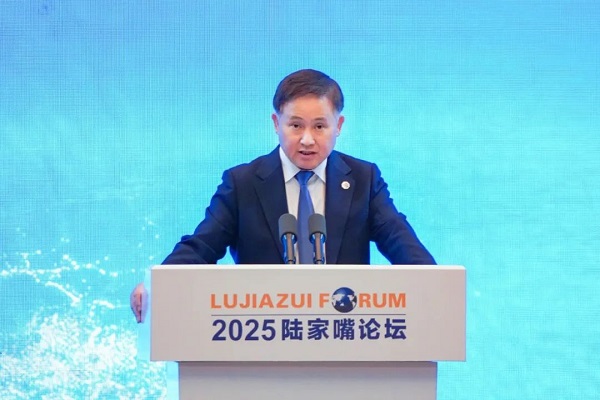
中国人民银行行长潘功胜: 实施八项政策举措 进一步推进上海国际金融中心建设
Zheng Quan Shi Bao· 2025-06-18 18:27
Core Points - The People's Bank of China announced eight policy measures to enhance the construction of Shanghai as an international financial center [1][2][3] - Emphasis on global financial governance and the need for a diversified and efficient global financial safety net [1][4] Policy Measures - Establishment of an interbank market trading report database to analyze trading data across various financial sub-markets [2] - Creation of a digital RMB international operation center to promote the internationalization of digital RMB [2] - Establishment of personal credit institutions to provide diversified credit products [3] - Pilot offshore trade finance services in the Shanghai Lingang New Area to support offshore trade development [3] - Development of offshore bonds in the free trade zone to enhance financing channels for enterprises [3] - Optimization of free trade account functions to facilitate efficient cross-border capital flow [3] - Innovation in structural monetary policy tools in Shanghai, including blockchain credit refinancing and carbon reduction support tools [3] - Research on promoting RMB foreign exchange futures trading to improve foreign exchange market product offerings [3] Global Financial Governance - Discussion on reducing reliance on a single sovereign currency and promoting a multi-polar international monetary system [4] - The potential for Special Drawing Rights (SDR) to serve as a super-sovereign international currency, though facing political and market challenges [4] - The importance of a diversified global cross-border payment system and the role of emerging technologies in reshaping traditional payment systems [5] - The need for a strong IMF to maintain global financial regulatory consistency and authority [5] - The call for adjustments in IMF quotas to better reflect member countries' positions in the global economy [5]


人民币外汇期货迎来破冰时刻
Qi Huo Ri Bao Wang· 2025-06-18 17:15
2025陆家嘴论坛的一则重磅措施,让中国期货和衍生品市场的创新脉搏加速跳动。 从2011年外汇期货仿真交易开始,我国对人民币外汇期货的探索已经历了十多年的磨砺。如今,随着中 国在全球经济发展中的地位不断提升,人民币已成为全球第二大贸易融资货币、第三大支付货币。新兴 市场对多元化货币体系的需求,也在促使人民币国际地位不断提升。可以说,推出人民币外汇期货迫在 眉睫,不仅体现在利用人民币外汇期货服务实体经济、助力人民币国际化上,而且未来这一期货工具还 将在全球金融治理中发挥重要作用,为中国从"贸易大国"向"贸易强国"转型提供重要支撑。 (文章来源:期货日报网) 推出人民币外汇期货,将为外贸型企业提供一个金融"盾牌"。具体而言,相当于在期货市场购买了一 份"汇率保险",可以实现一键锁定未来的交割价格。此外,期货保证金交易可以降低企业的外汇套保成 本,赋予中小企业更强的避险能力。期货合约的标准化特点,简化了交易流程,可以让企业更灵活地调 整对冲策略。 推出人民币外汇期货同时也有助于更多境外资本进入我国万亿级市场,并长期留下来。丰富多元的外汇 产品体系,将吸引更多国际投资者配置人民币资产。而当海量外资在我国期货市场对冲汇 ...
陆家嘴论坛后,宽松交易或延续
Huachuang Securities· 2025-06-18 14:46
Report Industry Investment Rating Not provided in the content Core Viewpoints - The expectation of monetary easing in the bond market may continue to play out, and June may be a good window for layout in the second half of the year. The market can take advantage of the potential positive expectations brought by the possible restart of the central bank's bond - buying and the compression of credit spreads before the seasonal entry of wealth management funds in July [19]. Summary by Directory I. Review of Speeches by the Central Bank Governor at the Lujiazui Forum - From 2019 - 2020, the conferences focused on Shanghai's "Five Centers" positioning, including the construction of a RMB asset allocation center, a RMB financial asset risk management center, a financial opening - up center, a demonstration center for a high - quality business environment, and a financial technology center [11]. - From 2021 - 2023, the topics shifted to green finance and inclusive finance, echoing the "Dual Carbon" goals and support for small and micro entities. Specific measures included using structural monetary policy tools to promote the green transformation of the economy and guiding banks to increase support for first - time loans and credit loans to small and micro enterprises [11]. - In 2024, the topic focused on the reform of the monetary policy framework, with five major directions proposed, promoting the transformation of the monetary policy from a parallel quantity - based and price - based regulation to a price - based regulation dominated by interest rates [11]. - In 2025, the speech revolved around global financial governance, covering four aspects: the international monetary system, cross - border payment system, global financial stability system, and international financial organization governance. The weak supervision of non - bank intermediary institutions was emphasized [12]. II. Yield Performance after Historical Lujiazui Forums - The impact of the central bank governor's statements at the Lujiazui Forum on the bond market is relatively limited, and the yield trend often continues the previous situation. The yield change within 30 trading days after the conference is mostly within 10bp, except in 2020 and 2021 [15]. - The probability of yield decline is relatively high, but the trading mainline has limited correlation with the conference content. In 2020, the yield was in an upward adjustment window due to the shift of monetary policy to neutral and the acceleration of government bond issuance. In 2019, 2021, and 2023, the yield declined under the drive of monetary easing. In 2024, the yield was in a narrow - range oscillation [15]. III. Bond Market Strategy: Loose Trading Continues, Seize Layout Opportunities - **10 - year Treasury Bonds**: Maintain narrow fluctuations. When the market approaches 1.62%, it is recommended to take partial profits. The bond market is expected to trade within a narrow range of 1.6% - 1.7% [20]. - **Short - term Treasury Bonds**: There may still be a compression space of 5 - 10bp. Considering factors such as increased supply and a slower bond - buying rhythm this year, the downward range of the short - end may be further reduced [23]. - **Certificates of Deposit**: With loose funds, they are waiting for the drive of wealth management funds in July. The reasonable pricing level is around 1.6% - 1.7%, and it may continue to repair towards 1.6% [28]. - **Credit Bonds**: Pay attention to the opportunities of credit sinking within 3 years and a slight compression of the spread for 4 - 5 - year bonds. There may be a catch - up opportunity for credit bonds within 3 years, and the 4 - 5 - year credit spread has relatively sufficient odds compared to the 2024 low [29].
陆家嘴论坛主题演讲解读:以高质量金融改革,应对外部不确定性
Guoxin Securities· 2025-06-18 13:36
Group 1: Financial Reform Policies - The People's Bank of China announced 8 key financial policies to strengthen financial infrastructure, including the establishment of an interbank market trading report library and a digital RMB international operation center[4] - The National Financial Regulatory Administration proposed 9 financial opening measures, emphasizing institutional financial openness and enhancing the foreign investment environment[6] - The China Securities Regulatory Commission introduced 10 capital market reform measures aimed at deepening reforms in the Sci-Tech Innovation Board and the Growth Enterprise Market[9] Group 2: Specific Measures and Goals - Establishing a personal credit agency to diversify credit products and improve the social credit system[4] - Promoting offshore trade financial service pilot programs in the Shanghai Lingang New Area to support international trade[4] - Encouraging innovation in financial tools and market products, including the development of offshore bonds and structural monetary policy tools[4] Group 3: External Environment and Economic Stability - The report highlights the importance of maintaining a stable exchange rate amid external uncertainties, with the RMB showing resilience against external shocks[11] - The overall response to external challenges has led to a stable and slightly rising exchange rate, reflecting confidence in China's economic fundamentals[11] - The report warns of potential risks from unexpected inflation in the U.S. and geopolitical tensions that could impact global markets[13]
潘功胜、李云泽、吴清、朱鹤新最新发声!发布一揽子重要金融政策 | 宏观经济
清华金融评论· 2025-06-18 11:22
Core Views - The 2025 Lujiazui Forum focuses on "Financial Opening Cooperation and High-Quality Development in the Context of Global Economic Changes" [2] - Key speeches were delivered by prominent financial leaders, emphasizing the importance of financial cooperation and reform in response to global economic challenges [19][43] Group 1: Global Financial Governance - The evolution of the international monetary system reflects deep changes in global dynamics, with historical shifts in dominant currencies indicating the need for reform [6][8] - Discussions on the international monetary system are increasingly driven by geopolitical factors, with a focus on reducing reliance on a single sovereign currency and promoting a multipolar currency system [7][8] - The potential for Special Drawing Rights (SDR) to serve as a super-sovereign currency is acknowledged, but challenges remain in achieving international consensus and expanding its use [8] Group 2: Cross-Border Payment Systems - The cross-border payment system is crucial for global financial stability and is evolving towards greater diversification due to technological advancements [9][10] - Traditional cross-border payment methods face challenges such as inefficiency and high costs, prompting calls for improvement and international cooperation [10] - Emerging technologies like blockchain are reshaping cross-border payments, enhancing efficiency while posing regulatory challenges [11] Group 3: Global Financial Stability - The global financial stability framework has been strengthened post-2008 financial crisis, with enhanced crisis response mechanisms and regulatory reforms [12][13] - New challenges include fragmented regulatory frameworks and insufficient oversight of emerging financial sectors, necessitating improved global coordination [14][15] - The importance of a robust IMF in maintaining global financial stability and governance is emphasized, with calls for reform to reflect the changing global economic landscape [16][17] Group 4: Financial Opening and Cooperation - Financial opening is seen as a key driver for China's financial reform and development, with significant foreign investment in the Chinese financial sector [20][21] - China's financial market is positioned as a vital opportunity for global investors, with a growing share of foreign assets and increasing market participation [21][22] - The expansion of financial services and products in China is expected to continue, driven by consumer demand and technological advancements [23][24] Group 5: Capital Market Development - The capital market in China is undergoing structural changes that support the integration of technology and industry, enhancing the financing environment for innovative enterprises [32][34] - The role of the capital market in facilitating technology innovation and industry transformation is highlighted, with a focus on improving service offerings for different stages of enterprise development [33][35] - Continued reforms in the capital market are necessary to enhance its attractiveness and competitiveness, particularly in supporting high-quality development [36][40]
一文读懂!潘功胜、李云泽、吴清、朱鹤新陆家嘴发言合集
2 1 Shi Ji Jing Ji Bao Dao· 2025-06-18 07:59
21世纪经济报道记者 唐婧 北京报道 6月19日,2025陆家嘴论坛隆重开幕,主题为"全球经济变局中的金融开放合作与高质量发展"。中国人 民银行行长潘功胜、金融监管总局局长李云泽、中国证监会主席吴清、国家外汇局局长朱鹤新出席会议 并发表主题演讲。 作为陆家嘴论坛的重头戏,每年金融管理部门在开幕式上的演讲都会受到市场关注,因其通常都会释放 有关金融领域的监管与改革重要信号。日前举行的上海市政府新闻发布会也已提前透露,2025陆家嘴论 坛期间,中央金融管理部门将发布若干重大金融政策。 谈及全球金融稳定体系,潘功胜认为,该体系正面临三大挑战:一是监管框架仍然碎片化,甚至出 现"竞争性逐底"的倾向;二是数字金融等一些新兴领域监管不足;三是对非银行中介机构的监管仍然薄 弱。未来,应以强有力的国际货币基金组织为核心,构建多元、高效的全球金融安全网,维护全球金融 监管规则的一致性和权威性,是危机防范与化解的关键路径,也是应该继续坚持的方向。 谈及国际金融组织治理,潘功胜指出,国际社会应该关注,个别成员国奉行单边主义的政策取向,干预 和影响了国际金融组织的治理和运作。国际金融组织需要与时俱进推进治理改革,动态反映成员国在全 ...

重磅利好!潘功胜、李云泽、吴清集体发声→
Sou Hu Cai Jing· 2025-06-18 06:59
Group 1: Global Financial Governance - The 2025 Lujiazui Forum highlighted the importance of global financial governance, focusing on the international monetary system, cross-border payment systems, global financial stability, and governance of international financial organizations [2][4][5] - The international monetary system is evolving, with discussions on reducing reliance on a single sovereign currency and promoting a multipolar currency system to enhance global financial stability [6][7] - The role of Special Drawing Rights (SDR) as a potential super-sovereign currency was discussed, emphasizing its ability to provide stability and act as a global public good [8][9] Group 2: Cross-Border Payment Systems - The cross-border payment system is essential for international trade and investment, facing challenges such as inefficiency and high costs in traditional methods [9][10] - There is a trend towards diversification in cross-border payment systems, with more countries using local currencies for transactions and new payment infrastructures emerging [10] - Emerging technologies like blockchain are reshaping cross-border payments, enhancing efficiency and posing regulatory challenges [10] Group 3: Global Financial Stability - The global financial stability framework has been strengthened post-2008 financial crisis, with enhanced crisis response mechanisms and regulatory frameworks [12][13] - New challenges include fragmented regulatory frameworks and insufficient oversight of emerging financial sectors like digital finance and non-bank intermediaries [14] - A call for a robust global financial safety net centered around the IMF was made to ensure effective crisis prevention and resolution [14] Group 4: International Financial Organization Governance - The governance of international financial organizations like the IMF needs reform to better reflect the economic realities of emerging markets and developing countries [15][16] - The importance of enhancing the IMF's crisis response capabilities and ensuring its governance structure is representative of its member countries' economic standings was emphasized [16][17] Group 5: Capital Market Development - The capital market in China is undergoing structural changes to better support technological and industrial innovation, with a focus on enhancing the financing ecosystem for tech companies [21][24] - The integration of capital markets with technological innovation is crucial for fostering a conducive environment for startups and established firms alike [22][23] - Recent reforms aim to improve the adaptability and inclusiveness of the capital market, facilitating better access to funding for innovative enterprises [26][30] Group 6: Financial Opening and Cooperation - The forum underscored the significance of financial openness and cooperation as a means to enhance global economic stability and growth [35][36] - China's financial market is seen as a fertile ground for foreign investment, with significant opportunities in consumption finance and technology sectors [37][38] - The commitment to high-level financial openness and the establishment of a mutually beneficial financial ecosystem was reiterated [40][41]
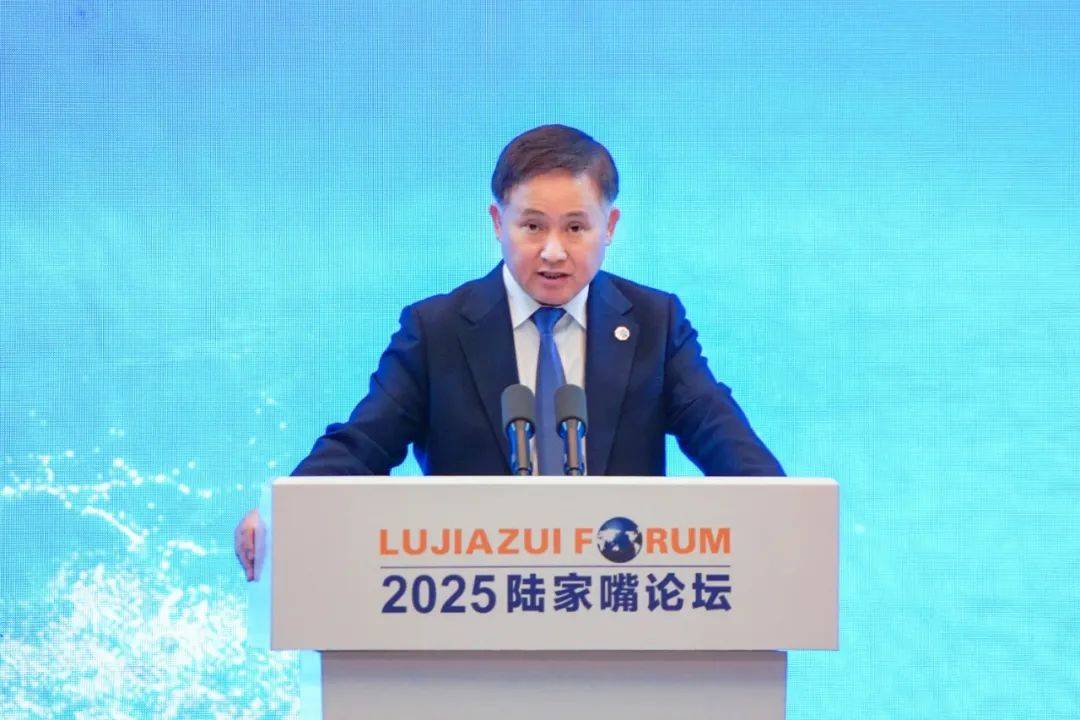
关于全球金融治理的若干思考——中国人民银行行长潘功胜在2025陆家嘴论坛上的主题演讲
中国基金报· 2025-06-18 05:43
Core Viewpoint - The speech emphasizes the need for reform in global financial governance, focusing on the international monetary system, cross-border payment systems, global financial stability, and the governance of international financial organizations [3][4]. Group 1: International Monetary System - The evolution of the international monetary system reflects significant changes in global dynamics and national competitiveness, with historical shifts in dominant currencies from the Dutch Guilder to the British Pound and currently the US Dollar [4]. - The inherent instability of a single sovereign currency as a global public good can lead to conflicts of interest, financial risks, and geopolitical tensions [4][5]. - Discussions on reforming the monetary system are increasingly driven by geopolitical factors, with two main directions: reducing reliance on a single currency and considering a super-sovereign currency like the IMF's Special Drawing Rights (SDR) [5][6]. Group 2: Cross-Border Payment System - The cross-border payment system is crucial for international trade and financial stability, facing challenges such as inefficiency, high costs, and the need for better international cooperation [8][9]. - There is a trend towards diversification in the cross-border payment system, with more countries using local currencies for settlements and new payment systems emerging [9][10]. - The application of new technologies like blockchain is reshaping the traditional payment system, enhancing efficiency while posing regulatory challenges [10]. Group 3: Global Financial Stability System - Post-2008 financial crisis, the global financial safety net has been strengthened through enhanced IMF capabilities and regional financial mechanisms [11][12]. - The regulatory framework has been improved, but challenges remain, including fragmented regulations and insufficient oversight of non-bank intermediaries [14][15]. - A robust international financial safety net centered around the IMF is essential for crisis prevention and resolution [15]. Group 4: Governance of International Financial Organizations - The governance of international financial organizations like the IMF and World Bank needs reform to better reflect the economic realities of emerging markets and developing countries [15][16]. - Adjusting the quota shares in the IMF is critical for enhancing its legitimacy and representation [16]. - Strengthening the economic oversight functions of international financial organizations is necessary to maintain stability in the global financial system [16].
聚焦国际货币体系、跨境支付体系……潘功胜发言全文来了
Di Yi Cai Jing· 2025-06-18 03:49
Core Insights - The People's Bank of China (PBOC) has emphasized the growing international status of the Renminbi, which has become the second-largest trade financing currency globally and the third-largest payment currency according to all-caliber calculations [1][8] - The PBOC is committed to a supportive monetary policy stance, implementing various measures to support economic recovery and financial market stability [1][6] - The international monetary system is evolving towards a scenario where a few sovereign currencies coexist, compete, and balance each other [1][8] International Monetary System - Historical shifts in the international monetary system reflect deep changes in global dynamics and national competitiveness, with the Renminbi's rise being notable since the 2008 financial crisis [7][8] - The discussion around the international monetary system is increasingly influenced by geopolitical factors, with a focus on reducing reliance on a single sovereign currency [8][9] - The potential for a super-sovereign currency, such as the IMF's Special Drawing Rights (SDR), is being explored as a means to enhance global liquidity and crisis response capabilities [9][10] Cross-Border Payment System - The cross-border payment system is diversifying, with more countries using local currencies for settlements, moving away from a single sovereign currency dominance [12] - New payment infrastructures and systems are emerging, enhancing the efficiency and security of cross-border transactions [12] - China has established a comprehensive cross-border payment clearing network for the Renminbi, facilitating international trade and investment [12] Global Financial Stability System - The global financial stability framework has been strengthened post-2008, with a focus on enhancing crisis response mechanisms and regulatory frameworks [13][14] - The international community is addressing challenges such as fragmented regulatory frameworks and the need for better oversight of non-bank financial intermediaries [16] - Strengthening the IMF's role as a core institution in global financial governance is crucial for maintaining stability and coherence in regulatory standards [18] Governance of International Financial Organizations - The governance structures of international financial organizations like the IMF and World Bank need reform to better reflect the economic realities of emerging markets and developing countries [17][18] - Enhancing the representation and voice of these countries in global financial governance is essential for promoting true multilateralism [17][19] - The IMF's quota system requires adjustment to align with the current global economic landscape, ensuring its legitimacy and effectiveness in crisis management [18]