制造强国

Search documents
为建设制造强国贡献力量
Xin Lang Cai Jing· 2025-11-16 23:19
Core Viewpoint - Taiyuan Heavy Industry Co., Ltd. emphasizes the importance of technological innovation for corporate development and outlines its strategic direction towards advanced manufacturing and industry upgrades [1] Group 1: Production and Technological Upgrades - The company has successfully transitioned from a traditional workshop-style production to a streamlined process-oriented production line, significantly improving product quality and reducing production costs, thus providing better value for customers [1] - Taiyuan Heavy Industry has established an industry "lighthouse factory" utilizing information technology and intelligent methods, receiving national-level smart factory recognition, which demonstrates a significant enhancement in manufacturing capabilities [1] Group 2: Development Strategy - The company has organized a series of product launch activities under the theme "Manufacturing Power, Equipment with Me," aiming for a development direction focused on refinement, internationalization, high-end, and intelligence [1] - The strategy emphasizes continuous technological innovation to enhance core competitiveness and contribute to the goal of becoming a manufacturing powerhouse while creating greater value for investors [1]

太原重工董事长陶家晋:为建设制造强国贡献力量
Zheng Quan Ri Bao Zhi Sheng· 2025-11-16 17:09
Core Viewpoint - Taiyuan Heavy Industry Co., Ltd. emphasizes the importance of technological innovation for corporate development and outlines its strategic direction for future growth [1] Group 1: Production and Technological Upgrades - The company has successfully transitioned from a traditional workshop-style production to a streamlined assembly line production, significantly improving product quality and reducing production costs, thus providing better value for customers [1] - Taiyuan Heavy Industry has established an industry "lighthouse factory" utilizing information technology and intelligent methods, receiving national-level smart factory recognition, which demonstrates a significant enhancement in manufacturing capabilities [1] Group 2: Strategic Development Direction - The company has organized a series of product launch activities under the theme "Manufacturing Power, Equipment with Me," aiming for a development direction focused on refinement, internationalization, high-end, and intelligence [1] - The company is committed to continuously enhancing its core competitiveness through technological innovation to contribute to the goal of becoming a manufacturing powerhouse and to create greater value for investors [1]
张庆伟率队在北京开展民用航空法修改调研
Xin Hua She· 2025-11-13 06:27
Core Viewpoint - The National People's Congress Standing Committee is conducting research on the amendment of the Civil Aviation Law, emphasizing the need for high-quality development in strategic emerging industries such as aerospace and low-altitude economy, while ensuring robust legal support for the sustainable growth of the civil aviation sector [1] Group 1 - The research team, led by Zhang Qingwei, visited key organizations involved in civil aviation, including the Commercial Aircraft Corporation of China and Beijing Aerospace Times Navigation Technology Co., Ltd [1] - The research team acknowledged the achievements of relevant units in the research and manufacturing of civil aviation aircraft [1] - The amendment of the Civil Aviation Law is to be guided by Xi Jinping's thoughts and the spirit of the 20th National Congress, aiming to enhance legislative quality by incorporating diverse opinions and suggestions [1]
筑牢制造强国根基 中国银行以金融活水激活产业动能
Zhong Guo Xin Wen Wang· 2025-11-13 05:41
Group 1: Manufacturing Industry Importance - The manufacturing industry is emphasized as the foundation of a nation and a key element for national strength, especially in the context of global industrial chain restructuring [2] - The 20th National Congress of the Communist Party of China highlights the need to accelerate the construction of a manufacturing powerhouse and maintain a reasonable proportion of the manufacturing sector [2] Group 2: Financial Support for Manufacturing - China Bank is committed to supporting national strategies by focusing on key areas such as core technology breakthroughs, traditional industry transformation, and high-quality international expansion, increasing resource investment and optimizing financial supply [2] - By the end of September 2025, the overall and medium-to-long-term loan balances for the manufacturing sector from China Bank are projected to exceed 3.3 trillion yuan and 1.4 trillion yuan, respectively, representing 2.3 times and 3.3 times the levels at the beginning of the 14th Five-Year Plan [2] Group 3: Technology Innovation and Support - Technology innovation is identified as a crucial factor for improving production efficiency and stimulating potential growth rates, necessitating increased R&D and domestic substitution rates [3] - China Bank is expanding credit support in key technology areas such as integrated circuits, CNC machine tools, and biomedicine to promote technological breakthroughs and innovation in the manufacturing sector [3] Group 4: High-end Equipment Manufacturing - High-end equipment manufacturing is described as a critical component of industrial upgrading, with China Bank providing full lifecycle support for projects like the domestically produced large cruise ship "Aida Magic" [4] - China Bank has developed a comprehensive service system to support future industries, including a financial service plan for the low-altitude economy, marking it as the first bank in the industry to do so [4] Group 5: Traditional Manufacturing Revitalization - Traditional manufacturing is recognized as the backbone of China's manufacturing sector, and its upgrade is essential for enhancing supply chain resilience and advancing new industrialization [5] - China Bank is actively responding to national policies for large-scale equipment upgrades, providing comprehensive services such as green approval channels and policy consulting to support traditional manufacturing [5] Group 6: Global Expansion of Chinese Manufacturing - To build a manufacturing powerhouse, China Bank leverages its global presence to support Chinese manufacturing enterprises in participating in international markets [7] - The bank has facilitated various financing services for cross-border projects, including loans for domestic aircraft and high-speed rail, helping Chinese companies expand overseas [7][8] Group 7: Financial Services and Future Outlook - China Bank has established over 1,000 versions of cross-border cash pools for multinational companies, ensuring comprehensive service coverage for state-owned enterprises with overseas financial management needs [8] - The bank aims to continue providing precise, efficient, and comprehensive financial services to contribute to the construction of a modern industrial system that is self-controlled and secure [8]


德力佳今日上市!无锡A股上市公司达126家!
Sou Hu Cai Jing· 2025-11-07 04:54
Core Viewpoint - Delijia Transmission Technology (Jiangsu) Co., Ltd. successfully listed on the Shanghai Stock Exchange on November 7, marking the fourth company from Wuxi to go public this year, contributing to the expansion of the Wuxi capital market [1][11] Company Overview - Delijia was established in 2017 and is located in Wuxi Xishan District, focusing on the research, production, and sales of gear transmission products, particularly wind turbine gearboxes, which are critical components of wind power generation [7] - The company has obtained a total of 63 authorized patents, including 24 invention patents, establishing a significant production and sales scale and leading the market in wind turbine gearbox technology [9] IPO Details - The company publicly issued 40 million shares at a price of 46.68 yuan per share, raising approximately 1.867 billion yuan [3][5] - The raised funds will be used for projects including the annual production of 1,000 units of large onshore wind turbine gearboxes and 800 units of large offshore wind turbine gearboxes, aligning with the trend of large-scale and high-end development in the wind power industry [5] Market Context - Wuxi has seen a surge in IPO enthusiasm, with 25 companies currently in the pipeline for listing, including 11 in domestic exchanges and 14 in overseas markets, indicating a strong growth potential for the Wuxi capital market [10][13] - The local government has implemented various measures to support companies in their listing efforts, enhancing the competitiveness and growth potential of the "Wuxi sector" [11][13]
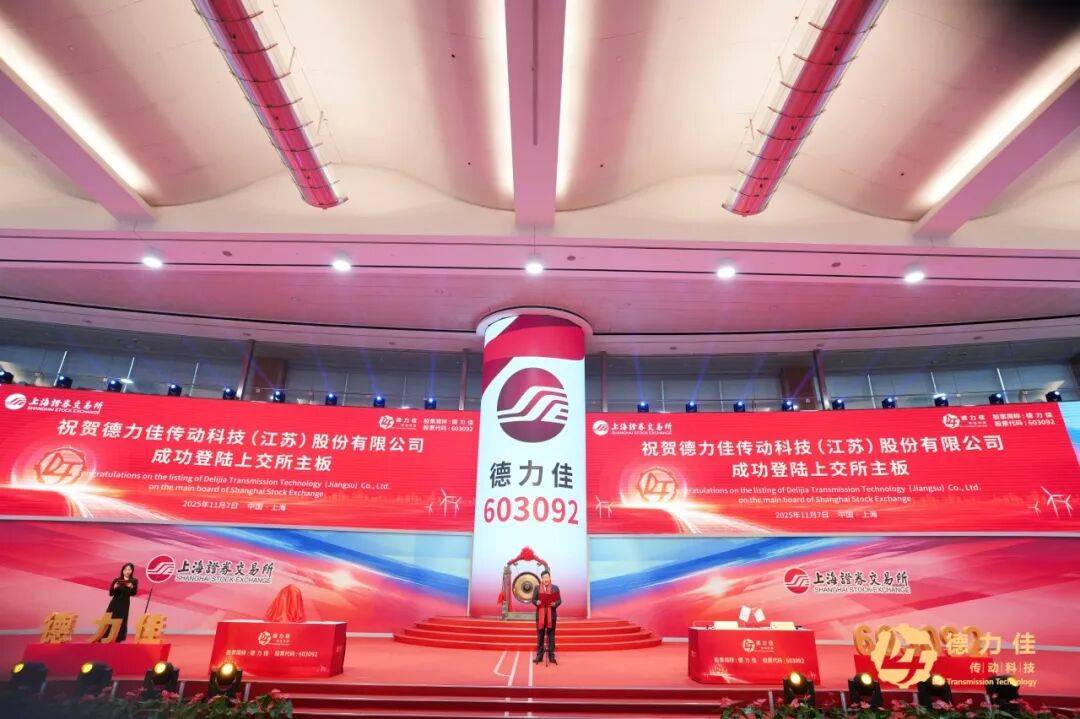
德力佳在上交所主板成功上市 无锡A股上市公司达126家
Zheng Quan Shi Bao Wang· 2025-11-07 04:20
Group 1 - Delijia (603092) Transmission Technology Co., Ltd. was listed on the Shanghai Stock Exchange on November 7, becoming the fourth listed company in Wuxi this year, bringing the total number of A-share listed companies in Wuxi to 126, ranking 7th nationwide and 2nd in the province [1] - The company issued 40 million shares at a price of 46.68 yuan per share, raising 1.8607 billion yuan, which will be invested in projects for producing large onshore and offshore wind turbine gearboxes [1] - Founded in 2017, Delijia specializes in the R&D, production, and sales of gear transmission products, with its core product being the wind turbine main gearbox, a critical component of wind power generation [1] Group 2 - Delijia's chairman, Liu Jianguo, emphasized the company's commitment to innovation in wind power transmission technology and its role in contributing to national energy security and manufacturing strength [2] - Wuxi has been actively promoting capital market engagement and high-quality enterprise development, with 25 companies currently in the pipeline for listing, including 11 domestically and 14 internationally [2] - The listing of Delijia reflects Wuxi's robust support for enterprises through policy optimization, financing support, and streamlined processes, enhancing the competitiveness and growth potential of the "Wuxi sector" [2]
挺膺担当勇争先(学习贯彻党的二十届四中全会精神)
Ren Min Ri Bao· 2025-10-31 22:32
Group 1 - The "14th Five-Year Plan" period has been characterized by significant achievements in China's development, with a focus on technological advancements and national strength [2][3] - The exploration of the moon and Mars during this period has marked a milestone in China's scientific endeavors, enhancing national confidence and pride [2][3] - The emphasis on high-quality development and the establishment of a modern industrial system is crucial for China's future economic growth [6][7] Group 2 - The "15th Five-Year Plan" outlines clear goals for economic and social development, prioritizing high-quality growth and the well-being of the people [4][5] - The plan encourages the integration of technology and agriculture, aiming to modernize rural areas and enhance agricultural productivity [4][5] - The cultural sector is also highlighted, with initiatives to promote Chinese culture globally and support the development of internet literature as a means of cultural exchange [8][9]
学习笔记|加大保障和改善民生力度,推进共同富裕
2 1 Shi Ji Jing Ji Bao Dao· 2025-10-31 08:27
Core Viewpoint - The 20th Central Committee of the Communist Party of China has approved the "Suggestions for Formulating the 15th Five-Year Plan for National Economic and Social Development," emphasizing the importance of improving people's livelihoods and achieving common prosperity as the foundation of modernization [2]. Employment and Economic Development - The plan prioritizes high-quality and sufficient employment, advocating for an employment-first strategy and the establishment of a supportive employment promotion mechanism [2]. - It aims to enhance collaboration between industry and employment, fostering new job roles and supporting enterprises in maintaining and expanding jobs [3]. Income Distribution and Social Equity - The plan calls for improvements in the income distribution system, emphasizing labor-based distribution and increasing the proportion of residents' income in national income distribution [4]. - It seeks to enhance the income of low-income groups and expand the middle-income population, promoting a more equitable distribution structure [4]. Social Security and Welfare - The plan proposes the establishment of a comprehensive social security system, including national coordination of basic pension insurance and the development of a multi-tiered pension system [5]. - It aims to improve medical insurance coverage and expand unemployment and work injury insurance, ensuring broader protection for various employment forms [5]. Consumer Confidence and Domestic Demand - The enhancement of the social security system is expected to boost consumer confidence and expand domestic demand, contributing to the creation of an olive-shaped society [6]. - The plan outlines specific policy directions in education, housing, healthcare, and public services, indicating a commitment to improving living standards during the 15th Five-Year Plan period [6].
陕西华达(301517) - 301517陕西华达投资者关系管理信息20251030
2025-10-30 09:44
Group 1: Company Development Strategies - The company aims to strengthen technological innovation and industry collaboration by increasing R&D investment in optical modules and exploring new pathways in active and passive microwave industries, particularly in commercial aerospace, 6G, and data centers [3] - The company is focused on deepening participation in key projects and domestic substitution, leveraging its full-link key technologies in electrical connectors to engage in major national aerospace projects [3] - The company plans to diversify its product offerings and enhance production capacity, transitioning from a single component supplier to a provider of interconnected system solutions [3] Group 2: Financial Performance Insights - The company reported revenue growth in the third quarter compared to the previous year and quarter, despite a decline in profits primarily due to impairment provisions and rising prices of gold and copper affecting gross margins [3] - The company is committed to expanding market reach and collaborating closely with key customers to explore cooperation potential while maintaining cost reduction and efficiency improvement measures [3] Group 3: Market Value Management - The company has established a market value management system and is working on acquiring Huajing Microelectronics, with plans to carefully consider national policies and industry dynamics in future strategic decisions [4] Group 4: Talent Acquisition and Development - The company is enhancing its talent acquisition strategy by optimizing development plans, broadening recruitment channels, and improving salary competitiveness to attract high-level talent [4] - The company emphasizes talent development and capability enhancement through a structured training system and plans to establish a long-term incentive mechanism to stimulate innovation and creativity among employees [4]
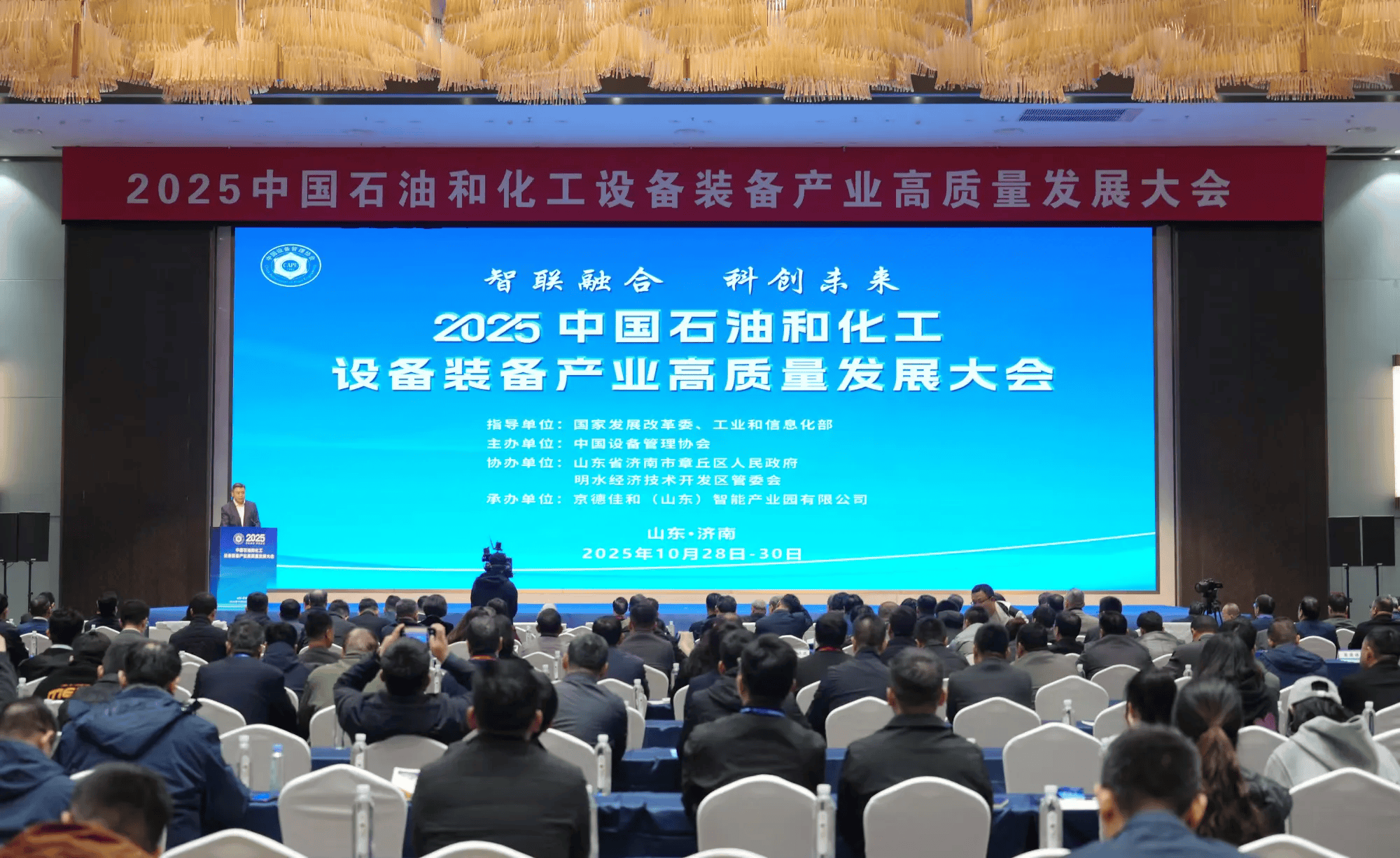
透过这场大会,看到了“章丘智造”的实力!
Sou Hu Cai Jing· 2025-10-30 02:19
Core Insights - The 2025 China Petroleum and Chemical Equipment Industry High-Quality Development Conference was held in Zhangqiu, focusing on the "Manufacturing Power" strategy and "Dual Carbon" goals, gathering over 500 representatives from leading companies and research institutions in the petrochemical sector [4][14] - The conference emphasized the importance of technological innovation and collaboration among enterprises to promote the high-end, intelligent, and green development of the equipment manufacturing industry [4][14] Industry Overview - The equipment manufacturing industry is a crucial driver of industrial growth, with the petrochemical equipment sector being a significant component [7] - Zhangqiu's petrochemical equipment industry includes key products such as forgings, drilling mud pumps, and pressure vessels, serving major companies like PetroChina and Sinopec, with products exported to Europe, Southeast Asia, and the Middle East [7] - In 2024, 14 large-scale petrochemical equipment and parts companies achieved an output value of 3.83 billion, accounting for 3.06% of the total industrial output value in the region [7] Regional Development - Zhangqiu has a robust industrial foundation with over 6,700 enterprises across 31 industrial categories, including 253 large-scale equipment manufacturing companies [7] - The specialized equipment industry in Zhangqiu reached an output value of 26 billion in 2024, with 20.1 billion achieved in the first nine months of the year [7] - The region is recognized for its advanced manufacturing capabilities, including the world's largest forging ring and significant contributions to nuclear power equipment [10] Innovation and Collaboration - The conference highlighted the establishment of the China Equipment Management Association's domestic work committee and supply chain committee, with 20 companies signing agreements to enhance resource sharing and technological collaboration [4][14] - Zhangqiu is building a comprehensive industrial chain that includes automotive, advanced materials, and specialized equipment, supported by high-quality digital parks and educational institutions [13] - The city aims to transform its innovation resources into productive capabilities, fostering a vibrant environment for talent and entrepreneurship [13][14]