
大单品战略

Search documents
盐津铺子(002847):收入符合预期,利润亮眼增长
GOLDEN SUN SECURITIES· 2025-10-28 03:56
证券研究报告 | 季报点评 gszqdatemark 2025 10 28 年 月 日 盐津铺子(002847.SZ) 收入符合预期,利润亮眼增长 事件:公司发布 2025 年三季报,前三季度实现营收 44.3 亿元,同比 +14.7%,归母净利润 6.0 亿元,同比+22.6%,扣非净利润 5.5 亿元,同 比+30.5%。25Q3 单季度营收 14.9 亿元,同比+6.0%,归母净利润 2.3 亿元,同比+33.5%,扣非净利润 2.2 亿元,同比+45.0%。 电商调整 Q3 收入降速,利润延续高增。25Q3 公司营收同比+6.0%至 14.9 亿元,环比 Q2 有所降速,我们预计与渠道变革之下,电商费率提升,公 司主动调整电商运营策略,形成一定拖累相关,过去盐津在每一轮渠道变 革机遇中均快速把握机会,当前叠加大魔王等大单品打造成熟,进一步牵 引定量流通等渠道布局。品类维度,盐津大魔王开创麻酱魔芋赛道,牵引 整体增长,同时公司储备虎皮鳕鱼豆腐、虎皮豆干等产品体系,后续复制 大魔王的打造路径,有望复刻更多大单品。25Q3 归母净利润同比+33.5% 至 2.3 亿元,延续亮眼高增,预计主要来自于大单品打磨 ...
净利润增长超37%,燕京啤酒靠什么?
和讯· 2025-10-25 02:52
Core Viewpoint - The beer industry in China is facing pressure from weak consumer demand, leading major companies to shift focus from volume growth to price increases and premium product offerings [2] Group 1: Industry Performance - In the first eight months of 2025, China's beer production from large enterprises was 26.83 million kiloliters, a slight decrease of 0.2% year-on-year [2] - Yanjing Beer reported a beer sales volume of 3.4952 million kiloliters from January to September 2025, a year-on-year increase of 1.39%, with revenue reaching 13.433 billion yuan, up 4.57% [3] - The company's net profit for the same period was 1.770 billion yuan, reflecting a significant year-on-year growth of 37.45% [3] Group 2: Company Financials - Yanjing Beer achieved a revenue of 4.875 billion yuan in Q3 2025, marking a 1.55% increase year-on-year, while net profit reached 668 million yuan, maintaining a robust growth rate of 26% [4] - Over the past five years, Yanjing Beer's revenue has increased from 10.928 billion yuan in 2020 to an estimated 14.667 billion yuan in 2024, with net profit soaring from 197 million yuan to 1.056 billion yuan during the same period [5] - The company has maintained revenue growth for four consecutive years since 2021, with net profit growth significantly outpacing revenue growth [6] Group 3: Product Strategy - Yanjing Beer has successfully implemented a big product strategy centered around Yanjing U8, which has seen sales grow from 90,000 tons to 900,000 tons over five years, becoming the company's first nationwide flagship product [10] - The U8 product line has contributed to an increase in the proportion of mid-to-high-end products, which now account for approximately 70% of the company's revenue [2][6] - The gross profit margin for the company reached 47.19% in the first three quarters of 2025, with Q3 gross margin at 50.15%, benefiting from the sales growth of mid-to-high-end products [6] Group 4: Market Positioning and Marketing - Yanjing U8 targets the 8-10 yuan price range, appealing to younger consumers and differentiating itself from competitors [8] - The company has engaged in various marketing strategies, including collaborations with popular celebrities and sponsoring events to enhance brand recognition among younger demographics [9] - Yanjing Beer has also focused on expanding its distribution channels, with traditional channels generating significant revenue while e-commerce channels have shown impressive growth [9] Group 5: Future Outlook - Yanjing Beer anticipates that its net profit for the first three quarters of 2025 will exceed the total for 2024, with expectations for annual revenue to surpass 15.2 billion yuan [7] - The company plans to replicate the success of U8 by developing a second flagship product, although it faces challenges in a more competitive market environment [11]


劲仔食品(003000):收入环比提速 利润短期承压
Xin Lang Cai Jing· 2025-10-24 10:39
Core Viewpoint - The company reported its Q3 2025 results, showing a revenue of 1.81 billion, a year-on-year increase of 2.1%, but a net profit decline of 19.5% to 170 million, indicating challenges in profitability despite revenue growth [1][2]. Revenue Performance - For the first three quarters of 2025, the company achieved a revenue of 1.81 billion, with a year-on-year growth of 2.1% and a net profit of 170 million, down 19.5% year-on-year [1]. - In Q3 2025 alone, the revenue reached 680 million, reflecting a year-on-year increase of 6.5% [1]. - The company is expanding its product offerings, including "Jingmen Baodu" sesame sauce konjac and "Jingzhou Shuangshuang" spicy peanuts, which are expected to drive revenue growth [1]. Profitability Analysis - The gross margin in Q3 2025 decreased by 1.1 percentage points to 28.9%, attributed to changes in channel structure and the rise of new emerging channels [2]. - The sales expense ratio increased by 1.6 percentage points to 13.8%, reflecting higher marketing and promotional expenses during the channel expansion and new product launches [2]. - The net profit margin for Q3 2025 was 8.8%, down 2.4 percentage points year-on-year, but showed a quarter-on-quarter improvement of 0.4 percentage points [2]. Growth Potential - The company is expected to see steady growth driven by fish products, while konjac is anticipated to create new growth opportunities [2]. - Despite short-term profitability pressures due to channel changes and new product development, there is significant potential for net profit margin improvement in the long term [2]. Investment Outlook - The company is projected to achieve revenue growth of 3.2%, 12.5%, and 11.2% for the years 2025 to 2027, reaching 2.49 billion, 2.80 billion, and 3.11 billion respectively [3]. - The net profit is expected to decline by 14.6% in 2025 but recover with growth rates of 32.0% and 13.1% in the following years, reaching 250 million, 330 million, and 370 million respectively [3].
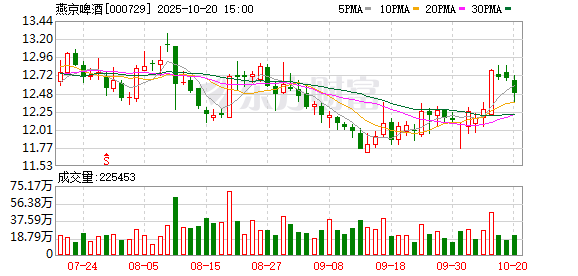
燕京啤酒Q3营收增长1.55%至48.75亿元,拟分红2.82亿元
Cai Jing Wang· 2025-10-21 20:32
Core Viewpoint - Yanjing Beer reported a revenue growth of 1.55% to 4.875 billion yuan in Q3 2025, with net profit increasing by 26% to 668 million yuan [1] Financial Performance - The company achieved a beer sales volume of 3.4952 million kiloliters (including entrusted operations) from January to September 2025, representing a year-on-year growth of 1.39% [1] - The profit distribution plan for the first three quarters of 2025 involves cash dividends, with a proposal to distribute 0.10 yuan per 10 shares (including tax), totaling 282 million yuan [1] Strategic Initiatives - The company is committed to executing a major product strategy, with Yanjing U8 showing strong growth, contributing to product structure upgrades and improved profitability [1] - Efforts are being made to enhance key business areas and deepen the excellence management system, focusing on "omni-channel integration + regional cultivation" to solidify market growth [1] - The company is accelerating the transformation of its supply chain through intelligent and digital construction, effectively promoting efficiency across the entire chain [1]
燕京啤酒(000729):旺季圆满收官,高端化稳步推进
GOLDEN SUN SECURITIES· 2025-10-21 03:39
Investment Rating - The report maintains a "Buy" rating for Yanjing Beer [5] Core Views - The company reported a revenue of 13.433 billion yuan for the first three quarters of 2025, a year-on-year increase of 4.57%, and a net profit attributable to shareholders of 1.770 billion yuan, up 37.45% year-on-year [1] - The company continues to implement a big product strategy, with the Yanjing U8 series showing strong growth, contributing to product structure upgrades and market rejuvenation [2] - The company is focusing on digital transformation and supply chain optimization to enhance overall efficiency and profitability [2] Financial Performance Summary - For Q1-Q3 2025, the company achieved a beer sales volume of 3.4952 million kiloliters, a year-on-year increase of 1.39%, with a price per ton of approximately 3,843 yuan, up 3.13% year-on-year [1] - The gross profit margin for Q3 2025 was 50.15%, an increase of 2.16% year-on-year, with net profit margin reaching 13.70%, up 2.66% year-on-year [1] - The company forecasts net profits for 2025-2027 to grow by 51.6%, 19.1%, and 14.2%, reaching 1.600 billion, 1.906 billion, and 2.177 billion yuan respectively [2] Revenue and Profit Forecast - The projected revenue for 2025 is 15.532 billion yuan, with a year-on-year growth rate of 5.9% [4] - The earnings per share (EPS) for 2025 is estimated to be 0.57 yuan, with a price-to-earnings (P/E) ratio of 22.0 [4]
燕京啤酒Q3旺季降速 首次季报分红
2 1 Shi Ji Jing Ji Bao Dao· 2025-10-20 14:01
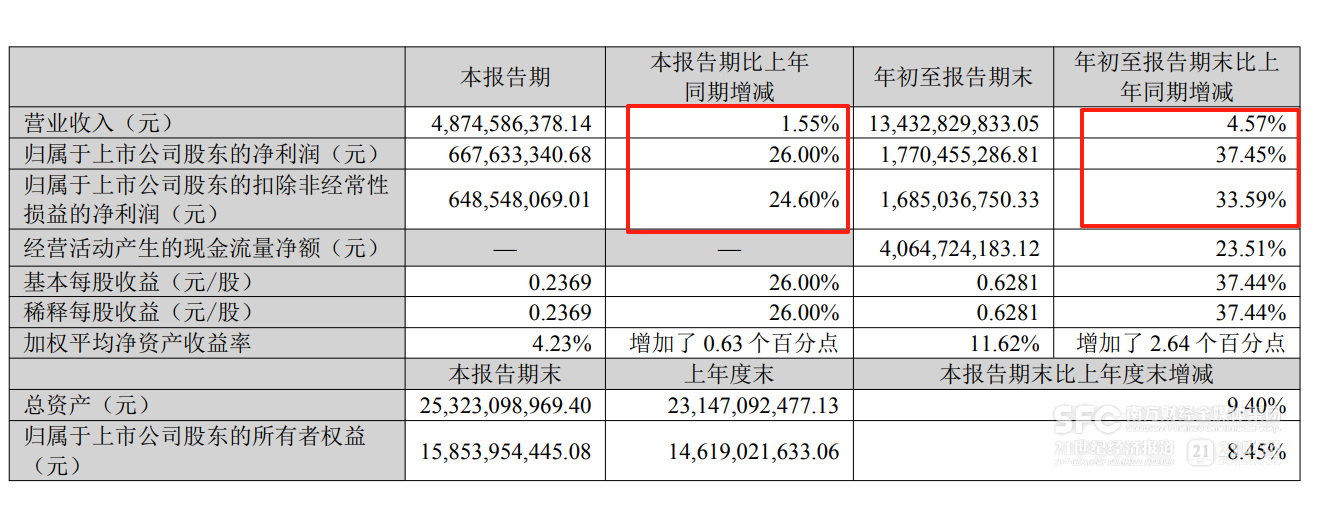
Core Insights - Yanjing Beer reported a revenue of 4.875 billion yuan in Q3, a year-on-year increase of 1.55%, and a net profit attributable to shareholders of 668 million yuan, up 26% [1][2] - For the first three quarters, the company achieved a total revenue of 13.43 billion yuan, surpassing the entire revenue of 2022, with a net profit of 1.77 billion yuan, reflecting a growth of over 37% [1][2] - The company maintains a strong growth trajectory, with a net profit margin exceeding 20% [1] Financial Performance - Q3 revenue was 4.875 billion yuan, with a year-on-year growth of 1.55% [2] - Net profit attributable to shareholders for Q3 was 668 million yuan, marking a 26% increase [2] - The net profit for the first three quarters reached 1.77 billion yuan, a growth of over 37% compared to the previous year [1][2] - The basic and diluted earnings per share for Q3 were both 0.2369 yuan, reflecting a 26% increase [2] Market Position and Strategy - Yanjing Beer continues to execute its major product strategy, with the Yanjing U8 brand showing strong growth, contributing to product structure upgrades and improved profitability [3] - Despite a slowdown in growth compared to the first half of the year, where revenue growth was 6.37% and net profit growth was 45.45%, the company remains optimistic about its annual performance [5] - The company plans to distribute a cash dividend of 1 yuan per 10 shares for the first three quarters of 2025, totaling 282 million yuan, signaling a commitment to return value to shareholders [5] Shareholder Activity - Northbound capital slightly reduced its holdings, with Hong Kong Central Clearing Limited decreasing its stake by over 21 million shares, resulting in a holding ratio of 2.65% [5] - The dividend distribution marks the first time in over twenty years that Yanjing Beer has issued dividends outside of the annual distribution, indicating a positive signal to investors [5]
燕京啤酒Q3旺季降速 首次季报分红|酒业财报观察
2 1 Shi Ji Jing Ji Bao Dao· 2025-10-20 13:43
Core Viewpoint - Yanjing Beer has demonstrated resilience in its financial performance, achieving growth in both revenue and net profit despite a slowdown in growth rates compared to the first half of the year [2][5]. Financial Performance - In Q3, Yanjing Beer reported revenue of 4.875 billion yuan, a year-on-year increase of 1.55%, while the net profit attributable to shareholders reached 668 million yuan, reflecting a 26% growth [3][4]. - For the first three quarters of the year, total revenue amounted to 13.433 billion yuan, surpassing the total revenue for the entire year of 2022, with a net profit of 1.770 billion yuan, up over 37% year-on-year [2][3]. Growth Trends - The growth rate of revenue and net profit has slowed in Q3 compared to H1, where revenue growth was 6.37% and net profit growth was 45.45% [7]. - Beer sales saw a slight increase of 2.03% in H1, but only a marginal increase of less than 0.1% in Q3 [7]. Strategic Initiatives - The company is committed to its major product strategy, with Yanjing U8 continuing to show strong growth, contributing to product structure upgrades and improved profitability [5]. - Yanjing Beer announced a profit distribution plan for the first three quarters of 2025, proposing a cash dividend of 1 yuan per 10 shares, totaling 282 million yuan, marking the first dividend distribution outside of annual dividends in over twenty years [7]. Shareholder Engagement - The company has seen a slight reduction in holdings by northern capital, with Hong Kong Central Clearing Limited reducing its stake by over 21 million shares, resulting in a holding ratio of 2.65% [7]. - The dividend payout ratio has fluctuated over the past five years, with a notable increase expected for 2025, indicating a positive signal for investor returns [7].
芭薇股份(920123):科技创新驱动型美妆智造企业,坚定实施“大客户、大单品”战略
Hua Yuan Zheng Quan· 2025-10-15 08:59
Investment Rating - The report gives an "Accumulate" rating for the company, marking its first coverage [5][8]. Core Views - The company is a technology-driven beauty manufacturing enterprise, firmly implementing a "major clients, major products" strategy. The Chinese cosmetics market is continuously expanding, driving growth in the cosmetics OEM industry. The company has established a good reputation in the industry and has built strong relationships with numerous brand clients [6][10]. Summary by Sections 1. Market Growth - The Chinese cosmetics market is projected to reach CNY 579.1 billion by 2025, with a year-on-year growth of 6.1%. The skincare market is expected to grow to CNY 318.6 billion, with a year-on-year increase of 5.7%. The OEM industry has seen a compound annual growth rate of 15.1% from CNY 21.41 billion in 2017 to CNY 49.76 billion in 2023 [6][21][22]. 2. Company Performance - In the first half of 2025, the company achieved revenue of CNY 371 million, a year-on-year increase of 39.3%, and a net profit of CNY 16.94 million, up 14.95% year-on-year. The company is expanding its market share despite a decline in gross margin due to changes in client and product structure [41][44]. 3. R&D and Market Expansion - The company holds 138 patents, including 120 invention patents, and has participated in drafting 7 national standards. It focuses on new raw material applications and formula development to support both new and existing brand clients. The company aims to penetrate overseas markets through participation in international exhibitions [48][55]. 4. Financial Forecast and Valuation - The forecasted net profits for 2025, 2026, and 2027 are CNY 54 million, CNY 65 million, and CNY 74 million, respectively. The corresponding price-to-earnings ratios are 36.5, 30.6, and 26.8 times. The report compares the company with peers, noting an average PE of 38.1 times for comparable companies in 2025 [8][41].
市值蒸发480亿,初代餐饮「排队王」不香了
3 6 Ke· 2025-10-05 01:17
Core Viewpoint - The financial performance of Taier Suancaiyu, a brand under Jiumaojiu Group, has significantly declined, with a notable drop in revenue and net profit, leading to a reduction in store count and raising questions about its market appeal [1][5][9]. Financial Performance - In the first half of 2025, Taier Suancaiyu reported revenue of 1.949 billion yuan, a year-on-year decline of 13.3%, which is worse than the overall group performance [1][5]. - The total revenue for Jiumaojiu Group in the same period was 2.753 billion yuan, down 10.1% year-on-year, with net profit falling to 61 million yuan, a decrease of 16.05% [1][5]. - The number of Taier Suancaiyu stores decreased from 612 to 547, marking a net closure of 65 stores within six months [1]. Market Position and Strategy - Taier Suancaiyu was once a leading brand for Jiumaojiu, contributing 79% of the group's revenue by 2021, but its market position has weakened significantly [2][11]. - The brand's table turnover rate has dropped to 2.2 times per day, down from 4.9 times, indicating reduced customer traffic [5]. - The company is undergoing a transformation to focus on fresh ingredients, with plans to convert 150 stores to a new "fresh" model by the end of the year [6][12]. Competitive Landscape - The brand faces intense competition from the rising popularity of pre-packaged dishes and lower-priced alternatives, which have captured significant market share [10][12]. - The shift in consumer preferences towards more affordable options has pressured Taier Suancaiyu to lower prices and expand delivery services, but these efforts have not yielded the desired results [9][10]. Future Outlook - Despite the challenges, Taier Suancaiyu remains a crucial part of Jiumaojiu's strategy, as the group seeks to revitalize its brand and explore new growth avenues [11][12]. - The overall dining industry is experiencing shifts, with the grilled fish market expected to grow, indicating potential opportunities for Taier Suancaiyu if it can successfully pivot its offerings [12].

7000家门店狂奔后,霸王茶姬涨不动了?
3 6 Ke· 2025-09-23 01:22
Core Viewpoint - Bawang Chaji's stock price has experienced significant volatility, with its market value dropping from $59.54 billion at IPO to $31.88 billion, nearly halving since its listing [1] Group 1: Store Expansion and Market Saturation - Bawang Chaji plans to open 10,087 stores from 2022 to 2024, with 7,038 stores already established by mid-2023, surpassing competitors like Heytea and Nayuki [1] - The rapid increase in store density is leading to declining single-store revenue, particularly affecting Bawang Chaji, which focuses on larger store formats [1][2] - Franchisees report significant drops in sales, with some experiencing a 30% decline in online performance due to increased competition in their vicinity [2][3] Group 2: Financial Performance - Bawang Chaji's revenue for the first half of the year was $67.25 billion, a year-on-year increase of 21.61%, but net profit fell by 38.22% to $7.55 billion [1][4] - The company reported a staggering 87.72% decline in net profit for the second quarter, indicating a broader trend of decreasing profitability [1][4] Group 3: Competitive Landscape - Bawang Chaji is facing intense competition in the tea beverage market, with rivals like Mixue Ice City and Gu Ming showing significant revenue growth rates of 39.3% and 41.2% respectively, while Bawang Chaji's growth has slowed [4] - The brand's strategy of not engaging in price wars contrasts with competitors who have adopted aggressive discounting tactics, impacting its market position [4][5] Group 4: Product Strategy and Innovation - Bawang Chaji follows a "big single product" strategy, with its flagship product, "Boya Juexian," accounting for over 50% of its revenue, but it has introduced fewer new products compared to competitors [5][6] - The company has faced challenges with product availability, as franchisees can choose to remove underperforming items, leading to inconsistencies in product offerings [6] Group 5: Marketing and Brand Positioning - Bawang Chaji has significantly increased its marketing expenditures, with sales and marketing costs rising from $7.36 million in 2022 to $385 million in 2025, reflecting a focus on brand enhancement [9] - The brand has attempted to diversify its offerings by venturing into retail and apparel, although these initiatives have faced challenges and some products have been removed from sale [10][11] Group 6: Future Growth and Challenges - Bawang Chaji is exploring new growth avenues, including launching new store formats and expanding into overseas markets, but faces complexities in scaling its international presence [10][12] - The company is at a critical juncture, needing to innovate and adapt to maintain its competitive edge in a saturated market [12]