
央行独立性

Search documents
世界正从“1920s”滑向“1930”?
3 6 Ke· 2026-01-23 04:10
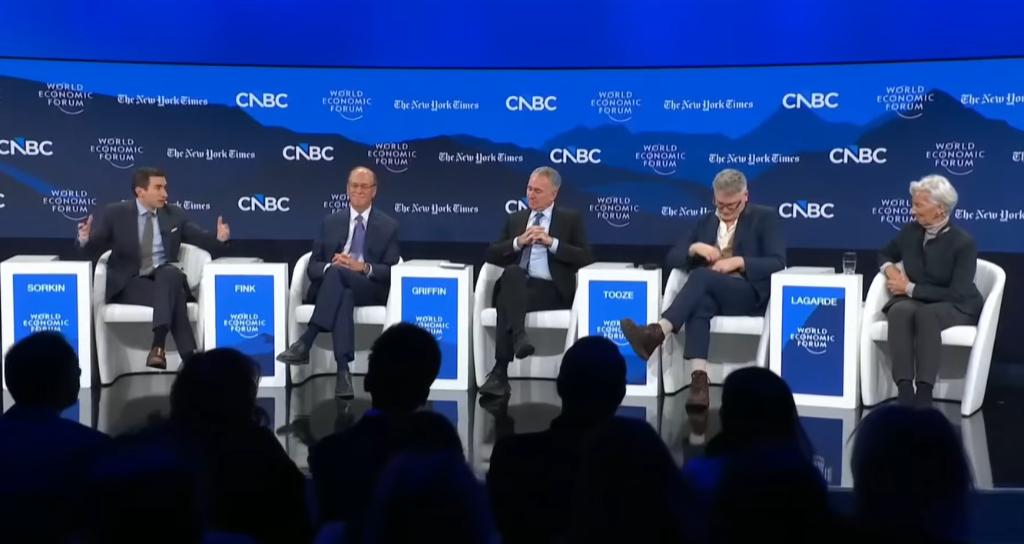
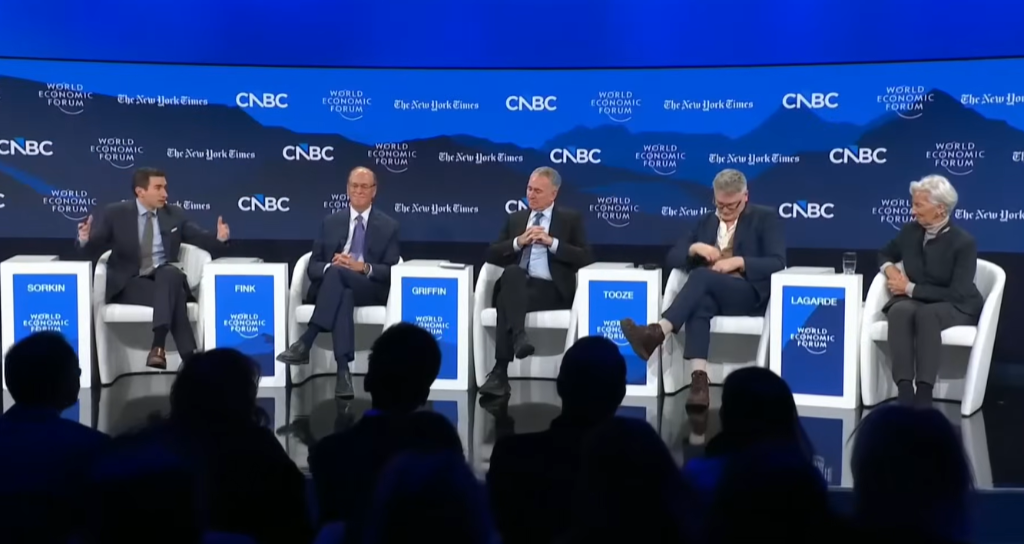
Core Viewpoint - Global financial leaders warn that government fiscal irresponsibility and geopolitical fragmentation may offset the productivity gains from AI technology [1][3] Group 1: Historical Parallels - ECB President Christine Lagarde and historian Adam Tooze highlight alarming similarities between the current "technological boom + trade protection + geopolitical fragmentation" and the path leading to the Great Depression in the 1930s [4] Group 2: Debt Crisis - Ken Griffin criticizes reckless government spending, particularly in the U.S., as the primary threat to the market, stating that "all governments are overspending, almost without exception" [5][10] - Larry Fink believes AI is not a bubble but will create a "winner-takes-all" scenario, where large companies with scale and data will dominate [5][11] Group 3: Tariffs and Fragmentation - Lagarde warns that geopolitical fragmentation and protectionism will hinder the data flow and energy access necessary for AI, leading to decreased efficiency [5] - Average tariffs between the U.S. and Europe have risen from 2% to over 12%, with a potential increase to 15%, which could negatively impact inflation [6][13] Group 4: Central Bank Independence - Lagarde emphasizes the importance of central bank independence, stating that fiscal consolidation cannot rely on central banks as a safety net [7][14] Group 5: Economic Disparities - Fink notes that the high cost of developing cutting-edge AI models, estimated at $1 billion, creates a barrier that only large-scale operators can overcome, exacerbating economic disparities [11] - Griffin points out that the capital expenditure for U.S. data centers is projected to reach $600 billion this year, indicating a significant financial commitment to AI infrastructure [11]


1月22日白银晚评:美最高法院显现抵御倾向 银价走势大幅上行
Jin Tou Wang· 2026-01-22 09:22
Core Viewpoint - The news highlights the current trading status of silver and the implications of a legal case involving the Federal Reserve's independence, which could impact market confidence and monetary policy effectiveness. Group 1: Silver Price Analysis - As of January 22, the spot silver price is trading at $94.19 per ounce, with a daily range between $90.79 and $94.37 [1] - Technical analysis indicates that silver prices are in an upward channel, suggesting a bullish outlook [3] - The price is above the rising nine-day exponential moving average (EMA), indicating strong short-term momentum [4] Group 2: Market Influences - The U.S. Supreme Court is cautious about President Trump's attempt to dismiss Federal Reserve Governor Lisa Cook, which could undermine the Fed's independence and disrupt markets [3] - A ruling favoring Trump could damage public confidence in the Federal Reserve and jeopardize its ability to formulate effective monetary policy [3] - The court is expected to make a decision by July, which could have significant implications for the U.S. and global economy [3] Group 3: Technical Indicators - The 14-day Relative Strength Index (RSI) is at 70.99, indicating an overbought condition and potential for consolidation [4] - Silver prices may test the historical high of $95.89 set on January 20, 2025, with further resistance around $98.50 [4] - A corrective pullback could occur, potentially down to the nine-day EMA at $90.36, with further support at the lower boundary of the upward channel around $81.10 [4]
世界正从“1920s”滑向“1930”?
华尔街见闻· 2026-01-22 08:22
Core Insights - The discussion highlighted the alarming similarities between the current economic climate and the prelude to the Great Depression of 1929, driven by technological exuberance, rising sovereign debt, and geopolitical fragmentation [2][3][8] Debt Crisis - Ken Griffin criticized reckless government spending, particularly in the U.S., as the primary threat to the market, stating that nearly all governments are overspending [4][9] - The U.S. national debt has reached $38 trillion, raising concerns about the sustainability of such spending without significant productivity gains from AI [9] Tariff Costs - Lagarde noted that tariffs between the U.S. and Europe have surged from an average of 2% to over 12%, with potential increases to 15% [5][12] - Griffin warned that tariffs act as a regressive tax on consumers and could foster crony capitalism, stifling the vitality of small and medium enterprises [5][13] Central Bank Independence - Lagarde emphasized the importance of central bank independence, arguing that fiscal consolidation should not rely on central banks as a safety net [6][15] - The current political climate necessitates maintaining the "knave-proof" nature of central banks to prevent moral hazard [17] AI and Economic Disparity - Larry Fink described the current economic landscape as a "K-shaped" recovery, where large firms leverage AI to gain a competitive edge over smaller companies [10] - The cost of developing cutting-edge AI models has skyrocketed to $1 billion, creating a high barrier to entry that favors large capitalized firms [10] Geopolitical Fragmentation - Lagarde warned that geopolitical tensions and protectionism are undermining the data flow and energy access necessary for AI efficiency, posing a significant threat to its expansion [9][10]

“1920s vs 2020s”!华尔街教父、欧央行行长与历史学家激辩:“AI、关税和地缘”把世界拖向“1930”?
Hua Er Jie Jian Wen· 2026-01-22 02:22
Group 1 - Global financial leaders warn that government fiscal irresponsibility and geopolitical fragmentation may negate the productivity gains from AI [3][4] - The discussion at the World Economic Forum highlighted the parallels between the current economic climate and the pre-Great Depression era, particularly in terms of technological advancements and political failures [4][7] - Ken Griffin emphasized that the core risk in 2026 is not from private capital markets but from reckless government spending, with U.S. national debt reaching $38 trillion [5][7] Group 2 - Adam Tooze pointed out that the current technological boom, driven by AI, mirrors the 1920s' electrification and mass production, but political failures could lead to economic collapse [4][7] - Christine Lagarde noted that global trade is under unprecedented pressure due to geopolitical fragmentation and tariffs, which could hinder the scale effects needed for AI [4][10] - The average tariff between the U.S. and Europe has surged from 2% to over 12%, with a potential rise to 15%, impacting inflation and economic growth [10][11] Group 3 - Larry Fink stated that AI is not a bubble but will lead to significant failures, creating a "K-shaped" economy where large firms benefit disproportionately [6][8] - The cost of developing cutting-edge AI models is around $1 billion, and U.S. capital expenditure on data centers is projected to reach $600 billion this year [8][10] - Lagarde warned that geopolitical divisions and protectionism could obstruct the data flow necessary for AI efficiency [8][10] Group 4 - The discussion highlighted the importance of central bank independence in managing fiscal policies and avoiding reliance on monetary solutions to address structural imbalances [12][33] - Lagarde emphasized that not all debt is equal, and productive investments will always find funding, while non-productive debt will face challenges [33][42] - The need for cooperation in managing AI's development and its implications for society was underscored, with concerns about energy consumption and social consequences [32][34]
英国央行行长贝利:美联储独立性面临的任何威胁都可能对英国产生溢出效应
Sou Hu Cai Jing· 2026-01-20 12:48
Core Viewpoint - The Governor of the Bank of England, Bailey, indicated that any threats to the independence of the Federal Reserve could have spillover effects on the UK, although there are no similar threats to the independence of the Bank of England [1] Group 1 - The statement highlights concerns regarding the independence of central banks, particularly the Federal Reserve, and its potential impact on international markets [1] - The Bank of England currently does not face the same threats to its independence as the Federal Reserve [1]
黄金价格突破4700美元,你该如何选择?
Jing Ji Guan Cha Wang· 2026-01-20 11:59
本轮金价上涨的核心逻辑已超越传统通胀对冲范畴,转向对全球货币体系稳定性的深度反思。东方金诚 《黄金周报(2026.1.12–2026.1.18)》指出,多位拥有2026年FOMC投票权的美联储官员近期密集发 声,强调"央行独立性是物价稳定的基石"。费城联储主席保尔森表示,降息决策应基于经济数据而非外 部压力;明尼阿波利斯联储主席卡什卡利则直言,无论谁担任下一任主席,美联储都必须坚持集体决策 机制以抵御外界干预。 这些表态被市场解读为对特朗普政府要求大幅降息的回应。当货币政策可信度受损时,黄金作为非主权 信用资产的吸引力自然提升。与此同时,地缘政治风险急剧上升。 报告提到,特朗普政府宣布对丹麦等欧洲八国加征关税,直至达成收购格陵兰岛协议。欧洲国家开始向 格陵兰岛派遣军事人员,丹麦及其盟友也筹备联合军演。尽管未引发直接冲突,但地缘紧张局势显著推 高地缘风险溢价,促使资本流向黄金等安全资产。 作者 胡群 1月20日,国际现货黄金价格首次突破每盎司4700美元,创下历史新高。今年以来,金价接连跨越 4500、4600及4700美元三大关键心理关口,国内主流金饰品牌足金报价同步攀升至每克1450元以上。 这一波动背后, ...
特朗普“格陵兰野心”引爆避险狂潮!金价狂飙冲破4730美元
Sou Hu Cai Jing· 2026-01-20 10:40
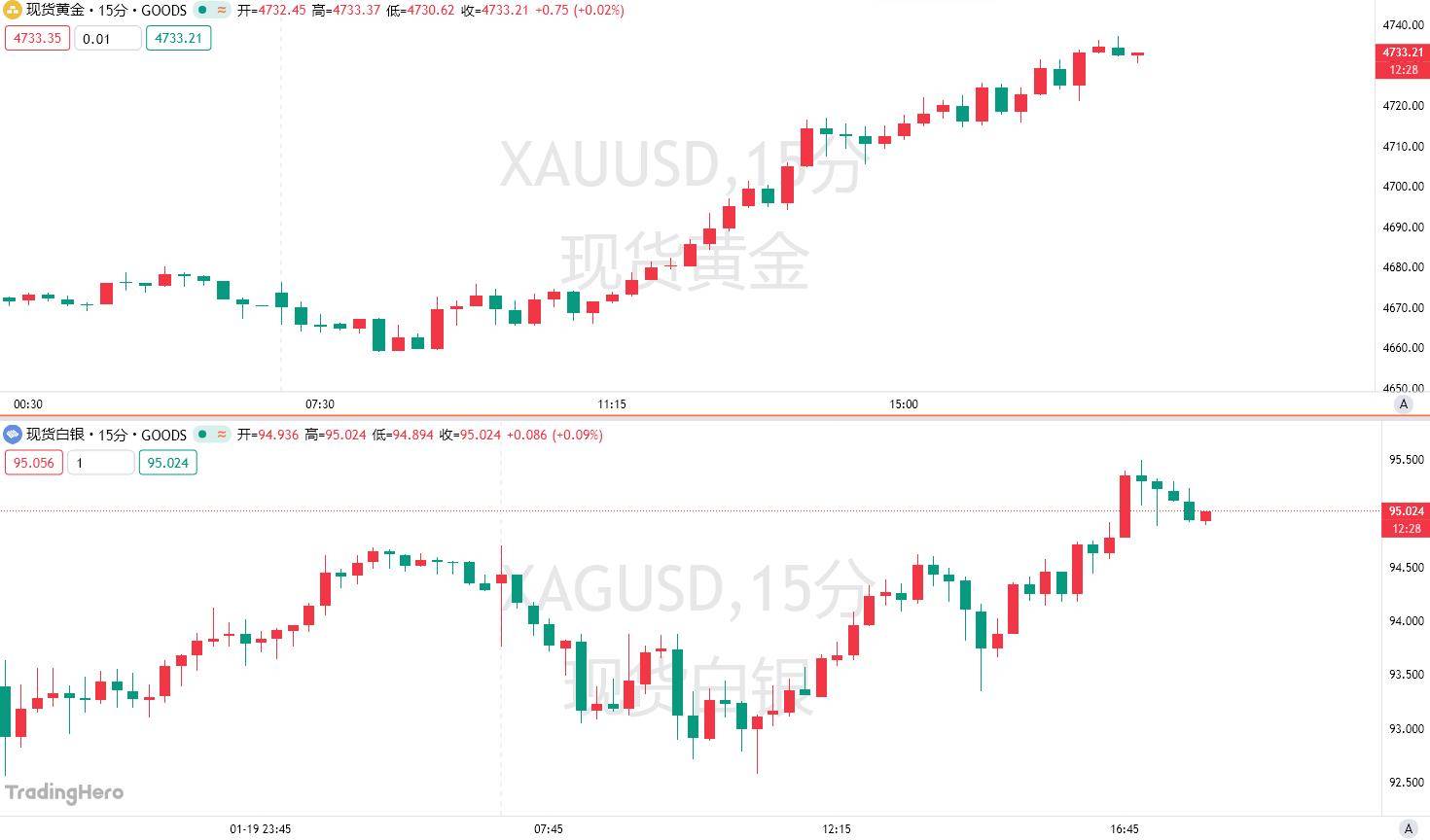
Group 1 - The core issue is the potential trade war between the US and Europe triggered by President Trump's push to acquire Greenland, leading to a surge in gold and silver prices, with gold reaching over $4,700 and silver surpassing $95 [1][3] - Market participants are closely monitoring Europe's response to Trump's threat of imposing tariffs on eight European countries, which could escalate trade tensions [3] - UBS analyst Giovanni Staunovo suggests that the combination of tariff threats and concerns over US interest rate cuts are driving gold prices to new highs, with a target price of $5,000 per ounce [3] Group 2 - The Greenland crisis is intensifying the already significant rise in precious metals, with gold increasing nearly 10% in just 20 days and over 70% since the beginning of Trump's second term [4] - Silver has seen a remarkable increase of 147% since 2025, driven by its classification as a critical US mineral and growing demand leading to structural market shortages [4] - The geopolitical tensions and expectations of monetary policy easing are key factors behind the recent record price increases in gold and silver [4]
中经评论:多家央行为何“干涉”美国内政
Jing Ji Ri Bao· 2026-01-20 00:02
上周,在美国司法部向美联储发出传票之后,多家央行罕见地发表联合声明声援美联储主席鲍威 尔。这种看似"干涉"美国内政的行动,反映出在美元信用不断下滑的背景下,欧美资本对可能出现系统 性风险的担忧在不断上升。 美元信用受损将引发全球大范围资产重估。美元在全球外汇储备中占比约58%,是全球贸易结算和 金融交易的主要货币。在现有体系框架下,美联储若在美国国内政治斗争中介入过深,其货币政策将失 去市场信任,投资者会要求更高的风险溢价,推高美债收益率和全球借贷成本。同时,现有货币政策协 调机制将出现紊乱。多家央行在制定政策时,往往需要预判美联储的利率路径。若美联储决策从经济数 据转向政治信号,其参照系将出现重大调整,政策制定成本陡增,加剧金融市场波动。此外,全球金融 监管框架也面临挑战。 (责任编辑:臧梦雅) 多家央行"捍卫独立性"的声明,无意中揭示了西方资本"打断骨头连着筋"的底色。央行独立性并非 美国独有,而是西方主要经济体的制度共识。特朗普政府对美联储的施压,被视为对全球央行独立性的 系统性挑战,也触及了西方资本更深层次的担忧。特别是对"破窗效应"的担忧。签署声明的欧洲央行、 英国央行行长无不面临内部政治压力。美国 ...
多家央行为何“干涉”美国内政
Jing Ji Ri Bao· 2026-01-19 22:18
上周,在美国司法部向美联储发出传票之后,多家央行罕见地发表联合声明声援美联储主席鲍威尔。这 种看似"干涉"美国内政的行动,反映出在美元信用不断下滑的背景下,欧美资本对可能出现系统性风险 的担忧在不断上升。 多家央行"捍卫独立性"的声明,无意中揭示了西方资本"打断骨头连着筋"的底色。央行独立性并非美国 独有,而是西方主要经济体的制度共识。特朗普政府对美联储的施压,被视为对全球央行独立性的系统 性挑战,也触及了西方资本更深层次的担忧。特别是对"破窗效应"的担忧。签署声明的欧洲央行、英国 央行行长无不面临内部政治压力。美国作为全球金融体系的核心,若成功通过司法手段干预美联储,形 成"破窗效应"引起其他国家效仿,西方制度体系下的央行独立性将面临连锁冲击。有分析认为,多家央 行的联合声明是在为自身制度安全设置"防火墙"。 声明虽然颇具声势,但受制于美国国内政治生态,外部压力带来的实际效果可能有限。从积极效果看, 声明增加了美国政府的政治成本。联合声明发布后,美国国内反对声音增强。美联储前主席、前财政部 长等10余名财经界重量级人物发表联合声明,批评调查行为。共和党内部也出现分歧,部分参议员表示 将阻止美联储相关提名。市 ...
IMF上调2026年全球经济增长预期,但警告AI热潮逆转或掀市场风暴!
Jin Shi Shu Ju· 2026-01-19 12:44
AI播客:换个方式听新闻 下载mp3 音频由扣子空间生成 国际货币基金组织(IMF)于周一发出警告称,尽管当前全球经济表现"出人意料地具有韧性",但人工 智能(AI)投资热潮若出现急剧逆转,或将对经济造成严重冲击。时值各国领导人齐聚瑞士达沃斯准 备参与会谈,这一警示引发广泛关注。 IMF在《世界经济展望》更新报告中指出,全球经济增长的下行风险正在加大,当前的经济扩张高度依 赖少数驱动因素,尤其是美国科技行业以及与之相关的股市繁荣。 尽管如此,IMF仍预测,美国经济增速在今年将大幅领先其他七国集团(G7)成员国,2026年的经济 增长率预计为2.4%,2027年将放缓至2%。该组织还发现,美国科技行业投资占经济产出的比重已攀升 至2001年以来的最高水平,成为拉动经济增长的关键引擎。 "如果市场对于人工智能推动生产力提升和利润增长的预期未能实现,就有可能出现回调风险。"IMF首 席经济学家皮埃尔-奥利维耶・古兰沙(Pierre-Olivier Gourinchas)表示。 他补充道:"客观来讲,当前市场的泡沫化程度尚未达到互联网泡沫时期的水平,但我们依然有理由保 持一定程度的警惕。" 美国总统特朗普将于本周前往 ...