开源大模型

Search documents
AI产品定价难:20%的重度用户,可能会让企业亏得一塌糊涂丨鲸犀百人谈Vol.42
雷峰网· 2025-10-31 07:10
Core Insights - The article discusses the significant investment trend in AI hardware, particularly in the U.S., which is viewed as the "iPhone moment" for AI hardware development [3][7] - It highlights the differences between U.S. and Chinese AI hardware startups, emphasizing the U.S. focus on original, vertical market needs versus China's tendency for concept replication [2][6] Investment Trends - U.S. venture capitalists are heavily investing in AI hardware, seeing it as a pivotal moment similar to the launch of the iPhone, with a mature supply chain and manageable development costs [3][7] - The global enthusiasm for AI hardware is creating a golden opportunity for startups in this sector [3] Market Dynamics - The article notes that while U.S. startups are focused on enterprise-level solutions, Chinese companies are more inclined towards consumer-level products, leading to a divergence in innovation paths [2][6] - The emergence of open-source large models is reshaping the competitive landscape, allowing smaller companies to compete on a more level playing field [3][19] Cost Advantages - In the healthcare sector, traditional human translation costs exceed $1 per minute, while AI translation services can be offered at an annual fee of only $60, showcasing a significant cost advantage [3][35] - The article emphasizes the need for precise product positioning in various fragmented markets, such as legal consulting and maintenance services, to effectively address local needs [3][35] Product Development - The transition from software to hardware in AI products is driven by the need for better user experiences, as hardware can provide more intuitive interactions than software alone [9][10] - The company is developing AI hardware products, including translation headsets, and is focusing on creating a strong emotional connection in AI companionship products [12][15] Pricing Strategies - Traditional SaaS subscription models are becoming less effective due to the "80/20 rule," leading to a shift towards tiered pricing structures that accommodate heavy users [28] - The company maintains a competitive pricing strategy for its AI translation headset, positioning it within the high-end market segment while justifying its price through superior technology and user experience [27][29] Future Opportunities - The article identifies significant opportunities in the medical translation market, where AI can replace costly human translators, and emphasizes the importance of understanding local industry ecosystems for successful market entry [35][41] - It also discusses the potential for AI hardware to excel in vertical markets, providing tailored solutions that address specific user needs, contrasting with the challenges faced by general-purpose products [31][32]


APEC峰会本周在韩国举行,港股通科技ETF(513860)连续12日“吸金”,机构:科技板块仍将是贯穿中长期的投资主线
2 1 Shi Ji Jing Ji Bao Dao· 2025-10-28 02:07
Group 1 - The Hong Kong Hang Seng Index opened up by 0.28%, while the Hang Seng Tech Index rose by 0.45%, indicating a positive trend in the Hong Kong stock market, particularly in tech stocks [1] - The Hong Kong Stock Connect Technology ETF (513860) has seen a continuous net inflow of funds over the past 12 trading days, accumulating over 56 million yuan, reflecting strong investor interest [1] - The ETF closely tracks the CSI Hong Kong Stock Connect Technology Index, which selects 50 large-cap, high R&D investment, and fast-growing revenue tech companies to represent the overall performance of tech leaders in the Hong Kong Stock Connect [1] Group 2 - The AI industry maintains a high level of prosperity, with rapid advancements in application areas such as multimodal animation, browser entry, and programming, indicating a robust growth trajectory [2] - The technology sector, represented by artificial intelligence, is expected to be a long-term investment theme, further integrating with China's advantageous industries, including leading internet platforms and high-end equipment manufacturing [2] - The year is anticipated to be pivotal for the explosion of open-source large models in China and the reshaping of application patterns within the AI sector [2]

港股科技ETF(513020)涨超2%,近10日净流入超3亿元
Mei Ri Jing Ji Xin Wen· 2025-10-27 06:58
Core Viewpoint - The technology sector is expected to lead the market, driven by the overseas expansion of Sora2 and major companies accelerating their computing power investments. The AI industry remains highly prosperous, with rapid advancements in various application areas such as multimodal animation, browser integration, and programming [1] Group 1: AI Industry Insights - The AI industry is maintaining a high level of prosperity, with significant progress in application areas like multimodal animation, browser entry, and programming [1] - OpenAI has launched its first AI-native browser, Atlas, and Doubao Programming has undergone a major upgrade, indicating a successful business model in AI multimodal applications [1] - The long-term trend in the industry remains unchanged, with expectations for 2023 to be a year of explosive growth for China's open-source large models and a reshaping of application patterns [1] Group 2: Hong Kong Technology ETF - The Hong Kong Technology ETF (513020) tracks the Hong Kong Stock Connect Technology Index (931573), focusing on technology-related companies listed in Hong Kong that can be traded through the Stock Connect [1] - This index includes 30 selected constituent stocks, emphasizing high-purity technology assets, which exhibit a high concentration of leading companies and industry representation [1] - The index aims to reflect the overall performance of technology sector securities in the Hong Kong market [1]
开源模型TOP5,被中国厂商包圆了
量子位· 2025-10-15 06:27
Core Insights - The article highlights the significant rise of Chinese open-source large models, with notable mentions of Alibaba's Qwen series and DeepSeek, which are expected to have a profound impact on the open-source community starting in the second half of 2024 [1][6][20]. Model Rankings - Chinese open-source models have moved from being followers to leaders in the field, as evidenced by their positions in the LMArena rankings, where models like GLM-4.6 and DeepSeek-v3.2 are closely following top proprietary models such as GPT-5 and Gemini-2.5-pro [7][10]. - Qwen3-max-preview has reached the top three in rankings, although it is not yet open-sourced [8]. Performance in Various Domains - In the text generation domain, Chinese models like DeepSeek-R1/V3.1 and GLM-4.6 are competing closely with leading proprietary models [10]. - In web development tasks, models such as DeepSeek-R1-0528 and Qwen3-Coder have also made it to the top ten [11]. - In the visual domain, Tencent's Hunyuan-vision-1.5 and Qwen3 are among the strongest open-source models, with Hunyuan-vision-1.5 still in the planning phase for open-sourcing [12]. Popularity and Downloads - Qwen3 is noted as one of the highest downloaded models, leading among open-source models when scaled to hundreds of billions of parameters [18]. - The most popular model currently is DeepSeek-R1, indicating strong user engagement and preference [17]. Industry Trends - The article suggests that the shift in dominance within the open-source model landscape is not just about who leads but may redefine the global innovation landscape [21]. - The driving force behind this momentum is increasingly recognized as coming from China, indicating a potential shift in the global AI development paradigm [20].

智能体互联网:被“人工智能+”行动忽视的关键未来
经济观察报· 2025-10-01 04:30
Core Viewpoint - The article discusses the evolution of policy from "Internet Plus" to "Artificial Intelligence Plus," highlighting the differences in focus and implications for the future of technology integration in China [2][5][18]. Policy Evolution - The "Artificial Intelligence Plus" action plan was released by the State Council on August 26, 2025, aiming to deeply integrate AI with various sectors of the economy and society, outlining six key actions and corresponding developmental goals [2][3]. - In contrast, the "Internet Plus" action plan was issued on July 4, 2015, emphasizing the role of the internet as a foundational infrastructure for resource integration and innovation [3][7]. Terminology and Focus - A notable difference between the two documents is the frequency of the term "platform," which appears 62 times in the "Internet Plus" document but only 4 times in the "Artificial Intelligence Plus" document, indicating a shift in focus from platform-centric models to a broader integration of AI [4][5]. Technological and Economic Differences - The article argues that the fundamental nature of the internet as a "connector" contrasts with AI as a "cognitive" technology, leading to different policy approaches. The internet's value lies in connecting dispersed entities, while AI enhances the intelligence of individual nodes [9][10]. Industry Practices - The concept of "industrial internet" emerged from the "Internet Plus" initiative, where platform companies sought to extend their influence from consumer to enterprise sectors. However, the reality of business needs has led to a decline in enthusiasm for this strategy [11][12]. AI Integration and Future Prospects - The "Artificial Intelligence Plus" initiative aims to transition service industries from digital empowerment to intelligent-driven services, suggesting a shift in how businesses will adopt AI technologies [13][14]. - The article expresses optimism about achieving the 2027 goal of widespread AI integration across six key areas, citing lower resistance compared to the "Internet Plus" initiative [13][14]. Long-term Goals and Network Strategies - The long-term objectives for 2030 and 2035 require a network strategy to support the comprehensive development of the intelligent economy, emphasizing the need for interaction between supply and demand [16][18]. - The article notes a lack of emphasis on the internet within the "Artificial Intelligence Plus" policy, which may overlook the potential benefits of network effects in facilitating AI's growth [17][18]. Intelligent Internet Concept - The concept of "intelligent internet" is introduced as a potential framework for integrating AI and internet technologies, suggesting that the evolution from platform models to intelligent agents could enhance the effectiveness of AI applications [19][20]. - The emergence of open-source protocols for intelligent agents may facilitate a transition to a more decentralized and efficient model, breaking the dominance of traditional platform companies [19][20]. Conclusion - The article concludes that both "Internet Plus" and "Artificial Intelligence Plus" are not mutually exclusive but rather interdependent, with the potential to jointly drive China towards a new stage of intelligent economic and social development [22].

AI时代高品质全光算力专线研究报告
中国信通院· 2025-09-30 12:54
Investment Rating - The report does not explicitly provide an investment rating for the industry Core Insights - The emergence of high-performance open-source large models has significantly lowered the barriers and costs for AI application innovation, driving the development of intelligent computing applications across various sectors such as finance, government, education, healthcare, and industry [7][14] - The report emphasizes the differentiated network connection requirements arising from the rapid growth of intelligent computing applications, highlighting the need for high bandwidth, low latency, and high reliability to support AI model training and inference [7][15] - The report proposes five key features for high-quality computing dedicated lines tailored for intelligent computing applications: intelligent perception, business certainty experience, elastic network on demand, intelligent operation and maintenance, and optical computing collaboration [7][15] Summary by Sections Overview - The proliferation of open-source large models since 2023 has disrupted the previous monopoly in the field, enabling rapid innovation in intelligent computing applications across various industries [14] - The report identifies the need for networks to perceive business types and provide differentiated connection capabilities to ensure optimal service experiences [14] Differentiated Dedicated Line Service Requirements for Intelligent Computing Applications Financial Intelligent Computing Applications - Financial institutions are leveraging AI for customer service, risk management, and operational efficiency, requiring high bandwidth and low latency for various applications [17][22] - Specific network requirements include: - AI service assistants: 5 Mbps bandwidth, latency < 5 ms, availability ≥ 99.99% [27] - Digital lobby managers: 200 Mbps bandwidth, latency < 2.5 ms, availability ≥ 99.99% [27] - AI financial compliance checks: 150 Mbps bandwidth, latency < 5 ms, availability ≥ 99.99% [27] - AI fraud detection systems: 5 Mbps bandwidth, latency < 5 ms, availability ≥ 99.99% [27] Government Intelligent Computing Applications - The report discusses the transition from basic digitalization to comprehensive intelligent governance, emphasizing the need for flexible network services to handle varying demands [29][33] - Network requirements include: - Intelligent government customer service: < 5 Mbps bandwidth, latency < 500 ms, availability ≥ 99.99% [38] - Intelligent traffic management: < 200 Mbps bandwidth, latency < 20 ms, availability ≥ 99.99% [38] - Intelligent environmental monitoring: 200 Kbps to 20 Mbps bandwidth, latency < 500 ms, availability ≥ 99.99% [38] Educational Intelligent Computing Applications - The report highlights the transformation in education through intelligent computing, with applications in personalized learning and automated assessment [39][43] - Network requirements include: - Smart classrooms: 100-500 Mbps bandwidth, latency < 25 ms, availability ≥ 99.99% [45] - Intelligent monitoring systems: ~4 Gbps bandwidth, latency < 5 ms, availability ≥ 99.99% [45] Healthcare Intelligent Computing Applications - The healthcare sector is increasingly adopting intelligent computing to enhance diagnostic accuracy and operational efficiency [46][49] - Network requirements include: - AI-assisted imaging: 10 Gbps bandwidth, latency < 10 ms, availability ≥ 99.9% [52] - AI-assisted diagnosis: 500 Mbps to 1 Gbps bandwidth, latency < 5 ms, availability ≥ 99.9% [52] Public Security Intelligent Computing Applications - AI is being integrated into public security to enhance risk identification and response capabilities [54][58] - Network requirements include: - AI video monitoring: 200 Mbps bandwidth, latency < 5 ms, availability ≥ 99.99% [60] - AI policing services: 20 Mbps bandwidth, latency < 50 ms, availability ≥ 99.99% [60] Entertainment Intelligent Computing Applications - The report discusses the digital transformation of the entertainment industry, particularly in cloud gaming and media production [66][67] - Network requirements include: - Cloud gaming: 120 Mbps bandwidth per user, latency < 1 ms [66] - 3D scene reconstruction: 1 Gbps bandwidth, latency < 1 ms [67]
早报|西贝回应“一碗汤换顾客北京一套房”;校方回应中专生暑假校内劳动猝死;北大教授巴西坠机遇难处置进展披露
虎嗅APP· 2025-09-28 00:34
Group 1 - BMW is recalling over 330,000 vehicles due to potential short circuit hazards in the starter motor and related components, with more than 130,000 affected in Germany alone [2][3] - The recall includes nearly 200,000 vehicles in the U.S. from models produced between 2019 and 2022, with risks of overheating and fire due to corroded starter relay [2] - The cost of replacing the starter motors and potentially installing larger batteries for some models may be significant [3] Group 2 - GAC Fiat Chrysler is preparing for its sixth auction of core assets, now divided into two asset packages: one for land and buildings with a starting price of around 600 million yuan, and another for production equipment starting at about 200 million yuan [4] - The total starting price for both packages will not be less than 80% of the previous auction's failed bid [4] Group 3 - Neta Auto has only one investor that completed the registration process for its restructuring, having submitted the required materials and a deposit of 50 million yuan [13][14] - The selected investor must submit a feasible restructuring plan to be confirmed as the final investor [14] Group 4 - The express delivery industry is experiencing a price increase, with major companies reporting higher revenue per package in August compared to July [17][18] - The price hike is part of an industry-wide effort to combat "involution" and maintain fair competition, initiated by the State Post Bureau [17]


【钛晨报】央行例会最新定调:抓好政策执行,加力支持小微、外贸等;开源鸿蒙新进展:未来可支持全尺寸类人型机器人;零跑汽车回应成失信被执行人
Tai Mei Ti A P P· 2025-09-27 23:29
Monetary Policy Insights - The People's Bank of China indicated that the economy is stabilizing with improvements, but still faces challenges such as insufficient domestic demand and low price levels [2][3] - The third quarter meeting emphasized the need for effective implementation of monetary policy measures to maximize their impact [2][3] - Structural monetary policy tools will be prioritized, with increased financial support for small and micro enterprises and stabilization of foreign trade [2][3] Banking Sector Developments - The meeting highlighted the importance of maintaining liquidity and guiding financial institutions to increase credit supply, aligning social financing growth with economic growth and price expectations [3] - Large banks are encouraged to play a leading role in supporting the real economy, while smaller banks should focus on their core responsibilities [3] Market Stability Measures - The meeting reiterated the need to stabilize the foreign exchange market and prevent excessive fluctuations in the RMB exchange rate [3] - For the bond market, attention will be paid to long-term yield changes to prevent capital turnover issues [3] - The capital market will continue to focus on stability, utilizing mechanisms like stock repurchase and loan support for market maintenance [3] Automotive Industry Updates - Leap Motor addressed its status as a dishonest executor due to a contract dispute, confirming that all payments have been made and operations are normal [5] - Nezha Auto's restructuring process has seen only one potential investor meet the requirements, indicating challenges in attracting investment [5] Technology Sector Developments - OpenAI's CEO stated that general artificial intelligence will arrive by 2030, potentially taking over 30-40% of jobs [4] - The development of humanoid robots is becoming a competitive focus for companies, with significant advancements expected in the next 2-3 years [4] Credit Card Market Changes - Several banks have adjusted credit card overdraft rates, with some offering rates as low as 0%, aiming to attract high-quality customers [8][9] Stock Market Trends - Nine ST companies have seen stock price increases exceeding 100% this year, with significant movements linked to acquisitions and emerging business areas [21] - The Hong Kong stock market is viewed as having substantial upside potential, particularly in the technology sector [22] Regulatory Developments - The Chinese government is implementing export license management for pure electric passenger vehicles starting January 1, 2026, to regulate the market [17] - The National Development and Reform Commission is promoting the construction of a national integrated computing network to support digital economy innovation [18]

游戏ETF(516010)回调超3%,机构称行业景气度逻辑未改
Mei Ri Jing Ji Xin Wen· 2025-09-26 09:10
Core Viewpoint - The gaming ETF (516010) experienced a decline of over 3% on September 26, but the industry remains optimistic about its long-term growth potential due to high demand and structural improvements in the entertainment sector [1]. Industry Summary - The gaming industry is expected to maintain high prosperity in Q3, driven by expanding entertainment demand and improvements in market structure [1]. - The media sector is witnessing a rise in AI applications, which is expected to enhance cultural confidence through content output [1]. - The overall media industry is showing slight revenue growth and a continuous recovery in profits, with a focus on the release of gaming prosperity and the empowerment of existing businesses through AI and IP derivatives [1]. Company Summary - The gaming ETF tracks the anime and gaming index (930901), which selects listed companies involved in anime production, game development, and distribution to reflect the overall performance of the anime and gaming industry [1]. - The anime and gaming index emphasizes content creation, technology research and development, and upstream and downstream enterprises in the industry chain, indicating significant growth potential and investment value for the Chinese anime and gaming sector [1]. - Investors without stock accounts can consider the Guotai CSI Anime and Gaming ETF Connect A (012728) and Connect C (012729) [1].
Qwen又立功,全球最快开源模型诞生,超2000 tokens/秒
3 6 Ke· 2025-09-10 12:19
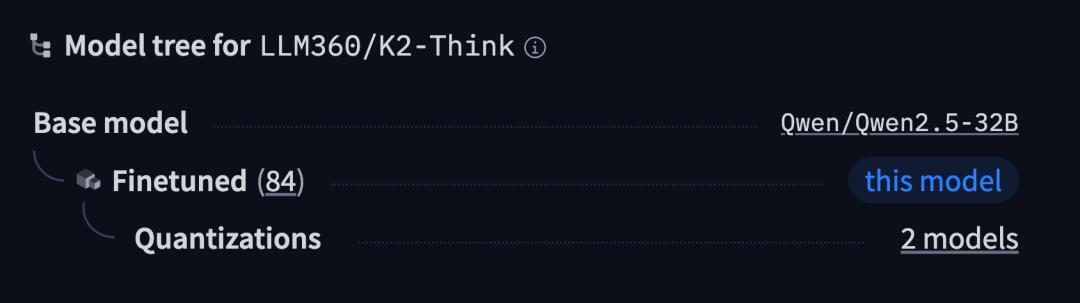
Core Insights - The K2 Think model, developed by MBZUAI and G42 AI, is touted as the fastest open-source AI model, achieving a speed of over 2000 tokens per second, specifically 2730.4 tokens per second in tests [1][3][9] - K2 Think is claimed to be the most advanced open-source AI inference system to date, with a focus on mathematical reasoning [2][9] - The model is based on Qwen 2.5-32B and has been designed to excel in complex problem-solving through innovative training techniques [1][12] Performance Metrics - K2 Think has demonstrated consistent performance, maintaining speeds above 2000 tokens per second across various tests, including mathematical problems [3][7] - The model achieved notable scores in multiple mathematical benchmarks, such as 90.83 in AIME'24 and 81.24 in AIME'25 [9] Technical Innovations - The K2 Think team implemented six key innovations to enhance the model's capabilities: - Supervised Fine-Tuning (SFT) for structured reasoning [12] - Reinforcement Learning with Verifiable Rewards (RLVR) to improve performance in logic and mathematics [12] - Planning before reasoning to outline problem-solving strategies [12] - Best-of-N sampling to generate multiple answers and select the best [12] - Speculative Decoding for parallel answer generation and validation [12] - Hardware acceleration using Cerebras WSE for high-speed token generation [12] Safety and Security - The K2 Think team conducted comprehensive safety testing, ensuring robustness against harmful requests and information leaks [12]