
核能

Search documents
老国企迎来新概念,兰石重装能否焕发“第二春”?
市值风云· 2025-11-04 10:09
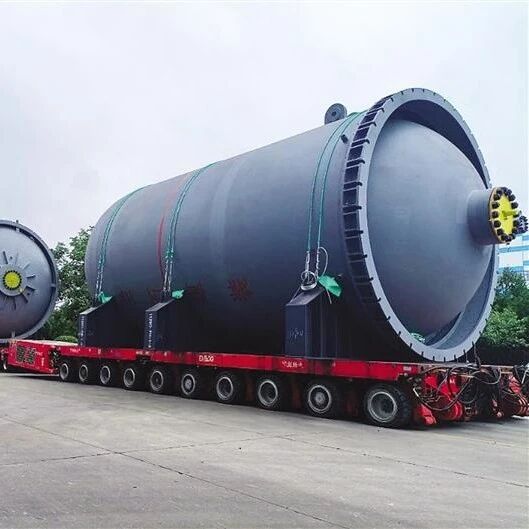
Core Viewpoint - The article discusses the transformation challenges faced by Lanzhou Heavy Equipment (兰石重装) as it shifts focus towards nuclear and hydrogen energy, highlighting both the potential opportunities and the financial struggles associated with this transition [3][39]. Group 1: Company Background and Transformation - Lanzhou Heavy Equipment, established in 1953, has a long history as a key player in China's energy equipment manufacturing, initially focusing on traditional energy sectors [6]. - The company went public in 2014, experiencing a strong market debut despite previous declines in net profit, reflecting high market expectations [6]. - Following a downturn in traditional energy equipment, the company identified a need for transformation, emphasizing the development of new energy equipment, industrial intelligence, and environmental protection equipment since 2018 [6][7]. Group 2: New Energy Focus - The company has made significant strides in nuclear energy and hydrogen energy, claiming to cover the entire industry chain from production to storage and utilization [9][14]. - In nuclear energy, Lanzhou Heavy Equipment has established itself as a major supplier in the domestic market, particularly in nuclear fuel and nuclear power station equipment [9][10]. - The hydrogen energy segment includes various technologies for hydrogen production, storage, and refueling stations, showcasing a comprehensive approach to new energy solutions [14][15]. Group 3: Financial Performance and Challenges - In 2022, the company reported revenue of 4.98 billion, a 23.4% increase, with net profit rising by 37.6% to 180 million, driven largely by the growth in new energy equipment [17]. - Despite revenue growth, the company faced challenges, including a significant drop in the profitability of its nuclear-related acquisition, which fell short of performance expectations [20][21]. - The overall gross margin declined by approximately 4 percentage points across both traditional and new energy equipment, attributed to rising raw material costs [22][23]. Group 4: Recent Developments and Future Outlook - By 2025, the company reported a revenue of 2.83 billion in the first half, a 13.6% increase, but faced a sharp decline in net profit by 21.9% due to increased R&D expenditures [27][30]. - The first three quarters of 2025 showed a revenue increase of 26.9%, yet net profit plummeted by 88.3%, indicating a significant disconnect between revenue growth and profitability [30][34]. - The company is currently navigating a challenging transition, with high R&D costs and cash flow pressures impacting its financial health, raising questions about the sustainability of its growth strategy [36][39].


朱民深入解读“十五五”|宏观经济
清华金融评论· 2025-11-01 10:54
Group 1 - The core viewpoint of the article emphasizes the importance of the "Fifteen Five" plan, which aims to navigate the challenges of globalization while promoting domestic economic growth and international engagement [2][3][4]. - The article highlights the need to understand the current macro external environment's volatility and the necessity to focus on internal stability and economic growth [2][8]. - It discusses the historical perspective on China's position in the world, emphasizing the importance of recognizing past achievements and future goals in the context of global changes [3][4]. Group 2 - The article points out that while the "Fifteen Five" plan focuses on quality, it also implicitly addresses quantity, particularly in terms of economic growth and labor productivity [5][6]. - It stresses the significance of enhancing domestic market stability to counteract international uncertainties, advocating for a unified domestic market to strengthen internal resilience [8]. - The article outlines China's advancements in key technological fields such as AI, quantum computing, and superconductivity, indicating a competitive edge over the U.S. in certain areas [10][11][12][13]. Group 3 - The "China + N" global strategy is discussed, highlighting the shift towards a multi-point global configuration in response to trade tensions, with an emphasis on the importance of China's market for international companies [15][16]. - The article notes that China's outbound direct investment (ODI) has surpassed foreign direct investment (FDI), marking a significant shift in the global investment landscape [17]. - It emphasizes the acceleration of the internationalization of the Renminbi, linking it to the strength of the country's financial and real economy [19].
谷歌联手NextEra重启爱荷华核电站,2029年为AI供电
Xin Lang Ke Ji· 2025-10-29 11:50
Group 1 - Google and NextEra Energy plan to restart the Duane Arnold Energy Center in Iowa by 2029 to provide carbon-free power for Google's AI operations [1] - The U.S. electricity consumption reached a record 4.097 trillion kilowatt-hours in 2024, driven by the expansion of data centers [2] - The U.S. Energy Information Administration predicts that electricity consumption will continue to rise, reaching 4.191 trillion kilowatt-hours in 2025 and 4.305 trillion kilowatt-hours in 2026, primarily due to AI data centers [2] Group 2 - Major tech companies like Oracle, Microsoft, and Amazon are exploring nuclear energy solutions to meet the growing energy demands of their data centers [2] - Microsoft plans to procure power from a nuclear fusion startup, Helion, which aims to launch a 50-megawatt fusion power project by 2028, although it faces technological and regulatory challenges [2] - There are currently three nuclear power plant restart projects in the U.S., but none have successfully restarted a decommissioned plant yet [3]


谷歌与美能源巨头合作重启核电站,为AI基础设施供电
Xin Lang Cai Jing· 2025-10-29 10:52
Group 1 - The core point of the articles highlights the record electricity consumption in the U.S. driven by the expansion of artificial intelligence and data centers, with nuclear energy becoming a focal point to meet this demand [1][2] - Google and NextEra Energy plan to restart the Duane Arnold Energy Center in Iowa by 2029 to provide carbon-free power for Google's AI operations, following its closure in 2020 due to high operational costs and safety concerns [1] - The U.S. electricity consumption is projected to reach 4.097 trillion kilowatt-hours in 2024, with further increases expected, potentially reaching 4.191 trillion kilowatt-hours in 2025 and 4.305 trillion kilowatt-hours in 2026, primarily driven by AI data centers [2] Group 2 - Major tech companies like Oracle, Microsoft, and Google are exploring nuclear energy solutions to address the increasing energy demands from AI computing, with Oracle designing a data center powered by three small nuclear reactors [2] - In addition to the Duane Arnold Energy Center, other nuclear projects are in progress, although no decommissioned nuclear plants have successfully restarted yet [3]
DLS MARKETS:英伟达忙着宣布合作项目,谁还需要数据?
Sou Hu Cai Jing· 2025-10-29 09:53
Group 1 - Nvidia's CEO Jensen Huang announced new collaborations with Nokia, Palantir, Uber, and the U.S. Department of Energy at the GTC conference, including the construction of seven AI supercomputers for the government [1] - Nvidia plans to invest $1 billion in Nokia to help transform it into an AI-driven company, with Nokia using Nvidia's chips to accelerate its 5G and 6G software development [2] - Nvidia has reserved approximately $500 billion in sales for Blackwell and Rubin chips for 2025-2026, indicating strong demand for its products [3] Group 2 - Nvidia's stock surged by 5%, surpassing the $200 mark for the first time, contributing to a new high for the S&P 500 index, with tech stocks leading the gains [3] - The GlobalX uranium ETF rose by 8%, reflecting the increasing energy demands of AI, as nuclear energy is seen as a suitable clean energy source [5] - The market anticipates a dovish statement from the Federal Reserve, which could further boost market sentiment and asset prices [6]

新闻1+1丨“十五五”规划建议发布,更清晰的方向!
Yang Shi Xin Wen Ke Hu Duan· 2025-10-29 07:32
Core Insights - The "15th Five-Year Plan" emphasizes a strategic approach to counter global challenges while focusing on domestic economic growth and stability [1][2][4] Strategic Dimensions - Understanding the current macro external environment's challenges and volatility is crucial, as traditional globalization principles are changing [1][2] - Concentrating on internal affairs is essential to respond effectively to external changes [1][2] Historical Perspective - A historical viewpoint is necessary to recognize China's position and trajectory in the global landscape, marking a significant opportunity for advancement [2] Goal Orientation - The unwavering goal of building a modern socialist country and achieving national rejuvenation remains central despite global changes [2] Problem Orientation - Identifying and addressing existing issues is vital after understanding the broader context [2] Economic Growth and Quality - The plan highlights the importance of both qualitative and quantitative aspects of growth, with an average economic growth rate of 5.5% during the first four years of the "14th Five-Year Plan" [3] - Labor productivity improvement is emphasized as a key factor for quality growth, alongside increasing wages and domestic consumption [3] Domestic Market Stability - Enhancing internal stability is critical to countering external uncertainties, with a focus on unifying the domestic market [4][5] Technological Advancements - China has made significant strides in technology, particularly in AI, quantum computing, and fiber optics, positioning itself competitively against the U.S. [6][7][8] Global Layout - The "China + N" phenomenon reflects a shift in global investment strategies, with increased importance placed on China's market by international companies [9][10][11] Currency Internationalization - Accelerating the internationalization of the Renminbi is deemed essential for strengthening the economy and financial system, with a focus on capital account openness [12]
新闻1+1丨“十五五”规划建议发布 更清晰的方向!
Yang Shi Wang· 2025-10-28 23:08
Core Insights - The "15th Five-Year Plan" emphasizes a strategic approach to counter global challenges while focusing on domestic economic growth and stability [1][6] - The plan outlines a clear goal of building a modern socialist country and achieving national rejuvenation by 2035, with a commitment to maintaining economic growth around 5% [5][2] - The concept of "China + N" reflects a new global strategy where Chinese enterprises expand internationally while attracting foreign investment and technology [12][13] Strategic Dimensions - Understanding the changing macro external environment is crucial, highlighting the volatility and challenges posed by the breakdown of global rules and order [1][2] - The focus on historical context emphasizes recognizing China's position and trajectory in the global landscape, presenting a significant opportunity for advancement [2][3] - A goal-oriented approach is essential, with unwavering commitment to national objectives despite global uncertainties [2][3] Economic Growth and Quality - The plan indicates that the average economic growth rate during the "14th Five-Year Plan" was approximately 5.5%, setting a foundation for future growth [5] - Emphasis on improving labor productivity is critical, as it is seen as a key factor in enhancing economic quality and overall growth [5][6] - The importance of domestic consumption and living standards is highlighted, with a goal for wages to increase as a proportion of total income [5] Domestic Market Stability - Strengthening the domestic market is identified as a primary strategy to counter international uncertainties, with a focus on unifying regulations and improving the business environment [6][9] - The establishment of a unified domestic market is deemed essential for enhancing internal stability and resilience against external shocks [6] Technological Advancements - China is positioned to compete with the U.S. in several technological fields, particularly in AI, quantum computing, and nuclear energy, with significant advancements expected in the next five years [9][10][11] - The focus on AI+ applications indicates a strategic shift towards practical implementations rather than just foundational models, suggesting a competitive edge in specific areas [9] Global Engagement - The "China + N" strategy signifies a shift in how global companies view China, recognizing its importance in the global supply chain and market [12][13] - China's outbound direct investment (ODI) has begun to match foreign direct investment (FDI), indicating a significant change in the global investment landscape [13] Currency Internationalization - The acceleration of the internationalization of the Renminbi is deemed necessary for strengthening China's financial position in global markets [14] - The plan includes steps to enhance capital account openness and develop a global bond market to facilitate Renminbi's international use [14]

总计5500亿美元,日本对美投资计划清单曝光,最大项目近1000亿美元
Mei Ri Jing Ji Xin Wen· 2025-10-28 22:28
Group 1: US-Japan Investment Mechanism - The Japanese government has unveiled a potential project list under a $550 billion investment mechanism with the US, detailing specific funding proposals related to the core terms of the US-Japan trade agreement [4][5] - The project list includes investments from companies like SoftBank, Westinghouse Electric, and Toshiba in sectors such as energy, artificial intelligence, and critical minerals, with individual project sizes ranging from $350 million to $100 billion [4][5] - Energy projects dominate the list, with Westinghouse planning to invest nearly $100 billion in AP1000 nuclear reactors and small modular reactors, while SoftBank is interested in a $25 billion power infrastructure project [5] Group 2: Market Reactions and Stock Performance - US stock indices reached new historical highs, with the Dow Jones up 0.32%, Nasdaq up 0.31%, and S&P 500 up 0.01% as of the latest report [1] - Uranium and nuclear power stocks surged, with the uranium sector rising by 11.5%, and notable gains for companies like Cameco and Uranium Energy [6][7] - The partnership between Cameco and Brookfield Asset Management with the US government aims to construct at least $80 billion worth of Westinghouse AP1000 nuclear units, which is expected to create significant job opportunities [7][9] Group 3: Apple and Microsoft Market Performance - Apple's market capitalization briefly surpassed $4 trillion, with strong early sales of the iPhone 17 series, outperforming the iPhone 16 series by 14% in the first 10 days post-launch [10][15] - Microsoft also reached a market cap of approximately $4.03 trillion, driven by a new agreement with OpenAI for additional Azure services [11][13] - The iPhone 17's sales performance indicates a robust market demand, with average sales growth of 31% across China and the US compared to the previous model [15]



美股前瞻 | 三大股指期货齐涨,日对美投资大单或成美股牛市催化剂
Zhi Tong Cai Jing· 2025-10-28 11:46
Market Overview - US stock index futures are all up before the market opens, with Dow futures rising by 0.27%, S&P 500 futures up by 0.03%, and Nasdaq futures increasing by 0.12% [1] - European indices show mixed results, with Germany's DAX up by 0.16%, UK's FTSE 100 down by 0.07%, France's CAC40 up by 0.14%, and Europe's Stoxx 50 up by 0.16% [2] - WTI crude oil prices fell by 1.24% to $60.55 per barrel, while Brent crude oil dropped by 1.17% to $64.14 per barrel [3] Key Market Events - President Trump is hosting a dinner in Tokyo with business leaders, including OpenAI and Salesforce CEO Marc Benioff, to celebrate Japan's significant investment in the US, amounting to $550 billion [4] - Japan's government has unveiled a $550 billion investment plan targeting sectors such as nuclear energy, AI, and semiconductors, which is expected to act as a major catalyst for the ongoing US stock market bull run [5] Company News - PayPal has signed an agreement with OpenAI to integrate its digital wallet into ChatGPT, allowing users to make payments directly through the AI tool. PayPal's Q3 revenue reached $8.417 billion, exceeding expectations [7] - NXP Semiconductors reported a 2% year-over-year decline in Q3 revenue to $3.17 billion but provided positive guidance for Q4, indicating a potential return to revenue growth [7] - Nomura's net profit fell by 6% in Q2, but strong performance in stock trading revenue is seen as a positive catalyst for the Japanese brokerage [8] - Novartis reported a 6% increase in operating profit for Q3, driven by new drug sales that offset the impact of the patent expiration of its heart drug Entresto [9] - Shengda Technology announced a core operating profit of $2.5 million for H1 2025, with its new energy vehicle insurance business growing by 111% [10] - UnitedHealth exceeded Q3 expectations and raised its full-year profit guidance, with a Q3 medical loss ratio of 89.9% [11] - Amazon plans to cut approximately 14,000 corporate jobs as part of its ongoing restructuring efforts influenced by AI advancements [12][13] Economic Data and Events - Upcoming economic data includes the US Conference Board Consumer Confidence Index for October, scheduled for release at 22:00 Beijing time [14] - API crude oil inventory changes for the week ending October 24 will be reported at 04:30 Beijing time [15]


探讨光学前沿应用潜能 “好望角科学沙龙”超快光学专场活动举行
Zheng Quan Ri Bao Wang· 2025-10-28 11:13
Group 1: Core Insights - The event "Good Hope Cape Science Salon" focused on ultrafast optics, highlighting its significance in precision measurement, strong field physics, biological imaging, and information processing [1] - Researchers discussed the rapid advancements in time scale exploration, from femtoseconds to attoseconds, emphasizing the acceleration of scientific discovery [1] - The development of three-dimensional chips using femtosecond laser-based nano-printing technology is expected to significantly enhance data processing capabilities [2] Group 2: Technological Advancements - Terahertz technology is gaining attention for its unique advantages in detecting large organic molecules, particularly in cancer diagnostics [2] - The high intensity characteristics of lasers, particularly ultra-strong lasers, are noted for their important scientific and strategic value [2] - The salon aimed to promote the integration of ultrafast optical technology with academic research and industrial capital, facilitating discussions on China's photon industry transitioning from "technology catching up" to "industry leading" [3] Group 3: Event Overview - The "Good Hope Cape Science Salon" serves as a platform for cross-disciplinary exchange among professionals from technology, industry, and investment sectors [3] - The event gathered over 40 experts, including scholars, tech entrepreneurs, and investment leaders, to discuss trends in artificial intelligence, photon science, quantum computing, and more [3] - The theme of the salon was "Ultrafast Light: From Laser Pulses to a New Era in the Photon Industry," aiming to foster collaboration and innovation in cutting-edge technologies [3]